
Aerospace Engineer with interest in math, cryptography & computational algorithms. Advancing Zero-Knowledge research
Joined February 2023
- Tweets 62
- Following 84
- Followers 84
- Likes 91
4 Photos and videos

6 Jul 2023
Finally the last post! This is where the main novelty resides
6 Jul 2023

Introducing the final installment of our Arithmetization in STARKs series, where we will compare low-degree bounds of AIR and PAIR methods.
We explore the computational complexity of both approaches and discuss transition strategies between the two.
1/6
threesigma.xyz/blog/degree-b…
1
5
402
Tiago Martins retweeted

6 Jul 2023
Introducing the final installment of our Arithmetization in STARKs series, where we will compare low-degree bounds of AIR and PAIR methods.
We explore the computational complexity of both approaches and discuss transition strategies between the two.
1/6
threesigma.xyz/blog/degree-b…
1
5
18
1,801
16 Jun 2023
A general description of PAIR to make the contents available a little less sparse. We tried to make it easy to understand and complete at the same time.
16 Jun 2023
We are excited to share the second part in our Series on Arithmetization Methods for STARKs: Preprocessed AIR.
1/5
threesigma.xyz/blog/preproce…
1
3
243
Tiago Martins retweeted
16 Jun 2023
We are excited to share the second part in our Series on Arithmetization Methods for STARKs: Preprocessed AIR.
1/5
threesigma.xyz/blog/preproce…
1
9
38
3,411
1 Jun 2023
New blogpost just dropped:
threesigma.xyz/blog/an-intro…
It used the ideas that were described in our paper eprint.iacr.org/2023/661 @joaoanf_ts @threesigma_xyz
1
3
106
Tiago Martins retweeted
1 Jun 2023
We are thrilled to announce our new Series on Arithmetization Methods for STARKs, where we will dive into AIR and its variant PAIR, exploring their soundness implications for low-degree testing.
1/5
threesigma.xyz/blog/an-intro…
1
12
44
3,929
Tiago Martins retweeted

11 May 2023
#ePrint Study of Arithmetization Methods for STARKs: T Martins, J Farinha ia.cr/2023/661
3
10
1,349
Tiago Martins retweeted
16 Mar 2023
As DeFi grows in the crypto environment, capital efficiency has emerged as a major concern for L2 solutions. Our most recent research study describes the implementation of a cross-L2 AMM to address the issue of liquidity fragmentation.
Read it at threesigma.xyz/blog/damm.
1/6
1
15
39
3,332
14 Mar 2023
Making optimistic rollups capital-efficient 💸
14 Mar 2023

Diving into this topic was truly exciting and rewarding! With our solution, we can now enhance this L2 solution and achieve a better user experience. Our solution can eliminate the hazardous 7-day waiting period! Let's explore how we can maximize this breakthrough together!
1/4
1
4
171
Tiago Martins retweeted
14 Mar 2023
We are excited to announce our new two-part series: Challenging Periods Reimagined, which proposes a new dynamic challenging period and decentralization paradigm for Optimistic Rollups.
Read Part 1 at threesigma.xyz/blog/optimist….
1/4
2
13
36
8,184
2 Mar 2023
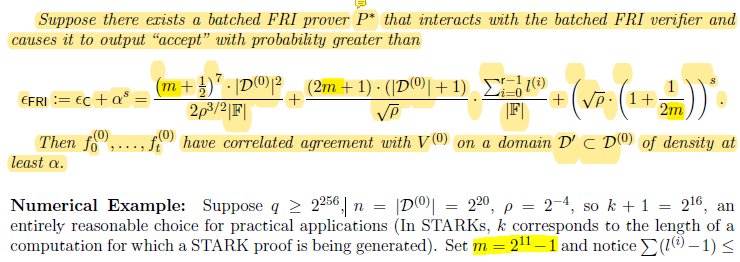
1/3 I have been puzzled by a detail in STARKs security.
Regarding the paper eprint.iacr.org/2020/654.pdf: how to determine the value of the integer m>2, in the FRI soundness?
In this paper, the example sets m=2047. But, in the ethSTARK doc. (eprint.iacr.org/2021/582.pdf), m=3 is chosen.

2
3
12
496
2 Mar 2023
3/3 Maybe you guys already know the answer to this issue, @AndrijaNovakov6, @eduadiez, @yezhang1998, @OmerShlomovits, @cronokirby, @federicocarrone, @PapiniShahar, @gluk64, @cryptodavidw, @BrianRetford, @kobigurk, @TauLepton_, @zksync, and @the_matter_labs. If not let's find out!
3
244
1 Mar 2023
1/4 What's P-AIR and how does it affect #ZK proofs @aztecnetwork? Preprocessed Algebraic Intermediate Representation (P-AIR) combines disjoint AIR constraints into larger combined constraints with selectors. Can this damage the soundness of the FRI due to larger rate.
1
5
20
2,036
1 Mar 2023
4/4 Using the regular AIR enforcement domains instead of using selectors will potentially avoid this issue. Let's evaluate P-AIR's impact on protocol security and prioritize safety while pushing forward with innovative research. #ZKproofs
1
7
227
1 Mar 2023
@janbenes16 @mike_connor @jaosef @Zac_Aztec @Blulinski who of you wrote the article? Our team @threesigma_xyz is interested in connecting 😁!
1
1
10
264
Tiago Martins retweeted

28 Feb 2023
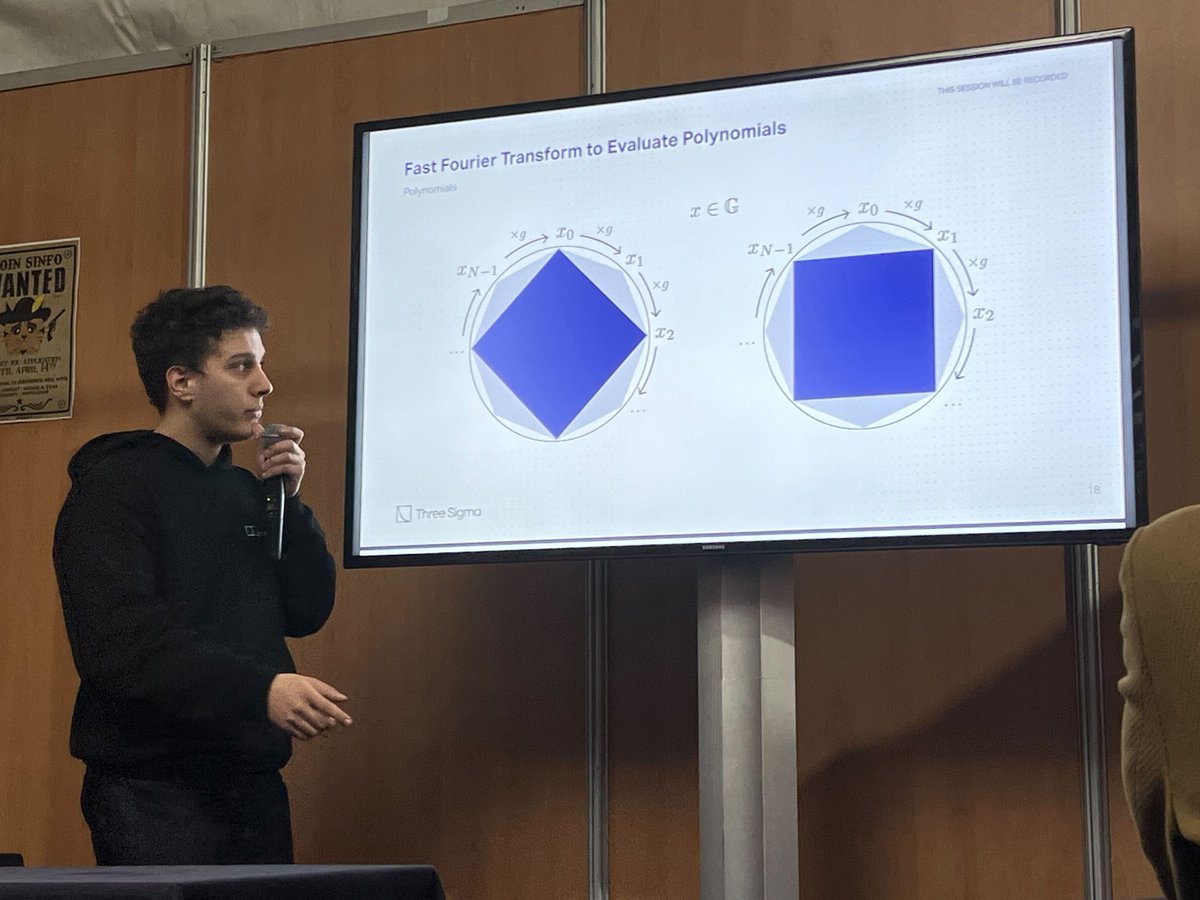
While everyone is talking about #ETHDenver, the big brain @0xtiago was busy dropping an epic 1.5hour workshop on ZK & FRI with hands-on exercises 🧑💻🧠
1
5
19
623
Tiago Martins retweeted

28 Feb 2023
1
17
328