
America is Fucked if we keep letting them get away with it !
Joined April 2009
- Tweets 11,685
- Following 2,586
- Followers 1,824
- Likes 7,160
1,542 Photos and videos















Whoop that ass !!!
5 Dec 2020

Biden’s Antifa thugs get their asses whooped by Trump supporters.
3
2
23
🇺🇸nick🇺🇸 retweeted

🇮🇪⚔️ An armed Irish group has issued a direct warning to politicians:
“You have flooded our communities with military-age migrant men.
We will not sit back and watch our culture and religion destroyed.”
The pushback has begun.
Ireland is waking up.
4,016
21,647
110,318
3,278,771
Let’s get it done already !!!

🚨NOW: Rep. Thomas Massie just stood on the House floor and named what every politician in DC has spent 58 years pretending did not happen
The USS Liberty. June 8, 1967.
34 dead American sailors. 174 wounded. Over 70% casualty rate on a virtually unarmed US ship.
25 minutes of Israeli jets, Israeli rockets, Israeli 30mm cannon fire, and ISRAELI NAPALM ON THE BRIDGE. Then Israeli torpedoes. Then Israel machine-gunned the lifeboats.
MASSIE: "They were intent on leaving no survivor."
Then the part nobody wants you to think about: the Saratoga and the America launched planes to help. The planes were RECALLED. The crew sat there bleeding for 17 hours.
Dean Rusk. Richard Helms. Admiral Moaner. The chief counsel of the Court of Inquiry himself. None of them believed the "mistaken identity" story.
And now you understand exactly why the entire DC machine and Israel lobby has spent the last year trying to primary this man out of existence.
You are not allowed to say the quiet part. He said it anyway.
Honor the crew. ussliberty.org.
6
And then there is this !
Repost if you agree !!
youtu.be/GjgYdurDEmA?si=YqsV…
1
22
🇺🇸nick🇺🇸 retweeted

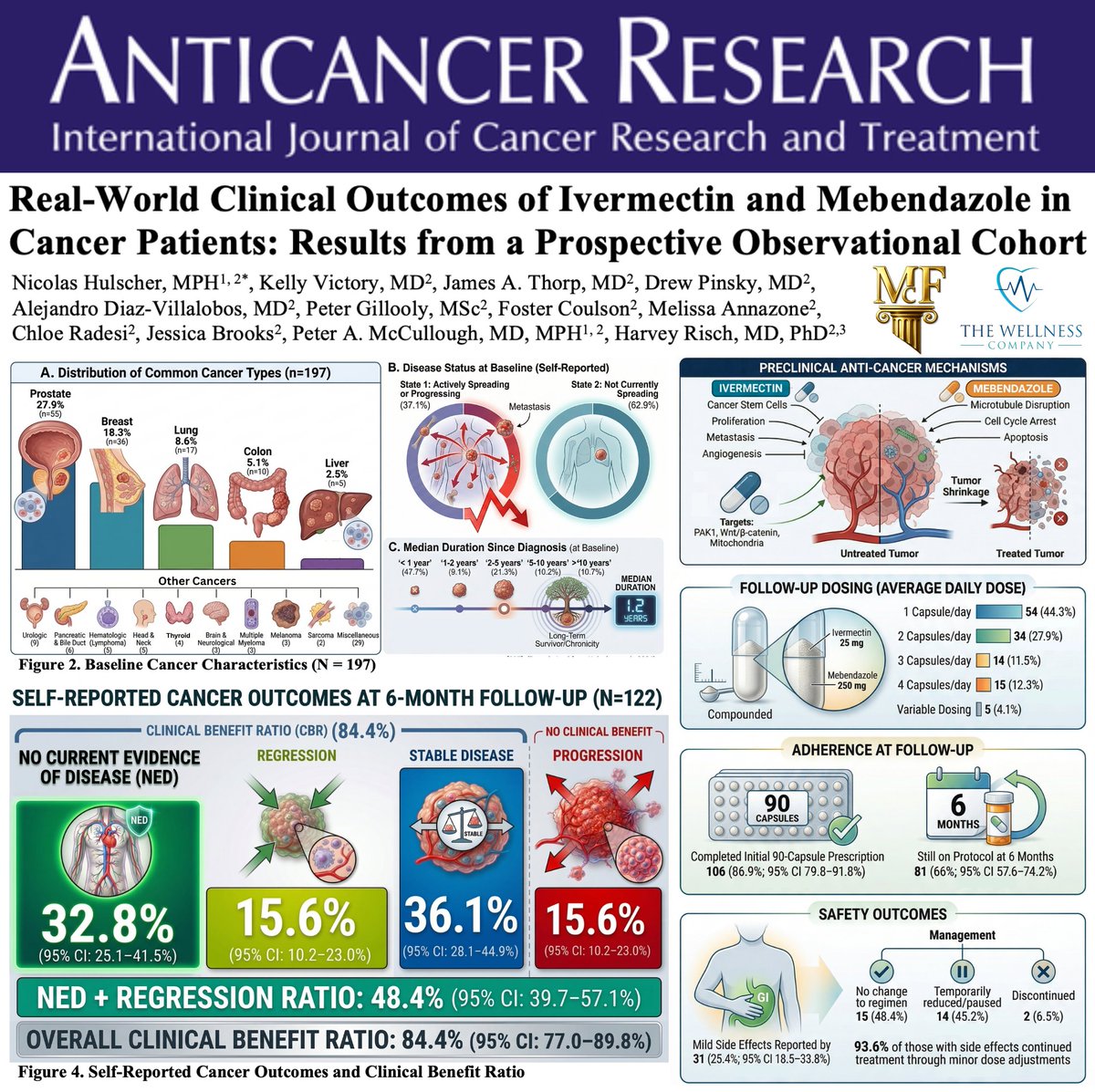
BREAKING: Largest Human Cancer Study of Ivermectin Mebendazole Is Now PEER-REVIEWED and PUBLISHED in a MAJOR Cancer Journal
84.4% of cancer patients taking ivermectin mebendazole for 6 months declared either CANCER DISAPPEARANCE, TUMOR REGRESSION, or CANCER STABILIZATION.
Our study, “Real-world Clinical Outcomes of Ivermectin and Mebendazole in Cancer Patients: Results from a Prospective Observational Cohort,” is now peer-reviewed and published in Anticancer Research—a major international oncology journal of the International Institute of Anticancer Research (IIAR), established in 1995.
The results represent one of the most compelling clinical signals ever documented for repurposed anti-parasitic therapies in oncology.
A diverse population of cancer patients (n=197) was prescribed compounded ivermectin–mebendazole through a U.S. telemedicine platform, with each capsule containing 25 mg ivermectin and 250 mg mebendazole.
Participants were followed for approximately six months using standardized digital surveys assessing cancer outcomes, medication adherence, and tolerability.
At approximately six months post-treatment initiation, we observed an 84.4% Clinical Benefit Ratio (CBR)—meaning more than four out of five patients reported either:
No evidence of disease (32.8%)
Tumor regression (15.6%)
or Cancer stabilization (36.1%)
Importantly, adherence was remarkably high, with 86.9% completing the initial prescription and 66.4% remaining on therapy at six months.
Side effects were predominantly mild and manageable, reported in 25.4% of patients (primarily gastrointestinal), with 93.6% of those experiencing side effects continuing treatment after minor dosing adjustments.
This groundbreaking peer-reviewed publication was made possible through a unique collaboration between The Wellness Company, the McCullough Foundation, and the Chairman of the President’s Cancer Panel—uniting real-world clinical data, frontline medical experience, and epidemiologic expertise to evaluate inexpensive, repurposed therapies with major translational potential.
With these extraordinarily promising results, double-blind, placebo-controlled clinical trials are now required.
In the meantime, many cancer patients are exercising their right to try.
@twc_health @McCulloughFund @IIAR_Journals @P_McCulloughMD @DrHarveyRisch @DrKellyVictory @jathorpmfm @drdrew @PeterGillooly @FosterCoulson
622
16,322
33,629
2,713,387
🇺🇸nick🇺🇸 retweeted

May 20
Are you going to vote in the 2026 midterms?
Now that AIPAC owns the entire political system in the United States?
1,284
286
2,203
49,115
And there is this :
people primarily get hantavirus through contact with infected rodents (such as mice and rats) or their urine, droppings, and saliva. cdc.gov
Hantaviruses are a family of viruses carried by rodents worldwide. Different rodent species carry different strains, leading to two main types of illness in humans: Hantavirus Pulmonary Syndrome (HPS), which affects the lungs (common in the Americas), and Hemorrhagic Fever with Renal Syndrome (HFRS), which affects the kidneys (more common in Europe and Asia). mayoclinic.org
Primary Ways of Transmission
• Inhaling aerosolized virus particles — This is by far the most common route. When rodent urine, droppings, or saliva dry out and are disturbed (e.g., by sweeping, vacuuming, cleaning sheds/garages, or disturbing nesting materials), tiny virus-containing droplets become airborne. Breathing them in infects people. canada.ca
• Touching contaminated surfaces then touching your eyes, nose, or mouth.
• Eating or drinking contaminated food/water with rodent waste.
• Rodent bites or scratches (rare). my.clevelandclinic.org
Rodents like deer mice (in North America), rice rats, cotton rats, and others are the main carriers. They don’t usually show symptoms but shed the virus in their urine, droppings, and saliva. kingcounty.gov
Risk increases in enclosed or infrequently used spaces (cabins, sheds, barns, woodpiles, or homes with rodent infestations), especially when cleaning or disturbing dust. cdph.ca.gov
Person-to-Person Transmission
This is very rare and documented only with the Andes virus strain (found in South America). It typically requires close, prolonged contact with a sick person (e.g., direct physical contact, sharing utensils, handling contaminated bedding, or exposure to respiratory secretions). Most other hantaviruses do not spread between people. cdc.gov
Recent news involves a cruise ship outbreak linked to the Andes virus, with some person-to-person spread noted in that context, but overall public risk remains low. cdc.gov
Other Key Facts
• Hantavirus is not spread by insects, pets (unless wild rodents infect them), or casual contact.
• It cannot spread through water, air in general, or typical everyday interactions in most strains.
• Incubation period is usually 1–8 weeks after exposure. cdc.gov
Prevention centers on avoiding rodents: Seal entry points in homes, store food securely, control infestations with traps (not poisons that might attract more rodents), and clean rodent areas carefully (wet-mop or use disinfectant sprays instead of dry sweeping/vacuuming without protection; wear gloves and masks). cdc.gov
Hantavirus infections are rare but can be severe (with a notable fatality rate in HPS cases), so prompt medical care for flu-like symptoms after potential rodent exposure is important. For the latest details, check sources like the CDC.
1
61
🇺🇸nick🇺🇸 retweeted

May 11
Here’s Dr Zelenko teaching us how to treat Hantavirus back in 2022. This will be the most enlightening 2 minutes and 47 seconds of your life. Please listen carefully.
1,292
25,291
64,541
2,632,495
🇺🇸nick🇺🇸 retweeted

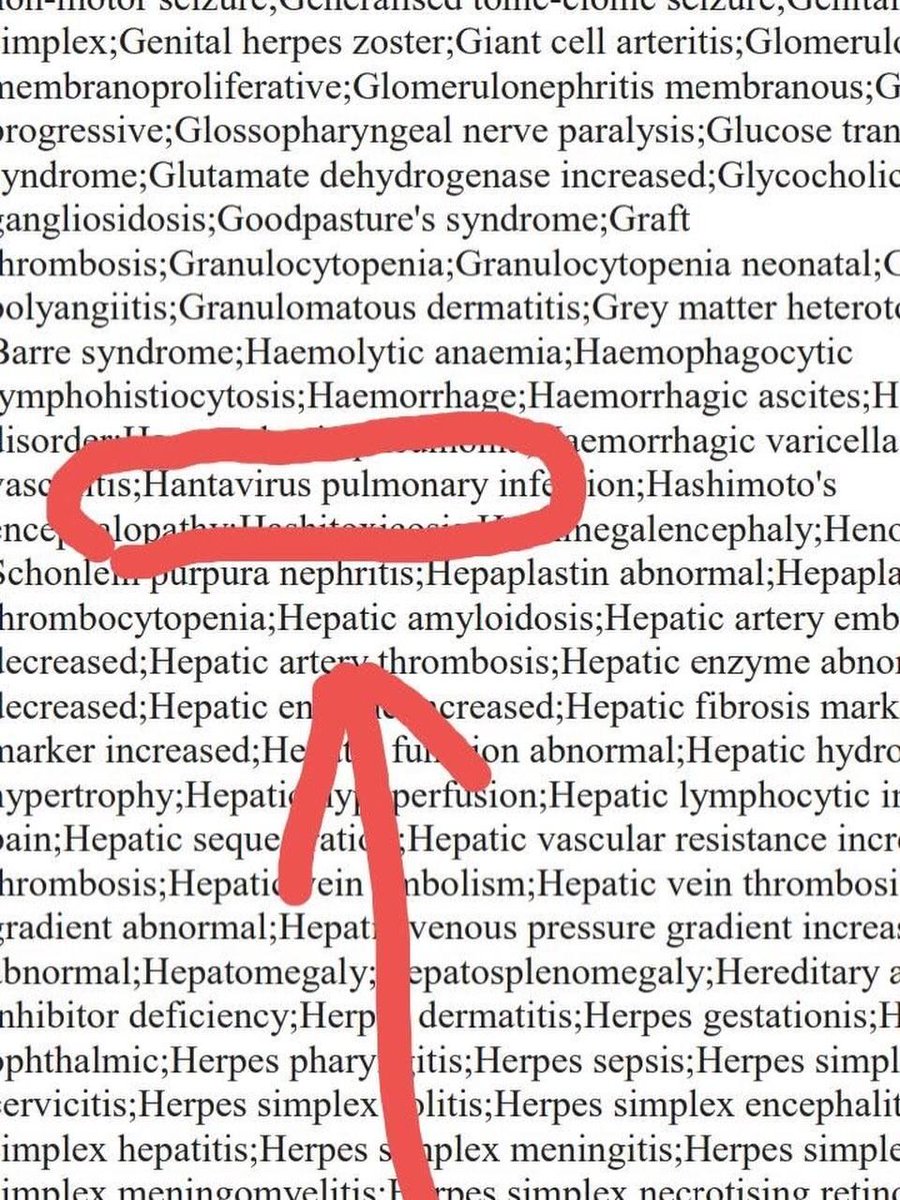
Hantavirus pulmonary listed as a side affect from the Pfizer Covid vaccine? What? Is this why they wanted to hide this info until 2085?
659
11,548
21,798
1,153,694
🇺🇸nick🇺🇸 retweeted

Apr 28
“Those who would give up essential Liberty, to purchase a little temporary Safety, deserve neither Liberty nor Safety.” — Benjamin Franklin
27
202
770
6,950