
“The only thing necessary for the triumph of evil is for good men to do nothing.” John Stuart Mill
Joined February 2023
- Tweets 26,374
- Following 180
- Followers 229
- Likes 4,286
61 Photos and videos



Exchange retweeted

Remember folks, when a bunch of 35-40 year old "Young Republicans" were caught joking about Hitler and gas chambers J.D. Vance called them "kids"
But 15 year old girls in the Epstein Files are "young women". It's sick.
141
15,516
96,172
872,359
Exchange retweeted

Jan 28
Very good post from Sharon Hayes...Worth your time.
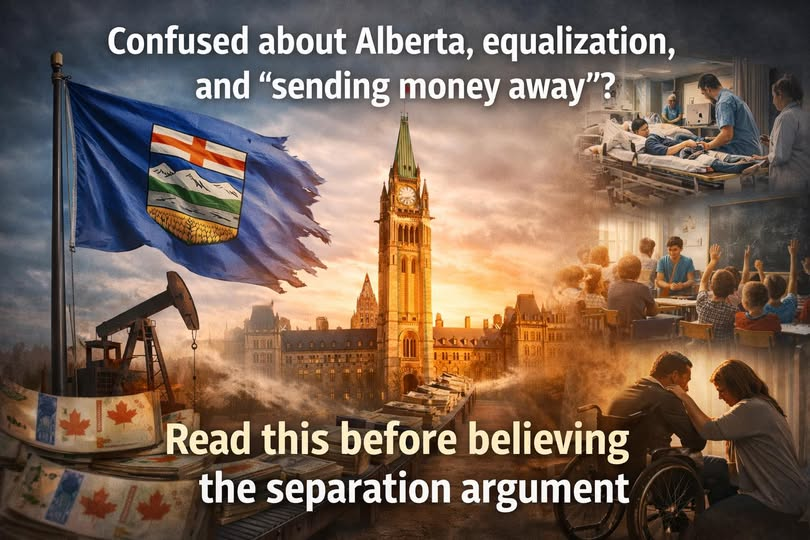
Most Alberta separation arguments fail before they even get to equalization.
They start with the assumption that Alberta “sends money away” and would magically fix its problems if that stopped. That assumption misunderstands how federal taxes, equalization, and risk-sharing actually work.
From there, the entire argument collapses.
The pitch is simple and emotionally effective:
“Alberta pays billions in equalization and gets nothing back. We’d be better off on our own.”
That story only works if you isolate one program, blur how it actually functions, and quietly imply things that are not true.
Yes, Alberta pays more to the federal government than it gets back in equalization.
That part is true.
What’s misleading is treating that fact as evidence of extraction.
Here’s what equalization actually is.
Equalization is a federal program, paid out of general federal revenues. It is not a direct transfer from Alberta to Quebec. Alberta does not write an equalization cheque. There is no line item where “Alberta’s money” is sent east.
The federal government collects revenues nationally through:
- Personal income taxes
- Corporate taxes
- GST and excise taxes
- Other federal revenues
Those revenues go into a single federal pool. Equalization payments are then calculated based on fiscal capacity, meaning a province’s ability to raise revenue at average tax rates.
If a province has lower capacity, the federal government tops it up so it can provide reasonably comparable public services. If a province has higher capacity, it does not qualify.
That’s it.
Equalization is not:
- A refund program
- A reward or punishment
- A moral judgment
- A transfer from Alberta taxpayers to Quebec taxpayers
Alberta doesn’t qualify because its fiscal capacity is higher. British Columbia and Saskatchewan also receive zero. That distinction matters, and it is almost always missing from separation rhetoric.
Another implication that often sneaks into this conversation is that individual Albertans are personally paying higher federal taxes than people elsewhere.
That is also false.
Federal income taxes are set nationally. An Albertan and an Ontarian earning the same income pay the same federal income tax. Same brackets. Same rates. Same rules. There is no “Alberta surcharge” in the federal tax code.
When Alberta sends more to Ottawa, it is not because Albertans are taxed more harshly. It is because:
- Average incomes are higher
- Corporate profits are larger in boom years
- Employment rates are higher
- More people are working and earning taxable income
That’s arithmetic, not discrimination.
Demographics matter here too.
Alberta has a younger population than many provinces. Younger populations mean:
- More people in prime working years
- Fewer retirees drawing federal benefits
- Higher employment-to-population ratios
- More income tax collected relative to benefits paid
That demographic advantage boosts federal revenues flowing out of Alberta in good years. It also means Alberta draws less from age-related federal programs compared to older provinces. That is not a policy choice made in Ottawa. It is a population-structure reality.
More importantly, equalization is one program, not the totality of Alberta’s relationship with Canada.
Here’s the part the propaganda skips:
Alberta receives billions every year in federal transfers that have nothing to do with equalization.
Core transfers alone matter:
- The Canada Health Transfer
- The Canada Social Transfer
Together, these now total roughly $8–9 billion per year flowing to Alberta, rising over time. These funds support healthcare, post-secondary education, childcare, and social services. They do not disappear just because Alberta does not receive equalization.
Then there is stabilization:
Alberta is a high-income, high-volatility province tied to global oil prices. In boom years, Alberta sends more to Ottawa. In bust years, the federal government acts as a shock absorber.
That is not redistribution.
That is insurance.
We have seen this repeatedly.
In 2014–2016, oil prices collapsed from over $100 USD to under $30. Alberta lost more than 100,000 jobs. Provincial revenues cratered. Federal EI payments surged. Household incomes were stabilized by federal programs while Alberta absorbed the shock.
In 2020, oil prices briefly crashed at the same time COVID shut down large parts of the economy. Alberta still received $6.6B in core federal transfers that year, rising to $8.2B by 2024–25, with $9.2B projected. That is before counting pandemic programs.
Canada also has a Fiscal Stabilization Program specifically designed for sharp provincial revenue collapses. Alberta received hundreds of millions through this mechanism when oil revenues imploded. Alberta’s volatility is not ignored by the federation. It is explicitly planned for.
Now let’s talk COVID support, because this is where the “we get nothing back” claim really breaks.
Alberta received less CERB per capita than many provinces, although not dramatically so. Not because Ottawa singled it out, but because Alberta has higher wages and more EI-eligible workers. CERB flowed mainly to low-wage, service, tourism, gig, and seasonal work. Alberta has less of that.
Meanwhile, the real money was flowing elsewhere.
Through the Canada Emergency Wage Subsidy, Alberta businesses received roughly $14–15B, scaled to payroll size and wage levels. Add CEBA loans, liquidity programs, and sector supports, and Finance Canada estimates Alberta saw a net increase of roughly $10.9B in federal inflows in 2020 compared to 2019.
That matters when people cite figures like “$244B sent to Ottawa.”
Those numbers measure net contribution in good years, not what Alberta avoided losing in bad ones. Net contributor status is not proof of extraction. It is the arithmetic result of higher incomes during booms, paired with federal insurance during busts.
Now add the piece that separation rhetoric almost never confronts:
If Alberta were truly being starved of its own money, its provincial systems would reflect that. They don’t. They reflect provincial policy choices, even while federal money continues to flow.
Alberta’s health system has experienced repeated emergency department disruptions and closures, even as it receives billions annually through the Canada Health Transfer. The province is currently restructuring its entire healthcare system because the existing model is not functioning as intended.
Alberta’s education system has faced rapid enrollment growth, larger class sizes, and rising classroom complexity, culminating in a historic province-wide teachers’ strike. This is happening while federal social transfers continue to flow and while Alberta remains one of the wealthiest provinces in the country.
And Alberta is actively restructuring disability supports, reducing benefit levels under a new program while instructing recipients to apply for the federal Canada Disability Benefit, then clawing that federal money back. That is not Ottawa starving Alberta. That is Alberta choosing how to allocate support.
The claim that Alberta would thrive if it simply “stopped sending money away” collapses when you look at outcomes. Equalization is not draining Alberta’s budget. Federal money is already flowing in. The state of healthcare, education, and disability services reflects provincial governance decisions, not federal confiscation.
Now add the piece that is almost always left out entirely: oil industry support and cleanup costs.
In 2020, the federal government committed $1.7 billion to clean up orphan and inactive oil and gas wells in Western Canada, with Alberta receiving the largest share, including:
- Over $1 billion to the Alberta government
- A $200 million loan to the Orphan Well Association
This is direct federal spending inside Alberta to deal with oil industry liabilities.
On top of that, the federal government provides ongoing oil and gas subsidies, tax preferences, public financing, carbon capture incentives, and transition funding. A disproportionate share of this support flows to oil-producing provinces, primarily Alberta.
These are not symbolic amounts. They are material assumptions of environmental and financial risk by the federal government.
Now we have to talk honestly about Alberta’s dependence on oil prices, because this is where the independence fantasy quietly breaks.
“Oil is profitable” is not the same thing as “Alberta is fiscally stable.”
Alberta produces several types of oil, each with different economics.
For conventional light and medium oil, operating break-even costs are roughly $35–$50 USD per barrel. These wells can remain viable at relatively low prices, but they represent a shrinking share of production and no longer drive provincial revenues the way oil sands do.
For oil sands mining projects, operating costs once built can fall into the $30–$40 USD range. But when you include capital costs, financing, and long-term investment recovery, full-cycle break-even prices rise to roughly $60–$80 USD per barrel.
For in-situ oil sands (SAGD), operating break-even typically sits around $35–$45 USD, while full-cycle economics usually require $50–$65 USD oil.
Oil sands projects can keep pumping at lower prices once built, but new investment, expansion, royalties, and public revenues depend on much higher sustained prices.
For Alberta as a province, fiscal stability historically requires oil prices in the range of $75–$85 USD per barrel. Below that, royalty revenues fall sharply even if companies remain profitable. At $50–$60 USD, Alberta’s public finances deteriorate quickly. At $40–$50 USD, deficits become structural.
In other words:
- Oil companies can survive at $40
- Alberta’s public finances cannot
And volatility is the real problem.
Oil prices are shaped by OPEC decisions, wars, global demand cycles, financial speculation, and technological shifts. Alberta does not control these forces.
This leads to one unavoidable conclusion that rarely gets stated plainly:
Alberta is a price taker, not a price maker.
Alberta does not set global oil prices. It reacts to them.
Prices are influenced by:
- OPEC and OPEC production decisions
- U.S. shale output and U.S. domestic political priorities
- Global demand from China, India, and Europe
- Wars, sanctions, and shipping disruptions
Even the United States, the world’s largest producer, cannot fully control prices. Alberta, as a single producer within a global market, has even less influence.
That means Alberta’s fiscal health is structurally tied to decisions made outside the province, often for reasons that have nothing to do with Alberta’s needs.
Independence does not change that reality. It intensifies it.
Without federal risk-sharing:
- Volatility becomes fiscal crisis
- Downturns become deeper and longer
- Public services become harder to sustain
Oil doesn’t just fund Alberta.
Oil destabilizes Alberta.
Being part of a federation cushions that instability.
Independence would magnify it.
Much of the anger wrapped around equalization isn’t really about equalization at all. It’s about control over resources, regulatory friction, pipelines, and a feeling that decisions affecting Alberta are made elsewhere. Those are legitimate political debates.
But laundering those grievances through a misleading story about equalization distorts the problem and leads to bad conclusions.
Now ask the question separation advocates avoid.
What does an independent Alberta look like in the next oil crash?
No federal EI backstop.
No wage subsidies.
No national borrowing power.
No stabilization program.
No shared cleanup funding.
No national balance sheet absorbing risk.
An independent Alberta wouldn’t just “keep more money.” It would have to build its own EI system, its own stabilization fund large enough to absorb oil crashes, its own borrowing credibility, and fully assume oil cleanup liabilities alone.
Comparisons to Norway ignore the fact that Norway built its sovereign wealth fund before separating risk, runs massive trade surpluses, and taxes oil aggressively at the national level. Alberta has not done that at scale.
That doesn’t mean Alberta couldn’t survive.
It means the recessions would be deeper, the swings harsher, and the fiscal promises harder to keep.
You can argue for reform. You can argue for more autonomy.
But if the case for separation collapses once you explain equalization, federal transfers, stabilization, demographics, oil-sector risk sharing, oil-price dependence, price-taking reality, and the actual state of Alberta’s public systems, then equalization was never the real issue.
Sharon Hayes
Footnote: None of this even touches the legal and political reality that separation would require renegotiating Indigenous treaties, navigating constitutional law, and securing broad democratic legitimacy.
398
733
1,723
97,628
Exchange retweeted

Jan 24
Reminder that Kyle Rittenhouse showed up to a protest like this and Republicans called him a hero

14,017
31,482
196,174
9,132,996


Exchange retweeted

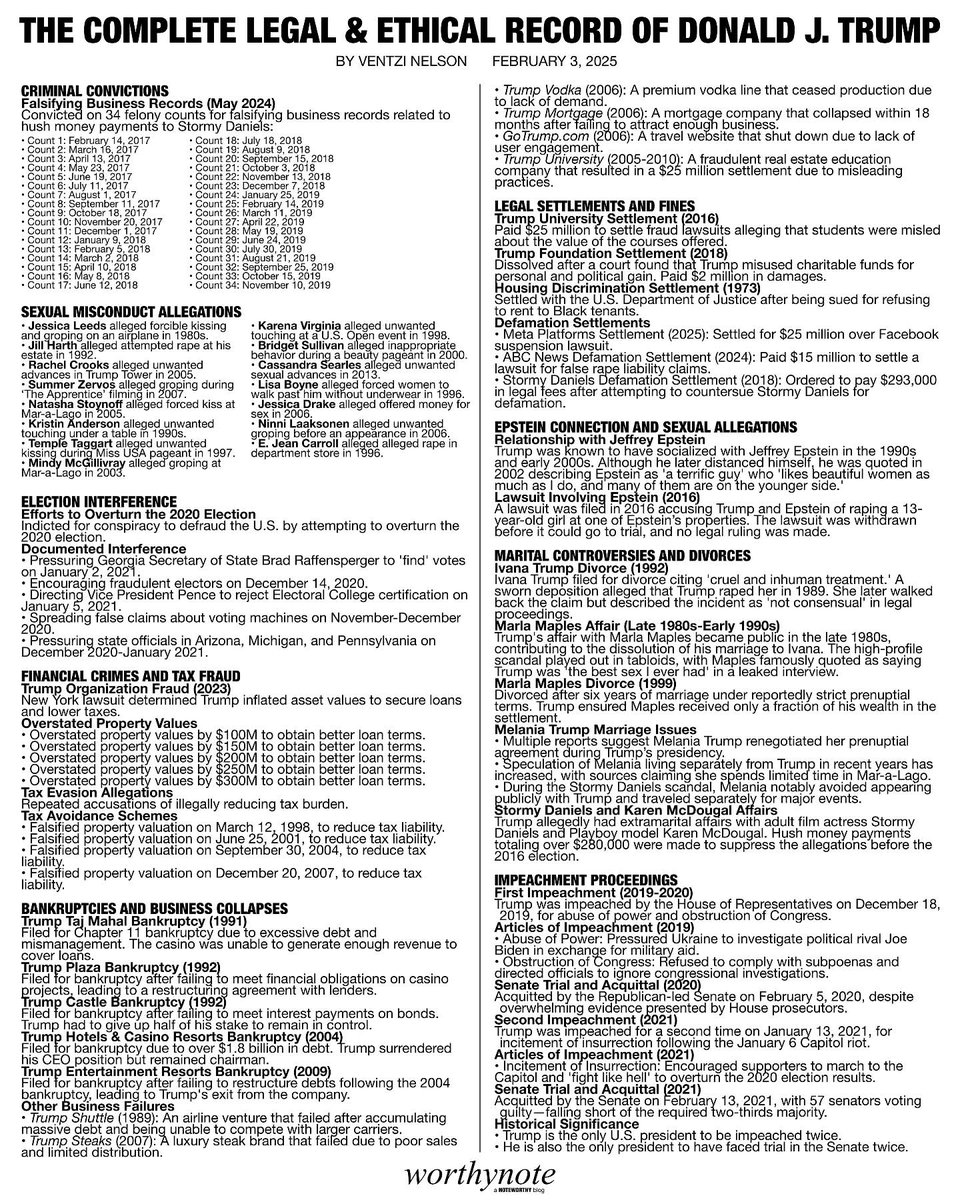
Hey MAGA: If y'all are so concerned about fraud, then why is it every time we turn around, your crooked president is pardoning another rich white person for fraud? Where's your outrage?
Or does it only matter if they're Somalian?

732
9,843
22,788
259,254

Exchange retweeted

4 Dec 2025
Donald Trump, meet Donald Trump.
538
4,799
12,688
369,790

Exchange retweeted

22 Nov 2025
The only “peace plan” that makes sense is the one from Sanna Marin, Finland’s former Prime Minister:
“The way out of the conflict is for Russia to leave Ukraine. That is the way out of the conflict.”
1,480
7,632
43,967
1,245,368
Exchange retweeted

27 Oct 2025
We’re giving $40 billion to Argentina.
This is $5 billion MORE that the entire USAID budget that DOGE cut.
1,921
5,593
22,861
600,961
Exchange retweeted

27 Oct 2025
If you want to understand just how distorted the political lens has become, The Ronald Reagan Presidential Foundation threw their guy under the bus to support a convicted felon and adjudicated rapist, who is about to starve millions of Americans. Got it!
Thanks to Dave Columbo for the clip
🎥 TikTok - vm.tiktok.com/ZNdcxow5v/
35
739
1,855
67,493
Exchange retweeted

19 Oct 2025

37
103
426
26,964
Exchange retweeted

18 Oct 2025

32
293
1,092
26,122


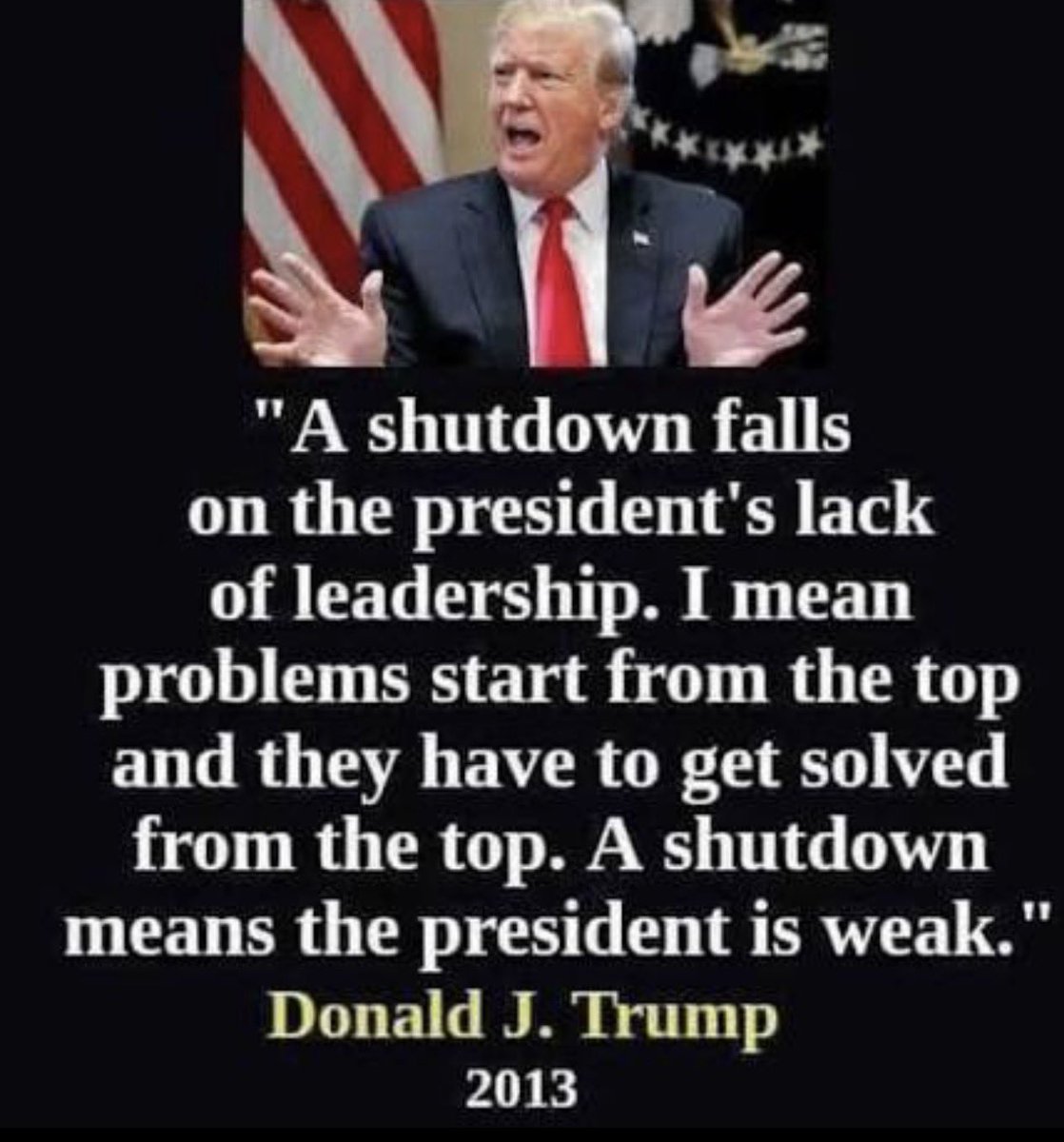

Exchange retweeted

14 Sep 2025
"Let's put her with a rifle standing there with nine barrels shooting at her, okay? Let's see how she feels about it, you know, when the guns are trained on her face."
— @realDonaldTrump, October 31, 2024

2,020
7,848
20,847
1,140,502


Exchange retweeted

13 Sep 2025
Mathew Dowd lost his gig at MSNBC for pointing out that Charlie Kirk had engaged in hate speech.
Meanwhile, Brian Kilmeade, openly suggests that we should euthanize the homeless and there’s zero outrage or repercussions.
800
3,937
15,449
800,098