Joined February 2026
- Tweets 220
- Following 179
- Followers 69
- Likes 85
22 Photos and videos

Mar 6
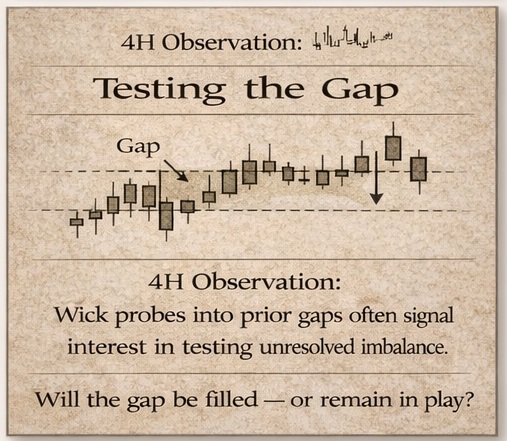
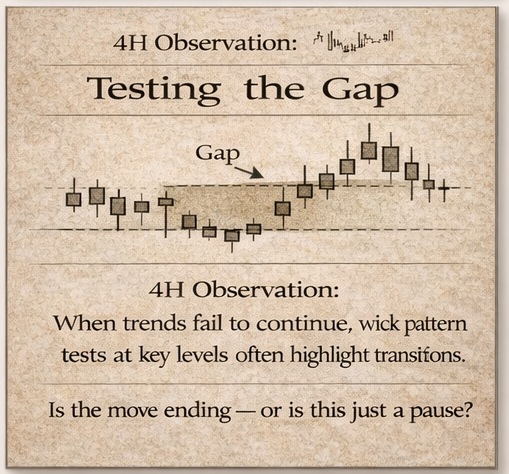
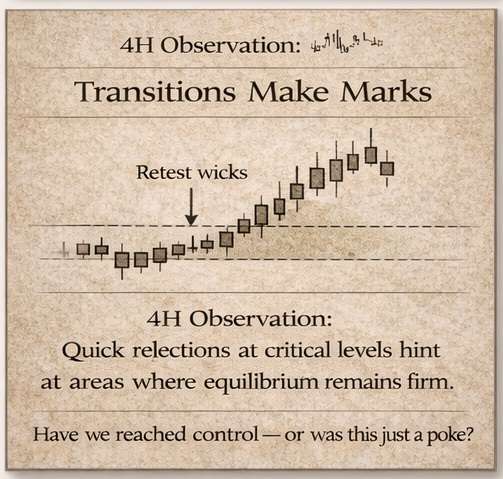
4H Observation:
The center of a range often produces the most emotional decisions.
Clarity usually resides near the edges, not the middle.
Question:
Are we trading structure — or boredom?
1
2
34
Mar 5
4H Observation:
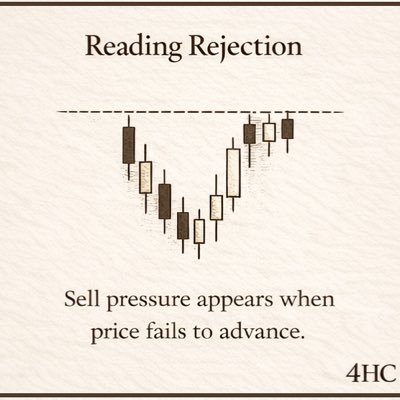
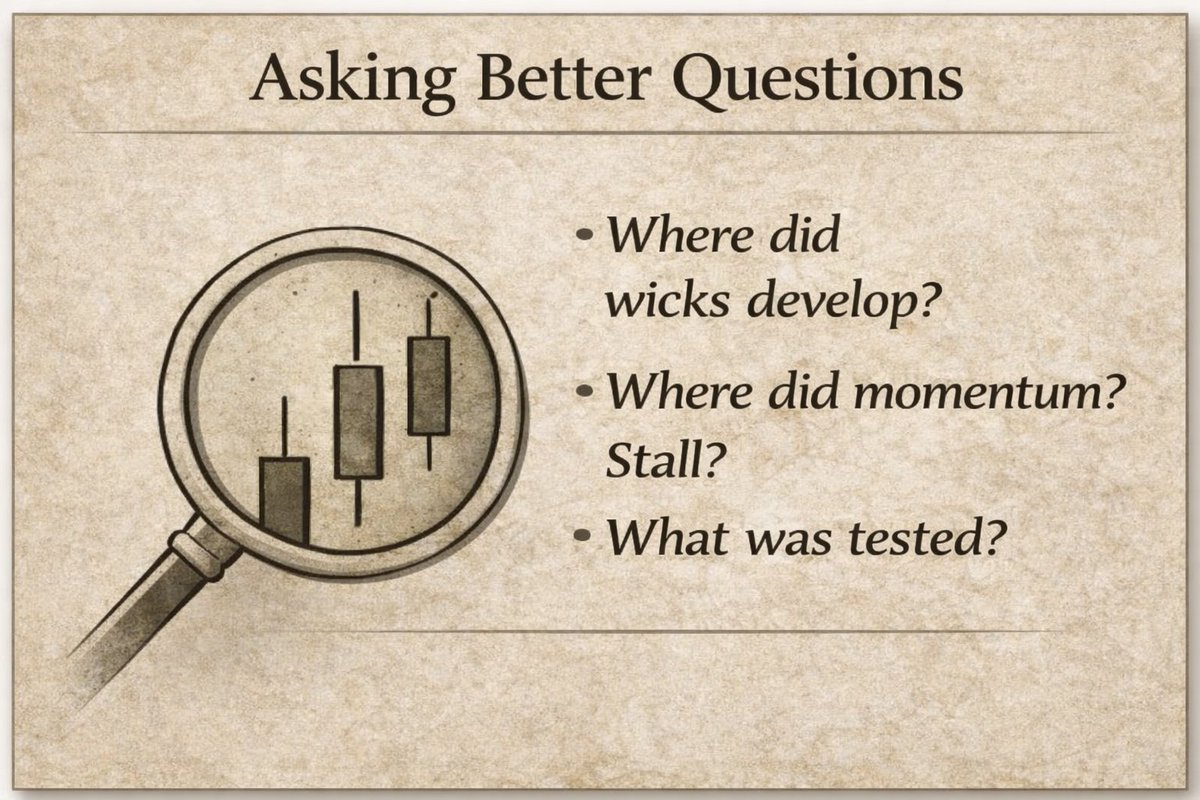
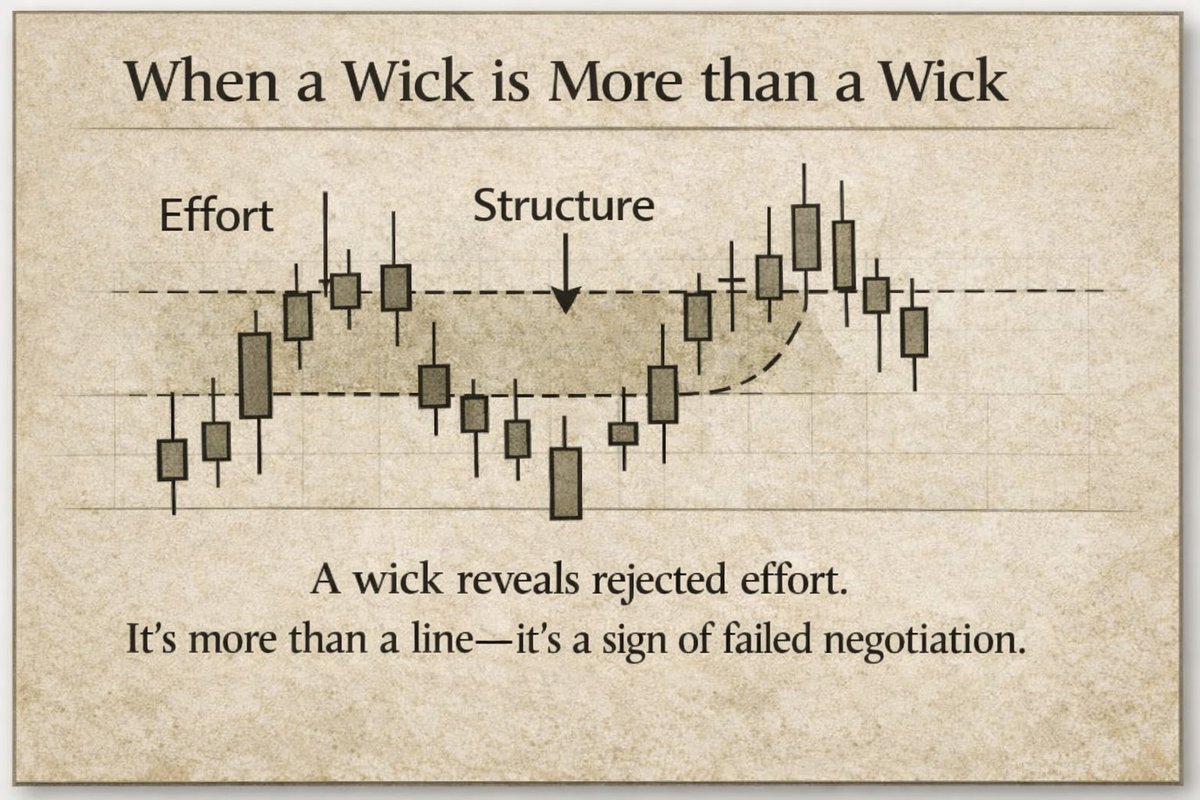
A wick signals rejection, but not necessarily reversal.
Context determines whether rejection is structural or temporary.
Question:
Was this rejection meaningful — or merely reactive?
1
38
Mar 4
4H Observation:
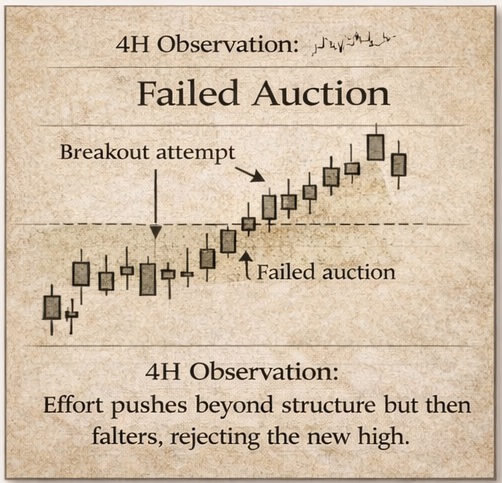
When price revisits prior highs without expanding cleanly, hesitation is visible in the wicks.
Equal highs do not guarantee equal strength.
Question:
Is effort increasing — or stalling?
3
34
Mar 3
4H Observation:
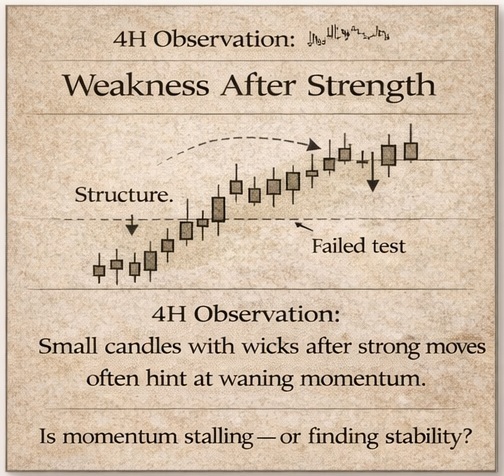
Strong directional candles often pause near prior decision points.
Momentum does not equal acceptance.
Question:
Is this continuation — or a market catching its breath?
2
38
Mar 2
4H Observation:
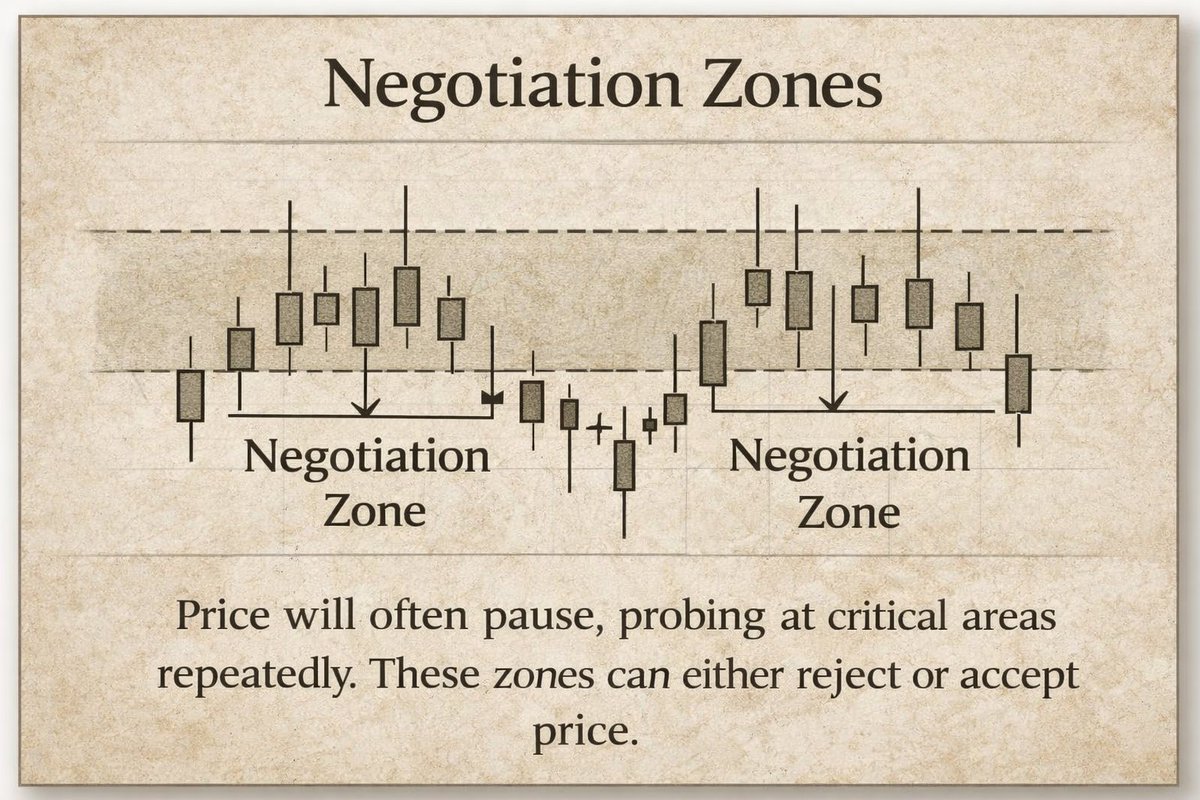
Price rarely breaks structure without first testing it repeatedly.
Multiple probes reveal where conviction is thinning.
Question:
Is this level being defended — or gradually weakened?
2
52
Mar 2
4H Observation:
Repeated wicks in the same area reveal persistent disagreement.
Markets often revisit these zones until acceptance is found.
Question:
What keeps price returning here?
1
43
Feb 28
4H Observation:
When momentum stalls quickly after a move, the market may be questioning its own direction.
Failed continuation often precedes transition.
Question:
What changed — participation or conviction?
1
28
Feb 27
4H Observation:
Narrow ranges often represent negotiation between opposing forces.
Compression is less about inactivity and more about balance.
Question:
Is the market preparing to expand — or quietly losing momentum?
21
Feb 25
4H Observation:
Early wicks reveal effort that failed to gain acceptance.
The first rejection rarely defines direction but often hints at emerging tension.
Question:
Is this the beginning of resistance — or simply noise?
16
Feb 23
4H Observation:
Major shifts rarely begin with dramatic moves.
Often they start with subtle loss of momentum and changing wick behavior.
Question:
Has direction changed — or only the pace?
36
Feb 20
4H Observation:
Some areas show smooth acceptance, others repeated hesitation.
Understanding the difference changes how we interpret movement.
Question:
Where does price feel comfortable — and where does it resist?
13
Feb 19
4H Observation:
Momentum without continuation often signals unfinished business.
Markets test conviction before committing to direction.
Question:
Did price truly change — or only attempt to?
17
Feb 18
4H Observation:
Single wicks can be random. Repeated rejection in the same area rarely is.
Clusters reveal where agreement fails repeatedly.
Question:
What keeps drawing price back to this level?
14
Feb 17
4H Observation:
Markets rarely move directly.
Rejection often leads to negotiation before resolution.
Question:
Are we helping the trade — or forcing it?
17
Feb 16
4H Observation:
Not every movement carries meaning. Some candles test structure while others simply create noise.
The challenge is learning which is which.
Question:
Is price moving with intention — or just reacting?
18
Feb 15
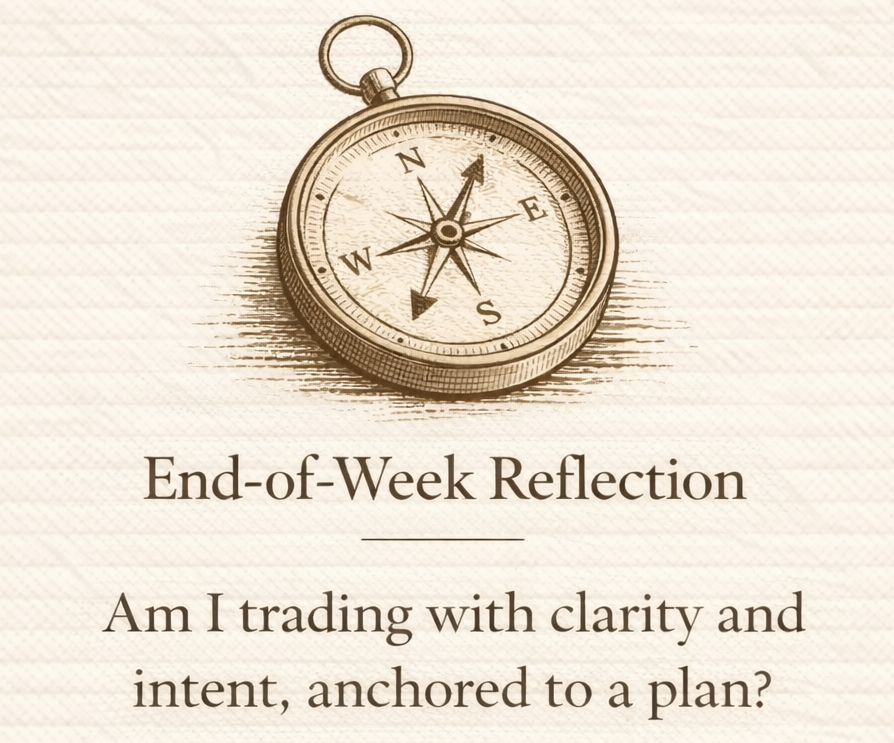
4H Observation:
Markets move through stages before clarity appears.
Patience reveals structure.
1
2
52
Feb 14
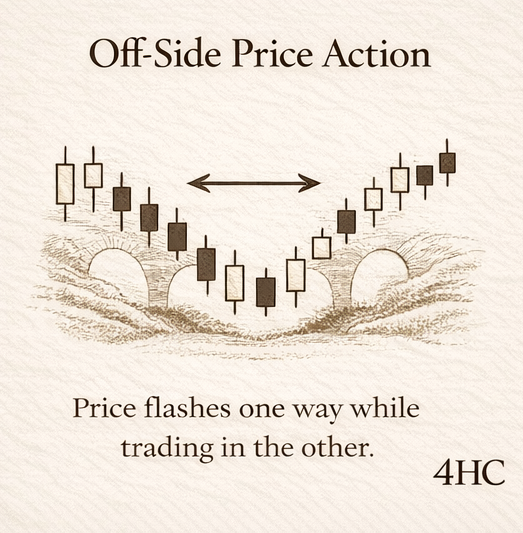
4H Observation:
Two-sided wicks signal disagreement.
Markets pause before choosing direction.
Question:
Is this opportunity — or warning?
1
52
Feb 13
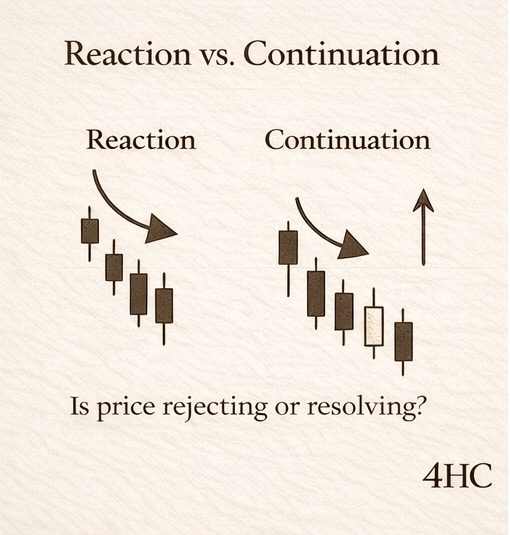
4H Observation:
One rejection does not define direction.
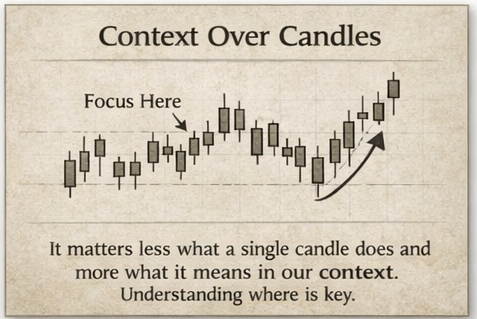
Context determines meaning.
Question:
What has actually changed?
2
73
Feb 12
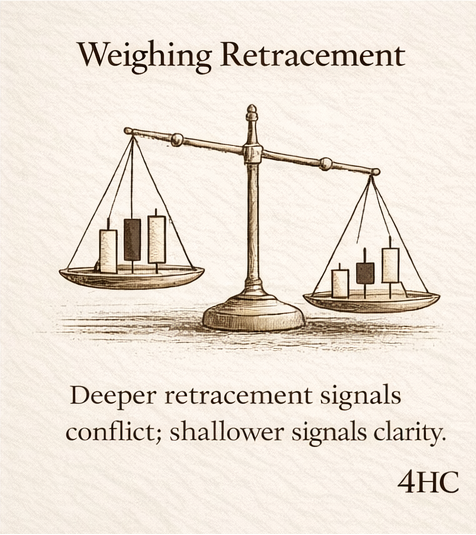
4H Observation:
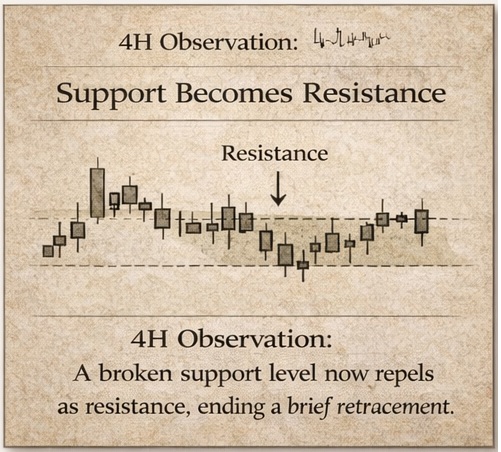
Retracement depth tells a story about conviction.
Strong trends often defend structure.
Question:
Is this correction — or change?
3
47
Feb 11
4Hour Observation:
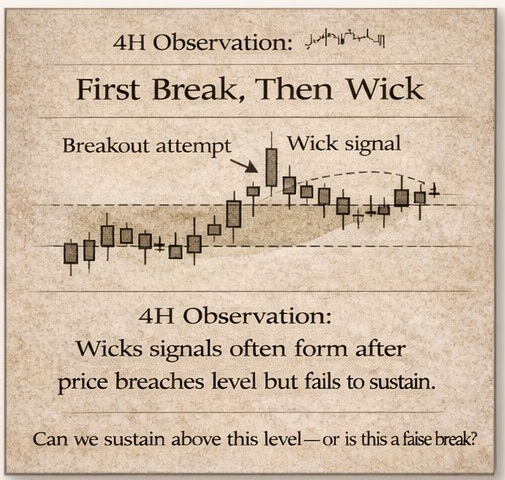
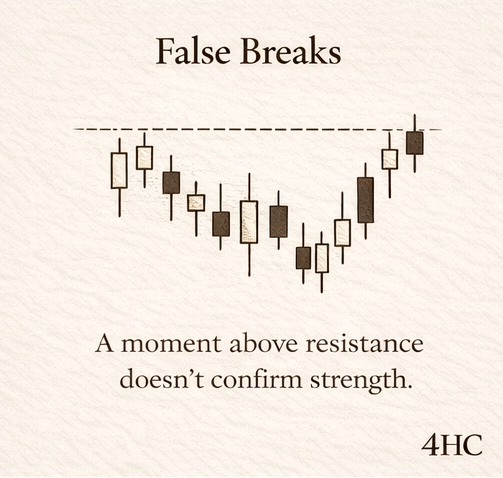
Not every breakout becomes agreement.
Movement without acceptance often retraces.
Question:
Did price move — or was it accepted?
2
32