
Pre/Seed ex-founder led VC, backing moonshot ambitious 🚀 deeptech & transformative startups changing the way our world works for the better. 🇬🇧🇺🇸🇪🇺
Joined June 2015
- Tweets 1,569
- Following 609
- Followers 6,488
- Likes 1,194
164 Photos and videos







7percent Ventures retweeted

May 27
If the Founder of Hugging Face asks, you gotta do it. Models and dataset now live: huggingface.co/papers/2605.2…
Also built an explorer:
huggingface.co/spaces/Kaikak…
May 27

Nice! Could you add the model and dataset to HF?
14
27
349
249,683

7percent Ventures retweeted
May 26
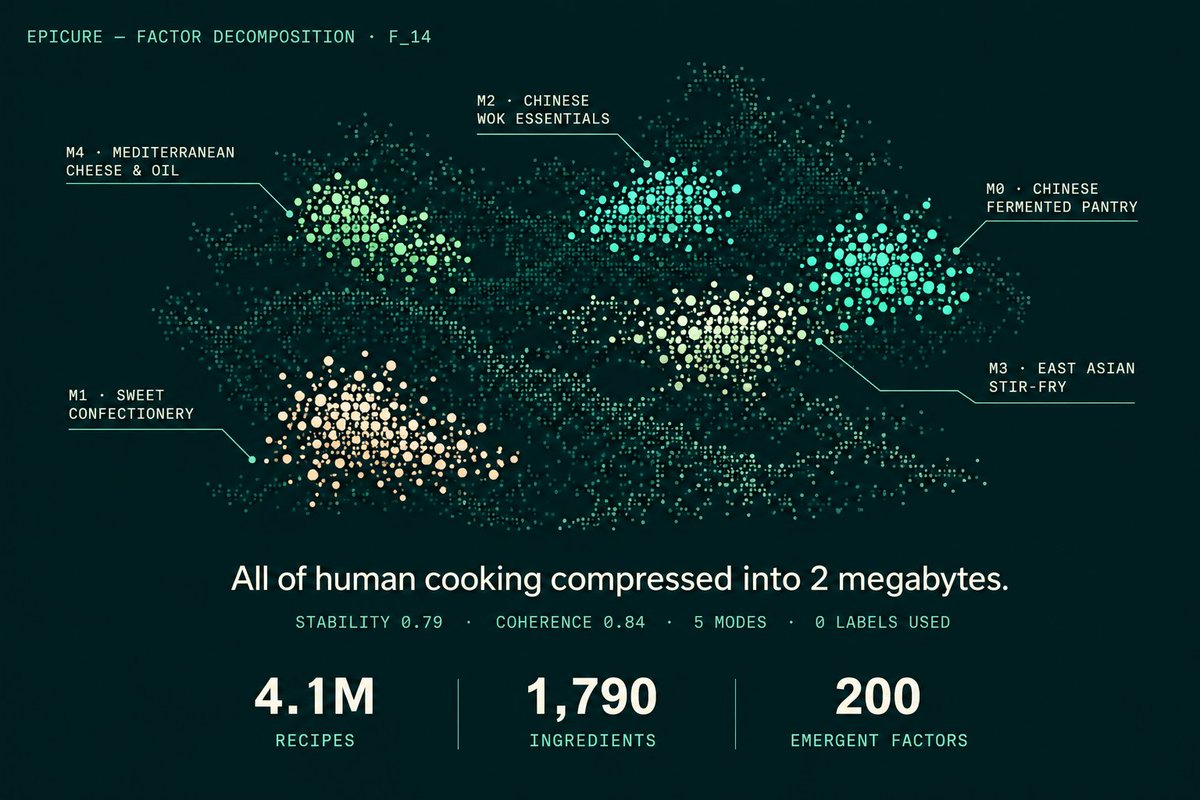
Launching our new paper on arXiv: we trained the largest multilingual food model ever built.
4.1M recipes. 7 languages. 1,790 ingredients. 300 dimensions.
All of human cooking compressed into 2 megabytes.
339
971
9,362
5,147,949

Ukraine’s drone pilots hitting targets 500km away shows how frontier tech reshapes defence.
The UK must accelerate sovereign capability in dual-use tech to avoid dependency.
Bottleneck: industrial base and export controls need urgent alignment.
ft.com/content/9287516e-8ec1…
73
7percent Ventures retweeted

Apr 18
11% of US trade has turned fraudulent since Liberation day created massive incentive to cheat on your tariffs.
Chinese exporters declare the value of their US exports to the Chinese government $112B higher than the value of the same goods as declared to the US government.
11
48
490
149,060
Commodities brokerage is being rewritten by software.
@VosborExchange just executed the first AI-brokered physical ag trade:
1,000 MT of rapeseed oil. Zero brokerage fees.
No humans in the loop. No legacy fee stack.
vosbor.com/
52
7percent Ventures retweeted
Apr 12
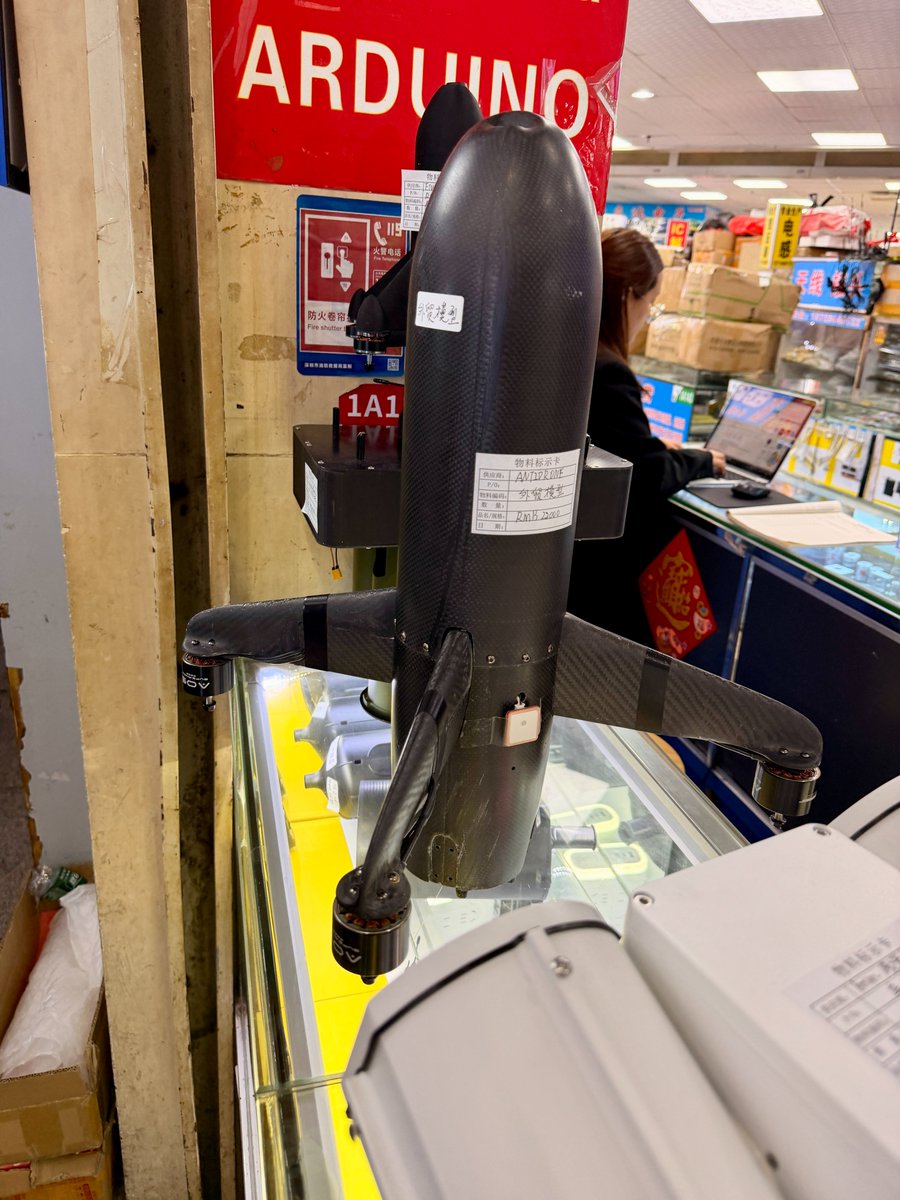
Huaqiangbei is the only place on earth where “just grabbing an arduino” can plausibly end in:
> prototype missiles
> inference ASICs
> carbon fibre FPV airframes
> ½ price RTX 5090
> 22 DOF robot hand
> a weirdly good espresso machine board
16
31
616
27,472
Gensyn CEO @benfielding speaking with @ambient_xyz and @PrismaXai on Distillation, Anthropic, OpenAI, the USA and China.
Also on Spotify open.spotify.com/episode/6yD…
and Apple Podcasts podcasts.apple.com/in/podcas…
Apr 10

👀Big one: Discussing A.I model distillation & the U.S vs China rivalry today is our CEO @IridiumEagle along with @benfielding from @gensynai and @castorhat from @PrismaXai. What a treat in the studio!
12
9
107
13,573
UK’s £80m boost for life sciences signals a needed pivot from imports to local manufacturing. Vital medicines and jobs hinge on scaling domestic supply chains, not just lab innovation. Industrial strategy must prioritise resilience over convenience.
gov.uk/government/news/vital…
33
7percent Ventures retweeted

Apr 7
Good advice for any GPs raising out there.

Most emerging managers run fundraising like a transaction.
Send deck → send data room → hope it closes.
That’s not how LPs actually decide.
1
1
302
7percent Ventures retweeted

Our CEO @b_belvisi spoke at the Amazon MARS Conference, hosted by Jeff Bezos.
She presented Interstellar Lab’s work to leading experts in AI, robotics, and space.
Watch here: youtu.be/2Ps-uUhE694


2
2
15
418
7percent Ventures retweeted
Apr 7
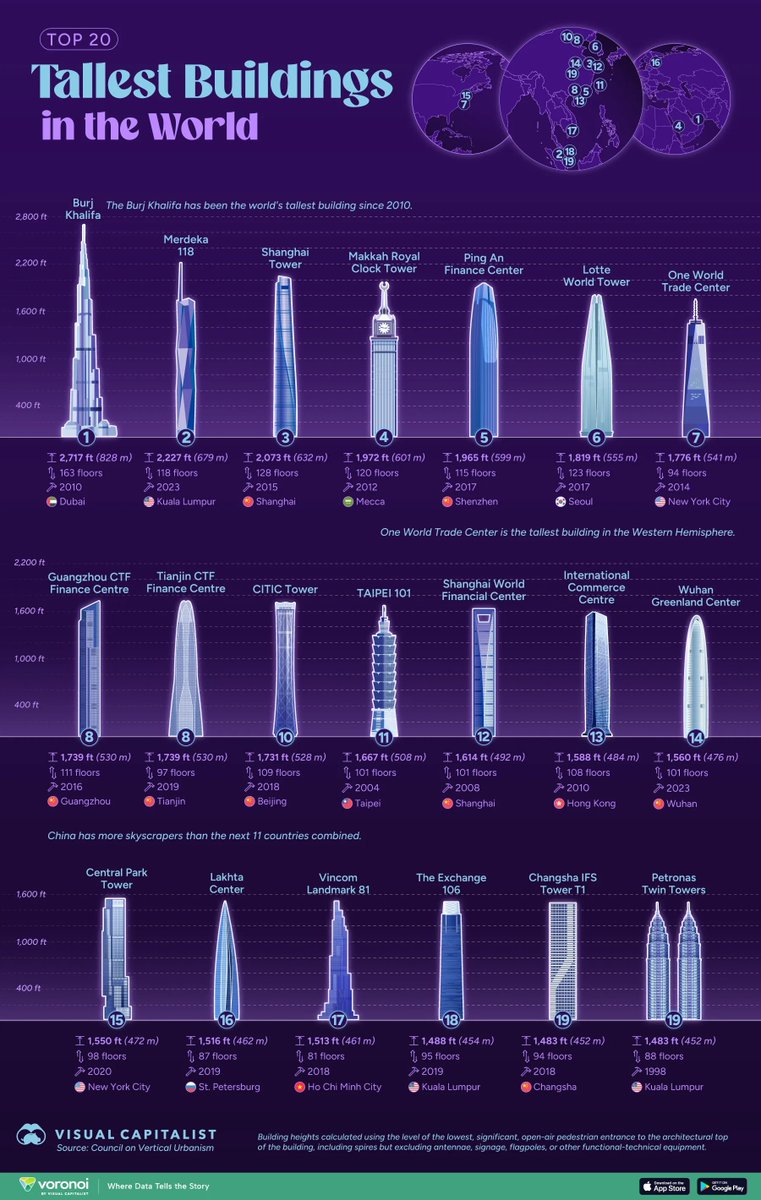
Some of these look like unusual screwdrivers. And I guess Europe doesn't have head for heights.
1
3
246
7percent Ventures retweeted
Apr 7
Tip of the iceberg.
We’ll be seeing a lot more of this across industries as we come to terms with just how unreliable current LLM AI models can be for many tasks; how fallible they sometimes are without guardrails.
Apr 6

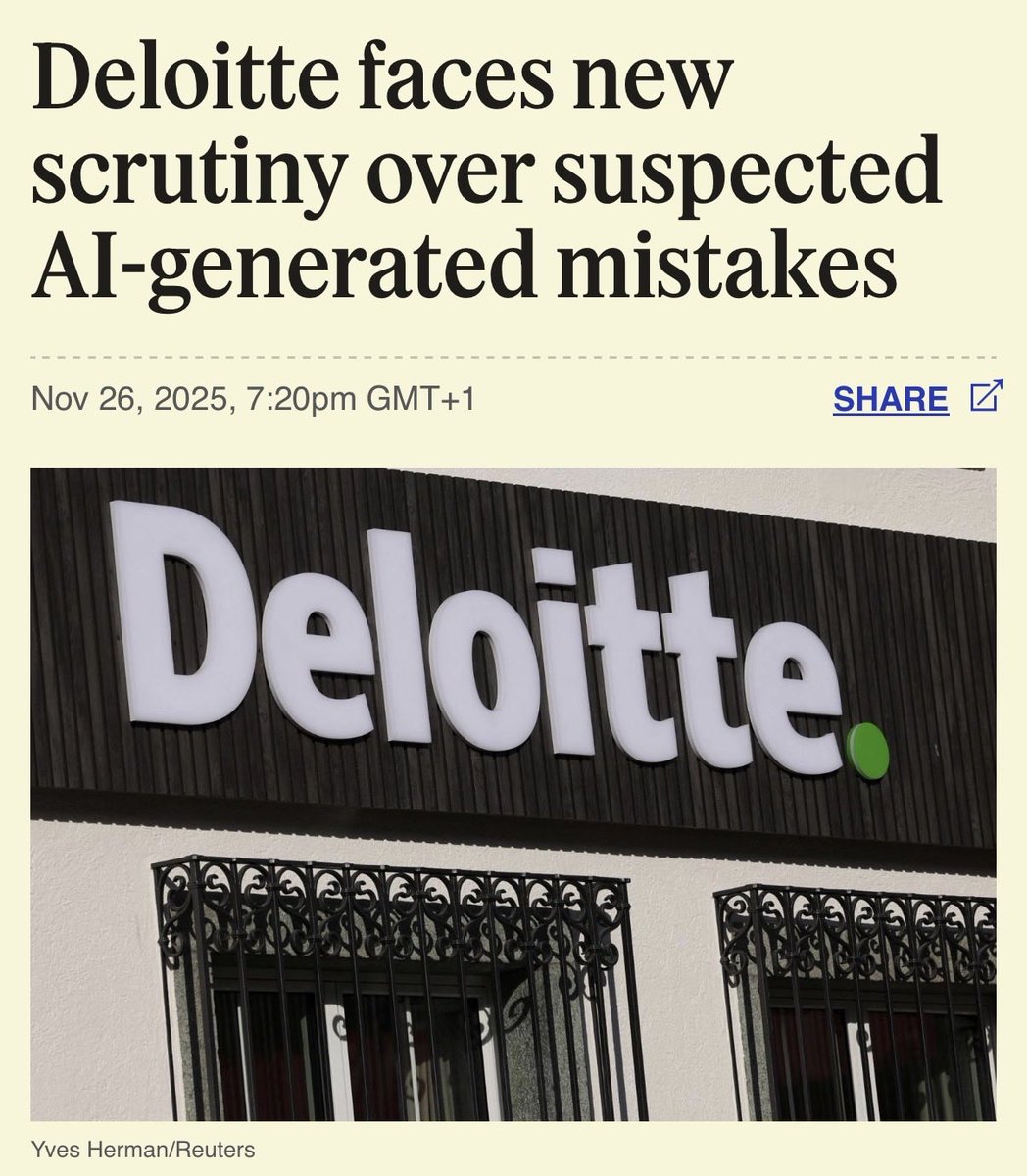
🚨 Holy shit… Deloitte was charged $1.6 million for a healthcare report filled with AI-hallucinated citations.
This is the second time in two months they’ve been caught.
First an Australian government agency. Now a Canadian province’s Department of Health.
And their response? They “stand by the conclusions.”
Let me translate that for you: “The AI made up the sources, but trust us, the advice is still good.”
That’s a $1.6 million report. For a healthcare system. With fake citations that nobody at Deloitte bothered to verify before submitting.
Not an intern’s draft.
The final deliverable.
The Australian incident was supposed to be a wake-up call.
Deloitte even partially refunded that government for the errors.
You’d think after publicly embarrassing themselves once, someone would have implemented a basic fact-checking step before hitting send on the next million-dollar engagement.
They didn’t.
And here’s what makes this story bigger than Deloitte.
Every major consulting firm is racing to integrate AI into their workflows. McKinsey, BCG, Bain, Accenture.
They’re all doing it. Because AI lets them produce reports faster with fewer junior analysts, which means higher margins on the same $500/hour billing rates.
But the entire consulting business model is built on one thing: trust. You’re paying for credibility.
You’re paying so that when you hand the report to your board or your minister, nobody questions the sources. The moment that trust breaks, the math changes completely.
Why pay $1.6 million for AI-generated analysis with fake citations when you could run the same prompts yourself for $20/month and at least know to check the sources?
That’s the real disruption nobody’s talking about. AI isn’t going to replace consulting firms by being smarter than them.
It’s going to replace them by revealing that a huge percentage of consulting work was always just expensive research and formatting.
And now the clients have access to the same tools.
Deloitte’s problem isn’t that they used AI. It’s that they used AI the way most people use AI: paste in a request, take the output at face value, ship it.
No verification layer.
No human review of citations.
No system.
The firms that survive this era won’t be the ones who use AI the fastest. They’ll be the ones who build actual verification systems around AI output. The ones who treat AI as a first draft, not a final product.
$1.6 million. Fake citations. Twice in two months. And they stand by the conclusions.
The consulting industry’s biggest threat isn’t AI.
It’s clients realizing they don’t need to pay someone else to hallucinate.
1
1
266
Ukraine’s drones cutting into Russia’s oil profits illustrates how dual-use tech reshapes conflict economics. For the UK, investing in frontier embodied AI and autonomous systems is vital to maintain sovereign defence edge.
ft.com/content/d49e288f-b74e…
1
1
169
AI has landed in auditing. Regulators face a bottleneck: how to ensure AI transparency and trustworthiness in a sector critical for market integrity. UK must lead on clear standards or risk lagging behind global peers.
ft.com/content/14062aaa-251d…
24
7percent Ventures retweeted

Mar 30
Yep 👇
Jan 21

I don't know anyone real who actually uses AI slop apps like Sora by OpenAI or Vibes by Meta.
Explosion of interest on launch, but massive post-hype drop-off for both.
1
1
147
Gensyn at EthCC: Cannes:
Decentralized AI: Friends or Foes (Mon)
Panel with @diogortega, Eth Foundation, Hype and Kash-bot
REE Workshop (Wed)
A hands-on workshop with our engineers
(ai)RL: EthCC (Wed)
A casual, beachside evening with Gensyn team members
Find the links below.

12
10
127
5,774
China is winning the AI talent race. The UK must rethink its skills pipeline and immigration policy to compete - talent scarcity is a structural bottleneck. Boosting STEM education skilled migration are critical if the UK wants to lead AI innovation.
economist.com/interactive/sc…
29
7percent Ventures retweeted
Mar 25
Too many founders don’t understand busy ≠ productive
10
2
45
3,289