
Joined August 2018
- Tweets 33,255
- Following 1,261
- Followers 1,346
- Likes 13,319
2,512 Photos and videos










Pinned Tweet

May 16
Reach out for such woodworks n carpentry 254 797 665974




1
2
196
Juan Tam 🇲🇽 retweeted

23h
Happy birthday, Egyptian King 👑

ALT A birthday graphic for Mohamed Salah
1,195
11,723
122,064
1,041,919
Juan Tam 🇲🇽 retweeted

Perfect definition of being cooked
The Diageo Loses case is really interesting

DPP seeks dismissal of Diageo petition, says claims are premature and speculative
tv47.digital/dpp-seeks-dismi…
2
1
30
Juan Tam 🇲🇽 retweeted

15h
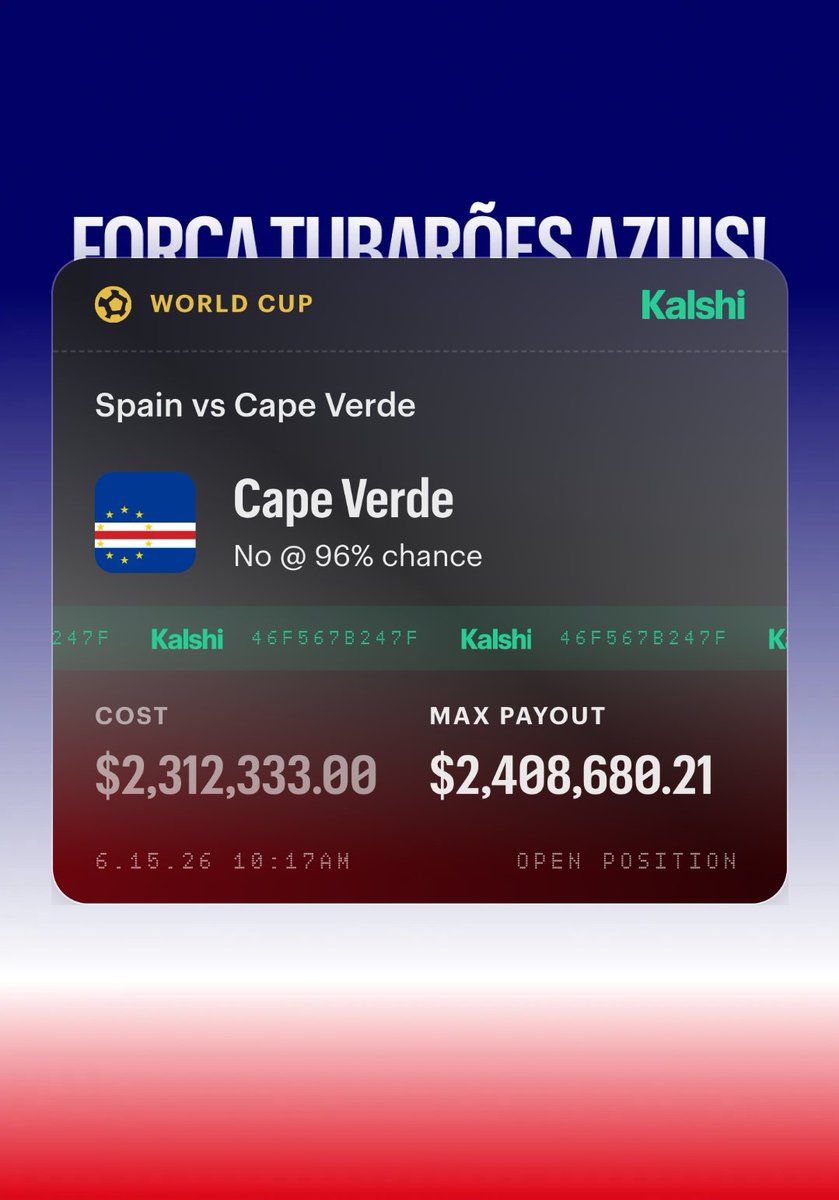
This kind of trades will never make sense to me. What if by mistake Cape Verde holds Spain to a draw?

NEW: One Kalshi trader has $2,312,333 on Cape Verde to NOT win over Spain today.
$2,408,680 potential payout on Kalshi.
734
484
18,464
5,298,132
They'll be available in Kenya latest tomorrow evening

Adidas are set to re-release a remake of Arsenal’s iconic 1990-92 home shirt.
The collection, expected to launch in early 2027, will also feature a ‘blackout’ version of the legendary design.
🤝 @Footy_Headlines



5
Juan Tam 🇲🇽 retweeted
The High Court of Kenya is urged to strike out Diageo PLC's petition with costs, marking a significant pushback against multinational legal maneuvers in the country. #Diageo

DPP Opposes Diageo Bid to Block Possible Criminal Probe Over Commercial Dispute
courthelicopter.co.ke/dpp-op…
4
3
28
Juan Tam 🇲🇽 retweeted
Legal setback for Diageo PLC. The ODPP has filed a formal objection at the Milimani Law Courts asking the High Court to dismiss the multinational company's application. #Diageo

DPP Pushes Back Against Diageo Bid to Block Potential Criminal Prosecution
A new twist has emerged in the long-running dispute involving Diageo PLC, East African Breweries PLC (EABL), Kenya Breweries Limited (KBL) and construction firm JILK, after the Director of Public Prosecutions (DPP) opposed attempts by the multinational drinks giant to shield itself from possible criminal proceedings.
In documents filed before the High Court in Nairobi, the DPP urged the court to dismiss a petition by Diageo seeking to permanently bar his office from instituting criminal proceedings linked to allegations arising from the construction of KBL’s brewery project in Kisumu.
At the heart of the dispute is a contract signed between JILK and KBL in 2016/17 for the construction of the Kisumu brewing facility. The relationship later deteriorated, triggering a series of civil and commercial disputes that have since expanded into allegations of criminal conduct.
JILK is seeking permission to privately prosecute Diageo, EABL, KBL, EABL Group Managing Director Jane Karuku and Corporate Affairs Director Eric Kiniti over allegations including conspiracy to defeat justice, fabrication of evidence and sexual harassment claims linked to the execution of the project.
The company also wants Irish nationals Brendan Daly and Nicholas Quarke, who were involved in overseeing the Kisumu project on behalf of Diageo, prosecuted over allegations of sexual harassment involving two former JILK employees.
In May 2026, Diageo moved to court seeking orders preventing JILK, the Directorate of Criminal Investigations (DCI), the DPP and the Attorney General from initiating or pursuing criminal proceedings against the company and its officials.
The multinational argues that the intended prosecutions are malicious, unconstitutional and designed to exert pressure in an ongoing commercial dispute already before the courts.
However, the DPP has strongly opposed the application, describing it as an attempt to interfere with his independent constitutional mandate.
According to the prosecution authority, Diageo is asking the court to stop criminal proceedings that have not yet been approved, sanctioned or commenced, making the application premature and speculative.
“The petition is speculative, hypothetical and non-justiciable to the extent that it seeks anticipatory relief against criminal proceedings that are yet to be commenced, approved or sanctioned by the DPP,” the prosecution office stated.
The DPP further argued that the orders sought would violate the doctrine of separation of powers by effectively preventing his office from exercising future constitutional functions.
He also rejected the argument that the existence of civil proceedings should automatically bar criminal investigations or prosecutions arising from the same facts.
“The petition seeks to preempt and defeat constitutionally sanctioned investigative and prosecutorial processes contrary to public policy, public interest and the administration of justice,” the DPP stated.
According to the prosecution office, granting the orders sought by Diageo would effectively create permanent immunity from future criminal processes, regardless of the outcome of ongoing investigations.
The case now places the High Court at the centre of a complex legal battle involving corporate governance, prosecutorial independence, private prosecution rights and the intersection between civil and criminal liability.
The court’s eventual decision could have significant implications for how corporations challenge potential criminal investigations and the extent to which courts can intervene in prosecutorial discretion before charges are formally approved.
#Diageo #EABL #KBL #DPP #JaneKaruku #JILK #HighCourt #KenyaLaw #CorporateGovernance #CriminalJustice #DCI #BusinessNews #KenyaBusiness #LegalAffairs #GenoStyle
4
3
59
Juan Tam 🇲🇽 retweeted
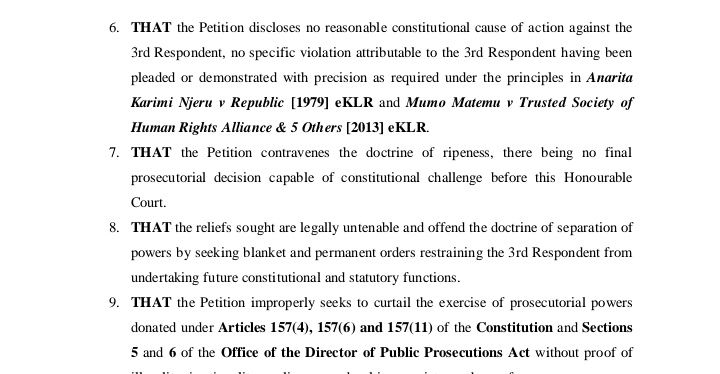
Diageo PLC's bid to restrain state authorities faces immense resistance as the DPP labels their pleadings vague, imprecise, and legally deficient. #Diageo
5
3
42
Juan Tam 🇲🇽 retweeted
Legal analysts weigh in as Diageo PLC faces a tough battle in Nairobi. The DPP insists that ongoing civil disputes do not stop the State from probing criminal conduct. #Diageo
3
2
26
Juan Tam 🇲🇽 retweeted
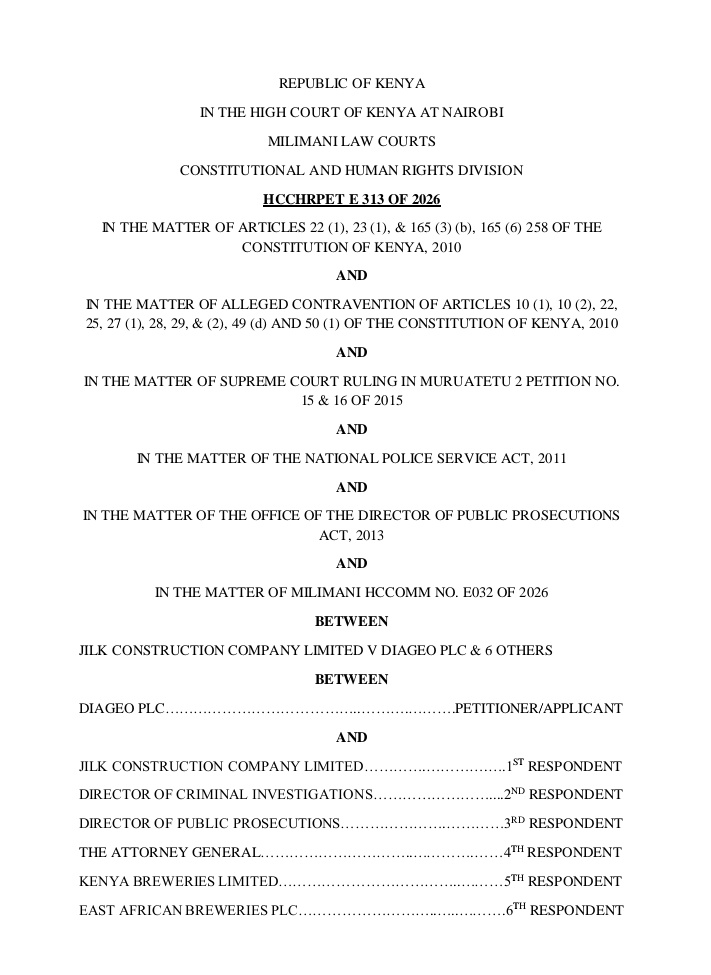
Let's take a closer look at the case filed by Diageo PLC vs the respondents
Diageo Loses
1
5
3
103
Juan Tam 🇲🇽 retweeted

Diageo was trying to bully it's way through the courts. They must be stopped

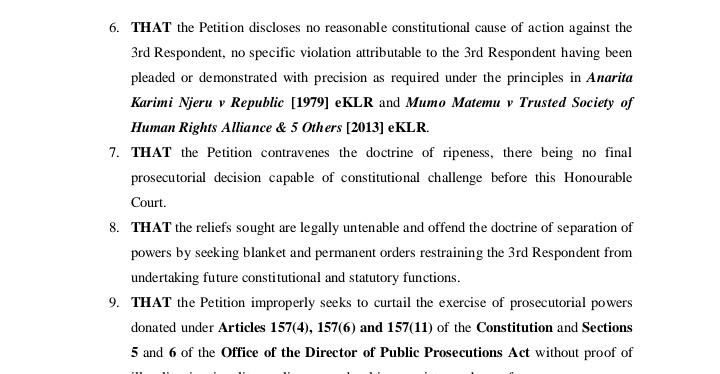
The state insists that Diageo PLC has not shown any exceptional circumstances to justify court interference with independent prosecutorial powers. #Diageo
1
1
13
Juan Tam 🇲🇽 retweeted
The DPP's objection to Diageo is significant because it defends a simple democratic principle: no institution should be prevented from carrying out its lawful mandate based on speculation alone. #Diageo
3
2
28
Juan Tam 🇲🇽 retweeted
The legal battle intensifies at the Milimani Law Courts Constitutional Division as the DPP demands Diageo PLC's application be thrown out completely. #Diageo
DPP Opposes Diageo Bid to Block Possible Criminal Probe Over Commercial Dispute
courthelicopter.co.ke/dpp-op…
3
2
19
Juan Tam 🇲🇽 retweeted
The State files a fierce preliminary objection against Diageo PLC, arguing the global alcohol manufacturer failed to prove any actual violation of its constitutional rights. #Diageo

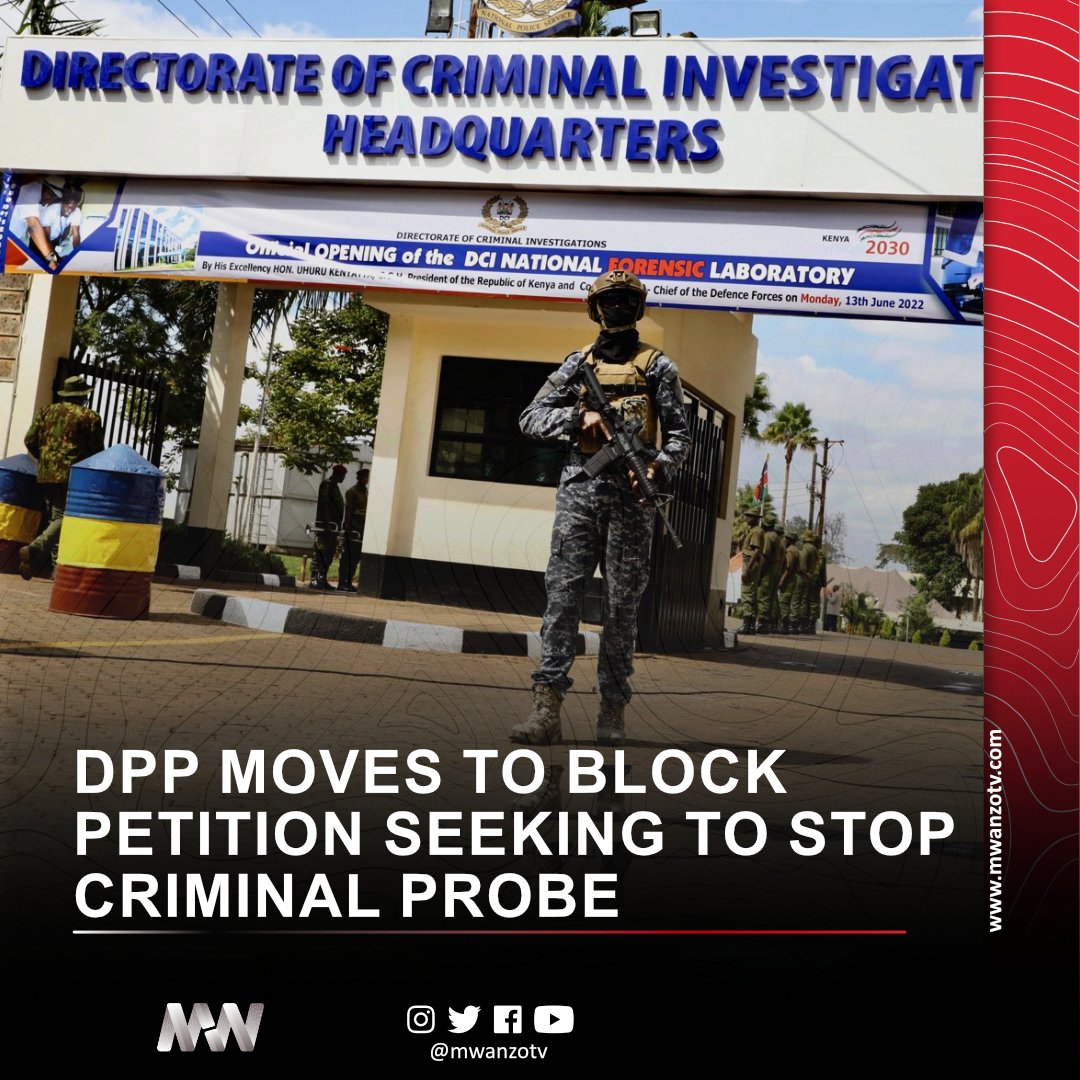
#KENYA: DPP MOVES TO BLOCK PETITION SEEKING TO STOP CRIMINAL PROBE
The Director of Public Prosecutions has moved to block a petition by Diageo PLC, telling the High Court the company is attempting to shield itself from investigations over a dispute with Jilk Construction Company Limited.
In a preliminary objection, the DPP argued the petition is premature, speculative and outside the court’s jurisdiction, stressing that no prosecution has been initiated.
The office insists prosecutorial powers are constitutionally vested in the DPP under Article 157, and any attempt to restrain them undermines prosecutorial independence guaranteed by Article 157(10).
The prosecution accused Diageo of abusing court process by converting a commercial disagreement into a constitutional matter, while ignoring existing mechanisms under the Criminal Procedure Code and National Police Service Act.
According to the objection, Diageo has failed to demonstrate any constitutional violation, making its petition non‑justiciable and speculative.
4
3
57
Juan Tam 🇲🇽 retweeted
The public interest question raised by the Diageo matter is straightforward:
Should constitutional institutions be allowed to complete their lawful mandates before courts are invited to intervene?
Many legal observers believe that question deserves serious consideration.
#Diageo
DPP seeks dismissal of Diageo petition, says claims are premature and speculative
tv47.digital/dpp-seeks-dismi…
2
3
33
Juan Tam 🇲🇽 retweeted
The broader significance is that the outcome of the Diageo case may shape future debates on the relationship between multinational corporations and constitutional institutions.
tv47.digital/dpp-seeks-dismi…
2
2
2
41
Juan Tam 🇲🇽 retweeted
Diageo's court challenge has sparked a much bigger national conversation.
Where should courts draw the line when asked to intervene before prosecutorial decisions are made?
The answer could shape the future of institutional independence in Kenya.
1
1
30
Juan Tam 🇲🇽 retweeted
Diageo knows they're losing the case. It's a matter of rule of law. Let constitutional offices be allowed to run their mandate independently without obstruction.

Diageo claims the planned charges are malicious and aimed at advancing a separate civil dispute. They seek court declaration that such prosecution would be unconstitutional and violate their rights
1
15
Diageo claims the planned charges are malicious and aimed at advancing a separate civil dispute. They seek court declaration that such prosecution would be unconstitutional and violate their rights

Behind the Diageo headlines lies a deeper constitutional debate. The DPP is effectively asking whether Kenya's institutions should be trusted to do their jobs before judicial intervention is sought.
1
1
14