
Ta.. Study Bitcoin! Stack Sats! 🧡 npub14v8jrrw7kwht38vphwvps0dwntc2dn4wplgnv8auhrjkyf85mecsqveatq ⚡️743ynip1@tether.me
Joined June 2011
- Tweets 525
- Following 2,223
- Followers 131
- Likes 1,426
110 Photos and videos

🤯
Jun 12

"You are my exit liquidity"
What a scumbag
6
👀
Jun 11

W systemie bankowym tylko podejrzane transakcje są raportowane. W ramach dyrektywy DAC8, WSZYSTKIE transakcje krypto w UE będą przekazywane do władz (nie tylko te podatkowe, bo też krypto-do-krypto).
@FlorenceHumblet #BTCPrague2026

1
7
😆

1
24
💥
Jun 2

BREAKING:
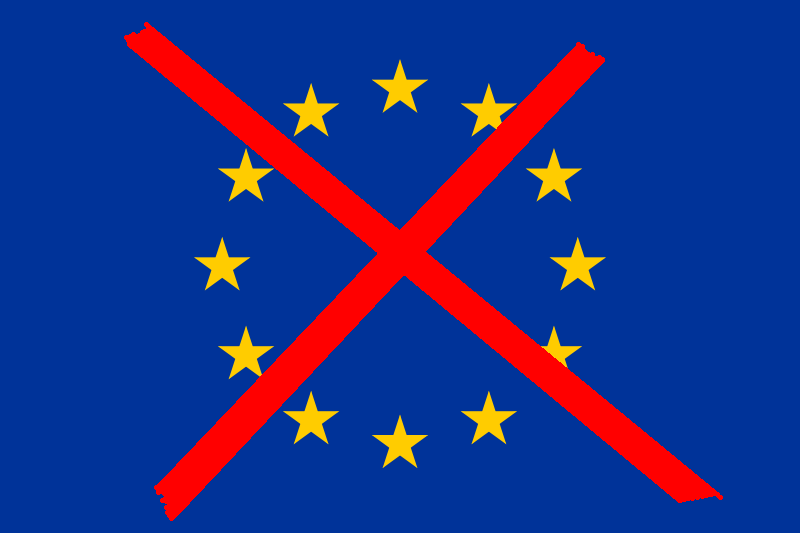
The EU just launched a massive crypto crackdown.
€10,000 cash ban.
€1,000 crypto KYC threshold.
Privacy coins fully banned.
Monero. Zcash. Dash. All removed from EU platforms.
Effective July 1, 2027.
- Meanwhile the U.S. is pushing zero capital gains
- UAE rolling out full crypto banking licenses.
Europe sees crypto as a threat to control.
America and the UAE see it as an opportunity.
Capital always flows to where it's welcomed.
Europe is making the choice for investors.
11
💥🧡
Jun 2

większość uzna to za bełkot.
Pieniądz w banku:
- nie jest Twój
- nie jest w banku
- to nie pieniądz
ale właśnie dlatego warto studiować Bitcoina, to to wszystko zrozumieć.
1
1
16
🔥
Jun 2

So-called age verification for social media is spreading across the world, framed as an effort to create a safer internet for children. In reality, age verification lays the foundation for a fully controlled internet.
The age verification rush must be slowed down, and politicians need to recognize the consequences of different types of legislation and systems.
Age verification is the wrong approach to fix “the social media problem”
The big tech social media companies are bad. Their business model is bad; it is based on mass surveillance and manipulation, and they cooperate with governments in mapping entire populations. But age verification is fundamentally the wrong approach to preventing children from using big tech social media platforms. Introducing age verification is based on coercion; the state forces social media companies to verify their users’ identities. But the big tech social media platforms already know which of their users are children. Their business model depends on knowing this. They know how old users are, and they know exactly what type of person they are. As age verification is based on coercion, politicians could instead force platforms to stop doing the things politicians consider harmful to children, or force them to block children (again, they know who they are) from using their services. But instead, politicians seek to massively invade everyone’s privacy and undermine democratic rights on a global scale. In other words, the latter is the real objective – they do not want to protect children; they want to impose control.
Slippery slope of age verification
It is undeniable that age verification threatens freedom of expression, risks increasing mass surveillance, and is likely to lead to censorship. It will not only shrink the online world and reduce young people’s right to privacy (for example, if VPN services were to be restricted); but also risks becoming a significant step toward a controlled internet for everyone.
Most age verification is identity verification
Most countries are now considering introducing age verification systems, meaning that everyone would have to identify themselves either to the service/website they want to use or to a third party capable of linking them to their activity on that service or website. This is not age verification but identity verification, and the consequence is therefore that freedom of information is restricted (you can no longer visit regulated websites anonymously) and that you can no longer post anonymously on social media. This is a major problem in countries like the UK and Germany where the police conduct raids on people’s homes for posting content on social media that the authorities dislike. Or in the United States, where authorities are trying to pressure tech companies into revealing the identities behind accounts protesting ICE. Social media identity verification removes important tools for activists in countries where criticizing those in power is dangerous.
Restrictions on app store or operating system level
Some countries are looking to impose identity verification at the app store level or even within the operating system itself. This is an exciting experiment, since this is possible to circumvent using open-source operating systems. Some countries are already looking to include open-source systems. Since open-source systems cannot be controlled, politicians would ultimately need to ban devices that are not controlled by the state. The end point: telescreens like those in Orwell’s 1984, devices that both monitor you and broadcast only the information approved by the state.
The Zero-Knowledge Proof (ZKP) alternative and the EU
The EU has presented its own age verification app as “completely anonymous”. The idea is to use Zero-Knowledge Proof (ZKP) cryptography to break the link between the age credential issuer (EU governments) and the regulated services/sites. Currently, the EU app does not have ZKP functionality, contrasting Ursula von der Leyen’s claim that the app ”is technically ready to be used”. But more importantly, the app is currently designed to always function without ZKP technology; if ZKP is unavailable, the app falls back to a non-ZKP model. Even if fully developed ZKP technology could be implemented in the future, it would remain an optional extra feature that countries may choose to disable and that the EU could remove at any time.
Read more on our site.
mullvad.net/blog/age-verific…
18
💥

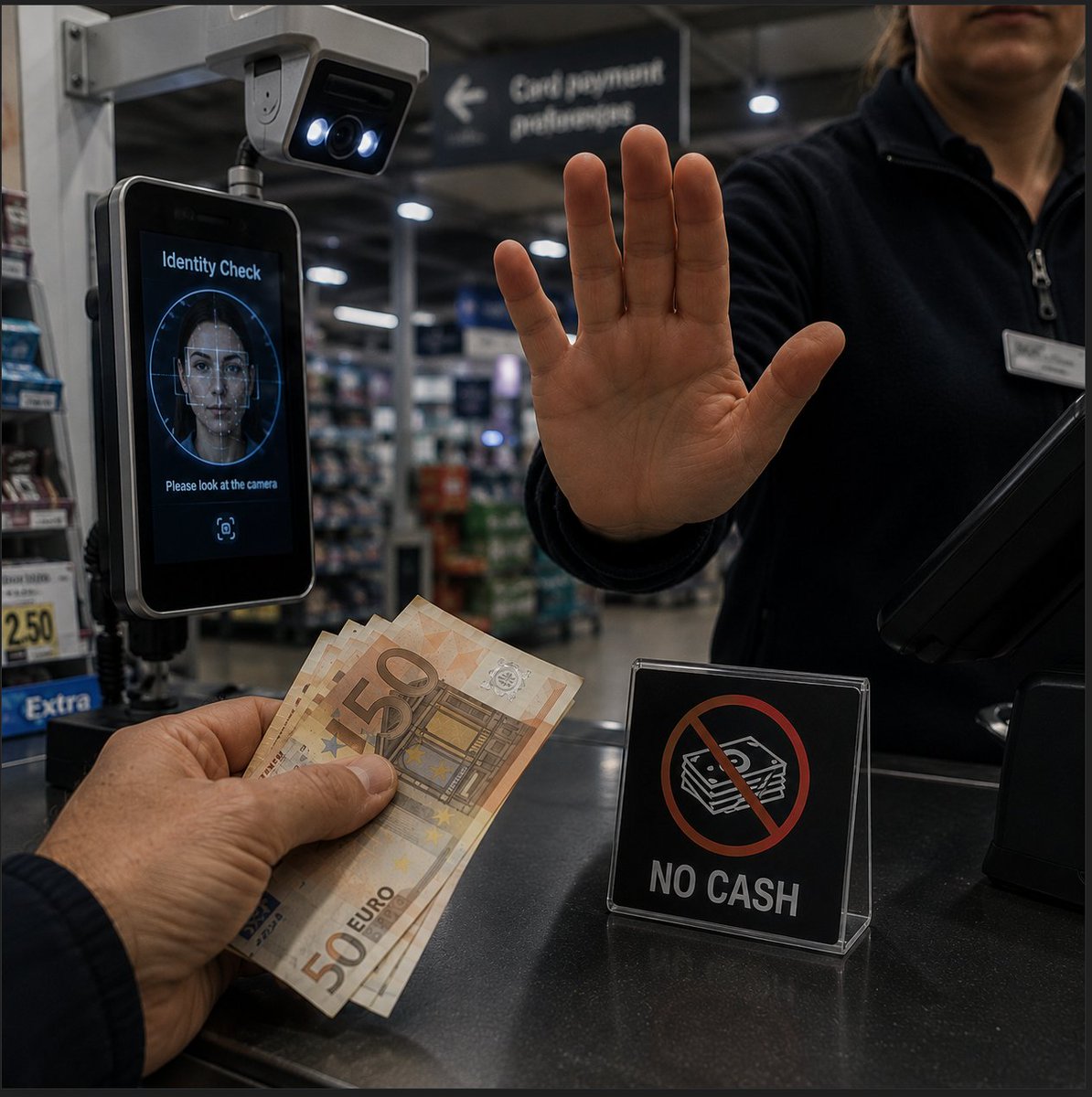
🚨If you live in Europe, paying for anything in cash above €10,000 becomes illegal from 10 July 2027, and anything over €3,000 will mean handing over your ID before the payment goes through.....
This is one EU law covering all 27 countries at once. Your government can set the limit lower than €10,000, but never higher, and several already have
France and Spain cap business cash payments at €1,000. Italy sits at €5,000. Greece at just €500. The rule only lets those numbers fall further over time, never rise
They say this is about catching criminals. But cash is still how most of Europe actually pays day to day. It's 63% of payments in Germany, 54% in Austria, 75% in Greece. Austria and Ireland have no cash limit at all today. From 2027 they will
The same year this limit lands, the European Central Bank begins a year-long test of the digital euro
A digital currency like this could come with limits on how much you hold, and digital money tried elsewhere has been built to expire or restrict how it gets spent
But cash, the one form of money that leaves no record and answers to nobody, may not stay open for much longer
Follow me to stay informed
1
9

💥
May 31

🚨UWAGA Podaję dowód, że #KSeF to system szpiegowski, który każdy laik może łatwo sam przeprowadzić w trzy minuty‼️
#KSeF_GPS65 #Cyberbezpieczeństwo
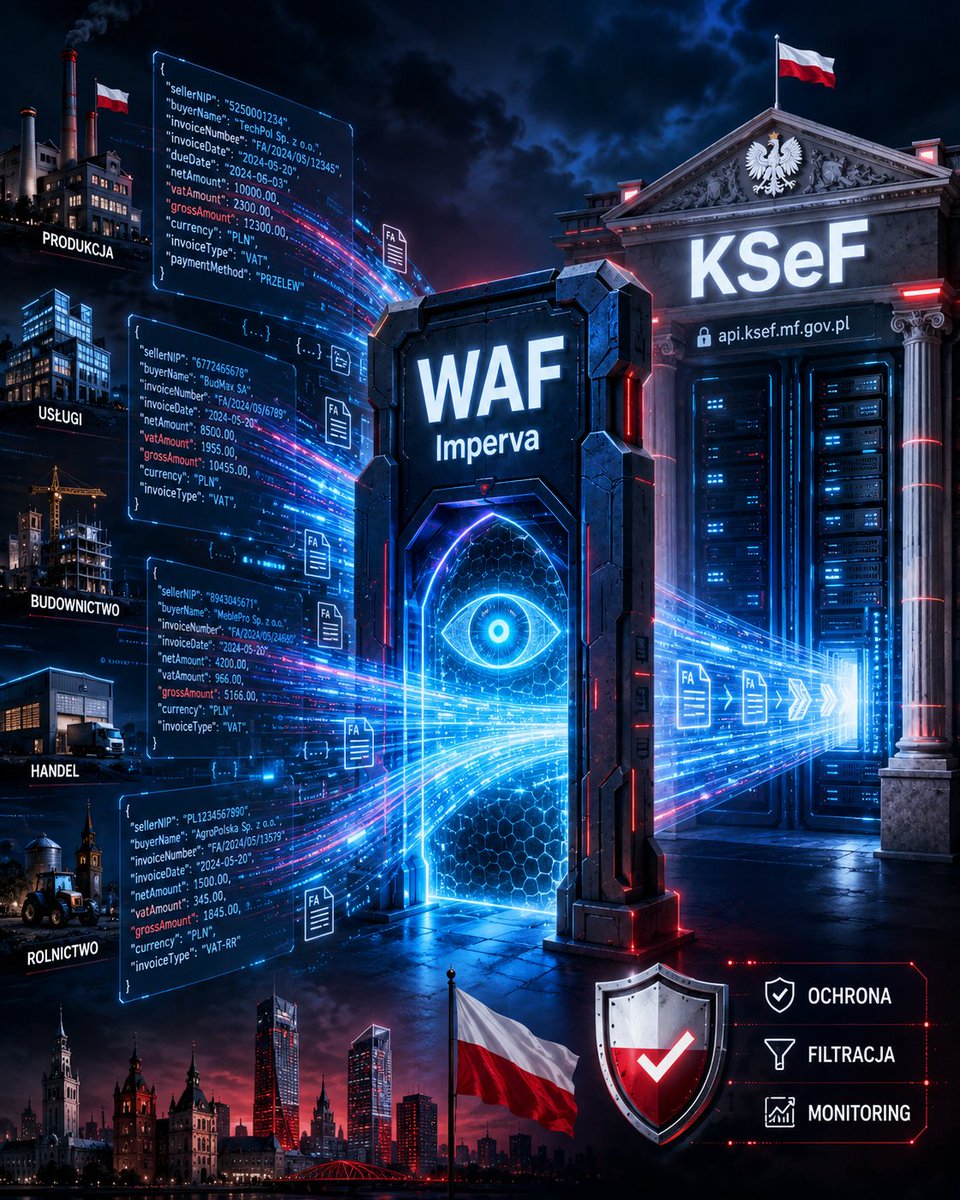
Cały ruch do produkcyjnego API #KSeF przechodzi przez bramkę WAF firmy Imperva, działającą przed właściwym systemem KSeF jako zewnętrzna warstwa ochronna. To można sprawdzić samodzielnie, bez konta w KSeF, bez dostępu do faktur, bez żadnych narzędzi hakerskich. Wystarczy publiczny DNS, publiczny WHOIS i oficjalna dokumentacja API 2.0 Ministerstwa Finansów.
To jest ważne, bo KSeF nie przesyła przez API wyłącznie zaszyfrowanych E2E faktur w XML, których nikt po drodze nie może odczytać. Oficjalna dokumentacja pokazuje, że w API istnieją metadane faktur zwracane jako zwykły JSON zawierające: NIP sprzedawcy, dane nabywcy, nazwy podmiotów, numer faktury, daty, kwoty netto, VAT, brutto, waluta i typ faktury. To są dane gospodarcze najwyższej wrażliwości. Nie trzeba znać treści każdej pozycji faktury, by z takich metadanych zbudować mapę obrotu gospodarczego.
Nie wymagam, byście mi wierzyli na słowo. Poniżej są trzy proste kroki. Każdy może je wykonać sam. To jest zwykła kontrola techniczna: dokąd prowadzi adres API KSeF, kto jest właścicielem domeny pośredniczącej i jakie dane według oficjalnej dokumentacji przechodzą przez to API 👇
ALT KSeF WAF
1
12
🔥
May 29

Stop asking people to share their email addresses for login. They are terrible for privacy and are not efficient.
Logging in with Lightning is a much better experience. If you use an agent, this whole process takes like 30 seconds. It's very easy.
10
🔥🧡
May 29

Getting drained is literally one of the biggest fears in Web3.
Everyone says “get a hardware wallet” but what if you need protection today?
Turns out, your old phone can become an offline signing device with CupCake by @cakewallet
EP1 of " What Didn't You Know about Cake Wallet”
1
17

👀🔥

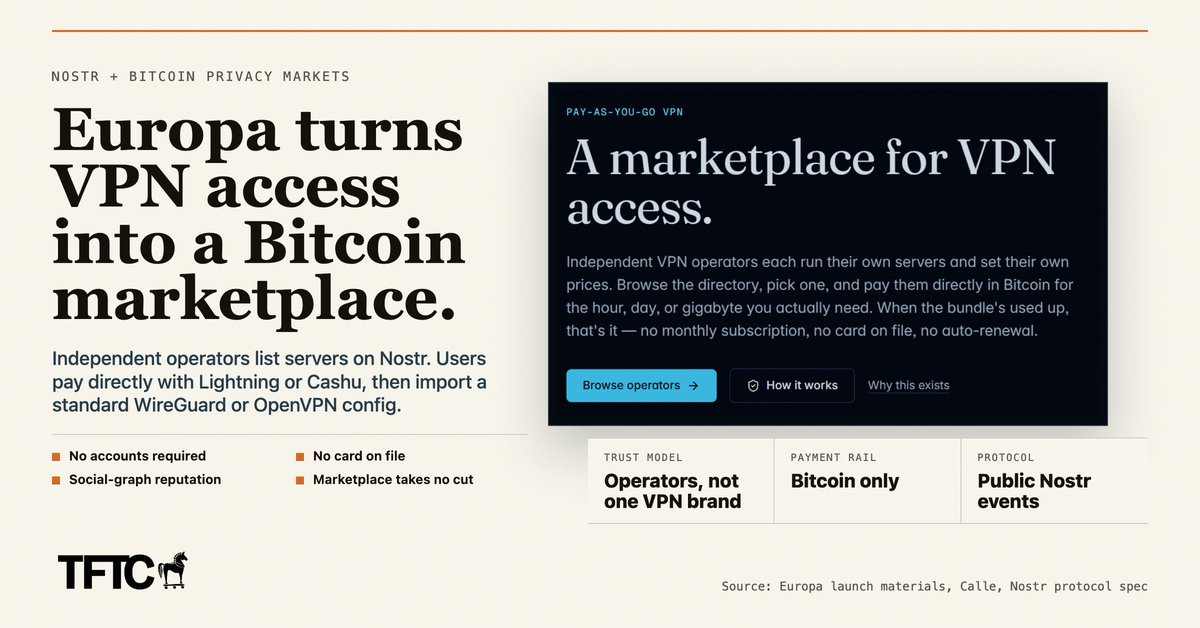
Europa is a new decentralized VPN marketplace built on Nostr and paid exclusively with Bitcoin.
It launched this week from @callebtc, the developer behind the Cashu ecash protocol.
The concept is simple but the implications are significant. Instead of trusting a single VPN company with a global server fleet, one privacy policy, and one monthly subscription, Europa lets independent VPN operators list their servers on an open directory.
Each operator runs their own infrastructure in their own jurisdiction, writes their own no-log policy, and sets their own price. Users browse the directory, pick an operator, and pay them directly over Lightning or Cashu ecash. The marketplace never touches the money and takes no cut.
After payment, the operator delivers a standard WireGuard or OpenVPN config file. No proprietary app, no custom client. Users import it into the same open-source VPN software they would use anywhere else and connect. When the bundle runs out, the tunnel goes quiet. No auto-renewal, no card on file, no surprise charges.
The reputation system runs on Nostr. Instead of editorial ratings or paid placements, recommendations and complaints come from people in your social graph. Sign in with a Nostr identity and the directory weights endorsements from accounts you already follow. If Nostr is not your thing, ignore the feature entirely and start with the smallest bundle from an unfamiliar operator to limit your risk.
The entire protocol is built on public Nostr events. Operator listings, reputation data, and payment coordination all live on the Nostr network. The Europa website is just one viewer of that data, not the source. Other directories can exist. If Europa makes bad editorial choices, users can leave without losing access to the underlying marketplace. The protocol spec is CC0 (public domain) and the code is MIT licensed.
What makes this meaningful is the architecture. Traditional VPN providers consolidate trust into one company in one jurisdiction. If that company gets acquired, served with a warrant, or breached, every customer is exposed at once. Europa distributes that trust across independent operators. Users can spread their traffic across multiple operators they actually chose rather than trusting a single brand to make every decision for them.
Anyone with a server can become an operator. Anyone with a Lightning wallet can become a customer. No accounts required for either side.
10
🧡

21
🤎
May 22

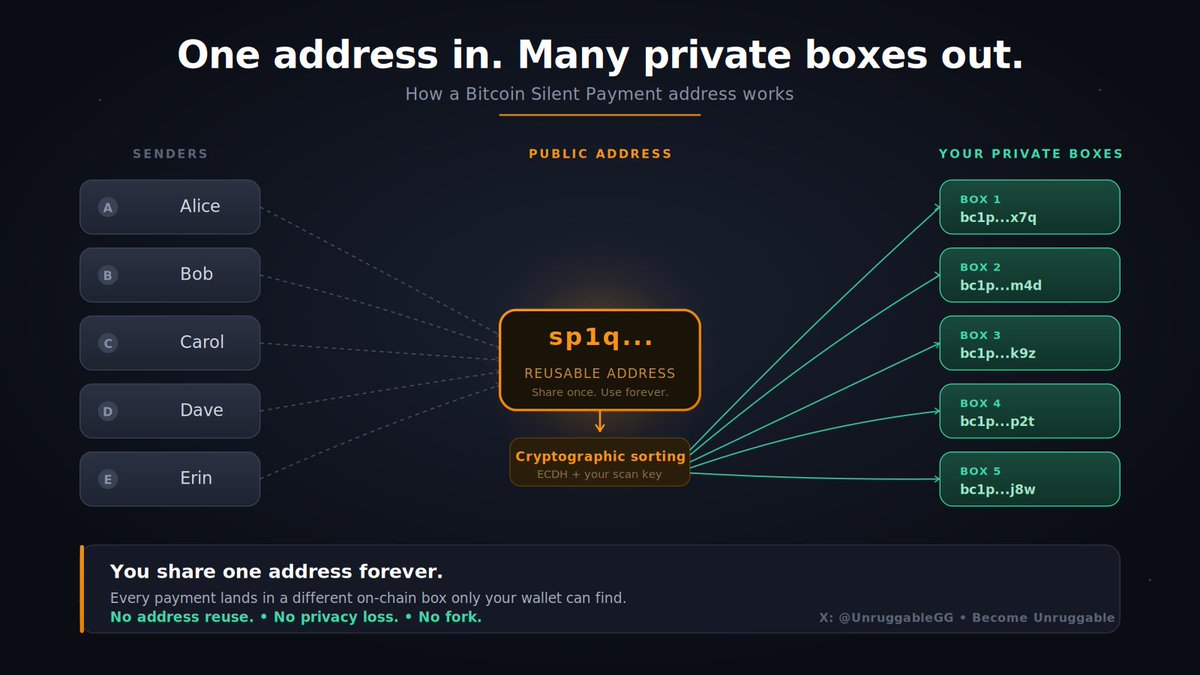
🥷@craigraw just shipped Silent Payments receiving in Sparrow Wallet!
One Bitcoin address. Reuse it forever. Zero privacy loss.
This is one of the biggest privacy upgrades Bitcoin has had in years. Here's why it matters and what Silent Payments actually are. 🧵
25
💬 @r_zalski 💥 #WojnyFinansow 🔊 @RadioWNET 💬 @GracjanPietras 💬 @MTCreteil
youtu.be/mOdNGxgr9CQ
✅️ Playlista audycji ➡️
youtube.com/playlist?list=PL… ➡️
1
44
🤎

Silent Payments Explained Simply
A major privacy issue for Bitcoin is address reuse. If you reuse a Bitcoin address, anyone with that address can see your transaction history and balances.
The solution was to generate a new bitcoin address for each transaction.
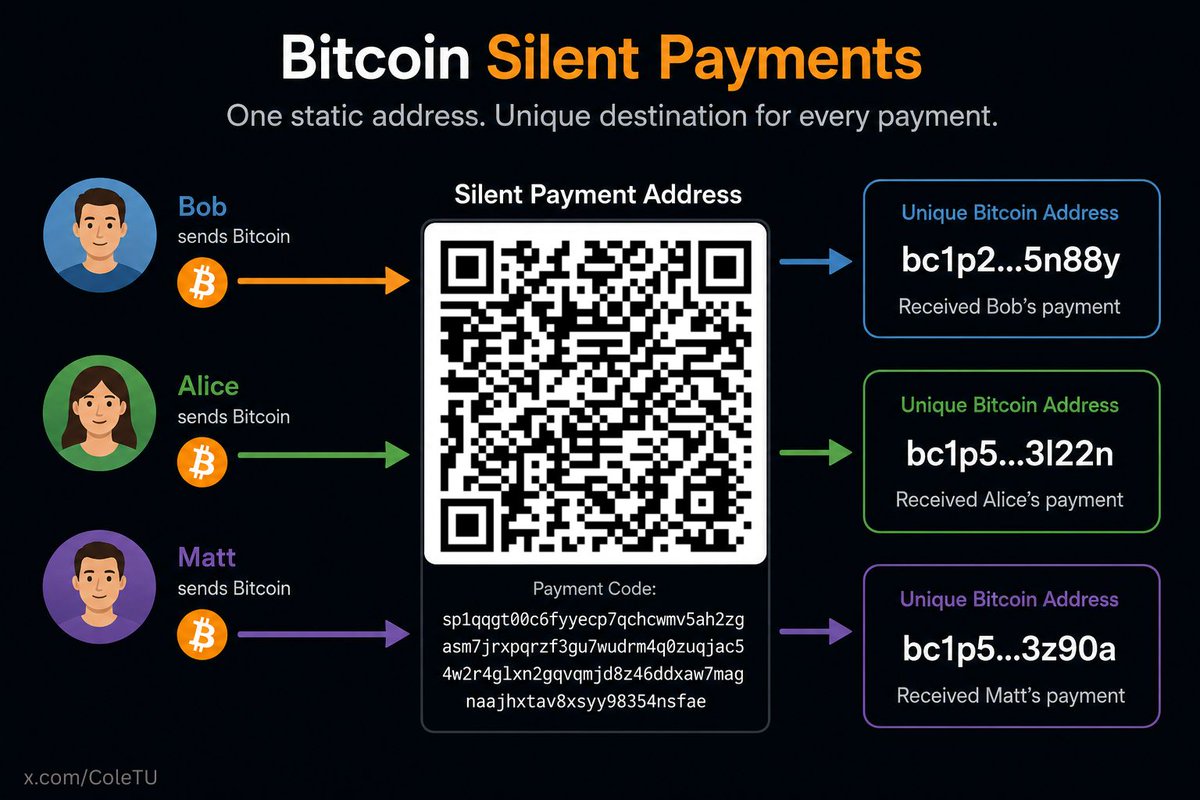
Silent Payments allow you to reuse a single static payment address, that generates a new on-chain bitcoin address every single time you receive.
23