
Accelerating Cancer Immunotherapy Research. A free weekly digest of the latest findings in the field. We also make cool images :) Listen to @ImmunoTalks.
Joined June 2017
- Tweets 4,713
- Following 1,079
- Followers 3,266
- Likes 981
4,494 Photos and videos


Cho et al. integrated whole-section (WS) spatial transcriptomics across 12 cancer types to construct a pan-cancer tertiary lymphoid structure (TLS) atlas. TLSs spanned early, primary, and secondary maturation states with distinct spatial niches and immune organization. Tumor regions proximal to intratumoral TLSs showed enriched antigen-presentation and IFN-response programs, and reduced proliferative and EMT signatures. An AI framework trained on whole-slide H&E images classified TLS maturation and maturation-aware TLS composite scores, which stratified survival and treatment response, outperforming conventional TLS metrics. bit.ly/4dZAbwi @mdAndersonNews @IamLinghua
5
23
1,132
In a phase 2 clinical trial of a short-course regimen (median 7 months) of pembrolizumab (anti-PD-1) plus high-dose IL-2 in patients with advanced ccRCC, Johnson et al. reported that at a median follow-up of over 6 years, the ORR was 73%, with 42% CRs and a 92% DCR. Median OS was over 84 months, and median PFS was 19.3 months. Patients were able to remain off treatment for a median of 23.8 months, with 42% of patients off treatment at 5 years. Potential biomarkers for durable clinical benefit included elevated CD16 NK cells, enhanced innate immunity, reduced PD-1 T cells, and patterns of IL-2-induced immune remodeling. bit.ly/4efKhYK
@JadChahoud
@MoffittNews
4
7
559
Azimazade et al. developed an explainable machine learning (XML) pipeline to study associations between clinical outcomes and in silico estimated cell types within the TIME of over 5,000 METABRIC and TCGA samples from patients with breast cancer. In estrogen receptor-positive samples, macrophages correlated positively with pathological complete responses after neoadjuvant chemotherapy, but negatively with relapse-free survival. Imaging mass cytometry and scRNAseq data demonstrated that HLA-ABC macrophages accumulated in the vicinity of HLA-ABChi epithelial cells and were associated with Tregs and TEX cells. bit.ly/4uteIkj
1
4
388
In a KPC tumor model, Nguyen et al. combined a FAP-targeted CD40 agonist (FAP-CD40; localizes CD40 stimulation to the TME) and PD1–IL-2v (targets a mutated IL-2 to PD-1 T cells and not Tregs). FAP-CD40 alone activated TME cDC1s, which migrated to tdLNs. Combination therapy expanded TME T cells and increased CD4 /CD8 /cDC1 clustering and therapeutic efficacy (dependent on both CD4 and CD8 T cells) compared to monotherapies. FTY720 blockade of LN egress did not preclude clustering or efficacy, suggesting activation of TME T cells. Combination therapy boosted TME T cell Th1 gene expression, TNFα/IFNγ production, and Nur77 promoter activity. bit.ly/4e5iWs4 @roche
2
13
548
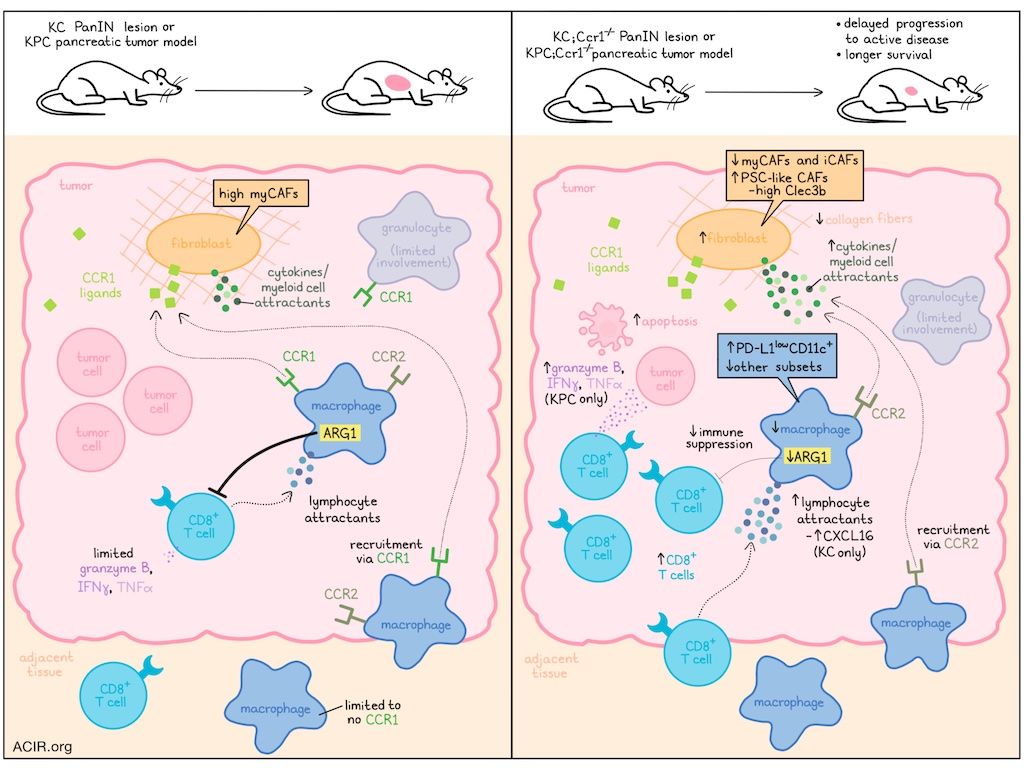
CCR1 expression in tumor myeloid cells plays an immunosuppressive role pancreatic cancer, and could be targeted through immunotherapy bit.ly/4v5iema
👉
Evaluating the role of CCR1 in pancreatic cancer, Zhang et al. used KC and KPC mouse tumor models, and found while elimination of CCR1 did not limit tumor formation, it delayed progression of active disease, resulting in prolonged survival. CCR1 was mainly expressed by macrophages and granulocytes, but its deletion induced TIME remodeling that affected fibroblasts and increased CD8 T cell accumulation, but not activation. CCR1 inhibition showed synergy in combination with targeting of other immunosuppressive mechanisms, though there was still room to improve antitumor efficacy in this highly resistant tumor setting. @Pasca_Lab @Umich
1
2
9
411
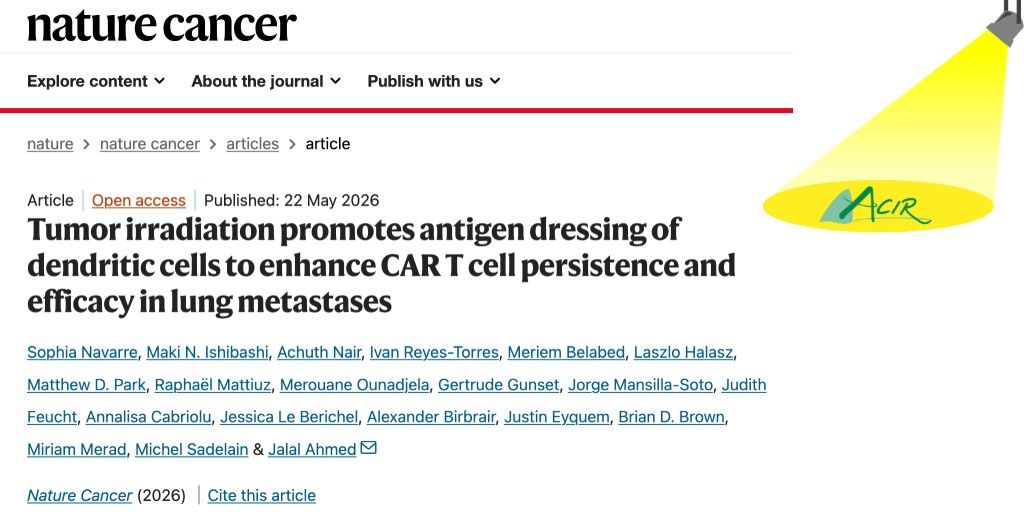
Navarre, Ishibashi, and Nair et al. showed that focal 8 Gy tumor irradiation in a syngeneic metastatic lung adenocarcinoma model enhanced CAR T cell persistence and efficacy in a DC-dependent manner. Irradiation conditioned tumor cells for trogocytic antigen transfer onto DCs and macrophages, but only DCs engaged CAR T cells through the chimeric receptor, sustaining their activity. DC depletion abolished sustained CAR T cells and long-term tumor control. CAR T cell expansion was restricted to irradiated tumors, and not adjacent antigen-expressing normal lung tissue, indicating spatially restricted DC–CAR T cell engagement. bit.ly/3SjHNkF @IcahnMountSinai @SinaiImmunol
8
17
938
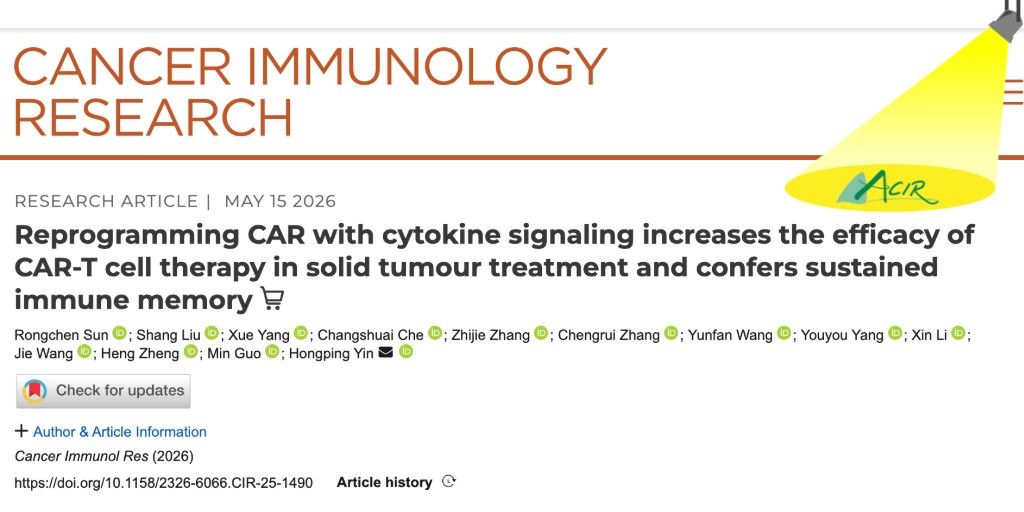
To improve CAR T cell efficacy for solid tumors, Sun and Liu et al. designed a series of CARs that enabled antigen-dependent “cytokine” co-activation, while preserving second-generation CAR structure. Incorporating compact IL-2/IL-15 receptor (IL2RB)-derived STAT5 docking motifs (Y392 and Y510) within the CD3ζITAM2/3 regions resulted in antigen-specific co-activation upon CAR engagement. The best candidate S71 CAR exhibited superior efficacy and dose-dependent memory in multiple xenograft tumor models (EDB-fibronectin, CD19, and CLDN), improved mitochondrial function, and supported durable and persistent T cell activity, with less exhaustion. bit.ly/4ueD7dq @CIR_AACR
7
26
964
June is Cancer Immunotherapy Month!
Immunotherapy is transforming how we treat cancer — and we are committed to keeping the scientific community informed with the latest research.
Our work depends on your support. If you believe in the power of science to save lives, consider donating today. 💙
👉 bit.ly/4viO5PP
140
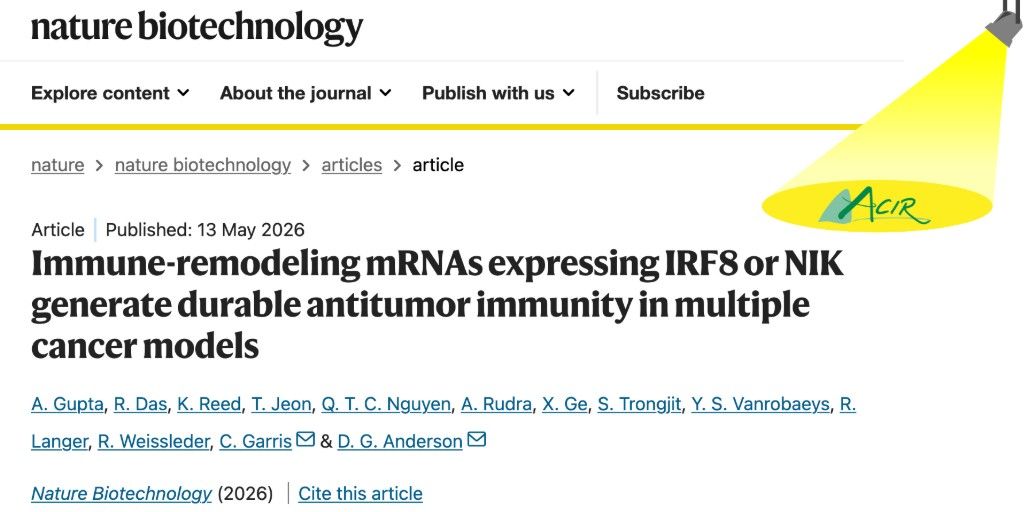
In mice, i.t. or i.v. delivery of CKK-E12-LNPs loaded with immune-remodeling mRNAs (IR-mRNAs) encoding NF-κB-inducing kinase (NIK) or IFN regulatory factor 8 (IRF8) induced (1) APC activation and maturation into cDC1s, (2) a release of immunostimulatory cytokines, (3) accumulation of NKT and γδT cells in tumors, and (4) priming of antitumor CD8 T cells, which infiltrated and eliminated tumors and protected mice from rechallenge. In combination with mRNA encoding OVA, IR-mRNA prevented growth of OVA tumors. IR-mRNAs also synergized with anti-PD-1, and enhanced humoral and adaptive immune responses to infectious disease antigens. bit.ly/3PJgZK1
2
11
679
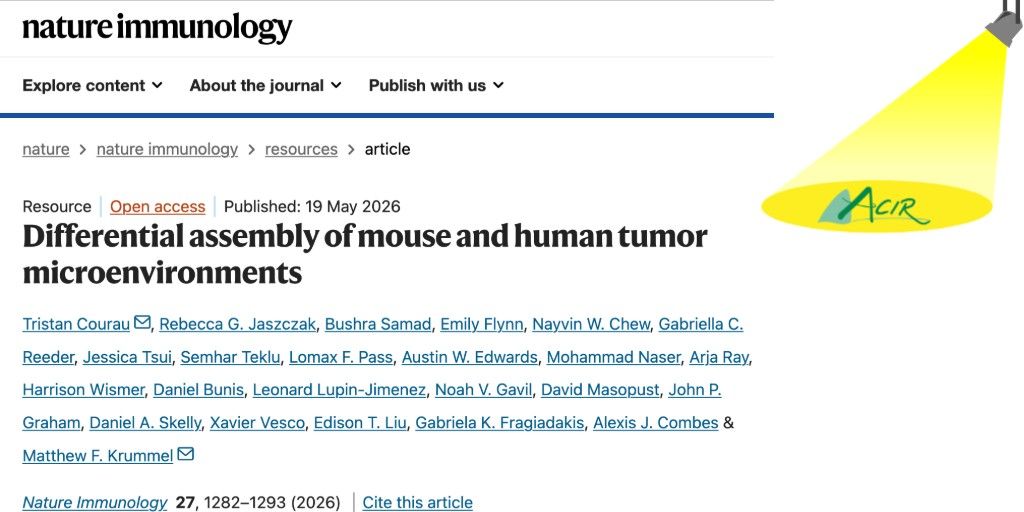
Courau et al. profiled immune landscapes of 15 common mouse tumor models alongside human datasets. Most murine TIMEs resembled a minority subset of macrophage-rich, poorly infiltrated human tumors. Cross-species analysis showed species-specific biases in chemokine networks (including reduced CCR2/CCR5 and altered CXCL13 in mice) and altered T and myeloid cell frequencies, while conserved cell-type specific gene expression programs emerged as discriminatory. An IFN-responsive myeloid–CD8 T cell cytotoxicity module was conserved across tumor types, and predicted clinical outcome in humans. bit.ly/3RK2oi1 @alexis_combes @CourauTristan @MaxKrummel @GabiFragiadakis
1
4
438
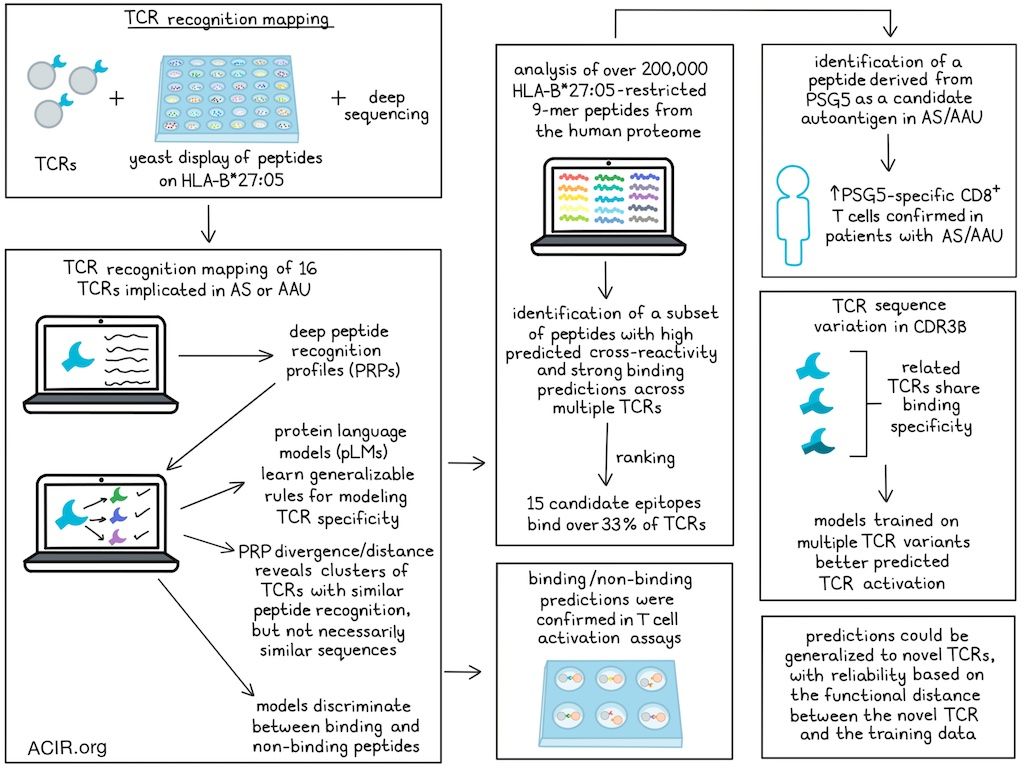
AI-based TCR specificity prediction bit.ly/4uOVQ0b @parkerici @stanfordMed
👉 Using high-throughput yeast display and protein language models (pLMs), Wang, Yeh, et al. developed a new approach to determine TCR recognition that goes beyond the TCR sequence. This method generates deep peptide recognition profiles (PRPs), with PRP functional distance predicting the specificity of a new TCR, thereby enabling the discovery of novel candidate autoantigens in autoimmune disease.
9
474
June is Cancer Immunotherapy Month!
The science of training the immune system to fight cancer is advancing faster than ever — and we are here for every breakthrough.
We continuously track the latest research findings and share them with the scientific community so the field keeps moving forward.
Stay up to date: acir.org
#CancerImmunotherapy #Immunotherapy #CancerResearch #ACIR
145
Daniel Peeper focused his presentation on two primary goals in cancer immunology: understanding the mechanisms of immunotherapy resistance and identifying new targets to increase therapeutic impact. Peeper and his team developed a reductionist CRISPR-Cas9 screening system with a whole-genome CRISPR/Cas9-KO library to identify key mediators of resistance. Read more: bit.ly/42ZYX9f #CIMT2026
1
4
216
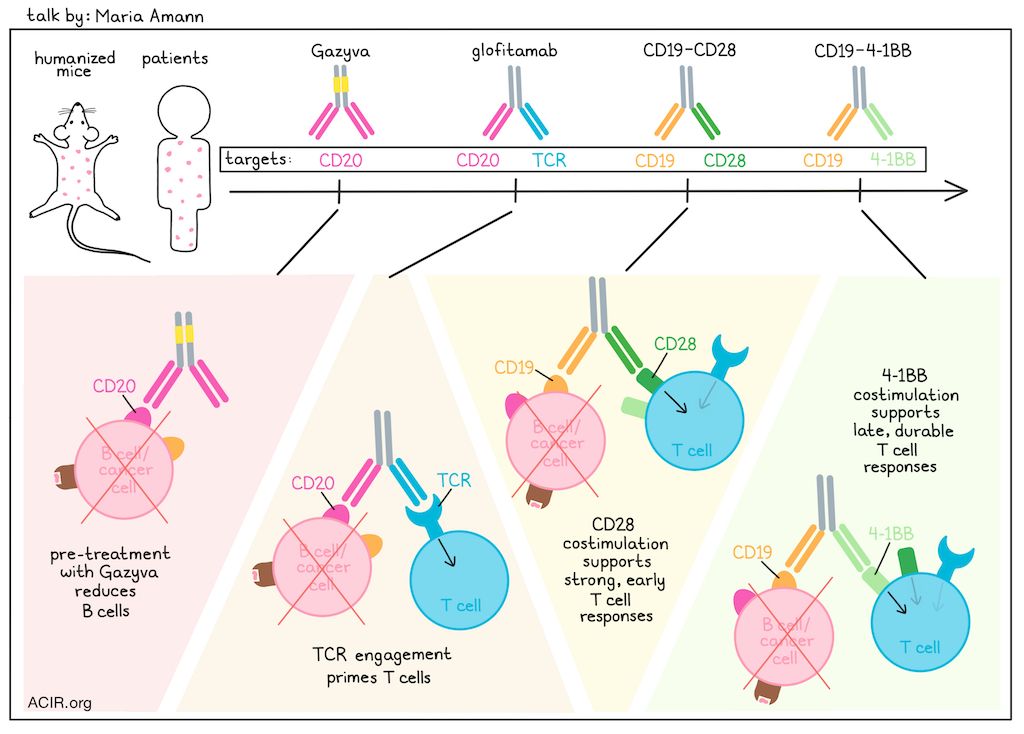
Maria Amann discussed the importance of humanized mouse models to bridge the gap between murine and human systems when evaluating potential T cell bispecific antibodies alone or in combination with costimulatory molecules. One antibody under investigation is glofitamab – a T cell bispecific (TCB) that targets CD3 with one arm (inducing MHC-independent TCR activation), and binds with high affinity to CD20 with the other arm, with a silenced Fc region. Read more here: bit.ly/42ZYX9f #CIMT2026
1
10
735
The ACIR team attended the 23rd CIMT Annual Meeting held on May 11-13, 2026 in Mainz, Germany. This week’s extensive special feature covers select talks from the conference. bit.ly/42ZYX9f
@C_IMT
1
193
Lawal et al. identified an immune-privileging regulon signature (IMPREG) from tumor samples of patients who were non-responsive to ICB. IMPREG mirrors transcriptional programs of immune-privileged organs. Transcriptomics revealed that IMPREG was activated via three compartments: immature neuronal-like malignant cells, myofibroblastic CAFs, or endothelial cells, forming niches devoid of effector T cells and enriched for TGFβ3, CXCL12, and IL-34-driven suppressive circuits. High IMPREG scores predicted ICB resistance in 14 cancer types, and was associated with increased sensitivity to EGFR inhibitors and anti-angiogenic therapies. bit.ly/4urgdAm @pitt_immunology
5
18
764
To improve mRNA vaccine delivery to lymph nodes, Ren, Zhao, and Zhou et al. developed a DTC-modified, PEI-based, transferrin receptor-associating polyplex (TRAP) that enters cells by binding to TfR1, which is highly expressed on monocytes. In mice, s.c. TRAPs induced local inflammation, leading to monocyte recruitment, and effectively bound to and were taken up by TfR1high monocytes, inducing both differentiation into mo-DCs and HEV-mediated trafficking to draining lymph nodes, where mRNA translation and antigen presentation occurred. In tumor models, TRAP-mRNA vaccines elicited strong, antigen-specific, cytotoxic T cell responses, and reduced tumor progression. bit.ly/4wWj8mm
2
17
806
As certain irAEs correlate with clinical efficacy following checkpoint inhibitor therapy, Lim and Williams et al. investigated the relationship between autoimmunity and antitumor immunity. Loss of TREX1, an autoimmune risk gene and key negative regulator of the STING and type I IFN pathways promoted antitumor immunity in mice, and shared pathways with successful cancer immunotherapy. Like in PDCD1-/- and CTLA4-/- mice, constitutive TREX1 loss resulted in multiorgan CD8 T cell influx, autoimmunity, and myocarditis. Conditional systemic TREX1 ablation was well tolerated and promoted effective CD8 T cell-driven antitumor immunity, suggesting a new opportunity for immunotherapy. bit.ly/4uV5hL1 @genentech
2
7
385
Zhou, and Ling et al. engineered CRYSTAL, a crystal-like STING-activating nanoassembly, to stabilize a STING agonist and enhance STING signaling at lower doses. Intravenous CRYSTAL activated myeloid cells, remodeled immunosuppressive tumor microenvironments, and primed host STING-dependent CD8 T cell responses, driving durable tumor regression in advanced murine and rabbit models. Across mice, dogs, and non-human primates, CRYSTAL induced potent, but transient interferon responses, without cytokine release syndrome. Ex vivo treatment of human head and neck cancer biopsies triggered strong interferon signaling. bit.ly/4fyc0WS @UMRogelCancer
1
1
318
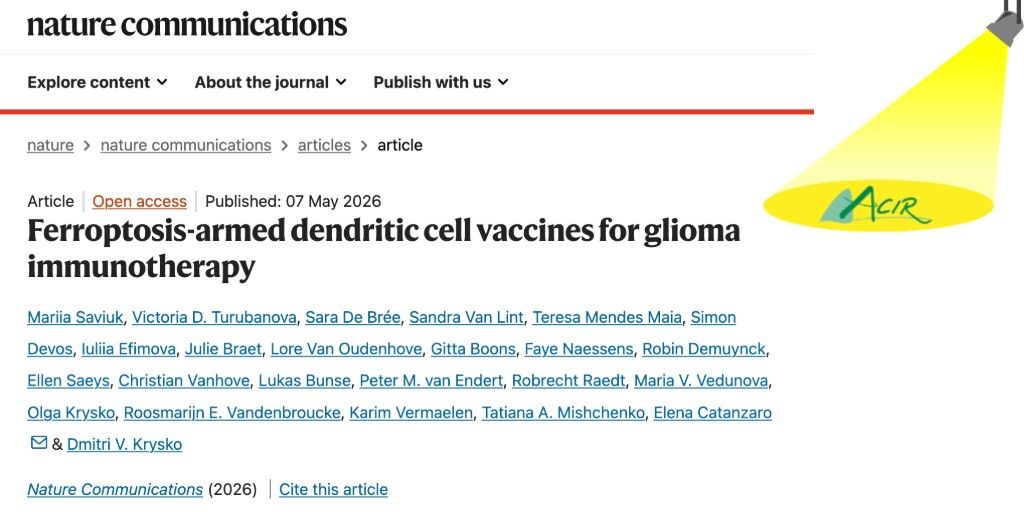
A prophylactic DC vaccine loaded with ferroptotic (iron-dependent cell death) glioma cell line lysates protected against glioma growth in mice, superior to immunogenic cell death (ICD) or freeze/thaw (non-ICD) lysates. The vaccine also mediated therapeutic efficacy, induced antigen-specific CTL responses in SLOs, and increased i.t. CTLs (particularly CD39 effector-memory cells) compared to controls. Ferroptosis induced ICD markers on glioma cells, and blocking calreticulin or ATP, but not HMGB1, abrogated vaccine efficacy. Ferroptotic lysates activated DCs and displayed a unique proteomic profile, potentially presenting novel TAAs. bit.ly/3PCbH2P @DmitriKrysko
1
4
13
893