Armed Conflict Location and Event Data (ACLED) is an independent, impartial, international NGO collecting data on violent conflict and protests globally.
Joined July 2012
- Tweets 40,367
- Following 3,692
- Followers 62,312
- Likes 6,025
17,463 Photos and videos

Pinned Tweet

Jun 11
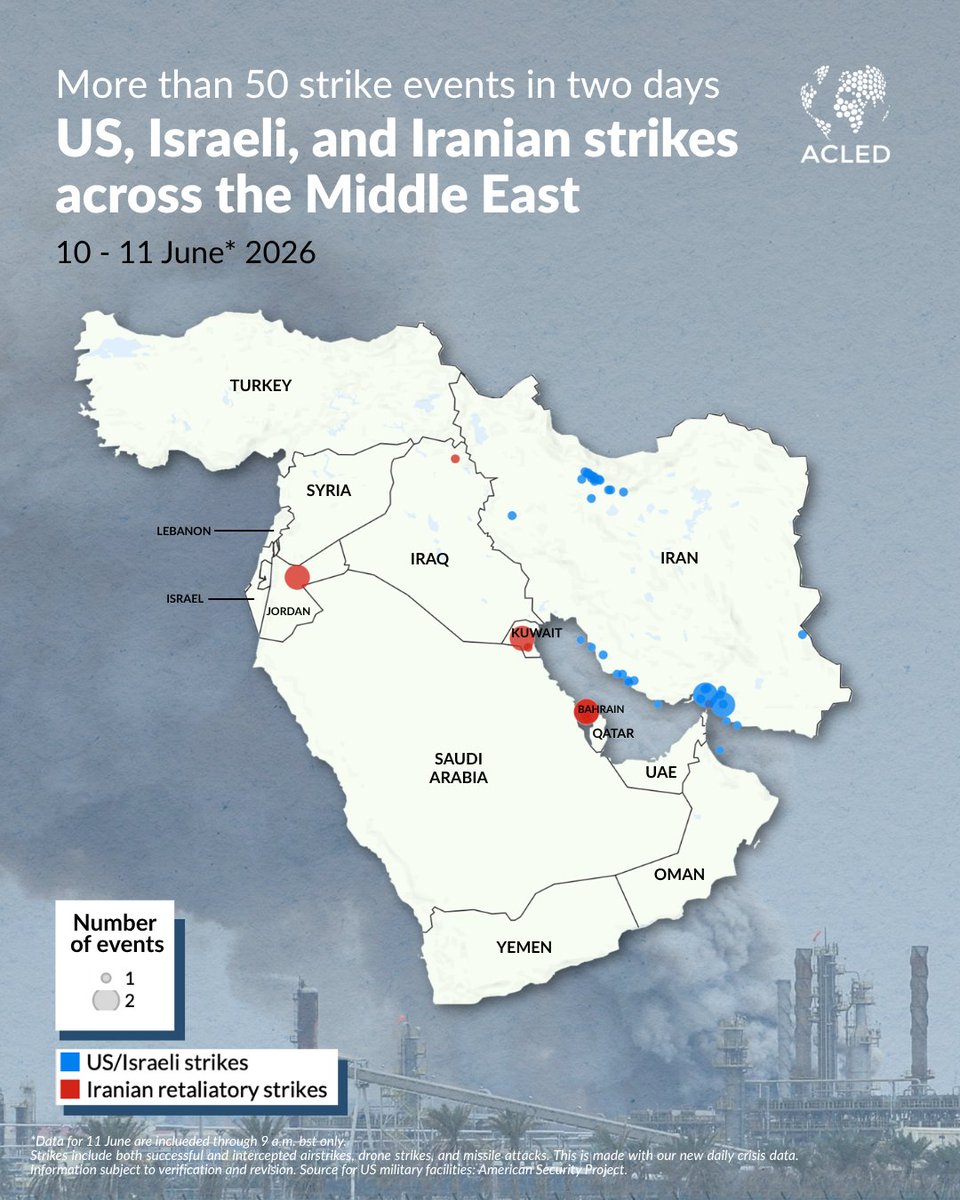
The US launched at least 40 strikes on #Iran between 10 and 11 June, while Iran launched 13 strikes across the region: six in Bahrain, three in #Kuwait, two in #Jordan, one in Iraq, and one in the Strait of Hormuz. Latest trends: bit.ly/3QlhBWk
1
9
22
2,972
1h
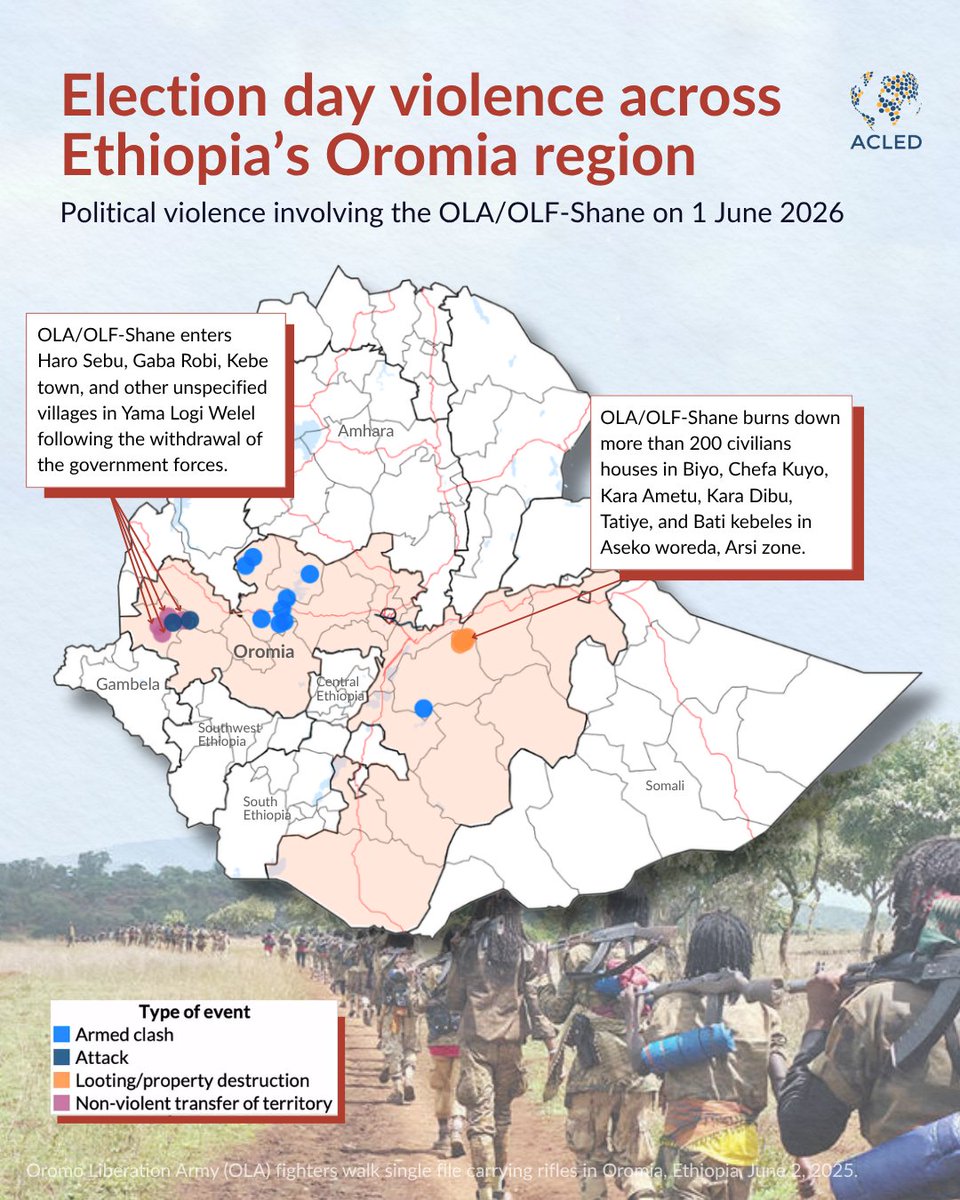
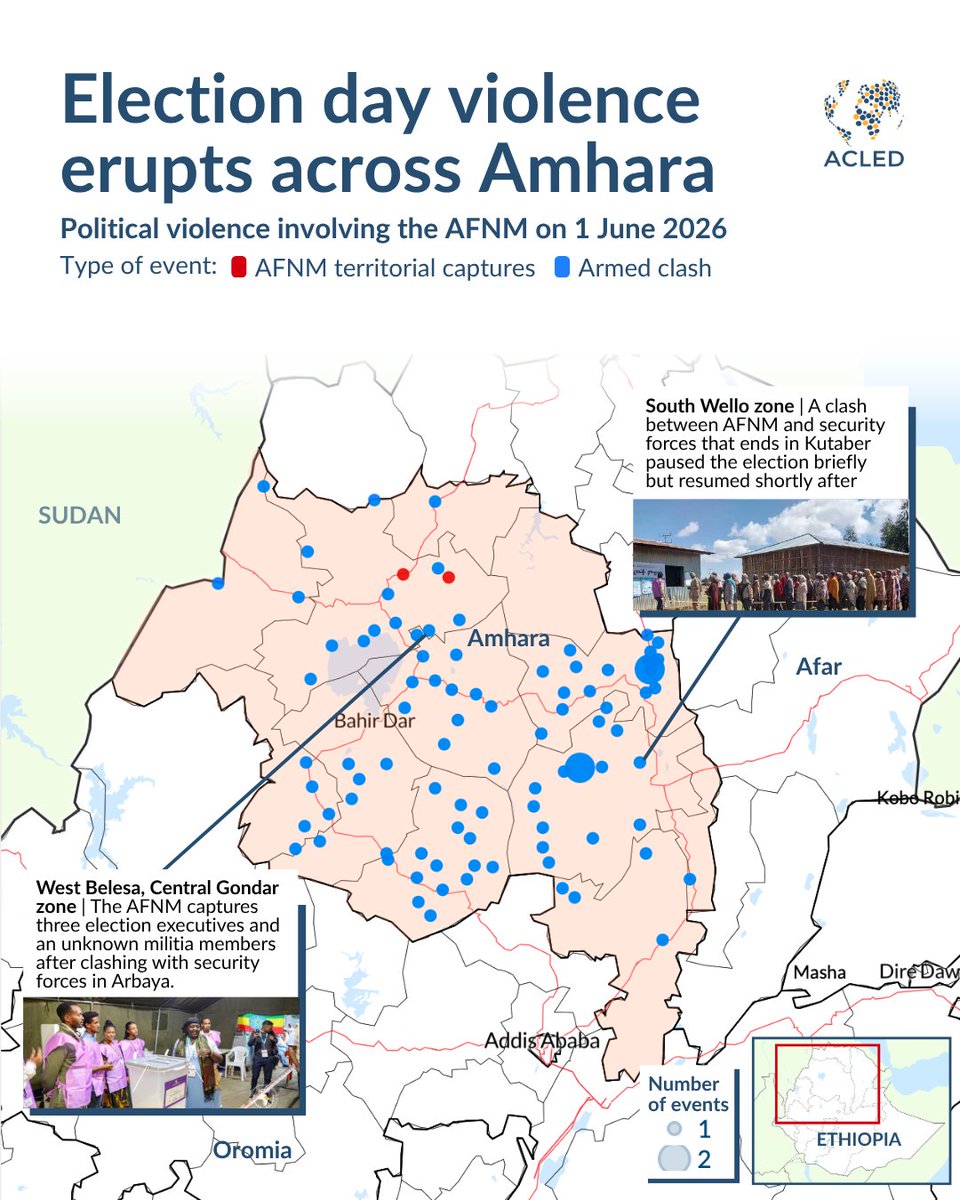
Election day in #Ethiopia brought further violence in Oromia’s Arsi zone, where the OLA/OLF-Shane attacked Orthodox Christian civilians & burned a 101-year-old church. ACLED records 159 incidents targeting civilians in the zone since February 2023. More: acleddata.com/expert-comment…
3
8
485
20h
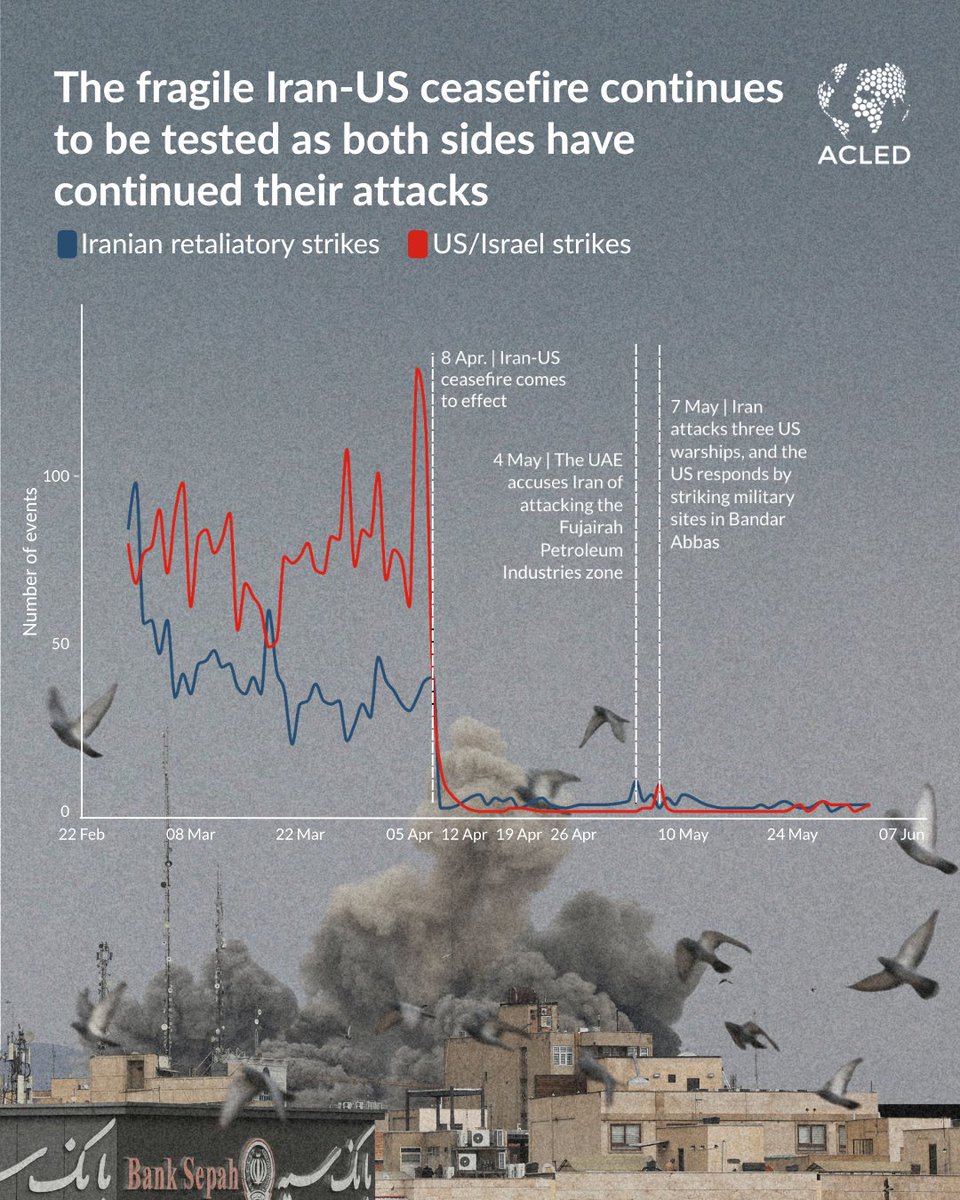
Iran and the US are negotiating under live fire as efforts to finalize an agreement stall. Neither side appears to want a full-scale war, but without a deal, ongoing military friction risks spiraling into uncontrolled escalation. Latest overview: acleddata.com/update/middle-…
1
6
676
Jun 13
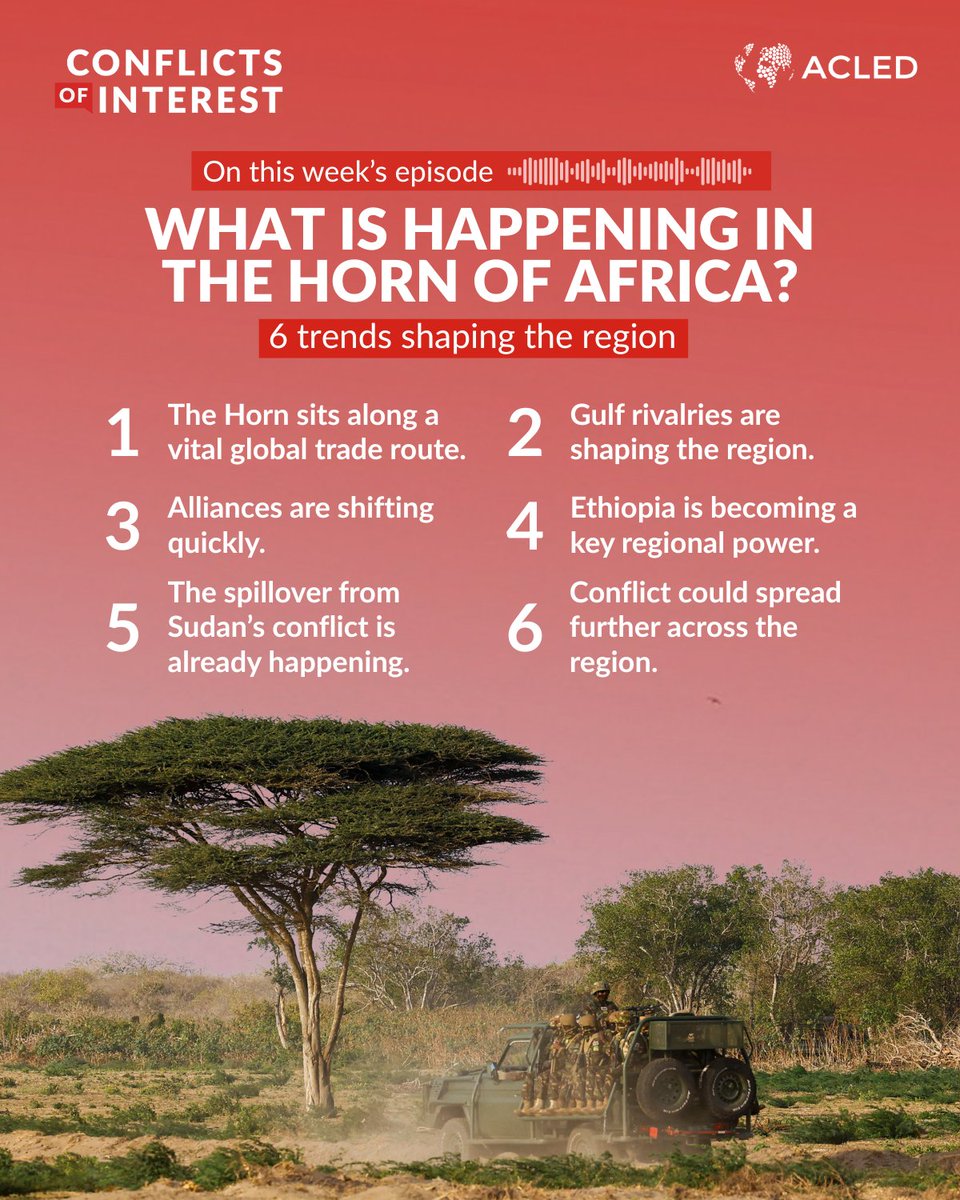
The Horn of Africa is becoming an increasingly important arena for regional competition, shifting alliances, and cross-border conflict.
In the latest episode of Conflicts of Interest, #ACLED experts discuss six trends shaping the region ⬇️
Listen to the full episode to find out more: linktr.ee/ConflictsOfInteres…
2
5
11
1,861
Jun 12
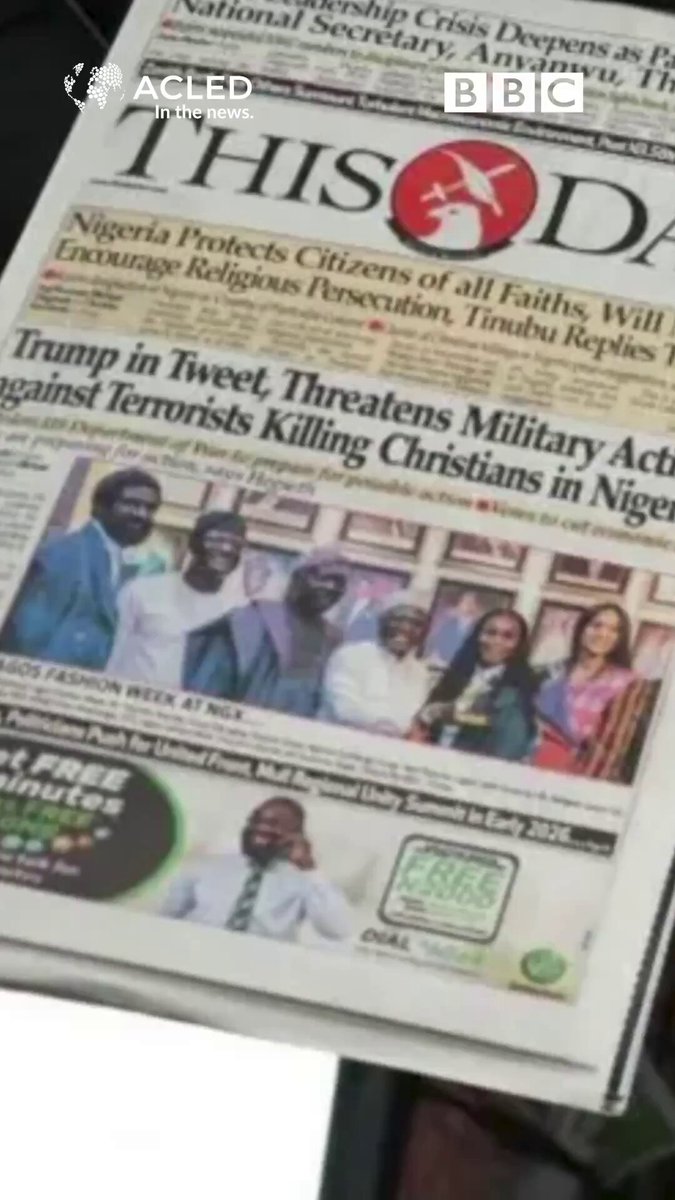
Is #Nigeria’s violence primarily driven by religion?
The picture is far more complex.
@bbcworldservice used #ACLED data to show how violence affects both Christian and Muslim communities, while examining the different actors and drivers behind the country’s security crisis.
1
4
4
1,187
ACLED retweeted

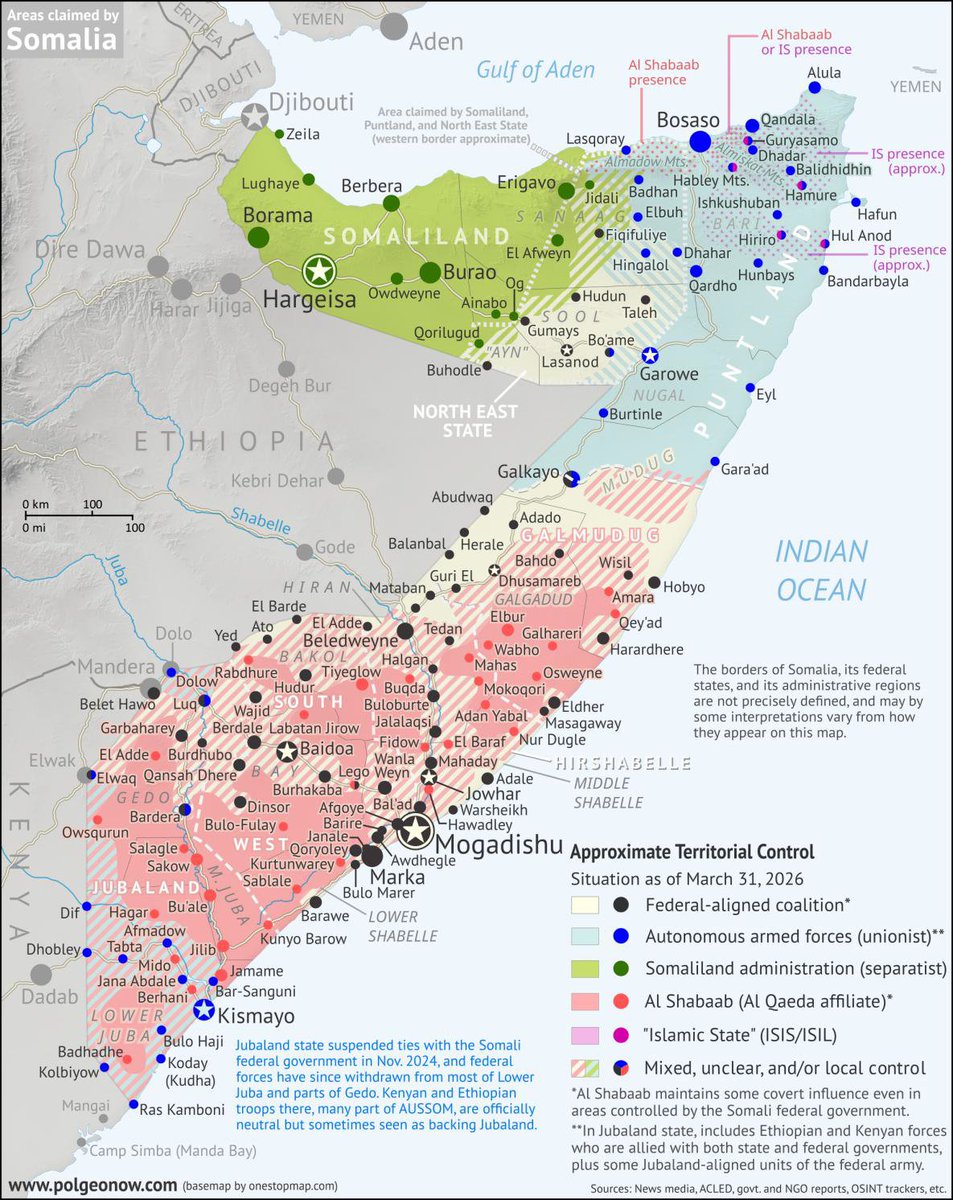
"Somalia - Approximate Territorial Control, 31 March 2026"
EUAA COI May 2026: Somalia: Security Situation p. 20. Depicting the political complexities beyond political narratives.
27
41
139
28,188
Jun 12
Did #Ethiopia’s elections worsen existing conflicts? More than 200 Orthodox Christian properties were destroyed in Oromia’s Arsi zone on 1 June, while AFNM activity triggered at least 90 clashes with security forces across #Amhara. Latest trends: acleddata.com/expert-comment…
7
25
37
5,069
Jun 10
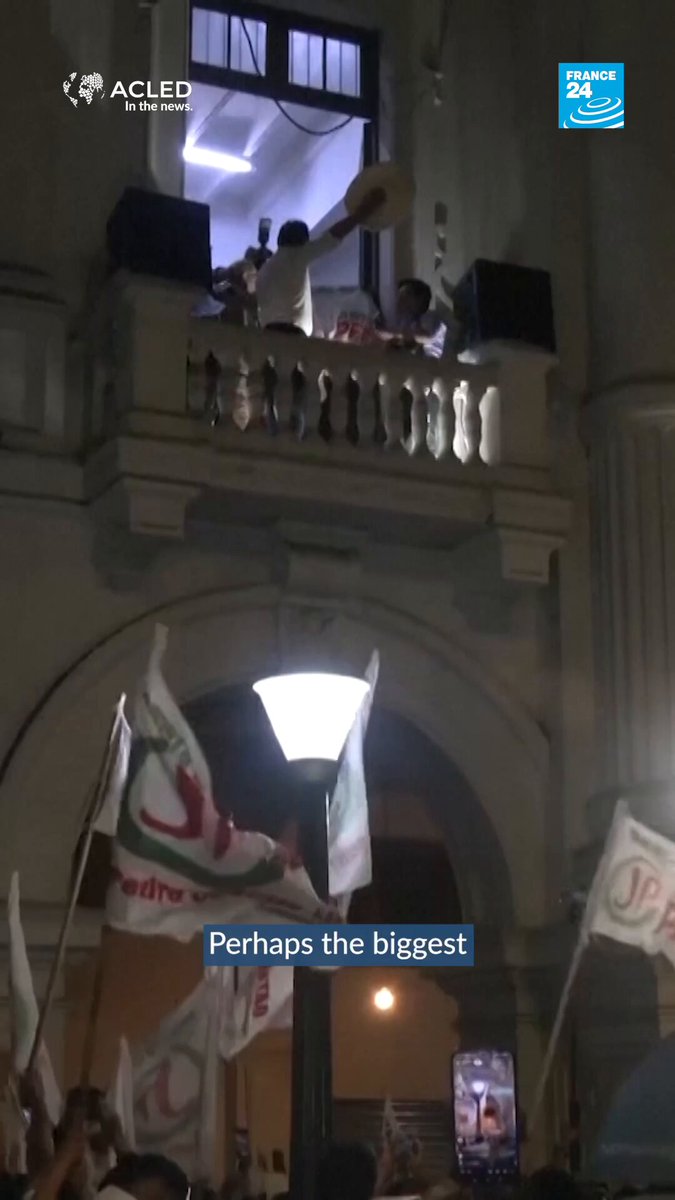
Peru's next president may win the election, but not the power to reshape the country.
A two-part Congress is returning for the first time in 30 years, but neither candidate has enough backing to make big changes. The result? #Peru could trade its political chaos for a standstill.
ACLED’s Senior Analyst Tiziano Breda spoke to @FRANCE24 about what this could mean for the country’s future.
1
1
8
1,645
Jun 10
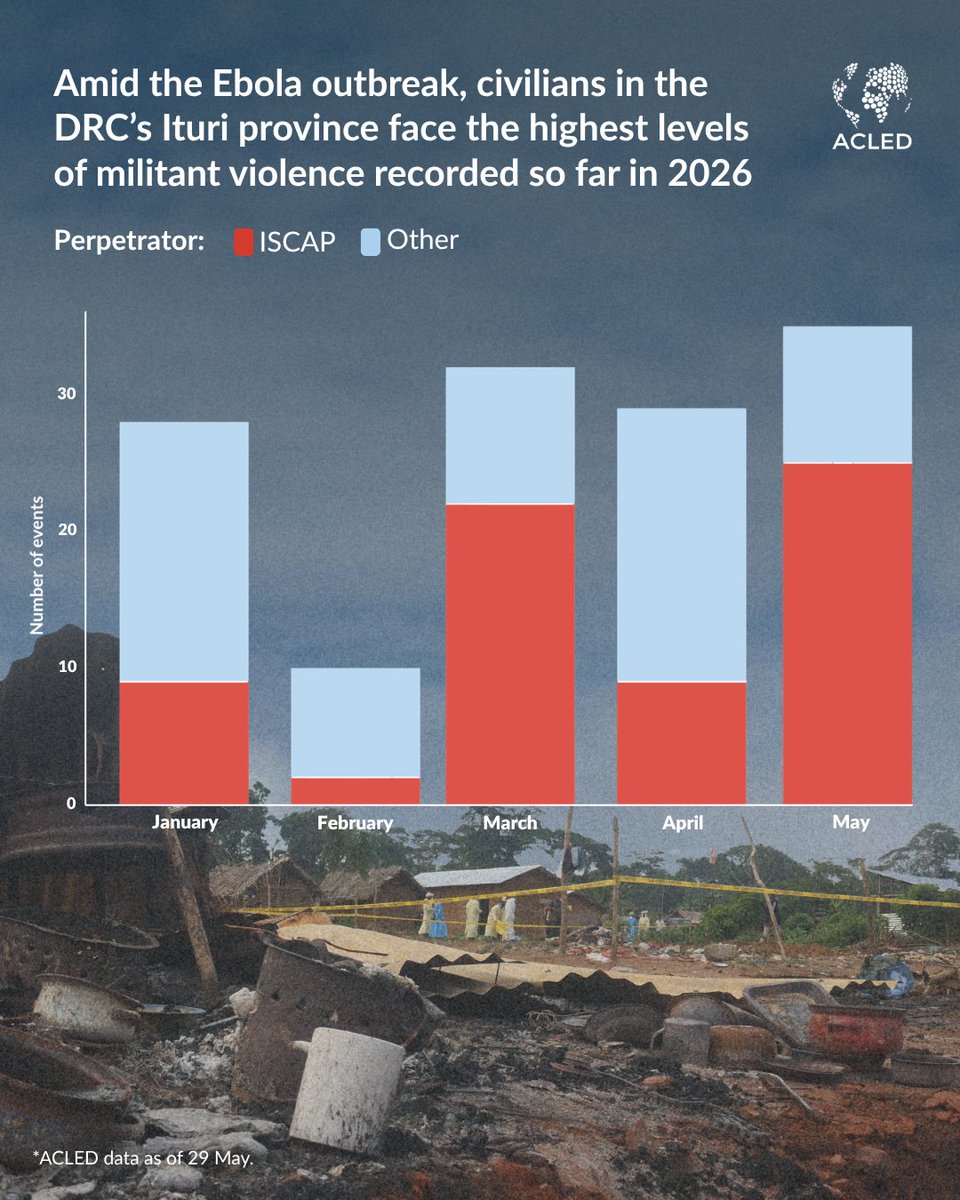
As the #Ebola outbreak spreads, civilians in #Ituri face worsening militant violence and disruptions to the humanitarian response. Islamic State Central Africa Province has carried out its deadliest campaign targeting civilians there since May 2022. 🔗acleddata.com/update/africa-…
3
3
1,510
Jun 9
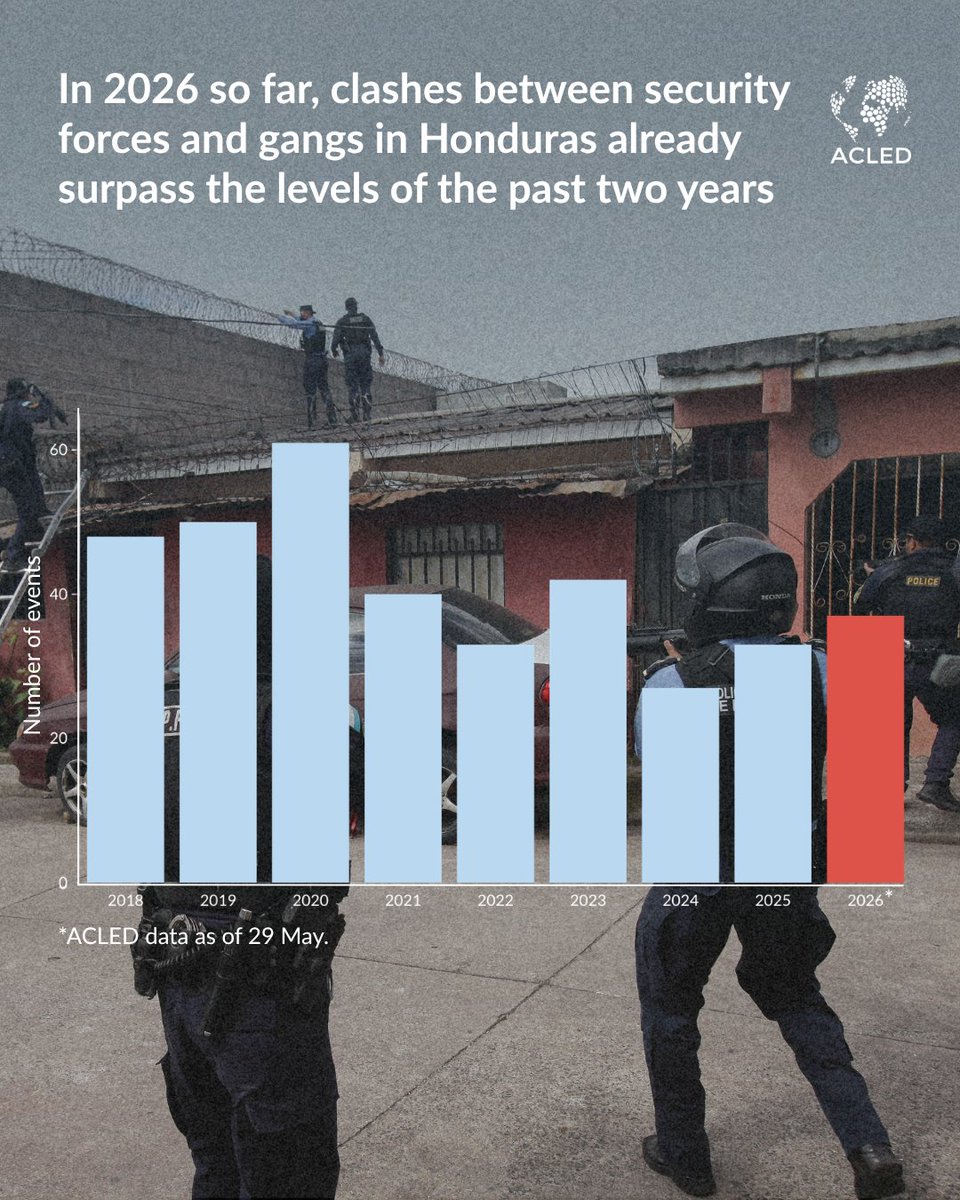
Organized crime violence escalated sharply in #Honduras in May, driving a more than 60% rise in fatalities. A massacre in Trujillo killed 20 farmers, making May 2026 the deadliest month in Colón department since 2018. Full overview: acleddata.com/update/latin-a…
3
8
833
Jun 9
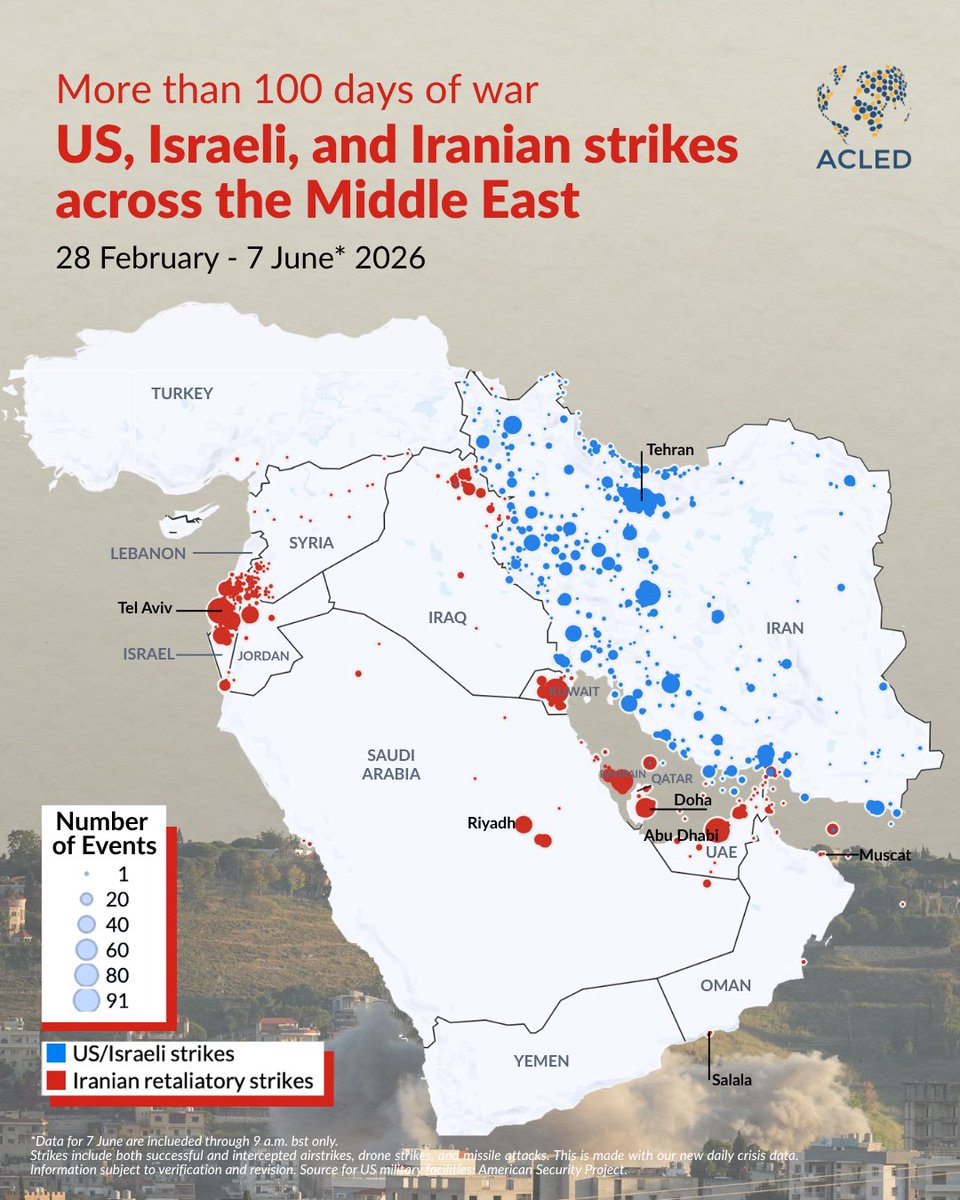
How has 100 days of war reshaped violence across the Middle East? ACLED records over 3,151 US and Israeli strikes targeting #Iran since 28 February, while Iran has launched 1,741 retaliatory strikes across the region. Latest trends: acleddata.com/press/iran-101…
15
25
2,055
Jun 9
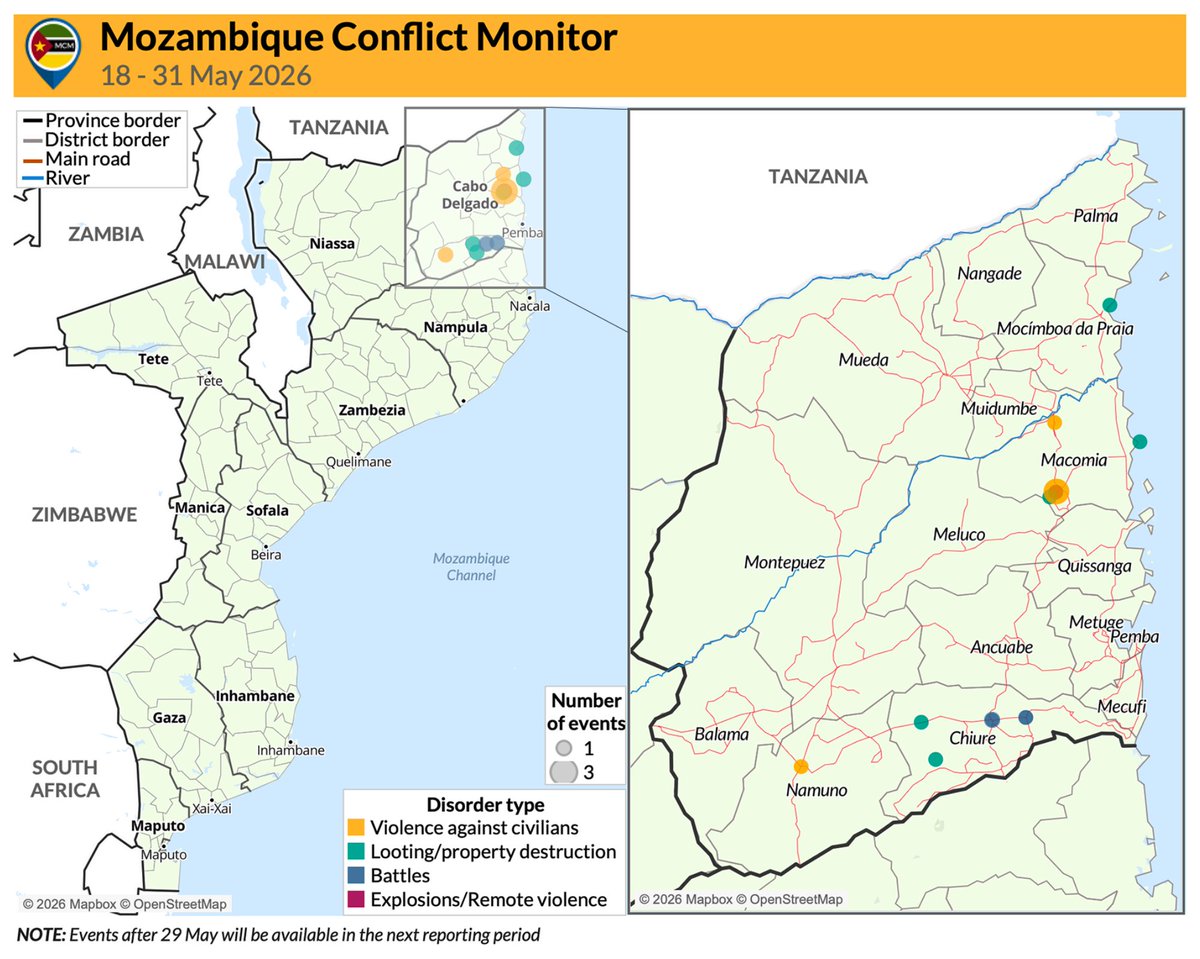
Islamic State Mozambique fired five mortars at a military position on the outskirts of #Macomia town on 25 May. Although no fatalities were reported, the attack highlights the town’s fragile security despite the presence of Mozambican & Rwandan troops. 🔗bit.ly/4o7lXNf
7
19
1,796
Jun 8
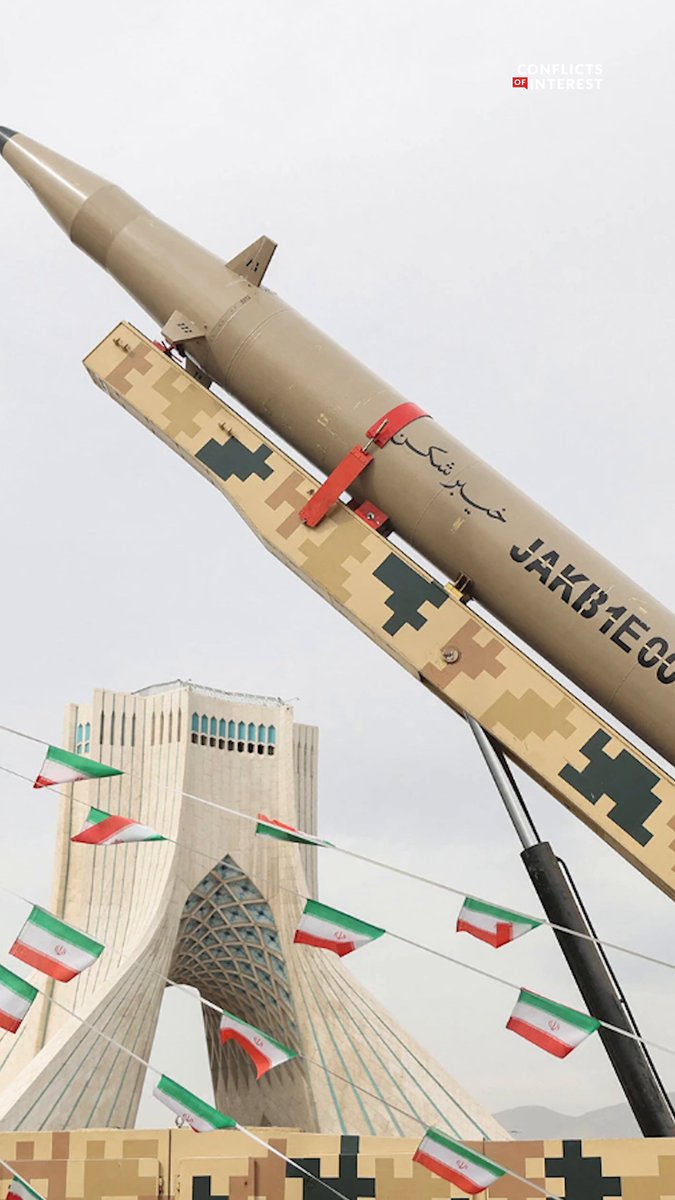
The IRGC’s grip on power rests on two pillars: Iran’s nuclear program and control over the Strait of Hormuz. Giving up either would come at an enormous political and strategic cost, making a negotiated resolution increasingly difficult.
In the latest episode of Conflicts of Interest, Prof. Clionadh Raleigh examines why Iran’s growing cash shortage may be one of its few genuine pressure points, and whether sustained economic and military pressure could eventually expose fractures within the regime itself.
Listen to the full episode: linktr.ee/ConflictsOfInteres…
4
9
1,131
Jun 8
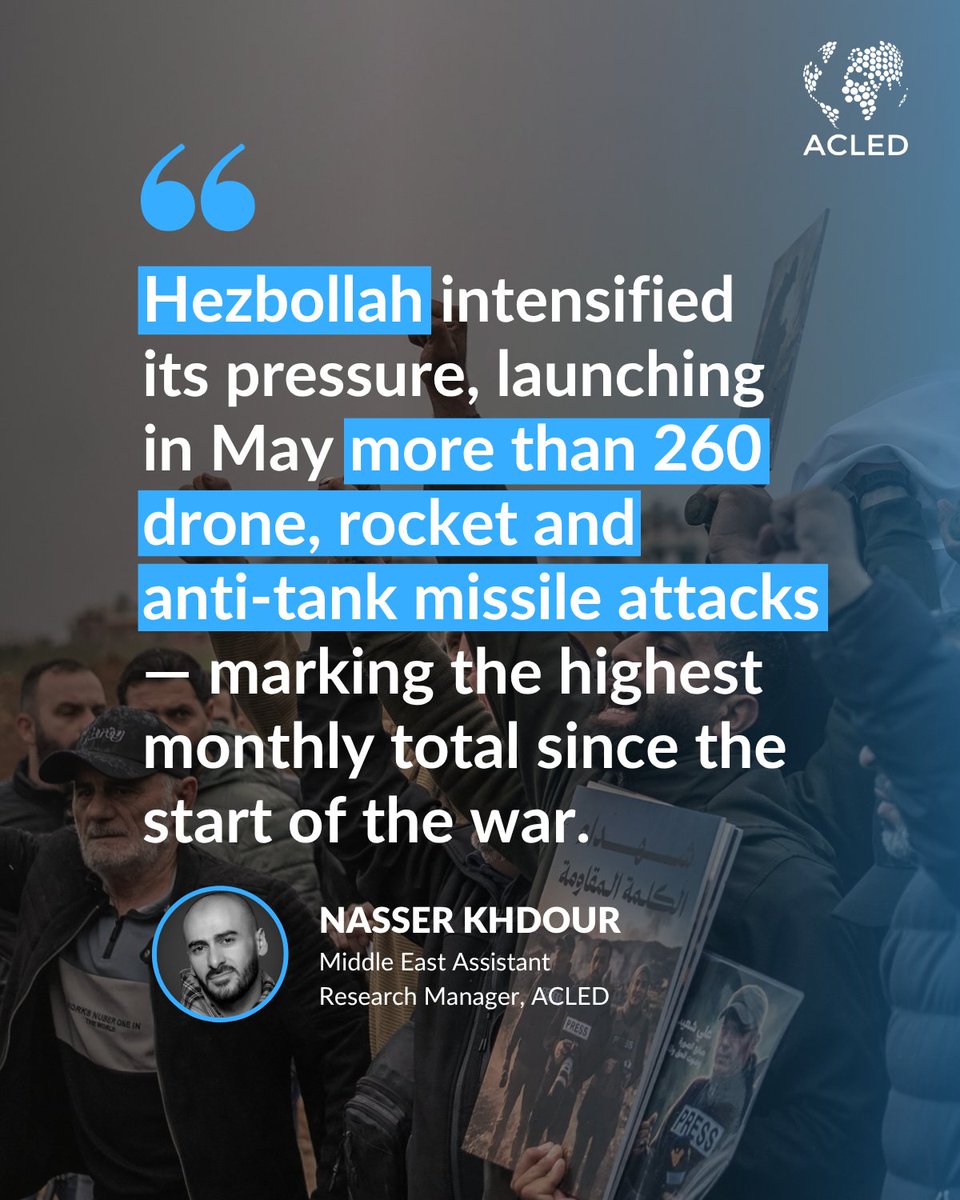
After 100 days of war involving Iran, the conflict has spread far beyond its initial frontlines — reaching Lebanon, disrupting energy markets, and triggering Iranian retaliatory strikes across the Gulf. ACLED experts spoke to @Newsweek: newsweek.com/100-days-of-ira…
1
3
10
2,117
Jun 8
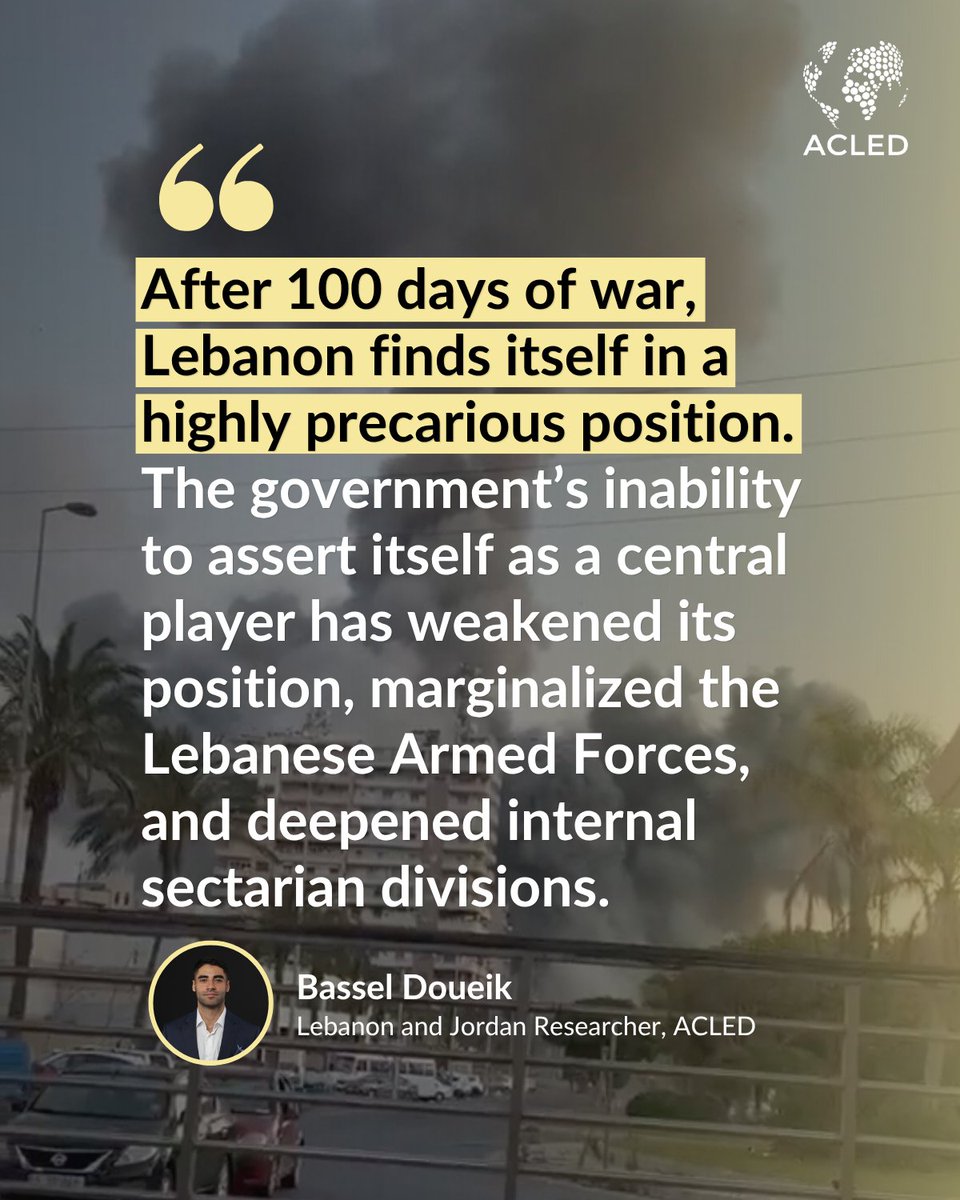
As the war continues, Lebanon faces growing questions about its ability to shape events within its own borders, the role of state institutions during wartime, and what the country could look like when the fighting eventually ends.
1
4
1,207
Jun 8
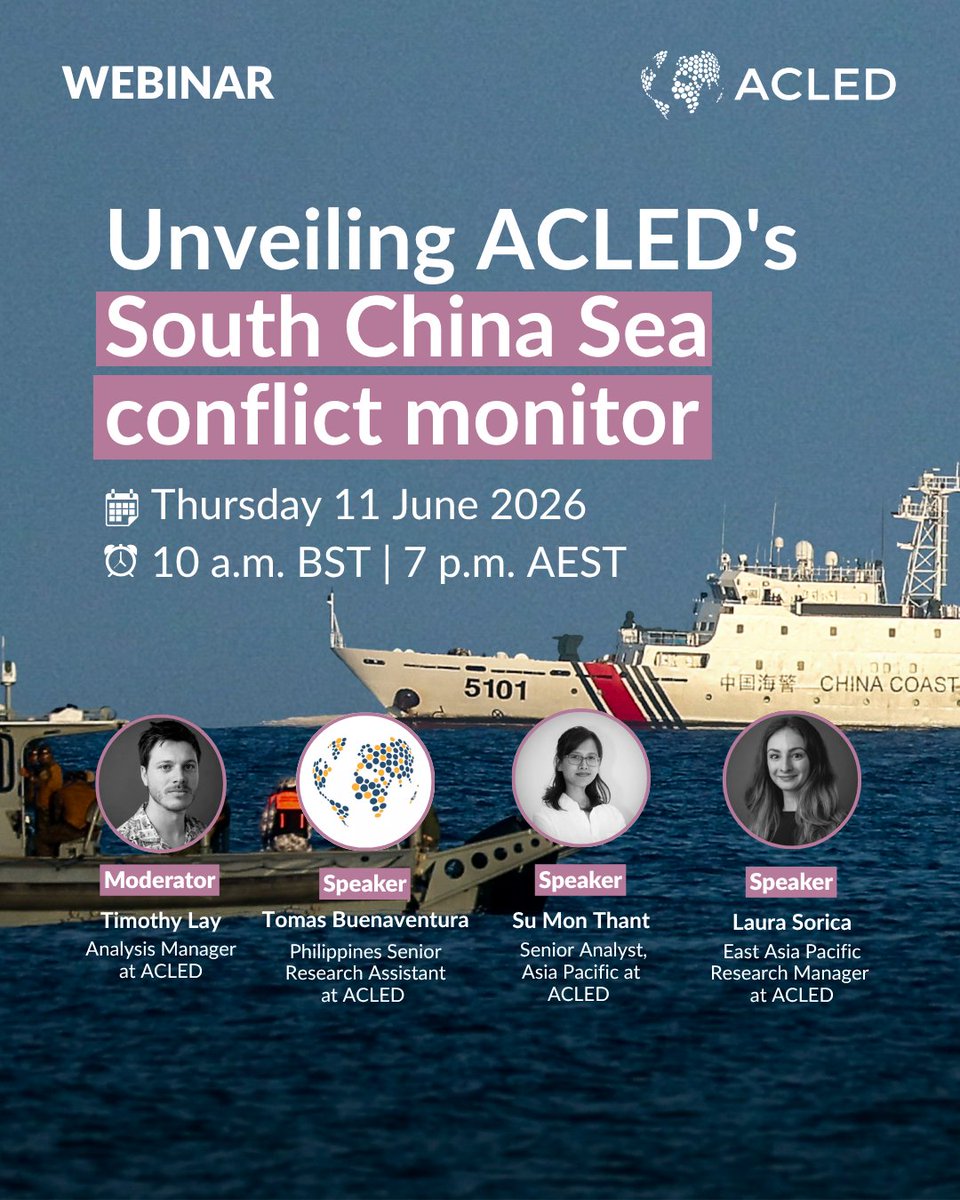
Geopolitical pressures in the South China Sea continue to mount amid China’s increasingly assertive maritime posture and competing sovereignty claims. Join us this week to unveil ACLED’s new conflict monitor and examine emerging maritime patterns. 🔗 events.zoom.us/ev/AqayXcS-2a…
3
14
1,170