Joined May 2019
- Tweets 3,374
- Following 466
- Followers 596
- Likes 3,777
149 Photos and videos





Pinned Tweet

2 May 2024
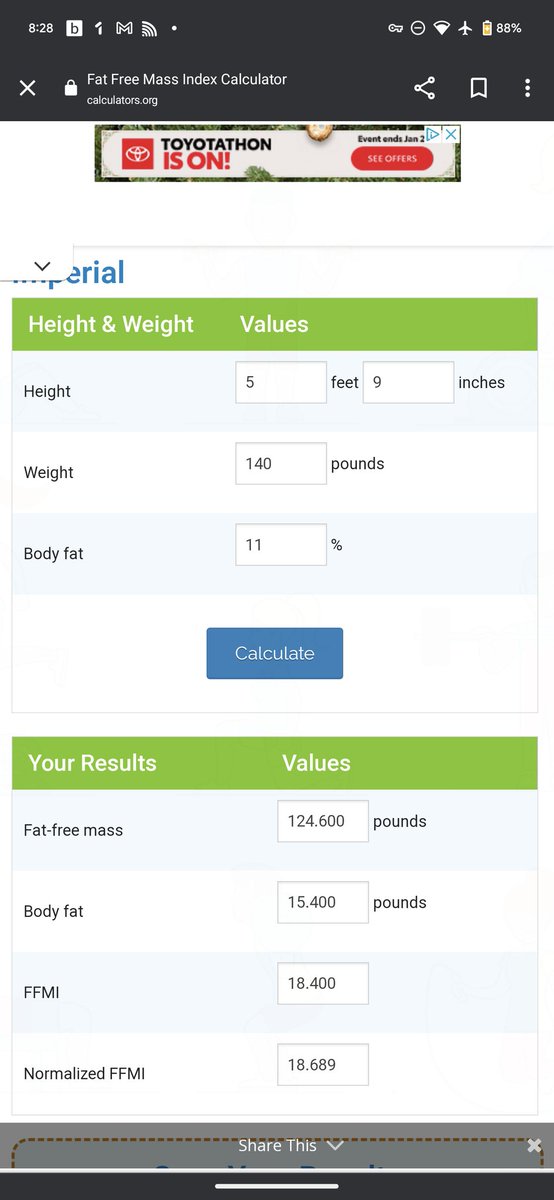
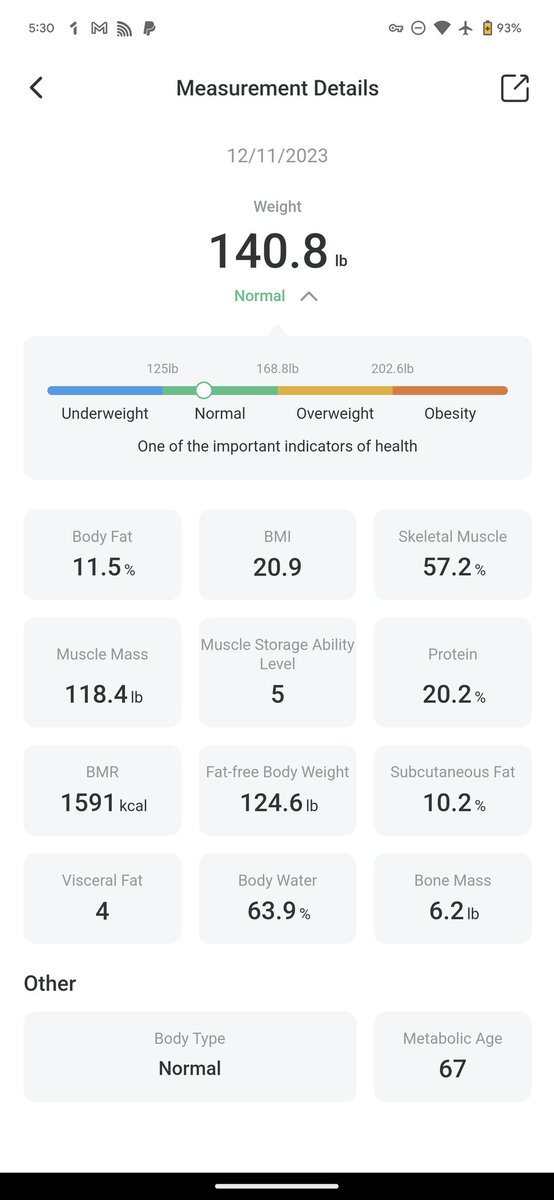
70 years old, 5'9" 140 lbs, 25 years of caloric restriction. PRs: 20 pullups, 4 strict muscle ups. Legless rope climb.
3
1
12
2,858
11 Aug 2025
Good news is good news; bad news is good news too 😁. But no one seems capable of asking a simple question: Why would Tesla need AI5, AI6, ... AI N if unsupervised FSD is going to be solved on AI4, eh? The answer is that, as I have been saying for months, unsupervised FSD will never be released on AI4. And don’t tell me it’s for humanoids—a car moving at 100 mph has drastically different latency requirements than a humanoid at 5 mph.
10 Aug 2025

The moment Elon mentioned AI6 (Q2 earnings call, July 23, 2025) and later followed up with the announcement of the Samsung deal (July 27, 2025), the fate of the Dojo's D1 was sealed.
Whether team members left voluntarily or were pushed is irrelevant. It is clear a decision was made to consolidate around the AI6 for inference (at the edge and data center) and training.
Tesla's Project Dojo was first mentioned by Elon Musk during Tesla's "Autonomy Investor Day" on April 22, 2019— now many years ago.
It didn't make sense for Tesla to continue Dojo as is, using the D1 architecture. And while progress was made, it was clear it was not progressing fast enough.
When an internal project takes too long its always a target. And Elon, unlike most, is not held to sunk costs. He makes fast turns, reorganizes teams, and moves on when the writing is on the wall.
Some will see "team members leaving" as a failure— its irrelevant, a headline that disappears in a few days.
Fast pivots are what make great companies great. Fast fails too, in a sense Dojo overstayed its welcome. The "failure" might not be the outcome we are all seeing play out, but the fact it lasted this long. But Dojo provided many learnings that inform better decisions and a better chip architecture going forward.
I, for one, am just impressed that a so-called auto company builds its own AI processor. Obviously the auto is for autonomy.
2
408
25 Jun 2025
Elon Musk’s Risky Bet on Unsupervised Autonomy: A Reckoning for Tesla
In October 2024, Elon Musk unveiled the Tesla Cybercab, a sleek, steering-wheel-less robotaxi that embodied his audacious vision for unsupervised general autonomy. The reveal was a culmination of a strategic pivot that began roughly a year ago, when Musk scaled back Tesla’s consumer car business—deprioritizing new plants and models—to go all-in on the Cybercab and Full Self-Driving (FSD) technology. Musk’s gamble rested on a single, unwavering belief: Level 5 autonomy, where vehicles operate without human intervention in any scenario, was imminent. “Tesla will soon release unsupervised FSD,” Musk would say, predicting cars “driving around by themselves, with no people in them” on public roads. Yet, as 2025 draws to a close, the reality is stark: unsupervised autonomy remains elusive, Tesla’s core business is faltering, and customer trust is fraying. Musk’s bet, while visionary, may have misjudged the complexity of autonomy and the cost of neglecting Tesla’s foundation.
The Mirage of Level 5 Autonomy
For over a decade, Musk has promised that fully autonomous driving is “next year.” In 2016, he claimed all Tesla vehicles had the hardware for full autonomy. In 2019, he predicted robotaxis would be operational by 2020. Each deadline has slipped, and the Cybercab was replaced with Robotaxi’s June 2025 trial in Austin, touted as a milestone, fell short of Musk’s “unsupervised” promise. X posts from June 2025 highlight the gap: users noted that Tesla delivered a supervised system with a human driver ready to intervene, far from the “nobody in the car” vision Musk hyped.
The core issue is that Level 5 autonomy demands a human-like understanding of the physical world—an AI capable of navigating edge cases like construction zones, erratic pedestrians, or sudden weather changes. No AI lab, not even Tesla’s, has cracked this. Musk’s approach—scaling compute power and training data—assumes autonomy is a resource problem. But as critics argue, artificial general intelligence (AGI), the foundation for true autonomy, isn’t something you can force-schedule. It’s akin to trying to “make a baby in one month with nine women,” as the saying goes. The complexity requires breakthroughs, not just brute force. Tesla’s FSD, while advanced, still struggles with basic scenarios, as evidenced by the National Highway Traffic Safety Administration’s October 2024 investigation into 2.4 million Tesla vehicles after four reported FSD-related collisions.
The Cost of the Pivot: Declining Sales and Eroding Trust
Musk’s focus on autonomy has come at a steep price for Tesla’s core business. In January 2025, Tesla reported disappointing sales, with vehicle deliveries declining for two consecutive years. While Musk had projected 20% to 30% sales growth for 2025 in late 2024, the company quietly dropped that forecast in its Q4 results. Global deliveries fell from 1.81 million in 2023 to 1.79 million in 2024, with 2025 on track for further declines as competitors like BYD and legacy automakers flood the market with affordable EVs. Neglecting new consumer models and production capacity has left Tesla vulnerable, with its aging lineup—led by the Model 3 and Model Y—losing ground.
Customer goodwill, once a Tesla strength, is also eroding. Tens of thousands of owners who paid $8,000 to $15,000 for FSD licenses feel misled by unfulfilled promises. A February 2025 class action lawsuit in California, now awaiting class action designation, accuses Tesla of misrepresenting FSD’s capabilities and the performance of its “Hardware 3” computer. The suit echoes a broader discontent: a June 2025 report noted 10,000 Australian Tesla owners joined a similar “phantom braking” lawsuit, highlighting global frustration. These legal battles threaten not just financial penalties but Tesla’s reputation as a trustworthy innovator.
1
1
7
15,236
12 Jun 2025
I just took FSD 13.2.9 (2025.20.3) out for the first time. Within the first 2 miles, it made 4 serious mistakes. I didn’t intervene in any of them because the situations were too quick to react to safely.
1.
I was at a stop, making a left turn onto a two-way street with partially obstructed visibility. There was a pickup truck coming from the left. The car hesitated, then darted out in front of the truck, close enough to be scary. A human driver would not do this, considering that no time was spent waiting for a safe opportunity, and the truck was the only vehicle on the road.
2.
Less than half a mile down the road, it stopped at a red left-turn arrow light, then suddenly made the left turn without waiting for the arrow to turn green.
3.
I was approaching an intersection where a bus was blocking the right lane. The left turn lane was occupied by a car waiting for the light. The car in front of me recklessly squeezed between the bus and the left-turn car. To my horror, my car followed the same risky maneuver.
4.
About 300 yards down the road, there was an intersection with 3 lanes. The leftmost lane could only turn left, the second lane could go left or straight, and the right lane could only turn right. The car took the leftmost lane but then went straight.
I stopped using FSD 13.2.8 around town a while back, but I don't recall it being as bad as 13.2.9.
3
714
30 May 2025
Why True Unsupervised FSD Might Require AGI
I’ve been reflecting on the current state of autonomous driving, especially after spending time with Tesla’s latest Full Self-Driving (FSD) software. While the progress is impressive, I’m starting to think that true unsupervised FSD — the kind that needs no human oversight — might be impossible without AGI-level reasoning.
Here’s why.
The Illusion of Competence
Modern FSD systems are excellent at handling the routine. Highways, lane keeping, traffic lights — these are mostly solved problems under good conditions. But real-world driving is messy. It’s full of ambiguous, rare, and high-stakes scenarios — the so-called “edge cases.”
These are things like:
A construction worker waving you past a blocked lane with a non-standard hand signal.
A child darting out from behind a van.
A stop sign that's been spray-painted and partially obscured.
Black ice forming just after sunset.
These events aren’t just rare; they’re often unpredictable and demand contextual understanding, common sense, and even moral judgment. In other words, the kind of flexible cognition that humans naturally apply when we drive.
Beyond Narrow AI
Today’s FSD systems — no matter how advanced — are still forms of narrow AI. They rely on deep learning, large datasets, and heuristics. They can mimic decision-making, but they don’t understand the world.
Yes, we can throw more data at the problem. Yes, we can train on millions of miles. But unless a system can reason like a human, it’s still just pattern-matching.
And pattern-matching fails when reality throws something new at you.
AGI: The Missing Link?
This leads me to believe that fully autonomous driving — with no need for human intervention — might actually require Artificial General Intelligence (AGI).
Only an AGI could:
Understand novel, complex, or contradictory situations.
Make split-second decisions using general knowledge and real-world reasoning.
Weigh risk, interpret intent, and adapt on the fly — just like humans do.
The Fragile Hack
Without AGI, every workaround feels like a band-aid. More sensors, more data, better models — they help, but they don't fundamentally solve the problem. They just delay the failure to a rarer edge case.
And if your system works 99.9% of the time, but fails catastrophically 0.1% of the time, it’s still not safe enough.
That’s why, to me, anything less than AGI-level reasoning for unsupervised FSD feels like a fragile hack — impressive, but inherently dangerous.
4
1
10
15,808
4 May 2025
Unsupervised FSD (meaning no driver or remote supervision) won’t be achievable until full integration of multimodal AGI and autonomous systems. The vehicle must act like a human in complex scenarios, such as:
A driverless car transporting a child or senior being pulled over by police.
Navigating unexpected roadblocks where an officer approaches, gives instructions, and the car responds, asks clarifying questions, and even interprets visual aids like maps or detour explanations.
Teaching a car to drive before teaching it to behave like a human is a fool’s errand.
3
1
457
7 May 2025
The head of Meta AI: We are nowhere near real world AGI. That's why there's no level 4,5 autonomy: x.com/slow_developer/status/…

Yann LeCun says despite LLMs passing bar exams, fundamental inventions remain missing.
We still lack domestic robots, fully autonomous cars, and systems with true physical understanding and persistent memory.
"your house cat is way smarter than the biggest LLMs"
269
6 May 2025
I take back the flip "fool's errand" comment. Obviously, FSD v13 is very useful.
112
4 May 2025
This is no different than teaching a humanoid to just move from point A to point B while avoiding obstacles. Without a multimodal AGI brain, such robot has limited utility.
135
6 Apr 2025
My conversation with grok3 reinforced the correctness of my decision to sell all my Tesla shares at $332. You can skip to the FSD discussion.
x.com/i/grok/share/ExX1sOERs…
2
1
375
15 Feb 2025
8 minutes of pure gold!
14 Feb 2025

American Citizen just watched the Joe Rogan interview with Mike Benz talking about USAID
She’s so mad, she’s physically shaking
“This is literally treason”
MUST LISTEN: “The things that USAID has been doing is treason. How can you describe the things that USAID has been doing as anything less than treason?”
“How much of what we've been told by the mainstream news who were being funded by USAID, how much of that was real?”
“The more that I learn, the more angry that I get, and I hate being f*cking emotional on here, I'm sorry, I don't mean to swear. I'm trying not to. I wasn't born and raised in the United States of America. The idea of what I thought the United States of America was is... it's not real. It's not real.
These people have perverted our country and our goodwill. They have extorted the American people in the name of humanitarian aid. And essentially funded both sides of every conflict. This is overwhelming. I can't even like, I can't even like grasp my thoughts, my mind is racing.”
“Like, this is insane. This is insane and these politicians that are sitting here screaming about how... how Donald Trump is causing a constitutional crisis. What are you talking about? You people have literally gotten rich off of USAID.
And just for anybody wondering, it's not about the money. It's not about the money. It's about the corruption. It's about the cost, the human lives that have been lost. because of the money, the blood money that has been spent. They've been funding the Taliban, they've been funding Al-Qaeda. How is that not the tip of the spear of the military industrial complex? Cause you can't perpetually be in war if there's no enemies to fight.”
“I want justice. I want every single person who had a hand in this corruption to be in prison. Every single one. I don't care if they're a hundred fucking years old. I don't care. They need to be in prison for the rest of their lives. These people are fucking evil. They are evil. And this is treason.
Donald Trump, please, God, please protect Donald Trump and Elon Musk. I pray every single day for those men, for everybody. Tulsi Gabbard, RFK Jr., Kash Patel, Pete Hegseth. I pray for Pam Bondi, and I pray for, I pray for everybody in the Trump administration. Oh, and JD Vance. I don't want to forget JD Vance.
We need this wrecking ball to absolutely destroy this corrupt machine that has been perverting our country.
And I want every single person involved in handcuffs and behind a jail cell door”
This is just a small portion of what’s said. Every word is 100% spot on to how WE ALL feel right now
180
14 Feb 2025
There is a massive uniparty grift machine there in DC.

It’s almost like there’s a massive uniparty grift machine here in DC 🤔
1
145


Alexander Dreyzen retweeted

7 Feb 2025
The American people have had enough!!
Absolute MIC DROP.. 🔥🔥💯
2,359
12,852
41,015
1,133,631
Alexander Dreyzen retweeted

5 Jan 2025
🇺🇸THESE ARE THE 158 DEMOCRATS WHO VOTED AGAINST DEPORTING SEX OFFENDERS
Alabama:
-Terri Sewell
California:
-Pete Aguilar
-Ami Bera
-Julia Brownley
-Salud Carbajal
-Tony Cárdenas
-Judy Chu
-Jim Costa
-Mark DeSaulnier
-John Garamendi
-Robert Garcia
-Sylvia Garcia
-Jimmy Gomez
-Jared Huffman
-Ro Khanna
-Sydney Kamlager-Dove
-Barbara Lee
-Ted Lieu
-Zoe Lofgren
-Doris Matsui
-Kevin Mullin
-Grace Napolitano
-Nancy Pelosi
-Katie Porter
-Linda Sánchez
-Adam Schiff
-Brad Sherman
-Norma Torres
-Mike Thompson
-Maxine Waters
Colorado:
-Jason Crow
-Diana DeGette
-Brittany Pettersen
-Joe Neguse
Connecticut:
-Rosa DeLauro
-John Larson
-James Himes
Delaware:
-Lisa Blunt Rochester
Florida:
-Kathy Castor
-Sheila Cherfilus-McCormick
-Lois Frankel
-Maxwell Frost
-Darren Soto
-Frederica Wilson
-Debbie Wasserman Schultz
Georgia:
-Sanford D. Bishop Jr.
-Lucy McBath
-Henry “Hank” Johnson
-Nikema Williams
-David Scott
Hawaii:
-Ed Case
-Jill Tokuda
Illinois:
-Sean Casten
-Danny Davis
-Jesús “Chuy” Garcia
-Jonathan Jackson
-Raja Krishnamoorthi
-Robin Kelly
-Delia Ramirez
-Janice Schakowsky
-Mike Quigley
-Bill Foster
-Brad Schneider
-Lauren Underwood
Indiana:
-André Carson
Kentucky:
-Morgan McGarvey
Louisiana:
-Troy Carter
Maine:
-Chellie Pingree
Maryland:
-Steny Hoyer
-Glenn Ivey
-Kweisi Mfume
-Jamie Raskin
C.A. Dutch Ruppersberger
-John Sarbanes
-David Trone
Massachusetts:
-Jake Auchincloss
-Katherine Clark
-Bill Keating
-Seth Moulton
-Ayanna Pressley
-Richard Neal
-Lori Trahan
-James McGovern
Michigan:
-Dan Kildee
-Debbie Dingell
-Rashida Tlaib
-Shri Thanedar
-Haley Stevens
Minnesota:
-Betty McCollum
-Ilhan Omar
-Dean Phillips
Mississippi:
-Bennie Thompson
Missouri:
-Cori Bush
-Emanuel Cleaver
New Hampshire:
-Ann Kuster
New Jersey:
-Andy Kim
-Rob Menendez
-Donald Norcross
-Bonnie Watson Coleman
-Frank Pallone
New Mexico:
-Melanie Stansbury
-Teresa Leger Fernandez
New York:
-Jamaal Bowman
-Adriano Espaillat
-Hakeem Jeffries
-Yvette Clarke
-Gregory Meeks
-Alexandria Ocasio-Cortez
-Jerrold Nadler
-Nydia Velázquez
-Paul Tonko
-Dan Goldman
-Ritchie Torres
-Grace Meng
-Joseph Morelle
North Carolina:
-Alma Adams
-Valerie Foushee
-Deborah Ross
Ohio:
-Shontel Brown
-Joyce Beatty
-Greg Landsman
Oregon:
-Earl Blumenauer
-Suzanne Bonamici
-Valerie Hoyle
Pennsylvania:
-Madeleine Dean
-Mary Scanlon
-Summer Lee
Rhode Island:
-Gabe Amo
South Carolina:
-James Clyburn
Tennessee:
-Steve Cohen
Texas:
-Greg Casar
-Veronica Escobar
-Joaquin Castro
-Sylvia Garcia
-Lloyd Doggett
-Lizzie Fletcher
-Al Green
-Jasmine Crockett
-Marc Veasey
Vermont:
-Becca Balint
Virginia:
-Donald Beyer
-Gerald Connolly
-Jennifer McClellan
-Bobby Scott
Washington:
-Suzan DelBene
-Derek Kilmer
-Rick Larsen
-Marilyn Strickland
-Pramila Jayapal
Wisconsin:
-Gwen Moore
-Mark Pocan
Source: Newsweek

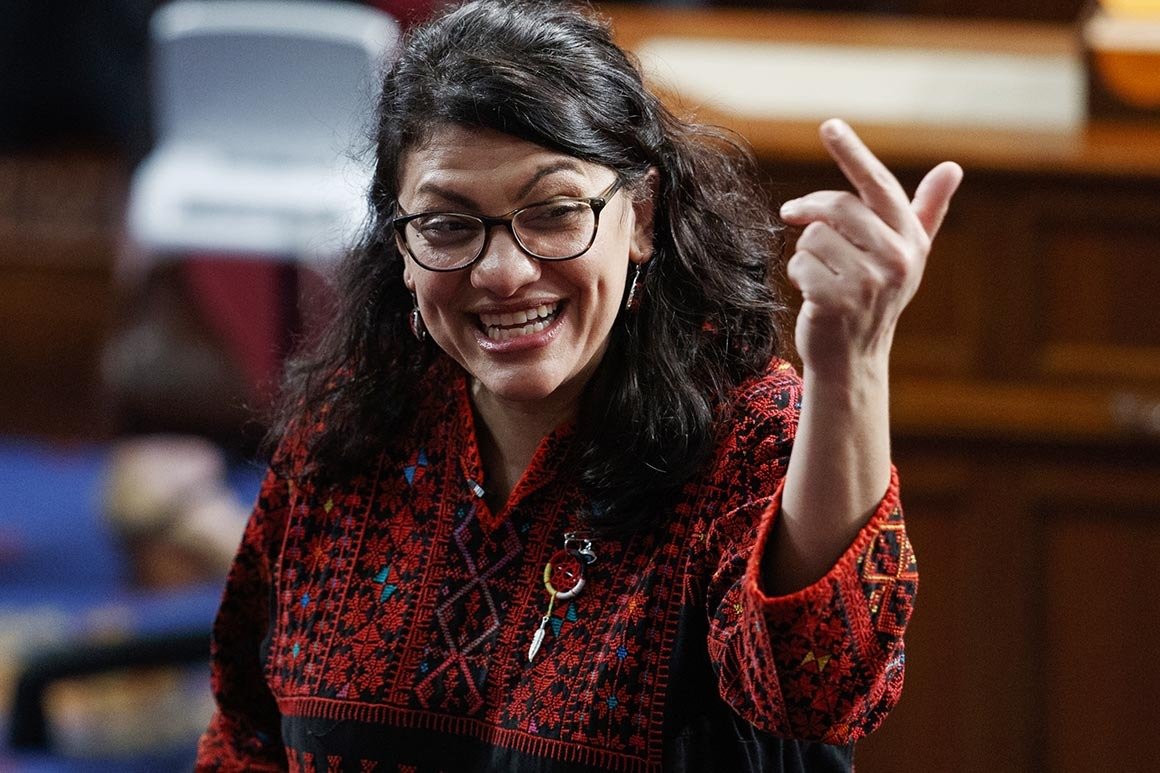
There is no excuse. Please post the list of people who opposed this law and want to keep illegals who are convicted sex offenders in America.
They all need to be voted out of office. Every one of them.
7,197
43,781
80,312
28,449,914
12 Nov 2024
FDA pharma are pure evil.
12 Nov 2024

Having been called a liar by Anthony Fauci for saying that "not one of the 72 vaccines mandated for children has ever been safety tested", RFK Jr. sued Fauci.
After a year of stonewalling, Fauci's lawyers admitted that RFK Jr. had been right all along.
"There's no downstream liability, there's no front-end safety testing... and there's no marketing and advertising costs, because the federal government is ordering 78 million school kids to take that vaccine every year."
"What better product could you have? And so there was a gold rush to add all these new vaccines to the schedule... because if you get onto that schedule, it's a billion dollars a year for your company."
"So we got all of these new vaccines, 72 shots, 16 vaccines... And that year, 1989, we saw an explosion in chronic disease in American children... ADHD, sleep disorders, language delays, ASD, autism, Tourette's syndrome, ticks, narcolepsy."
"Autism went from one in 10,000 in my generation... to one in every 34 kids today."
1
184
Alexander Dreyzen retweeted

8 Nov 2024
Holy sh*t. I might actually be able to tell the truth on YouTube again. This will send shockwaves through all of big tech and the intelligence agencies
2,710
19,648
84,964
6,094,760
8 Nov 2024
8 Nov 2024

President Trump released his plan to DISMANTLE the Deep State. Now that he's President-elect, this is the most important three minutes of video on the internet right now.
HUGE 🔥🔥
1
1
113
2 Nov 2024
These people are running the government
2 Nov 2024

Biden says Republicans like Trump are “the kind of guys you’d like to smack in the ass.” LOL WHAT 🤣🤣🤣
1
100
2 Nov 2024
She's amazing. Take time to listen!
1 Nov 2024

Here’s my full speech at Tucker Carlson’s event with Donald Trump in Glendale, AZ 🇺🇸
2
87