
University of Michigan Alum, Dog Dad, American 🇺🇸 | Unlock My 250-Prompt, Reverse Engineering Notion Toolkit for Free
Joined September 2011
- Tweets 7,490
- Following 1,896
- Followers 1,683
- Likes 6,166
964 Photos and videos


Pinned Tweet

9 Jul 2025
BIGGEST GIVEAWAY EVER: 250 prompts to reverse engineer top AI content - now FREE (was $21)
Pay what you want if you find value.
Break down winning articles & offers
Rebuild them better for your niche
Limited time only.
Download here: ahollenbaugh.gumroad.com/l/R…
If you found this to be helpful, please RT to spread the word!
10
2
15
5,569
At 6:42 a.m., the first real sign of the problem is not on Wall Street. It is at a Dunkin’ drive-thru in Worcester.
A man orders a small coffee for $3.19, hands over a five, and the cashier freezes.
She opens the drawer.
No singles.
She checks under the tray, behind the receipt printer, the emergency change cup, the rubber-banded stack near the manager’s office.
Nothing.
“Do you have exact change?”
He laughs because he thinks she is joking. Then he looks in his wallet and realizes he has a five, a twenty, two expired insurance cards, and zero ones.
By 8 a.m., the country has discovered the same thing at once: every $1 bill is gone. Not destroyed. Not replaced. Not withdrawn gradually. Just gone. From cash drawers, tip jars, wallets, glove compartments, birthday cards, church donation baskets, laundromat change machines, vending machine validators, bartender aprons, flea market cash boxes, toll booths, and every “take a dollar, leave a dollar” tray in America.
The economy does not collapse immediately. It gets deeply awkward.
The first casualties are small transactions.
Coffee shops, bodegas, food trucks, diners, convenience stores, parking garages, laundromats, and school fundraisers all run into the same basic problem: the American cash system is built around the assumption that the $1 bill exists. A $5 bill is useful because a $1 bill exists. A $10 bill is useful because a $1 bill exists. Without singles, cash suddenly becomes blunt.
A $2.75 coffee becomes easy if you have quarters, hard if you only have a five, and impossible if the store refuses to eat the loss. Cashiers start saying things like:
“We can round down.”
“We can round up.”
“We can give you store credit.”
“We can give you quarters.”
“We can’t break that.”
“We’re card-only for now.”
This creates an immediate divide. People with cards, Apple Pay, debit cards, prepaid cards, and tap-to-pay barely suffer. They complain, but mostly performatively. Their coffee still happens. Their Uber still happens. Their grocery trip still happens.
The pain hits cash-dependent people first: older Americans, unbanked households, kids, street vendors, people working tipped jobs, people paid under the table, people trying to budget physically with envelopes, and anyone who relies on small denominations to keep spending controlled.
By midmorning, “NO CASH UNLESS EXACT CHANGE” signs appear everywhere.
Then come the workarounds.
Fast-food restaurants start rounding all cash transactions to the nearest $5 unless coins can cover the difference. Some stores round down to avoid fights. Others round up and accidentally become villains on local Facebook groups.
Gas stations become chaotic because customers paying cash inside now face strange totals. Someone buying a $2.29 drink with a five might get $2.71 back in coins, if the store has coins. After an hour, the store does not have coins. Quarters disappear next.
The quarter becomes king.
A normal American does not usually think of quarters as serious money. But by lunchtime, quarters are the new singles. Laundromats, vending machines, grocery stores, parking meters, arcade machines, and bus fare systems all suddenly become strategically important sources of low-denomination currency.
People raid junk drawers. Coin jars get emptied. Cars are searched. Parents ask children if they still have piggy banks. Banks see lines of people trying to withdraw coins. Grocery stores stop giving coin rolls to non-business customers. Coinstar machines become weirdly important infrastructure.
At diners and bars, tipping gets strange fast.
The disappearance of singles hits tipping culture emotionally as much as economically. A $1 bill is not just money. It is a social unit. It is the thing you leave for a coffee, valet, hotel housekeeper, bartender, street musician, delivery driver, coat check, shuttle driver, or kid selling lemonade.
Without singles, people either overt tip, undertip, or avoid tipping altogether.
1
1
166
A Treasury or Federal Reserve official goes on camera and says the banking system remains stable, electronic balances are unaffected, and emergency currency-distribution protocols are being reviewed. The key phrase is something like:
“Americans should continue to use electronic payments, coins, and available denominations while financial institutions coordinate temporary cash-handling procedures.”
This calms markets somewhat, because investors care less about the physical inconvenience and more about whether payment systems, bank balances, and consumer spending are still functioning. If debit cards, credit cards, ACH, payroll, ATMs, and online banking still work, the macroeconomy survives the day.
But certain sectors take a hit.
Retailers with high cash volume slow down. Convenience stores lose sales. Transit systems that accept cash struggle. Tipped workers lose income. Small informal vendors lose customers. Armored-car services, banks, casinos, and cash logistics companies go into emergency mode. Payment processors and fintech stocks may jump on expectations that businesses will speed up digital adoption.
The biggest market impact is not that America lost the dollar as a unit of account. Prices are still denominated in dollars. Bank accounts still show dollars. The issue is that one physical denomination disappeared, and that creates friction. Modern economies hate friction.
By night, America has adapted, but not gracefully.
1
69
People pay with cards. Businesses round. Coins circulate aggressively. $2 bills become celebrities. Tip jars get QR codes. Children learn that a five-dollar bill is now basically the smallest serious paper money. Cashiers are exhausted. Bartenders are annoyed. Economists are on television explaining “denomination shock.” Reddit is full of theories. eBay is full of fake listings. Someone starts selling T-shirts that say “I Survived the Great Single Shortage.”
The broader lesson is simple: the $1 bill seems small because it is small, but it performs a huge coordination function. It lets millions of tiny exchanges happen without negotiation. It makes tipping, change-making, informal selling, cash budgeting, vending, and small charity frictionless.
Take it away, and America does not become poor overnight.
It becomes inconvenient.
Then unequal.
Then digital.
Then nostalgic.
And by the next morning, the humble $1 bill — the bill everyone ignored, crumpled, washed in jeans, left in cupholders, and handed to kids for losing teeth — has become one of the most important missing objects in the country.
66
May 15
It’s heartbreaking to hear about Indiana and Roo. Someone out there intentionally poisoned these dogs! gofund.me/990785123
1
1
3
50

Apr 28
Flights are up 21% and people are still booking.
Airlines just learned they can charge more - and get away with it.
1
22
Apr 22
Reverse-engineering Operation Epic Fury:
This looks less like a one-off strike and more like a phased coercive campaign.
Core logic:
find → fix → strike → assess → re-strike → prevent regeneration
Likely goals:
degrade missile and naval capability
hit command/control security infrastructure
pressure maritime access/shipping lanes
make rapid reconstitution harder
turn sustained military pressure into leverage
Bottom line:
Not just about destroying targets once; about keeping Iran from rebuilding capability fast enough to matter.
49
Mar 21
Not all heroes wear capes. Some are just, essentially, trillionaires. Thank you for the generous offer @elonmusk

JUST IN: 🇺🇸 Elon Musk offers to to pay all salaries of TSA agents as senate fails to advance DHS funding.
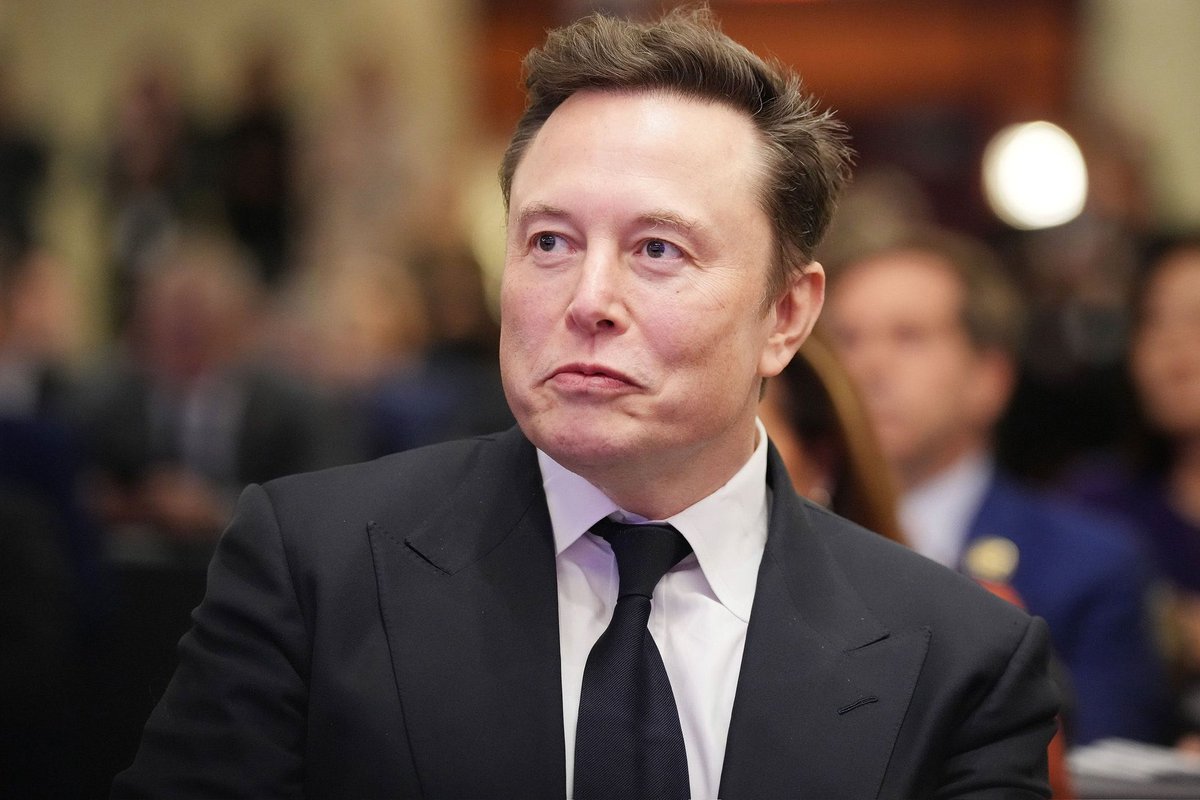

1
77
Mar 18
I built my 2026 March Madness bracket more like Moneyball than hype. Not trying to guess every upset, just trying to find where the bracket market is overrating brand names, underrating certain matchups, and getting too cute in the wrong places.
1
96
Mar 18
Best upset/value picks in my bracket:
High Point over Wisconsin
SMU over Tennessee
South Florida over Louisville
Akron over Texas Tech
Not chaos. Just pressure points.
2
156
Mar 18
That’s really the whole strategy:
stay disciplined up top, don’t overpick upsets, and be selective where the public is probably a little too comfortable.
1
40
Mar 18
So yeah, less “March Madness magic,” more “which teams/paths are being priced wrong?”
That’s how I built it.
36