
Leading @Precurion 4× founder (Arkive, Reflectly, Bounce)
Joined October 2011
- Tweets 739
- Following 737
- Followers 451
- Likes 1,296
57 Photos and videos












May 29
Opus 4.8 feels smarter.
More confident.
More personal.
Talks a lot.
I suppose that uses tokens.
Smart Anthropic.
I gave it a project.
I asked if it finished.
It said it finished.
It finished 70%.
I pointed at the rest.
It said "you're absolutely right."
It said it was fixing it now.
It was not fixing it now.
I handed it to Codex.
Codex didn't tell me I was right.
It just finished.
2
82
May 28
AI makes coding faster.
It does not make the last 20% shorter.
It just gets you up the wrong hill quicker.
Trigger happy is the new slow.
1
42
May 28
I feel like we're in the "dumb phase" of Codex 5.5's cycle right now. 5.6 must be about to launch
40
May 24
Saw two kids prepare their fishing rods in the rain right in front of the local golf course’s “No fishing” sign
That’s tenacity
51
May 24
I started reading the courage to be disliked recently.
Went through a period where an individual was stealing a disproportionate amount of my emotional attention - and I realized I can’t live life allowing others to do that.
So I started seeking inspiration on how to live a life more in tune with myself and the people I care about.
Now that I’ve started reading it I notice the people in my life who manage to truly and authentically be themselves. They tend to have a lot of people who love them deeply. And a fair amount of people who dislike them strongly.
On the surface I think I always thought that that way of living was selfish. Selfish in the sense that you end up contributing less to the world around you. Counterintuitively, what I notice about my friends who truly live authentically is that they tend to have a bigger and deeper impact on the people around them.
It’s seemingly a rare character trait, but once you realize that living that way is a choice, it’s hard to not want to pursue it.
So I have started to do just that. For my friends. For my family. For my daughter and most importantly for myself.
37
May 20
Today, @codycandee realized a goal we first discussed when we were just a few people in our small SF coworking space.
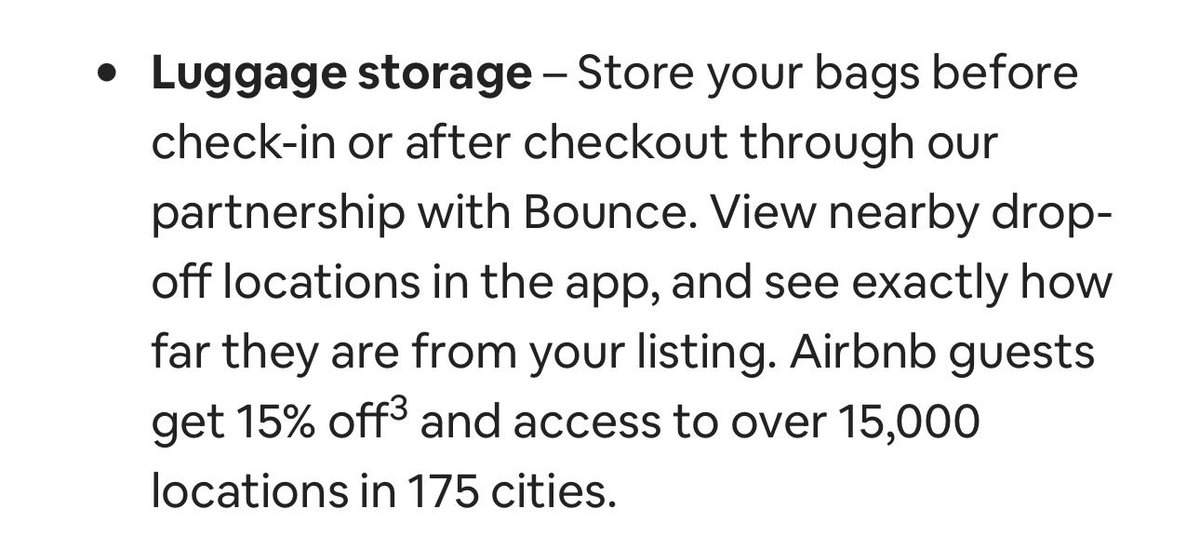
@bouncemystuff was the underdog in the luggage storage industry back then but we believed that with a relentless focus on store growth and superior technology Bounce could become the premier partner for Airbnb.
@codycandee and the team at Bounce have out worked everyone else in the space. I couldn’t be more proud!
4
57
May 19
My wife asked me if I’d be okay with her pulling our daughter out of school once in a while, to go to museums, hang out and have a good time.
I couldn’t be more thrilled. I care about her development and learning, not the institution providing it
1
27
May 19
AI has made it easier to turn "ideas into bets" than it ever was. But the value of those bets is rapidly decreasing.
13
May 18
The model companies are not trying to give you better building blocks. They are trying to ship the employee.
As a founder, that means the question is no longer full agent/narrow agent orchestration in CLI. It's what's left, and what should we bet on building if the AI providers are going to provide the employees?
25
May 17
On one hand the cursor x SpaceX deal is a smashing success. On the other it’s signal of the extreme power laws of owning compute.
If the fastest growing application company can’t compete with the model companies what does that mean for the rest of the application layer?
34
Feb 25
A friend asked me a question I cannot shake: If mortgages are underwritten on future earning potential, what happens when AI changes how earning power is priced?
We are entering a strange split.
Output can rise while the value of many forms of human effort falls.
People can produce more and still capture less.
If that continues, this is not just a labor story.
It is a credit and collateral story.
A lot of our models still assume future income behaves like it used to.
I am less sure that assumption holds. Are we underwriting the right future?
2
2
47
Feb 15
AI isn't going to replace you. your lack of agency will.
everyone has access to intelligence now. the people getting replaced are the ones still waiting to be told what to do with it
28
Feb 15
if intelligence is free, what do we teach kids?
the education system was built to produce knowledge workers. people who store, retrieve, and process information better than the next person.
a $20/month subscription does that better now.
so what's left? three things.
judgment: weighing incomplete information and making a call.
agency: doing something without being told what to do.
taste: knowing what matters and what doesn't.
none of these are taught in school. we teach kids to follow instructions, memorize facts, and optimize for grades.
we're training them for a world that no longer exists.
and here's what's uncomfortable: you can't teach judgment from a textbook. judgment comes from making decisions and feeling the consequences. getting it wrong and learning why.
the current system punishes getting things wrong. that's exactly backwards.
intelligence is infrastructure now. like electricity. you don't get a competitive edge from having it. you get one from what you do with it.
your child's ability to follow instructions is worth less every year. their ability to exercise judgment under uncertainty is worth more every year.
1
26
Feb 14
I keep thinking about what happens when intelligence becomes free.
Not cheaper. Free. Or close enough that it doesn't matter.
Finastra just put out a report. 1,509 financial executives, $100 trillion in AUM. 98% say they're using AI. That number would've been maybe 30% three years ago.
So OK. Intelligence is commoditized. Everyone has it now. The analytical horsepower that used to cost you $200K per analyst is heading toward $20/month.
What's left?
I think it's two things: judgment and agency.
Judgment is the stuff that's hard to automate. Knowing which deal feels wrong even when the numbers look right. Knowing when your model is confidently incorrect. Knowing which LP concern to take seriously and which one to acknowledge and move on from.
Agency is acting on that judgment. Not writing another memo about it. Not convening a committee. Actually making the call.
Most firms I talk to got the AI part. They have the tools. But they're using near-free intelligence to do the same work the same way, just 20% faster. That's not transformation. That's a rounding error.
The interesting firms are the ones asking a different question. Not "how do we use AI?" but "what do our people do now that the analysis is basically free?"
The answer, I think, is: exercise judgment. Build institutional memory so that judgment compounds over time. And move faster than the firms that are still debating whether to use AI at all.
That's what we're building at Precurion. But honestly the insight is bigger than any one company. This is the question every knowledge worker needs to be asking themselves right now.
37
Feb 14
AI removed the bottleneck everyone thought they had
turns out "we need more analysis" was never the real problem. it was "nobody wants to make the call”
20
Software engineering (and any type of knowledge work) is currently experiencing what physical crafts have been going through for the last few decades.
The only constant is change. And it’s here for all of us

I am not sure if other developers feel like this.
But I feel kinda depressed.
Like everyone else, I have been using Claude code (for a while, it’s not a recent thing lol).
And it’s incredible. I have never found coding more fun.
The stuff you can do and the speed you can do it at now. Is absolutely insane.
And I’m using it to ship a lot. And solve customer problems faster.
So all around it’s a win.
But at the same time. The skill I spent 10,000s of hours getting good at. Programming.
The thing I spent most of my life getting good at.
Is becoming a full commodity extremely quickly.
As much fun as it is. And as much as I like using the tools.
There’s something disheartening about the thing you spent most of your life getting good at.
Now being mostly useless.
130