Discover more from ASHA's high-impact research journals: AJA, AJSLP, JSLHR, & LSHSS. Now continuously published on the ASHAWire platform. Also, @SIGPerspectives
Check out another edition of "Last Week in the ASHA Journals!" We published 20 articles across all 5 of our journals in the past week. Check out what you missed!
academy.pubs.asha.org/2026/0…
Canonical babbling is a key stage in speech development, and if it's atypical, can be an early sign of speech disability. Authors ask whether the organization of consonant sequences in canonical babbling differs between autistic and non-autistic children.
on.asha.org/3RYBG5p
The latest issue of Perspectives contains a forum focused on ethics in school-based issues. Learn how to resolve ethical issues in schools, minimize unintended consequences, and prevent these issues from recurring
on.asha.org/4fysPkE
ALT Blue-green background with white text on top of it that says "JSLHR Issue Now Live!" with images of ears, speech bubbles, and a telescope. This image was generated by Gemini AI.
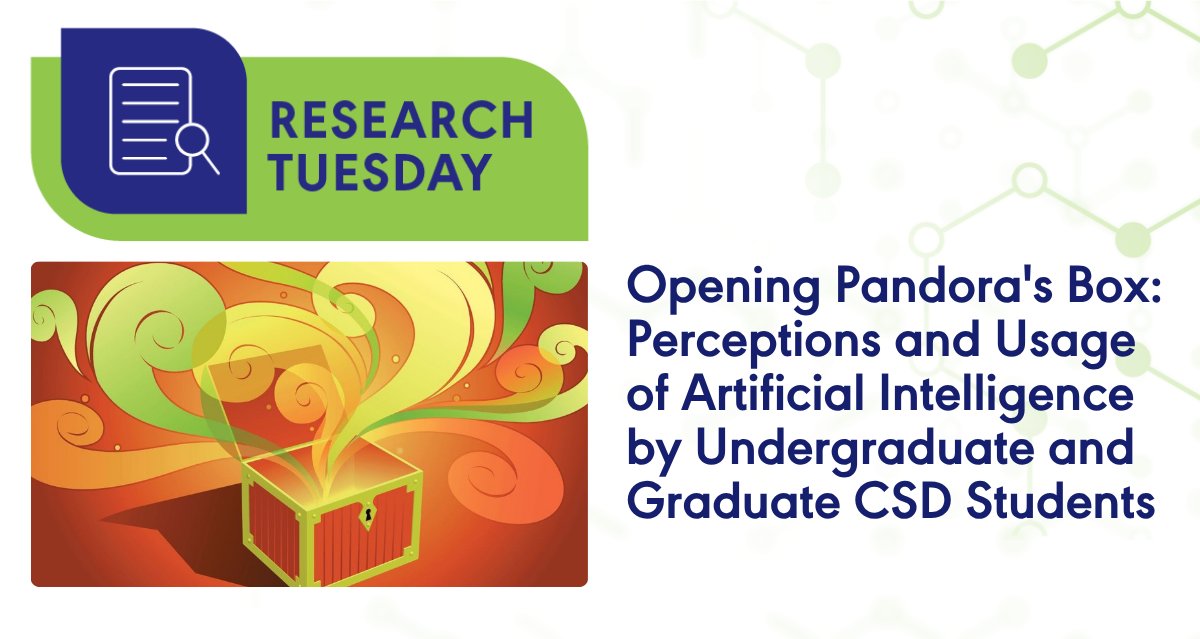
#ResearchTuesday: Students in CSD programs are eager to use AI in educational and clinical contexts, but need formal guidance to protect educational rigor and perform to their full potential as future clinicians.
Read more: at.asha.org/121@ASHAJournals@CSDisseminate
ALT research tuesday. the illustration of an open treasure box is displayed. opening pandora's box. perceptions and usage of artificial intelligence by undergraduate and graduate csd students.
Everyone deserves chances to choose, communicate, and lead their lives. SLPs play a key role in growing self‑determination for people with intellectual and developmental disabilities.
on.asha.org/43b95fz#SLPeeps
Our latest Special Collection gives school-based SLPs a wide variety of resources on service eligibility in one place! Read more and check out the Special Collection on ASHAWire! academy.pubs.asha.org/2026/0…
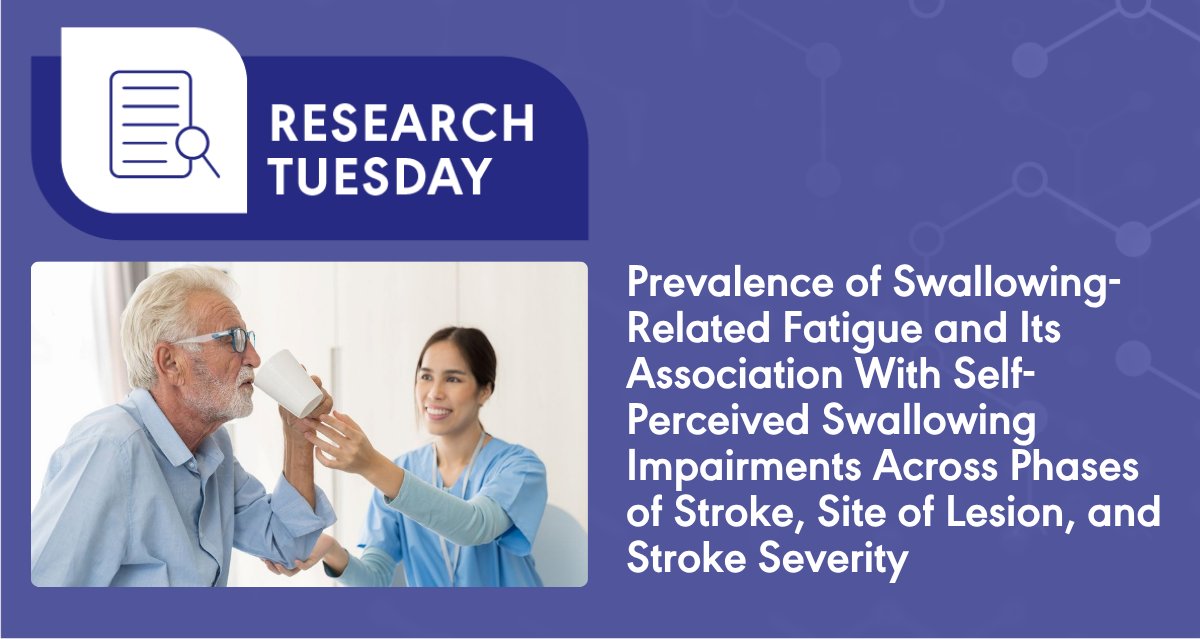
#ResearchTuesday: Swallowing-related fatigue is a notable and unique complication of stroke.
Learn how you can identify swallowing-related fatigue during dysphagia assessment in this AJSLP article: at.asha.org/11F@ASHAJournals@CSDisseminate
ALT research tuesday. prevalence of swallowing related fatigue and its association with self perceived swallowing impairments across phases of stroke site of lesion and stroke severity. a healthcare worker smiles as she uses one hand to guide a cup up to the mouth of a patient wearing glasses and places her other hand under his elbow. The patient holds the cup and tilts it toward his mouth.
Introducing a brand new feature: Last Week in the ASHA Journals! Be sure to check in every Monday to find articles published in the last week that you may have missed across all 5 of ASHA's journals! academy.pubs.asha.org/2026/0…
Researchers explored the experiences of young adults (18–22) w/ #TBI in educational, home, & extracurricular settings using qualitative methodologies. These valuable insights can inform person-centered interventions & support strategies. on.asha.org/4nOlTSk@UMaine_CSD
The continuing education experiences and needs of hearing health care professionals were examined in this #AJA study to inform the design and delivery of future educational initiatives tailored to this workforce.
on.asha.org/4acwLDY#aud2b#audiology
Perceptual training can improve intelligibility of a child w/CAS for communication partners--so, despite speech signal variability, there is sufficient predictability to support learning--& this learning response is not constrained by partner familiarity. on.asha.org/49o6PVH
How do people with aphasia and their partners navigate text messaging? And how do texting patterns change throughout recovery? New #AJSLP article explores these questions about the role of texting among people with aphasia.
on.asha.org/3Q6HCZn
Most research on boys w/ fragile X focuses on grammatical production, not receptive grammatical judgment. This study examined both, revealing persistent difficulties in grammatical production & judgment of finiteness marking (particularly, BE forms). on.asha.org/42ZB5Ti
This letter to the editor is a response to Morrell and LaManna, continuing a discussion on esophageal screening and clarifying points raised in their letter.
on.asha.org/4va9TwW
This study in #LSHSS highlights the value of allowing adolescents to employ their entire linguistic repertoire. Translanguaging can positively affirm these students' cultural–linguistic identities and practices on.asha.org/3Rm5top@KECKSchool_USC@OhioState
Author @wwlchung writes: Working memory, transcription, and oral language skills each play unique roles in Taiwanese children’s writing proficiency." Learn more in JSLHR! on.asha.org/3S1x5PG#SLPeeps#SLP2B
#JSLHR study investigated the interaction of reduced circulating #estrogen, #estradiol replacement, and mild systemic dehydration on ultrasonic vocalization (USV); both circulating estrogen & systemic hydration status selectively influenced USV profiles. on.asha.org/4v59USM
This letter to the editor in Perspectives discusses possible risk factors for Primary Progressive Aphasia (PPA). The article also discusses the treatment of PPA, and weighing an individual's burden and discomfort against the benefits of therapy on.asha.org/3S1wygE#SLPeeps