African Studies Review is the principal scholarly journal of the African Studies Association (@ASANewsOnline).
Joined February 2014
- Tweets 1,101
- Following 92
- Followers 4,447
- Likes 502
97 Photos and videos
Pinned Tweet

20 Feb 2025
African Studies Review 67.4 is out! The latest issue features thought-provoking articles on a variety of topics, including decoloniality, wartime Biafran art, the Sudan crisis, and "science" as a keyword in African Studies. cambridge.org/core/journals/…
6
20
1,291
May 14
In this issue’s In Memoriam section, James Ogude, Susan Kiguli, Ndirangu Wachanga, Brendon Nicholls, and Gilbert Shang Ndi reflect on the life and work of the late Kenyan visionary author and theorist, Ngũgĩ wa Thiong'o. Read their tributes here: tinyurl.com/2fwmdbrd
1
4
140
May 13
Nnanna Onuoha Arukwe surveys four histories—from rural South Africa to Casamance, Djibouti, & Ghana—to show how Africa is reconstructed through violence, defiance, politics, & spiritual revival—beyond state archives & modernization scripts. doi.org/10.1017/asr.2025.101…
3
4
178
May 12
For Dotun Ayobade, “Project a Black Planet,” presented at the Art Institute of Chicago, did more than represent Pan-Africanism: it “enacted” it. This review essay explores the exhibition’s vision of Black art, solidarity, and future-making. doi.org/10.1017/asr.2025.101…
1
4
153
May 11
How to mobilize 170 million people into a coherent political voice? In her Hormuud Lecture, 'On the Demanding Forward Flight of the Diasporan Sankofa Bird,' Abena P.A. Busia examines the promises & contradictions of the AU's 6th Diaspora Region. doi.org/10.1017/asr.2026.102…
1
61
May 8
Sudan’s democratic transition faltered as the US “missed another democratic moment.” Rawia Tawfik shows how a self-defeating foreign policy—shaped by strategic priorities, bureaucratic inertia, & regional alliances—undermined civilian rule. doi.org/10.1017/asr.2025.101…
1
1
79
May 7
What political work does rumor do? Diana Felix da Costa traces how claims about Murle infertility in South Sudan hardened into myth, legitimizing exclusion, securitization, and violence. doi.org/10.1017/asr.2026.101…
1
62
May 6
Nomthandazo Malambo and Stephen Brown examine how abortion and LGBTI rights in Zambia are both stigmatized as “un-Christian” and “un-Zambian,” while activists use those same pressures to build coalitions for reproductive justice. doi.org/10.1017/asr.2026.102…
1
121
May 5
What does women’s labor make visible in the African city? Tolulope Akinwole argues that women’s “discursive and performative actions” are central to understanding work, struggle, and urban life in Lagos. doi.org/10.1017/asr.2025.101…
78
May 4
When queer pleasure becomes public, it can become punishment. Nwando Achebe traces how a 2011 viral video at the University of Benin turned intimacy into “moral evidence” and visibility into violence in Nigeria. doi.org/10.1017/asr.2026.102…
1
124
May 1
30 years after his execution, Ken Saro-Wiwa’s legacy endures. Editor-in-Chief Cajetan Iheka traces the “afterlife” of his activism for Ogoni self-determination & environmental justice in art, literature & social movements. Read the editorial doi.org/10.1017/asr.2026.102…
8
6
512
Apr 30
The new ASR issue (69.1) is here. From Sudan’s stalled transition to Pan-African art, sexual citizenship in Nigeria, reproductive justice in Zambia, and diaspora politics—this issue traces power, embodiment, and resistance. Read it here: tinyurl.com/2fwmdbrd
2
5
253
Feb 16
Call for Proposals: ASR seeks keyword essays for the 2026 ASA Annual Meeting, New Orleans. Engage emerging trends & topics for a broad Africanist audience through critical terms. Peer-reviewed; publication opportunity. Submit by March 13: ow.ly/VcKz50YgzP2
1
3
357
Feb 9
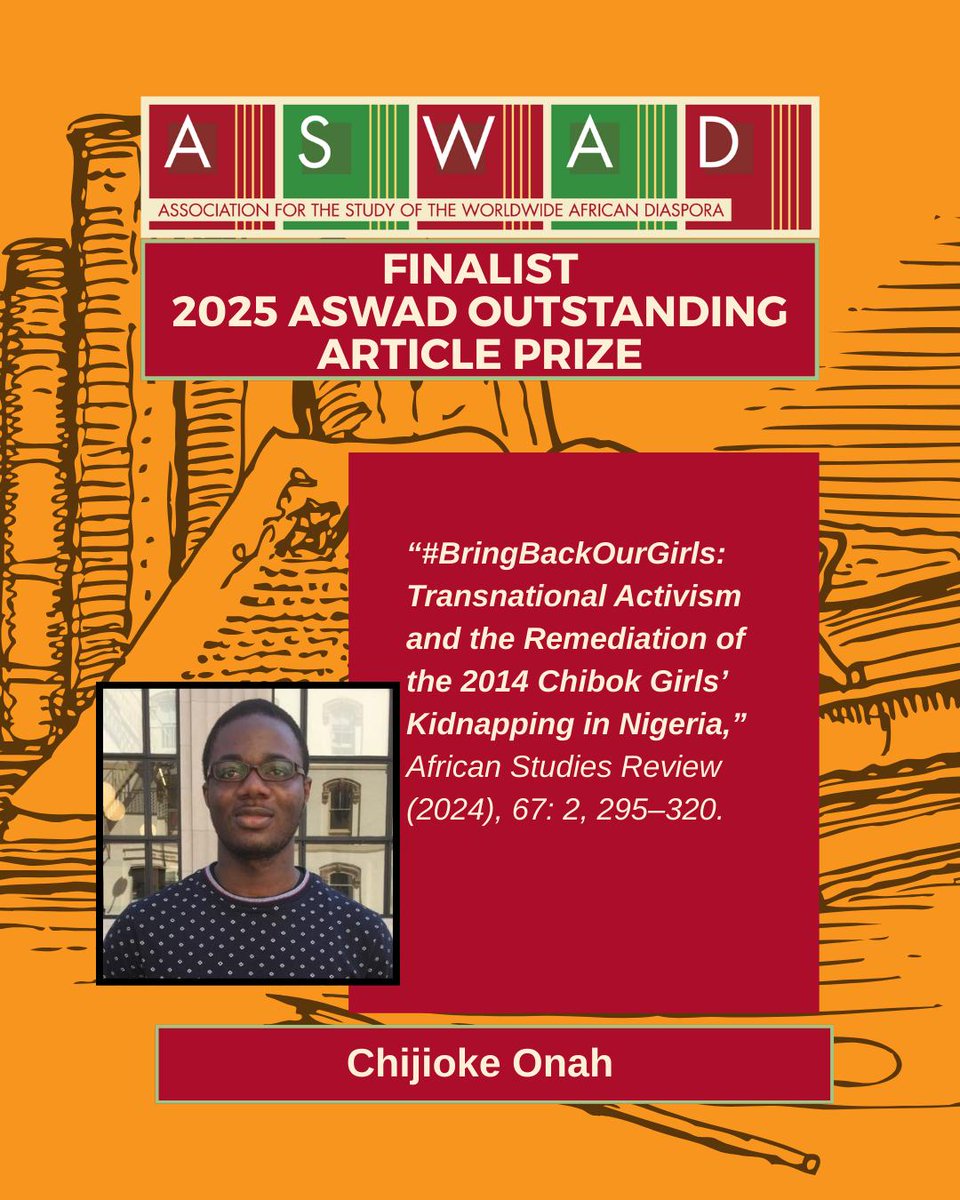
Chijioke Onah’s ASR article “#BringBackOurGirls,” from our vol. 67, no. 2, has been named a finalist for the ASWAD Article Prize, which honours outstanding scholarship on Africa and/or the African Diaspora. Congratulations, Chijioke! @kizichiji
cambridge.org/core/journals/…
4
9
481
Feb 6
In this issue’s In Memoriam section, Aliko Songolo, Anjali Prabhu, Pierre-Philippe Fraiture, & Tsitsi Jaji each pay tribute to the late Congolese philosopher & writer V. Y. Mudimbe. Read their thoughtful contributions here: tinyurl.com/6sfz5u4u
8
8
1,082
Feb 5
Reviewing recent works that focus on “governance deficit in public authority” in Nigeria and Ghana, Bernard Nwosu examines the relationship of such fragility to the “current condition of the political state in Africa.” doi.org/10.1017/asr.2025.100…
66
Feb 4
Jennifer Lofkrantz, Bréma Ely Dicko, and Chitra Nagarajan examine how an individual’s perceived positionality affects their response to the evocation of historical memory in the Katiba Macina and Boko Haram-related conflicts. doi.org/10.1017/asr.2025.101…
1
2
353
Feb 3
Using the concept of “deep listening,” Fauziyatu Moro and Reginold A. Royston examine “podcasting, as a technology of sound…for the way its content resonates with listeners in Africa, with and beyond the physical aspects of hearing.” doi.org/10.1017/asr.2025.101…
1
108
Feb 2
Despite similarly undelivered promises, Pritish Behuria documents how “the ‘democratic’ Mauritian and Botswana governments were more flexible in adapting their luxury tourism strategies than the ‘authoritarian’ Rwandan government. ow.ly/NRbA50Y58EU
1
272
Jan 30
Hangala Siachiwena challenges “the narrow framing of [former Zambian president Michael] Sata as a populist” and instead, “situates his politics within broader debates on development in post-adjustment Africa.” doi.org/10.1017/asr.2025.101…
1
2
293
Jan 29
Mahder Serekberhan discusses the central importance of working peoples’ nonhierarchical coordination to the success of the 2018/2019 Sudanese Uprising, an essay for which she won the 2023 ASA Graduate Student Paper Prize. doi.org/10.1017/asr.2025.101…
78