
Soul Healing Coach & Spiritual Advisor Lyme Advocate 💚💋Motivational Speaker Use your discernment that God gave you💛🙏🏻♥️
Joined March 2015
- Tweets 11,899
- Following 996
- Followers 1,201
- Likes 26,702
144 Photos and videos




Angie Sudduth Walsh retweeted

Mar 10
Mar 10

The Iraq War was about Occultic Satanists taking the body of Gilgamesh/Nimrod, as well as a possible Stargate.
Hillary Clinton’s email per wikileaks Podesta emails shows their intention. Tim Alberino theorized they're using #Nephilim bodies in rituals.
#ClintonEmails #Gilgamesh #Nimrod #NephilimBloodlines #Watchers #Genesis6Conspiracy #SeedWar #IraqWar #Annunaki
VID: Jason_abadi TT
1
7
18
1,401
Angie Sudduth Walsh retweeted
History is nothing more than a set of lies agreed upon.
By Controllers.
#Founded #OldWorld #Mudflood #LittleSeason #HiddenHistory
Credit: poddaddy2.0 IG
2
42
98
2,890
Angie Sudduth Walsh retweeted
Jun 14
All these dicks showing the girl hit the ground in bungee accident have lost any shred of empathy or decency.
I hate this part of digital culture, desensitized.
A WOMAN DIED!
14
12
74
5,884
Angie Sudduth Walsh retweeted

Instead of adding pink ribbons to their products every October maybe companies should just remove the cancer causing ingredients
549
24,220
126,317
1,136,572
Angie Sudduth Walsh retweeted

Jun 11
4
4
156
Angie Sudduth Walsh retweeted

Jun 11
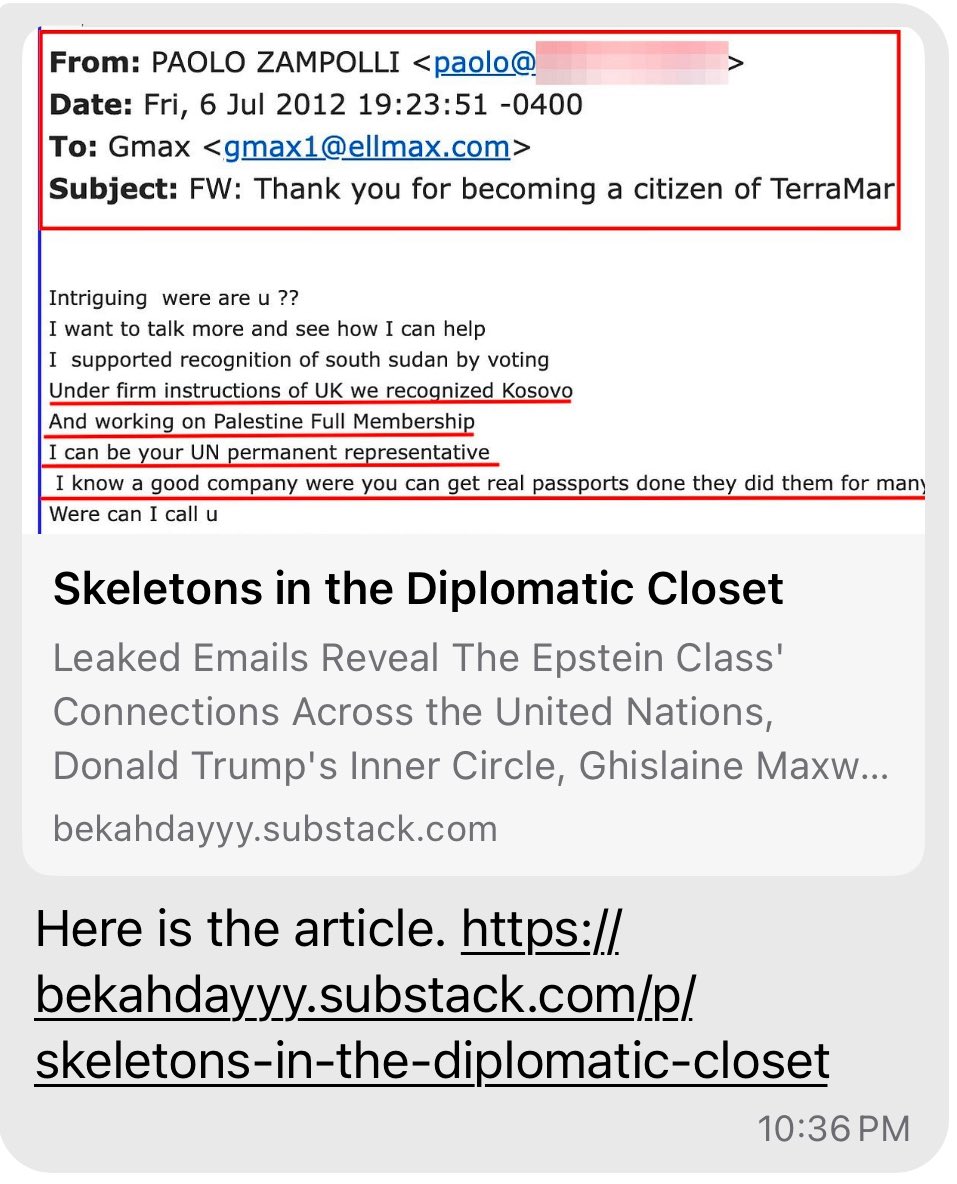
Here is the article. bekahdayyy.substack.com/p/sk…
11
179
345
9,776
Angie Sudduth Walsh retweeted
Jun 10
10
15
277
Angie Sudduth Walsh retweeted
Jun 10
facebook.com/reel/2127762608…
Get your tickets soon, it is going to be epic!
1
1
80
Angie Sudduth Walsh retweeted

Beware: as you outgrow pettiness and protect yourself from negative energy, that’s often when energy vampires and flying monkeys try to drain you of your joy and gnaw at your soul. Stay grounded, protect your peace, and don’t let them drain your beautiful light
🙏🏾🪷
70
79
681
6,165
Angie Sudduth Walsh retweeted
Lincoln Memorial undercroft
"Opened" in 1922
June 2026 the undercroft is opening to visitors to tour the previously unseen 15,000 sf. space beneath the memorial revealing the soaring grid of concrete foundation columns and a museum.

2
18
56
4,131
Angie Sudduth Walsh retweeted

Jun 5
coincidental timing> listening to this> Essential Oils as tick repellent> 1:06:41 youtu.be/ZhacFCy9eHI?si=Q5pl… > Thank you for the tips @ASuddWalsh2
1
2
3
45
Angie Sudduth Walsh retweeted

May 31
The orange dot on your iPhone is not decoration.
Orange dot = an app is using your microphone right now.
Green dot = camera is on.
If you see one when you are not on a call, swipe down to open Control Center. It will name the app.
This is your warning light. Watch it.
1
1
14
4,009
Angie Sudduth Walsh retweeted
May 31
Now here is how to actually see what your apps are doing on iPhone.
1. Open Settings
2. Tap Privacy & Security
3. Scroll down
4. Tap App Privacy Report
5. Tap Turn On App Privacy Report
For 7 days it logs every time any app opens your mic, camera, photos and location.
You will be shocked.
2
5
30
5,666
Angie Sudduth Walsh retweeted

May 30
MK Ultra hearings and a box full of confiscated MK Ultra files all just went away... few think to talk about it anymore by mass mind control design that shortened attention spans and heightened suggestibility. Knowledge is our defense against MK Ultra!
May 14

MK-Ultra Isn’t Going Away
Congressional hearings get delayed.
Witnesses suddenly fear for their lives.
And testimony tied to MK-Ultra remains sealed decades later under claims of “national security.”
What are they still hiding?
@RealCathyOBrien
17
231
478
8,965
Angie Sudduth Walsh retweeted

May 30
🚨 THEY DIDN’T REPLACE DVDS
WITH STREAMING FOR “CONVENIENCE”
THIS IS THE REAL REASON 🚨
“When they lock this internet up,
ain’t nobody streaming nothing.”
Streaming wasn’t about ease.
It was about TOTAL CONTROL.
No more owning your movies.
Real-time editing on their servers.
They can change history, erase scenes,
rewrite dialogue overnight.
Your data?
Harvested to train the beast...
building digital twins of every human alive.
Tiny hard drives.
Cloud everything.
So you own nothing…
and they know everything.
This isn’t paranoia.
This is the architecture of the digital prison:
You don’t own it... They can alter it.
They can delete it.
They can censor it.
While we binge, an AI “Metatron” is learning from every upload... your voice, face, habits, birthdays...
to become omnipresent.
To play God.
This is how they turn humanity
into cyborgs without us noticing.
Why did they kill physical media the second they could control digital streams?
If you don’t own your content…
do you really own anything in 2026?
How much of “reality” on your screen
has already been quietly edited?
What happens when they
flip the kill switch on the cloud?
Are you still going to pay monthly
for your own digital chains?
This video should be playing on every screen.
Share it like the matrix depends on it...
because it does.
Tag your normie friends.
Tag the ones still addicted to Netflix.
Tag anyone who thinks “it’s just entertainment.”
Own your data.
Own physical copies.
Own your mind.
The great awakening isn’t coming...
it’s here.
Watch till the end.
You’ll never look at “streaming”
the same way again...
Drop a like if you’re going back to hard drives.
Comment “OWN IT”
if you’re breaking the addiction.
What’s the craziest part of this for you?
Let’s expose it all.
Let me know what you think,
and SHARE THIS so that others may too.
And if you're not already following @TrueOnX...
What the heck are you doing!?
May 27

🚨 "LET ME TELL YOU ABOUT THE DEVIL..." 🚨
YOU NEED TO HEAR THIS! This 6-Minute Clip
Just Hit Me Like a Freight Train.
David Pawson drops TRUTH BOMBS straight from Scripture: Jesus Himself called Satan "the god of this world" and "the prince of the power of the air."
God allows it... because of free will.
Most people on Earth aren't worshipping the Creator... they're worshipping the deceiver through money, fame, power, lust, and endless distractions.
The system?
Rigged.
The matrix?
His playground.
Hollywood, governments, "success" culture...
all feeding the same beast.
But here's the hope: The King of Kings already defeated him at the Cross.
This isn't fear porn.
This is a WAKE-UP CALL.
Watch till the end.
Your soul will thank you.
If Satan is the god of this world...
whose kingdom are you really living for right now?
What’s one "worldly" thing you’re ready
to break free from today?
When you hear what Satan is being described as in this video, who comes to mind first...?
Retweet if this shook you.
Comment "JESUS IS KING" if you're choosing the narrow path.
Tag someone who needs to hear this.
The harvest is ripe...
but the workers are few.
Let me know what you think,
and SHARE THIS so that others may too!
14
102
150
11,792
Angie Sudduth Walsh retweeted

May 27
Electricity became a thing around 1870…
Tesla born around 1850…
The fires that simultaneously spread through out many big US cities happened around this time… 1870.
The Tartarian structures being some of the most brunt down buildings.
What really was going on during the late 1800s?
I’m going to find out, and I will make it a film.
I make films for a living. Get a month free and binge on my cinspriacy docs for a month with promo code FREE.
goodlion.tv
27
65
472
40,664
Angie Sudduth Walsh retweeted

May 25
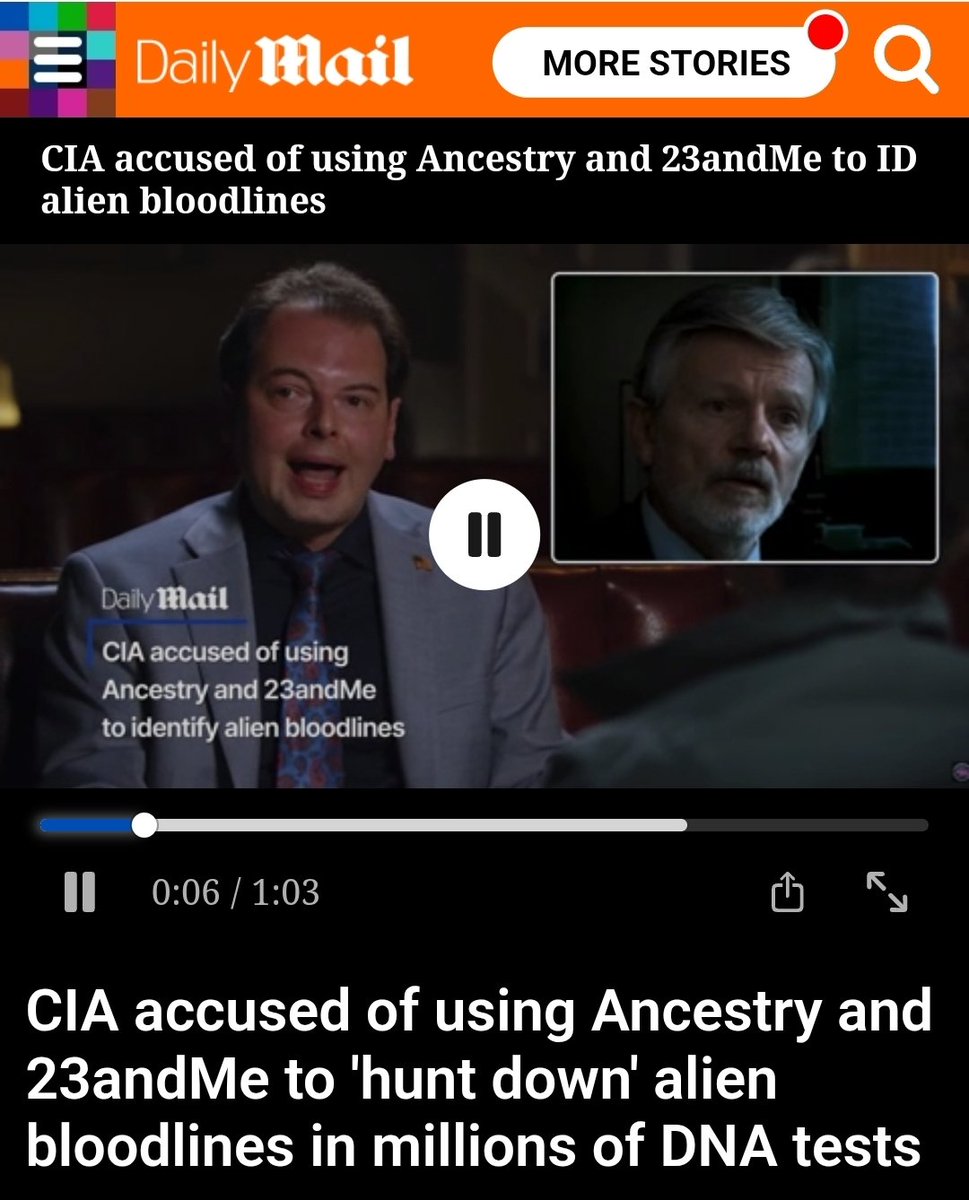
We told you long ago the government has been using Ancestry and 23andMe to hunt for specific bloodlines and now it's in the news.
Just remember the news stories are placed there to mix truth with fiction. It's damage control since they can no longer stop this information from being spread so they must get in front of it, add lies mixed with truth, and hope to throw you off the trail with wrong information layered in.
They aren't looking for "Nordics" or Alien DNA from other planets. They are looking for RH Negative bloodlines.
They've also used programs like GATE and other government screening operations to find exactly who they are looking for.
32
122
295
21,442
Angie Sudduth Walsh retweeted
May 24
Harvard Medical School tested what happens when an AI diagnoses real Emergency Room patients.
A patient walked into Beth Israel Deaconess Medical Center in Boston with routine respiratory symptoms. Recent organ transplant. Immunosuppressed. The doctors treated it as a standard case.
The AI flagged a flesh-eating infection.
12 to 24 hours before the human physicians became suspicious, the AI had already identified it. The patient needed emergency surgery. The AI saw it first. From nothing but the text in the chart.
This is not hypothetical. It is published in Science, April 30, 2026. The lead authors are Peter Brodeur and Thomas Buckley. The co-senior authors are Arjun Manrai at Harvard Medical School and Adam Rodman at Beth Israel. The model they tested was OpenAI o1.
They ran it on 76 real ER patients at Beth Israel. Not textbook cases. Real people who walked into a real hospital.
At triage, when information is sparsest, the AI identified the correct diagnosis 67.1% of the time. The first attending got 55.3%. The second attending got 50.0%. It used only the text in the electronic health records. No imaging. No physical exam. No bedside manner. Just the notes.
On management decisions, the AI scored a median 89%. Physicians using UpToDate and their full clinical references scored 34%.
On the 100 most challenging diagnostic cases ever published by the New England Journal of Medicine, the AI included the correct diagnosis nearly 80% of the time.
As of 2025, 1 in 5 doctors and nurses worldwide already use AI for a second opinion on complex cases. More than half want to.
Here is where the fight starts.
A Harvard Medical School researcher not involved in the study said this. "When we say clinical reasoning, it doesn't mean the same thing as model reasoning. These models have been optimized to do sequential thought that we call reasoning, but it's not at all the same thing as how we teach medical students to reason."
The AI does not feel the pulse. It does not hear the hesitation in a voice. It does not notice the thing the patient did not say. It processes text.
And it was more accurate than the humans who wrote that text.
Arjun Manrai, the lead Harvard researcher, said it plainly. "We're witnessing a really profound change in technology that will reshape medicine." Then he added the line the AI cannot say for itself. "Humans want humans to guide them through challenging treatment decisions."
The question is no longer whether AI can diagnose you. It can. The question is whether you want it to.

16
29
76
14,520
Angie Sudduth Walsh retweeted

May 22
I AM A CIA WHISTLEBLOWER and SURVIVOR OF THE CENTRAL INTELLIGENCE AGENCY’s MK ULTRA: TRAUMA BASED MIND CONTROL PROGRAM, WHICH THE ESTABLISHMENT REFUSES TO HEAR, perhaps the PEOPLE WILL.
74
241
773
19,895
Angie Sudduth Walsh retweeted
May 22
INTERESTING:
Tulsi Gabbard, the Director of National Intelligence is now resigning…
WHAT ABOUT THE MKULTRA FILES TULSI?
nypost.com/2026/05/22/us-new…
17
32
120
2,452