Stamp Dealer, #philately #postalhistory #postcards Bloggin @ coversofchina.com Selling @ alexander-voigt.com
Joined February 2021
- Tweets 661
- Following 576
- Followers 441
- Likes 215
516 Photos and videos


7 Dec 2025
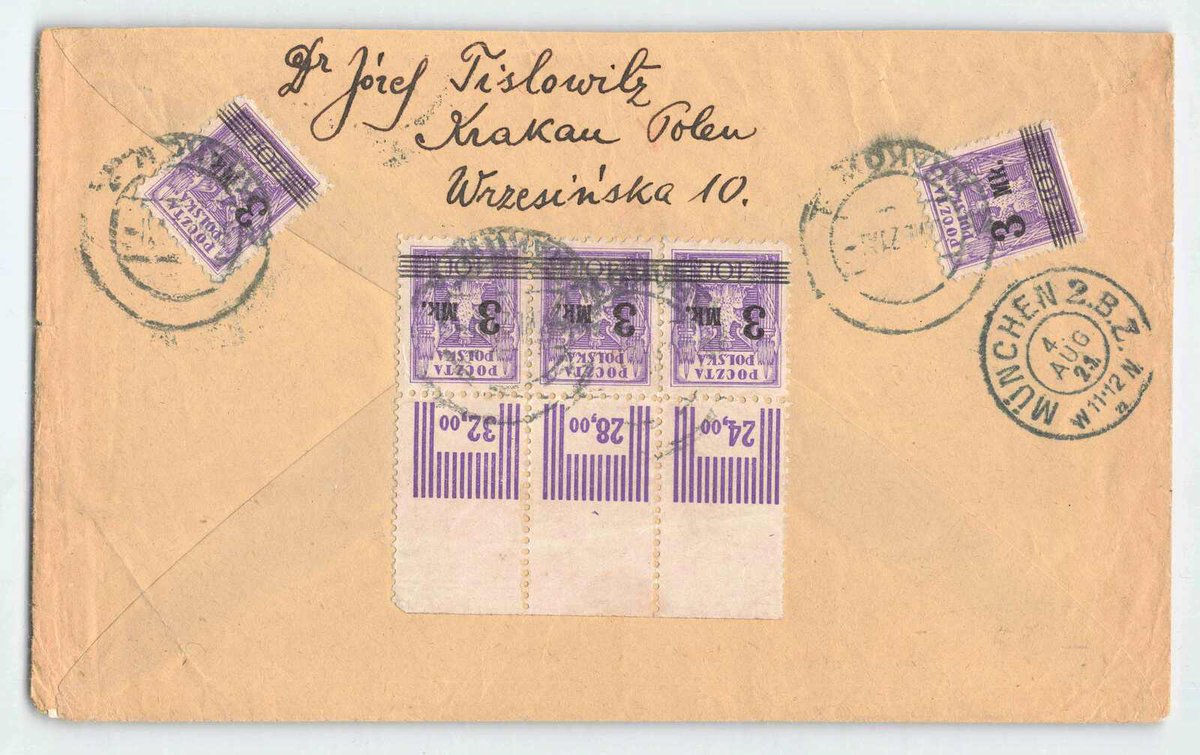
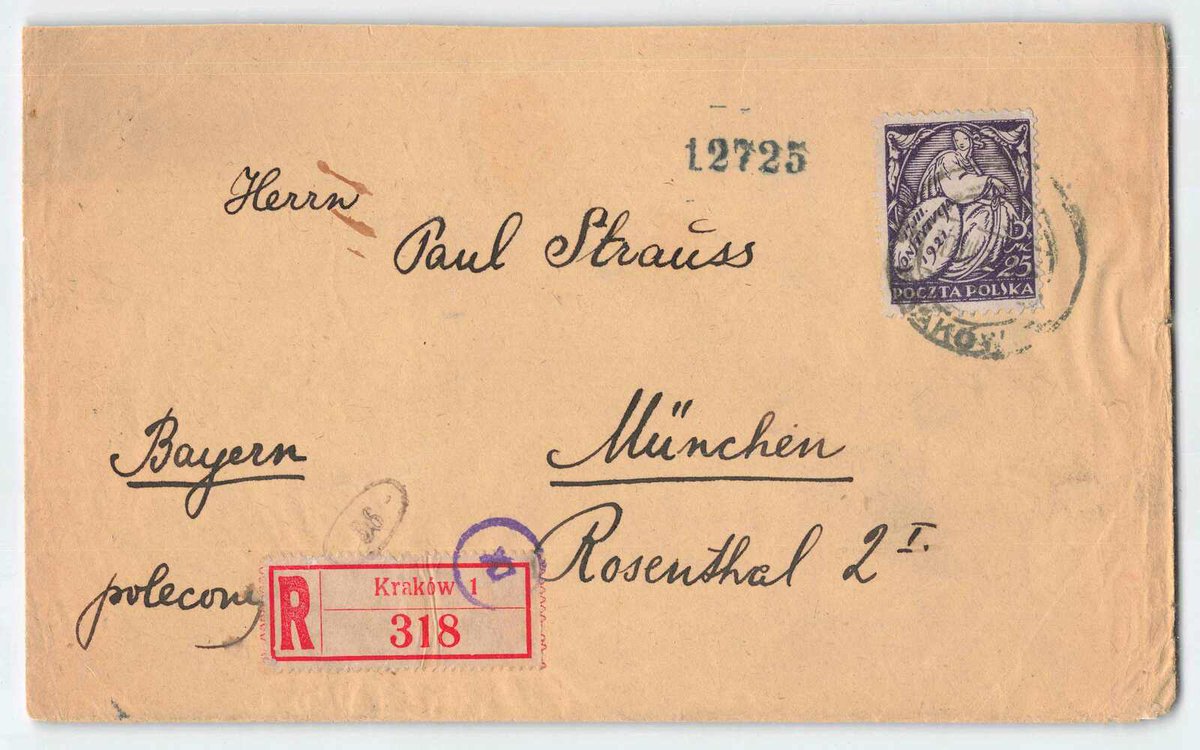
1921, five times 3 M on 40 F and 25 Mk, issues for Gesamtpolen, with town cancel "KRAKOW, 30. VII. 21" and violet Polish sausage border transit postmark "XI" on foreign countries registered cover to Munich (German Reich).
philasearch.com/en/i_9558-A7…
#philately #stamps #Poland #Polska #znaczki
1
52
7 Dec 2025
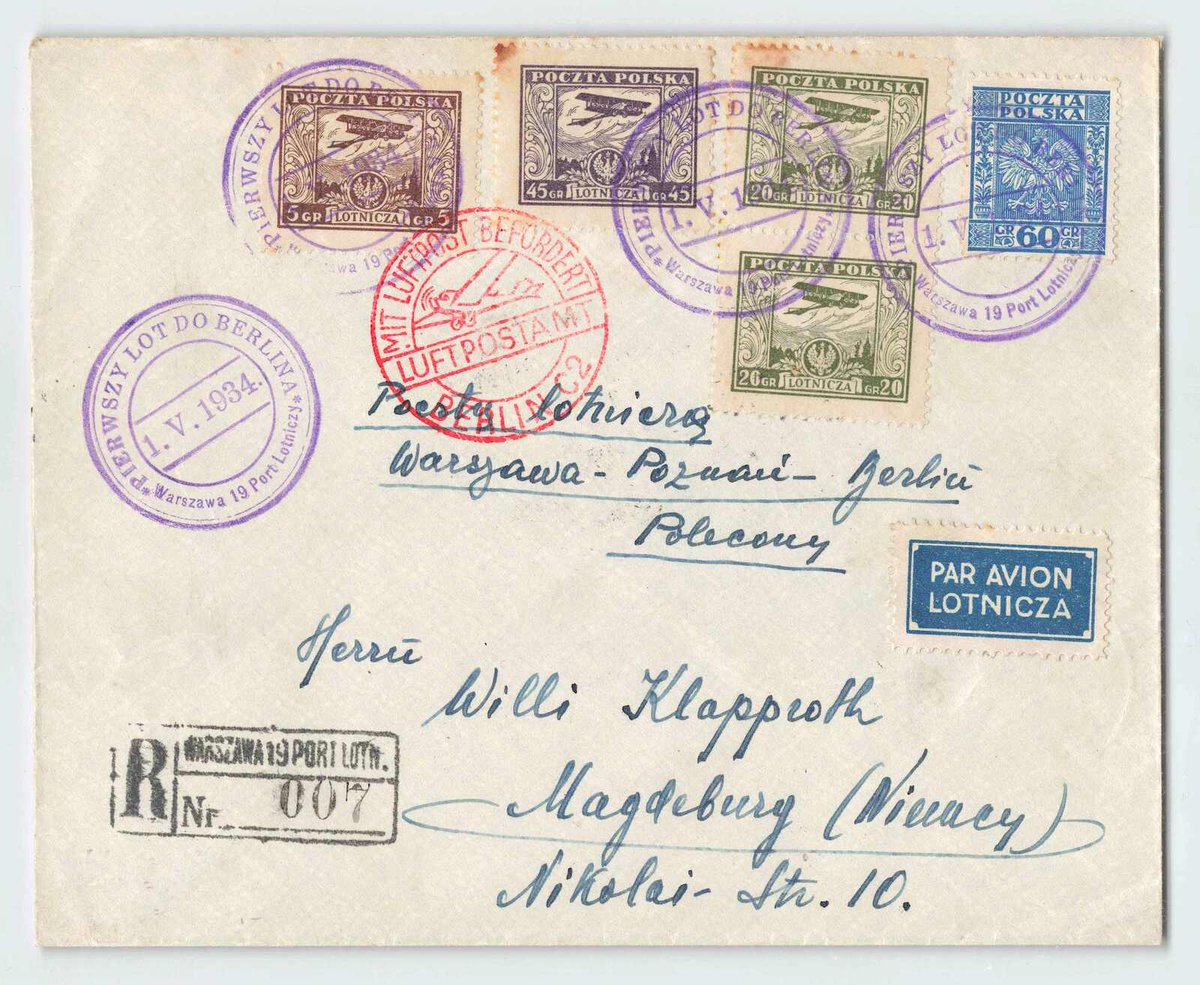
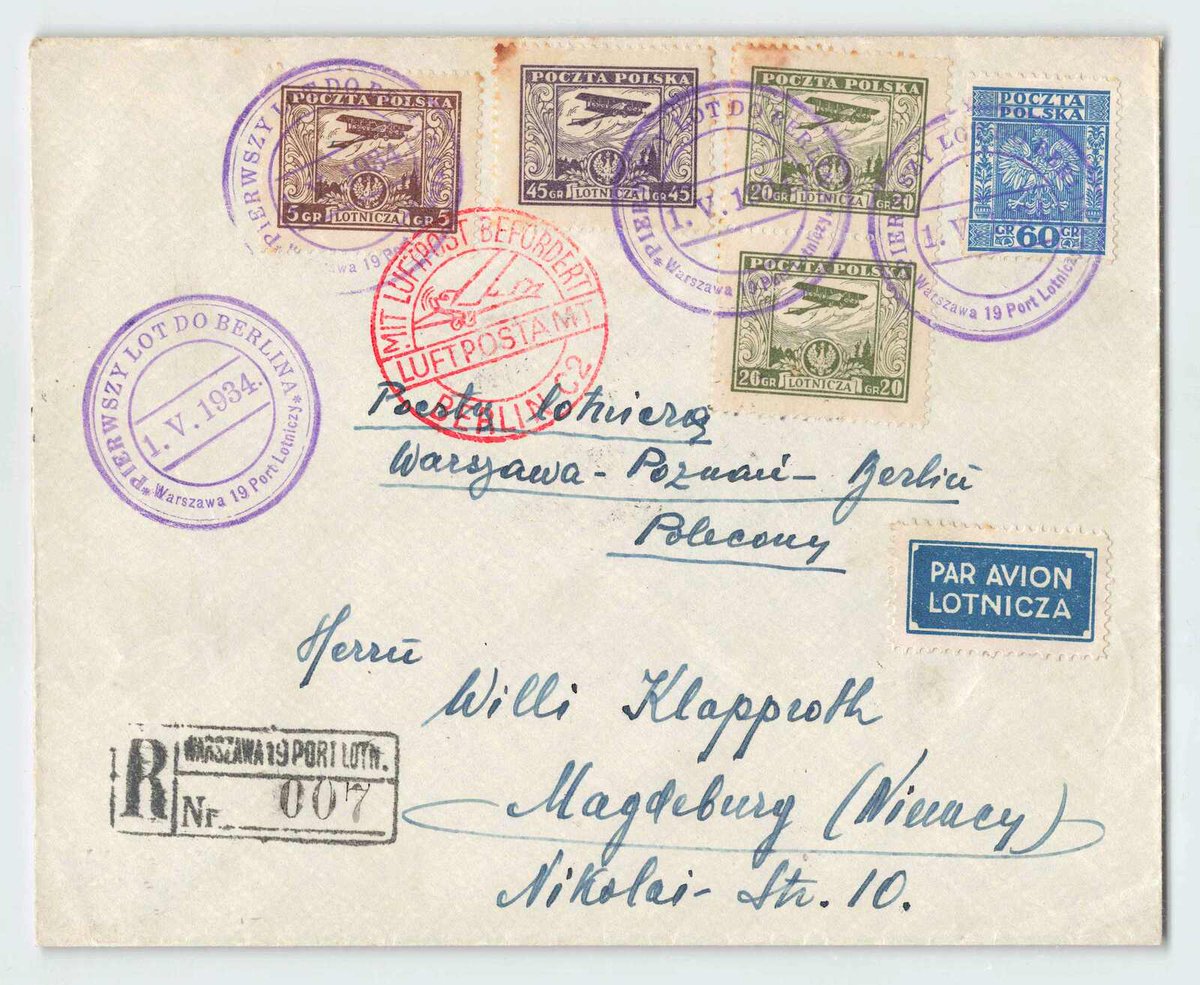
1934, airmail stamps and Polish coat of arms, with violet first flight stamp from 1. May 1934 and German flight confirmation stamp in red on foreign countries registered cover to Magdeburg (German Reich). This first flight marked the start of the regular airmail service Warsawa Berlin.
philasearch.com/en/cat/12432…
#philately #firstflight #airmail #airplane #stamps #Poland #Polska #znaczki
1
59
6 Dec 2025
My new stamp auction is online on Philasearch, featuring a lot of material from British Colonies, Poland, and the Soviet Union/Russia. Very specialized stuff!
philasearch.com/en/cat/12432…
#stamps #auction #Russia #Poland #Polska #BritishColonies #philately @firstissues @First_Stamps
42
6 Dec 2025
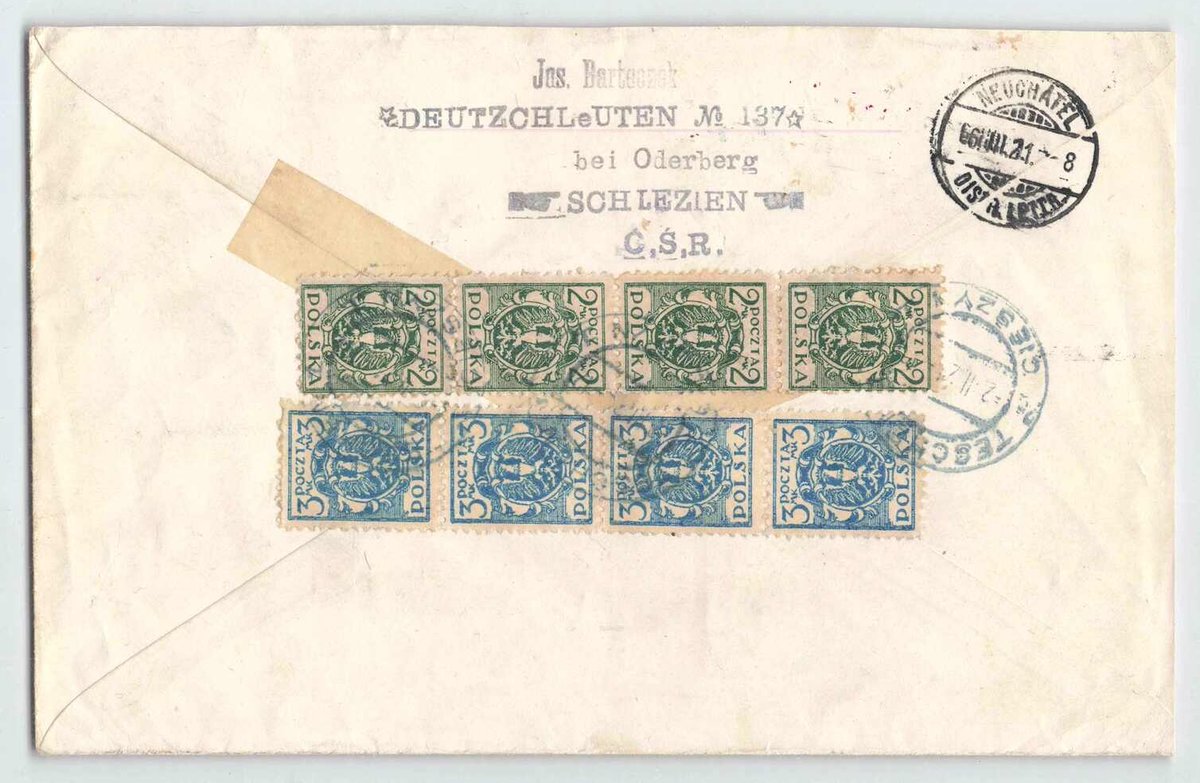
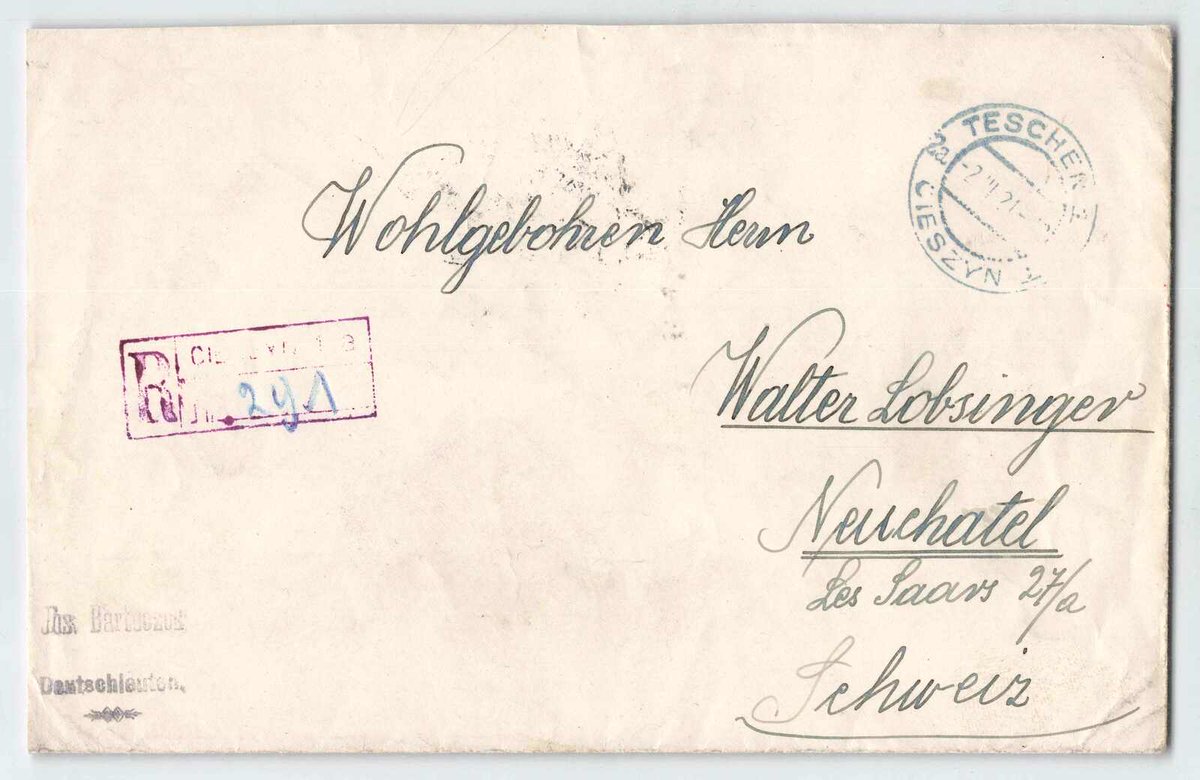
TESCHENER area: 1919, four times 2 and four times 3 Mk, postal stamps for Northern Poland, in each case as vertical strip of four with bilingual town cancel "TESCHEN / CIESZYN, 2.11.21" on foreign countries registered cover to Neuchatel (Switzerland). The sender dwelled in Deutschleuten, what 1920, after the break-down Austria Hungary, to the Tschechosllowakei fallen was. Poland and the neugegründete Czechoslovakia had 1918 both claim to the Teschener area (also "Olsa area" called). From November 1918 to January 1919 there was open military disputes, later to the international reconcilement. Deutschleuten lay in the strittigen Olsa basin (Kohleindustriegebiet) and was to July 1920 mutually stressed. The allied decided in Spa over the demarcation: the eastern part with of the city Cieszyn (Teschen) accrued Poland, the western part with Deutschleuten (Louky), Oderberg and Karwin came to the Czechoslovakia. Thus was Deutschleuten from 1920 Czechoslovak, although the human population mostly German-speaking was. The sender wrote therefore correct to the at that time political Lie "Deutschleuten by Oderberg, Silesia, Č. S. R. " .
philasearch.com/en/cat/12432…
@First_Stamps #stamps #philately #Poland
68
6 Dec 2025
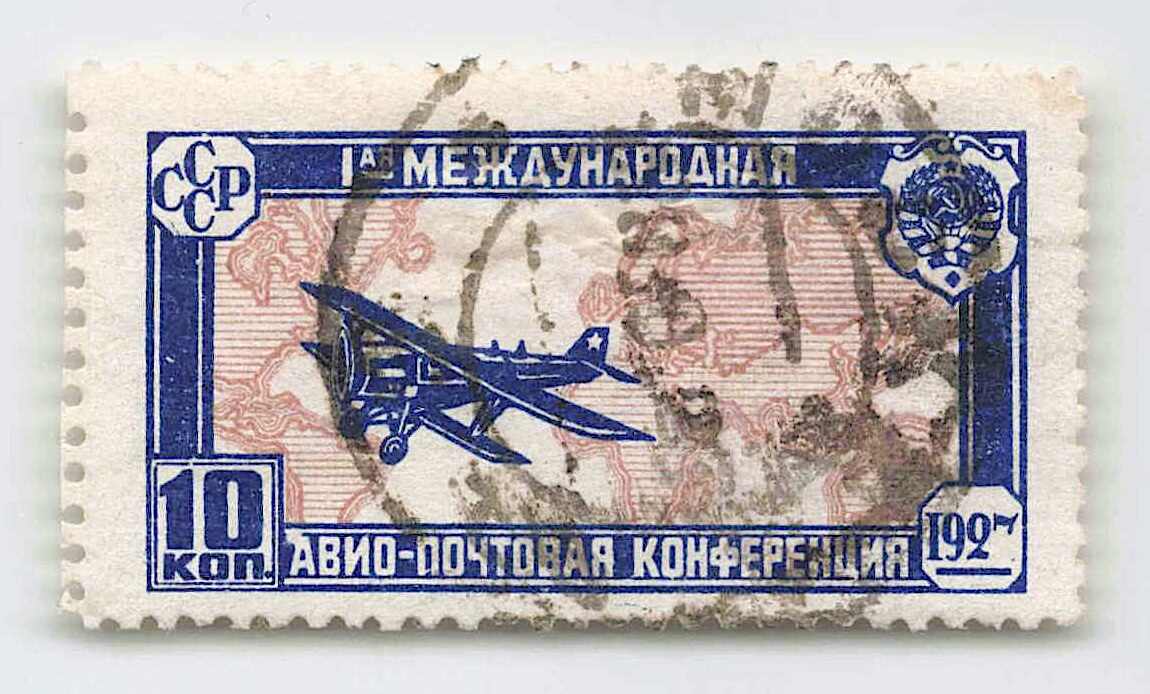
1927, 10 Kop., Airmail conference the Haag, plate flaw "damaged 7 in 1927 and white dot over A from "АВИО", used. Shatylo number 412 k6
philasearch.com/en/cat/12432…
#philately #stamps #airplane @First_Stamps
philasearch.com/en/cat/12432…
34
6 Dec 2025
1934, airmail stamps and Polish coat of arms, with violet first flight stamp from 1. May 1934 and German flight confirmation stamp in red on foreign countries registered cover to Magdeburg (German Reich). This first flight marked the start of the regular airmail service Warsawa Berlin.
philasearch.com/en/cat/12432…
#stamps #philately #Poland #Polska #airmail #airplanes @firstissues
31
22 Aug 2025
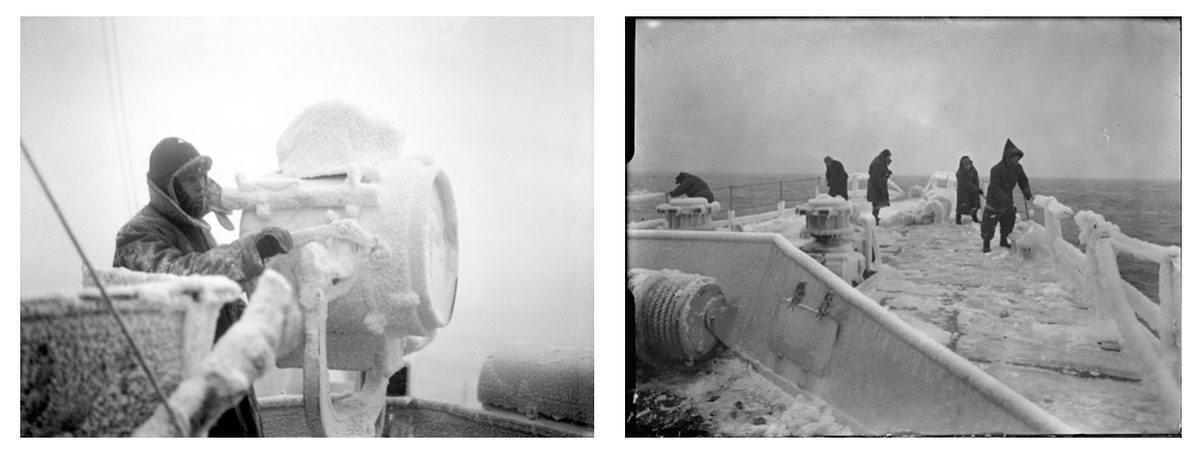
Arctic Convoy - Postal and Supply Route in the WWII
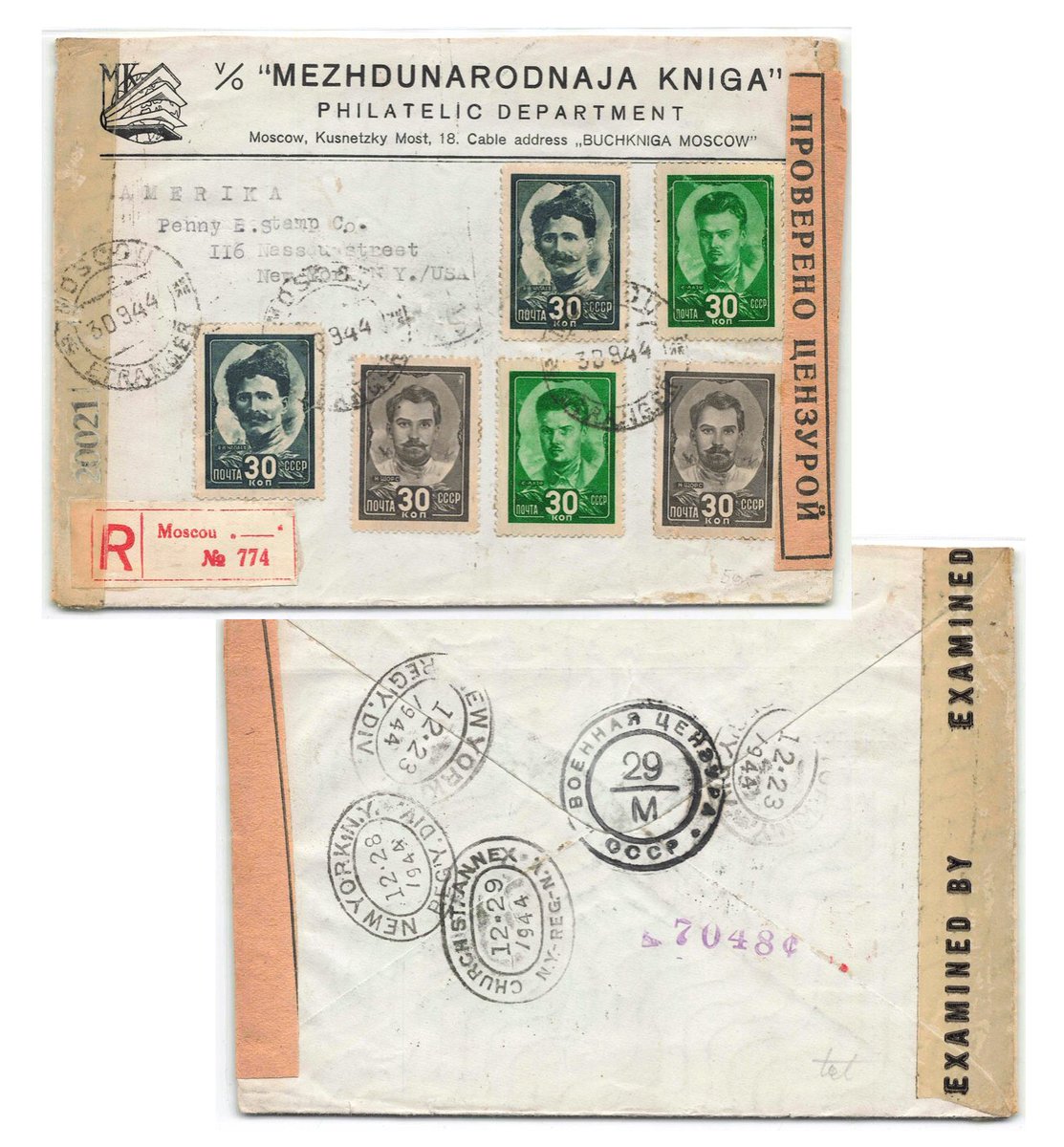
In the summer of 1941 Nazi Germany invaded the Soviet Union, thereby opening the Eastern Front, which in the following years developed into the decisive front of the Second World War. The world was in a state of total war, the battle lines stretched across Europe, and millions of soldiers were deployed. Civil life was also affected. International postal connections were severely restricted, strictly controlled, and in some cases completely cut off.
Nevertheless, connections remained between the Soviet Union and its Western Allies, Great Britain and the United States. These served not only military purposes but also cultural and economic exchange. Part of this communication is reflected in letters that, despite difficult circumstances, found their way across front lines, along sea routes, and through the hands of various censors.
Read more on: substack.com/home/post/p-171…
#philately #Philatelie #WWII #Russia #USA #ARTIC @First_Stamps #stamps
1
6
259
19 Aug 2025
Today, I am starting my new writing project on "Substack" in English and German. You will find more detailed information about Russian postal history and rare stamps. Mainly, the latest results of my research, which I have made over the last 20 years, are focused on plate errors, printing marks, color shades, and rare usages on covers.
From Russia to Peru – a Rare Destination open.substack.com/pub/russia…
#philately #stamps #Russia #Peru @First_Stamps
4
48
18 Aug 2025
Postal Censorship – Brazil’s Fear of Communism
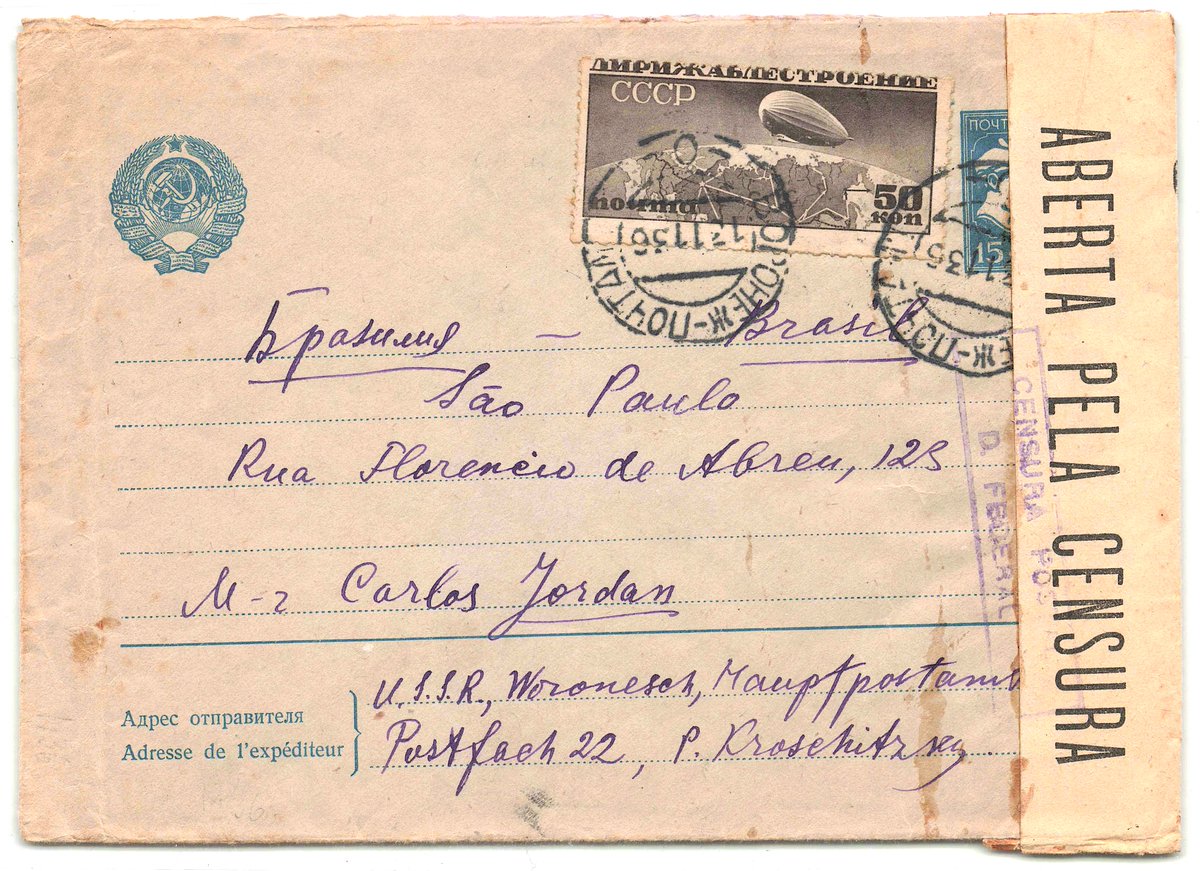
The letter from Voronezh in the Soviet Union, dated November 13, 1936 and addressed to São Paulo in Brazil, is more than just private correspondence. It vividly illustrates how strongly political tensions in the interwar period affected even the most ordinary aspects of daily life, such as the mail. Particularly striking is the Portuguese censorship band with the inscription “ABERTA PELA CENSURA.” This clearly proves that the letter was opened and examined upon its arrival in Brazil—not by Soviet authorities, but by the Brazilian postal censorship office.
The background to this measure lies in Brazil’s political upheavals in the mid-1930s. In November 1935, the so-called communist uprising (“Intentona Comunista”) shook the country. Although the rebellion was quickly suppressed, the government of President Getúlio Vargas responded with a massive tightening of surveillance. Any contact with the Soviet Union was regarded as suspicious; there were fears of communist propaganda being imported and of instructions being transmitted to domestic sympathizers. In this context, the censorship of this letter was not only plausible but almost inevitable.
This case fits into a broader pattern. Even before the outbreak of the Second World War, several Latin American states resorted to postal censorship to shield themselves from perceived ideological influences. Argentina, Mexico, and Brazil opened letters arriving from the Soviet Union and from Spain, which at that time was torn apart by civil war. In Brazil, an organizational framework for mail control had existed since the First World War, and central censorship offices in Rio de Janeiro were active again during the 1930s. Contemporary examples with identical censorship bands and the stamps “Censura Postal / Distrito Federal” confirm this practice.
Precisely because it dates from the prewar years, this letter is of particular interest. While the mass censorship of wartime correspondence after 1939 is well documented, comparatively few surviving items show that letters in the 1930s were opened for reasons of domestic political caution. They demonstrate that authoritarian regimes were already monitoring communication channels with considerable rigor long before the global conflict erupted.
#philately #stamps @First_Stamps #Brasil #Brazil #Russia
3
67
18 Aug 2025
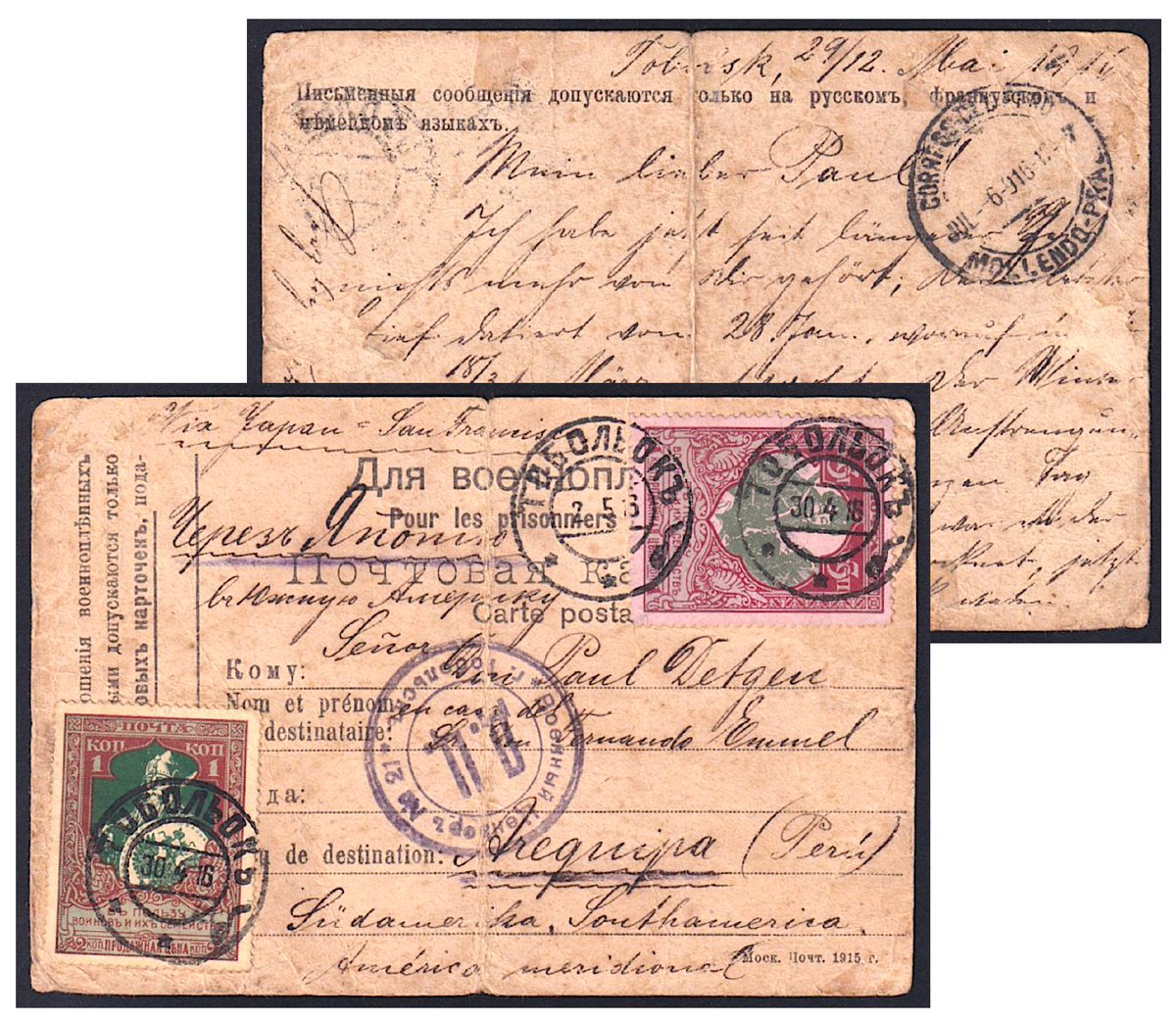
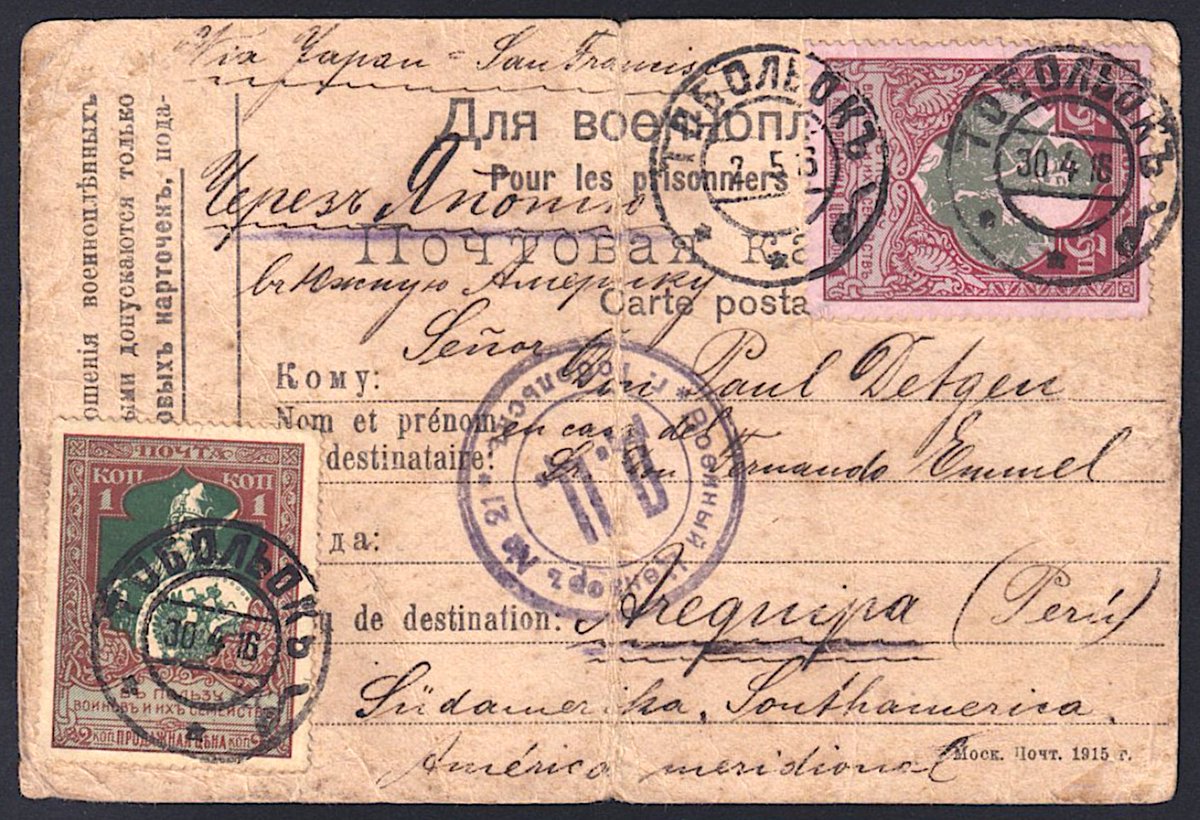
Here I show a postcard from 1916 from Tobolsk to Peru with Russian censorship.
-From 1914 onward, Russian mail overseas during World War I was routed almost exclusively via the Pacific:
-Inland transport via the Trans-Siberian Railway to Vladivostok
-From there, steamers of the NYK Line or other Japanese shipping companies traveled to Japan (Yokohama/Kobe)
-Onward to San Francisco via Japanese or US ships
-Then via the US railway across North America to the East Coast or directly to California → continuing towards Panama
-Through the Panama Canal (open since 1914) into the Pacific
-Arrival at the port of Callao (Lima, Peru)
-Land transport to Arequipa.
#Russia #Russian #Tobolsk #Peru #SouthAmerica #philately #Philatelie #WWI #stamps @First_Stamps
2
114