
Joined February 2020
- Tweets 1,556
- Following 518
- Followers 33
- Likes 50,385
49 Photos and videos








The Absent Tourist retweeted

"Hahaha, he clicked the Big Picture Mode button again instead of minimising Steam! We got him again!"
179
4,083
74,751
997,173
The Absent Tourist retweeted

Jun 10
I’m assuming @ZacksJerryRig is rage baiting at this point so no engagement for him.
My response was to the initial claim that GPUs simply produced too much heat to cool, which is nonsense. Jerry tries to salvage some dignity by moving the goalposts… and makes another blunder.
81
23
714
34,836
The Absent Tourist retweeted

Jun 10
I've seen a lot of people saying that AI datacentres in space will not work due to the thermal energy from the GPUs.
So, I went and actually did some calculations to see how easy it would be to cool down these satellites.
(Spoiler: these satellites will work)
CALCULATIONS:
So, starting with the Stefan-Boltzmann law:
Q = ε×σ×A×(Tₛ⁴×Tₑ⁴)
A in this equation is the area required to radiate all the thermal energy.
Rearranged to solve for area including extra energy radiated from the Sun and Earth:
A = Q×Qₑ/ε×σ(Tₛ⁴×Tₑ⁴)
Q = watts of thermal energy.
SpaceX is aiming for 150KW of power from the solar panels which I have assumed will be entirely converted into thermal energy.
Qₑ = watts of thermal energy from radiation from the Sun and Earth.
I guessed a value of around 25KW of extra thermal energy incident on the satellite's body, which is probably a MASSIVE over estimate since the satellite is flat and facing 90 degrees relative to the sun. The solar panels wouldn't transfer much heat either through the tiny metal parts which they are attached to.
ε = Emissivity of the surface.
Apparently the radiators on the ISS have an emissivity of 0.92 so, assuming no advancement in the technology in the decades since they were made, I went with that value.
σ = Stefan-Boltzmann constant
5.67×10⁻⁸W/m²K⁴
Tₛ = Temperature of the radiators
I am assuming a temperature of 25°C (298.15K) for the satellites, which is quite cool considering the GPUs will probably be operating at temperatures at or above 70°C.
Tₑ = Temperature of the surrounding environment
Space is about 2.7K (-270.45°C)
Putting all of these numbers into the equation:
Area = (150×10³ 25×10³) / 0.92 * 5.67×10⁻⁸ × (298.15 × 2.7⁴)
= 424.55m²
Now, 424.55m² sounds like a big radiator but let's find out how big each one will actually have to be.
Each radiator is double-sided so we divide the area by two which gets 212.27m².
Then, since there are two radiators, divide by two again to get 106.14m².
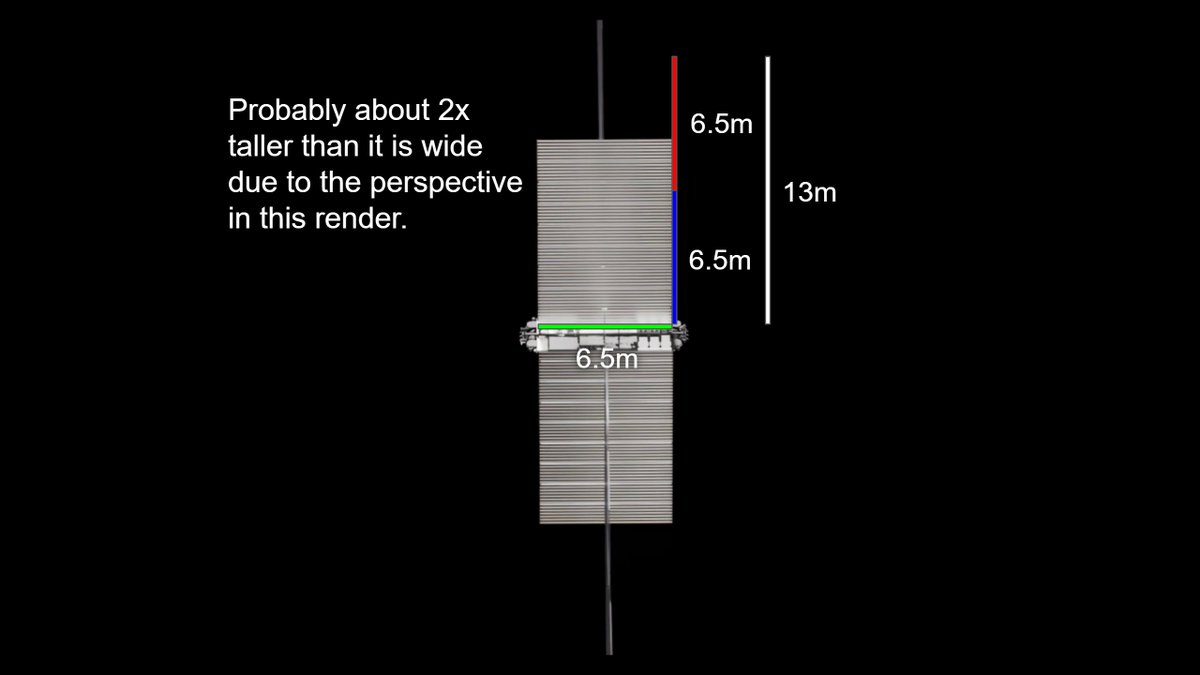
The Starship payload door is about seven meters wide, but let's cut down the width of the radiator panels to 6.5 for a little more margin.
106.14 / 6.5 gets us 16.33 meters long.
CONCLUSION:
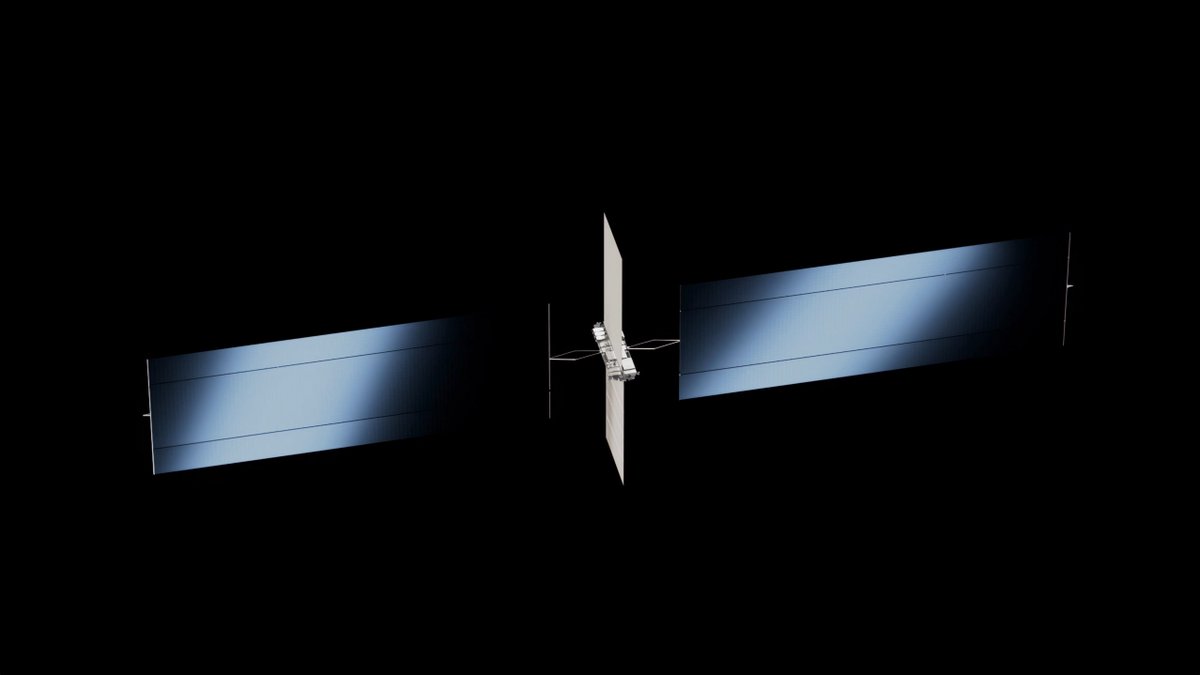
In the renders provided by SpaceX, the radiators seem just a little too small according to my calculations. However, I made sure to chose values according to the worst case scenario in my calculations.
Just removing the heat radiated from the Sun and Earth from the equation (which I believe would be negligible due to the position of the satellite) returns a length of 14 meters, which is much closer to my estimated length of 13 meters from SpaceX's renders.
Using the actual numbers would probably give a radiator with a size very close to what SpaceX has shown us.
So, after actually doing the maths, I believe the designs which SpaceX has shown will work just fine. It turns out the very intelligent people at SpaceX know what they are doing.
Jun 10

You know the reason your Stanley or Hydroflask is so good at keeping your water cold is because there's a vacuum inside the walls of the thermos.
Heat can't conduct in a vaccum. And "radiated" heat is ineffective at the temperatures processors operate at.
This satellite will be like plugging in your gaming PC without a CPU cooler. It'll be dead in minutes.
128
90
1,088
92,180


The Absent Tourist retweeted

May 29
We need an HLS update @elonmusk. I am not wanting to wait for an episode to release for us to get one.
3
40
879
The Absent Tourist retweeted

May 29
SpaceX, imma need y'all to do me a favor and lock the fuck in.
8
24
794
15,058

Time to build major base on the Moon!

LIVE: We're sharing the latest updates on @NASAMoonBase, our lunar habitat where astronauts will work and live. x.com/i/broadcasts/1OxwbbnNo…
10,666
15,465
130,565
37,859,368
The Absent Tourist retweeted

May 26
NASA has designated 3 “Moon Base” missions
Moon Base 1 - Blue Moon MkI
Moon Base 2 - Astrobotic Griffin
Moon Base 3 - Nova-C PRISM
These landers will aid in and contribute to the formation of the Lunar base
8
83
4,481
The Absent Tourist retweeted

I built a ∆V loss model and aerodynamics is included.
For starship gravity loss is ~ 1600 m/s and the aero loss is just ~ 30 m/s (minimum cross section)
I didn't use a gravity turn which is why the cross section stays constant, the aero loss would be higher otherwise
(Expand)

3
2
31
911
The Absent Tourist retweeted

Respectfully, I am not sure how it was the “wrong forum.” I was testifying under oath before the United States Congress. I was asked a question about the status of the Gateway hardware, and I gave an honest answer and shared our intent to work with industry and partners to pivot, as appropriate, toward surface applications. It might be worth going back to the tapes if anything was unclear.
I do think it is a bit interesting that the goalposts have moved, maybe not necessarily from you, but my initial description of the problem was challenged as 'outright false' or worse, and now it is being acknowledged as factually correct, with the concern shifting to whether I should have referenced a “repair plan,” when I am not sure there is a deterministic approach to repair, nor that one is even warranted at this point.
President Trump’s National Space Policy calls for America to return to the Moon and establish an enduring presence on the Moon (not above it), to build a Moon Base! And I have no doubt, based on the expected contributions of our many great international partners, that NASA astronauts and our allies will be standing shoulder to shoulder on the surface of the Moon in the years ahead.
60
164
3,565
181,445
The Absent Tourist retweeted

Apr 18
Is this the same tent? Was taken a week ago on the NSF McGregor stream. Seems to be testing inflatables?
18
14
178
81,122
The Absent Tourist retweeted

Apr 13
Just released: @NASA Moon Base User’s Guide nasa.gov/wp-content/uploads/… @NASAMoonbase #ArtemisII #NASA #Moon
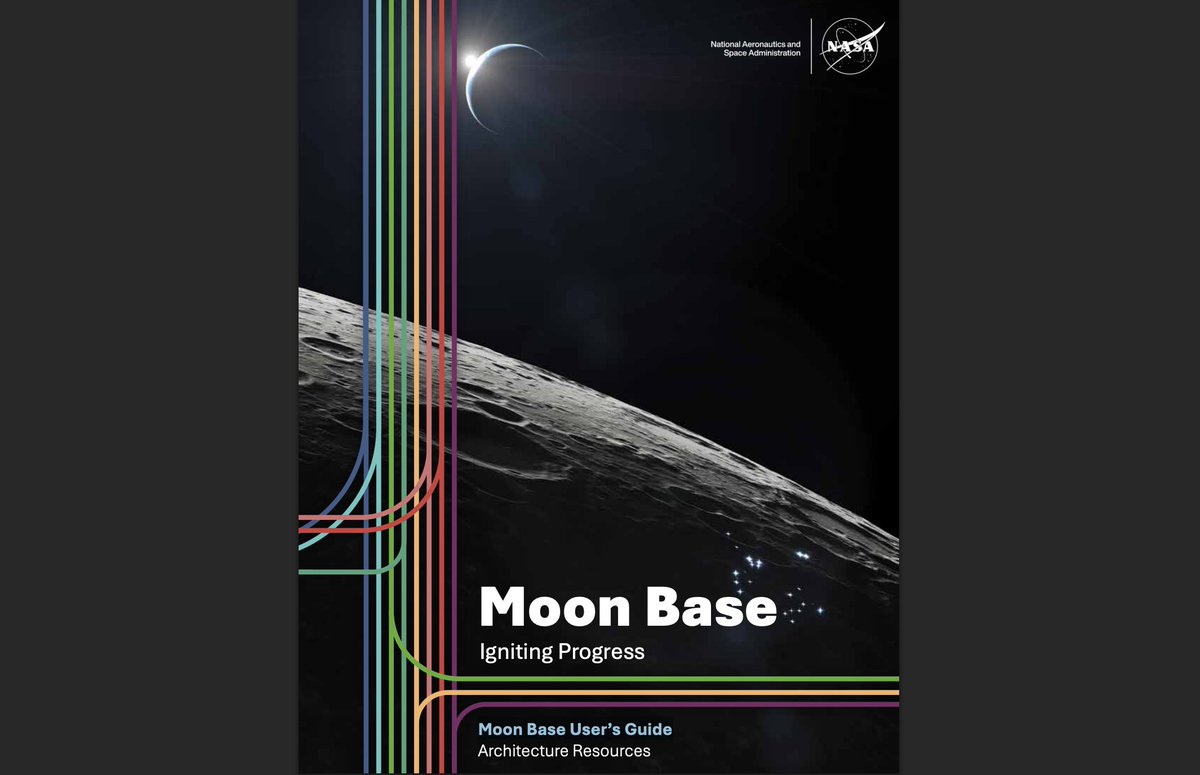
16
146
960
91,230
🇺🇸🇺🇸 Welcome home! 🇺🇸🇺🇸
Welcome home Reid, Victor, Christina, and Jeremy! 🫶
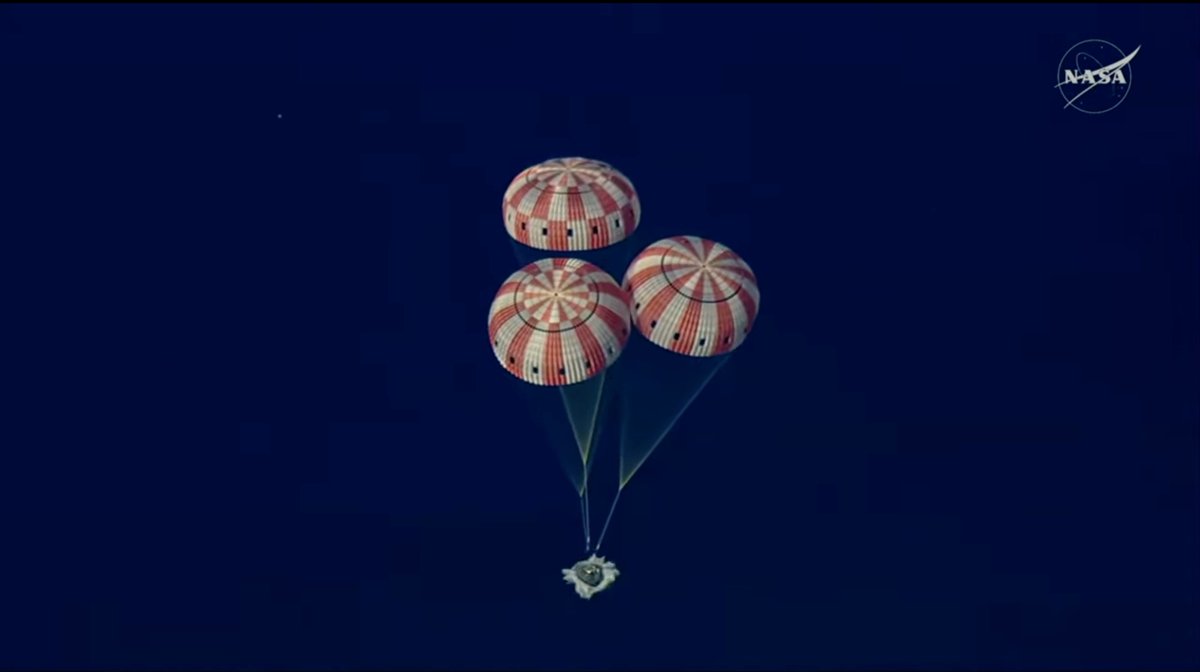
The Artemis II astronauts have splashed down at 8:07pm ET (0007 UTC April 11), bringing their historic 10-day mission around the Moon to an end.
9,844
51,107
598,191
70,100,840
The Absent Tourist retweeted
And splashdown!
America is back in the business of sending astronauts to the Moon and bringing them home safely.
Reid, Victor, Christina, and Jeremy did an outstanding job. These talented astronauts inspired the world and represented their space agencies and nations as humanity’s ambassadors to the stars.
This was a test mission, the first crewed flight of SLS and Orion, pushing farther into the unforgiving environment of space than ever before, and it carried real risk. They accepted that risk for all we stood to learn and for the exciting missions that follow, as we return to the lunar surface, build a Moon base, and prepare for what comes next.
And they were not alone. The entire NASA workforce, our commercial and international partners, and the hopes and dreams of people all over the world were with them. The astronauts know it, and you should too. This mission would not have been possible without you.
Congratulations. Artemis II, mission accomplished.
1,426
5,181
37,619
1,896,590
The Absent Tourist retweeted

Apr 7
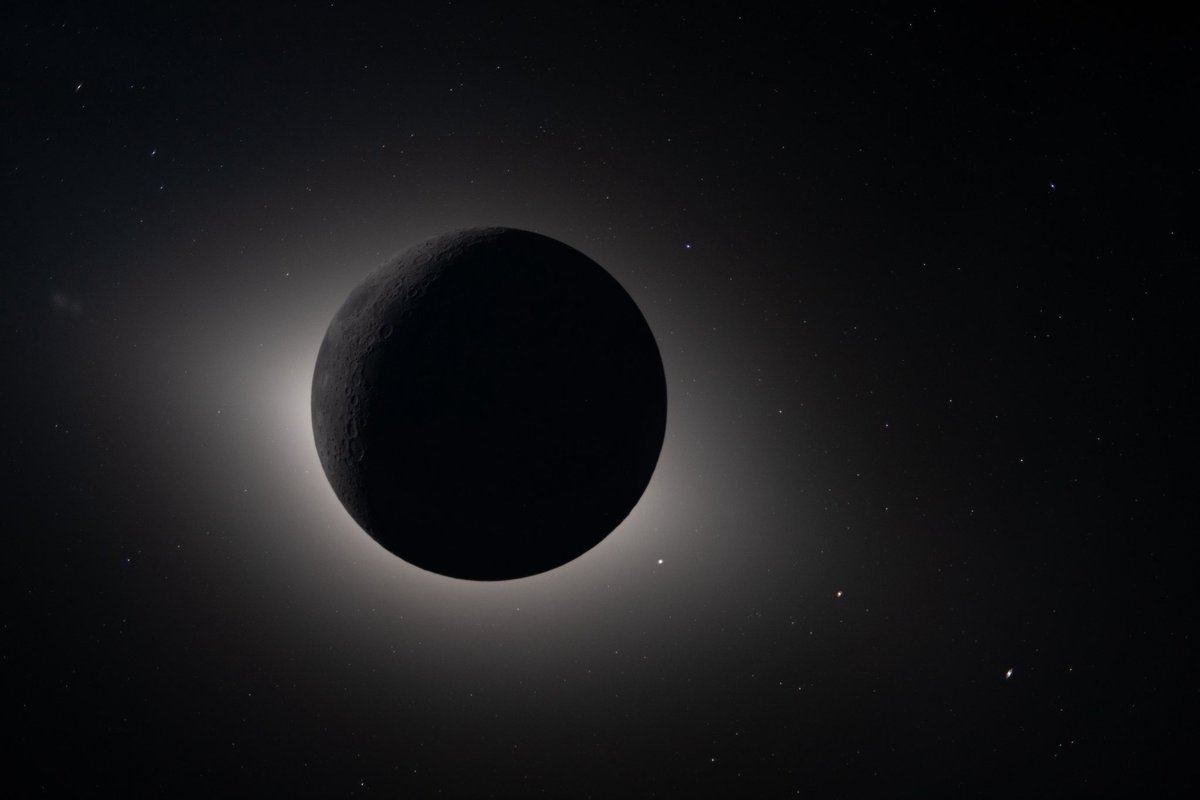
THE ARTEMIS II ECLIPSE.
April 6, 2026.
Totality, beyond Earth. From lunar orbit, the Moon eclipses the Sun, revealing a view few in human history have ever witnessed. Photo: NASA
1,935
14,957
81,037
5,803,378
The Absent Tourist retweeted
Apr 7
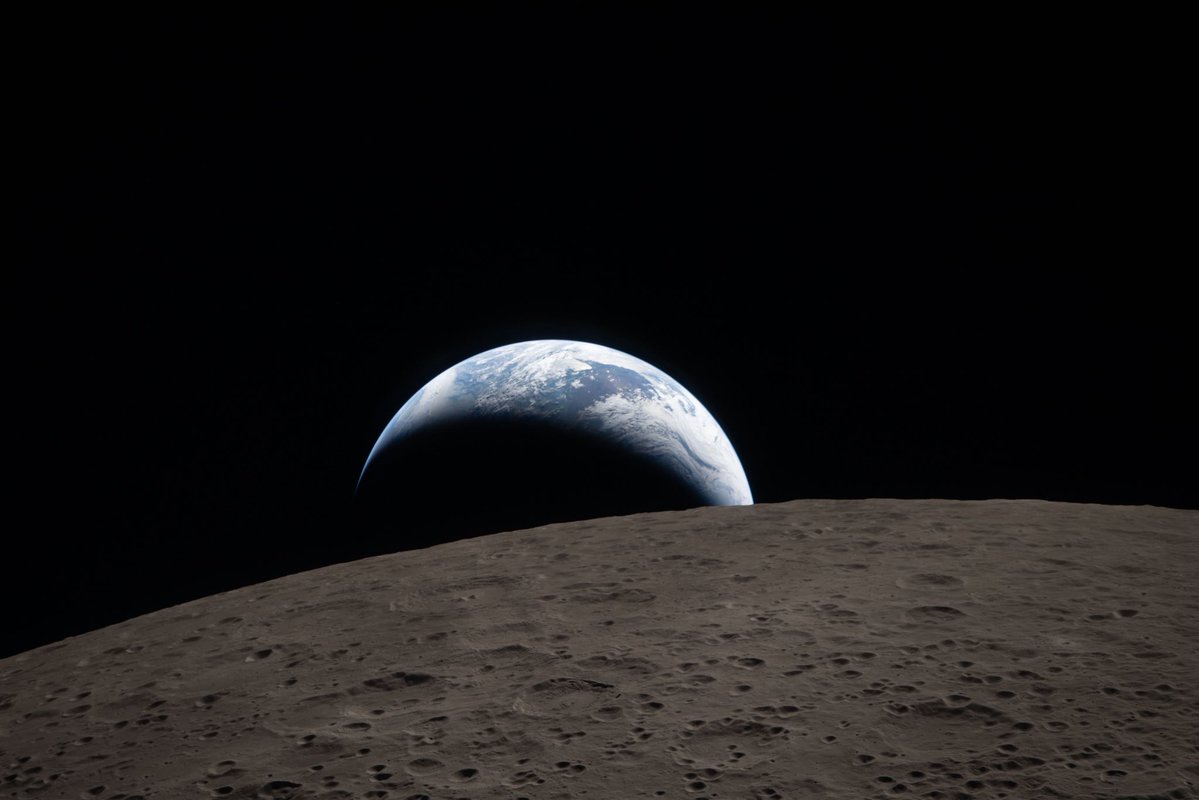
EARTHSET.
April 6, 2026.
Humanity, from the other side. First photo from the far side of the Moon. Captured from Orion as Earth dips beyond the lunar horizon. Photo: NASA
2,689
17,156
97,792
5,592,820
The Absent Tourist retweeted
Apr 7
Lots of Fedoras being tossed out of prams over on Reddit

32
55
1,277
29,177
The Absent Tourist retweeted

.@POTUS: "What was your feeling when you had no communication?"
Victor Glover: "I said a little prayer, but then I had to keep rolling. I was actually recording scientific observations of the far side of the moon... We were busy up here working really hard, and I must say, it was actually quite nice."
59
885
8,891
327,079