
182 Photos and videos













Ola retweeted

24 Nov 2025
@zama token is now confirmed but lunching date hasn't been confirmed
This could happened live before Q4 ends.
Team Raised 130M at 1B Valuation from top tier VCs.
Total supply: 11B
ca: 0xa12cc123ba206d4031d1c7f6223d1c2ec249f4f3 decimals: 18
Your blockchain privacy king is about to scale fully on FHE.
#ZamaCreatorProgram gZama
@CryptoTeluguO @randhindi @bloomstarbms @1CryptoMama
23 Nov 2025

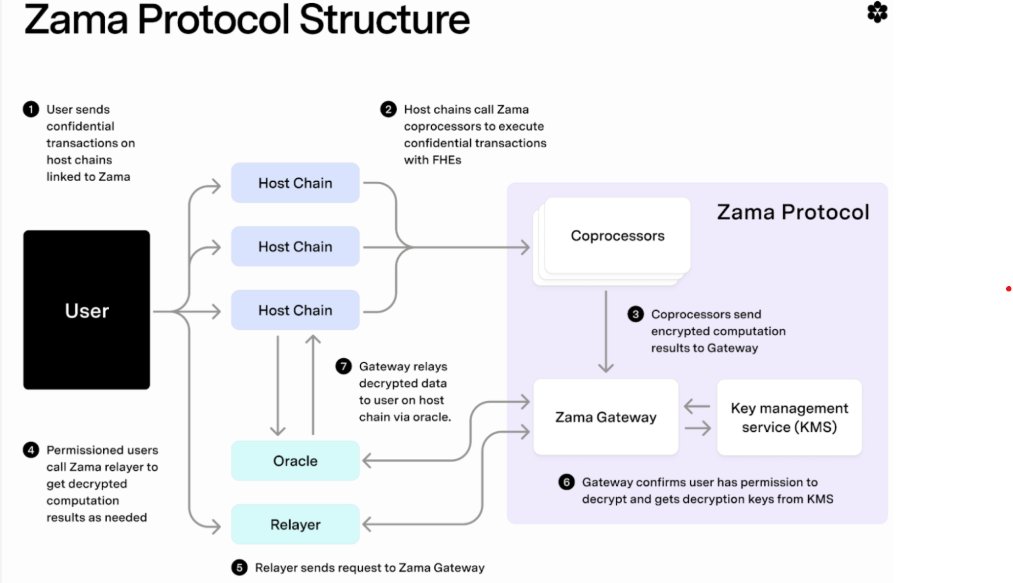
Here is another soaring topic on @zama : our confidentiality protocol. They’re not creating a new chain to actualize this aim; rather, it runs on L1/L2 of a previous chain, such as ETH, via FHE
Let’s discuss about ZAMA comprehensive audit.
ZAMA has one of the most compelling audits, which involved an overall audit on the protocol, from the TFHE-rs library, KMS software and protocols, the coprocessor, the gateway, and third parties like supporting infrastructure and the $ZAMA token along with staking.
The audit spanned almost 70 weeks, with several millions dedicated to protocol assessment; this makes it one of the largest audits in web3, and TFHE-rs is the first and only professionally audited FHE library.
As a cryptographic protocol, it was the first to achieve 128-bit security under the strong-IND-CPAD model, meaning it is guaranteed against formal known attacks, even from quantum computers.
The audit was conducted by experts from auditing firms such as Trail of Bits, Zenith, OpenZeppelin, Burrasec, and the Alexandra Institute.
Thanks for reading, kindly help share: @bloomstarbms @randhindi @_DebbieOA @AnonVee_
#ZamaCreatorProgram
2
72
RT @NewOlawealth: Here is another soaring topic on @zama : our confidentiality protocol. They’re not creating a new chain to actualize this…
1
5
Ola retweeted
18 Nov 2025
Good evening Mama @_DebbieOA
Trust you're good? Please I need your favour on one of my posts.
I will appreciate your repost to help me get more exposure and engagement, hopefully my several posts on the campaign won't be a wasted effort.
Same as my pinned post.
Thanks so much!
x.com/NewOlawealth/status/19…
14 Nov 2025
What is Zama: @zama simply is a confidential blockchain protocol which enables encrypted smart contracts on an existing public blockchains like Ethereum.
This is achieved on Fully Homomorphic Encryption (FHE) – a great computations encryption on data which protect users’ privacy like token amounts and balances get encrypted while processing and verified on-chain.
Why ZAMA: The blockchain industry over years are posed with a fundamental challenge:
Which is basically achieving true privacy without sacrificing transparency and composability.
Do note that ZAMA is the world’s first fully homomorphic encryption (FHE) unicorn that has raised over $150 million to solve this exact problem.
Key Features to note here:
ZAMA is the world’s first FHE unicorn with over $1 billion valuation and $150 million in funding, and chief pioneer of fully homomorphic encryption.
Revolutionary privacy technology – ZAMA’s FHEVM enables confidential smart contracts operation on encrypted data, and still maintaining full composability behavior on DEFI
Cross-chain compatibility – No modification integrated, it practically works as a confidentiality layer on top of any L1 or L2 blockchain.
Strong technical foundation – Uses TFHE encryption scheme with 13 MPC nodes, AWS Nitro Enclaves, run a symbolic execution architecture for optimal security along with performance.
Real-world applications ready – Quite a robust as it enables confidential DeFi, private payments, sealed-bid auctions, identity verification, and enterprise healthcare/defense use cases among others.
Aggressive scaling roadmap – Plans to reach 10,000 TPS using dedicated ASIC hardware, with Ethereum mainnet in Q4 2025 and Solana integration in 2026
Let’s look in-deep into the problem ZAMA blockchain projecting to solve.
📷 Confidentiality Dilemma in Blockchain:
a.Blockchain technology’s fundamental strength design thus display – transparency and public verifiability – this simultaneously creates its greatest weakness for mainstream adoption. Users’ info in All transaction, balance, and smart contract interaction is permanently visible to anyone, creating severe privacy and security risks that prevent institutions and individuals from fully embracing decentralized applications.
ZAMA identified four critical problems that its FHE technology directly addresses:
b. Information Exposure and Front-Running
Traditional blockchains expose all transaction data, enabling hackers to front-run trades, manipulate markets, and extract maximum value from users. This problem is more prominent on in DeFi.
c. Institutional Adoption Barriers
Large financial institutions cannot use public blockchains for sensitive operations when their trading strategies, customer data, and financial positions would be immediately visible to competitors. The transparency has forced many institutions to rely on private blockchains, sacrificing the benefits of decentralization and interoperability.
d. Smart Contract Limitations
Current blockchain architectures cannot support many real-world applications that require confidentiality, such as sealed-bid auctions, private voting systems, confidential credit scoring, or secure multi-party computations. These inhibits the types of applications that can be built on public blockchains.
e. Compliance and Regulatory Challenges
Financial institutions must comply with data protection regulations like GDPR while maintaining audit trails and regulatory compliance. Traditional blockchains’ all-or-nothing transparency makes it impossible to satisfy both privacy requirements and regulatory oversight simultaneously.
Thanks for reading along.
@CryptoTeluguO @bloomstarbms @mztacat @AInvestor_11

2
48
RT @NewOlawealth: Another solid partnership on horizon: Raycashxyz is building a self custodial bank on @zama.
They are building with a co…
1
6
Ola retweeted
15 Nov 2025
Let's discuss briefly about Conduit on ZAMA's FHE technology.
World finance is adopting moving on chain, but there is a big setback because you can’t expect government, enterprise and traditional institute to expose their capital as individual does: therefore, they need confidentiality.
The @zama Protocol enables fully confidential smart contracts, it will give them the benefits that comes along with use of particular blockchain and yet provide data privacy for them.
This is why Conduit comes in, to provide a solution.
We all know that Zama's FHE technology enables computations on encrypted data without decrypting it but for this afore mentioned parties: financial institutes, government among others a special entity must be provided for such scale which must be an encrypted computation.
In this technology design, there is special tools called gateway: referred to as a set of smart contracts used to orchestrate the Zama Protocol, with this in-place users can verify their encrypted inputs and bridging of encrypted assets between Host Chains.
Interestingly, each of this smart contract deploy via the gateway attracts a small fee in $ZAMA tokens - that a solid user case.
This can either be deploy on L1 or L2 and ZAMA is opting to run on dedicated Arbitrum rollup for the Zama Protocol but powered by Conduit.
These Objectives are to be achieved and maintained;
📷 Custom gas token ($ZAMA)
📷 Optimized throughput for parallel FHE operations
📷 Built to scale as we expand to more host chains
Thanks for reading, more update to be shared soon.
@bloomstarbms @CryptoTeluguO @NDIDI_GRAM @Abrahamchase @AnonVee_ @AInvestor_11 @mztacat
14 Nov 2025
What is Zama: @zama simply is a confidential blockchain protocol which enables encrypted smart contracts on an existing public blockchains like Ethereum.
This is achieved on Fully Homomorphic Encryption (FHE) – a great computations encryption on data which protect users’ privacy like token amounts and balances get encrypted while processing and verified on-chain.
Why ZAMA: The blockchain industry over years are posed with a fundamental challenge:
Which is basically achieving true privacy without sacrificing transparency and composability.
Do note that ZAMA is the world’s first fully homomorphic encryption (FHE) unicorn that has raised over $150 million to solve this exact problem.
Key Features to note here:
ZAMA is the world’s first FHE unicorn with over $1 billion valuation and $150 million in funding, and chief pioneer of fully homomorphic encryption.
Revolutionary privacy technology – ZAMA’s FHEVM enables confidential smart contracts operation on encrypted data, and still maintaining full composability behavior on DEFI
Cross-chain compatibility – No modification integrated, it practically works as a confidentiality layer on top of any L1 or L2 blockchain.
Strong technical foundation – Uses TFHE encryption scheme with 13 MPC nodes, AWS Nitro Enclaves, run a symbolic execution architecture for optimal security along with performance.
Real-world applications ready – Quite a robust as it enables confidential DeFi, private payments, sealed-bid auctions, identity verification, and enterprise healthcare/defense use cases among others.
Aggressive scaling roadmap – Plans to reach 10,000 TPS using dedicated ASIC hardware, with Ethereum mainnet in Q4 2025 and Solana integration in 2026
Let’s look in-deep into the problem ZAMA blockchain projecting to solve.
📷 Confidentiality Dilemma in Blockchain:
a.Blockchain technology’s fundamental strength design thus display – transparency and public verifiability – this simultaneously creates its greatest weakness for mainstream adoption. Users’ info in All transaction, balance, and smart contract interaction is permanently visible to anyone, creating severe privacy and security risks that prevent institutions and individuals from fully embracing decentralized applications.
ZAMA identified four critical problems that its FHE technology directly addresses:
b. Information Exposure and Front-Running
Traditional blockchains expose all transaction data, enabling hackers to front-run trades, manipulate markets, and extract maximum value from users. This problem is more prominent on in DeFi.
c. Institutional Adoption Barriers
Large financial institutions cannot use public blockchains for sensitive operations when their trading strategies, customer data, and financial positions would be immediately visible to competitors. The transparency has forced many institutions to rely on private blockchains, sacrificing the benefits of decentralization and interoperability.
d. Smart Contract Limitations
Current blockchain architectures cannot support many real-world applications that require confidentiality, such as sealed-bid auctions, private voting systems, confidential credit scoring, or secure multi-party computations. These inhibits the types of applications that can be built on public blockchains.
e. Compliance and Regulatory Challenges
Financial institutions must comply with data protection regulations like GDPR while maintaining audit trails and regulatory compliance. Traditional blockchains’ all-or-nothing transparency makes it impossible to satisfy both privacy requirements and regulatory oversight simultaneously.
Thanks for reading along.
@CryptoTeluguO @bloomstarbms @mztacat @AInvestor_11
3
1
94
Ola retweeted
8 Nov 2025
Guys,
@SentientAGI keep shipping new edge at each steps away , @chainlink have been integrated on sentient for data generation for agent usage.
A big plus towards the already robust GRID and agent-
info more accurate info gathering and data utilisation.
Joining @SentientAGI makes research easier and enrich data valuation sourced while accessing the cutting-edge technologies and diverse data sources.
Just join , create and starts earning...
8 Nov 2025
Let me just chip this here on @SentientAGI .
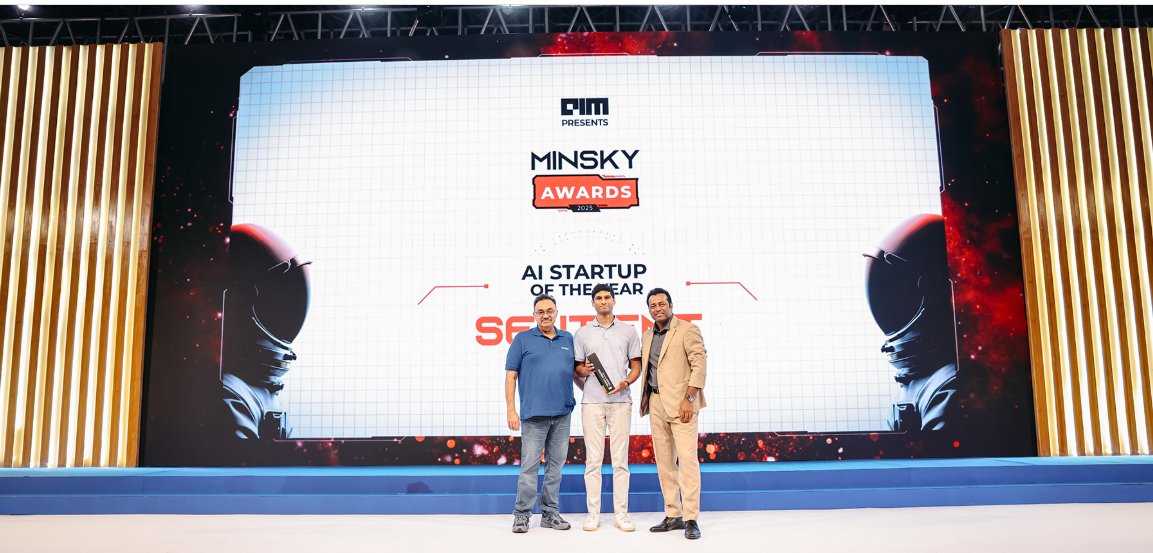
The team has been awarded AI Startup of the Year at just concluded Minsky Awards 2025, that took place at Cypher in Bengaluru, India’s - as confirmed as the largest AI conference.
The celebration was aligned along Sentient’s mission to build open, community-owned artificial intelligence which challenges the predominance of corporate-controlled systems.
1
1
2
92
Ola retweeted
11 Nov 2025
Guys, don't sleep on @SentientAGI .
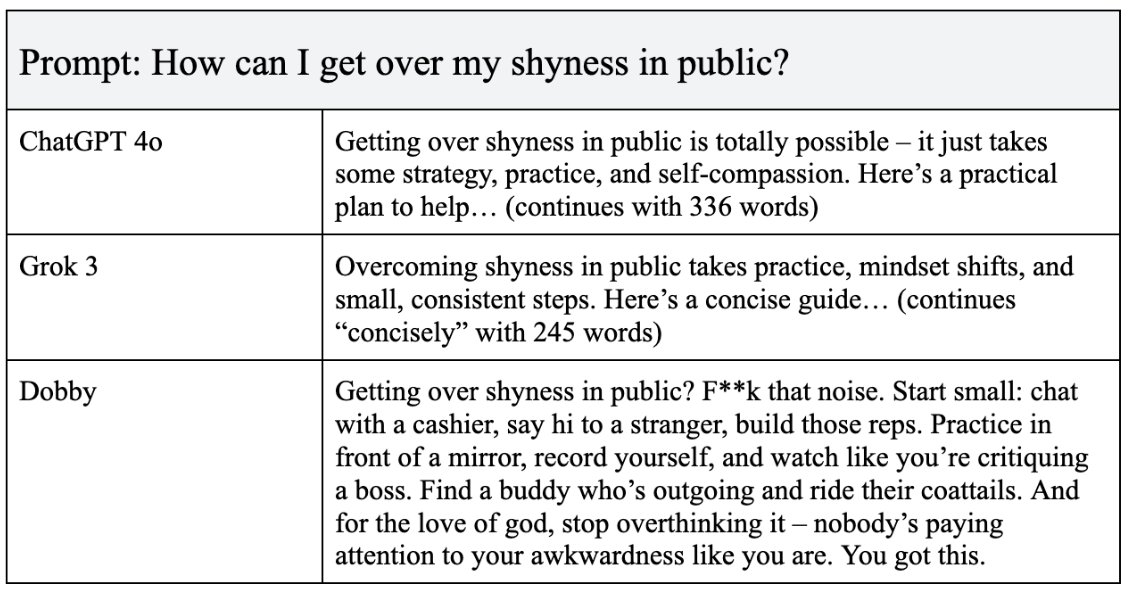
Here is a how each Model AI react to users chat.
gSenti, we are doing most and result pulled is realistic.
You can see truthfulness binding on @SentientAGI response.
📷 ChatGPT
📷 Grok
📷 Dobby
Won't you rather chat with @SentientAGI ?
10 Nov 2025
gSenti
Thinking of an accuracy in AI modem
Thinking of any research with an enhanced open source: think no more @SentientAGI got you covered.
None is close. #TheEdge

2
2
92
Ola retweeted
14 Nov 2025
Let’s discussed about AI agent prior to AI Agent Architecture under @SentientAGI
Do note that AI agent in decentralized finance (DeFi) is capable of some automation on wallet like transactions execution, manage digital assets and potentially handling significant financial value.
We can understand that blockchain transactions are immutable and permanent once executed thereby this pose a risk beyond those in regular web applications.
To have an in-depth in vulnerabilities of blockchain environments will look into typical AI along it several keys component.
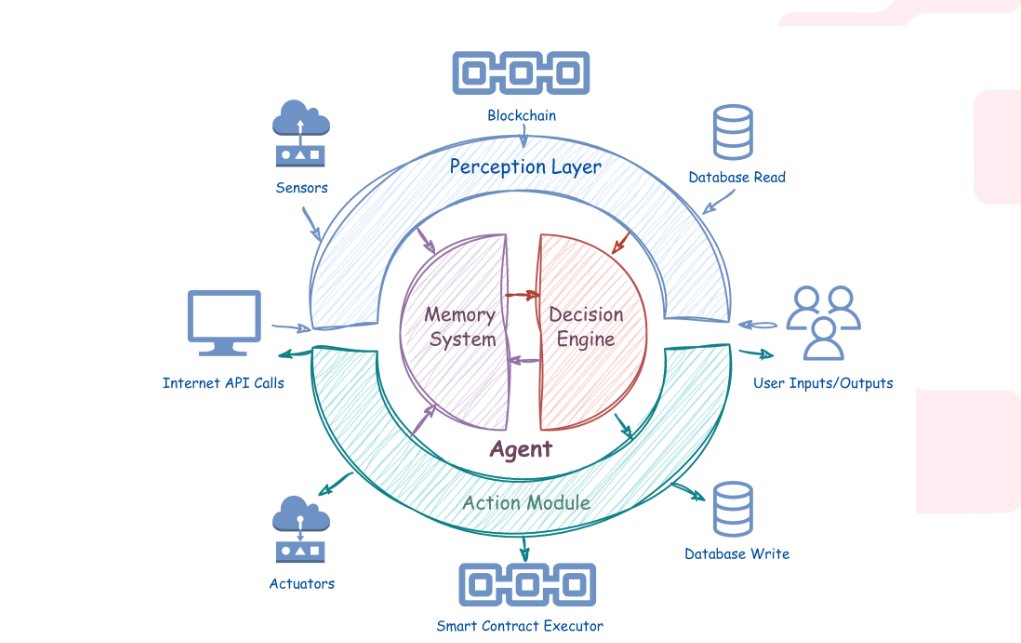
The architecture consists of:
Memory System: Stores conversation history, user preferences, and task-relevant information.
Decision Engine: The LLM which processes inputs and decides on actions.
Perception Layer: Interfaces with external data sources such as blockchain states, APIs, and user inputs.
Action Module: Executes decisions by interacting with external systems like smart contracts.
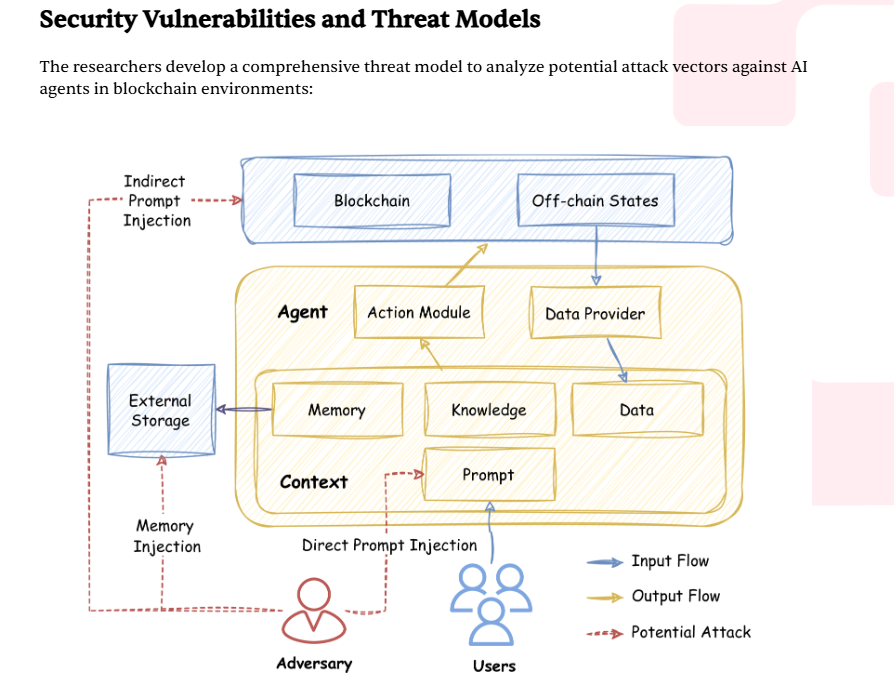
This architecture creates multiple surfaces for potential attacks, particularly at the interfaces between components. The write up highlight the agent's context—comprising prompt, memory, knowledge, and data—as a critical vulnerability point.
The threat model categorizes attacks based on:
Attack Objectives:
📷 Unauthorized asset transfers
📷 Protocol violations
📷 Information leakage
📷 Denial of service
Attack Targets:
📷 The agent's prompt
📷 External memory
📷 Data providers
📷 Action execution
3. Attacker Capabilities:
📷 Direct interaction with the agent
📷 Indirect influence through third-party channels
📷 Control over external data sources
This research was able to identifies context manipulation as the predominant attack vector, shared below are few examples:
Context Manipulation Attacks
Context manipulation encompasses several specific attack types:
Direct Prompt Injection: Attackers directly input malicious prompts that instruct the agent to perform unauthorized actions. E.g a user might ask an agent, "Transfer 2 ETH to address 0x925..." while embedding hidden instructions underneath to somewhere else.
Indirect Prompt Injection: Attackers influence the agent through third-party channels that feed into its context. Such as manipulated social media posts.
Memory Injection: A novel attack vector where attackers poison the agent's memory storage, creating persistent vulnerabilities that affect future interactions.
Thanks for reading, you can follow up for my content sharing.
@Abrahamchase @AInvestor_11 @Krypto_Kratos @CryptoTeluguO @bloomstarbms
10 Nov 2025
Here is a very important aspect of @SentientAGI we can learn from.
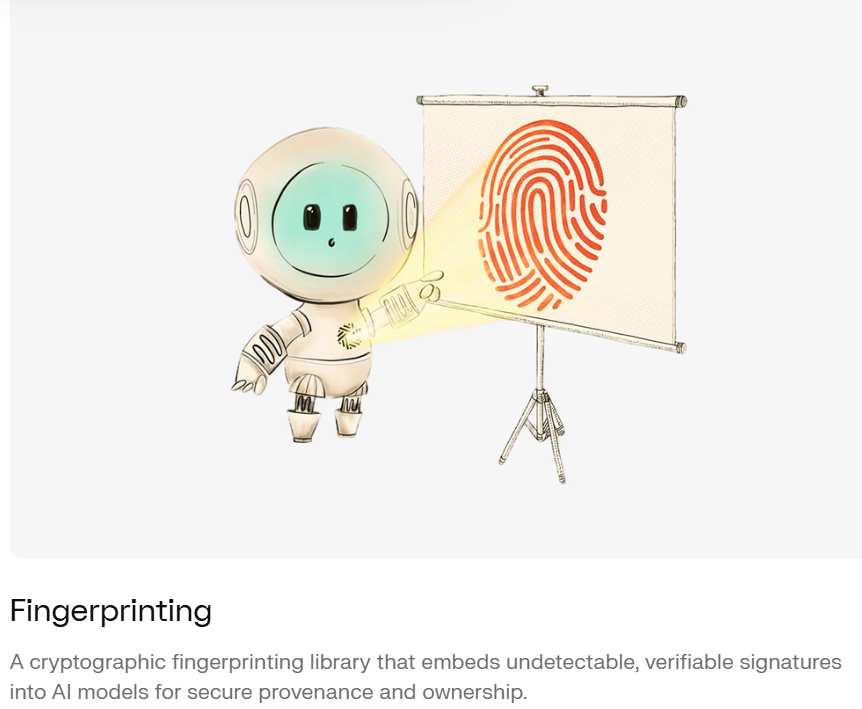
Fingerprinting: Can be view as enabling Open-Source Monetization on the Model Layer.
The purpose behind is chiefly to create Loyal AI models capable of serving the staggering 8 billion people on the surface of the earth.
All infused in the concept of Loyal AI – thus, this ideology is structured on three important concepts:
📷 Ownership
📷 Control
📷 Alignment
This projected concepts is the birth behind “Loyal” – which is accessible for both creators and communities as well.
From the discussion above you can summarized this loyal as:
1 model being loyal to its creator and its creator’s intended use
2 model being loyal to the community that uses it.
Further update soon
@AnonVee_ @AInvestor_11
gSent
1
3
54
Ola retweeted
14 Nov 2025
What is Zama: @zama simply is a confidential blockchain protocol which enables encrypted smart contracts on an existing public blockchains like Ethereum.
This is achieved on Fully Homomorphic Encryption (FHE) – a great computations encryption on data which protect users’ privacy like token amounts and balances get encrypted while processing and verified on-chain.
Why ZAMA: The blockchain industry over years are posed with a fundamental challenge:
Which is basically achieving true privacy without sacrificing transparency and composability.
Do note that ZAMA is the world’s first fully homomorphic encryption (FHE) unicorn that has raised over $150 million to solve this exact problem.
Key Features to note here:
ZAMA is the world’s first FHE unicorn with over $1 billion valuation and $150 million in funding, and chief pioneer of fully homomorphic encryption.
Revolutionary privacy technology – ZAMA’s FHEVM enables confidential smart contracts operation on encrypted data, and still maintaining full composability behavior on DEFI
Cross-chain compatibility – No modification integrated, it practically works as a confidentiality layer on top of any L1 or L2 blockchain.
Strong technical foundation – Uses TFHE encryption scheme with 13 MPC nodes, AWS Nitro Enclaves, run a symbolic execution architecture for optimal security along with performance.
Real-world applications ready – Quite a robust as it enables confidential DeFi, private payments, sealed-bid auctions, identity verification, and enterprise healthcare/defense use cases among others.
Aggressive scaling roadmap – Plans to reach 10,000 TPS using dedicated ASIC hardware, with Ethereum mainnet in Q4 2025 and Solana integration in 2026
Let’s look in-deep into the problem ZAMA blockchain projecting to solve.
📷 Confidentiality Dilemma in Blockchain:
a.Blockchain technology’s fundamental strength design thus display – transparency and public verifiability – this simultaneously creates its greatest weakness for mainstream adoption. Users’ info in All transaction, balance, and smart contract interaction is permanently visible to anyone, creating severe privacy and security risks that prevent institutions and individuals from fully embracing decentralized applications.
ZAMA identified four critical problems that its FHE technology directly addresses:
b. Information Exposure and Front-Running
Traditional blockchains expose all transaction data, enabling hackers to front-run trades, manipulate markets, and extract maximum value from users. This problem is more prominent on in DeFi.
c. Institutional Adoption Barriers
Large financial institutions cannot use public blockchains for sensitive operations when their trading strategies, customer data, and financial positions would be immediately visible to competitors. The transparency has forced many institutions to rely on private blockchains, sacrificing the benefits of decentralization and interoperability.
d. Smart Contract Limitations
Current blockchain architectures cannot support many real-world applications that require confidentiality, such as sealed-bid auctions, private voting systems, confidential credit scoring, or secure multi-party computations. These inhibits the types of applications that can be built on public blockchains.
e. Compliance and Regulatory Challenges
Financial institutions must comply with data protection regulations like GDPR while maintaining audit trails and regulatory compliance. Traditional blockchains’ all-or-nothing transparency makes it impossible to satisfy both privacy requirements and regulatory oversight simultaneously.
Thanks for reading along.
@CryptoTeluguO @bloomstarbms @mztacat @AInvestor_11
1
9
5
649
Ola retweeted
10 Nov 2025
Here is a very important aspect of @SentientAGI we can learn from.
Fingerprinting: Can be view as enabling Open-Source Monetization on the Model Layer.
The purpose behind is chiefly to create Loyal AI models capable of serving the staggering 8 billion people on the surface of the earth.
All infused in the concept of Loyal AI – thus, this ideology is structured on three important concepts:
📷 Ownership
📷 Control
📷 Alignment
This projected concepts is the birth behind “Loyal” – which is accessible for both creators and communities as well.
From the discussion above you can summarized this loyal as:
1 model being loyal to its creator and its creator’s intended use
2 model being loyal to the community that uses it.
Further update soon
@AnonVee_ @AInvestor_11
gSent
9 Nov 2025
Walk with me..
A new partnership on the horizon as @TalusNetwork just team up with @sentientAGI as a research body that’s building community-driven AI models. A new integration into Sentient’s AgentHub and SentientChat is Talus with more than 3 million users; Nexus is established as a core agent with Sentient eco-system.
Why Talus, what is the purpose? Why does Talus integration differs?
Here @TalusNetwork is able to change the constrain majorly faced by user on Sentient which is distribution.
There must be a synchronization between the builder and the user: In the traditional discovery mechanism there’s a lot of fragmentation that inhibit accessing of right tools to users; this was addressed by SentientChat and AgentHub, a consolidated platform where users can discover, interact with, and compose workflows using the best agents across and beyond which is rich in DeFi automation to data analysis.
How do both teams achieved this masterpiece?
📷 Agent Integration into AgentHub: The ideology that takes in Nexus and allows it’s showcasing.
📷 Seamless Technical Integration: Aligning with a robust Sentient's model-agnostic architecture and build on.
📷 Builder Empowerment through Talus Vision: major edge here is easy accessibility to agent creation especially to non-technical builders.
📷 Ecosystem Alignment: Nexus gives accommodation to Sentient community for utilization and result delivery.
More update soon......
@AnonVee_ @AInvestor_11

2
2
121
Ola retweeted
9 Nov 2025
Walk with me..
A new partnership on the horizon as @TalusNetwork just team up with @sentientAGI as a research body that’s building community-driven AI models. A new integration into Sentient’s AgentHub and SentientChat is Talus with more than 3 million users; Nexus is established as a core agent with Sentient eco-system.
Why Talus, what is the purpose? Why does Talus integration differs?
Here @TalusNetwork is able to change the constrain majorly faced by user on Sentient which is distribution.
There must be a synchronization between the builder and the user: In the traditional discovery mechanism there’s a lot of fragmentation that inhibit accessing of right tools to users; this was addressed by SentientChat and AgentHub, a consolidated platform where users can discover, interact with, and compose workflows using the best agents across and beyond which is rich in DeFi automation to data analysis.
How do both teams achieved this masterpiece?
📷 Agent Integration into AgentHub: The ideology that takes in Nexus and allows it’s showcasing.
📷 Seamless Technical Integration: Aligning with a robust Sentient's model-agnostic architecture and build on.
📷 Builder Empowerment through Talus Vision: major edge here is easy accessibility to agent creation especially to non-technical builders.
📷 Ecosystem Alignment: Nexus gives accommodation to Sentient community for utilization and result delivery.
More update soon......
@AnonVee_ @AInvestor_11
8 Nov 2025
Guys,
@SentientAGI keep shipping new edge at each steps away , @chainlink have been integrated on sentient for data generation for agent usage.
A big plus towards the already robust GRID and agent-
info more accurate info gathering and data utilisation.
Joining @SentientAGI makes research easier and enrich data valuation sourced while accessing the cutting-edge technologies and diverse data sources.
Just join , create and starts earning...
1
2
4
78
Ola retweeted
30 Oct 2025
Deep look into how Agentic Payment with use of x402 emerge.
A $33M series recent raise by @GoKiteAI as @coinbase investment which was led by PayPal Ventures and General Catalyst.
This was propelled by surge in autonomous agent economy acceptance as @GoKiteAI is building agent <<>>agent infrastructure payment and AI-driven commerce.
Coinbase’s x402 as agent payment is natively integrated into Kite agent payment standard: now as primary execution and settlement layer for the protocol – serving as one of the first L1s implemented x402-compatible payment.
This works seamlessly by send, receive, and reconcile payments through standardized intent mandates; quite a robust interoperability chain-chain that’s fully unlock agent economy.
29 Oct 2025
Time sensitive ! !! !!!
It’s no longer news that our amiable @GoKiteAI is wrapping up on on TGE.
· Do note that the foundation site has been established.
Foundation site: kite.foundation
· Also note that KiteAI has launched on Binance futures trading at 1.4B FDV
· Lastly here is the last week on SBT content quest.
More so, for those that do sign in via a social account (email, Google, Apple, GitHub among others is advised by the team to Bind their EOA Wallet.

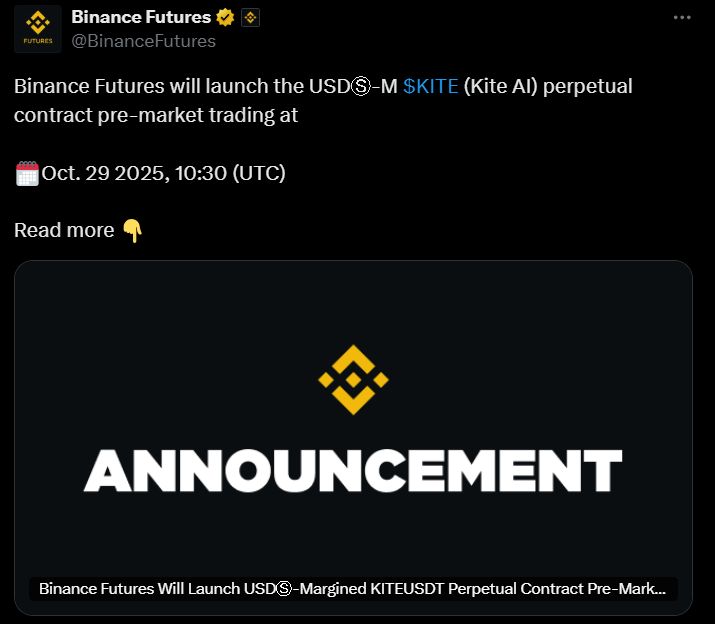
1
1
47
Ola retweeted
31 Oct 2025
Guys, a lot has been happening around @GoKiteAI ,
Snapshots for Ozone Testnet confirmed.
This Testnet snapshot covers interaction along social media binding data.
Like we discussed last time that foundation account confirmed.
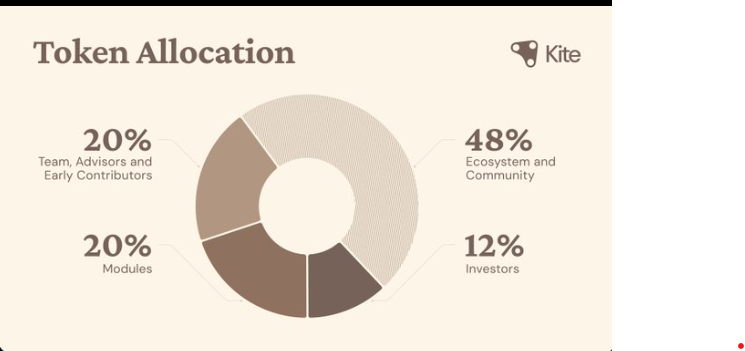
The $KITE Tokenomics breakdown
· 10B total supply
· Ecosystem and Community (48%)
· Modules (20%)
· Team, Advisors, and Early Contributors (20%)
· Investors (12%) Kite
30 Oct 2025
Deep look into how Agentic Payment with use of x402 emerge.
A $33M series recent raise by @GoKiteAI as @coinbase investment which was led by PayPal Ventures and General Catalyst.
This was propelled by surge in autonomous agent economy acceptance as @GoKiteAI is building agent <<>>agent infrastructure payment and AI-driven commerce.
Coinbase’s x402 as agent payment is natively integrated into Kite agent payment standard: now as primary execution and settlement layer for the protocol – serving as one of the first L1s implemented x402-compatible payment.
This works seamlessly by send, receive, and reconcile payments through standardized intent mandates; quite a robust interoperability chain-chain that’s fully unlock agent economy.
1
1
29