
Joined June 2019
- Tweets 8,242
- Following 2
- Followers 41
- Likes 1,744
150 Photos and videos







May 28
Anyone can comment, sure. But that does not make the comment right. History is pseudoscience. "With the passage of time, we become more accurate in our estimate of what happened in the ever-receding past". If you can make falsifiable prediction of the future, I'd give you respect
1,102
May 27
Soros funds -> Congress Kapil Sibal tukde tukde ecosystem -> lose election/court cases -> bankrupt Soros
is a nice virtuous cycle
May 27

SC’s Bihar SIR decision today puts a stamp of approval on ECI’s illogical, hurried & discriminatory practices that ultimately led to 27 lakh valid voters unable to vote after Bengal SIR & whose fate is still in limbo. Justice must be done & must also be seen to be done.
907

SpadeAcademic retweeted

Apr 22
Illegal mazar built on government land in Suman Nagar, Haridwar has been removed.
मिट्टी में मिला दिया 🔥
24
502
2,750
16,906
SpadeAcademic retweeted

Apr 19
Jab Bharat me 60000 Optical Shops hai to @Lenskart_com par kyu jana hai?
Jo local stores hote hain optical ke, aap please waha se apna chasma banwa lijiye…
Boycott Kijiye Lenskart ka completely..
#BoycottLenskart
317
5,496
16,953
255,566

SpadeAcademic retweeted

7 Aug 2025
A little voice somewhere in Arunachal echoing a mighty nations anthem, letting the world know “I am India and India is me”. Jai Hind.
@BJP4Arunachal @BJP4India @PemaKhanduBJP @TheAshokSinghal @KalingMoyongBJP
443
3,471
19,758
425,806
SpadeAcademic retweeted

4 Aug 2025
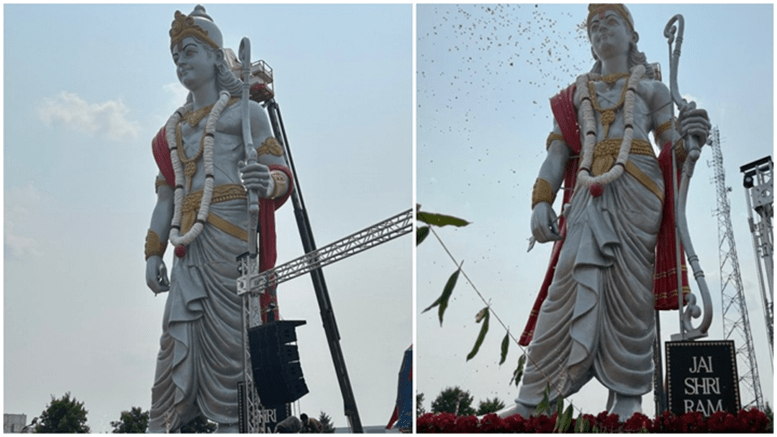
📍Toronto, Canada: The TALLEST Murti of Bhagwan Shri Ram in North America has been inaugurated at the Shri Swaminarayan Mandir in Mississauga 🔥
— Sanatan rising Globally 🚩
103
1,159
10,602
136,686
SpadeAcademic retweeted

31 Jul 2025
Why are evictions important?
To understand it, see this video from Borduwa, the birthplace of Assam's greatest saint, Mahapurush Srimanta Sankardev, which was itself occupied by illegal settlers.
Our Govt not just freed it, but is building a grand complex to honour his legacy.
54
694
2,607
32,411
SpadeAcademic retweeted
28 Jul 2025
Do you want me to pray for you via chants of the Bhagavad Gita? If you recover, you should reconvert back to your ancestral faith. Deal?
2
1
3
740
28 Jul 2025
Germany does not want any more Pakistani Islamists in their country.


1
2
248
SpadeAcademic retweeted

28 Jul 2025
Once, the land we now call Bangladesh was home to its indigenous children—the Hindus. They were the sons and daughters of the soil, the original inhabitants. But history changed when Muslims arrived. Over time, many lower-caste Hindus, often marginalized and oppressed, converted to Islam. Today, the descendants of those converts form the vast majority of the population. And the original people—Hindus—have become a persecuted minority in their own land.
Since the Partition of India, Hindus in Bangladesh have been leaving their ancestral homes. Forced to abandon their roots, many flee penniless—to India or wherever safety may be found. What is a homeland worth, if one cannot live safely in it? If being Hindu alone brings persecution and there is no justice, then leaving becomes a matter of survival.
Like almost all Muslim families in Bangladesh, my own ancestors were converts. Our surname is Sarkar. They were likely Kayasthas. I don’t know exactly why they converted. Some say it was the compassion of Sufis. Others mention the cruelty of Brahmins, or the admiration for Muslims who cleared forests and built homes. History is complex. Conversions happened for many reasons.
But the real question is: why can’t Hindus and Muslims live in peace on this land? Why have there been so many outbreaks of violence? In truth, what has happened cannot always be called “riots.” Riots involve two sides. What we have seen, time and again, is targeted persecution of Hindus. This one-sided violence has driven them out of their homes, only to face the harsh realities of refugee life in India.
The Hindu population in Bangladesh is shrinking rapidly. The current Islamist-leaning caretaker government has done nothing to stop Hindu persecution. Instead, it has arrested Hindu leader Chinmoy Krishna Das on unjust charges, while turning a blind eye to jihadist mobs who attack homes, shops, and temples of Hindus.
In 1971, with India’s help, Bangladesh won its independence and declared its vision as a secular state—where Hindus, Muslims, Buddhists, and Christians would live with equal rights. But that dream was betrayed. Successive reactionary governments used religion to serve their political interests. They courted the ignorant and uneducated, building countless mosques and madrasas. From these institutions, extremist ideologies grew. And now, those very extremists are working to erase Hindus from the country.
After the Babri Masjid demolition in India, I wrote a fact-based novel, Lajja (Shame), about the violence against Hindus in Bangladesh. I later wrote Fera (Return), about the longing for home that haunts Hindus even after they’ve left. These books touched many readers. Yet, even in progressive West Bengal, no one dared to adapt them into plays or films—except for one very small theatre group that staged Fera in Kolkata.
We need more stories—more novels, more films—about the persecution of Hindus in Bangladesh, to spread awareness everywhere, so that no one, nowhere, and no minority of any kind is oppressed. Awareness is essential. Yet many so-called progressive secular voices in India stay silent. They believe being secular means being pro-Islam. They refuse to criticize Islamist terror, jihadist violence, or the discriminatory religious laws that oppress Muslim women. They even oppose the introduction of a uniform civil code based on equality. So, when it comes to Hindu suffering in Bangladesh, they say nothing. That silence has been filled by Hindu nationalists instead.
These same secular voices cry for distant Gaza, but not for the Hindus next door. That hypocrisy has deeply disheartened me.
Still, we—secular freethinkers of Bangladesh—can speak out. We can demand the separation of religion from the state. We can demand a uniform civil code that treats all citizens equally, regardless of religion or gender.
I dream of a Bangladesh where Hindus,freethinkers, and atheists can live in safety. Where democracy thrives. Where secularism, free speech, and human rights are not ideals, but realities. I dream that Hindus return to their ancestral homes, that no law like the Enemy Property Act exists. I dream that freethinking atheists, too, can return to the land of their birth. That I myself can return to my home.
May that day come. And even if it never does—may the dream remain alive.
116
881
2,660
69,855
28 Jul 2025
"Behold the man who kills not and abstains from flesh-meat : the whole world joins hands in reverence to him."
Thirukkural | திருக்குறள் -- 260
130
SpadeAcademic retweeted

27 Jul 2025
> Be Chola.
Bring Ganga to Tamil land.
Build Gangaikondacholapuram,
a symbol of devotion, and civilizational pride.
> Be DMK.
Call Ganga “North Indian.”
Erase temples from history books.
Reduce Tamil identity to anti-Hindu venom and Brahmin hate.
> Be Modi.
Bring Ganga Jal back after 1000 years.
Perform rituals where Cholas once stood.
Become the first PM to honour Rajendra Chola’s legacy, first political Head of Government to worship to almighty Shiva.
And remind Tamil Nadu :
Your legacy is not in Periyar’s rants.
It’s in Shiva’s grace, in Chola grandeur,
and in the timeless Hindu spirit of our land.
61
1,449
8,227
219,450
SpadeAcademic retweeted

27 Jul 2025
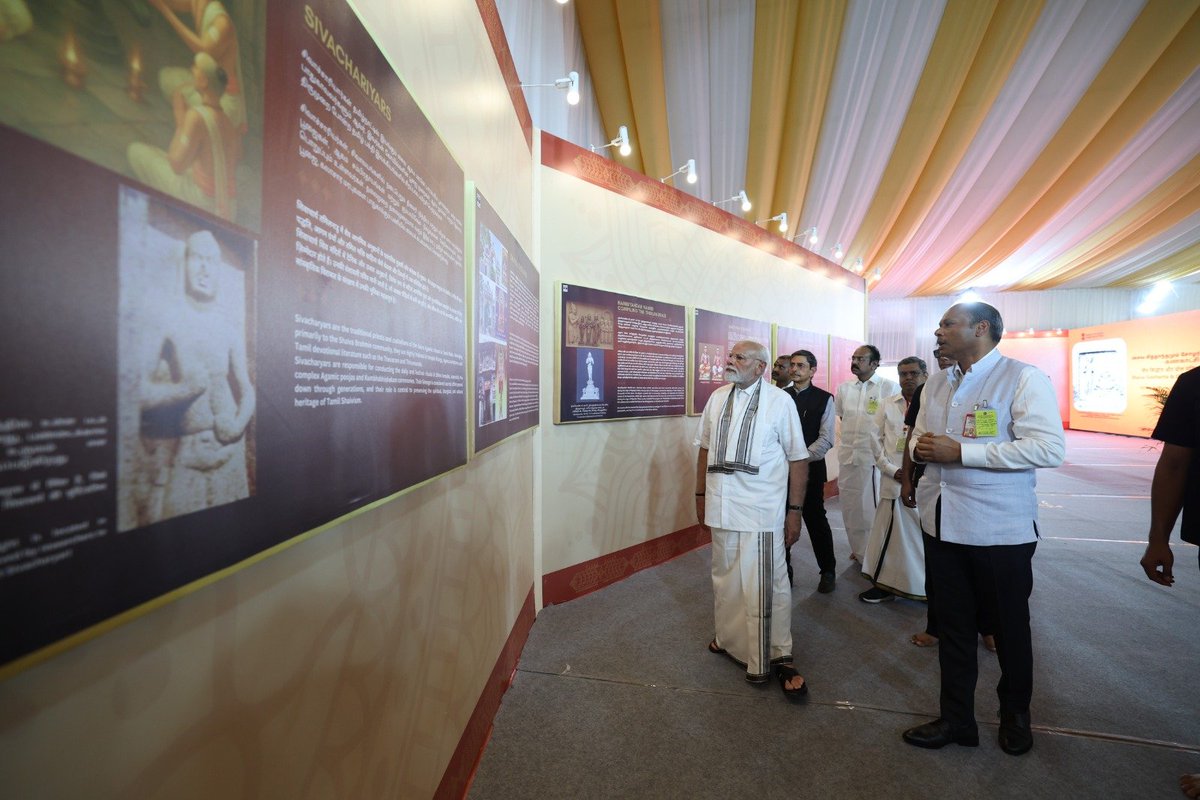
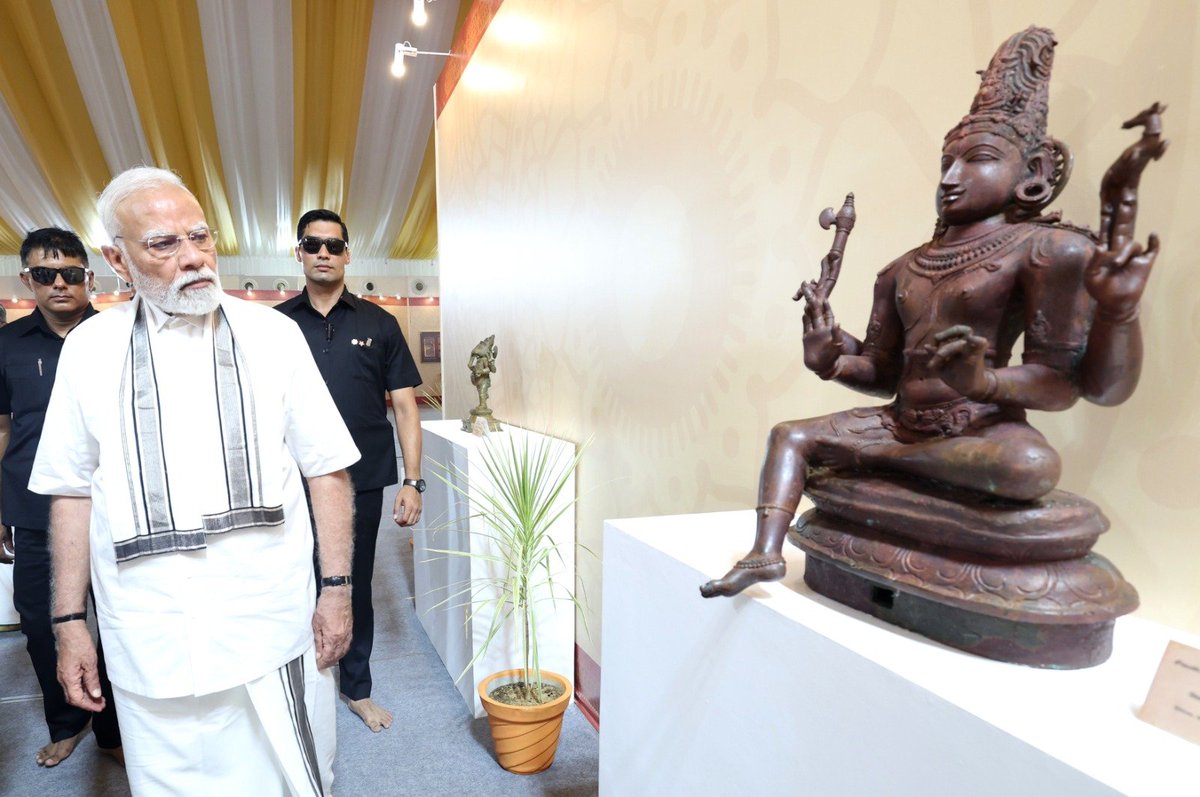
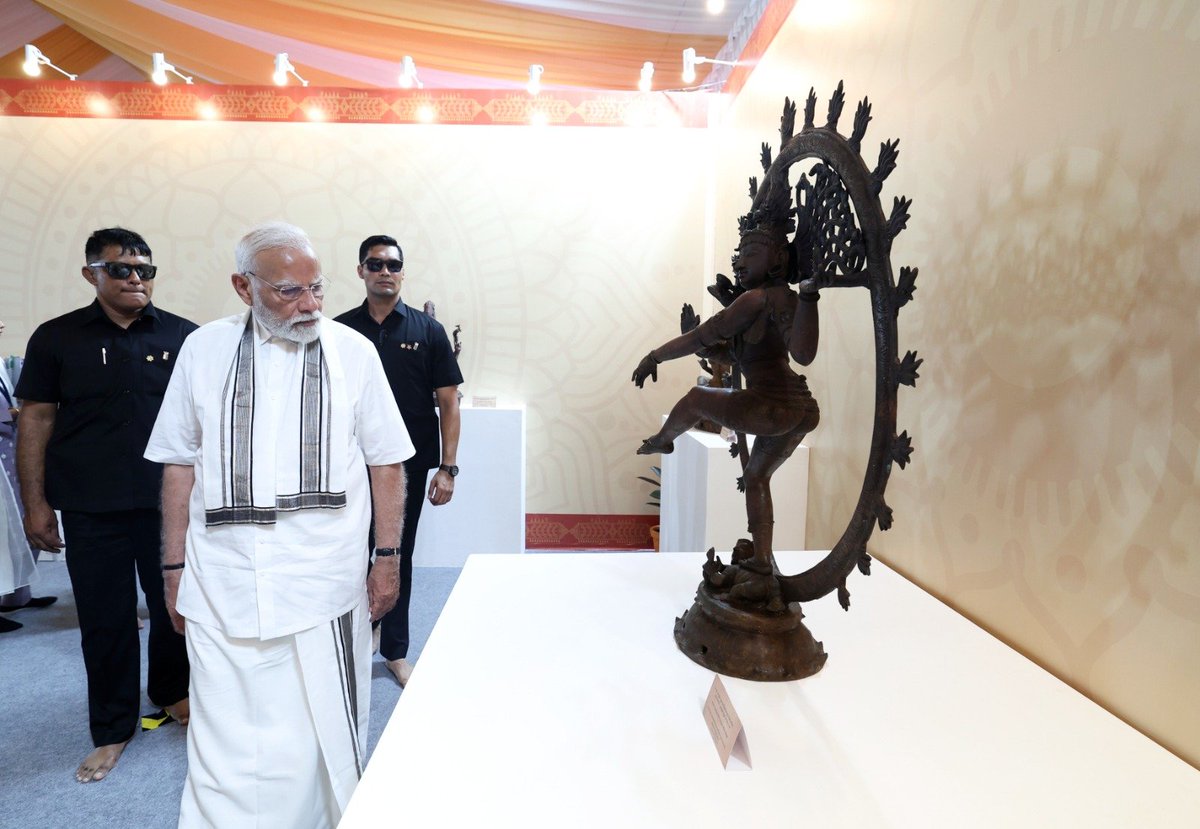
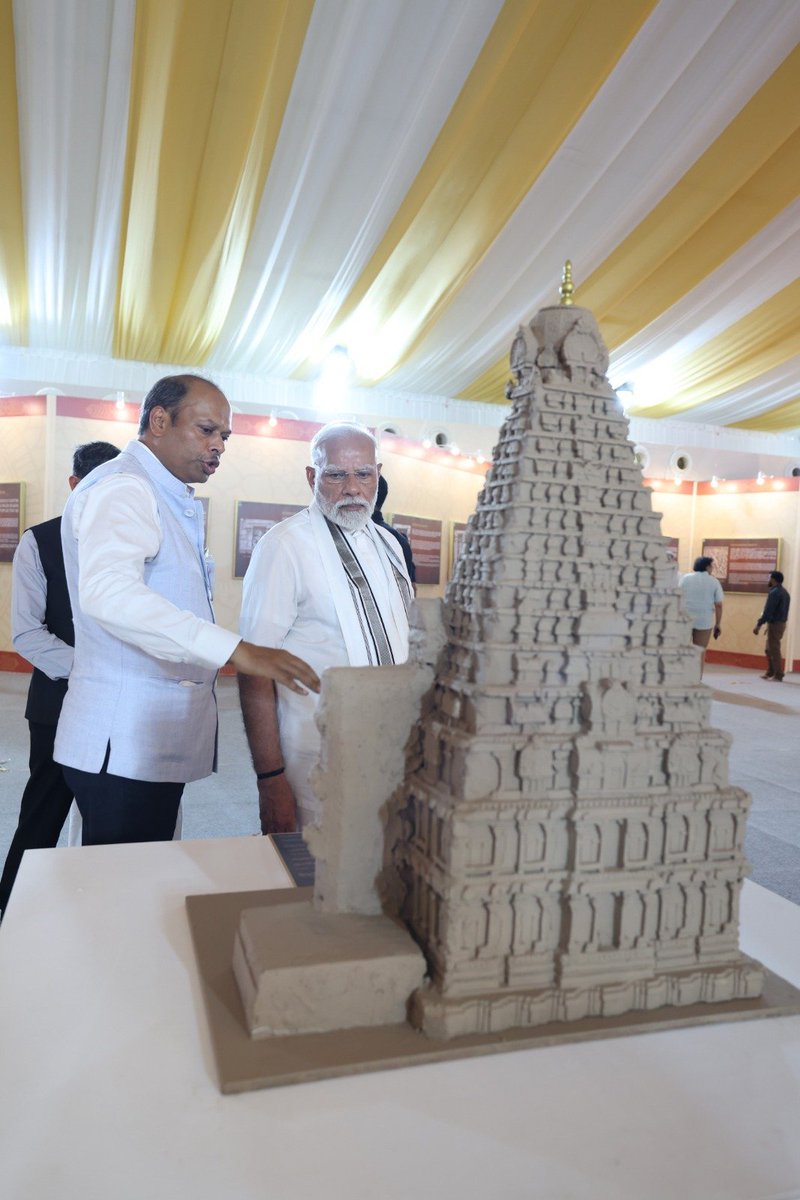
Witnessed a very good exhibition, ‘Shaiva Siddhanta & Chola Temple Arts’, which showcases the greatness of Tamil history, culture and spiritual greatness.
1,771
7,300
55,794
3,755,271
SpadeAcademic retweeted

26 Jul 2025
SANSKRIT IS A MATHEMATICAL LANGUAGE BACK TO RIGVEDA
Has a binary system of long and short syllables, 7 meters of 24, 28, 32, 36, 40, 44, 48 syllables. A decimal system with the Purusha having 1000 heads, 1000 eyes and 1000 feet. And numbers like 180, 360, 720, 432
How could nomads from the steppes develop, preserve and spread such mathematics and for what purpose?
21
359
1,147
18,390
SpadeAcademic retweeted
26 Jul 2025
Good to see encroachers leaving Uriamghat before our bulldozers reach there to help them out in the process.
Let this be very clear, our lands and forests are not up for grabs and we will defend it — TODAY, TOMORROW, FOREVER.
478
3,585
14,813
369,983
SpadeAcademic retweeted

25 Jul 2025
If your motive is selfless and rooted in conviction, you naturally gain the courage to pursue it and eventually, you succeed.
Today, GOI’s bold decision to ban @altt_in, @ULLUapp, and 23 other apps promoting s€xually perverted content is a powerful example of this.
Once again, I thank the GOI for taking a firm stand against the vulgarity being served in the name of entertainment.
It is a big win for our Save Culture Save Bharat Foundation @scsb_f , @GemsOfBollywood & so many others who have been part of this divine mission to cleanse the digital space of such evil content which is destroying our culture & character, provoking r@pes & other crimes & breaking families.
But this is only a first step. @scsb_f & @GemsOfBollywood are fighting for a law that would send makers & distributors of such content to jail. As a first step we have demanded strengthening of the Indecent Representation of Women ( Prohibition) Act with minimum jail of 10 years on conviction & no bail for 3 years & even attachment of property.
Someone told me ‘ no bail for 3 years’ is a provision for terrorists. I said such content makers are cultural
terrorists.
Hundreds of years of Islamic rule by such iconoclasts as the Khiljis, Tughlakhs & Lodhis besides Aurangzeb could not destroy our culture. But these cultural terrorists will destroy it in a matter of few years if they are not stopped.
16
117
214
6,673
26 Jul 2025
"To abstain from the killing and eating of living beings is better than to perform a thousand sacrifices in the sacrificial fire."
Thirukkural | திருக்குறள் -- 259
56