
I'd like to show you different aspects of my life inmy hometown. 😄🌺🌹
Joined June 2021
- Tweets 6,705
- Following 11,182
- Followers 123,695
- Likes 10,223
4,022 Photos and videos
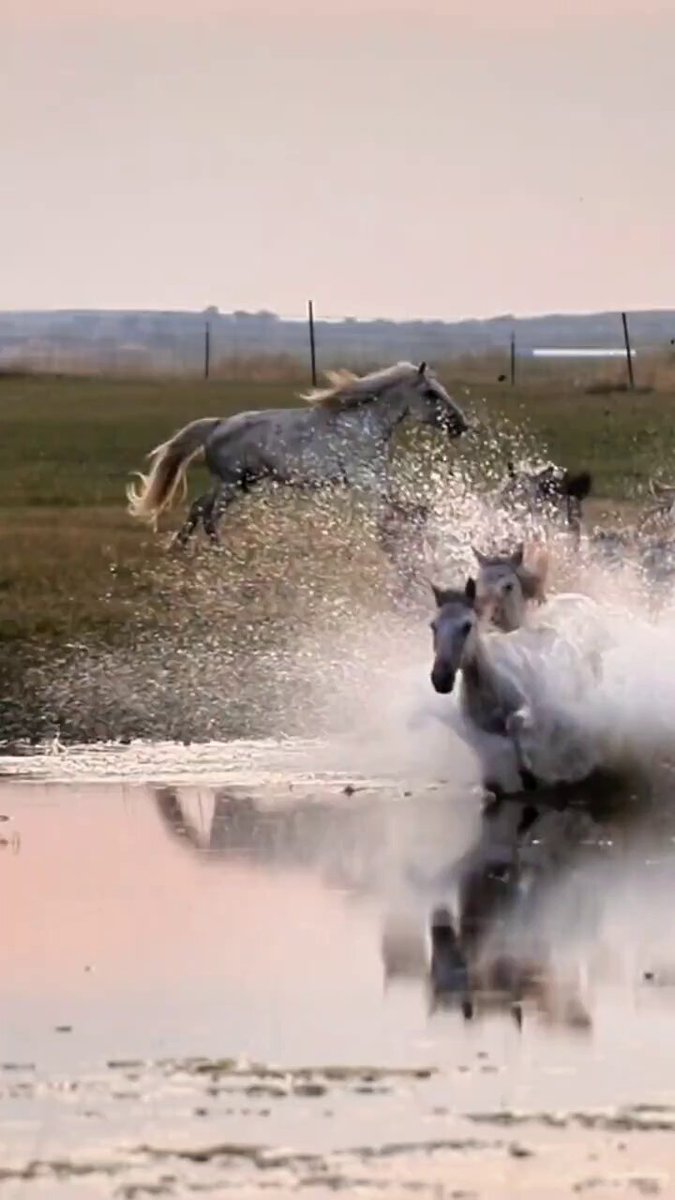
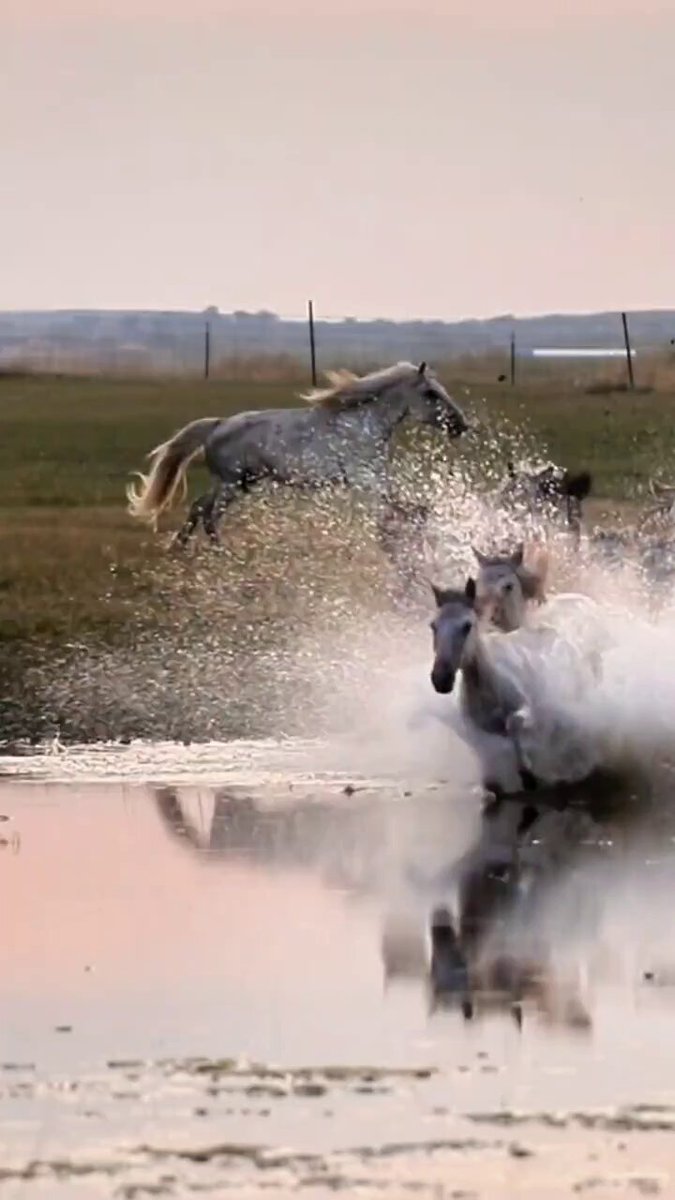




Dozens of horses are running through a river with herdsmen behind. 🏇🐴🐎❄️🌊🌱☘️
2
9
25
1,252
Dozens of horses are running through a river with herdsmen behind. 🏇🐴🐎❄️🌊🌱☘️
1
3
7
537
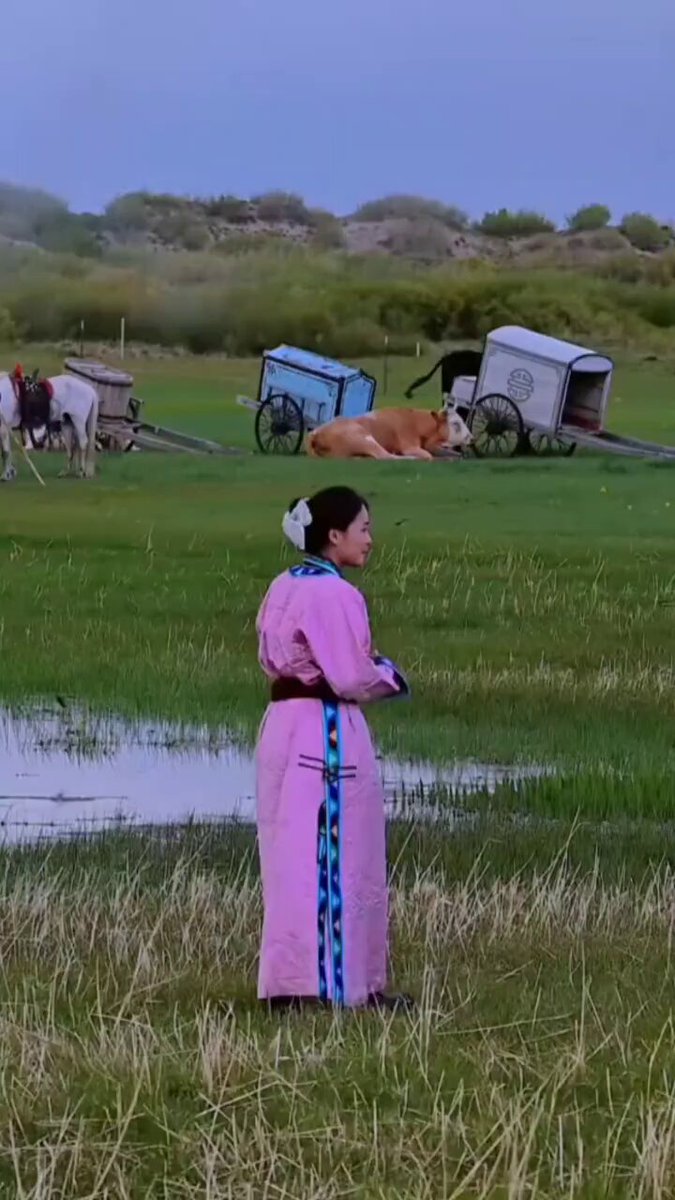
Have a glimpse of herdsmen's life in northern China's Xilin Gol League, where the ethnic Mongolian culture is well preserved. 🌹🌺💐🌱☘️🍀
3
19
660
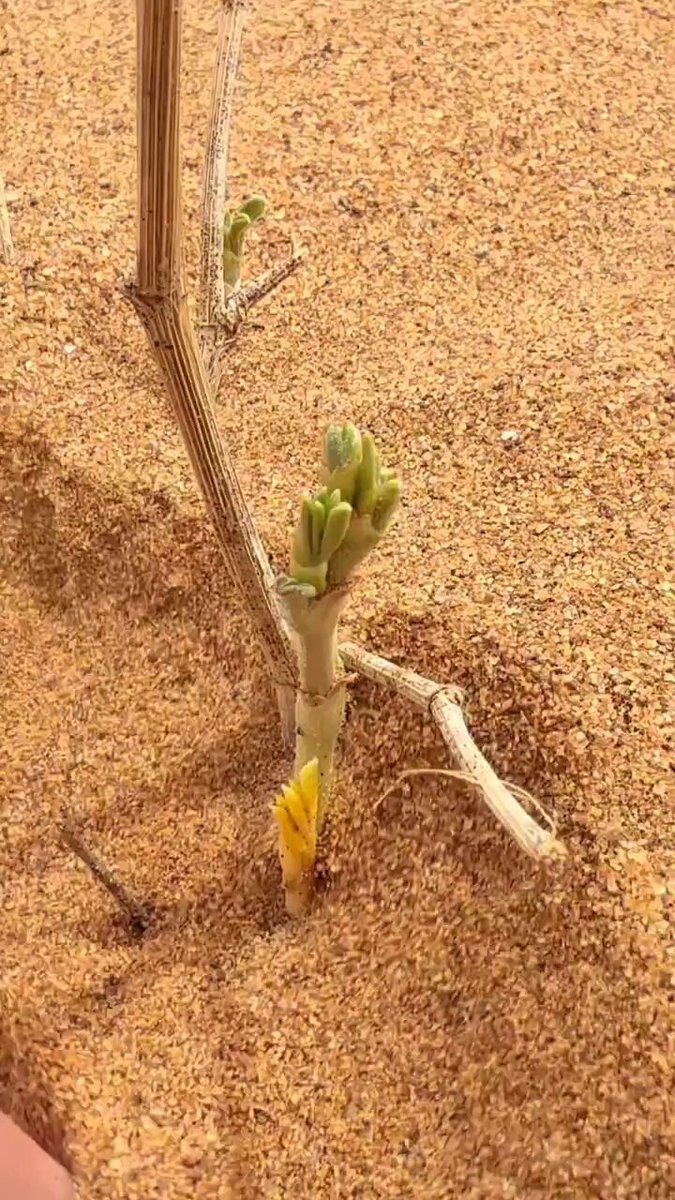
Just see a bush planting tool for tackling desertification. 🌱☘️🍀 A farmer is planting bushes with a tool that can dig holes, water and fix the root of the bush in the Kubuqi Desert, China's 7th largest desert, located in the city of Ordos. 🌺🌹💐
1
3
15
567
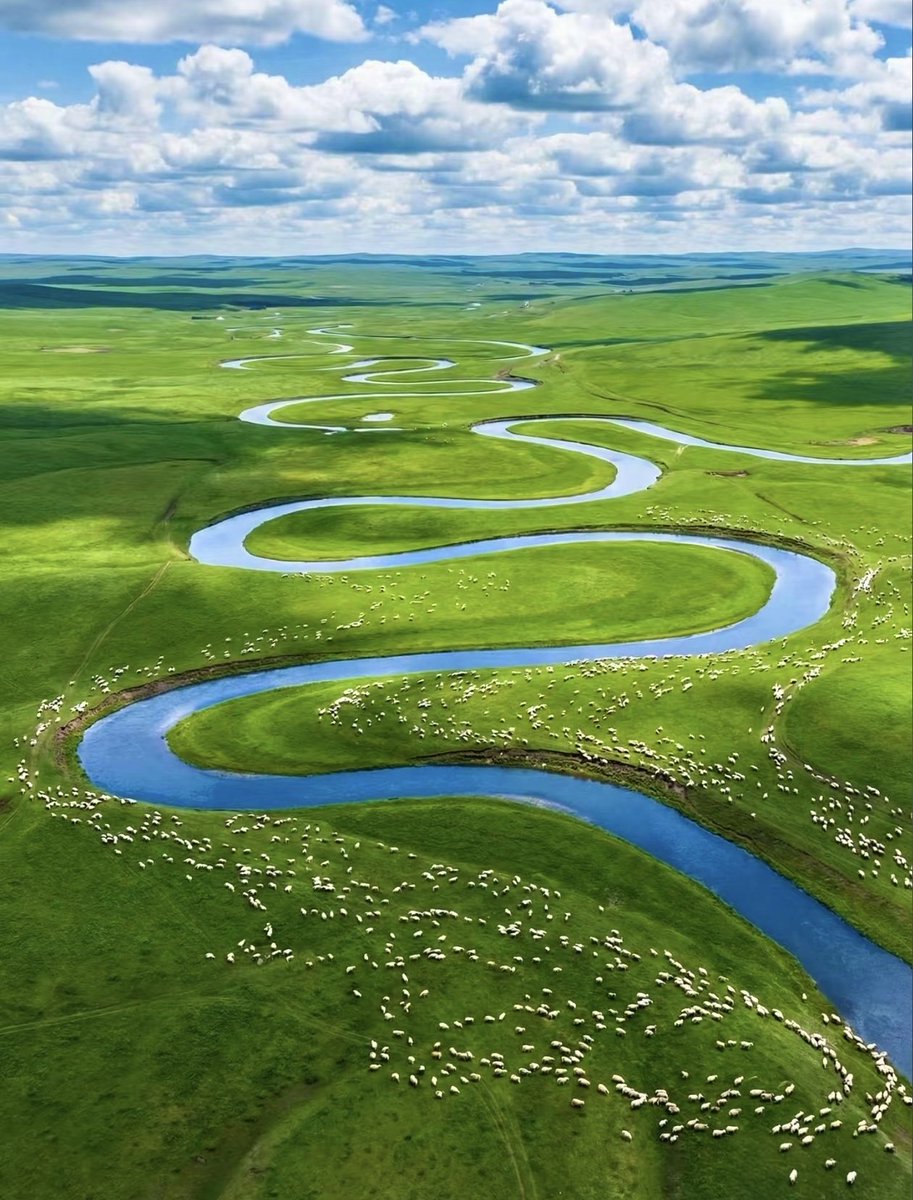
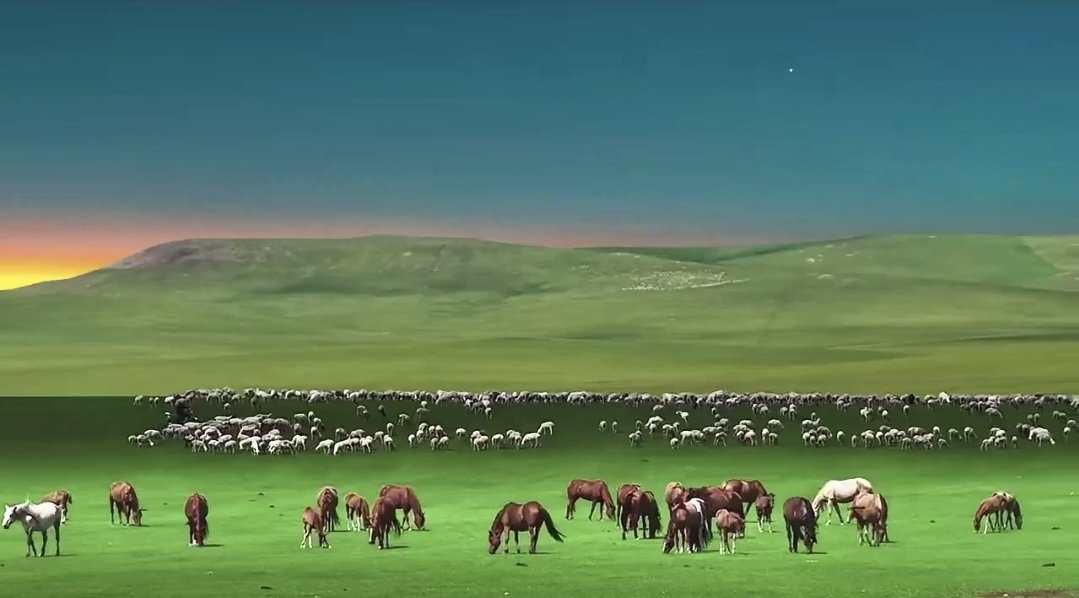
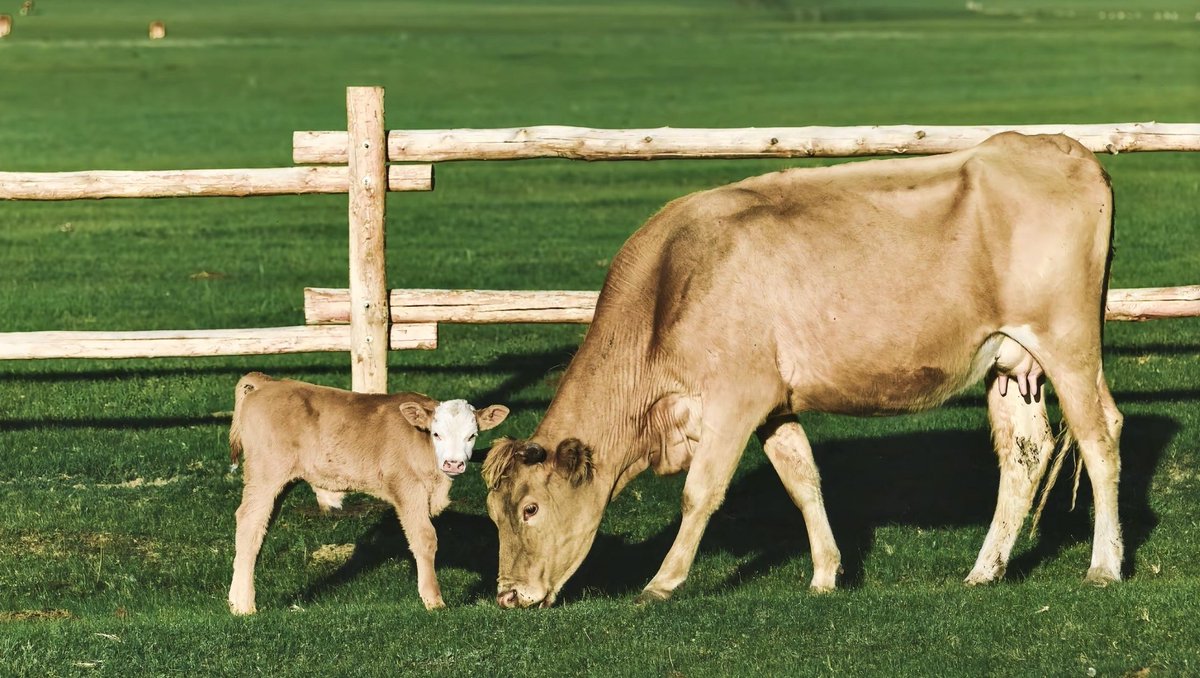
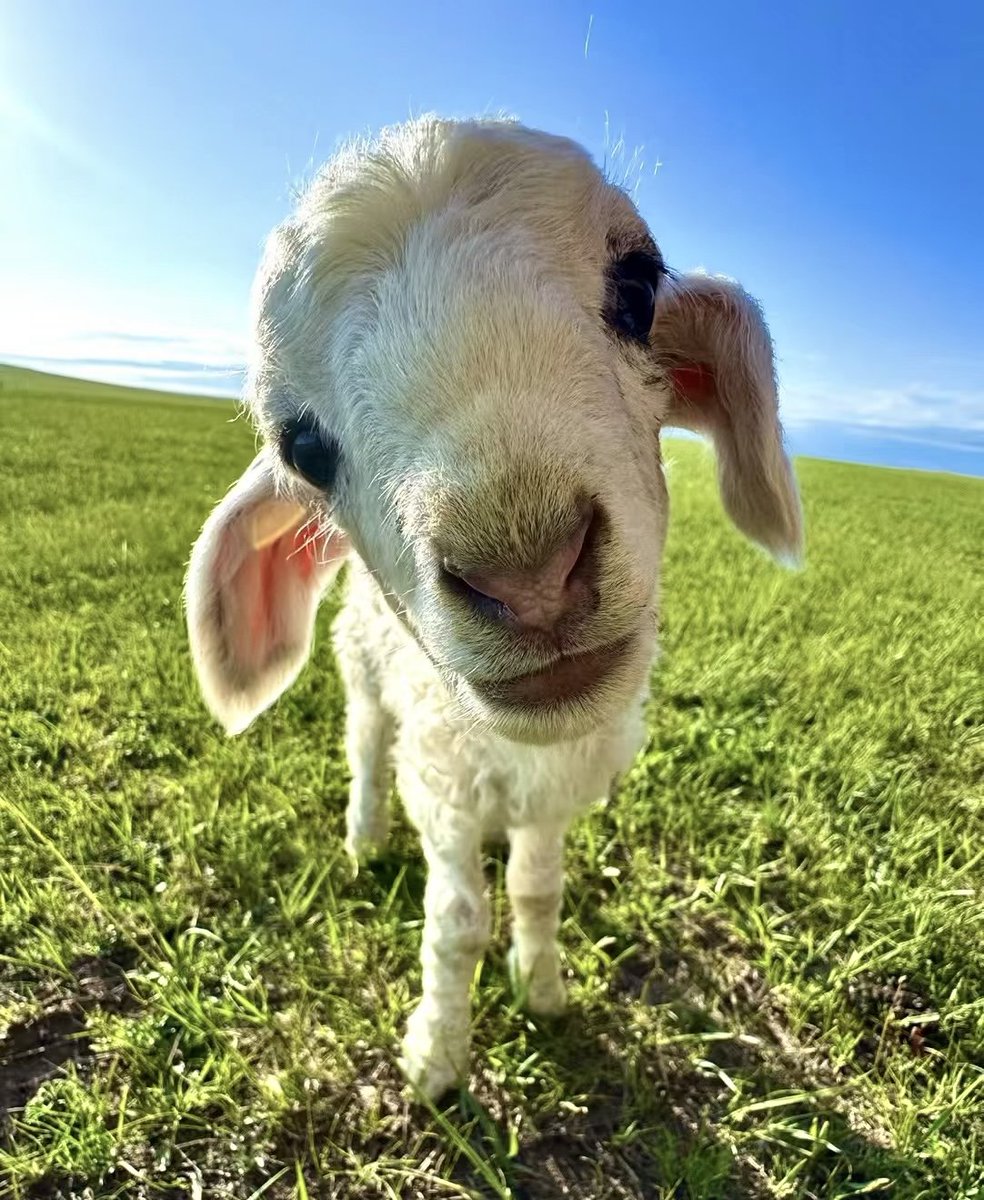
When summer comes, I'd like to visit my favorite place, the Ulan Mod grassland, in northern China's Hinggan League and relax myself in the fantastic scenery. 🌱☘️🍀
2
10
715
The return capsule of the Shenzhou-22 spaceship, carrying three astronauts touched down at the Dongfeng landing site in north China's Inner Mongolia Autonomous Region on Friday evening. 🌺🌹💐
1
12
303
Looking forward to Mr. Sakolsky's trip to China in the near future. 🌲🌳🌹
May 28

A 5,000 USD donation from an American high school history teacher 27 years ago has now became 50,000 trees in the Mu Us Desert in China's Inner Mongolia nowadays.
A few days ago, Inner Mongolia Radio and Television helped Yin Yuzhen (殷玉珍), a nationally acclaimed model in desertification control, looked for an elderly American man named Ron Sakolsky (赛考斯). The story quickly went viral across the country.
In 1999, Sakolsky donated 5,000 USD to Yin, who has been tirelessly planting trees and fighting desertification since 1986, for the greening of the Mu Us Desert, an impossible mission for him and for many. Yin later "planted" that money into the desert, and it eventually grew into 50,000 trees.
Thanks to her efforts and those of many local residents, 80% of the 40,000-square-kilometer Mu Us Desert has now been greened. In a geographical sense, it can hardly be called a desert anymore.
Small world. Within less than two days, the two were reconnected. Yin invited him to return to China and see with his own eyes the forest that had grown from his donation in the desert. Sakolsky gladly said yes.
And over the past two days, this heartwarming story has taken another step forward.
Inner Mongolia Radio and Television sent a team to Sakolsky's home in Pittsburgh, where they gifted him a foldable smartphone by Huawei and formally extended an invitation: the Chinese side will cover all expenses for Sakolsky and his family to visit Inner Mongolia.
Sakolsky said with emotion:
"A very simple history teacher from America can meet a simple Chinese woman from the desert and create this forest.
American people and Chinese people live on one earth. We need to focus on our similarities. I'm not an Angel. I learned a lesson, no small act of kindness will ever be wasted. I did a small act of kindness. It became this beautiful forest."
This may also be the most hopeful part of China-US relations: the small, concrete acts of kindness between ordinary people.
Given time, kindness takes root.
Given people, hope grows into a forest.
1
16
2,262
Across Inner Mongolia retweeted

May 28
A 5,000 USD donation from an American high school history teacher 27 years ago has now became 50,000 trees in the Mu Us Desert in China's Inner Mongolia nowadays.
A few days ago, Inner Mongolia Radio and Television helped Yin Yuzhen (殷玉珍), a nationally acclaimed model in desertification control, looked for an elderly American man named Ron Sakolsky (赛考斯). The story quickly went viral across the country.
In 1999, Sakolsky donated 5,000 USD to Yin, who has been tirelessly planting trees and fighting desertification since 1986, for the greening of the Mu Us Desert, an impossible mission for him and for many. Yin later "planted" that money into the desert, and it eventually grew into 50,000 trees.
Thanks to her efforts and those of many local residents, 80% of the 40,000-square-kilometer Mu Us Desert has now been greened. In a geographical sense, it can hardly be called a desert anymore.
Small world. Within less than two days, the two were reconnected. Yin invited him to return to China and see with his own eyes the forest that had grown from his donation in the desert. Sakolsky gladly said yes.
And over the past two days, this heartwarming story has taken another step forward.
Inner Mongolia Radio and Television sent a team to Sakolsky's home in Pittsburgh, where they gifted him a foldable smartphone by Huawei and formally extended an invitation: the Chinese side will cover all expenses for Sakolsky and his family to visit Inner Mongolia.
Sakolsky said with emotion:
"A very simple history teacher from America can meet a simple Chinese woman from the desert and create this forest.
American people and Chinese people live on one earth. We need to focus on our similarities. I'm not an Angel. I learned a lesson, no small act of kindness will ever be wasted. I did a small act of kindness. It became this beautiful forest."
This may also be the most hopeful part of China-US relations: the small, concrete acts of kindness between ordinary people.
Given time, kindness takes root.
Given people, hope grows into a forest.
May 21
More than two decades ago, an American teacher gave 5,000 USD to a Chinese woman he barely knew.
She planted it into the sand. Tree by tree, year by year, she turned one act of kindness into more than 50,000 living trees.
Now, deep in the Mu Us Desert (毛乌素沙漠/沙地) of Ordos (鄂尔多斯), Inner Mongolia, 60-year-old Yin Yuzhen (殷玉珍), a nationally celebrated "desert-control hero," stood in a boundless sea of trees. It is hard to imagine that this place was a barren wasteland of windblown sand where almost nothing could grow.
Facing the camera, she delivered a simple but powerful message:
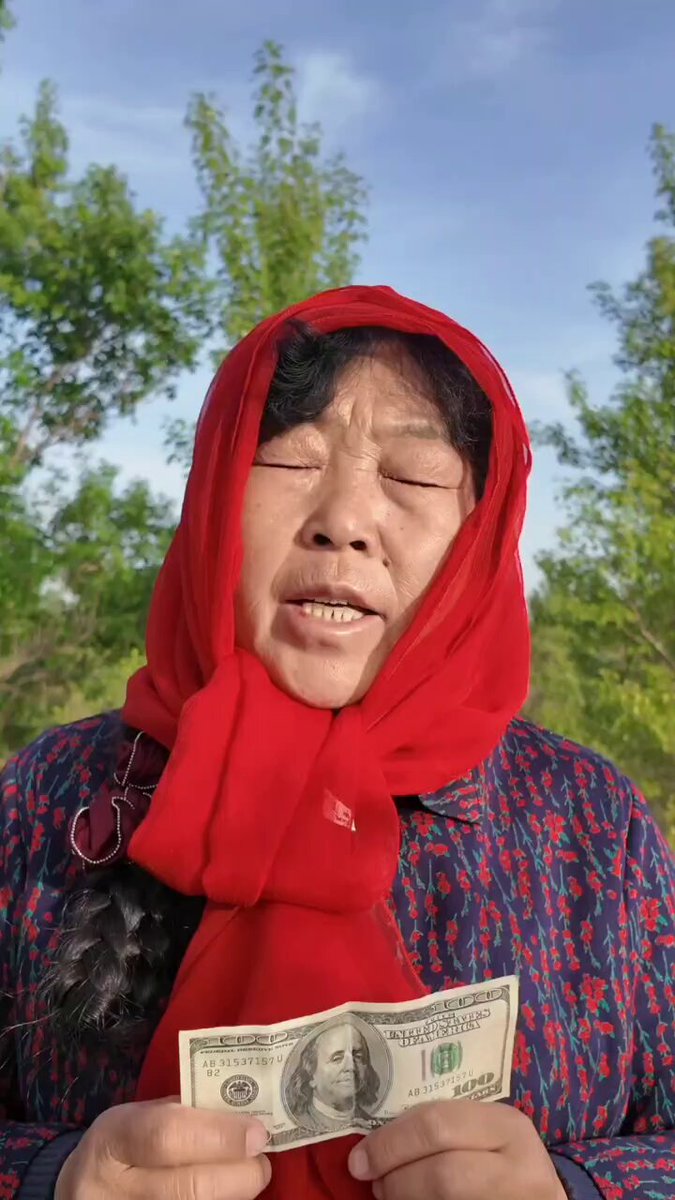
"Hello, Mr. Sakolsky. If you can see this video, I would like to invite you back to China to see the green forest that grew from your support all those years ago."
Yin wanted to find the American donor and personally show him this forest his kindness had helped grow.
Mu Us means "bad water" in Mongolian. More than 2,000 years ago, this was actually a place of lush grass and abundant water, and it was once a region contested by the Han Dynasty and the Xiongnu/Huns. Later, however, its ecology gradually deteriorated, turning it into a sandy expanse of more than 40,000 square kilometers.
For more than a thousand years, those who passed through this land or lived here may have lamented its decline. But few could have imagined that time itself could one day be reversed here.
In 1985, at the age of 19, Yin left her village in Shaanxi and married across the provincial border into Ordos, arriving in a place deep in the Mu Us Desert. Her new home was a cellar half-buried in the sand. It is said that on the second day after her wedding, windblown sand blocked the door shut.
She made up her mind to fight the desert by planting trees. As she put it, she could not let the sand "bully her to death."
The following year, Yin and her husband began their own version of "moving mountains." They planted saplings and willow cuttings in the sand, slowly opening a battle between green life and the desert.
Her husband went out as a migrant worker to support this dream, and apart from barely feeding the family, nearly all of their income went into fighting the sand.
Once, while digging tree pits, Yin and her husband were caught in a sandstorm. They ran back toward home but could not find their way for a long time. In the end, it was the sound of their own dog barking that guided them back.
This was not some romantic pastoral story.
In 1999, Ron Sakolsky, an American teaching at Luoyang Foreign Languages School in central China's Henan Province, saw Yin's desert-control story on TV.
The resilience and stubborn determination of this ordinary Chinese rural woman touched him. Sakolsky decided immediately that he wanted to help her. He raised 5,000 USD for Yin in Boston and personally traveled to the Mu Us Desert to meet Yin who was taking on the sand.
When Sakolsky saw Yin planting trees in the Mu Us, he kept shaking his head and saying, "Impossible." At that time, Yin's family did not own a single mechanized tool. They relied on the most basic implements: shovels and shoulder poles. She tied saplings together with hemp rope and carried them bundle by bundle into the rolling sand dunes. The newly planted saplings were only as thick as a finger and looked so fragile. How could they possibly survive the wind and sand?
In fact, as I have learned, most of the species Yin planted were well adapted to sandy terrain. The groundwater level in the Mu Us is relatively high, and the area also receives seasonal rainfall. Some plants could survive naturally after being planted, while others only needed watering and care in the early stage before they no longer required long-term irrigation.
At the time, Yin spoke no foreign language and did not even know what US dollar bills looked like. But she understood that this foreigner, who had come from so far away, was sincerely trying to help her. Feeling that she could not accept his kindness without offering something in return, she stayed up that night sewing a pair of embroidered insoles, then pressed them into his hands.
Back then, 5,000 USD were roughly equivalent to nearly two years' salary for an urban worker in China. It was enough for a family to build a house, pay for a child's private education, or even change the fate of an entire household. But Yin kept only one dollar bill as a souvenir and used all the rest to buy saplings.
After that, they lost contact. Sakolsky finished his teaching assignment and left China, while Yin stayed in the Mu Us, planting trees day after day. More than two decades passed. The saplings bought with the donation grew into towering trees and spread into a forest of more than 50,000 trees.
Over the years, Yin has been honored as a National Model Worker, spoken at the United Nations, and invited to the Great Hall of the People. According to incomplete statistics, over the past 40 years she has planted millions of trees across more than 40 square kilometers of desert. As the ecology improved, the land became suitable for growing peaches, apricots, millet, beans, watermelons, mushrooms and other crops. Together with government subsidies for ecological restoration over the past two decades, these changes gradually helped her achieve a prosperous life.
But Yin never forgot the American who had once reached out to help her. She had Sakolsky's name carved onto a stone tablet.
Every time she walked into that forest, she would often think:
How wonderful it would be if Sakolsky could see this with his own eyes.
When reporters from Inner Mongolia Radio and Television learned of her wish, they decided to help her find Sakolsky. On May 16, they released a video appeal titled:
Searching for Sakolsky | National Model Worker Yin Yuzhen Seeks the "Relative" of Her Trees, Inviting Her American Friend Sakolsky to Inner Mongolia: Your 5,000 USD Has Grown Into More Than 50,000 Towering Trees.
Once the video was released, it quickly went viral across the internet.
Sakolsky's former students and colleagues saw the report. That very evening, reporters from Inner Mongolia Radio and Television got in touch with one of Sakolsky's former colleagues, Bai Fan, the former vice principal of Luoyang Foreign Languages School. The reporters then set off overnight from Inner Mongolia for Luoyang.
The next day, they met Principal Bai. In 2000, Bai had accompanied Sakolsky to Inner Mongolia to visit Yin. Bai placed an overseas call and got in touch with Sakolsky.
Sakolsky was astonished and delighted. He said he would like to return to the Mu Us and witness this green miracle with his own eyes.
Soon, Yin was also successfully connected with Sakolsky. Across the screen, Yin choked back tears and called out:
"You are brother!"
He, now 69 years and a grandpa of eight, was visibly emotional as well:
"This is amazing. This is so amazing to me. I can't even believe that we are talking. I never thought I would talk to her again."
For this reunion, Yin had started learning English on short notice, practicing "you are my brother" again and again.
"I will be waiting for you in the desert." Yin told him.
Today, thanks to the efforts of Yin and many other local farmers, about 80 percent of the Mu Us has been covered in green, and its forest coverage rate has risen to 32.92 percent. What was once a place where sand advanced and people retreated is now becoming a place where green life is pushing the desert back.
According to data from China's fifth and sixth national surveys of desertified and sandy land, by the end of 2009, the country's total area of desertified land stood at 2.6237 million square kilometers, accounting for 27.33 percent of China's land area. Compared with 2004, the area of desertified land had decreased by a net 12,454 square kilometers over five years.
By 2019, China's desertified land area had fallen to 2.5737 million square kilometers, a net decrease of 37,880 square kilometers compared with 2014. That means an area equivalent to the combined land size of Massachusetts and New Jersey had turned green over those five years.
Behind these numbers are countless Chinese people like Yin, bending down in the wind and sand, planting tree after tree with their own hands.
Sakolsky's donation became one of the most heartwarming parts of the story.
In the hands of a Chinese woman fighting desertification, it became more than 50,000 trees, a forest, and an echo of goodwill that has crossed more than two decades and the Pacific Ocean.
Sometimes, China-US relations do not exist only in rivalry, tariff disputes, and strategic competition. They also exist in the kindness of an American teacher, in the perseverance of a Chinese rural woman, in a pair of embroidered insoles sewn overnight, and in a forest that rose from yellow sand.
This forest is a miracle made possible by an Chinese and an American. It is also a living message to both China and America: when goodwill is met with determination, even the most unlikely ground can turn green.
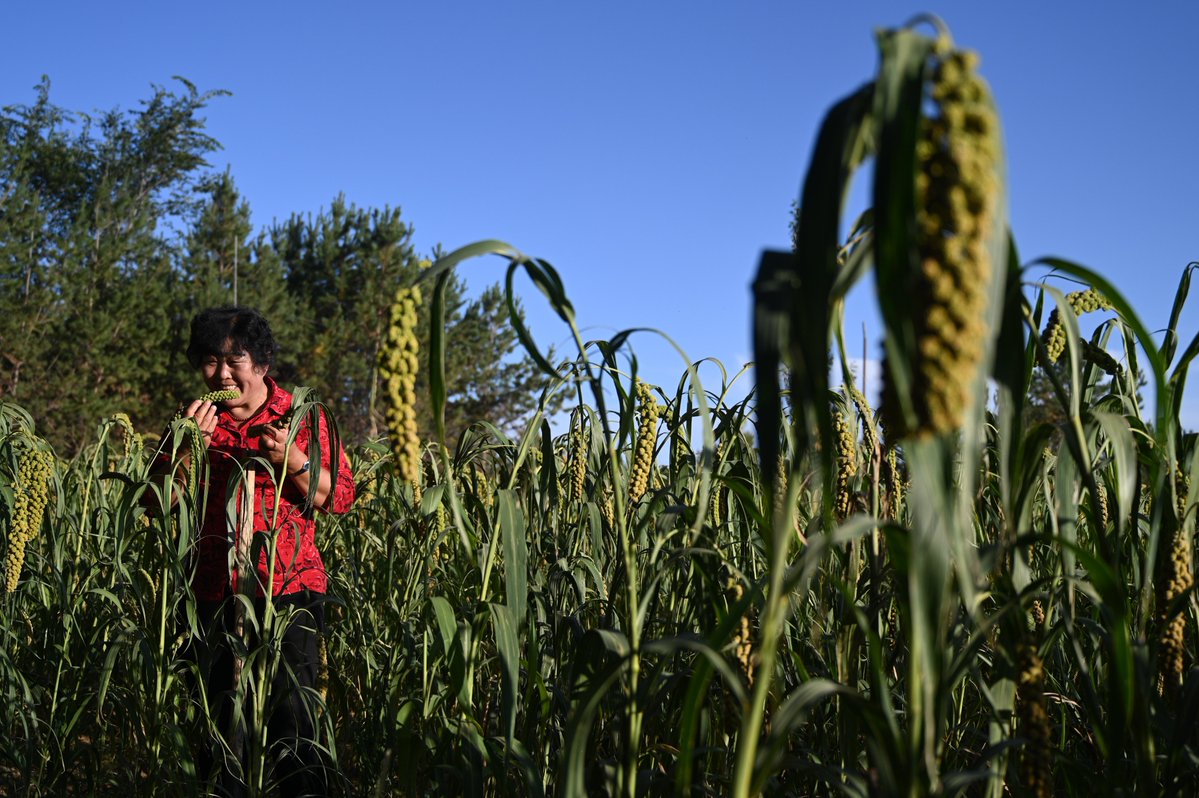
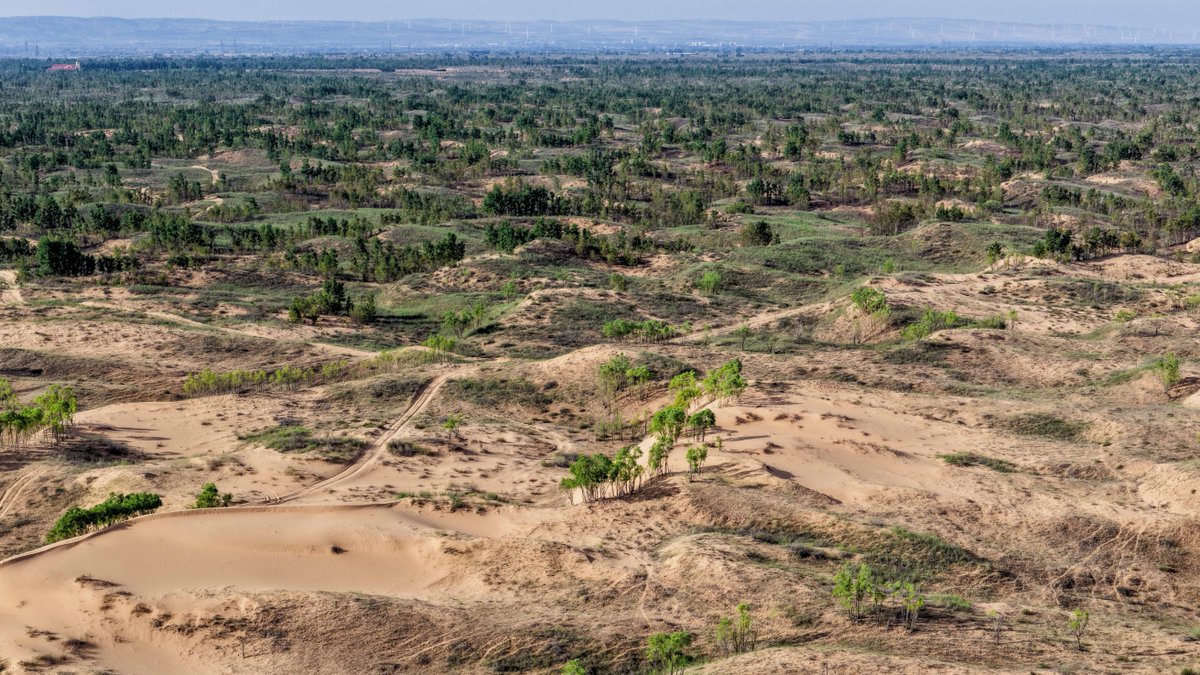
The top two photos show Yin and the Mu Us Desert as they are today.
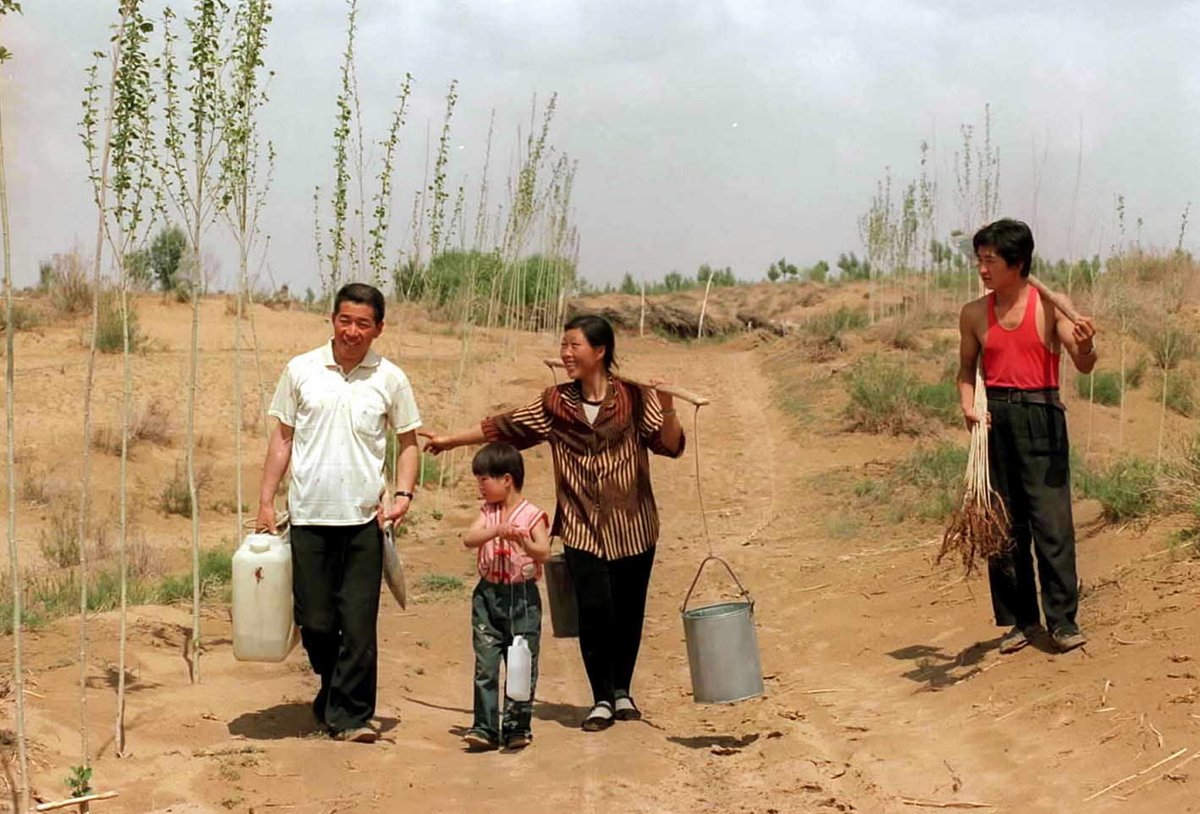
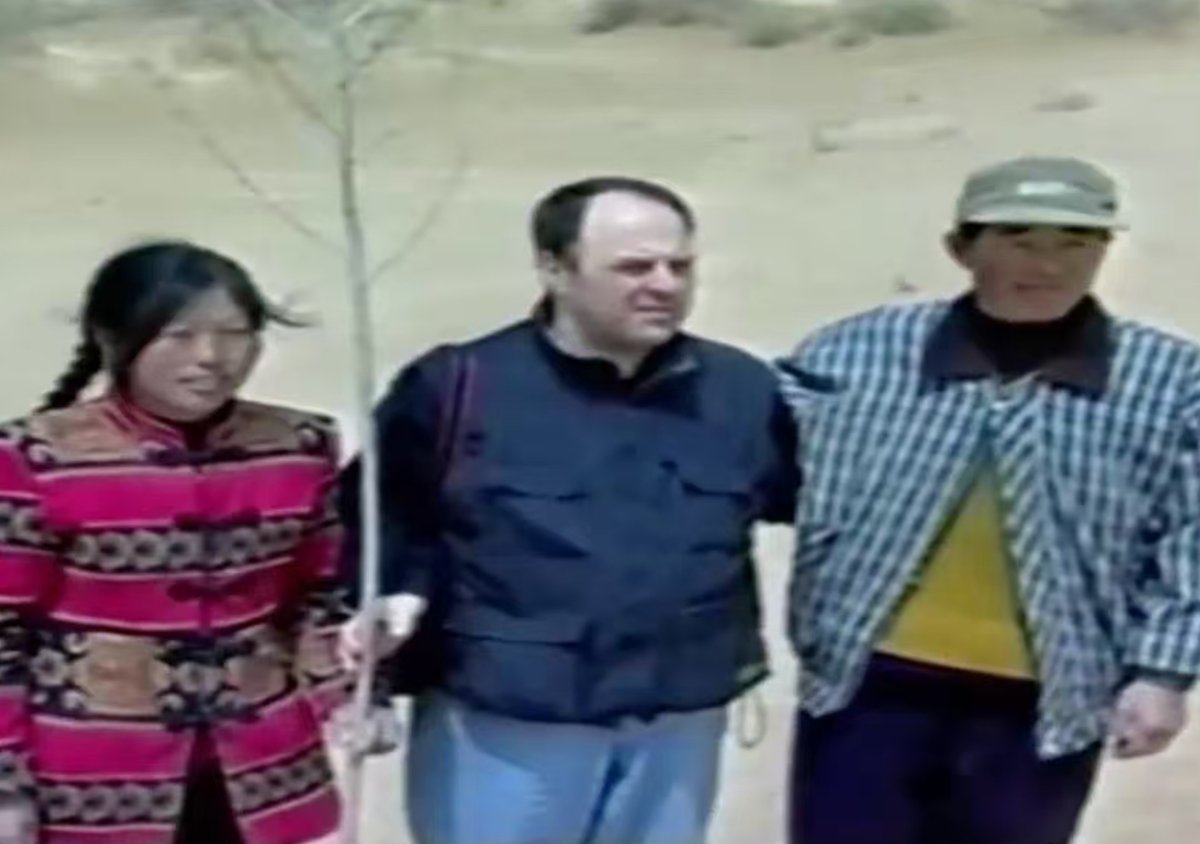
The bottom two photos show Sakolsky with Yin back in 2000, when he visited her in Inner Mongolia.
25
12
86
8,927
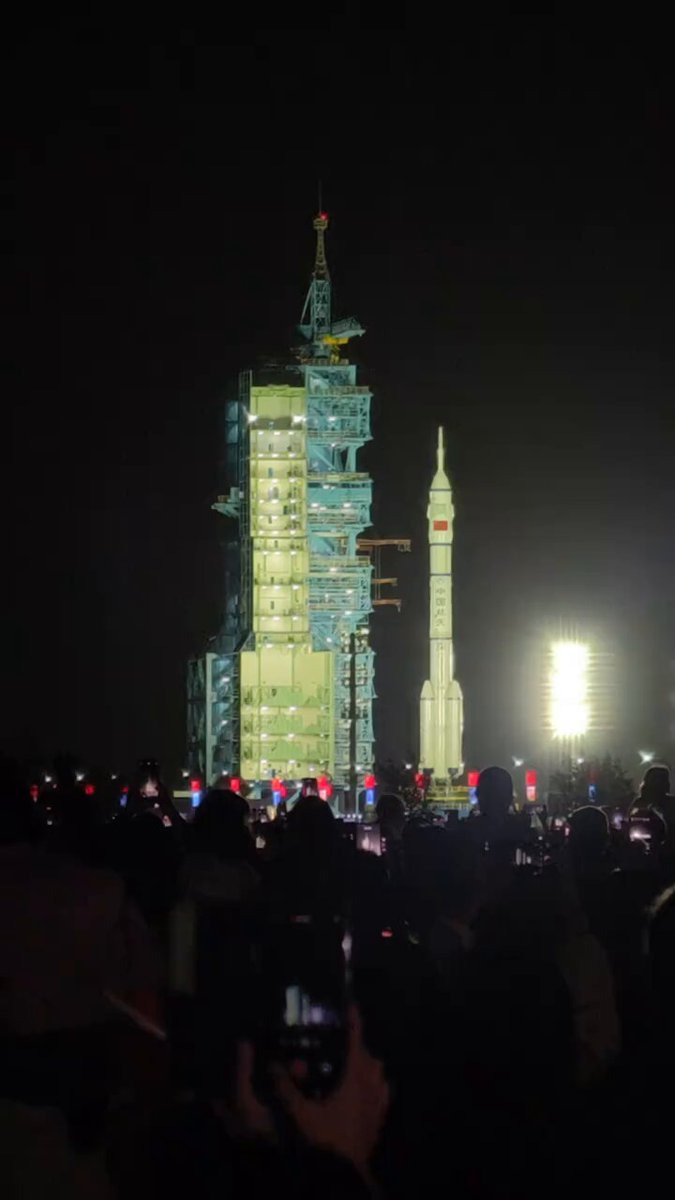
Very vivid memories on a visit to the Jiuquan Satellite Launch Center where the Shenzhou-23 spaceship launched a few days ago. 🌺🌹💐
May 26
The night before last, Shenzhou-23 was successfully launched from the Jiuquan (Wine Spring) Satellite Launch Center; in the early hours of yesterday morning, it docked with Tiangong Space Station.
While I was still a Cornell prospie, I visited the launch center, which counts as China's Kennedy Space Center. Set in the vast Gobi desert, it felt way more mysterious and remote than KSC, that I also visited the following year.
I went to Jiuquan with my father to visit one of his closest college classmates, who had worked at Jiuquan for many years. The flight to the base was on a military passenger plane. Tickets were super expensive, and one needed a military letter of introduction to buy them. I still remembered the harsh conditions there, and that my father's classmate was a very handsome senior colonel who later became a general.
He said that the only person he felt he had failed was his daughter. Life at the base was hard and isolated. He could give his best years to the country, but he could not give her the average childhood comforts that many other children took for granted: better schools, weekends at amusement parks, dinners at nice restaurants, or simply more time with her father.
To carry forward the friendship of the previous generation, I went with his daughter to the only karaoke lounge in the base, where we sang a few songs by popular Taiwanese singers of the time, including Jay Chou (周杰伦) and S.H.E.
Looking back years later, that scene feels almost symbolic. In the place in China closest to the dream of the stars, songs from Taiwan were already echoing softly in the night. Perhaps, in some quiet way, they were foreshadowing a future in which young people from Taiwan, too, would stand closer to that same dream.
Hong Kong, Macao, and Taiwan are all part of the China family. With a Hong Kong astronaut entering space for the first time, it is only natural to wonder what role Taiwan might one day play in this shared glory.
A colleague who watched the launch told me that he encountered a Taiwanese observation delegation at the site. It was the first time ever that the mainland had invited a Taiwan delegation to watch a space launch in person. My colleague spoke with them, and I translated several of their comments. Let's hear how people from Taiwan see China's space program.
Li, 18, student at a vocational school in Taipei:
"As someone from Taiwan, I think the first flight of a Hong Kong astronaut is something very worth learning from, and it also gives us more opportunities.
I really hope I will have the chance to come here again in the future.
I have been interested in space since I was a child, and I grew up dreaming of becoming an astronaut. I very much hope that one day I can take part in space or aerospace-related technical work."
Wang, 24, second-year master's student:
"The mainland truly has so many new and impressive developments. Its progress in technology and space exploration has been remarkable, and I hope more opportunities can be given to us as well.
Now that a Hong Kong astronaut has reached the space station, perhaps Taiwan will have the same opportunity one day, and perhaps there will also be a Taiwanese astronaut aboard the space station. It is truly inspiring and overwhelming…
I also hope that more opportunities can be given to young people in Taiwan. I used to think we women had fewer chances to become astronauts. But this time, seeing a woman enter the space station naturally gives me hope."
Lien Sheng-wu, son of former KMT chairman Lien Chan (连战):
"This is a truly great milestone for the Chinese nation. From the perspective of our Taiwan compatriots, the main reason we brought young people from Taiwan here this time was to tell them that the Chinese nation is moving toward the very top of the world.
I also want to encourage young people in Taiwan to dream big and bravely pursue their dreams. Perhaps one day, Taiwan compatriots will also have the opportunity to board a Chinese spacecraft together with mainland compatriots…Whether it is Hong Kong or Taiwan, both have inseparable ties with the mainland. Today, a female compatriot from Hong Kong has entered China's space station. We hope that one day, young people from Taiwan will also be able to step aboard our Chinese space station."
Su Heng, Chairwoman of the Chinese Strait Economic and Trade Exchange Association:
"The first mission by a Hong Kong astronaut is a major inspiration for people in Taiwan. With the support of the mainland's technological strength, Hong Kong has realized its dream of entering space.
But before cross-strait reunification, people in Taiwan do not yet have such an opportunity or possibility, which I find deeply regrettable. In my view, people in Taiwan are also very talented.
This Hong Kong woman has the opportunity to go into space, and I think this opens up a much broader path for Hong Kong people. I very much hope that, in the near future, we will also see people from Taiwan go into space."
These remarks stayed with me. They did not speak like distant observers. They spoke as young people imagining a future they themselves might someday enter.
Space exploration is never just about rockets, spacecraft, and space stations. It is also a nation's shared ability to look up at the stars together. A Hong Kong astronaut has already flown into space, and young people from Taiwan have seen, at the launch site, what may one day be possible for them.
In the future, as the three regions continue to integrate more deeply into the country's overall development, more and more young people will step onto a much broader stage. The nation's journey toward the stars will not be something for them merely to watch from afar, but a shared endeavor in which they could participate and shape in person.
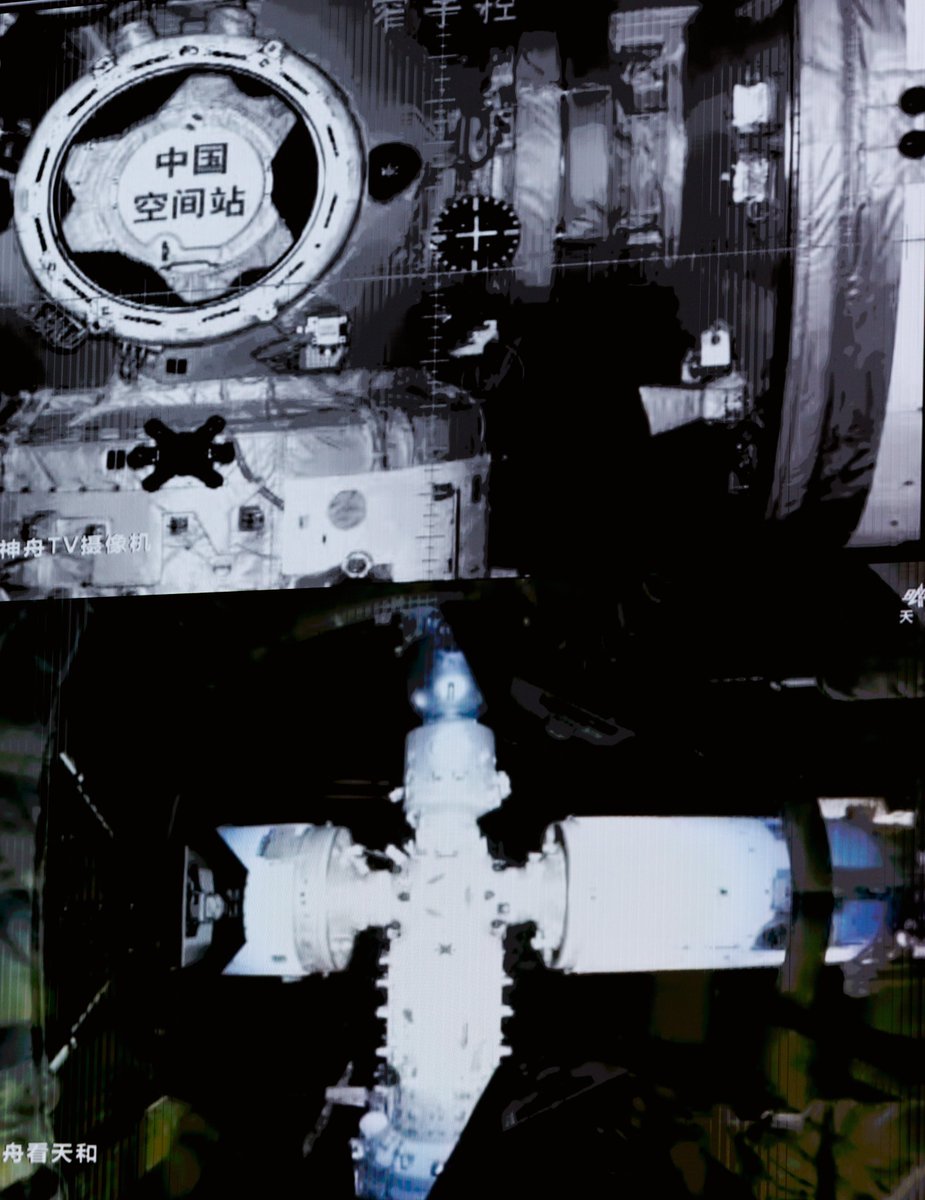

1
4
500
Across Inner Mongolia retweeted
May 26
The night before last, Shenzhou-23 was successfully launched from the Jiuquan (Wine Spring) Satellite Launch Center; in the early hours of yesterday morning, it docked with Tiangong Space Station.
While I was still a Cornell prospie, I visited the launch center, which counts as China's Kennedy Space Center. Set in the vast Gobi desert, it felt way more mysterious and remote than KSC, that I also visited the following year.
I went to Jiuquan with my father to visit one of his closest college classmates, who had worked at Jiuquan for many years. The flight to the base was on a military passenger plane. Tickets were super expensive, and one needed a military letter of introduction to buy them. I still remembered the harsh conditions there, and that my father's classmate was a very handsome senior colonel who later became a general.
He said that the only person he felt he had failed was his daughter. Life at the base was hard and isolated. He could give his best years to the country, but he could not give her the average childhood comforts that many other children took for granted: better schools, weekends at amusement parks, dinners at nice restaurants, or simply more time with her father.
To carry forward the friendship of the previous generation, I went with his daughter to the only karaoke lounge in the base, where we sang a few songs by popular Taiwanese singers of the time, including Jay Chou (周杰伦) and S.H.E.
Looking back years later, that scene feels almost symbolic. In the place in China closest to the dream of the stars, songs from Taiwan were already echoing softly in the night. Perhaps, in some quiet way, they were foreshadowing a future in which young people from Taiwan, too, would stand closer to that same dream.
Hong Kong, Macao, and Taiwan are all part of the China family. With a Hong Kong astronaut entering space for the first time, it is only natural to wonder what role Taiwan might one day play in this shared glory.
A colleague who watched the launch told me that he encountered a Taiwanese observation delegation at the site. It was the first time ever that the mainland had invited a Taiwan delegation to watch a space launch in person. My colleague spoke with them, and I translated several of their comments. Let's hear how people from Taiwan see China's space program.
Li, 18, student at a vocational school in Taipei:
"As someone from Taiwan, I think the first flight of a Hong Kong astronaut is something very worth learning from, and it also gives us more opportunities.
I really hope I will have the chance to come here again in the future.
I have been interested in space since I was a child, and I grew up dreaming of becoming an astronaut. I very much hope that one day I can take part in space or aerospace-related technical work."
Wang, 24, second-year master's student:
"The mainland truly has so many new and impressive developments. Its progress in technology and space exploration has been remarkable, and I hope more opportunities can be given to us as well.
Now that a Hong Kong astronaut has reached the space station, perhaps Taiwan will have the same opportunity one day, and perhaps there will also be a Taiwanese astronaut aboard the space station. It is truly inspiring and overwhelming…
I also hope that more opportunities can be given to young people in Taiwan. I used to think we women had fewer chances to become astronauts. But this time, seeing a woman enter the space station naturally gives me hope."
Lien Sheng-wu, son of former KMT chairman Lien Chan (连战):
"This is a truly great milestone for the Chinese nation. From the perspective of our Taiwan compatriots, the main reason we brought young people from Taiwan here this time was to tell them that the Chinese nation is moving toward the very top of the world.
I also want to encourage young people in Taiwan to dream big and bravely pursue their dreams. Perhaps one day, Taiwan compatriots will also have the opportunity to board a Chinese spacecraft together with mainland compatriots…Whether it is Hong Kong or Taiwan, both have inseparable ties with the mainland. Today, a female compatriot from Hong Kong has entered China's space station. We hope that one day, young people from Taiwan will also be able to step aboard our Chinese space station."
Su Heng, Chairwoman of the Chinese Strait Economic and Trade Exchange Association:
"The first mission by a Hong Kong astronaut is a major inspiration for people in Taiwan. With the support of the mainland's technological strength, Hong Kong has realized its dream of entering space.
But before cross-strait reunification, people in Taiwan do not yet have such an opportunity or possibility, which I find deeply regrettable. In my view, people in Taiwan are also very talented.
This Hong Kong woman has the opportunity to go into space, and I think this opens up a much broader path for Hong Kong people. I very much hope that, in the near future, we will also see people from Taiwan go into space."
These remarks stayed with me. They did not speak like distant observers. They spoke as young people imagining a future they themselves might someday enter.
Space exploration is never just about rockets, spacecraft, and space stations. It is also a nation's shared ability to look up at the stars together. A Hong Kong astronaut has already flown into space, and young people from Taiwan have seen, at the launch site, what may one day be possible for them.
In the future, as the three regions continue to integrate more deeply into the country's overall development, more and more young people will step onto a much broader stage. The nation's journey toward the stars will not be something for them merely to watch from afar, but a shared endeavor in which they could participate and shape in person.
2
8
53
3,194
Really amazing! I was standing near the launch site when the Shenzhou-23 spaceship carrying three astronauts launched successfully on Sunday night at the Jiuquan Satellite Launch Center, located in Alxa League China's Inner Mongolia Autonomous Region. 🚀💐🌹
1
4
20
1,331
A total of 120 patients with cataracts from Mongolia have received cataract surgeries for vision restoration free of charge in Erenhot City of northern China. 🌱
Aging from 56 to 92, the patients received treatment as part of the "Belt and Road" Brightness Tour Activity launched in 2019. Accumulated 765 patients have cured. 🌷
The activity is co-organized by Mongolian Red Cross Society and the Red Cross Society of China's Inner Mongolia Autonomous Region. 💐


5
11
578
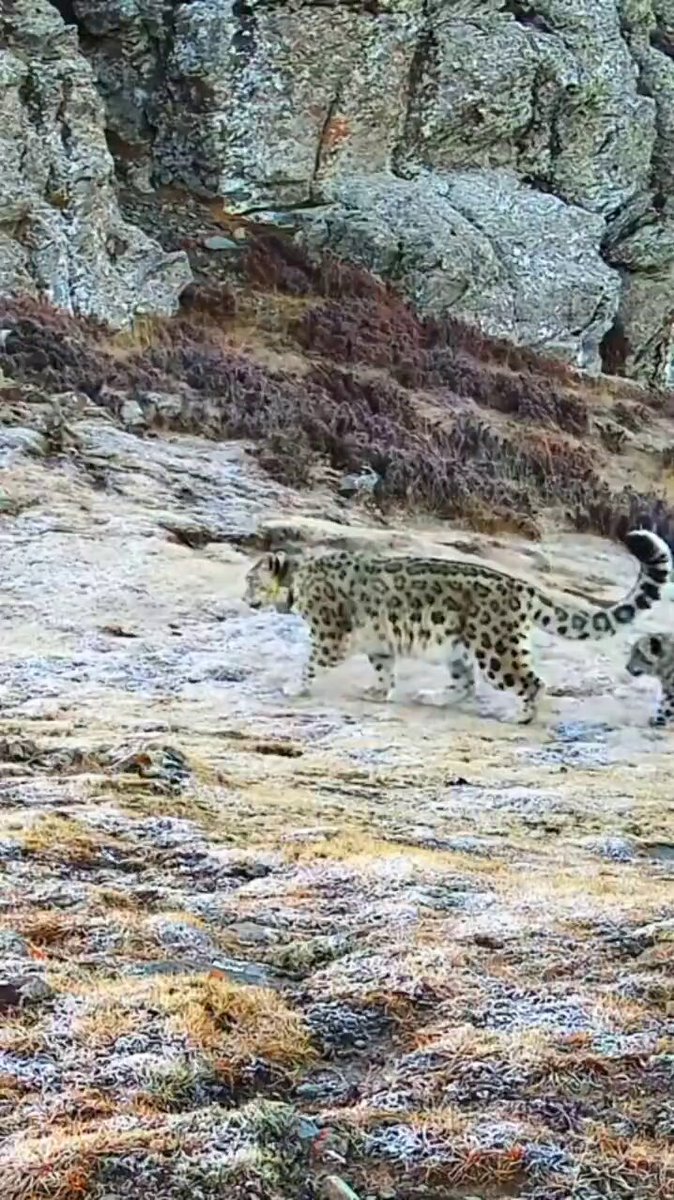
A one-year-old snow leopard is filmed playing with its parent excitingly at the Helen Mountains in Alxa League, northern China's Inner Mongolia Autonomous Region.🐆
Actually the baby's parent is among the 7 snow leopards that has been introduced to the mountains since 2021. 🌺
And the baby leopard is the first of its kind at the mountains after the 7 adult ones resided. 🌳
6
32
798
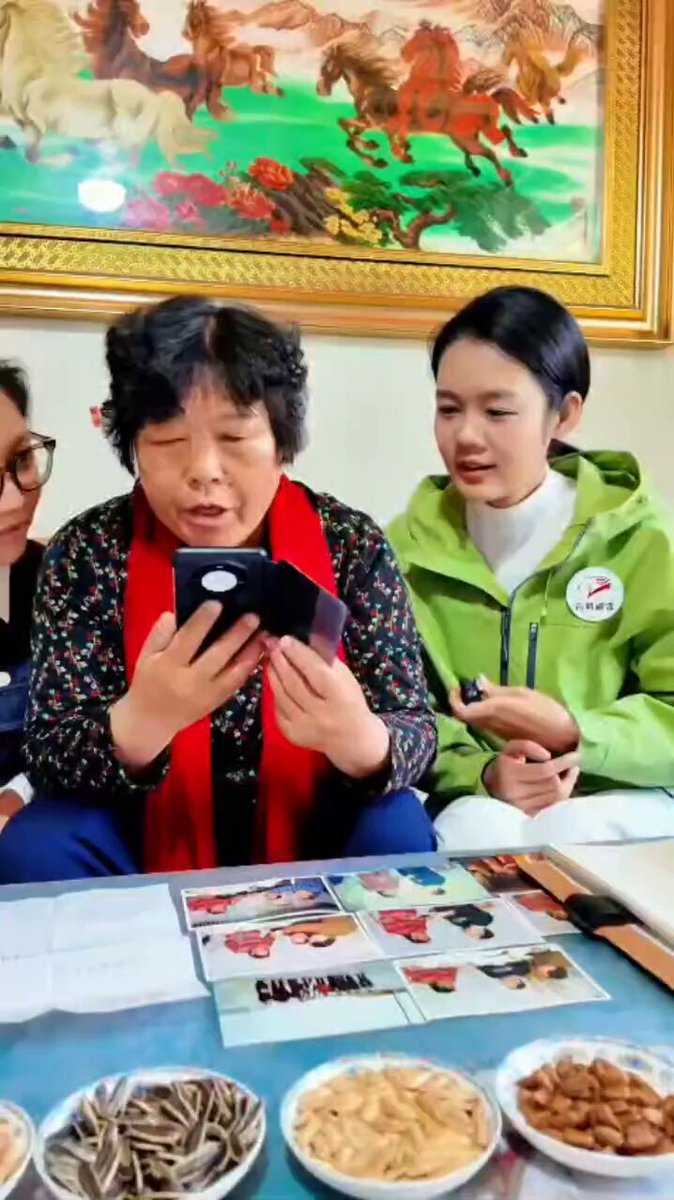
🌱The Chinese farmer Ms. Yin Yuzhen, who have planted trees in the Mu Us desert for over 4 decades, finally found and contacted the American donator Mr. Donald Sakolsky who donated 5,000 U.S. dollars 27 years ago for letting Yin buy saplings.
☘️Mr. Sakolsky taught at a college at that time in central China's Luoyang City and learn about Ms. Yin's story on anti - desertification. Then he decided to donate to her for better tackling the desertification.
🍀Now after nearly 3 decades, the saplings have grown into big trees and have formed a large scale of forest or oasis.
🌲Ms. Yin invited Mr. Sakolsky to return to the Mu Us desert in Ordos City of northern China's Inner Mongolia Autonomous Region, and Mr. Sakolsky accepted amazingly with saying "I will try (to return soon)." 🌹🌺💐
5
18
661
A touching story should be read all around the globe. 💐🌹🌺
May 21
More than two decades ago, an American teacher gave 5,000 USD to a Chinese woman he barely knew.
She planted it into the sand. Tree by tree, year by year, she turned one act of kindness into more than 50,000 living trees.
Now, deep in the Mu Us Desert (毛乌素沙漠/沙地) of Ordos (鄂尔多斯), Inner Mongolia, 60-year-old Yin Yuzhen (殷玉珍), a nationally celebrated "desert-control hero," stood in a boundless sea of trees. It is hard to imagine that this place was a barren wasteland of windblown sand where almost nothing could grow.
Facing the camera, she delivered a simple but powerful message:
"Hello, Mr. Sakolsky. If you can see this video, I would like to invite you back to China to see the green forest that grew from your support all those years ago."
Yin wanted to find the American donor and personally show him this forest his kindness had helped grow.
Mu Us means "bad water" in Mongolian. More than 2,000 years ago, this was actually a place of lush grass and abundant water, and it was once a region contested by the Han Dynasty and the Xiongnu/Huns. Later, however, its ecology gradually deteriorated, turning it into a sandy expanse of more than 40,000 square kilometers.
For more than a thousand years, those who passed through this land or lived here may have lamented its decline. But few could have imagined that time itself could one day be reversed here.
In 1985, at the age of 19, Yin left her village in Shaanxi and married across the provincial border into Ordos, arriving in a place deep in the Mu Us Desert. Her new home was a cellar half-buried in the sand. It is said that on the second day after her wedding, windblown sand blocked the door shut.
She made up her mind to fight the desert by planting trees. As she put it, she could not let the sand "bully her to death."
The following year, Yin and her husband began their own version of "moving mountains." They planted saplings and willow cuttings in the sand, slowly opening a battle between green life and the desert.
Her husband went out as a migrant worker to support this dream, and apart from barely feeding the family, nearly all of their income went into fighting the sand.
Once, while digging tree pits, Yin and her husband were caught in a sandstorm. They ran back toward home but could not find their way for a long time. In the end, it was the sound of their own dog barking that guided them back.
This was not some romantic pastoral story.
In 1999, Ron Sakolsky, an American teaching at Luoyang Foreign Languages School in central China's Henan Province, saw Yin's desert-control story on TV.
The resilience and stubborn determination of this ordinary Chinese rural woman touched him. Sakolsky decided immediately that he wanted to help her. He raised 5,000 USD for Yin in Boston and personally traveled to the Mu Us Desert to meet Yin who was taking on the sand.
When Sakolsky saw Yin planting trees in the Mu Us, he kept shaking his head and saying, "Impossible." At that time, Yin's family did not own a single mechanized tool. They relied on the most basic implements: shovels and shoulder poles. She tied saplings together with hemp rope and carried them bundle by bundle into the rolling sand dunes. The newly planted saplings were only as thick as a finger and looked so fragile. How could they possibly survive the wind and sand?
In fact, as I have learned, most of the species Yin planted were well adapted to sandy terrain. The groundwater level in the Mu Us is relatively high, and the area also receives seasonal rainfall. Some plants could survive naturally after being planted, while others only needed watering and care in the early stage before they no longer required long-term irrigation.
At the time, Yin spoke no foreign language and did not even know what US dollar bills looked like. But she understood that this foreigner, who had come from so far away, was sincerely trying to help her. Feeling that she could not accept his kindness without offering something in return, she stayed up that night sewing a pair of embroidered insoles, then pressed them into his hands.
Back then, 5,000 USD were roughly equivalent to nearly two years' salary for an urban worker in China. It was enough for a family to build a house, pay for a child's private education, or even change the fate of an entire household. But Yin kept only one dollar bill as a souvenir and used all the rest to buy saplings.
After that, they lost contact. Sakolsky finished his teaching assignment and left China, while Yin stayed in the Mu Us, planting trees day after day. More than two decades passed. The saplings bought with the donation grew into towering trees and spread into a forest of more than 50,000 trees.
Over the years, Yin has been honored as a National Model Worker, spoken at the United Nations, and invited to the Great Hall of the People. According to incomplete statistics, over the past 40 years she has planted millions of trees across more than 40 square kilometers of desert. As the ecology improved, the land became suitable for growing peaches, apricots, millet, beans, watermelons, mushrooms and other crops. Together with government subsidies for ecological restoration over the past two decades, these changes gradually helped her achieve a prosperous life.
But Yin never forgot the American who had once reached out to help her. She had Sakolsky's name carved onto a stone tablet.
Every time she walked into that forest, she would often think:
How wonderful it would be if Sakolsky could see this with his own eyes.
When reporters from Inner Mongolia Radio and Television learned of her wish, they decided to help her find Sakolsky. On May 16, they released a video appeal titled:
Searching for Sakolsky | National Model Worker Yin Yuzhen Seeks the "Relative" of Her Trees, Inviting Her American Friend Sakolsky to Inner Mongolia: Your 5,000 USD Has Grown Into More Than 50,000 Towering Trees.
Once the video was released, it quickly went viral across the internet.
Sakolsky's former students and colleagues saw the report. That very evening, reporters from Inner Mongolia Radio and Television got in touch with one of Sakolsky's former colleagues, Bai Fan, the former vice principal of Luoyang Foreign Languages School. The reporters then set off overnight from Inner Mongolia for Luoyang.
The next day, they met Principal Bai. In 2000, Bai had accompanied Sakolsky to Inner Mongolia to visit Yin. Bai placed an overseas call and got in touch with Sakolsky.
Sakolsky was astonished and delighted. He said he would like to return to the Mu Us and witness this green miracle with his own eyes.
Soon, Yin was also successfully connected with Sakolsky. Across the screen, Yin choked back tears and called out:
"You are brother!"
He, now 69 years and a grandpa of eight, was visibly emotional as well:
"This is amazing. This is so amazing to me. I can't even believe that we are talking. I never thought I would talk to her again."
For this reunion, Yin had started learning English on short notice, practicing "you are my brother" again and again.
"I will be waiting for you in the desert." Yin told him.
Today, thanks to the efforts of Yin and many other local farmers, about 80 percent of the Mu Us has been covered in green, and its forest coverage rate has risen to 32.92 percent. What was once a place where sand advanced and people retreated is now becoming a place where green life is pushing the desert back.
According to data from China's fifth and sixth national surveys of desertified and sandy land, by the end of 2009, the country's total area of desertified land stood at 2.6237 million square kilometers, accounting for 27.33 percent of China's land area. Compared with 2004, the area of desertified land had decreased by a net 12,454 square kilometers over five years.
By 2019, China's desertified land area had fallen to 2.5737 million square kilometers, a net decrease of 37,880 square kilometers compared with 2014. That means an area equivalent to the combined land size of Massachusetts and New Jersey had turned green over those five years.
Behind these numbers are countless Chinese people like Yin, bending down in the wind and sand, planting tree after tree with their own hands.
Sakolsky's donation became one of the most heartwarming parts of the story.
In the hands of a Chinese woman fighting desertification, it became more than 50,000 trees, a forest, and an echo of goodwill that has crossed more than two decades and the Pacific Ocean.
Sometimes, China-US relations do not exist only in rivalry, tariff disputes, and strategic competition. They also exist in the kindness of an American teacher, in the perseverance of a Chinese rural woman, in a pair of embroidered insoles sewn overnight, and in a forest that rose from yellow sand.
This forest is a miracle made possible by an Chinese and an American. It is also a living message to both China and America: when goodwill is met with determination, even the most unlikely ground can turn green.
The top two photos show Yin and the Mu Us Desert as they are today.
The bottom two photos show Sakolsky with Yin back in 2000, when he visited her in Inner Mongolia.
1
2
11
765
Across Inner Mongolia retweeted
May 21
More than two decades ago, an American teacher gave 5,000 USD to a Chinese woman he barely knew.
She planted it into the sand. Tree by tree, year by year, she turned one act of kindness into more than 50,000 living trees.
Now, deep in the Mu Us Desert (毛乌素沙漠/沙地) of Ordos (鄂尔多斯), Inner Mongolia, 60-year-old Yin Yuzhen (殷玉珍), a nationally celebrated "desert-control hero," stood in a boundless sea of trees. It is hard to imagine that this place was a barren wasteland of windblown sand where almost nothing could grow.
Facing the camera, she delivered a simple but powerful message:
"Hello, Mr. Sakolsky. If you can see this video, I would like to invite you back to China to see the green forest that grew from your support all those years ago."
Yin wanted to find the American donor and personally show him this forest his kindness had helped grow.
Mu Us means "bad water" in Mongolian. More than 2,000 years ago, this was actually a place of lush grass and abundant water, and it was once a region contested by the Han Dynasty and the Xiongnu/Huns. Later, however, its ecology gradually deteriorated, turning it into a sandy expanse of more than 40,000 square kilometers.
For more than a thousand years, those who passed through this land or lived here may have lamented its decline. But few could have imagined that time itself could one day be reversed here.
In 1985, at the age of 19, Yin left her village in Shaanxi and married across the provincial border into Ordos, arriving in a place deep in the Mu Us Desert. Her new home was a cellar half-buried in the sand. It is said that on the second day after her wedding, windblown sand blocked the door shut.
She made up her mind to fight the desert by planting trees. As she put it, she could not let the sand "bully her to death."
The following year, Yin and her husband began their own version of "moving mountains." They planted saplings and willow cuttings in the sand, slowly opening a battle between green life and the desert.
Her husband went out as a migrant worker to support this dream, and apart from barely feeding the family, nearly all of their income went into fighting the sand.
Once, while digging tree pits, Yin and her husband were caught in a sandstorm. They ran back toward home but could not find their way for a long time. In the end, it was the sound of their own dog barking that guided them back.
This was not some romantic pastoral story.
In 1999, Ron Sakolsky, an American teaching at Luoyang Foreign Languages School in central China's Henan Province, saw Yin's desert-control story on TV.
The resilience and stubborn determination of this ordinary Chinese rural woman touched him. Sakolsky decided immediately that he wanted to help her. He raised 5,000 USD for Yin in Boston and personally traveled to the Mu Us Desert to meet Yin who was taking on the sand.
When Sakolsky saw Yin planting trees in the Mu Us, he kept shaking his head and saying, "Impossible." At that time, Yin's family did not own a single mechanized tool. They relied on the most basic implements: shovels and shoulder poles. She tied saplings together with hemp rope and carried them bundle by bundle into the rolling sand dunes. The newly planted saplings were only as thick as a finger and looked so fragile. How could they possibly survive the wind and sand?
In fact, as I have learned, most of the species Yin planted were well adapted to sandy terrain. The groundwater level in the Mu Us is relatively high, and the area also receives seasonal rainfall. Some plants could survive naturally after being planted, while others only needed watering and care in the early stage before they no longer required long-term irrigation.
At the time, Yin spoke no foreign language and did not even know what US dollar bills looked like. But she understood that this foreigner, who had come from so far away, was sincerely trying to help her. Feeling that she could not accept his kindness without offering something in return, she stayed up that night sewing a pair of embroidered insoles, then pressed them into his hands.
Back then, 5,000 USD were roughly equivalent to nearly two years' salary for an urban worker in China. It was enough for a family to build a house, pay for a child's private education, or even change the fate of an entire household. But Yin kept only one dollar bill as a souvenir and used all the rest to buy saplings.
After that, they lost contact. Sakolsky finished his teaching assignment and left China, while Yin stayed in the Mu Us, planting trees day after day. More than two decades passed. The saplings bought with the donation grew into towering trees and spread into a forest of more than 50,000 trees.
Over the years, Yin has been honored as a National Model Worker, spoken at the United Nations, and invited to the Great Hall of the People. According to incomplete statistics, over the past 40 years she has planted millions of trees across more than 40 square kilometers of desert. As the ecology improved, the land became suitable for growing peaches, apricots, millet, beans, watermelons, mushrooms and other crops. Together with government subsidies for ecological restoration over the past two decades, these changes gradually helped her achieve a prosperous life.
But Yin never forgot the American who had once reached out to help her. She had Sakolsky's name carved onto a stone tablet.
Every time she walked into that forest, she would often think:
How wonderful it would be if Sakolsky could see this with his own eyes.
When reporters from Inner Mongolia Radio and Television learned of her wish, they decided to help her find Sakolsky. On May 16, they released a video appeal titled:
Searching for Sakolsky | National Model Worker Yin Yuzhen Seeks the "Relative" of Her Trees, Inviting Her American Friend Sakolsky to Inner Mongolia: Your 5,000 USD Has Grown Into More Than 50,000 Towering Trees.
Once the video was released, it quickly went viral across the internet.
Sakolsky's former students and colleagues saw the report. That very evening, reporters from Inner Mongolia Radio and Television got in touch with one of Sakolsky's former colleagues, Bai Fan, the former vice principal of Luoyang Foreign Languages School. The reporters then set off overnight from Inner Mongolia for Luoyang.
The next day, they met Principal Bai. In 2000, Bai had accompanied Sakolsky to Inner Mongolia to visit Yin. Bai placed an overseas call and got in touch with Sakolsky.
Sakolsky was astonished and delighted. He said he would like to return to the Mu Us and witness this green miracle with his own eyes.
Soon, Yin was also successfully connected with Sakolsky. Across the screen, Yin choked back tears and called out:
"You are brother!"
He, now 69 years and a grandpa of eight, was visibly emotional as well:
"This is amazing. This is so amazing to me. I can't even believe that we are talking. I never thought I would talk to her again."
For this reunion, Yin had started learning English on short notice, practicing "you are my brother" again and again.
"I will be waiting for you in the desert." Yin told him.
Today, thanks to the efforts of Yin and many other local farmers, about 80 percent of the Mu Us has been covered in green, and its forest coverage rate has risen to 32.92 percent. What was once a place where sand advanced and people retreated is now becoming a place where green life is pushing the desert back.
According to data from China's fifth and sixth national surveys of desertified and sandy land, by the end of 2009, the country's total area of desertified land stood at 2.6237 million square kilometers, accounting for 27.33 percent of China's land area. Compared with 2004, the area of desertified land had decreased by a net 12,454 square kilometers over five years.
By 2019, China's desertified land area had fallen to 2.5737 million square kilometers, a net decrease of 37,880 square kilometers compared with 2014. That means an area equivalent to the combined land size of Massachusetts and New Jersey had turned green over those five years.
Behind these numbers are countless Chinese people like Yin, bending down in the wind and sand, planting tree after tree with their own hands.
Sakolsky's donation became one of the most heartwarming parts of the story.
In the hands of a Chinese woman fighting desertification, it became more than 50,000 trees, a forest, and an echo of goodwill that has crossed more than two decades and the Pacific Ocean.
Sometimes, China-US relations do not exist only in rivalry, tariff disputes, and strategic competition. They also exist in the kindness of an American teacher, in the perseverance of a Chinese rural woman, in a pair of embroidered insoles sewn overnight, and in a forest that rose from yellow sand.
This forest is a miracle made possible by an Chinese and an American. It is also a living message to both China and America: when goodwill is met with determination, even the most unlikely ground can turn green.
The top two photos show Yin and the Mu Us Desert as they are today.
The bottom two photos show Sakolsky with Yin back in 2000, when he visited her in Inner Mongolia.
19
112
425
28,120
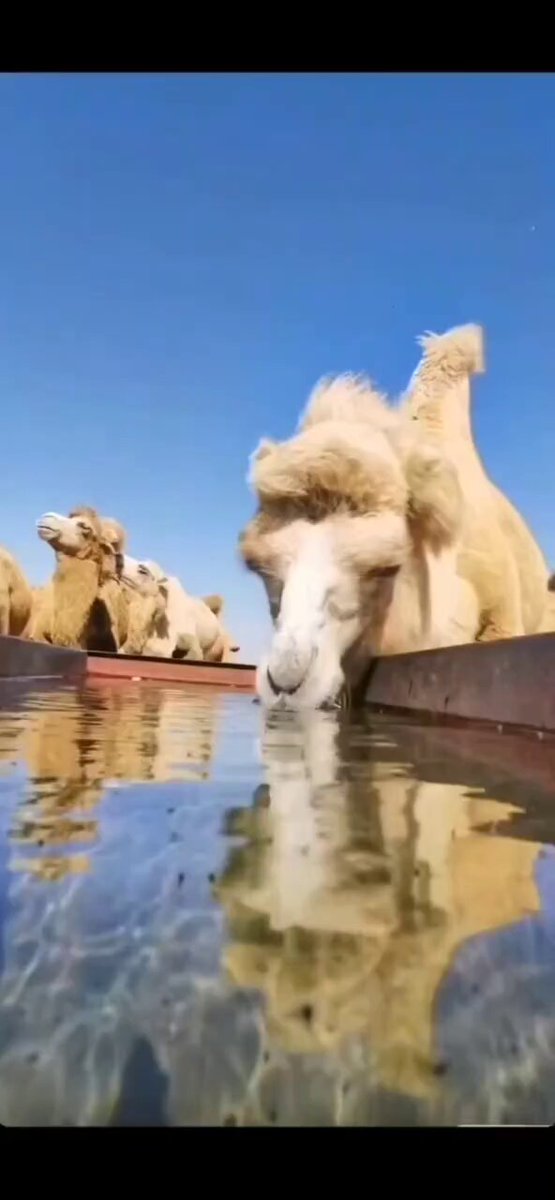
What are camels doing? Are they gargling their throat? 🐫🌵🌱
4
11
742
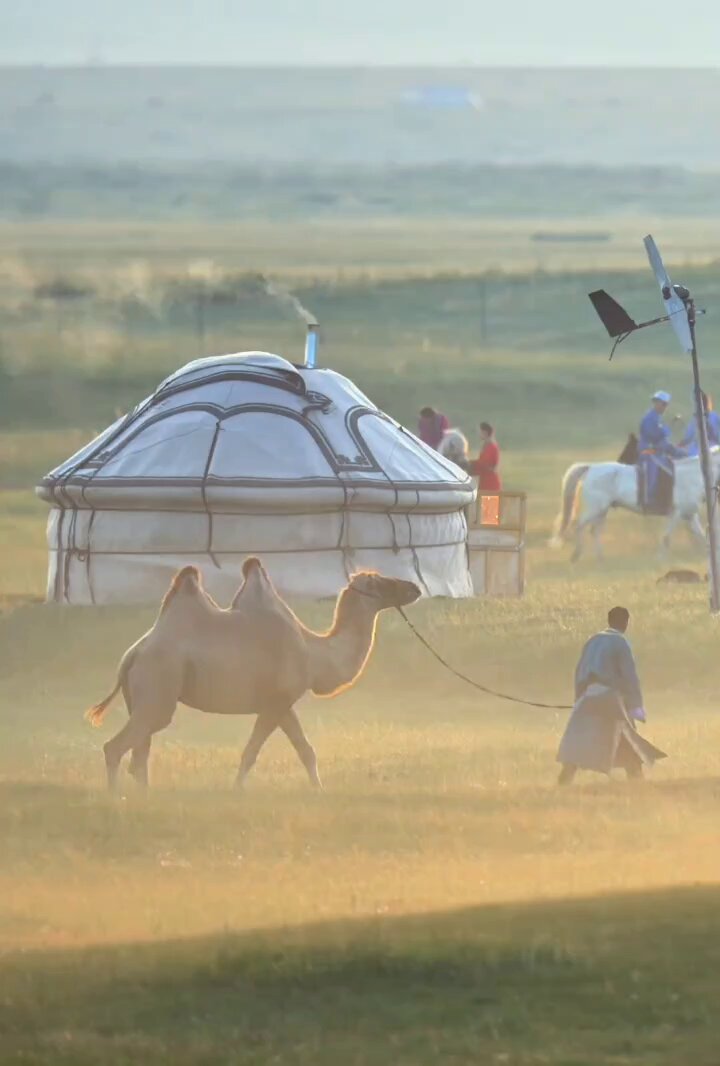
Just have a glimpse of herders' life in northern China's Xilin Gol League. 🌱☘️🍀🌺🌹💐
7
20
1,211
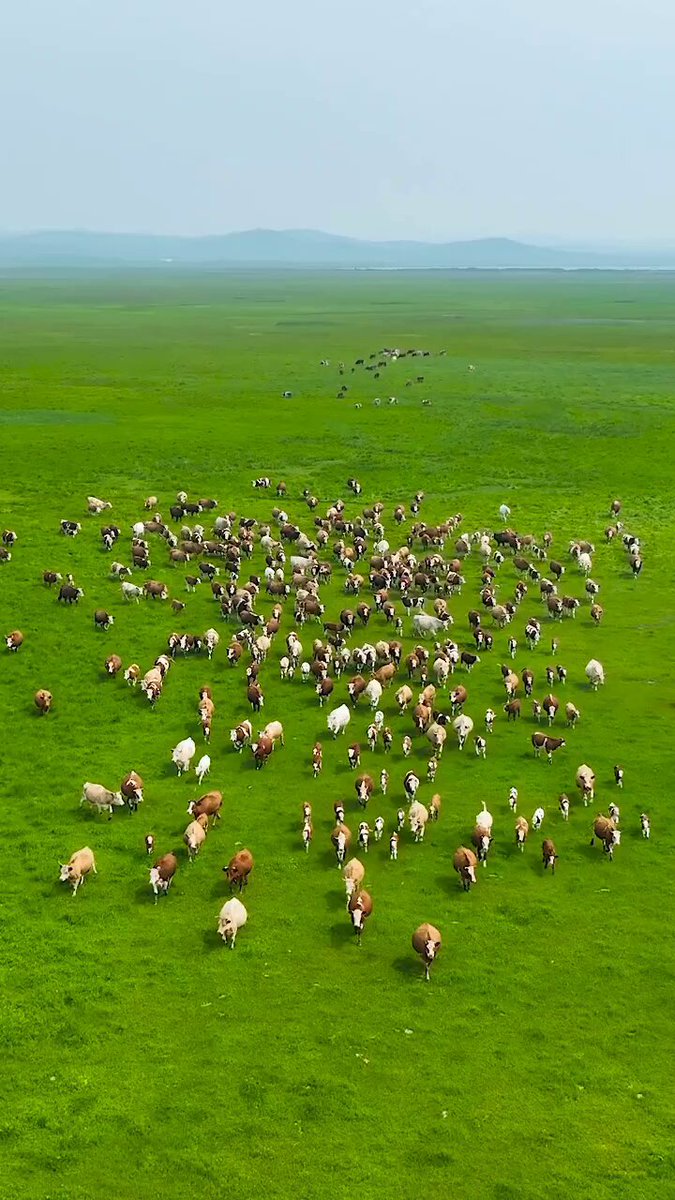
Are you curious about the scenery of the grassland at the prime time in northern China? Here you could have a glimpse. 🌱☘️🍀
3
23
544
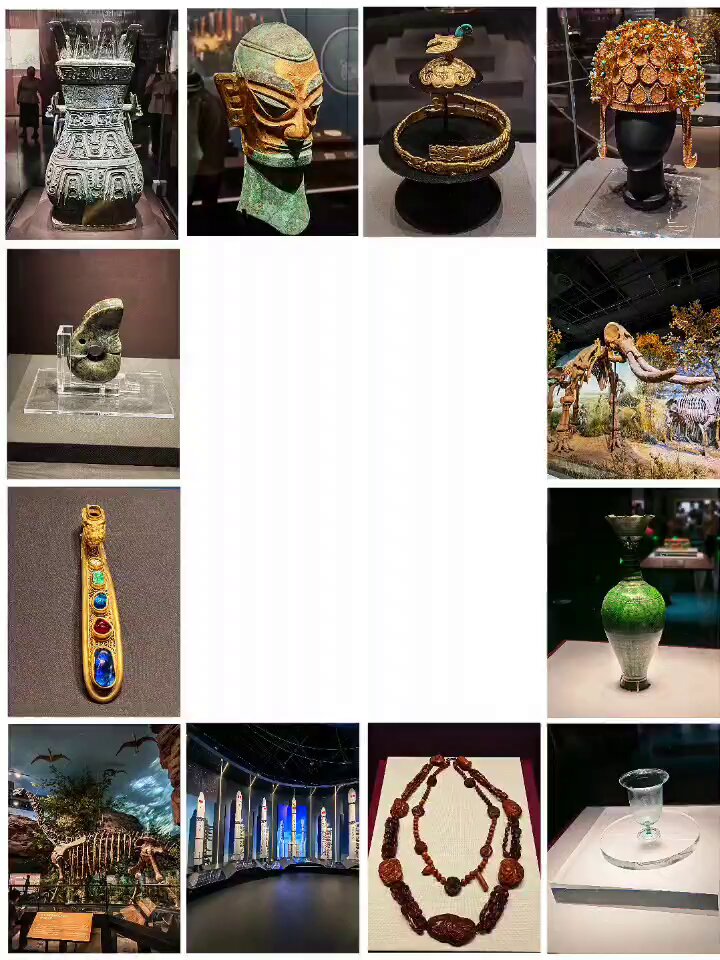
Today I visited Inner Mongolia Museum and was amazed by the wonderful ancient cultural relics, and you must not miss it when you come to China. 🌹💐🌺
6
18
493