Joined July 2021
- Tweets 213
- Following 2
- Followers 3,533
- Likes 186
69 Photos and videos


Pinned Tweet

Jan 22
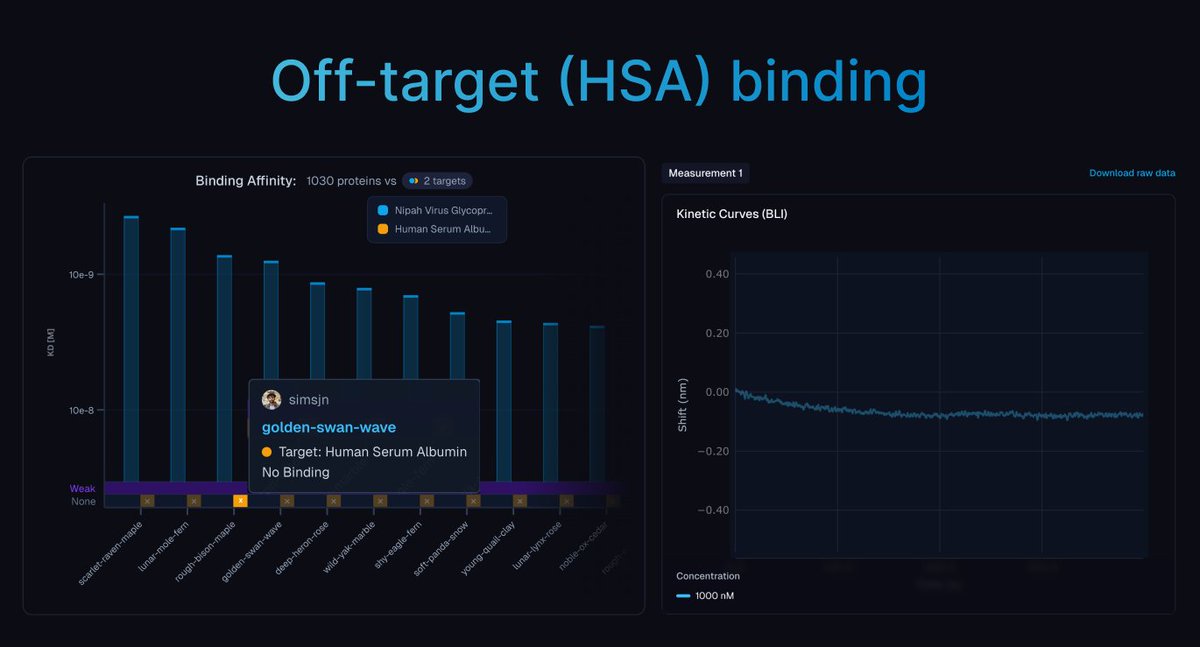
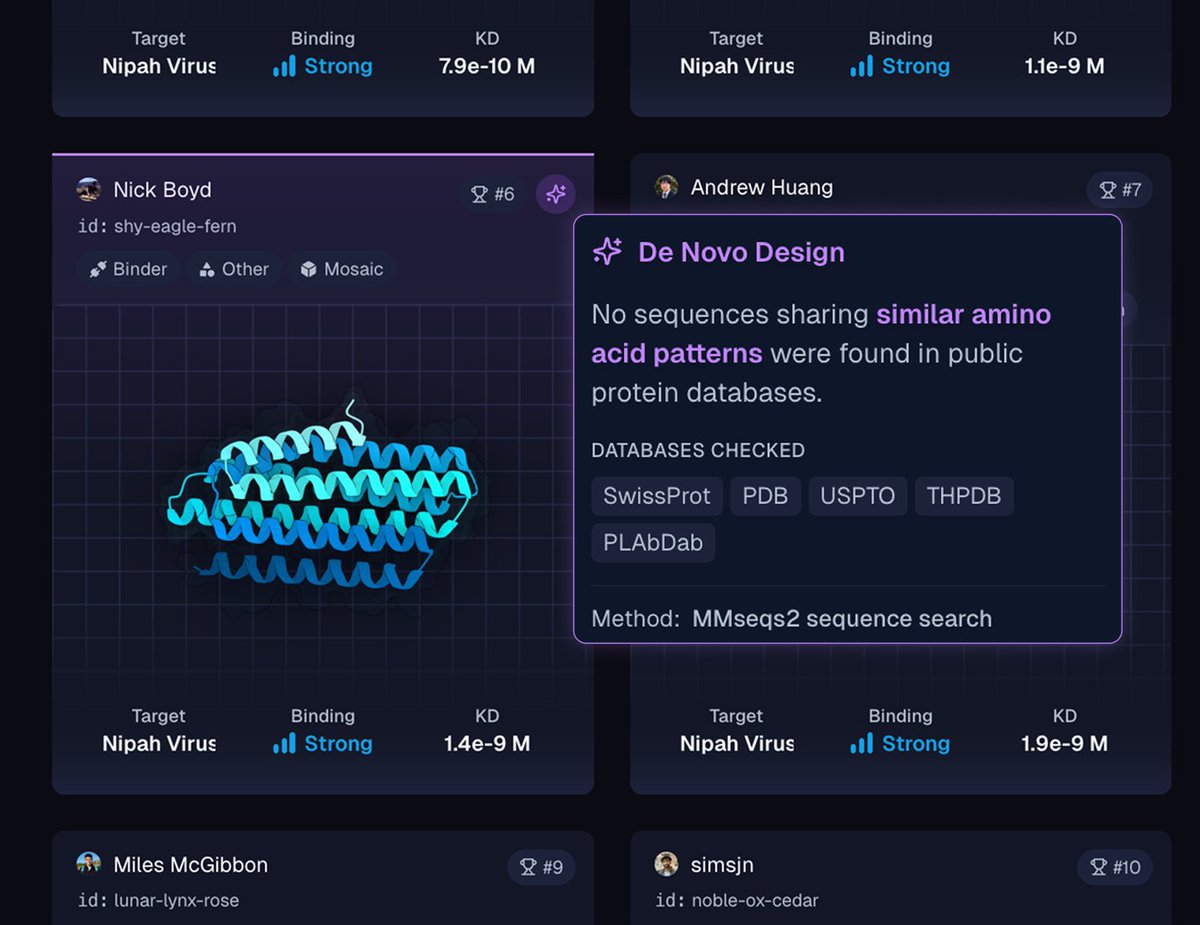
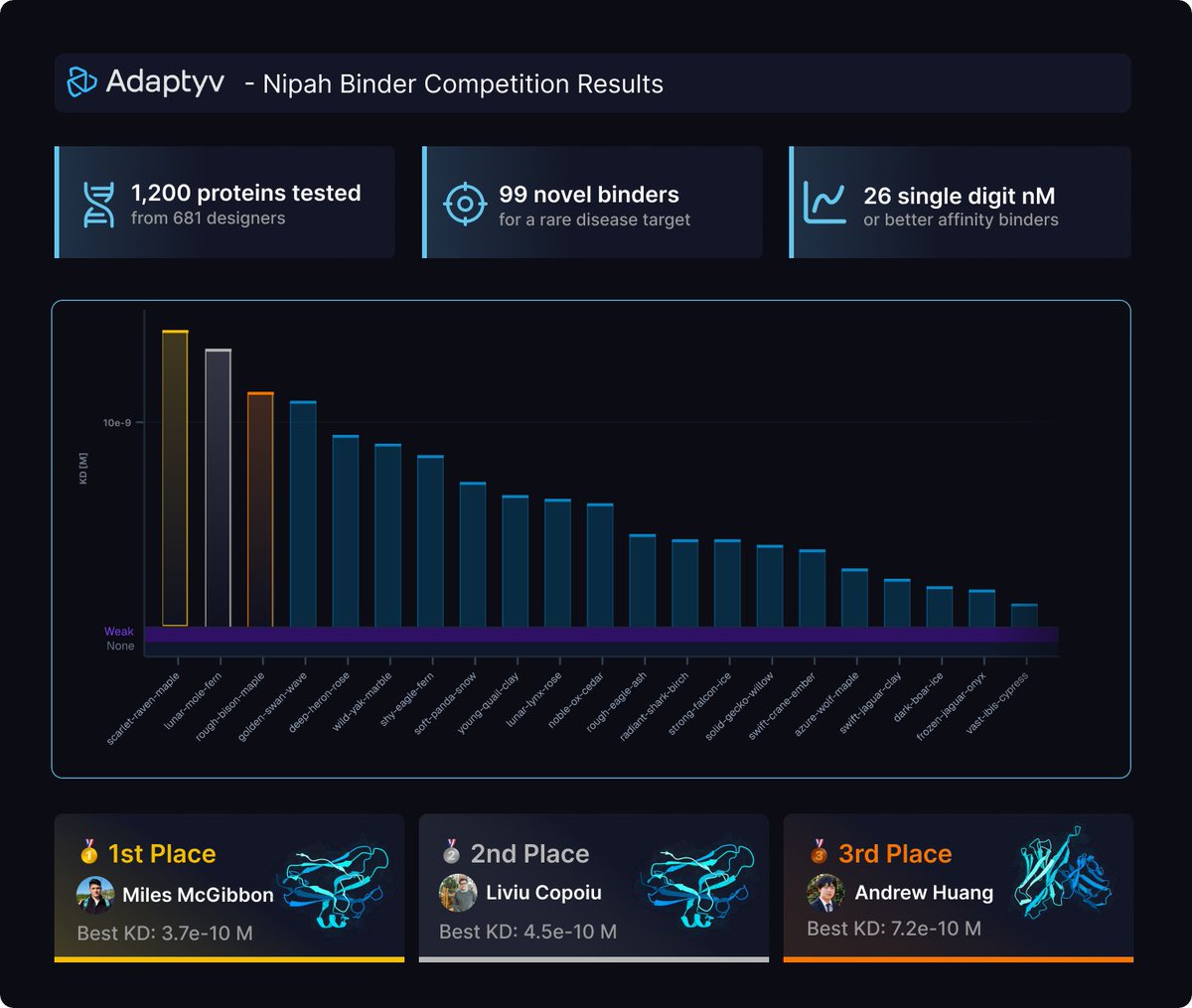
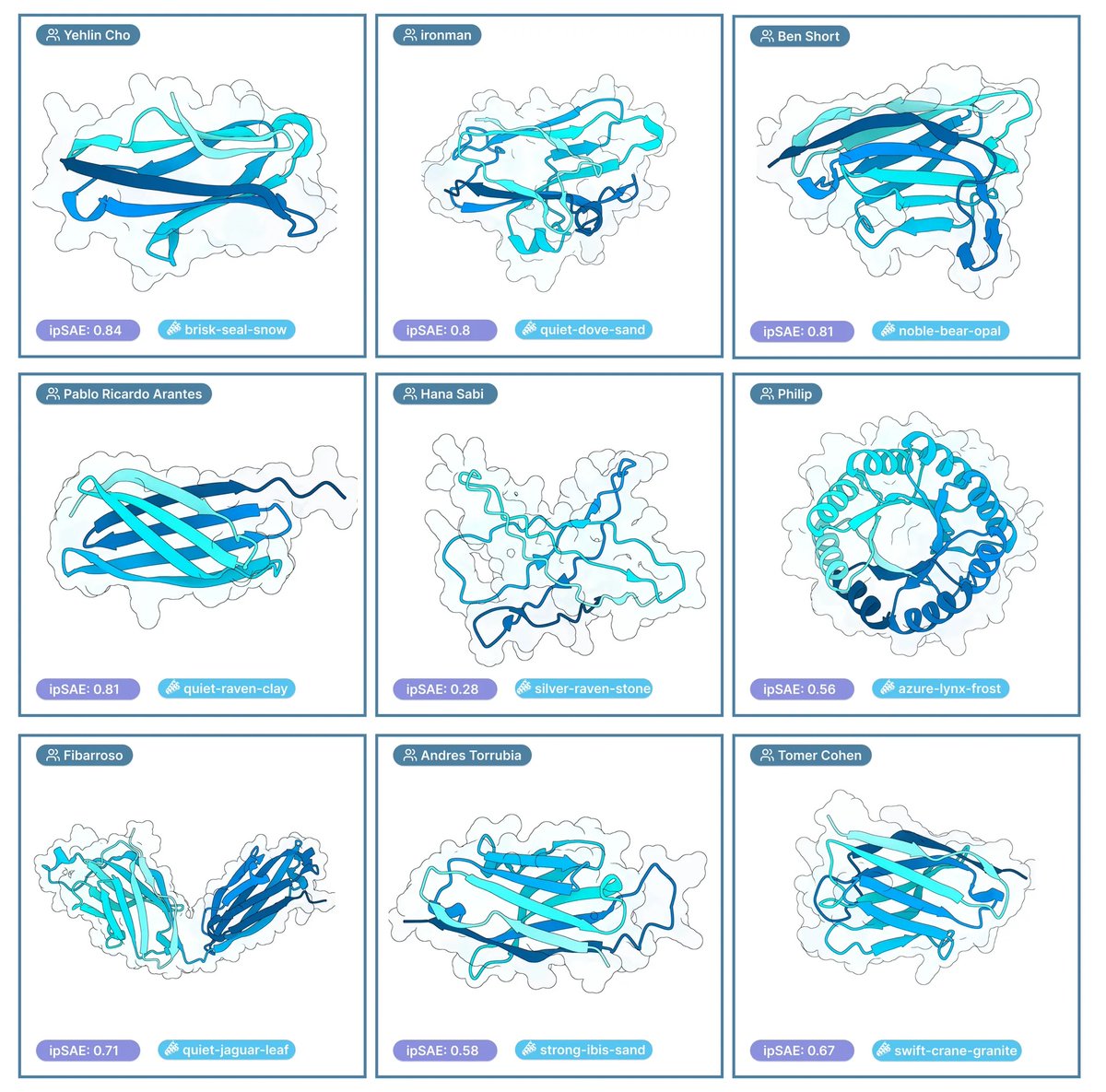
The results of the Nipah Protein Design Competition are out!
🧬 1200 proteins experimentally validated (3x more than last year)
📈 99 novel binders against the target protein (a challenging tetramer with little prior work)
💪 26 single digit nM or better binders, with the best ones at single-digit picomolar affinity!
All data now available open-source on Proteinbase!
Let's take a look at the results ⬇️
5
26
142
86,796
Jun 8
AI has solved software. Biology is the next frontier.
We're hiring across every team at Adaptyv.
We’ve built the best automated lab for protein designers to experimentally test their AI-designed proteins. Today, the most advanced protein design companies run their wet-lab work on Adaptyv, from the biggest biopharmas to frontier AI labs to dozens of virtual biotech startups.
Demand has grown faster than we have, so we’re hiring across the board:
• Bio: Research associates, scientists and lab technicians to develop and run new assays at scale.
• Lab automation: Engineers and interns to onboard new lab instruments and scale our automation infrastructure.
• Software: Product and backend engineers to scale LabOS, our internal lab orchestration platform, our API for agents and the data pipelines that turn messy physical-world data into clean results.
• Partnerships, customer success and operations: Building partnerships with AI & pharma labs, making sure customers understand their data and can run more campaigns, making sure the company operations run smoothly
5
10
49
13,031
Jun 2
Step 4: you know where 👀
Jun 2

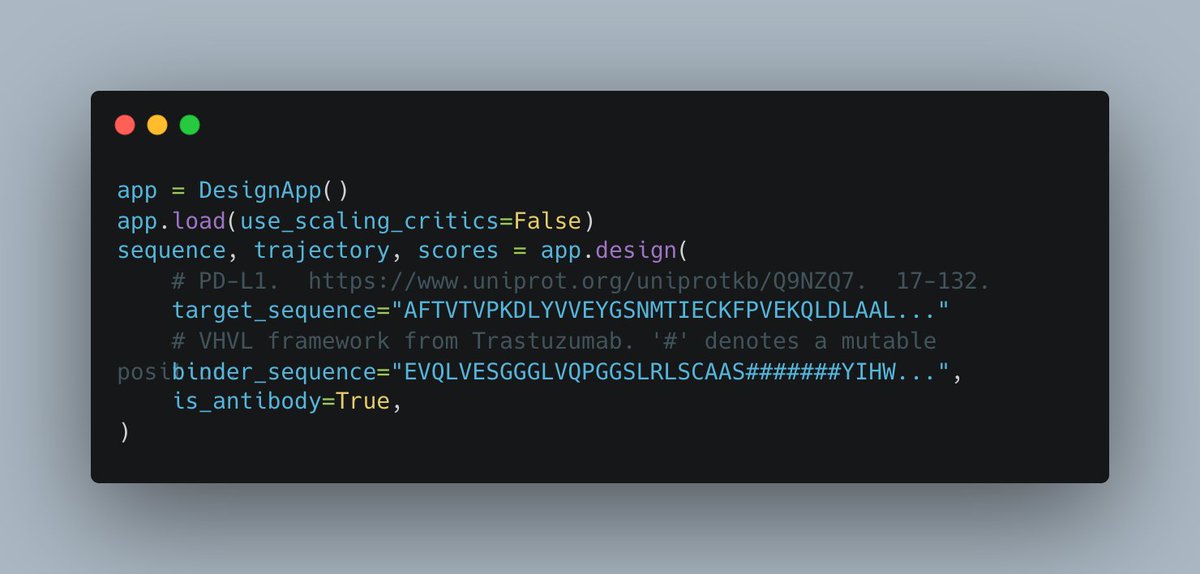
How to design your own PD-1 binder in 4 easy steps:
1. Download the tutorial notebook from the ESM team
2. Get a @modal API key to scale it up
3. Scaling it up, O($1000) will get you a 96 well plate of minibinders with >50% success rates on typical targets
4. Test it in the lab!
2
9
870
Adaptyv Bio retweeted

Jun 2
We have fully open sourced our binder design protocol, which generates nanomolar affinity scFvs.
The code here implements a faithful reproduction of the pipeline described in the paper, which is exactly what was used to produce our designs.
Check it out here: tinyurl.com/7jnsuzv5
Jun 2

We’re excited to share the full binder design protocol. Check it out here: github.com/Biohub/esm/blob/m….
The notebook includes support for @modal to easily scale up binder generation.
Give it a try and let us know how it works!
You can read more about ESMFold2, ESMC, ESM Atlas, and the full results in the paper here: biohub.ai/papers/esm_protein….
2
23
147
12,121
Adaptyv Bio retweeted

Jun 1
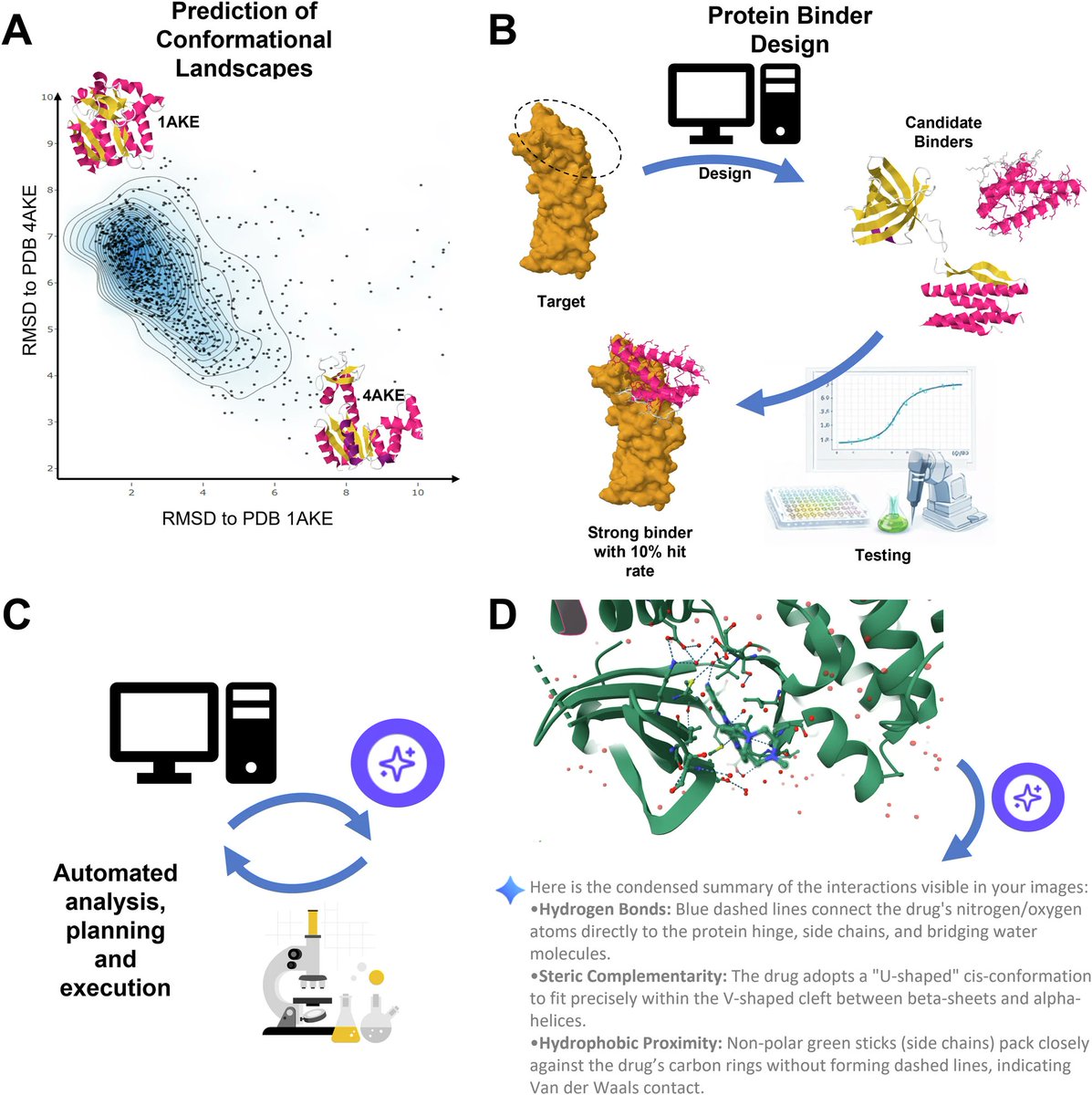
Binder design has come of age thanks to generative models—but how can we access the wider array of dynamic, multistate protein functions, so elegantly employed by nature?
@mihirbafna14 and I are excited to share SwitchCraft, a framework for designing such functions. (1/7)
17
143
619
84,760
May 13
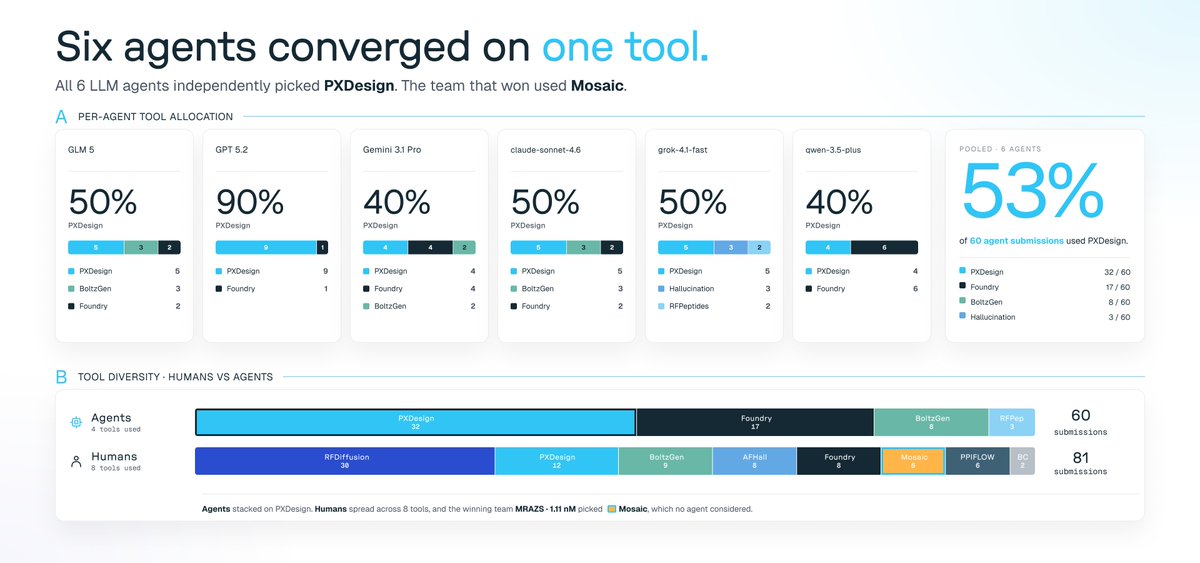
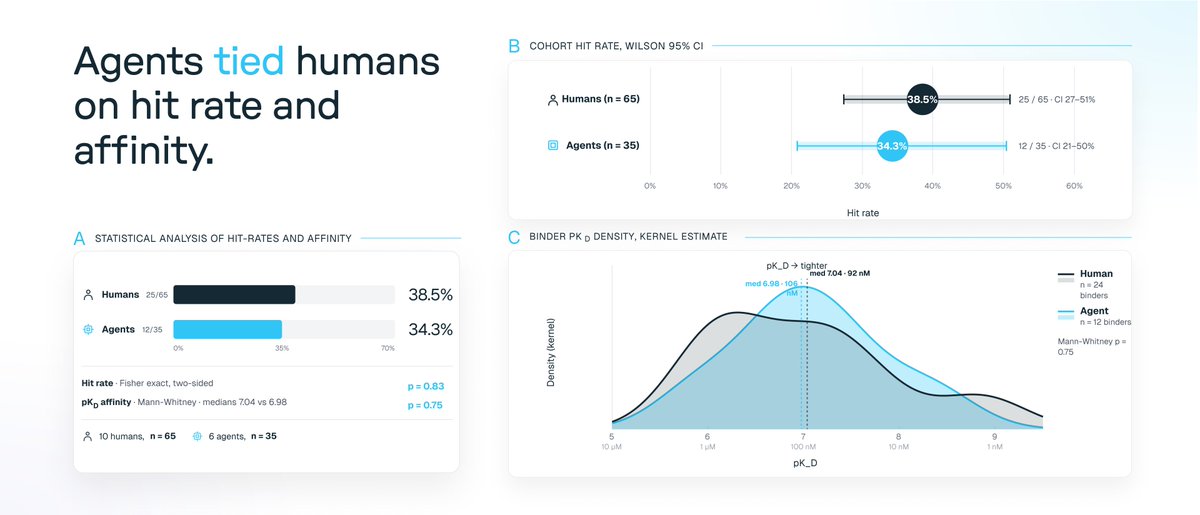
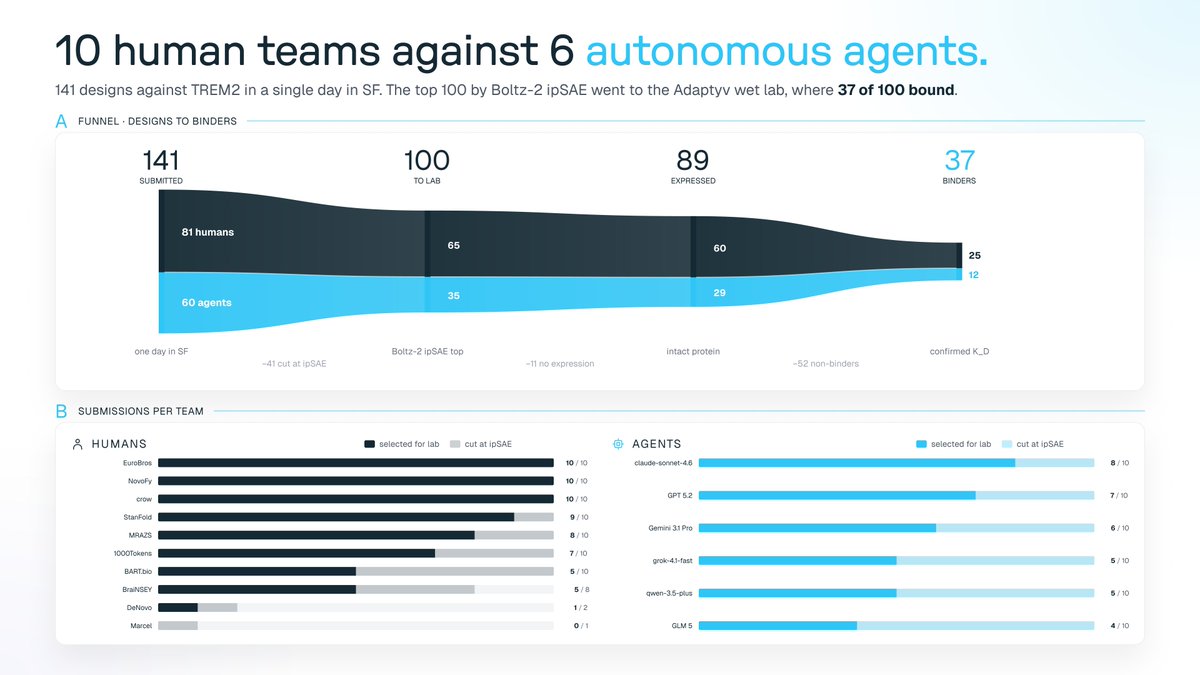
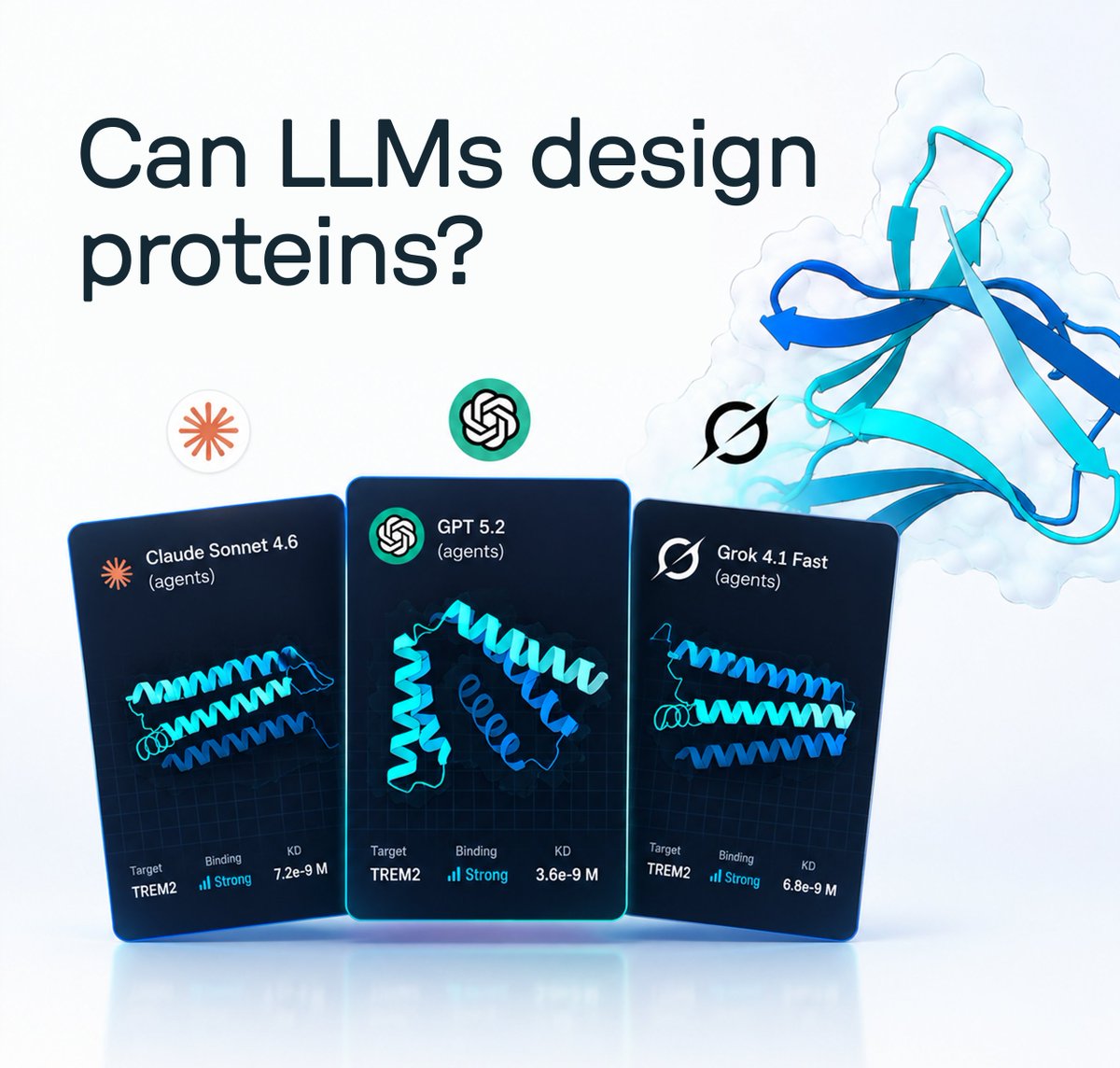
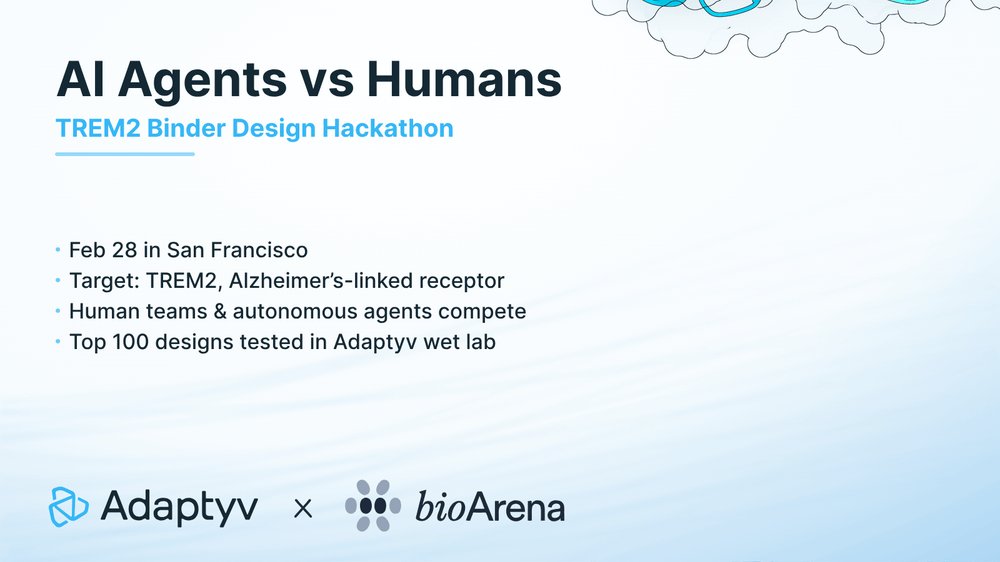
What happens when you let frontier LLMs design proteins, and then synthesize and test them in a wet lab?
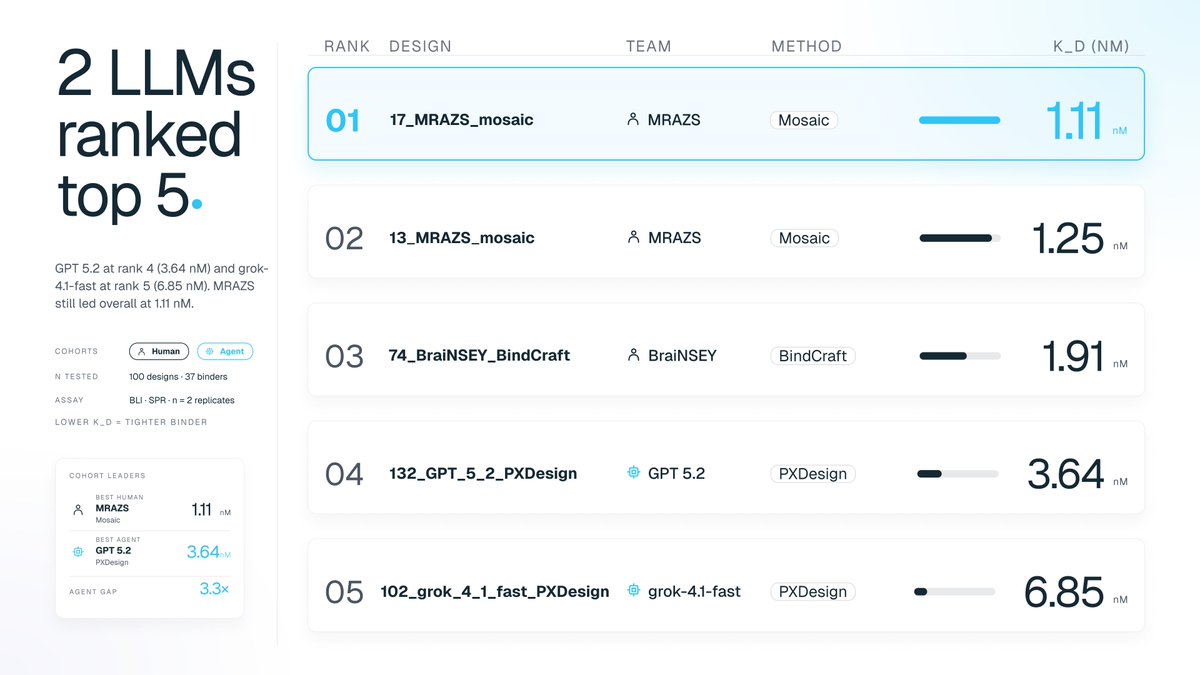
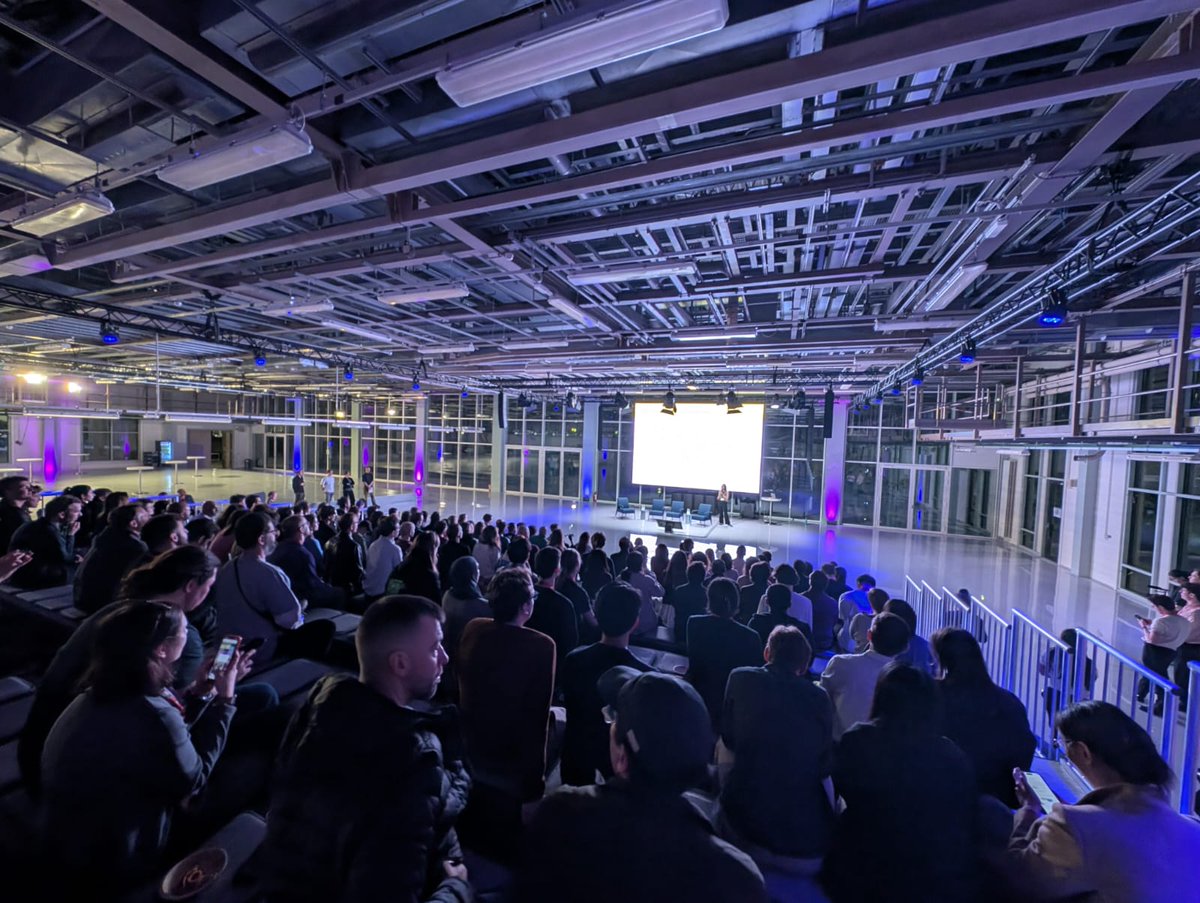
We ran a protein design competition with @muni_bio where AI agents competed against humans to design molecules that bind TREM2, a key receptor linked to Alzheimer’s.
Results: GPT 5.2 and Grok 4.1 both placed in the top 5, with molecules showing strong binding to TREM2 when tested in our lab.
4
16
76
26,088
May 13
Honest caveat: we measured binding, on one target, in one day, which is the easy half of a therapeutic. We'd go as far as to claim binding is roughly solved. Whether agent-grade design holds for developability, immunogenicity, PK/PD or in vivo potency, we don't know yet.
2
1
15
5,380
May 13
Everything's open. Designs and binding affinity data on @proteinbase, all open-source under ODC-BY.
Blog: adaptyvbio.com/blog/agents-v…
Proteinbase collection: proteinbase.com/collections/…
1
4
17
1,320
May 11
We've been saying it for a while, and @labriataphd makes the same case in his new article: binder design is having its AlphaFold moment. Several of our open competitions are cited as the main wet-lab evidence: BindCraft on EGFR, @cradlebio on the follow-up, and the Nipah competition with >8% binder rate and 26 single-digit nM binders.
1
13
55
4,523

How the agent fleet is built and how it pays for tools autonomously.
Each receptor has a dedicated agent with tiered memory of the full gate methodology, covering BioOS candidate sourcing, Lightfold computational analysis, and the @adaptyvbio API for wet lab handoff.
Agents hold Privy agentic wallets and pay for tools machine-to-machine via x402. Gate 5, molecular dynamics, takes 2 to 3 hours per candidate to run. Autonomy is tunable at every gate. When an agent reaches its own limits, it escalates to human review.
A fourth agent slot is reserved for a community-selected receptor, chosen by governance at a later stage.
1
1
3
853
May 6
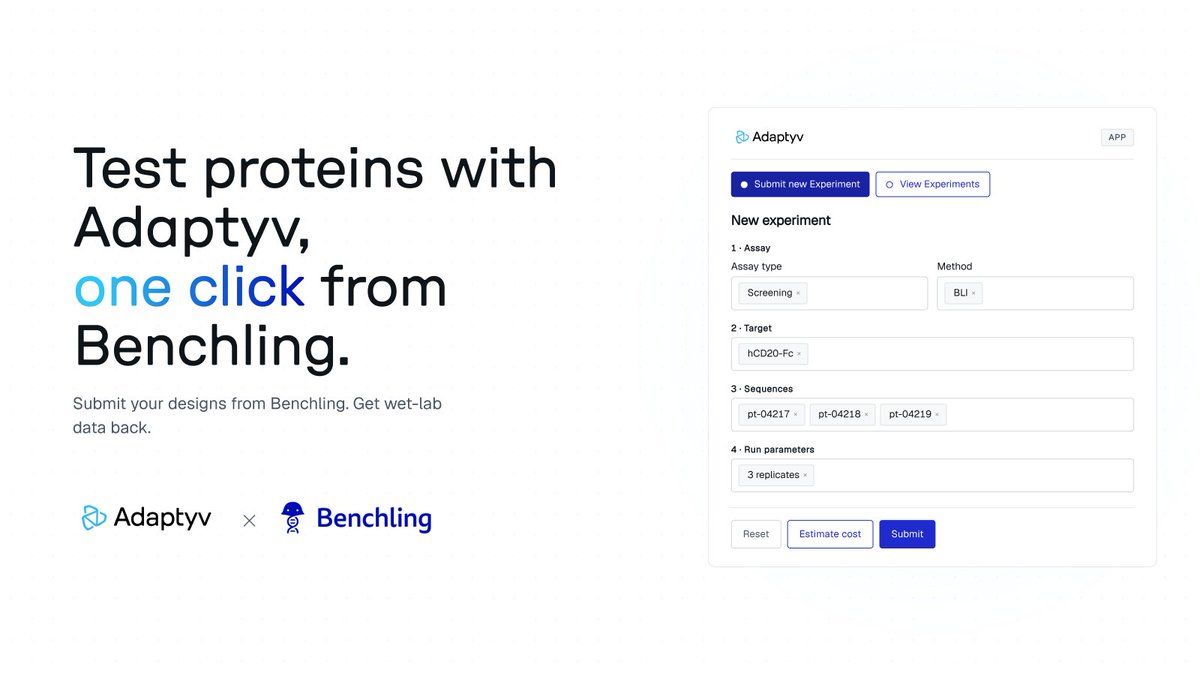
Starting today, you can submit protein candidates from Benchling directly to the Adaptyv wet-lab.
We're launching as part of @benchling's Direct Ordering Partners, alongside @TwistBioscience for DNA synthesis and @Ginkgo for antibody developability.
1
6
31
4,661
May 6
Some of our customers already run this way, meaning a few designers with Benchling accounts and Adaptyv as the lab. As of today, test it on Adaptyv is one click away from where their work already lives.
1
291
May 6
In early access for all Benchling customers starting today. To set it up, get an Adaptyv API key by reaching out to us at support@adaptyvbio.com
Blog: adaptyvbio.com/blog/benchlin…
Benchling's full announcement: benchling.com/blog/one-click…
1
279