
Privacy-first Address Intelligence for last-mile: normalization, multi-geocoder routing, caching, and explainable trust signals. 🧠🗺️
Joined December 2023
- Tweets 90
- Following 43
- Followers 8
- Likes 14
26 Photos and videos

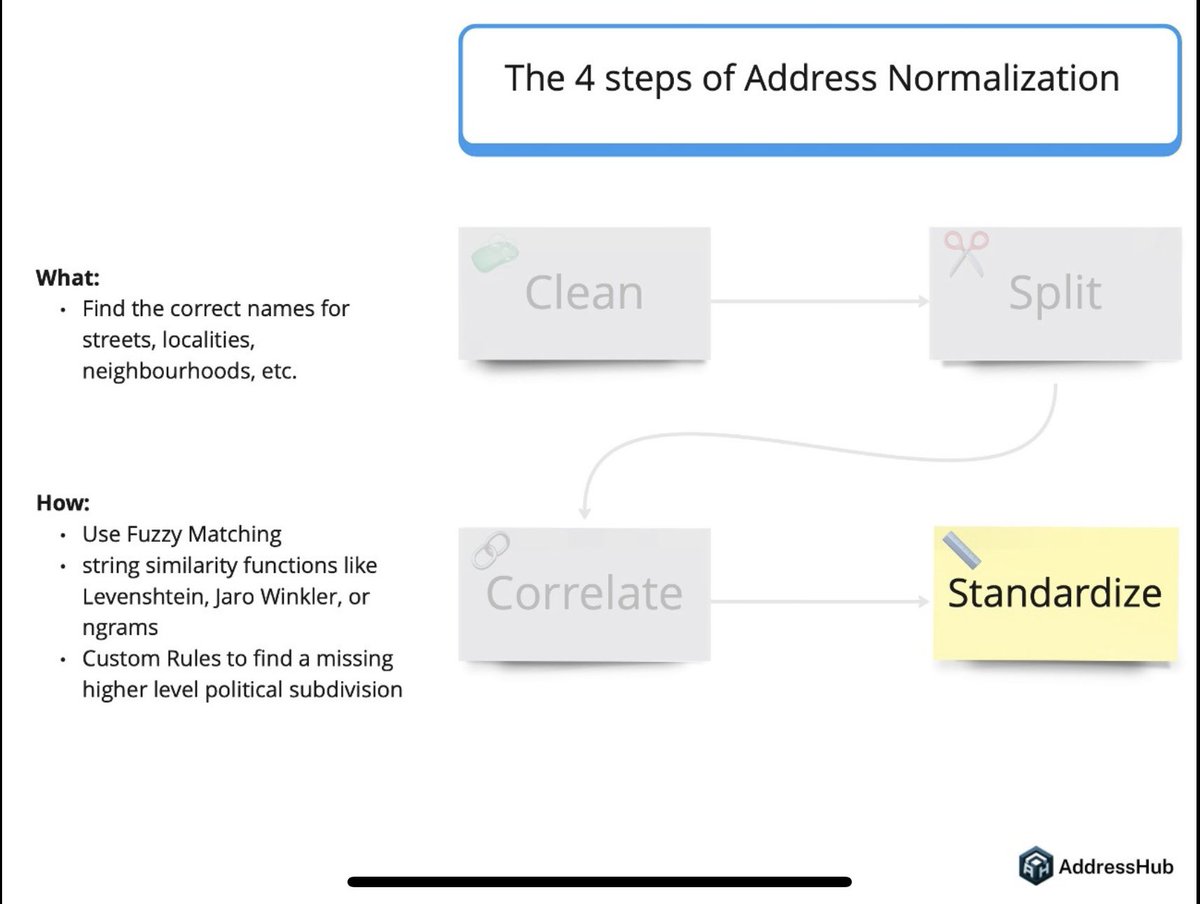
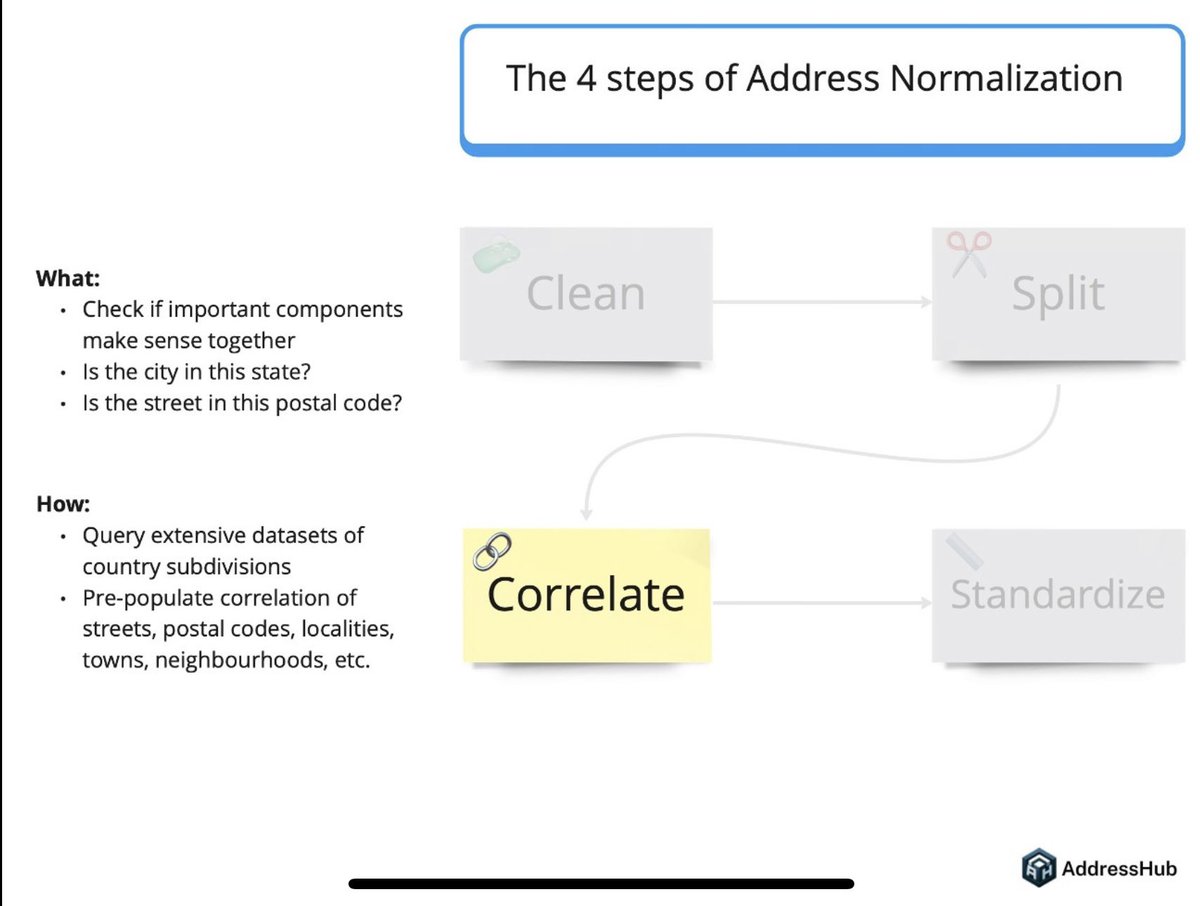
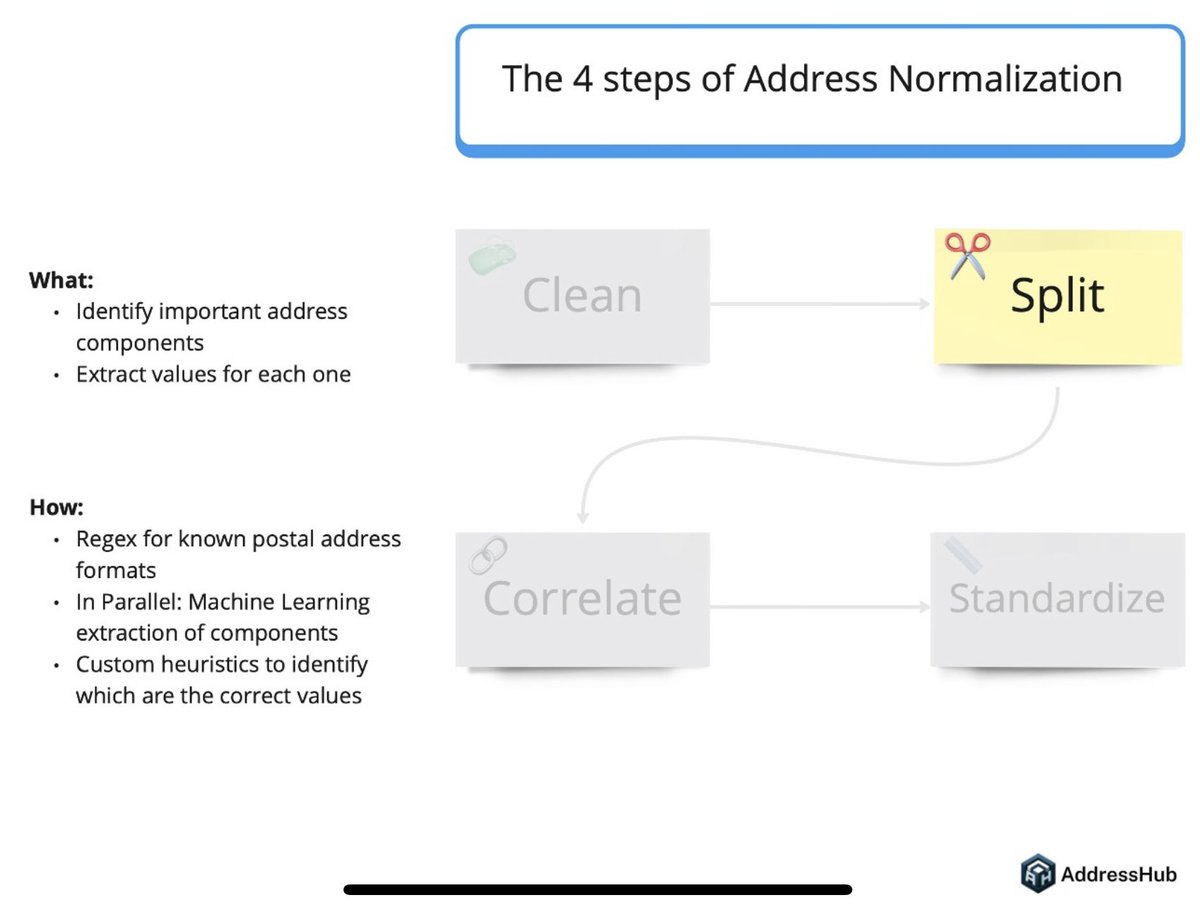
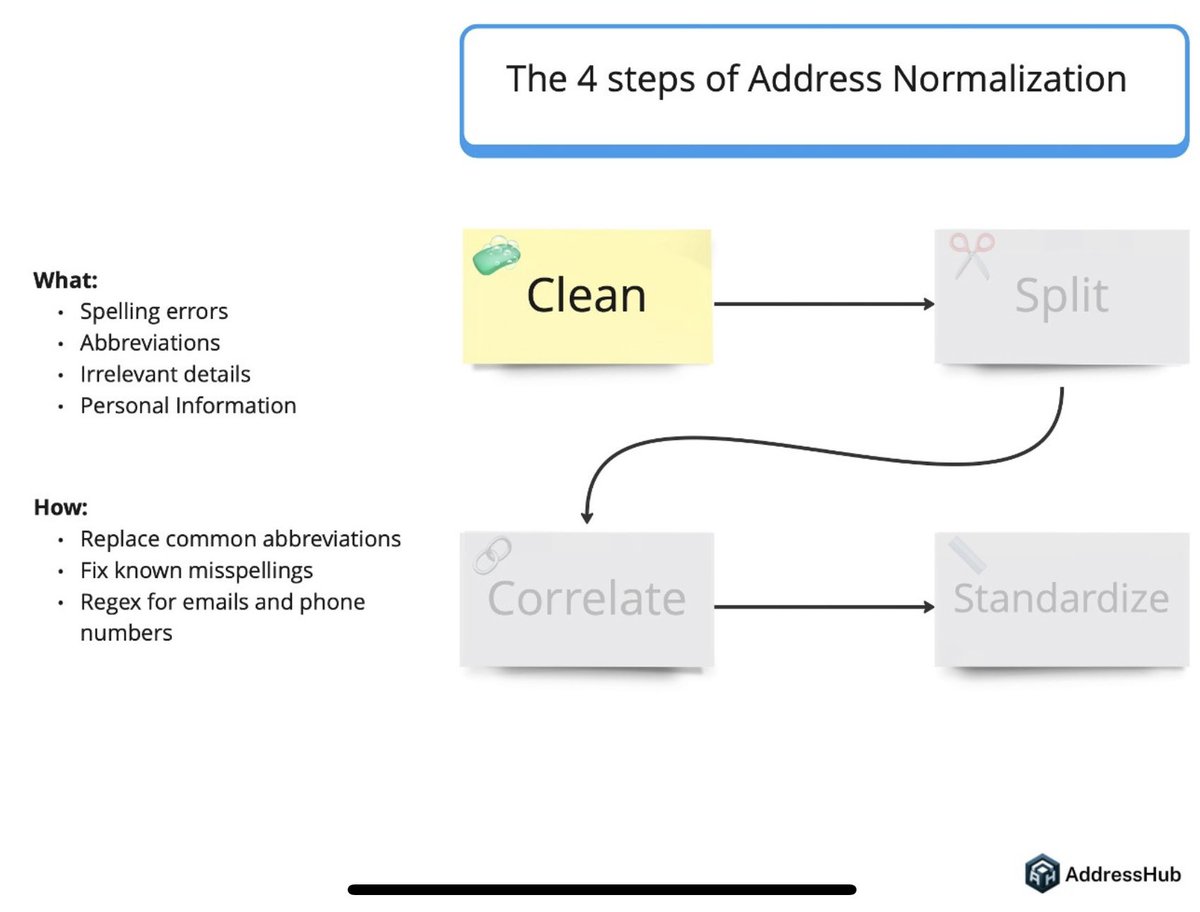


Jan 5
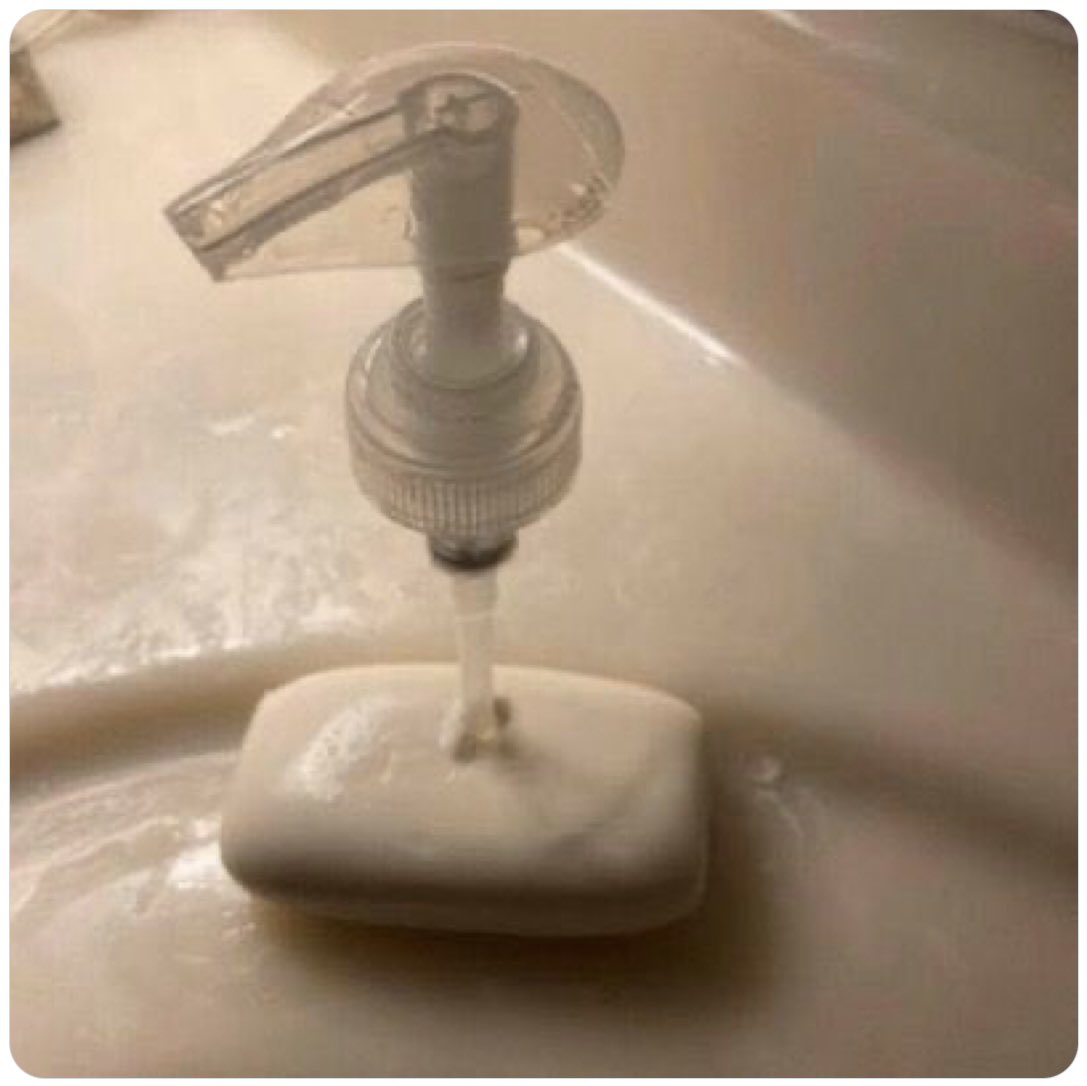
If you know, you know. 🤯
Real-world address data is chaotic, inconsistent, and notoriously difficult to manage at scale.
Trying to manage this internally is a massive drain on resources.
Don't let bad addresses slow you down.
Address data is a mess. We fix it.
1
35
Jan 3
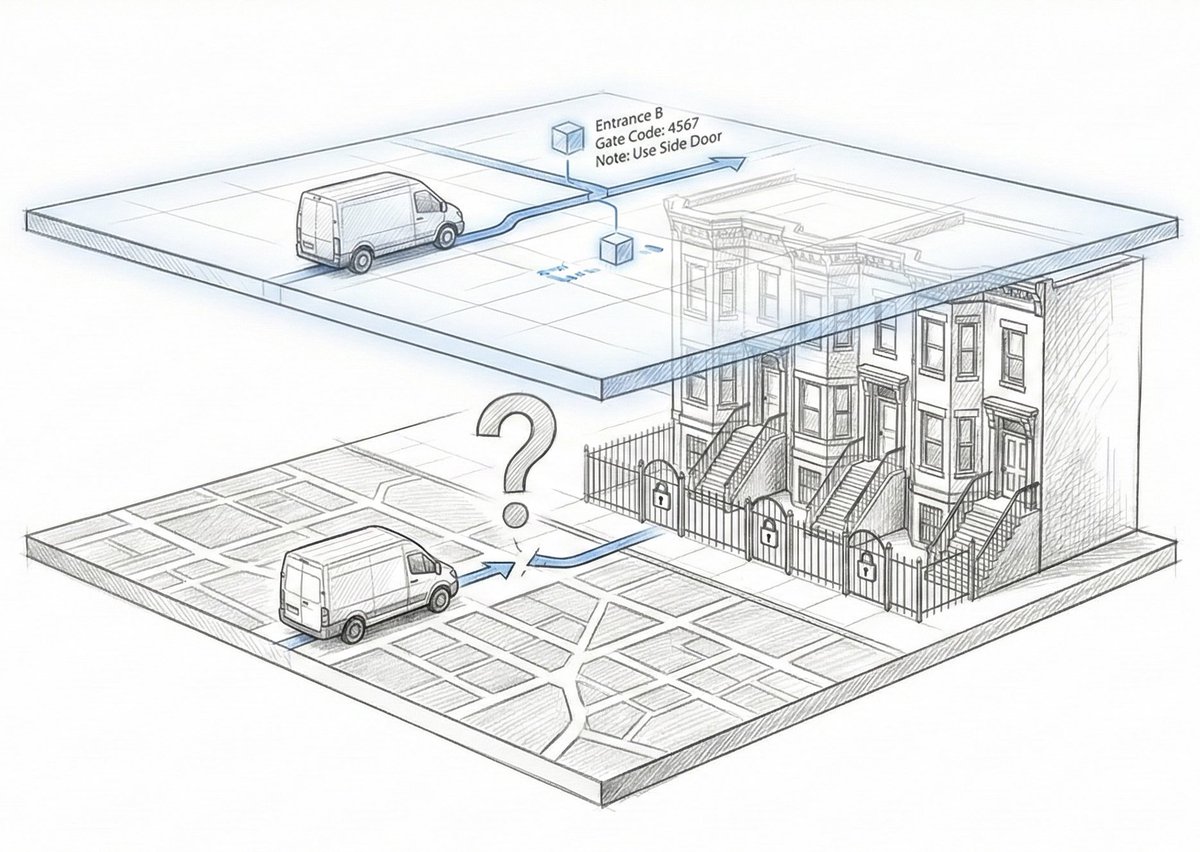
Most last-mile problems don’t start in routing.
They start earlier at the address.
Addresses are text. Deliveries happen in physical space.
Turning address text into structured intelligence is what makes last-mile operations truly scalable.
18
19 Dec 2025
Stop trying to fix your delivery data. It’s too late.
The bleeding has already started, and you can’t patch it in the middle of December.
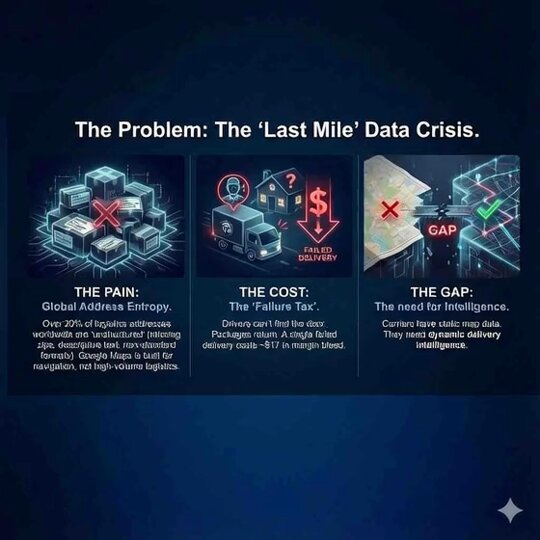
Every time a driver can’t find the door this week, it’s costing you ~$17 in margin bleed.
#Logistics #SupplyChain #PeakSeason #LastMile
1
1
37
19 Dec 2025
Here is the reality: You just have to survive the rest of the year.
But let’s make a pact: Don’t carry this chaos into 2026.
AddressHub provides the Address Intelligence needed to turn unstructured data into successful deliveries.
1
12
19 Dec 2025
Survive now. Let's fix this in January.
DM us "JANUARY" and let’s stop the margin bleed for good. 🛑
10
AddressHub retweeted

10 Sep 2025
Ok, I’ll admit it: You don’t need normalization…
At least not for all addresses.
Yes, I know I’m one of the biggest proposers of address normalization around here, and I still believe and can prove that address normalization is one of the most important things you need to do if you want to improve many of the most important KPIs in your delivery operation.
But the truth is that many addresses don’t have issues, or at least don’t need the full force of normalization.
For these cases you can apply a simple version of normalization that just tries to split it into components, and with that you can geocode the address (using the original input) and then use the components to validate the relevance of the results.
This is what a few of our @AddressHub customers said, so we listened. So, in Apple style:
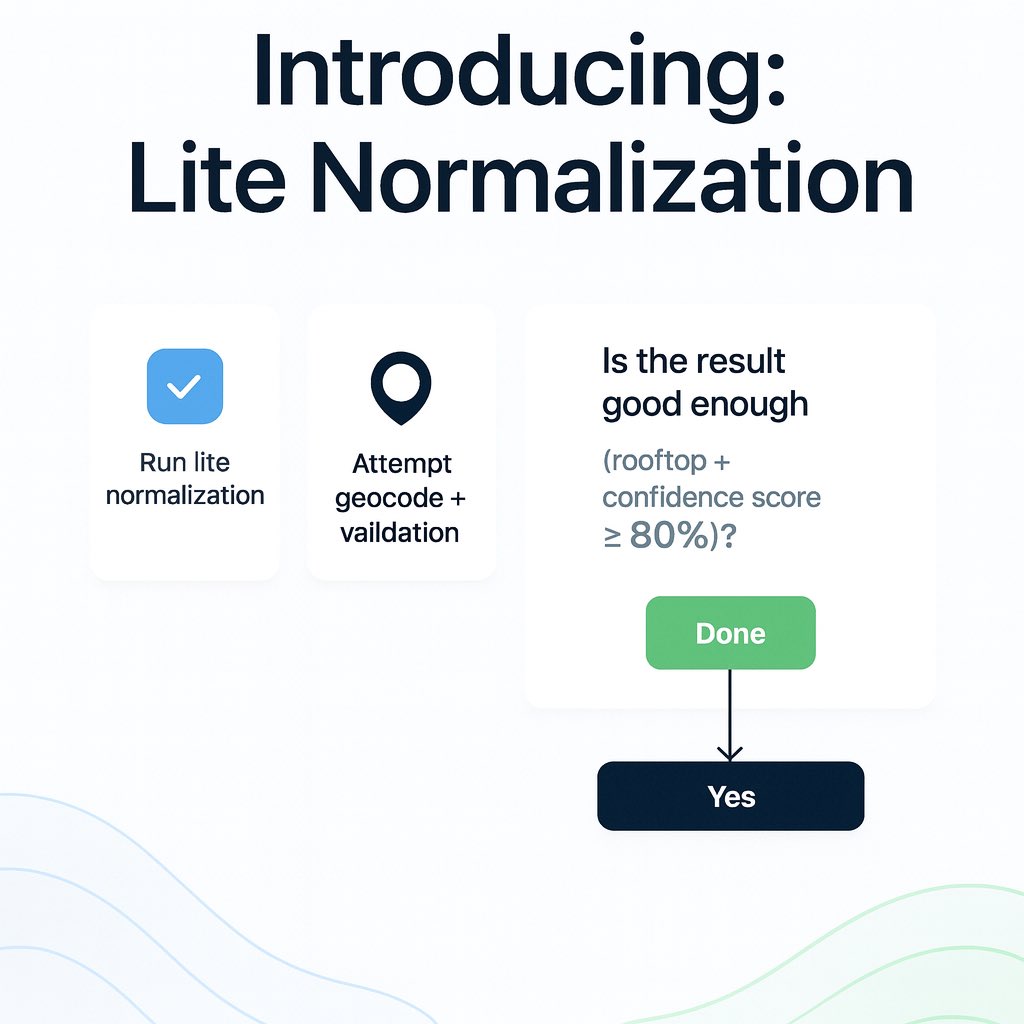
𝗜𝗻𝘁𝗿𝗼𝗱𝘂𝗰𝗶𝗻𝗴: 𝗟𝗶𝘁𝗲 𝗡𝗼𝗿𝗺𝗮𝗹𝗶𝘇𝗮𝘁𝗶𝗼𝗻 ✨
Or rather, we are now offering a way to process addresses that just applies a lite version of normalization, then attempts to geocode and validate the results using the lite normalization output.
If the geocoding result is not good enough (at least rooftop, and confidence score is at least 80%) then we run an uplift process which basically applies full normalization and then tries to geocode again.
This covers most of the cases where normalization doesn’t improve the geocoding result but still allows you to evaluate the geocoding results, and leaves the difficult cases to full normalization.
Additionally, this comes with a pricing model that allows our customers to pay fair prices for normal processing of an address, and an uplift fee only in the cases where full normalization was needed.
All of this is done automatically by AddressHub. All the intelligence to detect this runs with our internal models and algorithms, so you don’t have to build any of it yourself.
What do you think? Have you ever wondered if normalization is always needed? Here’s your answer!
1
1
166
AddressHub retweeted
1 Sep 2025
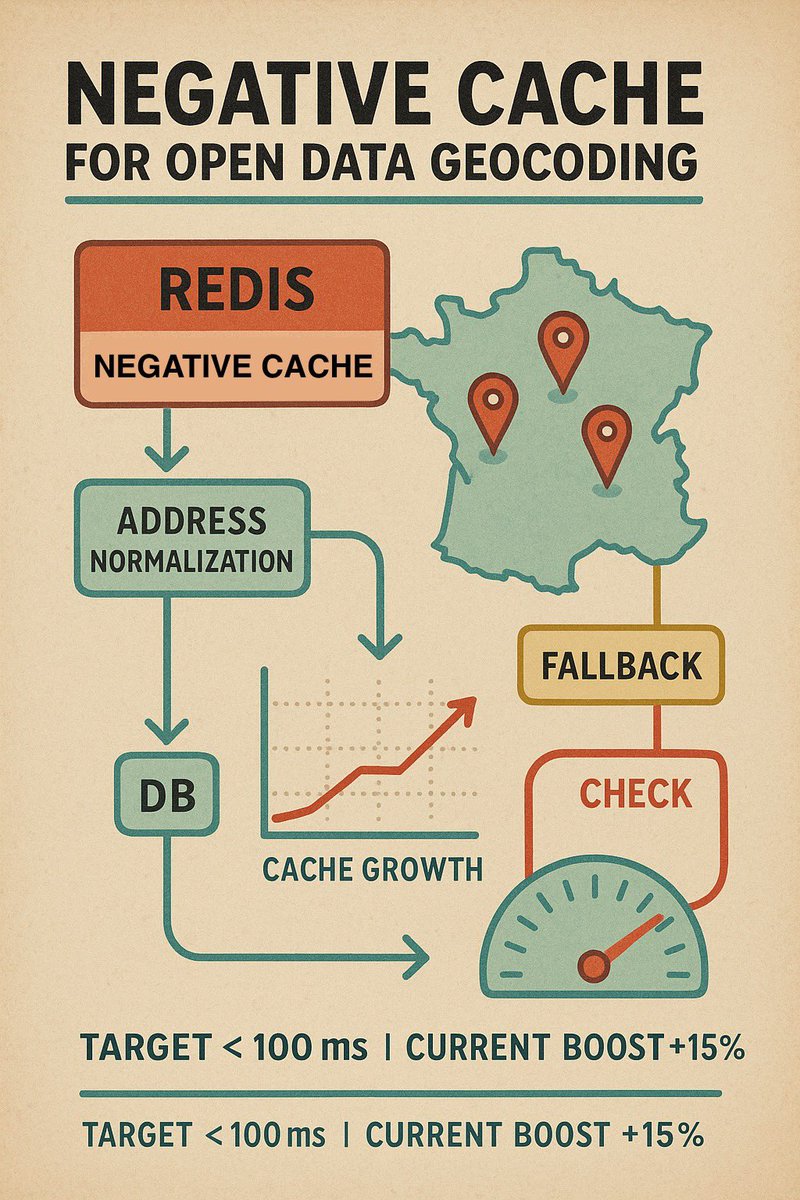
I implemented a negative cache for open data geocoding in my internal geocoding service.
Context: @AddressHub normalizes an address and geocodes it using a curated, pre-processed list of addresses in the country.
Previously, I checked if an address was in the database; if not, I started fallback geocoding. If the same address was requested again, I repeated the database query, which, though fast, was slower than no query.
Now, a negative cache stores not-found addresses, so a Redis check in under 2ms confirms if a query is unnecessary. This boosts process speed by at least 15%, with the negative cache still growing.
I’m exploring more areas to apply this. The goal is to reduce processing time to under 100ms, still a way to go, but progressing.
1
2
149
8 Aug 2025
“We already use Google” is one of the most expensive sentences in last-mile ops.
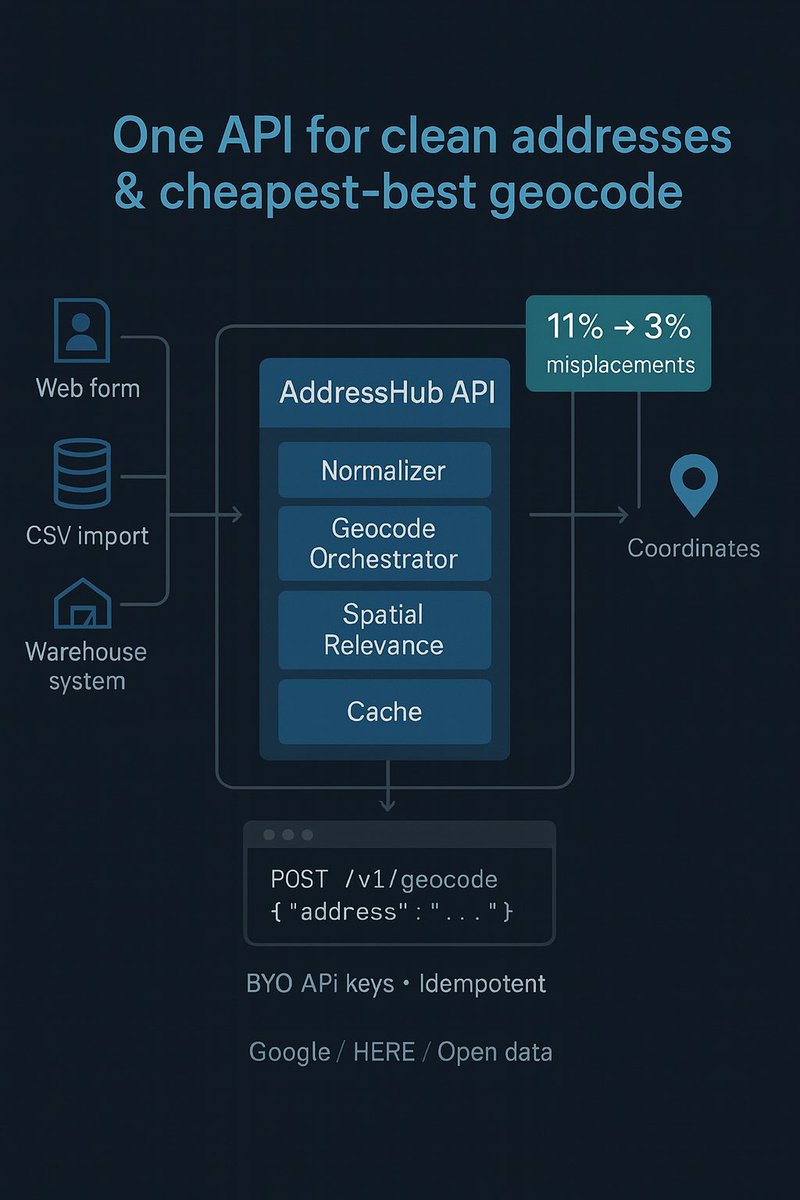
On a batch of 200,000 messy addresses, sending raw strings to a single geocoder mis-placed 11%.
After AddressHub (normalization multi-geocoder spatial relevance), misplacements fell to 3%.
1
114
8 Aug 2025
You don’t need another geocoder.
You need clean addresses before any geocoder and a router that picks the best/cheapest result.
Want to build that yourself?
You don’t have to, just use AddressHub, one API for all of it.
42
24 Feb 2025
𝐆𝐨𝐨𝐠𝐥𝐞 𝐌𝐚𝐩𝐬 𝐢𝐬 𝐧𝐨𝐭 𝐭𝐡𝐞 𝐠𝐨𝐥𝐝 𝐬𝐭𝐚𝐧𝐝𝐚𝐫𝐝 𝐟𝐨𝐫 𝐠𝐞𝐨𝐜𝐨𝐝𝐢𝐧𝐠. 🤯
Most people just send addresses to Google and blindly trust the results.
Big mistake.
Not all geocoders are equal
1
59
24 Feb 2025
So how do you know if a result is actually accurate?
✅ Inside the right postal code?
🏘️ In the correct neighborhood?
📍 Even close to the right street?
It’s not as simple as checking if the result is “rooftop.”
1
51
24 Feb 2025
This is why AddressHub does the hard work for you.
It picks the best geocoder for each address
and makes sure you get 95% high-accuracy results.
Check it out. You’d be surprised.
28
1 Nov 2024
Delivery companies using advanced routing software without fixing their addresses first 🤣
1
1
66
24 Oct 2024
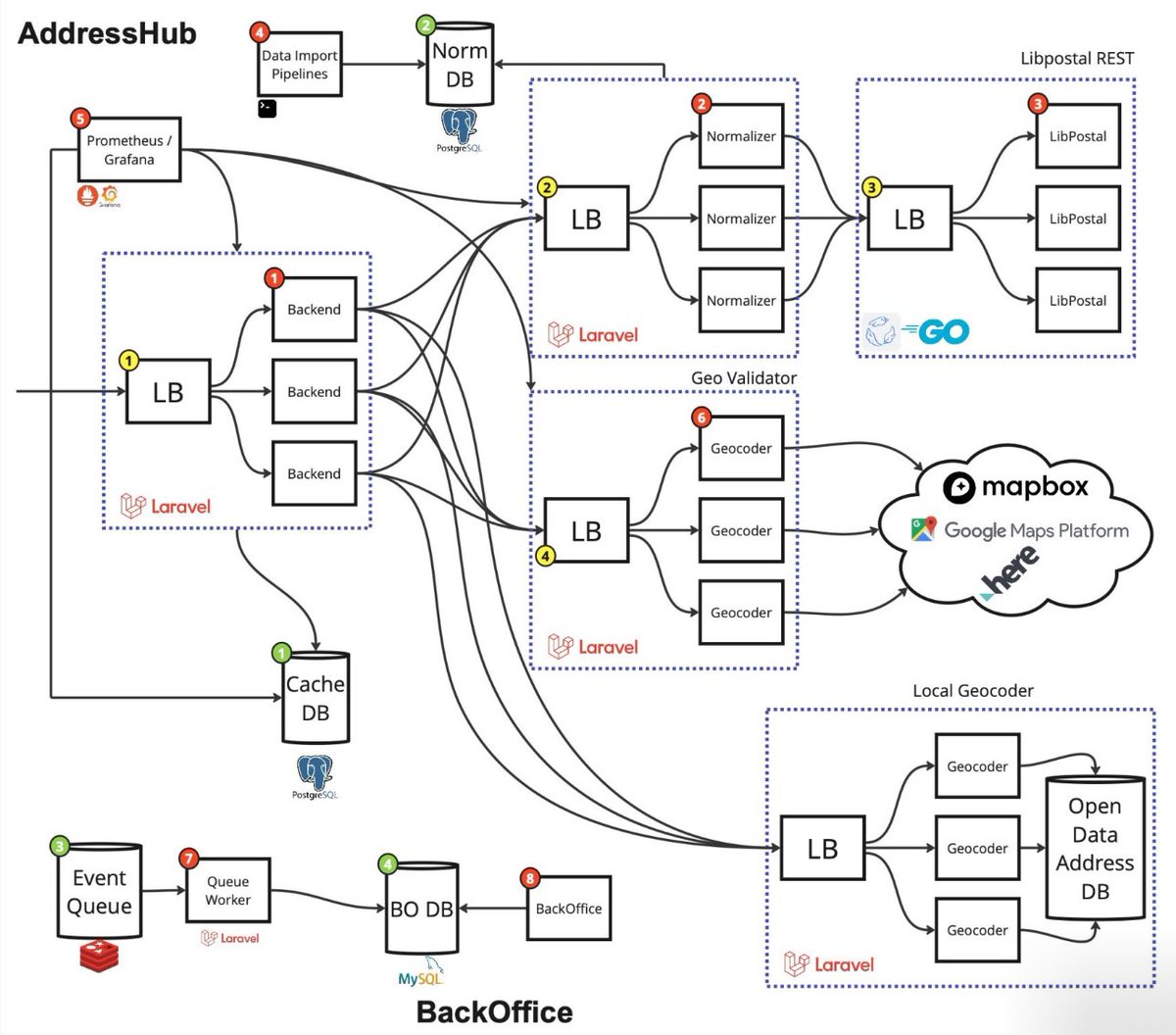
The Truth About Address Processing: It’s More Complicated Than You Think 🤯
Check out the diagram below for a quick peek at AddressHub’s architecture. ⚙️👇
Here’s how it helps solve the real problems in last-mile delivery 🧵
1
1
1
66
24 Oct 2024
🔹 𝐎𝐩𝐭𝐢𝐦𝐢𝐳𝐞𝐬 𝐝𝐞𝐥𝐢𝐯𝐞𝐫𝐲 𝐫𝐨𝐮𝐭𝐞𝐬: Better address data leads to better routes. With AddressHub’s clean, validated data, your drivers are less likely to miss deliveries and you can cut down on fuel costs by optimizing routes.
1
9
24 Oct 2024
So while AddressHub might look simple to use, it’s solving complex problems behind the scenes.
We handle the tricky stuff so your deliveries can run smoothly and efficiently.
If you want to improve delivery accuracy, reduce costs, and streamline your operations, let’s chat.
8