
Ecologist and Conservation Biologist. PI @oceanrecoveries lab | Focus: ocean ecosystem resilience. | @ucsantabarbara | he/him/his
Joined June 2011
- Tweets 7,148
- Following 1,713
- Followers 2,508
- Likes 24,527
Photos and videos
Pinned Tweet

18 Nov 2025
New paper alert! We just published a massive meta-analysis in @Ecology_Letters asking: How does crowding affect survival in reef fish populations?
The answer? It's way more complicated than we thought.
🧵 Thread on what 147 studies taught us (1/8)
1
1
163
16 Dec 2025
Been using Claude Code for a few months. My R scripts no longer make me want to walk into the sea (which, as a marine biologist, is occupationally inconvenient). Made codewithclaude.net for researchers who've been meaning to learn AI coding.
1
2
90
18 Nov 2025
New paper alert! We just published a massive meta-analysis in @Ecology_Letters asking: How does crowding affect survival in reef fish populations?
The answer? It's way more complicated than we thought.
🧵 Thread on what 147 studies taught us (1/8)
1
1
163
18 Nov 2025
Why does this matter?
Understanding density-dependence is crucial for: 🔹 Managing fisheries 🔹 Conserving endangered species 🔹 Predicting how populations respond to disturbance (hello, climate change)
But we can't predict what we don't understand. (7/8)
1
32
18 Nov 2025
Bottom line: Population regulation isn't a fixed property—it's contingent on ecological context.
Want to dive deeper? 📖 Paper: onlinelibrary.wiley.com/doi/…
Big thanks to @OsenbergLab and everyone who shared their data! 🙏 (8/8)
30
6 Oct 2025
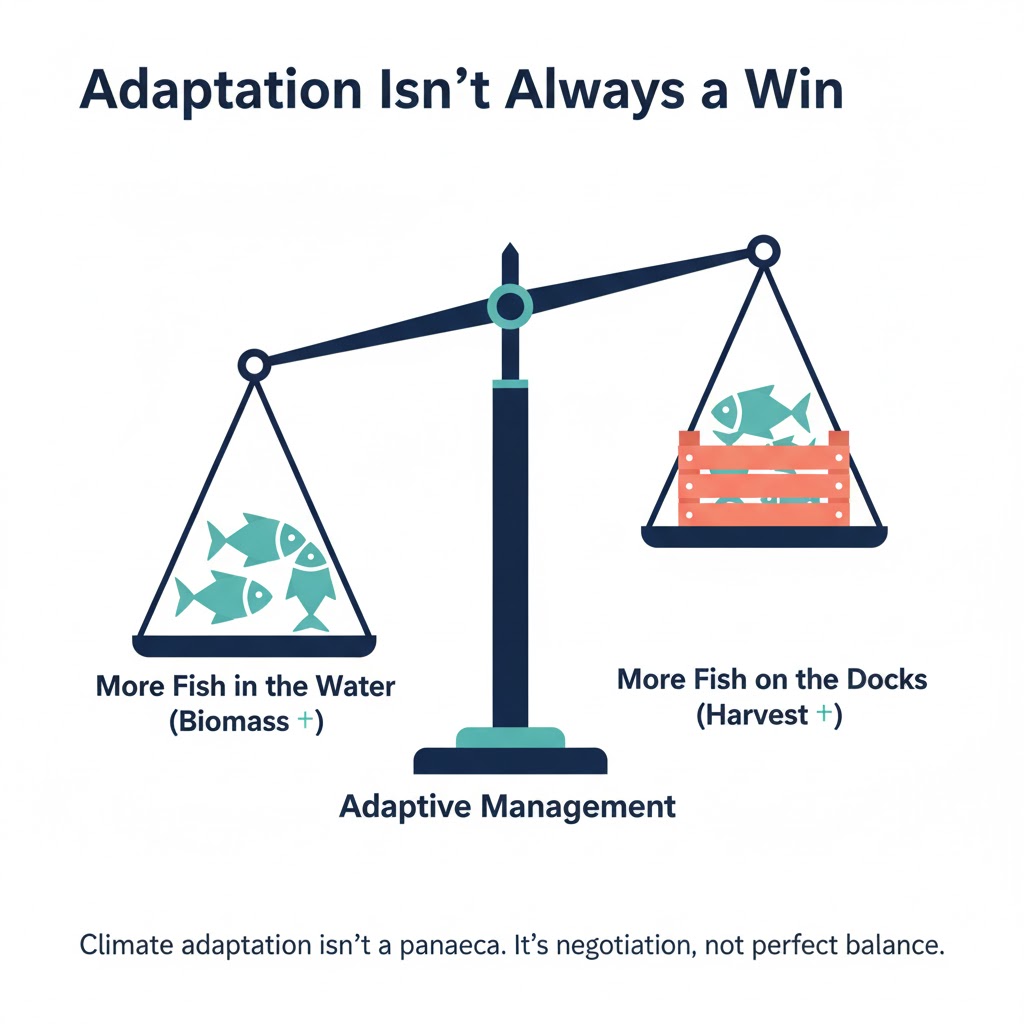
Our new study by @jamealfsamhouri @PLOSClimate reveals an uncomfortable truth about climate-ready fisheries: adaptive management strategies can boost population biomass OR harvest—but rarely both. The 'right' choice depends on what we value as a society.
journals.plos.org/climate/ar…
1
1
203
6 Oct 2025
imilar story with carrying capacity. When it dropped, adaptive management increased harvest 36% but reduced biomass 22%. The inverse happened when carrying capacity rose. Not a win-win—a trade-off.
1
28
6 Oct 2025
These aren't hypothetical scenarios. We examined Pacific hake, petrale sole, and sablefish on the US West Coast. Between 2005-2022, estimated unfished biomass changed by 25-65% as stock assessments incorporated new data every 1-4 years.
31
26 Sep 2025
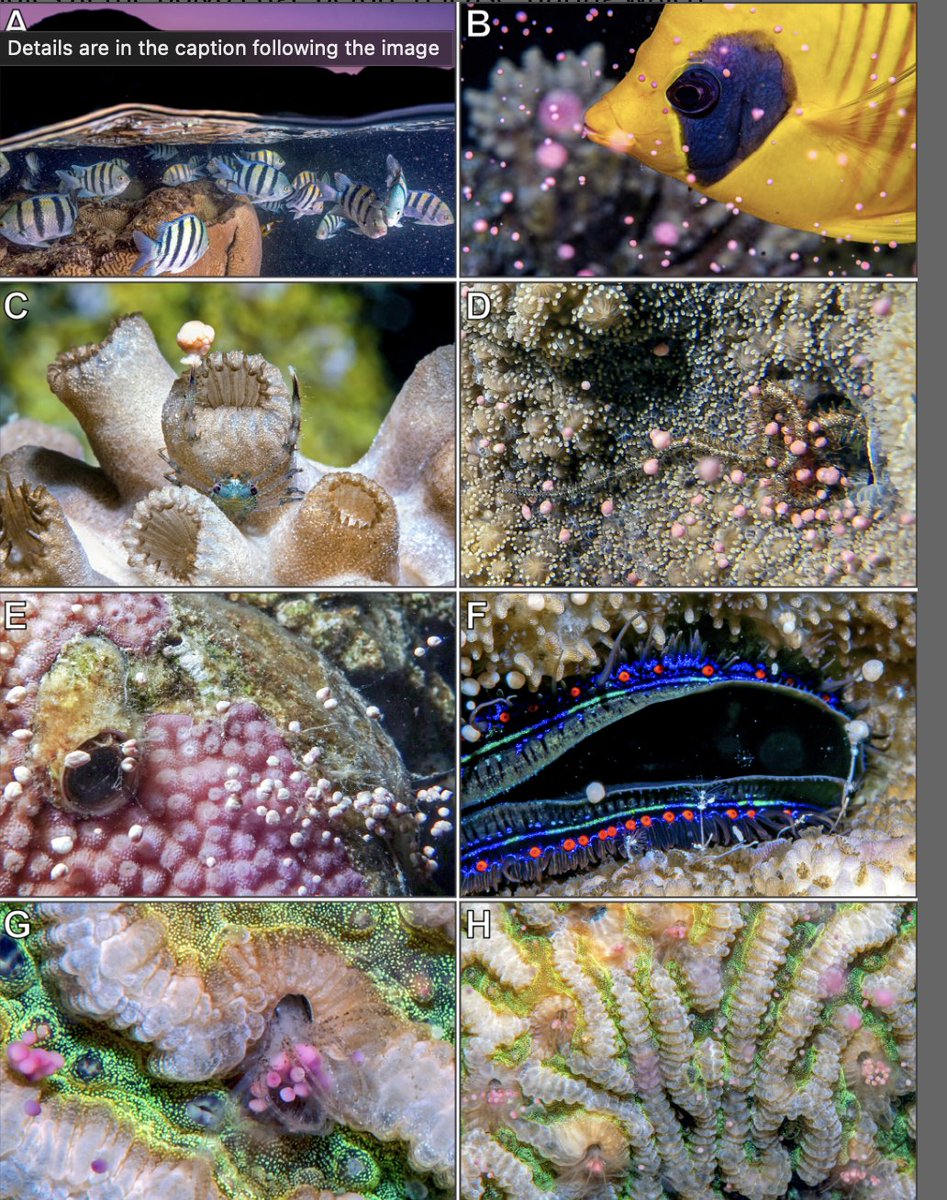
Coral spawning = nature’s biggest party 🎉🌊
But while corals release their eggs sperm into the night, a hidden guest list shows up hungry… 🦀⭐🐚🦪
@TomShlesinger reveals crabs, barnacles, brittle stars & more secretly feasting on coral spawn. doi.org/10.1002/ecy.70182
1
40
7 Sep 2025
🦈 Sharks, skates, and rays aren’t locked into slow, “fixed” life histories. New work in Ecology Letters shows they can shift to higher reproductive output when food availability increases — a surprising plasticity in elasmobranch biology! 👉 onlinelibrary.wiley.com/doi/…
2
115
5 Sep 2025
Stratford et al. tracked >1,000 coral “babies” in the remote Chagos Archipelago after bleaching. Survival & growth were high, but after 3 yrs they still made up just 2.4% cover. Even “ideal” reefs recover painfully slow. 🌊🌱
👉 link.springer.com/article/10…
1
77
3 Sep 2025
1/ New paper in Coral Reefs compiles 7,600 observations of coral cover across Indonesia (1994–2022).
Surprisingly, they find no clear national-level decline in coral cover over nearly 30 years. 🤯
link.springer.com/article/10…
1
1
59
3 Sep 2025
3/ The “shifted baseline” point is key: most data begin after the 1998 global bleaching event. What looks “stable” may already reflect reefs that declined before monitoring began.
1
27
3 Sep 2025
Take-home: Indonesia’s reefs may be showing more resilience than expected, but cover alone doesn’t capture species shifts, functional change, or hidden vulnerability.
30