
The Economic Layer for AI Agents
Joined May 2026
- Tweets 13
- Following 1
- Followers 155
- Likes 1
13 Photos and videos


Jun 11
Introducing Agent Audit — The Economic Layer for AI Agents.
AI agents don’t just run workflows, they operate hidden economies of calls, retries, loops, and decisions that quietly accumulate cost.
Agent Audit acts as the system of record for this economy, showing which agents are pulling their weight, where spend is wasted, and where opportunities for savings may exist, all in real dollar terms instead of tokens.
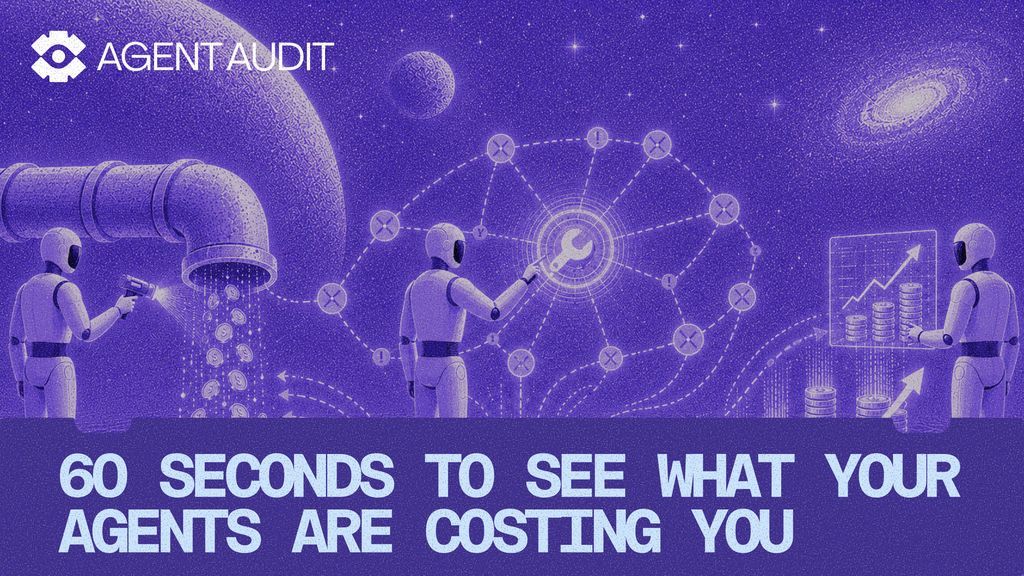
With one command, you can run a local audit and get your first signal in under sixty seconds.
Agent Audit analyzes your OpenClaw or Hermes data directly on your machine, requires no account, and keeps everything local unless you choose to push results.
Agent Audit goes beyond simple usage metrics by turning runtime data into economic visibility. It identifies confirmed waste like retries and loops, along with savings opportunities such as context bloat, idle workflows, and inefficient model usage.
Every audit provides a clear view of spend, waste, opportunity impact, waste rates, and trends over time, helping teams understand where costs are coming from and how their agent systems are performing economically.
Run everything locally or push results to a hosted workspace for shared visibility and historical tracking.
Today, Agent Audit brings transparency to agent economics.
Tomorrow, it evolves toward economic governance with budget guardrails and policy controls.
Because the future of AI agents isn’t just intelligence, it’s economics.
5
11
17
1,578
Jun 1
Agents can generate value. But they can also silently burn money.
Agent Audit makes sure you know the difference.
The economic layer for AI agents.
2
1,001
Jun 1
We’re moving toward autonomous agents.
But autonomy without economics is chaos.
Agent Audit brings economic structure to agent systems.
The missing layer.
2
900
Jun 1
If you’re building with AI agents, you need a system that tells you: what’s broken economically.
Not more monitoring. Not more dashboards.
Agent Audit is that system.
2
973
Jun 1
Not all spend is equal.
Agent Audit separates:
• confirmed waste
• potential savings
So you know what to fix now and what to test next.
2
875
Jun 1
Run audit → fix one thing → re-run
Agent Audit shows the delta in dollars.
Not guesses. Not vibes. Actual economic impact.
Iteration, but measurable.
2
529
Jun 1
No dashboards. No accounts. No data leaks.
Agent Audit runs locally.
Your agent data stays with you until you decide otherwise.
Economic visibility, without compromise.
2
913
Jun 1
Most agent systems don’t fail loudly.
They fail quietly:
- in retries
- in loops
- in unnecessary context
Agent Audit surfaces it all in dollars. That’s the difference.
2
655
Jun 1
AI workflows aren’t just logic.
They’re economic systems:
inputs → calls → retries → outcomes → cost
Agent Audit turns that runtime into decisions.
The economic layer for AI agents.
2
794
Jun 1
Every tool shows usage but Agent Audit shows waste.
Not tokens. Not logs. Actual dollar impact.
Because optimization starts with economics.
2
711
Jun 1
One command. 60 seconds.
Agent Audit audits your agent workflows locally and shows exactly:
• where money is wasted
• what to fix first
• how much you’ll save
2
572
Jun 1
You’re not running agents.
You’re running a hidden economy of calls, retries, loops, and wasted spend.
Agent Audit makes it visible.
The economic layer for AI agents.
2
461
Jun 1
AI agents don’t need more logs. They need an economy.
Agent Audit is the economic layer for AI agents.
See where money is actually going.
Find what’s wasting it. Fix it in minutes.
2
413