
Joined December 2013
- Tweets 3,348
- Following 222
- Followers 90
- Likes 22,347
277 Photos and videos






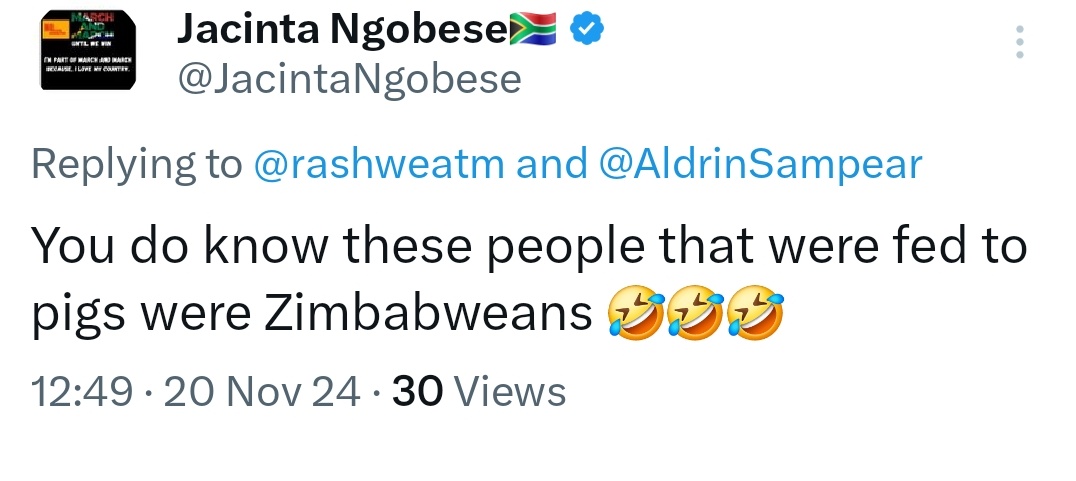
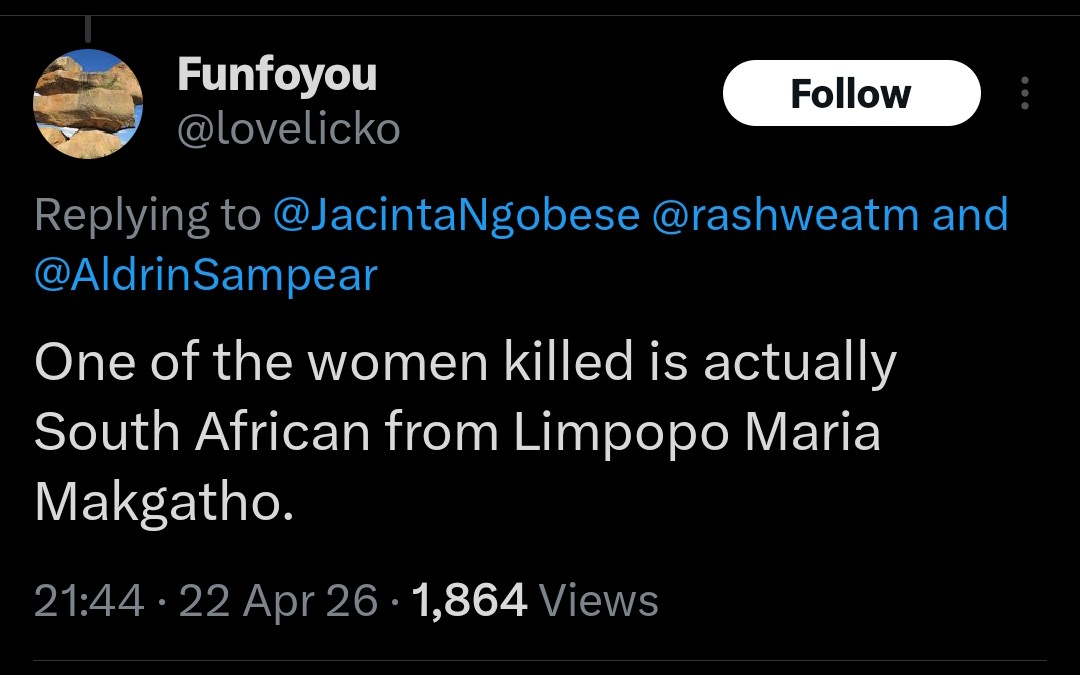
Tokoloho Africa Masemene retweeted

Jun 15
“It’s strange how the idea of heaven is a completely untouched paradise, crystal clear waters, lush green forests, enough food for everyone, classless, moneyless, stateless, a utopia of peace, unity and happiness..
But here on Earth it’s considered a crazy Communist ideology.”
97
1,399
4,531
62,536
Tokoloho Africa Masemene retweeted

Jun 10
When anthropology and sociology students tell yall that this anti immigrant movement will turn to affect poor and vulnerable South Africans yall cry lived experience
4
35
219
5,950

Tokoloho Africa Masemene retweeted
May 10
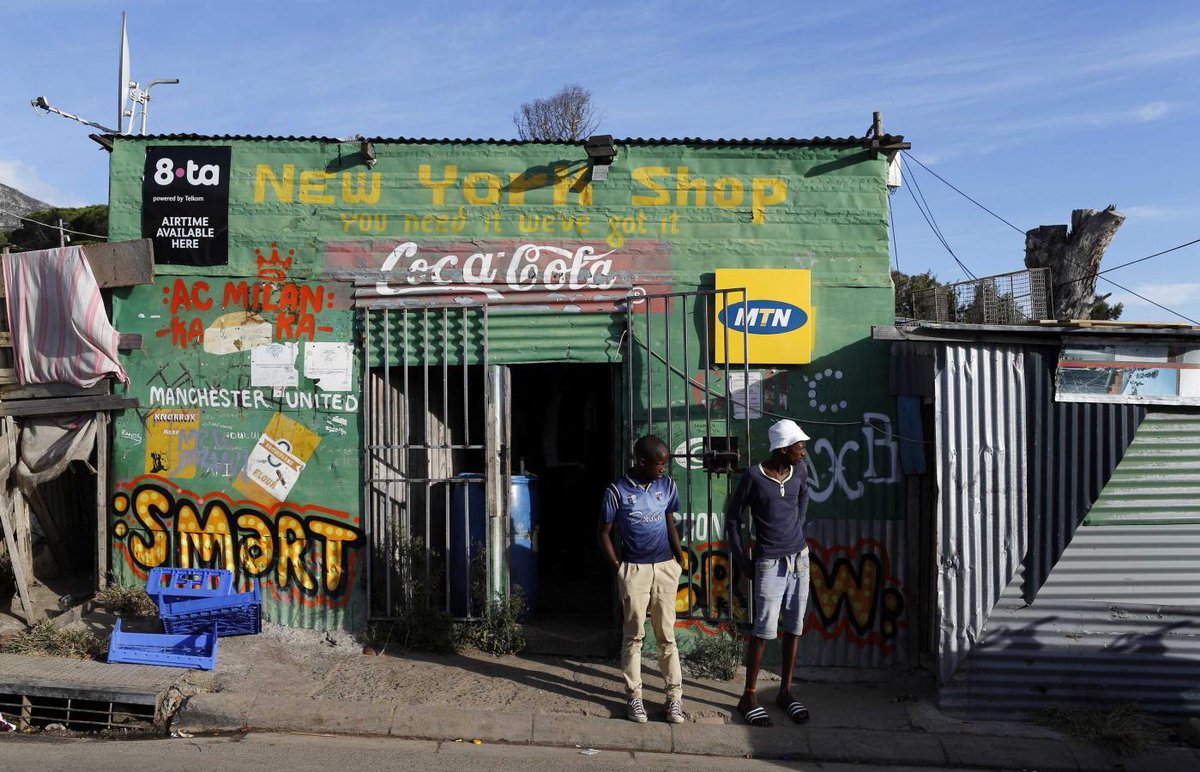
Spaza shops are what people do when they can’t get jobs.
No one quits a stable job paying a comfortable wage to go enter the spaza shop industry.
So, if your favourite politician fashions his political identity around “the spaza shop economy”, give him a call and ask him to start respecting your intelligence.
To be clear, spaza shops did not start becoming unprofitable recently. They’ve always been desperate subsistence activities ever since they were conceived. It’s not a coincidence that most people who open spaza shops do so after losing their jobs or as side hustles for an extra income while they continue working.
A 1991 article by N.S. Terblanché correctly defined and analysed the spaza shop as an informal retail innovation emerging from South Africa’s unemployment crisis during the 1980s and driven by massive Black unemployment, due to sanctions and a catastrophic lack of jobs throughout the 1980s.
Now, here’s where slick politicians mislead the people. According to Terreblanche, in 1989 already, spaza shops were bringing in an estimated R3 billion in revenue, accounting for ~25% of South Africa’s total grocery retail turnover. This is closer to R200 billion today.
This is not small change, so some politicians latch onto these figures to give the impression that tuck shop owners are somehow getting fleeced and should, in fact, be making good money.
But, the thing is, the high revenue figure doesn’t translate to high profits for individual owners due to the sector’s inherently thin profit margins. For one, spaza shops serve price-sensitive and unemployed or low-income customers, so they have to keep markups very low on basic goods. This means even a high turnover leads to tiny absolute profits.
In essence, yes, the total market is huge, but is fragmented into many tiny, low-margin operations where survival is the only reachable goal. In fact, in the paper, Terreblanche predicted that spaza shops would become permanent institutions due to persistent unemployment and lack of a welfare system. Because, again, there’s a natural link between high unemployment and spaza shop proliferation.
The overarching point here is that spaza shops are not, and have never been lucrative nor sustainable operations, and this is just their nature. Telling people that there’s a future in spaza shops is a political grift that romanticises precarity and must be condemned.
Ultimately, regardless of how much politicians harp on about “the spaza shop fund”, the spaza shop is not a scalable prosperity engine and the people, especially young people, deserve so much better than empty promises of being led to the promised land of spaza shop moguldom.
83
300
833
41,430
They rejected Starlink because Elon is not Asian 😂 damn these 143 race laws

No they don’t.
The Ministry of Digital Economy and Society (DES) recently rejected SpaceX's proposal because the company demanded 100% foreign ownership
Under current Thai law, telecommunications licenses, specifically Type 3 licenses for large-scale networks, restrict foreign shareholding to a maximum of 49% for national security reasons.
1
2
73
Those shouting "Brave Zulu Warriors" have no idea of the horrors some communities have been through. Beware the devil you pray to, he might just knock on your door to "thank you" in person.
May 3

I grew up in Thokoza in the East Rand. Katlehong, Thokoza and Vosloorus were called Kathorus. I grew up during the time when violence between the IFP and the ANC erupted. Zulu people aligned to the IFP from the hostel on the main road, Khumalo street, were fighting with Self Defense Units aligned to the ANC based in the township. It is believed the hostel dwellers were sponsored with arms by the apartheid police, and would often be accompanied by Army caspers when they went into the township to attack. They would attack indiscrimately, hacking families with spears and pangas, breaking windows, burning houses etc. Chris Hani and them were involved in providing arms to the SDF's to defend themselves against the apartheid sponsored IFP.
Fortunately for my family, this happened immediately after my father, who was a priest in Thokoza, had just lost my mother and his closest friend, a Taxi owner Ntate Sanie, who was shot in his presence just a month after my mom. The family in the Free State insisted he leaves Gauteng and come back home because it was no longer safe. I was at UCT at the time, and never went back to Thokoza.
Families of friends that I went to High School with were killed, others displaced. It was a dirty war. In Soweto, where my boyfriend then lived in Senaone, it was the same conflict. Zulus from Merafe hostel attacked townships of Phiri, Mapetla, Chiawelo etc.
Kids that were born in the 90's and 2000's do not know what it was like when there were scenes of communities fearful that the Zulus will come and kill anyone who did not speak isiZulu. You are Xhosa, Mosotho, Kendall, Shangaan, anything they came across that didn't speak Zulu would be hacked to death. In KZN it became Zulu against Zulu, with IFP vs ANC, which the boers called "Black on Black violence", knowing very well they were the sponsors of this conflict.
It took a very long time for peace to prevail between these two parties and for communities to heal. Many families remain with scars and trauma from that period. The same way that political killings have continued during election time, which led to the establishment of the PKTT.
I have no problem with Zulu pride. Some of us can speak and write isiZulu fluently, and love the language and culture. What I have anxiety about, it's mobilization of society under the "Hlangana Zulu" banner. The notion that "Zulu people will fix this country" by dealing with foreign nationals because of their supposed bravery. I'm not sure if that is where it will end. However, in the absence of Government leadership and State Intelligence on the foreign nationals crisis, people are resorting to Zulu Hlangana leadership. What can we say.
1
2
12
552
32 years later blud still can't accept that apartheid is over 😂
Apr 28

People celebrate Freedom Day in South Africa because they celebrate the expectations of 1994, but not the fulfillment thereof.
The truth is that in many ways that are objectively measurable, South Africa is much worse off now than it was when the ANC took power.
45
Tokoloho Africa Masemene retweeted

Apr 28
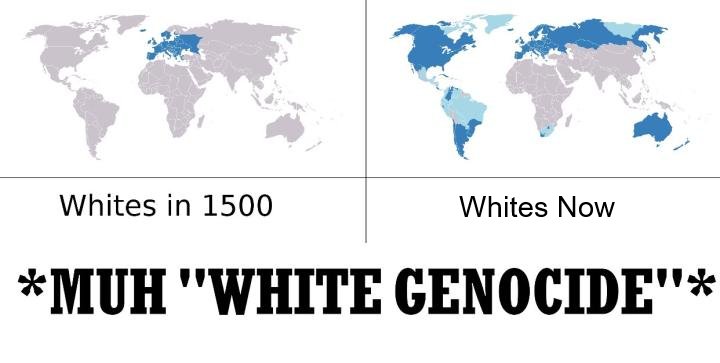
People who lie now about White genocide would definitely have lied about Stompie and Mama Winnie.
15
271
860
13,996
Shout out the Indigenous peoples of the Cape for rooibos 🥹🤌🏽
Apr 24

Rooibos is so goated. Shoutout to South Africa fr
92
I wish more white people were like this fella. Instead of doing mental gymnastics, he's clearly showing us how he feels about apartheid and Africans. So love accordingly black man. "Thank you, white man for giving us our own country." When will you go home though?
Apr 21

You were compensated. You were given a huge country with the biggest economy in Africa. What more do you want?
1
1
212
Tokoloho Africa Masemene retweeted

Apr 19
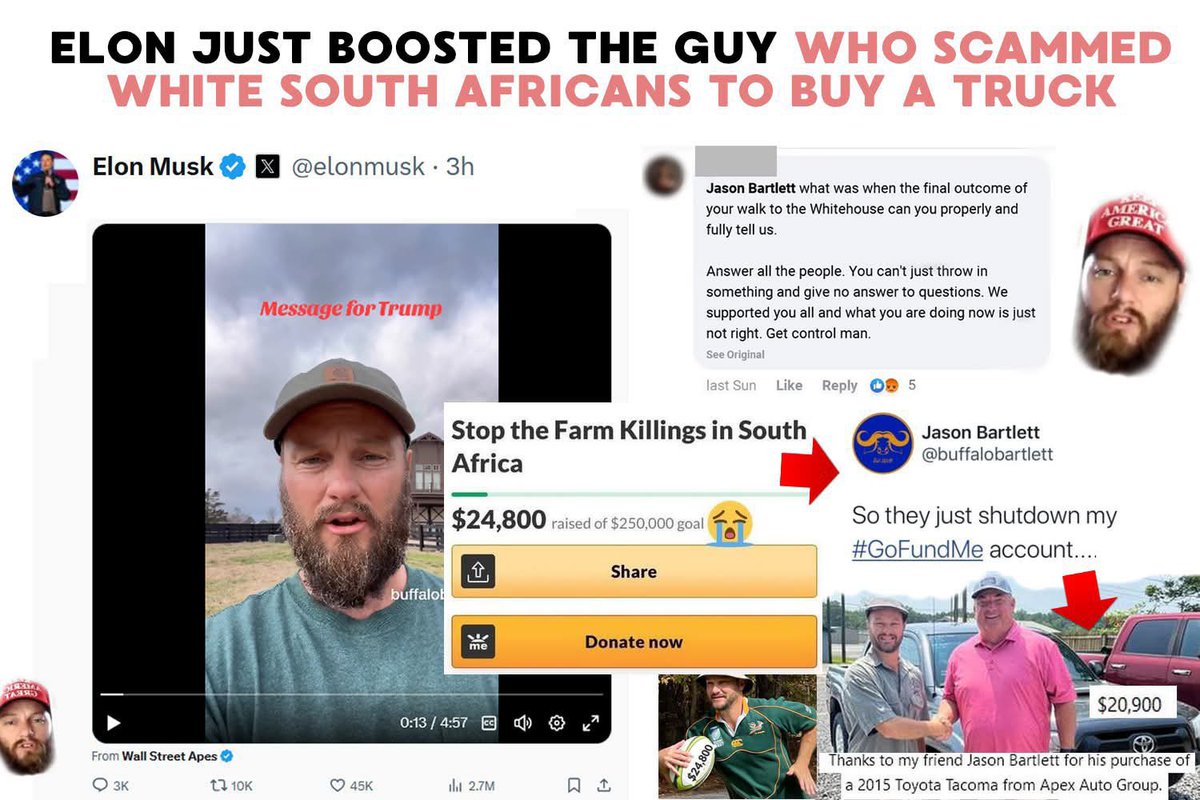
I really wish Elon Musk would leave us alone. We always get left out for world tours but when it’s time for nonsense suddenly people can read a map
6
221
843
12,653
Micheline!
Apr 16

History books.
1
1
242


Which also means the United States is the only one that fought a full scale war... to keep it

Want some truth?
There are ~195 sovereign countries in the World and all 195 have had slavery.
But…
Out of those 195 countries the United States is the only one that fought a full scale Civil War to end it.
31
Incredible 😂😂😂


33
Tokoloho Africa Masemene retweeted

Apr 5
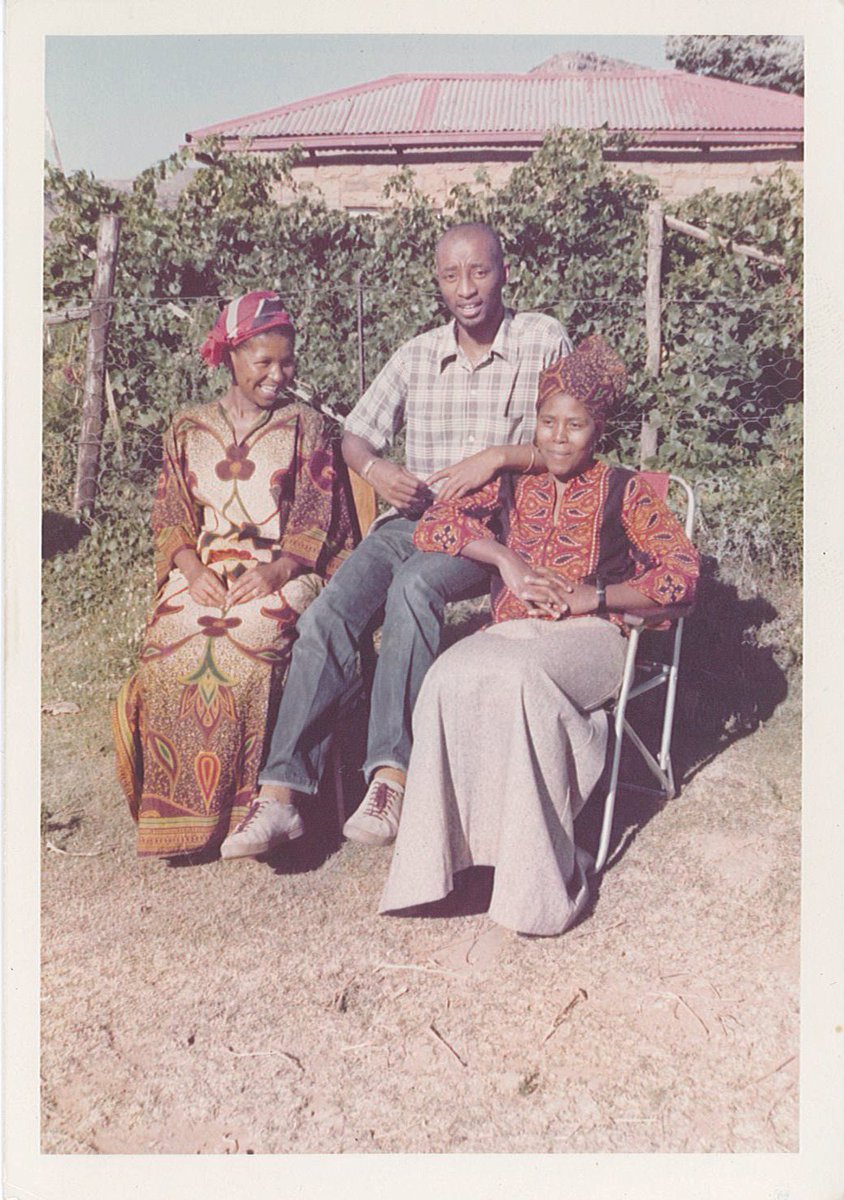
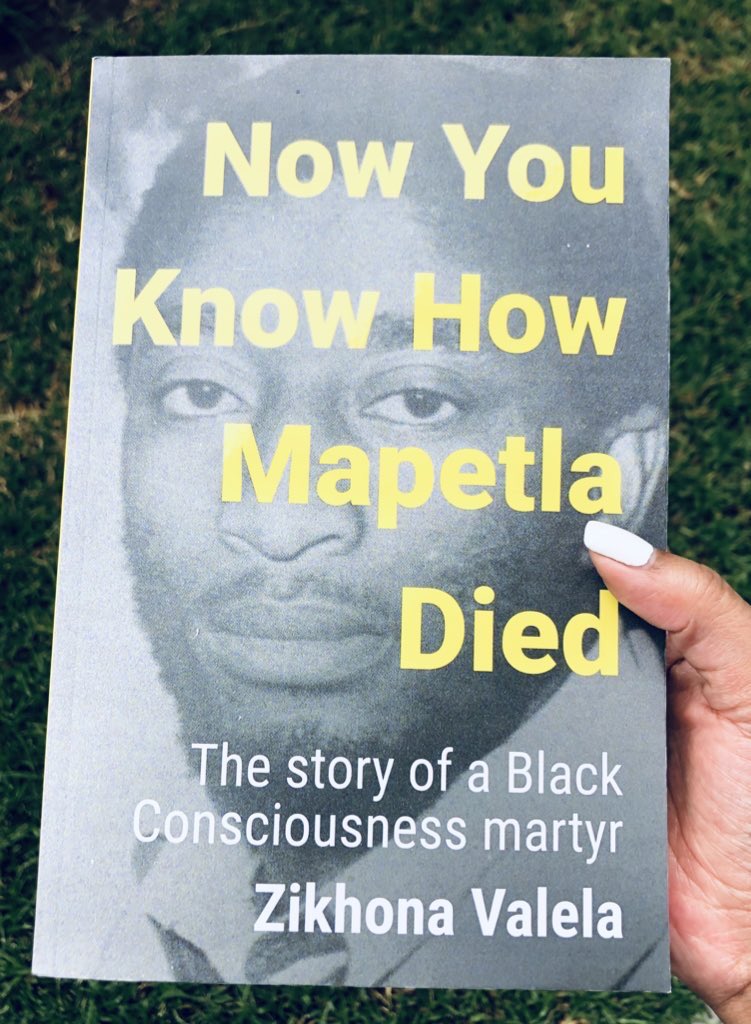
Top of mind today is Mapetla Mohapi. The photograph in f1 was taken 50 years ago when he and his wife, Nohle (right) visited Mohapi’s family in Jozanashoek for Easter. It was the last time Mapetla would see his family before the apartheid regime murdered him. I wrote about it f2.
4
122
318
9,364
Tokoloho Africa Masemene retweeted

Mar 17
Let's dedicate the rest of the month to @feziledhlamini_
Fellow entrepreneurs, let's resist the urge to share our stories until next month, so the rest of the month be solely focused on Fez.
I sincerely hope this is the trigger that sets off an avalanche.
We need it.
18
344
776
14,206

Tokoloho Africa Masemene retweeted

Mar 16
PLEASE REPOST:
I built South Africa's first black-owned electric vehicle company.
I have deployed 70 EVs with Blue Chip Companies, Local SMEs and exported to the UAE.
I have invested R9.5 million of my own money over 10 years.
The IDC has given me R0.
They gave a white-owned competitor R69.9 million.
Thread. 🧵
@businessXplain @ParliamentofRSA @sedfa_dsbd @DSBD_SA @the_dtic @IDCSouthAfrica @PublicProtector @NAFCOCKZN
Mar 15

I have a story for a news channel or newspaper regarding the IDC. We have made our submission to the Parliamentary Committee and a petition. Please comment or DM me. This is a fight I have been going through for 8 years; it could even go to court now. Thanks.
302
4,181
4,377
1,036,498
I made a short documentary about her. @Official_SABC1 @SABC3 @SABCPlus help me make a series about her life.
youtu.be/j3-dVew_ndI?si=mwYb…
Mar 13

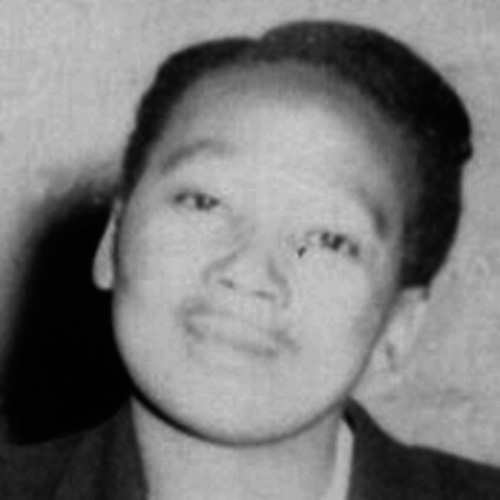
Viola Hashe (1926 – 1977) was a visually impaired South African anti-apartheid activist and trade unionist who achieved several historic "firsts" for women in the liberation struggle. She was active in the Defiance Campaign of 1952. In 1956, she became the first woman to lead an all-male South African union as the secretary-general of the South African Clothing Workers Union (SACWU). She was a dynamic leader in the South African Congress of Trade Unions (SACTU), serving as its Vice-President from 1960. Due to her activism, she was banned under the Suppression of Communism Act in 1963 and restricted to Roodepoort, where she lived under state surveillance until her death in 1977. Source: Drum Archive/SAHO/Wikipedia/
119