
Behavior and neurophysiology of perceptual learning. How do we become experts with practice? How do mechanisms differ in learning deficits?
Joined December 2021
- Tweets 37
- Following 45
- Followers 35
- Likes 28
11 Photos and videos

10 May 2023
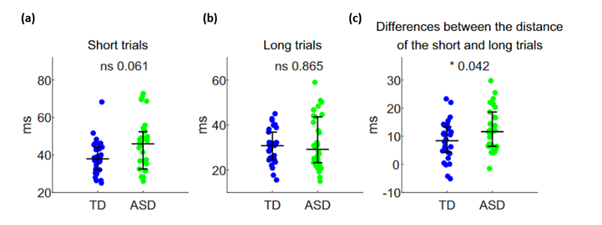
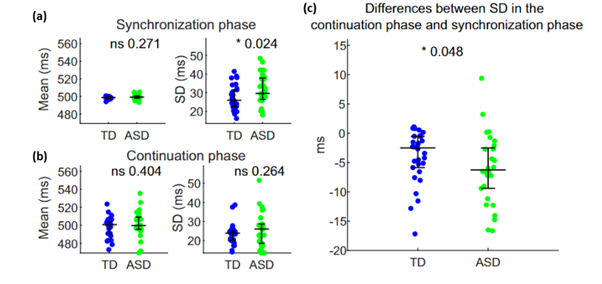
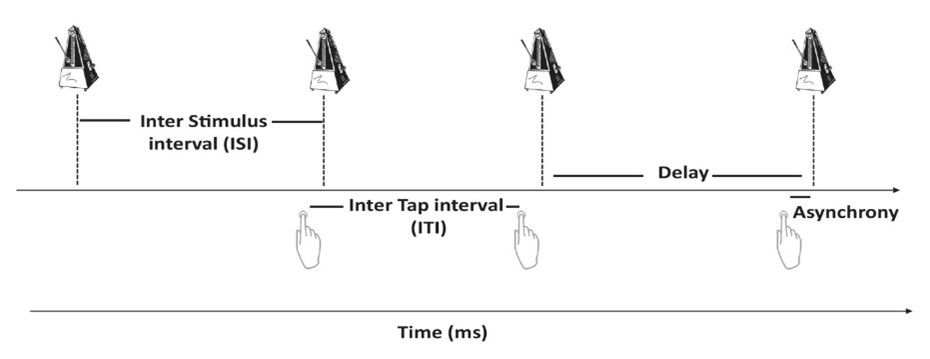
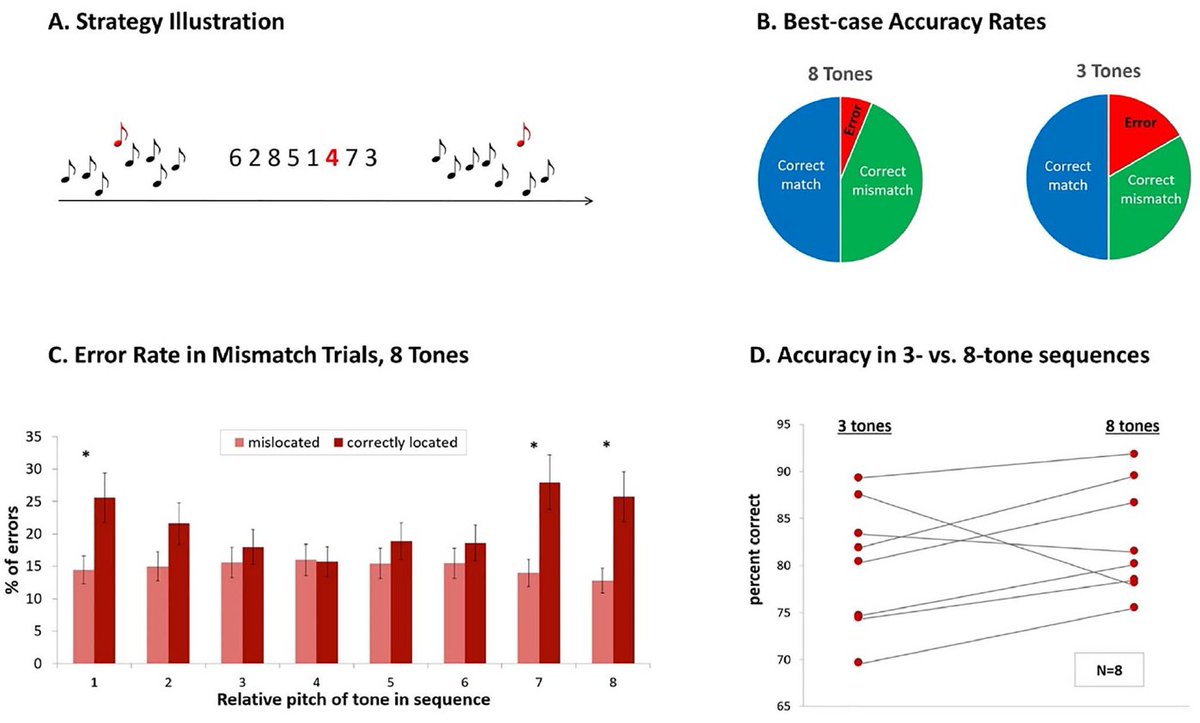
New paper in Autism Research😊Keren Kasten, @norijacoby, and @MeravAhissar's study delves into the difficulty individuals with autism have in synchronizing movements to external events. onlinelibrary.wiley.com/doi/… (1/6)
1
1
3
238
10 May 2023
This suggests that the impairment in synchronizing with external beats in individuals with autism is due to reduced online error correction rather than elevated internal noise levels. (5/6)
1
1
29
10 May 2023
This means that individuals with autism can accurately estimate environmental statistics, but their speed of updating internal priors is slower than typically developing individuals. (6/6)
28
Ahissar Lab for Perceptual Learning retweeted

28 Apr 2023
Happy to update: our Autism Research paper published today: "Poor synchronization yet adequate tempo-keeping in adults with autism", Kasten, Jacoby & Ahissar: ASDs' poor synchronization to external beat stems from reduced online error-correction and not higher internal noise .
1
8
334
Ahissar Lab for Perceptual Learning retweeted

17 Jan 2023
A recent paper by @neuro_gal @AhissarLab @norijacoby and others (nature.com/articles/s41467-0…) found that synchronization of finger-tapping to a metronome is less precise in autistic participants, and that these differences seemed to be due to reduced correction of timing errors.
1
1
2
245
Ahissar Lab for Perceptual Learning retweeted

11 Dec 2022
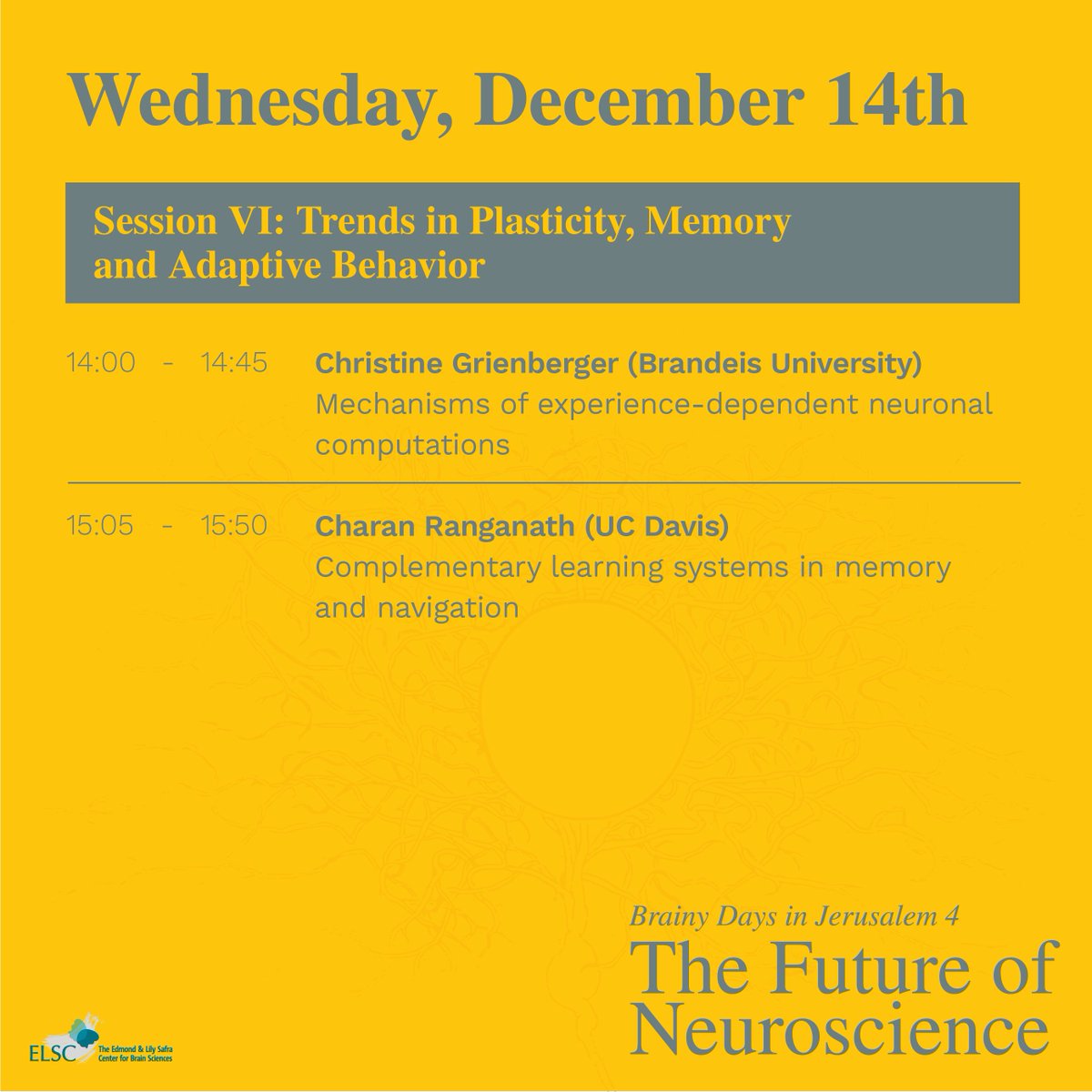
Introducing Brainy Days Session VI: "Trends in Plasticity, Memory and Adaptive Behavior".
Speakers: @CGrienberger & @CharanRanganath.
More info here: elsc.huji.ac.il/events-and-o…
3
6
Ahissar Lab for Perceptual Learning retweeted
22 Nov 2022
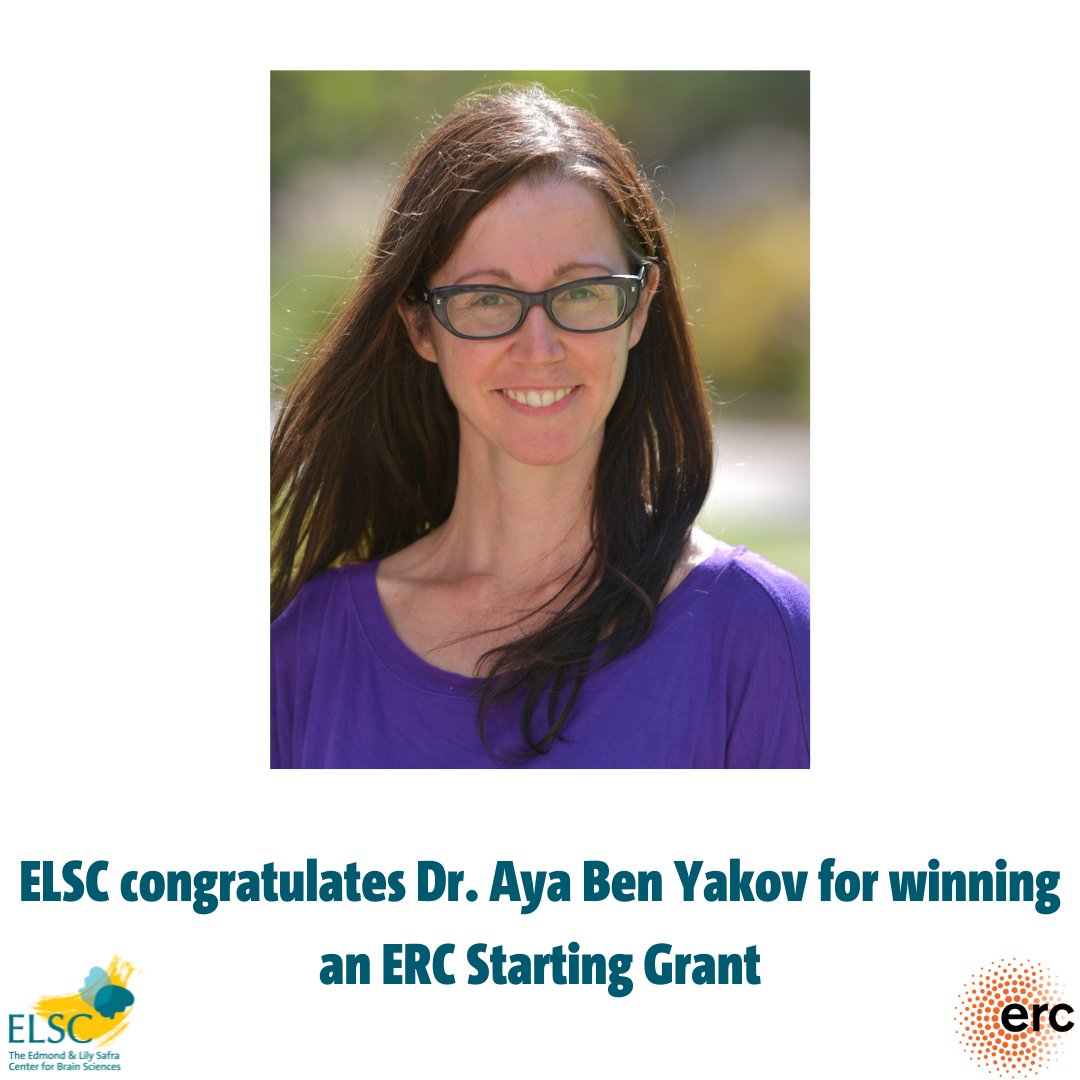
ELSC is delighted to announce that @aya_benya won an #ERCStG from the @ERC_Research for a research proposal titled “Identifying the building blocks
of memory for events”.
Read more here: elsc.huji.ac.il/elsc-news/ne…
1
6
56
Ahissar Lab for Perceptual Learning retweeted
14 Aug 2022
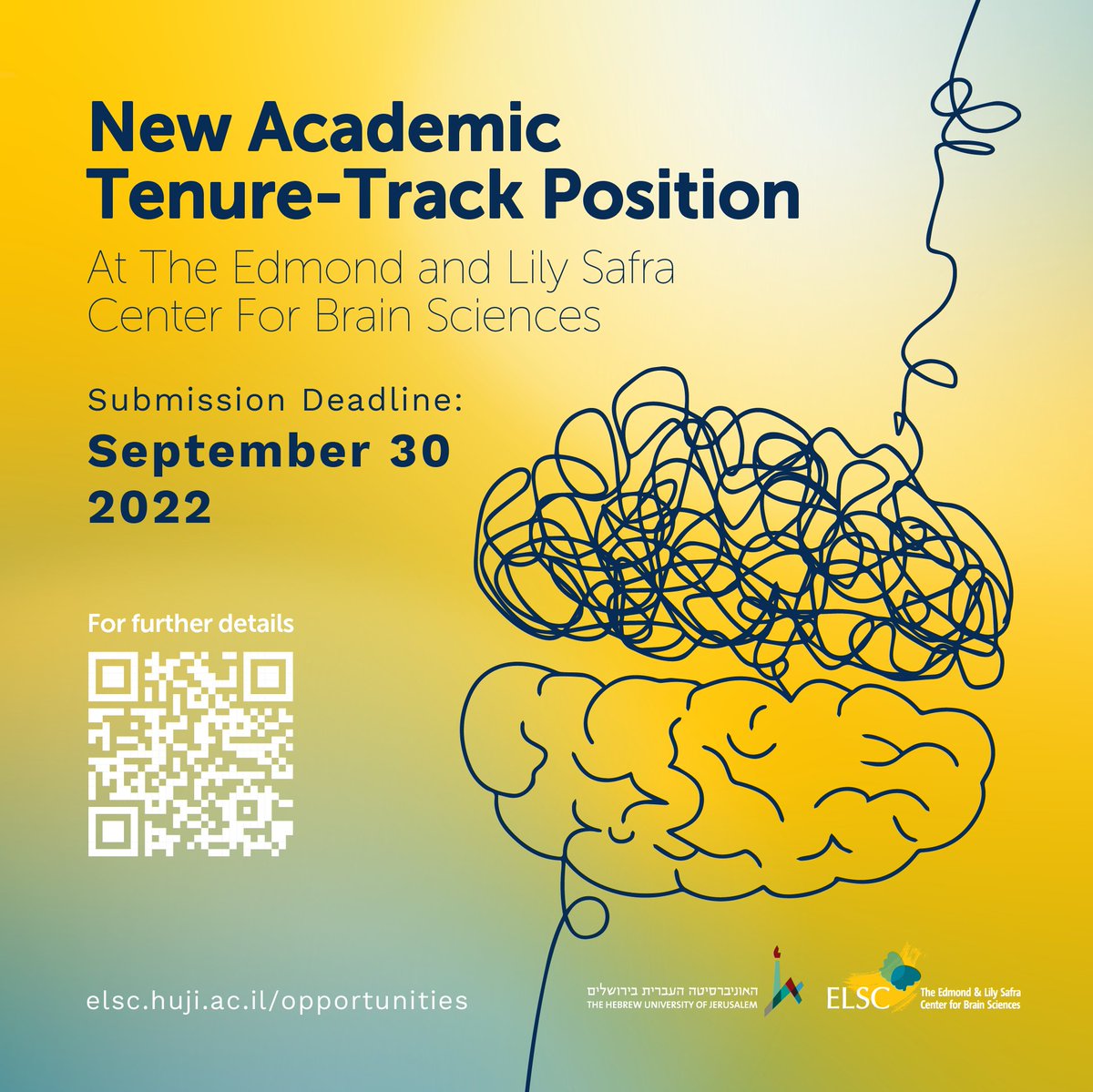
We are now accepting applications for a tenure track position!
Application deadline is September 30th.
More information can be found here: elsc.huji.ac.il/opportunitie…
29
30
Ahissar Lab for Perceptual Learning retweeted

9 Aug 2022
Open tenure track positions at the Department of Psychology, Hebrew University en.psychology.huji.ac.il/boo…
17
22
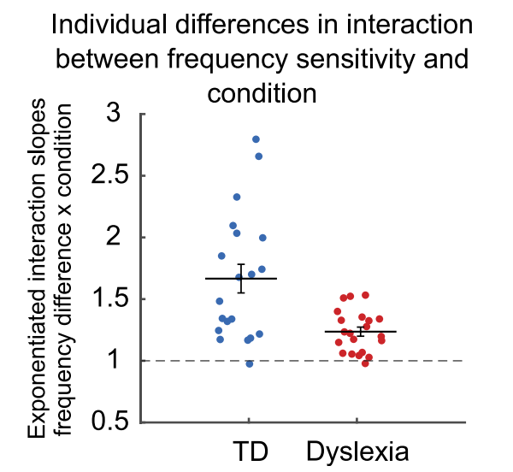
Repeated series learning revisited with a novel prediction on the reduced effect of item frequency in dyslexia, with @Eva_Kimel, Itay Lieder, and @MeravAhissar disq.us/t/49rhtxz
3
Ahissar Lab for Perceptual Learning retweeted

8 Jul 2022
(please RT). A fully funded PhD position to work with us @UCLEarInstitute @UCLBrainScience on developing a task battery to assess individuals' listening "footprint". Email me for more info. Further details here: findaphd.com/phds/project/au…

3
38
42
Ahissar Lab for Perceptual Learning retweeted
6 Jun 2022
#ELSCseminarseries with @Censor_Lab on the topic of "Rapid learning (and unlearning) in the human brain" will take place on Thursday, June 9th, at 14:00 IST.
Come hear the lecture at ELSC: Room 2004, Goodman bldg., Safra Campus.
elsc.huji.ac.il/events-and-o…
3
4
Ahissar Lab for Perceptual Learning retweeted

15 May 2022
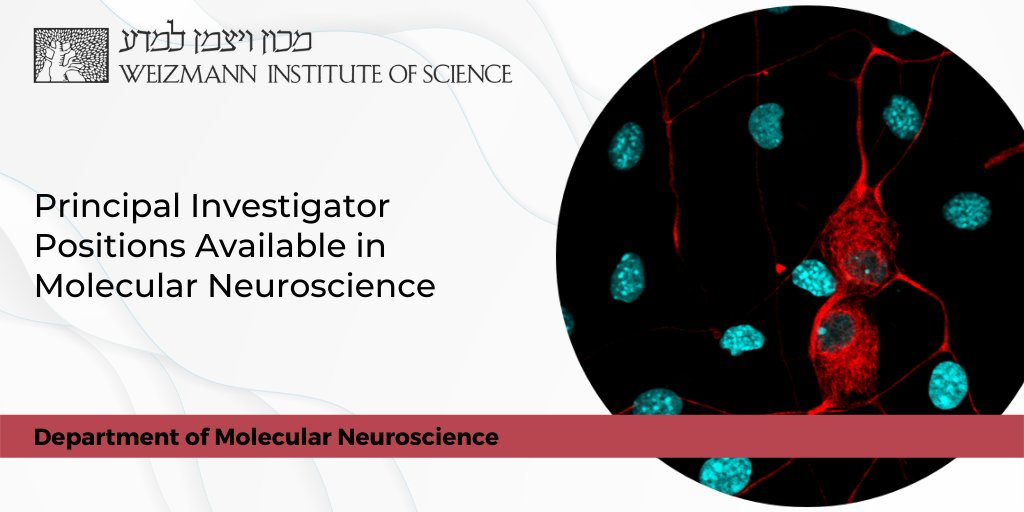
PI Positions in Molecular, Cellular or Developmental #Neuroscience at the Weizmann Institute of Science! We are welcoming outstanding applicants for #tenuretrack or #tenuredpositions. To apply >> weizmann.ac.il/molneuro/hiri…
@eran_hornstein
30
47
12 May 2022
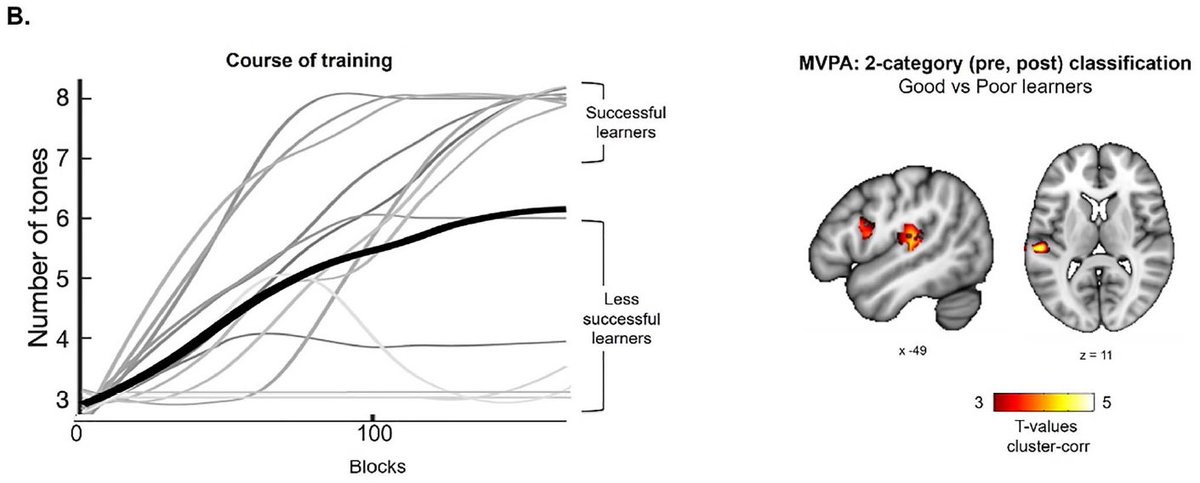
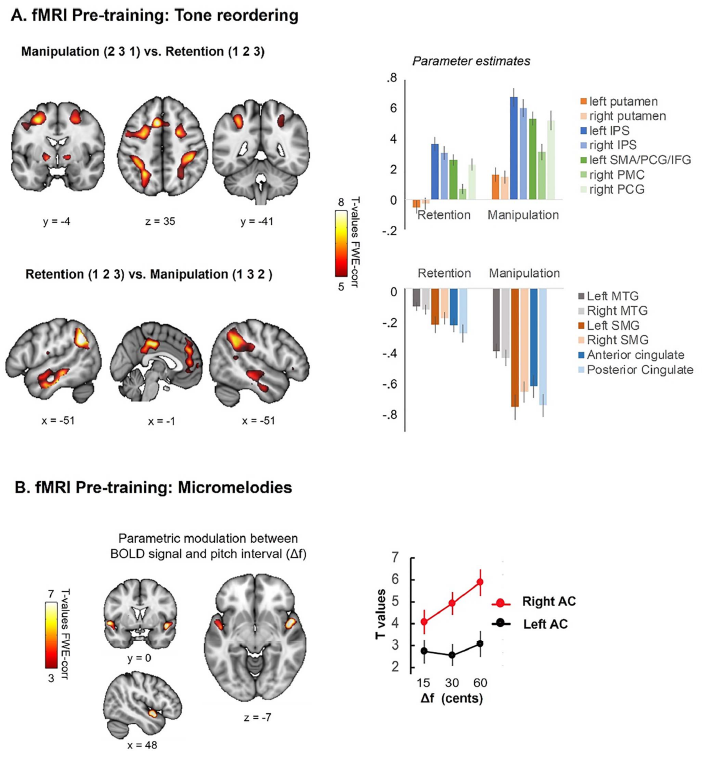
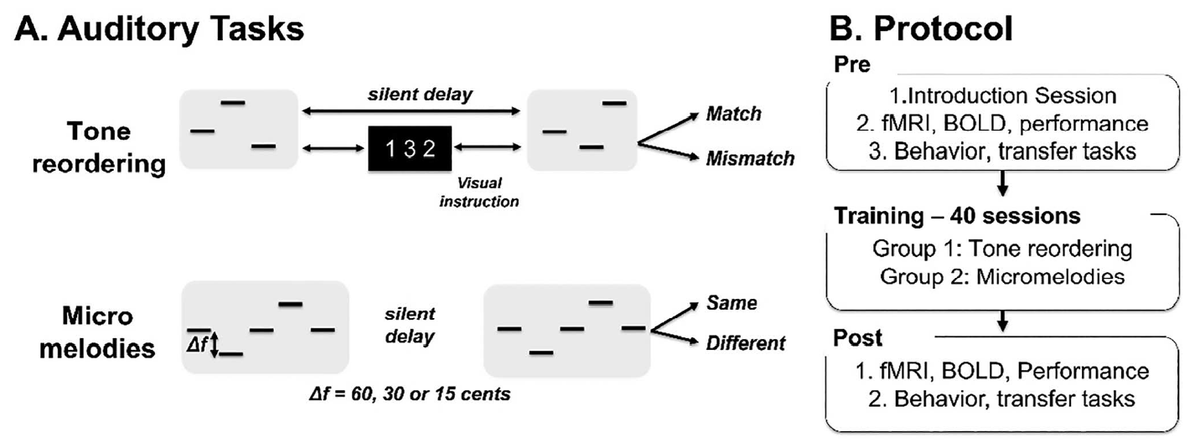
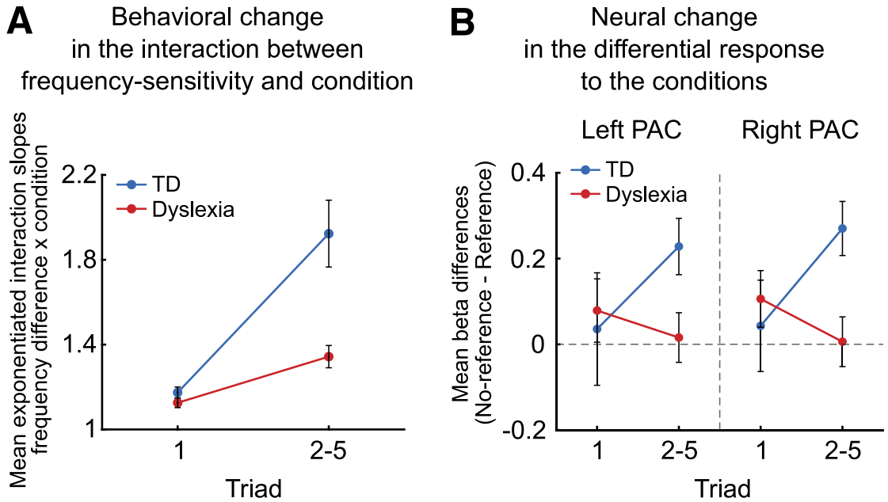
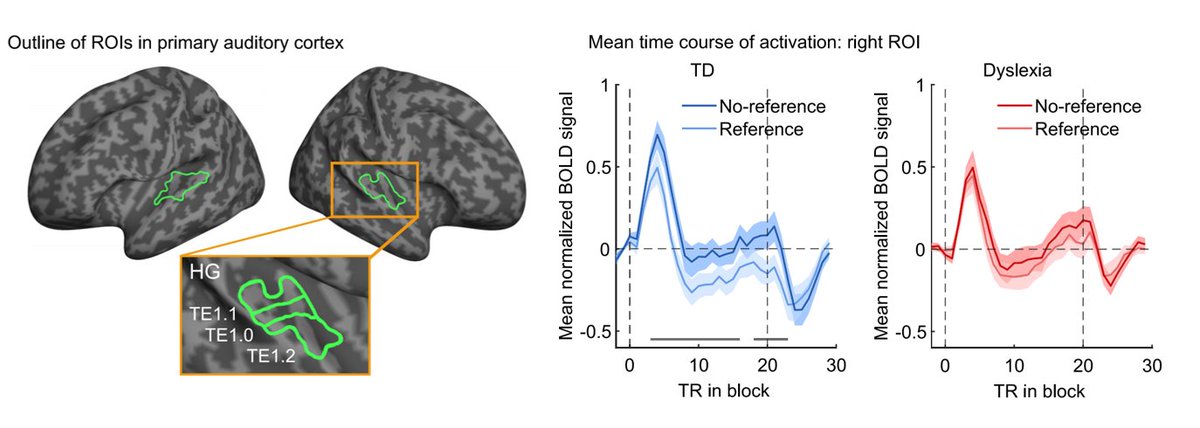
New paper in Cerebral Cortex @OxfordJournals by Tamar Malinovitch, Philippe Albouy, @zatorrelab, and @MeravAhissar! academic.oup.com/cercor/adva… 1/7
1
1
12 May 2022
These observations suggest that the huge task-specific enhancement of WM capacity stems from a task-specific switch to perceptual routines, implemented in perceptual regions. 6/7
1
1