A group of scientists at @RiceUniversity & @BerkeleyLab that love making organisms sense things and build stuff. Students run this account.
Joined May 2021
- Tweets 152
- Following 437
- Followers 631
- Likes 158
18 Photos and videos

Pinned Tweet

7 Mar 2024
Check out our new paper in @NatureComms on transforming conventional glucometer into a point-of-care biosensor for cancer therapeutics!
This work was led by Dr. Rong Cai and @BiochemAndChill in collaboration with the Verduzco lab @RafRice @RvindrSaxena
nature.com/articles/s41467-0…
2
6
35
3,464
Ajo-Franklin Lab retweeted

In conclusion, we have detailed design principles that greatly improve TFP display, increasing cargo size by over 2.5x while maintaining the bulk of TFP assembly. This method is fully generalizable to other TFP, allowing us to build display systems in all sorts of new species!
1
1
71
Ajo-Franklin Lab retweeted
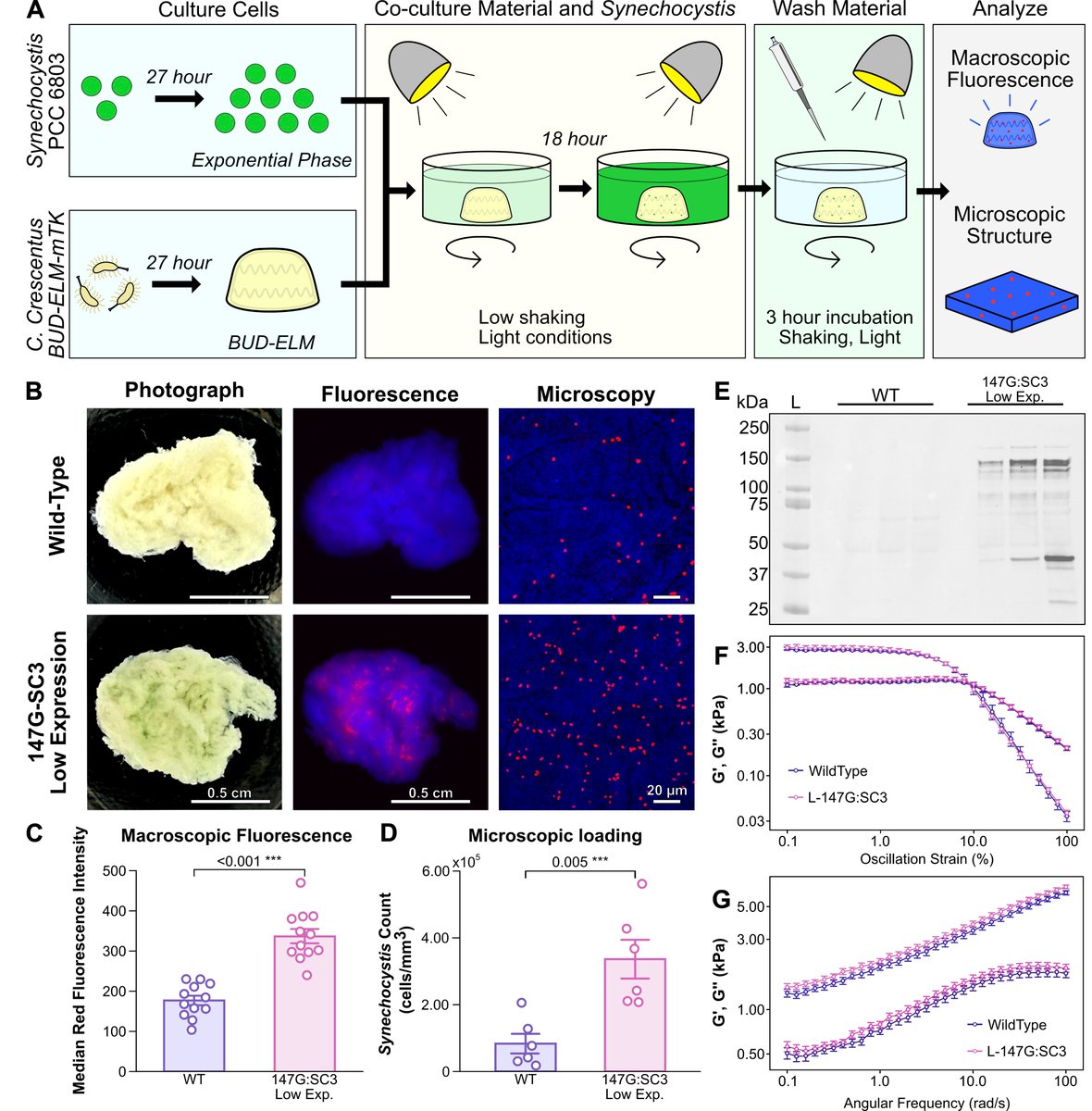
Lastly, we tested this best performing strain in a living material by patterning it into our previously described BUD-ELM! We saw a 4-fold increase in Synechocystis loading, fueled by covalent binding into the material. They also turned the materials a nice pretty green!
1
1
1
124
Ajo-Franklin Lab retweeted
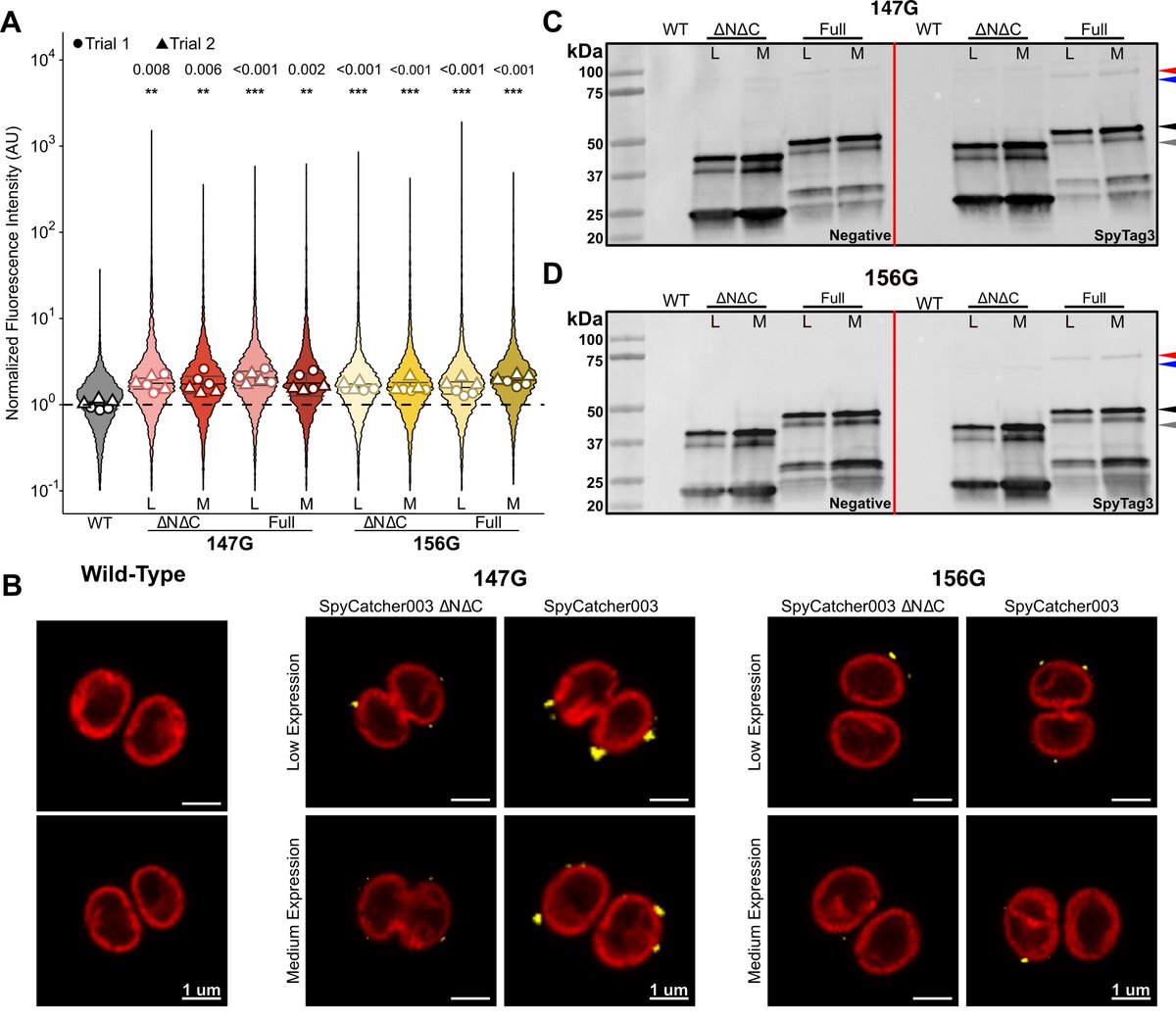
We next confirmed SpyCatcher003 reactivity in those sites! We observed covalent binding to SpyTag003-sfGFP on the cell surface manifesting as distinct puncta, with one strain reaching up to 1.7 fold higher fluorescence
1
1
1
73
Ajo-Franklin Lab retweeted
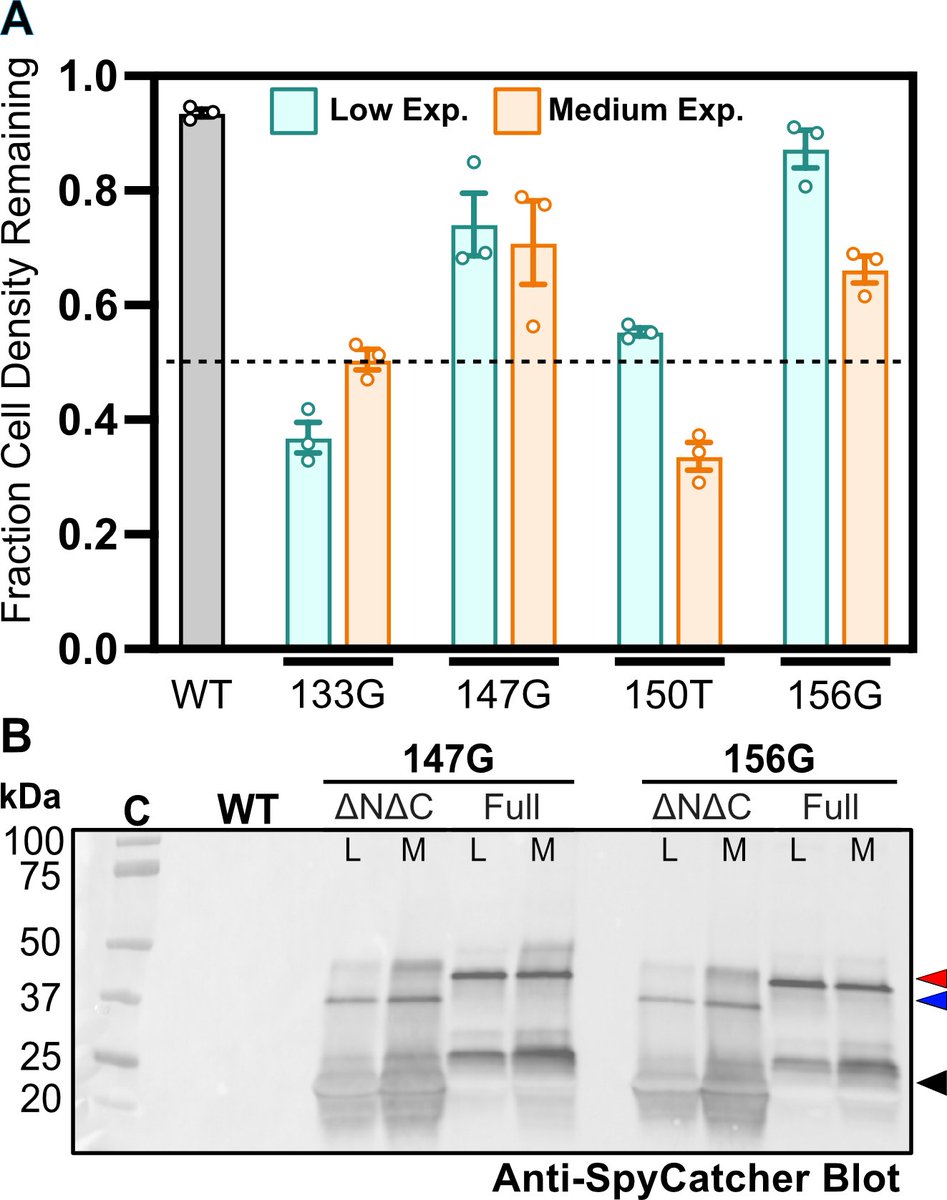
Sedimentation is an excellent proxy for TFP assembly, and we saw that 2/3 of our predicted sites retained close to wild-type sedimentation, even while displaying full length SpyCatcher003! We also confirmed proper display in those 2 best sites by western blot.
1
1
1
60
Ajo-Franklin Lab retweeted
With the end goal of SpyCatcher display, we designed multiple cassettes to co-express PilA1-SpyCatcher fusions with PilA1, varying insertion site, expression level, and SpyCatcher MW (both full length and truncated variants). We tested 16 constructs at 4 sites, 3 predicted viable
1
1
1
74
Ajo-Franklin Lab retweeted
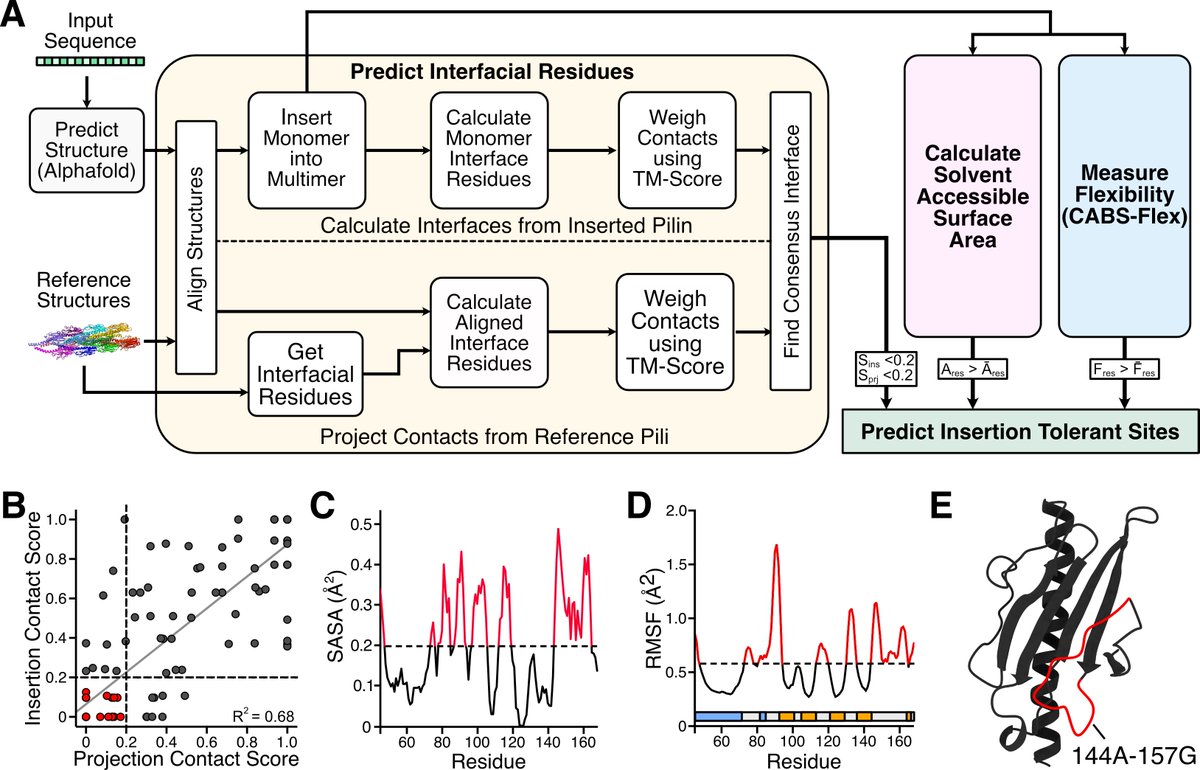
As many TFP structures have not been solved, we took a rational approach, where we generated the monomer for the major pilin PilA1 from Synechocystis, and built an analysis pipeline to screen for non-interfacial, solvent accessible, and flexible regions for domain insertion
1
1
1
81
Ajo-Franklin Lab retweeted
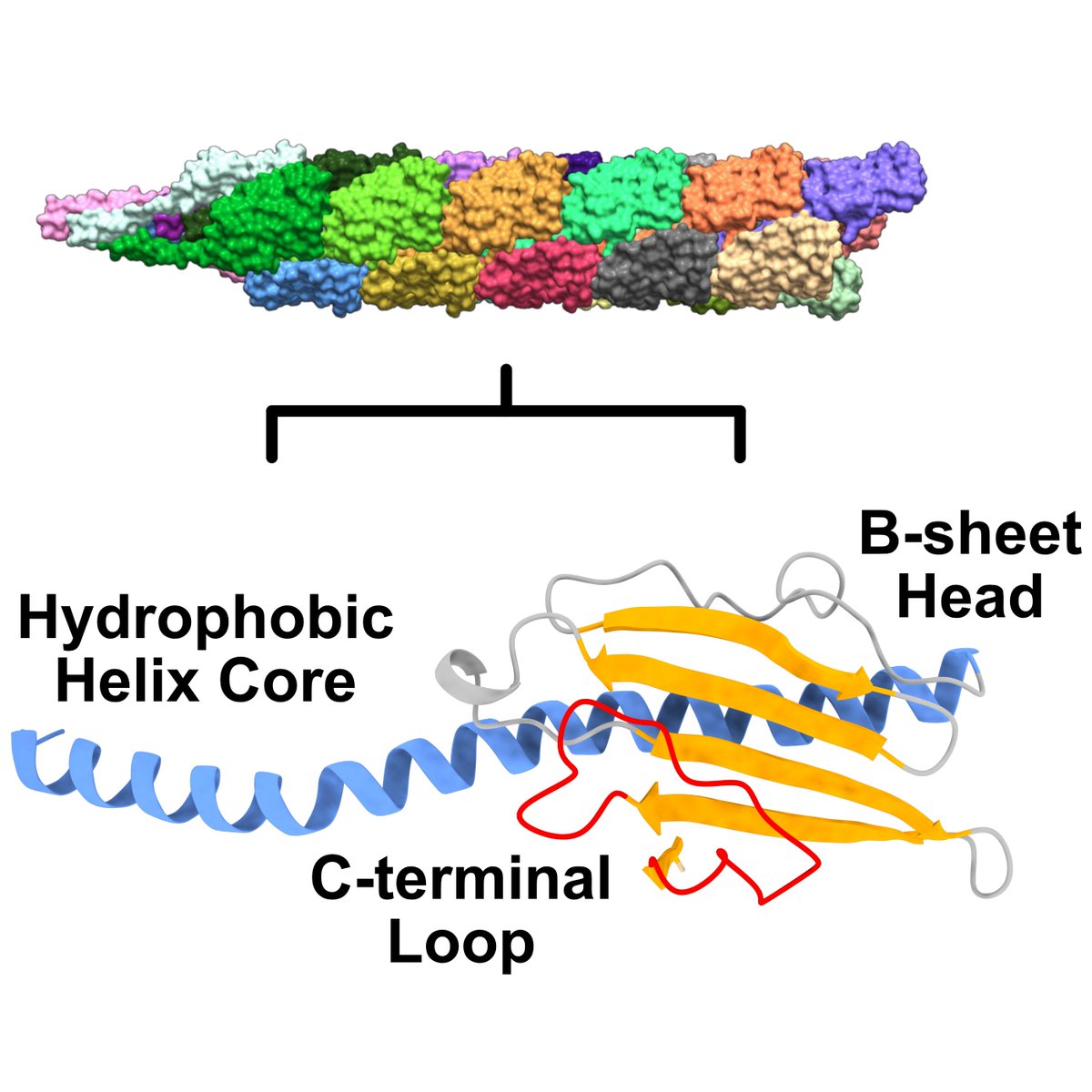
TFP assemble from thousands of pilin monomers, which assemble through their long N-terminal a-helices to form strong fibers! Previous work has shown that TFP can C-terminally display small affibodies, but at the cost of disrupting TFP assembly. We set out to fix that:
1
1
1
119
Ajo-Franklin Lab retweeted
This work constitutes the bulk of my PhD Thesis, and I'm excited to finally be able to share it! Thank you to my Co-authors and @AjoFranklinLab for helping me get this out.
Let me walk you through it:
1
1
5
129
Ajo-Franklin Lab retweeted
🚨New Preprint!🚨 Type IV Pili (TFP) are the most common bacterial surface structures, making them promising for display across diverse species. Here we rationally design TFP-mediated display, applying it to the cyanobacterium Synechocystis PCC 6803! 🧵
doi.org/rbc8
1
4
7
440
21 Nov 2024
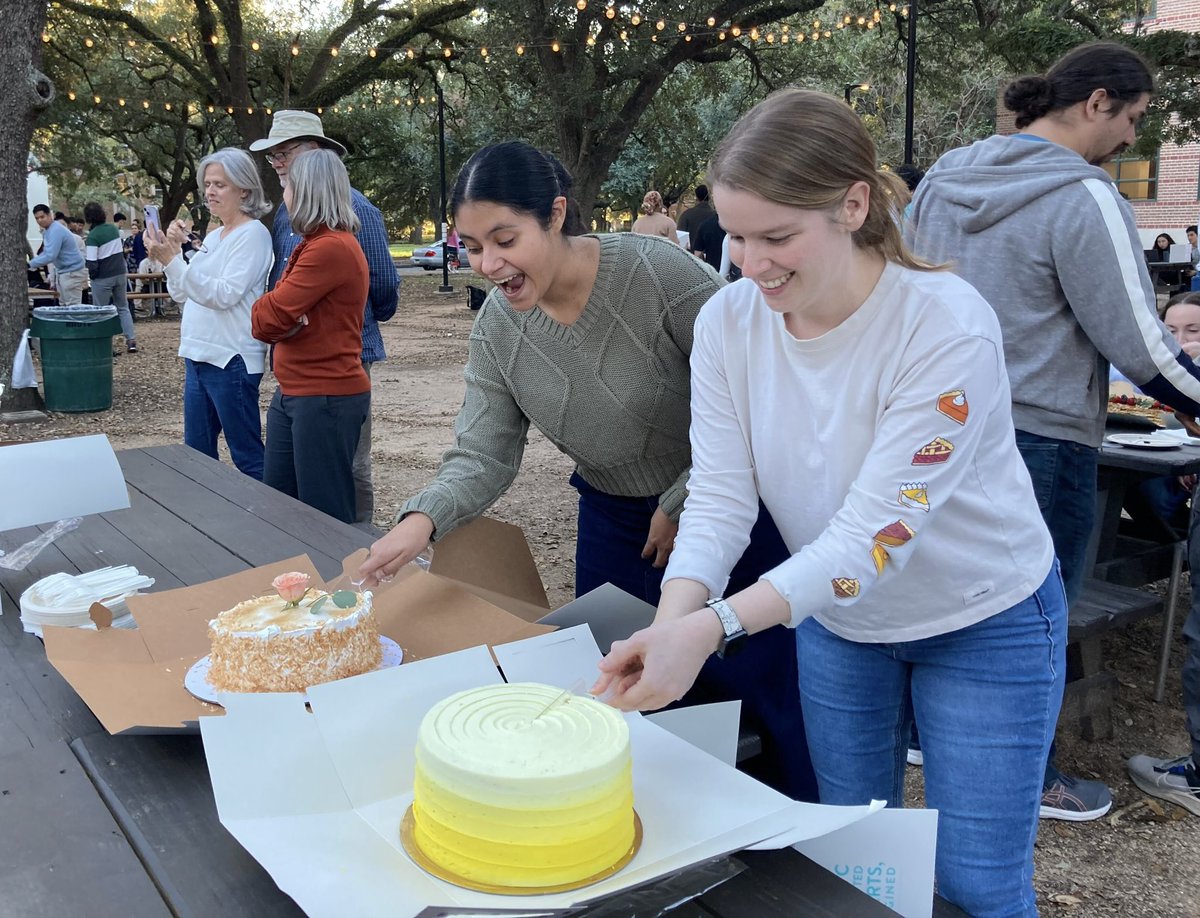
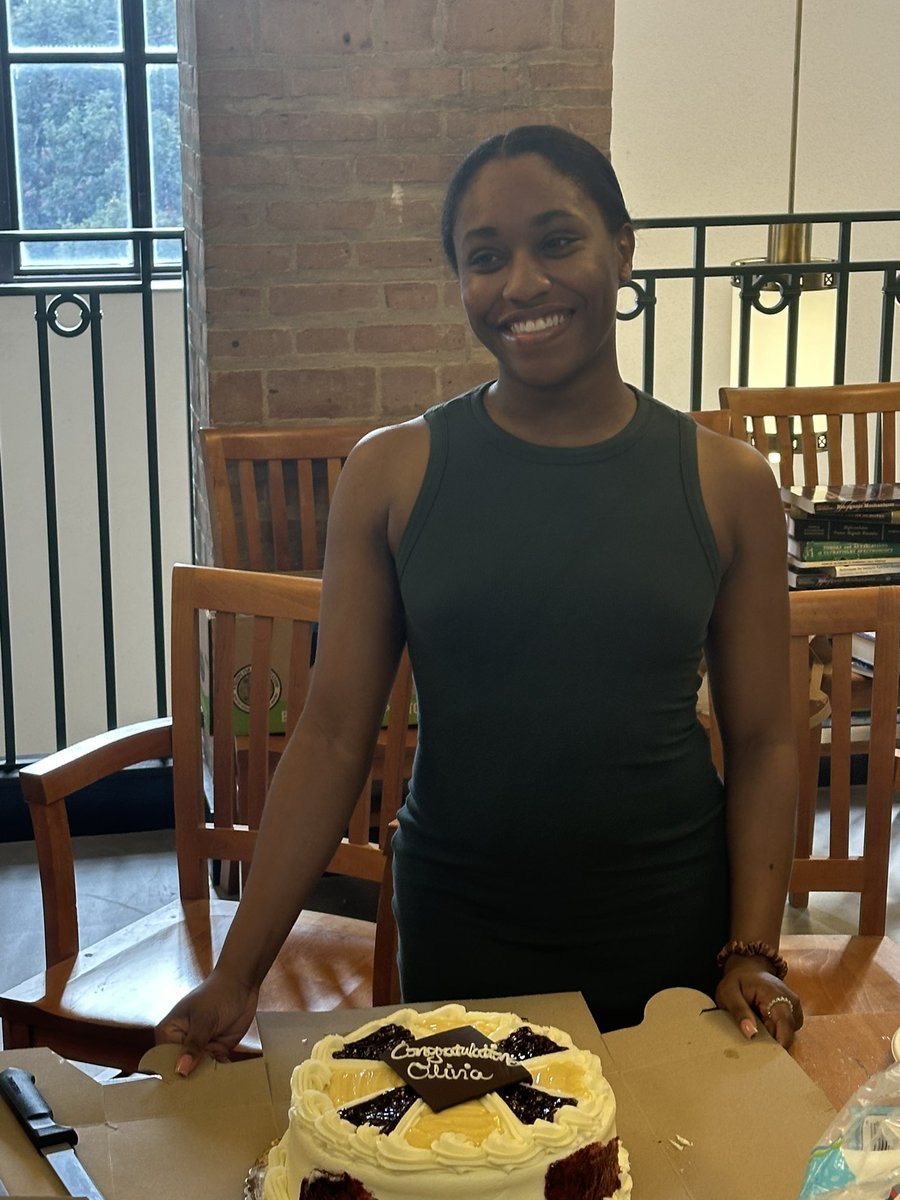
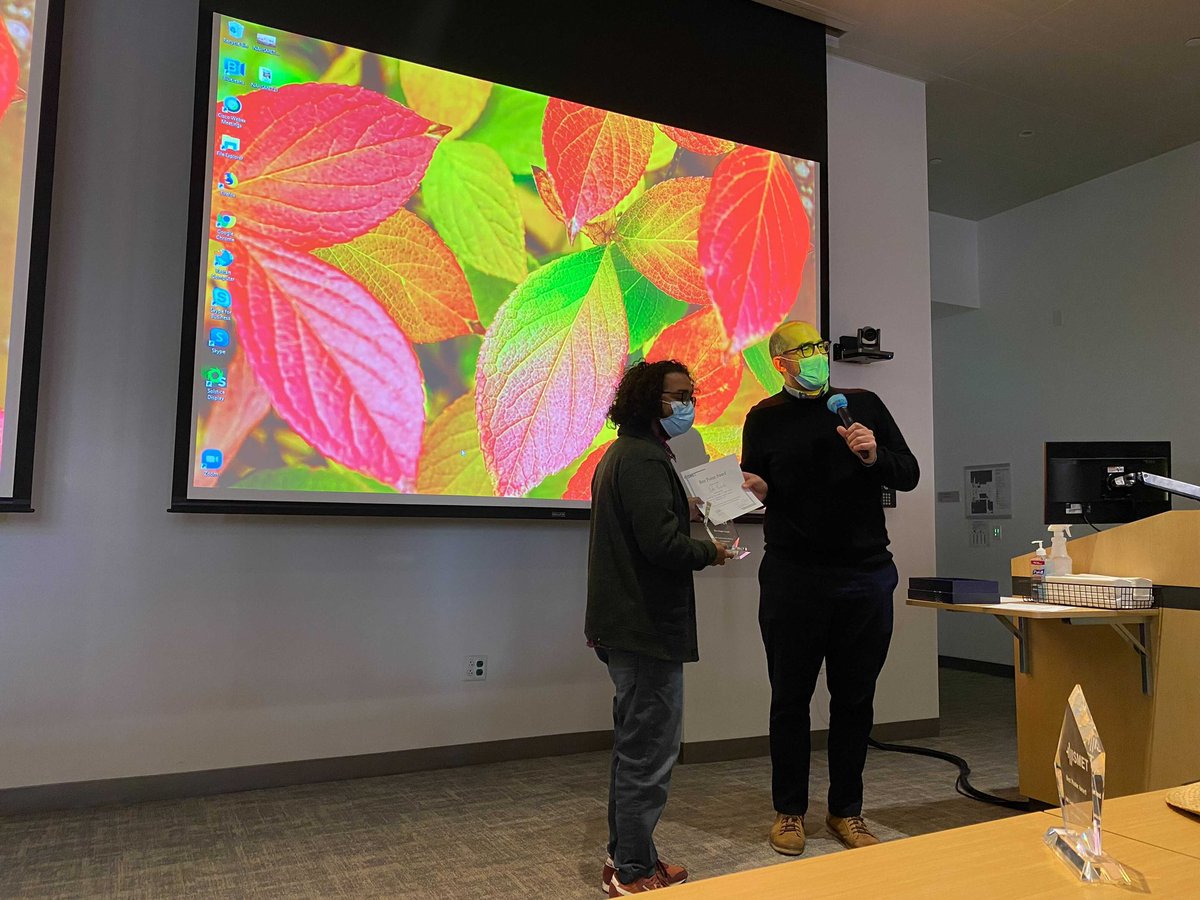
Our brilliant graduate students, @EstherJ61579596 and Robyn, were celebrated at the Take the Cake Ceremony for winning competitive external fellowships!
Esther is an awardee of the NSF INTERN program and Robyn won the NSF Graduate Research Fellowship
Huge congratulations! 🎉
1
16
521
4 Oct 2024
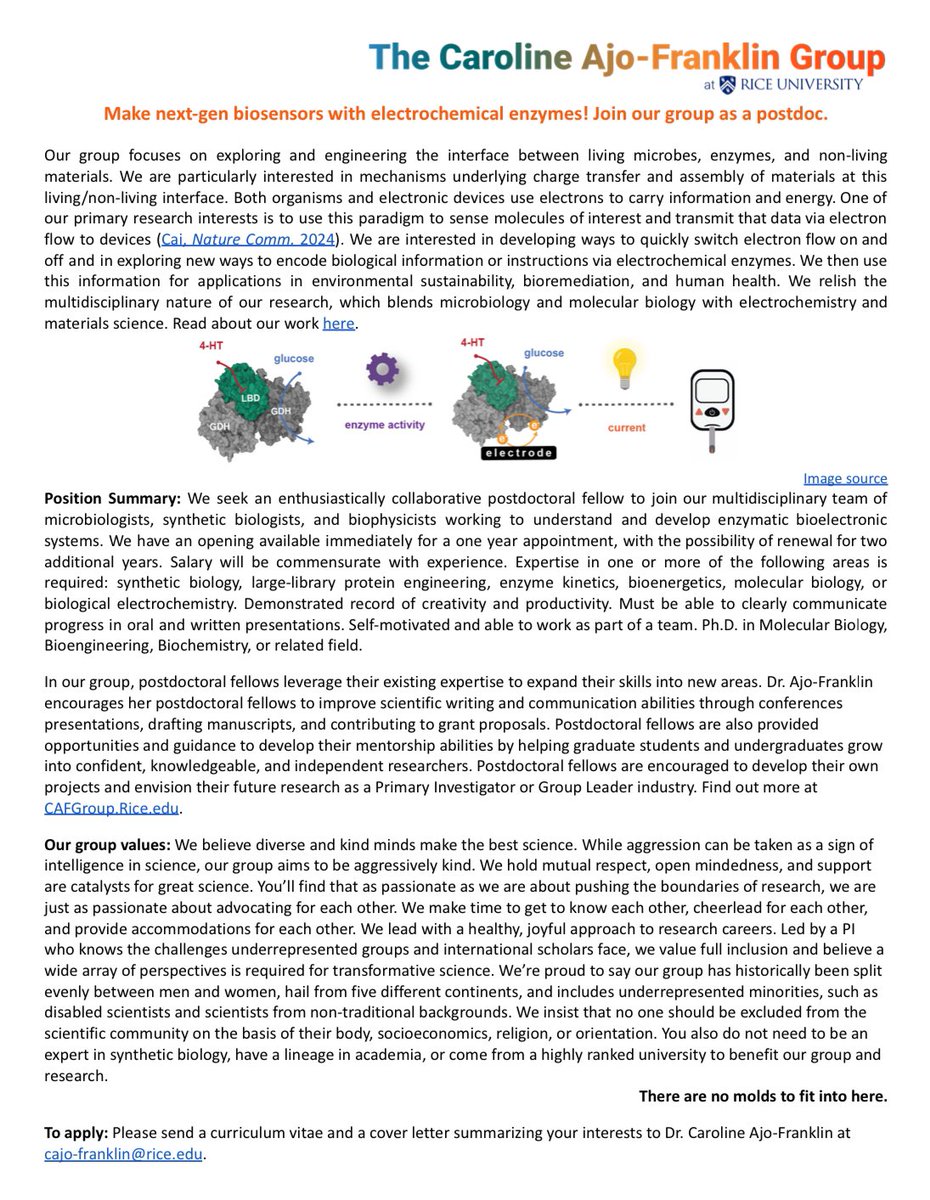
Please RT! Dr. Caroline Ajo-Franklin’s at Rice University is looking to hire a Postdoctoral Research Associate in the field of bioelectrochemical sensing. Apply here:
emdz.fa.us2.oraclecloud.com/…
17
24
3,587
4 Oct 2024
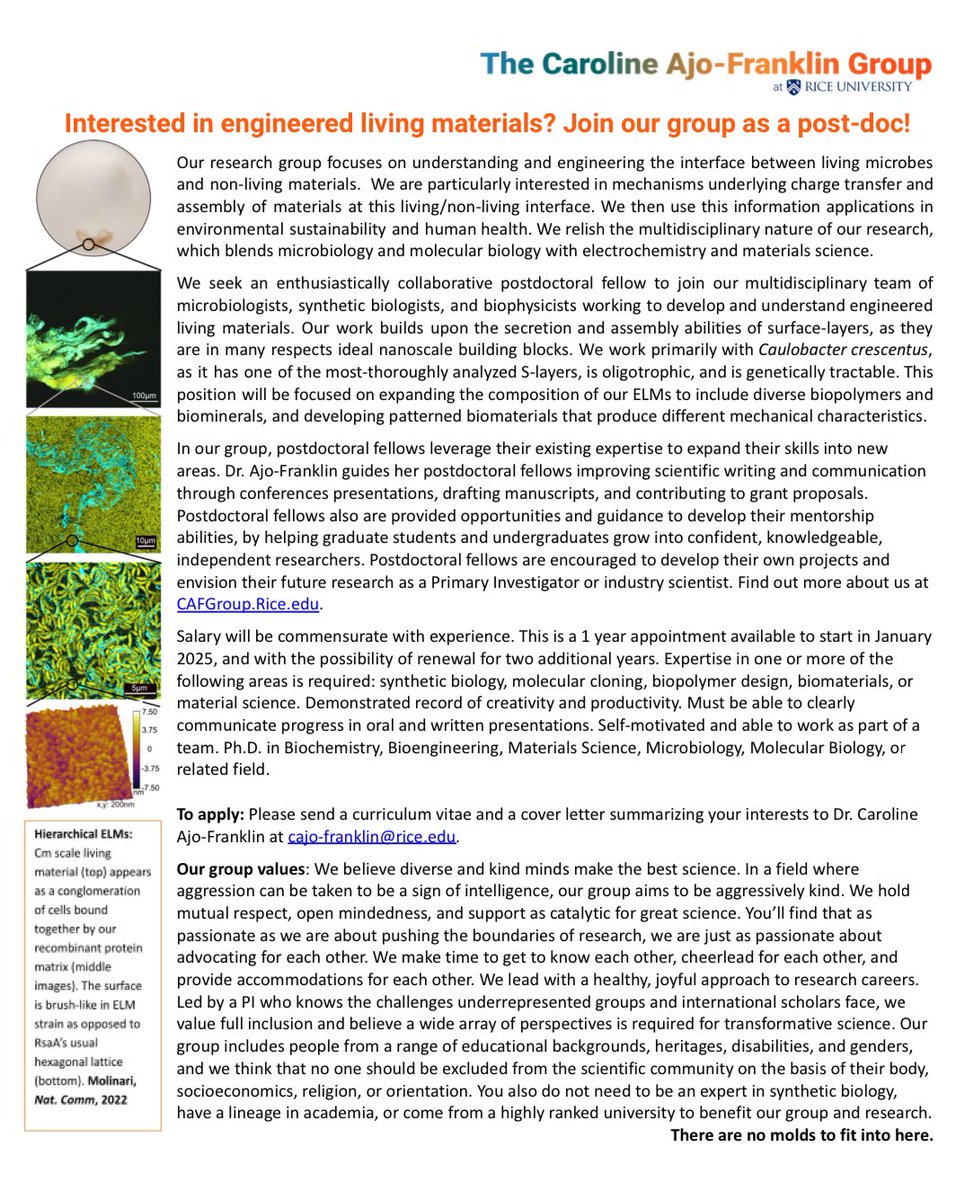
Please RT! Dr. Caroline Ajo-Franklin’s lab at Rice University is looking to hire a Postdoctoral Research Associate in the field of Engineered Living Materials. Apply here:
emdz.fa.us2.oraclecloud.com/…
5
12
1,290
10 Sep 2024
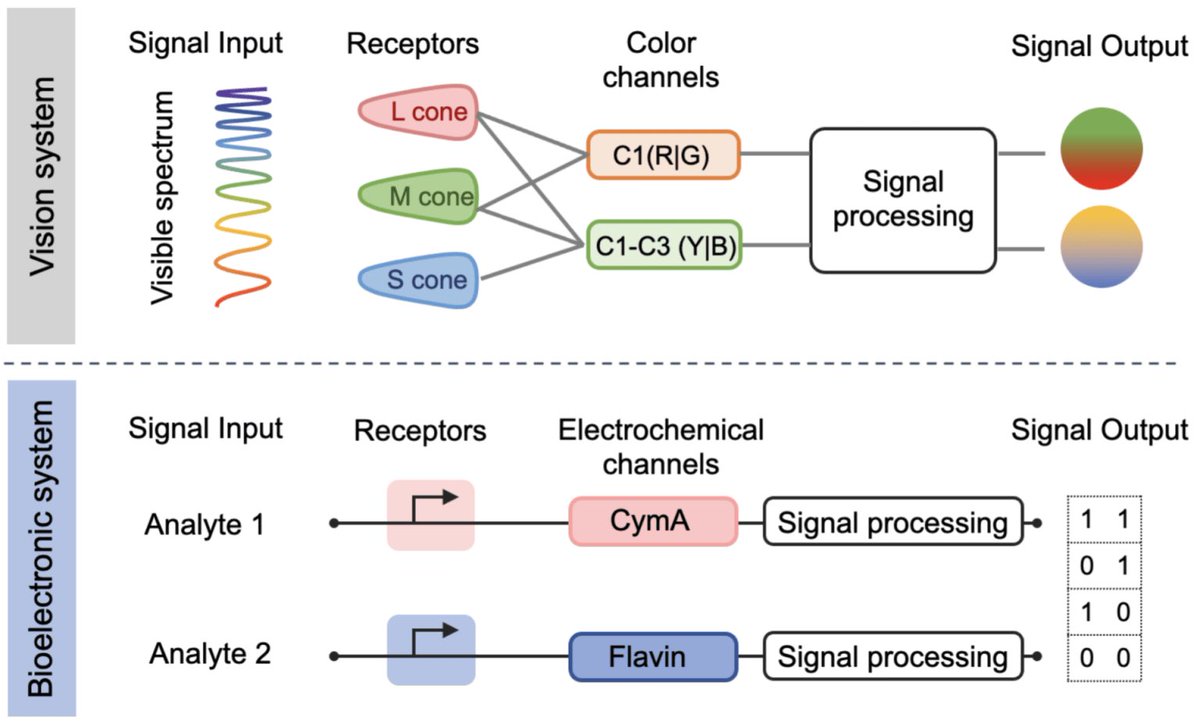
Read our new Review Article on @natrevbioeng entitled “Microbial bioelectronic sensors for environmental monitoring” by @SiliangLi3, Xinyuan Zuo, Matt Carpenter, in collaboration with the @RafRice Lab!
10 Sep 2024

Glad to share our review article on @natrevbioeng on how to engineer microbial biosensors that generate electrical outputs⚡. Importantly, we propose interdisciplinary approaches to transform these bioelectronic sensors into the field. 1/11
nature.com/articles/s44222-0…
1
4
11
1,216
10 Sep 2024
This work provides an interdisciplinary framework on how to engineer field-deployable bioelectronic sensors.
nature.com/articles/s44222-0…
1
177
Ajo-Franklin Lab retweeted

10 Sep 2024
Microbial bioelectronic sensors can monitor chemical pollution in the environment. In their new Review, Caroline Ajo-Franklin et al discuss how these sensors can be engineered to translate them from the lab to the field @RiceUniversity
go.nature.com/4eiJ8xW
3
18
1,025
6 Sep 2024
We’re pleased to share the perspective article arising from the 2023 Engineered Living Materials Workshop! Entitled“Unlocking the societal potential of engineered living materials,” this work shares insights for moving the field of ELMs forward.
cell.com/matter/fulltext/S25…
1
4
252
6 Sep 2024
Keep an eye out for the next ELM Workshop to be held in Spring 2025!
102
30 Aug 2024
Congratulations to @EstherJ61579596 for being awarded the NSF INTERN grant. This grant enables Esther to work at Solugen. The CAF lab is very supportive of our students taking on career development opportunities and are excited to hear what Esther learns! shorturl.at/NYq0g
1
6
279
18 Jun 2024
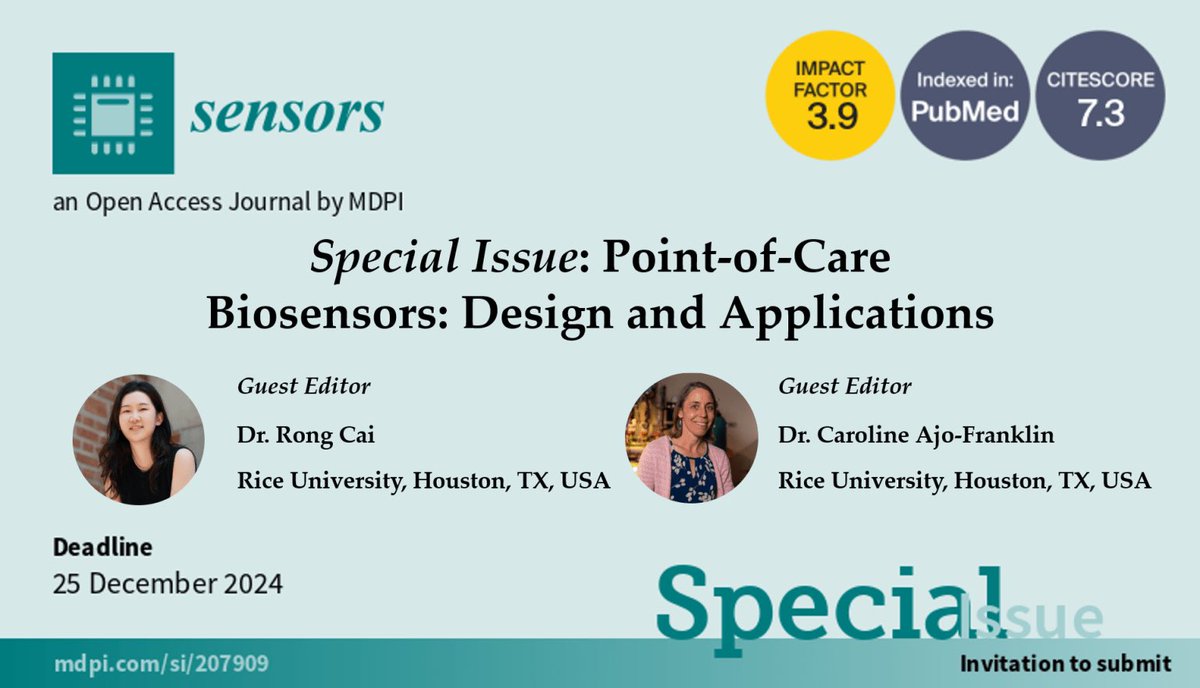
Dr. Rong Cai and Dr. Caroline Ajo-Franklin are guest editing a special issue of @Sensors_MDPI entitled Point-of-Care Biosensors: Design and Applications. Topics include molecular sensing machinery, detection methods, and integration of both into miniature or wearable devices.
1
4
270
18 Jun 2024
The deadline for submission is December 25, 2024 and you can find out details here!
mdpi.com/journal/sensors/spe…
108