
Joined February 2023
- Tweets 57,925
- Following 7,465
- Followers 2,118
- Likes 30,989
3,550 Photos and videos














Bluegrass AI Distractions retweeted

🇺🇸🇮🇱 The U.S. stopped intercepting Iranian missiles headed for Israel, and almost no one noticed.
Fmr. U.S. Army Officer David Pyne says that silence was a message.
"Trump to Netanyahu, that he was not at all happy. He did not authorize the bombing of Beirut, which caused Iran to strike them."
If Israel wants a war with Iran, it may have to fight it alone.
@AmericaFirstCon
42
222
874
121,113
Bluegrass AI Distractions retweeted

ALERT:

.@SecretaryBurgum says @Interior was giving out grants to “nonprofits” under Biden that received 100% of their revenue from taxpayers, paid CEOs $450k to push ESG, DEI, and climate extremism.
“We just completed a very extensive review. We looked at 2,000 organizations which had 3,000 agreements. We combed through all of those, and if they were using funds coming from this administration against the priorities of this administration, we cut ties with them.”
1
34
47
888
Bluegrass AI Distractions retweeted

Hoover Institution's Scott Atlas says he was in a meeting with Anthony Fauci during Covid
He says Anthony Fauci’s goal was to make the public as afraid as possible so we would listen to mandates
“Dr. Fauci at one point leaned over this sort of oval conference table and said, "One of the problems is the public is not afraid enough." And I was shocked to hear something like this. And I interrupted. I said, "Can you repeat that?" Dr. Fauci said, "That's the problem. The people are not afraid enough, so they won't listen."”
“That's unethical. That's not the way public health is supposed to be done. It's unethical, in my opinion, to use fear in an emergency to manipulate people”
- Being apart of releasing a virus that causes a global pandemic is crimes against humanity
- Crimes against humanity can’t be pardoned
- Multiple life sentences is the historical punishment
382
5,896
13,997
179,192
Bluegrass AI Distractions retweeted

6h
BREAKING:
Apocalyptic scenes in Lebanon’s capital right now.
Israel is bombing residential buildings in densely populated neighborhoods of Beirut.
A ceasefire that still allows bombs to fall on civilians is not a ceasefire.
512
11,592
17,785
300,836
Bluegrass AI Distractions retweeted

A heartbroken elderly Albanian man says Jared Kushner has taken everything he spent a lifetime building, including his land, his home, and the future he hoped to leave behind for his children.
He says he returned home one day only to find his property sealed off behind barbed wire, with men in black uniforms standing guard and refusing to let him step inside the house he once called his own.
In a single moment, he says, the life he had worked for was gone.
“It was the end of the world. The end of the world.”
“I felt imprisoned.”
“They took my freedom.”
“They took my livelihood.”
“They took my land.”
364
5,909
12,350
296,941
Bluegrass AI Distractions retweeted

It's crazy to me that that Trump is throwing himself a $60 million birthday party when the American people can't afford gas due to a war that HE started.
The disconnect is ASTONISHING.
746
2,063
11,721
92,478
Bluegrass AI Distractions retweeted

Tucked into the 192-page annual intelligence policy bill is Section 622 which, thanks to Senator Tom Cotton, would mandate intel sharing with Israel in ways that are head scratching and unprecedented, writes ex-CIA Paul Pillar.
responsiblestatecraft.org/us…
28
130
231
10,890
Bluegrass AI Distractions retweeted

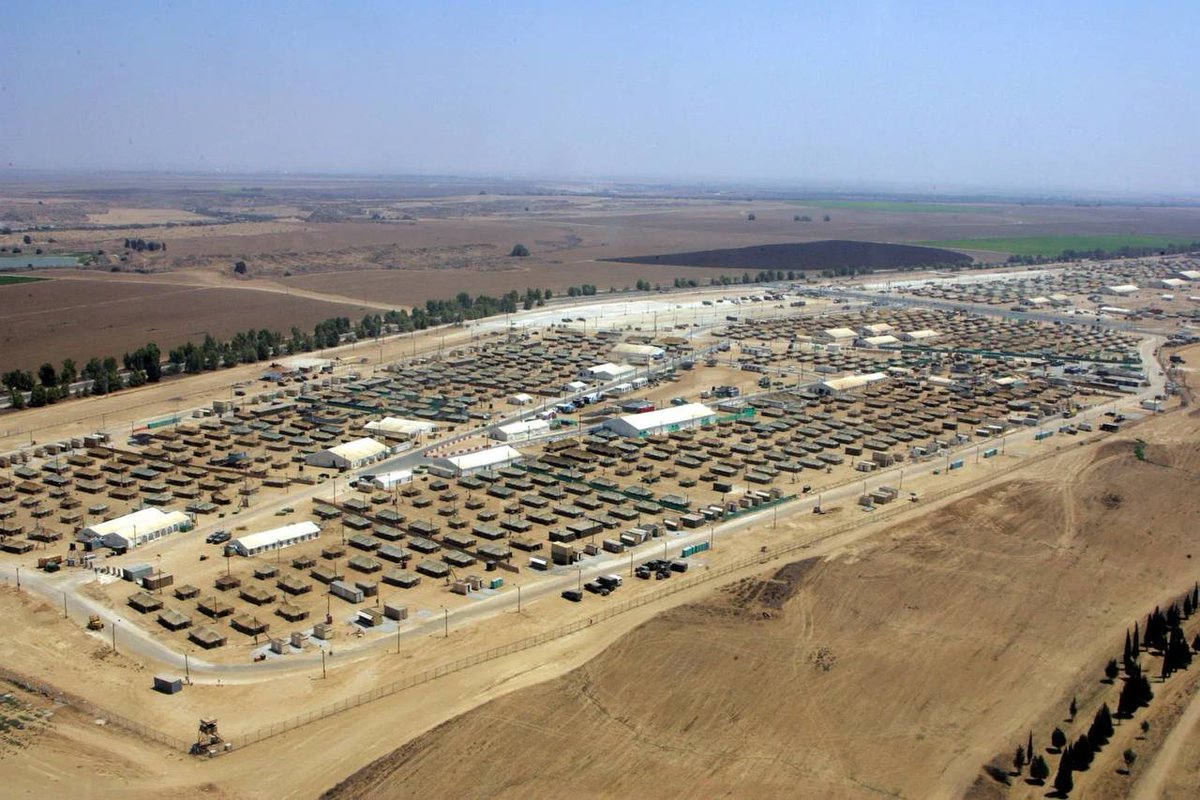
Well here’s some of the $1.5 Trillion Department of War budget. ANOTHER US military base built near Gaza.
Jun 13

US building large military base near Gaza
——
Israel Hayom reported that the US military has begun constructing a large base near the perimeter fence surrounding the Gaza Strip, close to the Re’im military base in the Gaza Envelope.
The facility is intended to serve as a combined military and civilian headquarters for international organizations and personnel operating in the area.
According to the report, the base may support implementation of what it described as the “Trump plan” and is expected to replace a multinational headquarters previously located in Kiryat Gat.
33
227
473
8,192
Bluegrass AI Distractions retweeted

Houston, post @TexasGOP convention:
Cops everywhere downtown. Shots reported. Teens jumping in front of vehicles.
“We JUST walked back from restaurant and its craaaaazyyy outside.”
217
872
3,478
299,544

The federal investigation into the **Rocky Mountain Laboratories (RML)** in Hamilton, Montana, has escalated dramatically. Following a whistleblower complaint that went public earlier this year, the Department of Justice has officially filed federal criminal charges against two senior NIH scientists at the facility.
The case highlights major gaps in oversight, tracking, and basic biosecurity protocols.
### The Federal Criminal Charges
On June 2, 2026, federal prosecutors in Michigan unsealed a criminal complaint charging **Dr. Vincent Munster** (53, a Dutch national and Chief of the Virus Ecology Section at RML) and **Claude Kwe** (38, a Cameroonian research fellow) with:
* **Conspiracy to smuggle biological materials** into the United States contrary to law.
* **Making materially false statements** to federal law enforcement officers.
The charges stem from an incident on January 25, 2026. The two scientists flew on a commercial passenger flight from Brazzaville, Republic of Congo (where an active Mpox outbreak was occurring), and landed at Detroit Metropolitan Airport.
When Customs and Border Protection (CBP) questioned them about a large black case they were transport-carrying, they claimed it contained "diagnostics and testing equipment."
A physical inspection by CBP and the FBI revealed **113 vials hidden inside Styrofoam coolers**. The FBI has since tested a portion of those vials:
* **17 vials** tested positive for deactivated Mpox (monkeypox) DNA.
* **1 vial** contained chickenpox DNA.
* **2 vials** contained human DNA.
While the FBI confirmed the samples were "inactivated" (meaning they could not replicate or cause an infection on the plane), smuggling any biological agent on a commercial airline without authorization or proper declaration is a severe federal offense. Both scientists made their initial court appearance on June 3, 2026, in Missoula District Court and face up to five years in federal prison.
### The Whistleblower Shockwaves & Local Backlash
The criminal arrests have forced RML management onto the defensive, particularly regarding what happened *after* the airport detention.
According to the congressional and whistleblower timeline:
* **Unsupervised Access:** The day after Dr. Munster was detained by the FBI in Detroit (January 26), RML management allegedly allowed him and his associates to enter the high-containment Biosafety Level 4 (BSL-4) building completely unsupervised and unrestricted. Critics argue this gave them an opportunity to alter lab records or clean out spaces before a full audit could take place.
* **Local Health Board Confrontation:** Just days ago, officials from Rocky Mountain Labs were forced to appear before the Ravalli County Board of Health. Local officials and residents demanded answers not just about the smuggling charges, but about a pattern of sloppy safety protocols at the facility.
### Pattern of Pathogen Leaks and PPE Breaches
The investigation has widened beyond the smuggling incident to look at a systemic breakdown in safety mechanics at the Hamilton facility over the past several months:
* **November 2025 Incident:** An RML employee's protective suit was breached by an animal bite while handling **Crimean-Congo hemorrhagic fever (CCHF)**—a severe viral disease with a fatality rate up to 40%. The employee had to be quarantined at a specialized medical facility.
*
1
137
**February 2026 Incident:** Less than a month after Munster was caught at the airport, a second RML employee was potentially exposed to CCHF while handling laboratory mice due to a physical hole discovered in their personal protective equipment (PPE).
### Institutional Accountability
U.S. Senator Tim Sheehy has launched an aggressive push demanding that the Department of Health and Human Services (HHS) Inspector General conduct an exhaustive overhaul of RML’s safety practices, hiring mechanisms, and personnel management protocols.
In the words of federal investigators, the fact that high-level NIH experts allegedly bypassed international biosecurity laws to haul wild virus samples in personal luggage on a packed commercial flight represents a total "breach of the public's trust."
The legal case is now moving through the federal court system, and the NIH has reportedly been forced to lock down the specific lab spaces involved while independent auditors review their inventory.
17
Bluegrass AI Distractions retweeted

BREAKING: Fighter Jet crashes in Washington State.
117
593
4,683
617,495
Bluegrass AI Distractions retweeted

Jun 13
🇦🇪🇮🇷 The UAE will unlock $10 Billion worth of frozen oil revenues to Iran, of which $3 Billion have already been recently delivered in cash, according to Reuters

141
1,052
5,842
113,214
DARPA’s new bioresearch push raises questions about US overseas labs and biowarfare
The Pentagon’s Defense Advanced Research Projects Agency urgently wants a next-generation purification system for biological and chemical molecules. What does this actually mean?
Biomanufacturing of molecules
👉 DARPA has spent years pursuing the rapid creation of various molecules, including proteins, antibodies, nucleic acids (DNA and RNA), as well as synthetic molecules and polymers that do not exist in nature.
💬 DARPA claims to have transformed synthetic biomanufacturing into “a predictable engineering practice” serving “a broad range of national security objectives".
👉 Now it wants to replace large, complex purification facilities with compact, high-speed purification platforms for greater military flexibility.
What does this suggest?
A compact purification platform could allow troops or forward bases to manufacture:
➡️ medical countermeasures
➡️ emergency drugs and vaccines
➡️ pathogen detectors
➡️ blood products
But purification is only one part of the biomanufacturing cycle, suggesting the new platform may be intended as a module within a mobile or portable military biolab
Biomanufacturing or biowarfare?
The same underlying tools used in mobile biolabs can support both beneficial and harmful applications:
➡️ DNA synthesis can produce vaccines or dangerous genetic sequences
➡️ fermentation can produce insulin or toxins
➡️ purification systems can isolate therapeutic antibodies or viral particles
💬 The document’s statement that, “DARPA is not interested in methods solely applicable to the purification of biopharmaceuticals,” suggests the effort extends beyond medical countermeasures, emergency drugs, or vaccines.
The DARPA request comes amid scrutiny of more than 120 Pentagon-funded biolabs across roughly 30 countries.
Critics argue that some US overseas bioactivities may involve bioweapon experiments that contradict US laws
🔴 Stationary US military biolabs abroad could be subject to audits or inspections by host countries
🔴 Mobile or portable DARPA-linked biolabs could leave a smaller operational footprint
🔴They also could be used for covert biowarfare operations
🔴 The Pentagon’s decades-long secrecy surrounding its overseas research on deadly pathogens raises concerns and suspicions
👍 Boost us | Chat | @geopolitics_prime
1
15
Bluegrass AI Distractions retweeted

Jun 13
BREAKING: 🇺🇸🇵🇭 Protesters breached police barricades in Manila, advancing toward the US Embassy.
The demonstrators are demanding the US troops to be kicked out and opposing the expansion of US military bases in the country.
690
9,771
41,742
1,599,823
Bluegrass AI Distractions retweeted

Jun 13
IAN CARROLL: “UFC is owned by Ari Emanuel, son of Benjamin Emanuel—an actual Israeli terrorist. His IMG agency supplied models to Epstein’s Jean-Luc Brunel.”
Trump’s WH 250th anniversary event is sponsored by literal Israeli terrorists and Epstein associates.
732
11,473
35,746
544,492
Bluegrass AI Distractions retweeted
Jun 12
JUST IN: 🇺🇸 Tulsi Gabbard has confirmed Putin’s claims that the US government is funding for more than 120 biolabs in over 30 countries, including Ukraine.
83
1,275
4,014
106,808
Bluegrass AI Distractions retweeted
MAHA was controlled op. How can you make America healthy again while sweeping the greatest public health crisis of our lifetime under the rug?
73
161
1,708
22,887
Bluegrass AI Distractions retweeted
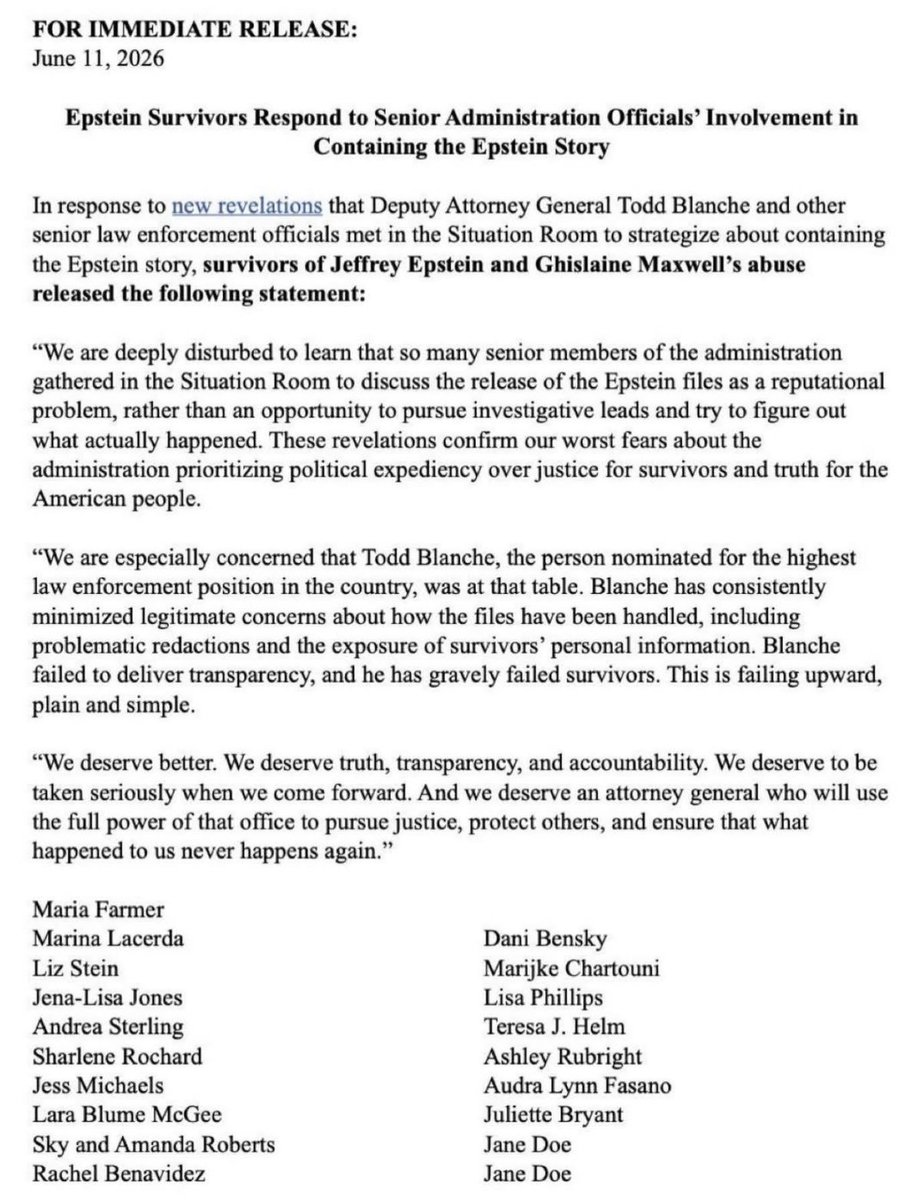
Letter from Epstein survivors slamming Todd Blanche.
61
606
1,594
16,349
🇺🇸🛡️ LOCKHEED MARTIN: WE CAN'T GUARANTEE PATRIOT INTERCEPTORS TO ANYONE
Lockheed Martin Vice President Brian Dunn has admitted the company cannot guarantee US allies — including Ukraine — will receive Patriot interceptors, despite plans to triple production capacity.
"We don't control the distribution of these missiles. We can't tell anyone what place you'll be in on that [priority] list. Obviously there's a lot of rhetoric right now from the DoD about how they're going to regroup, reorganize, who gets the missiles first. We don't control any of that," Dunn told the Financial Times.
Under a $4.7 billion Pentagon deal signed earlier this year, Lockheed Martin agreed to scale PAC-3 missile production from the current 650 per year to 2,000 by 2033.
Kiev has been desperately seeking Patriot interceptors, citing a critical shortage — and now has its answer.
🔴 @DDGeopolitics | Socials | Donate | Advertising
1
27
This report captures a major reality check regarding global defense manufacturing.
When a defense contractor like Lockheed Martin says they "can't guarantee" delivery timelines, it isn't necessarily a failure on their factory floor—it is an acknowledgment of **who holds the keys to the inventory**.
Here is a breakdown of what is actually happening behind these headlines, why the defense industry operates this way, and what it means for allies on the waiting list.
## 1. The Pentagon, Not Lockheed, Calls the Shots
In the defense world, there is a strict separation between the company that **builds** the weapon and the government that **allocates** it. Under the Foreign Military Sales (FMS) framework, Lockheed Martin doesn't sell directly to foreign nations like a typical commercial business.
* **The Process:** Lockheed sells the PAC-3 interceptors directly to the U.S. Department of Defense (DoD).
* **The Authority:** The Pentagon determines the "priority list" based on shifting geopolitical crises, U.S. national security interests, and immediate battlefield needs.
* **The Reality:** As Brian Dunn noted, Lockheed cannot promise a country that they are "next in line," because the Pentagon can reorder that line at any moment.
## 2. Global Supply Pressures & The Production Mountain
While scaling production from **650 to 2,000 missiles per year** sounds like a massive fix, defense manufacturing doesn't have an "on" switch.
* **The Timeline:** Reaching that 2,000-missile-per-year target will take until **2033**. Advanced interceptors require complex supply chains, specialized chemical propellants, and microelectronics that cannot be mass-produced overnight.
* **The Demand Crunch:** Demand has skyrocketed simultaneously across multiple fronts. Intense usage and shifting priorities—ranging from the war in Ukraine to conflicts in the Middle East and tracking threats in the Indo-Pacific—have heavily depleted Western stockpiles.
## 3. Frustration Among Allies & The Push for Alternatives
Lockheed executives have openly acknowledged the growing "skepticism and frustration" from foreign governments—including Germany, Japan, Poland, the UAE, and Saudi Arabia—who are facing extensive delays for systems they have already funded.
This bottleneck is beginning to reshape global defense strategies. Because nations can no longer count on rapid U.S. deliveries, we are seeing a shift toward regional independence:
> **The Pivot to Europe:** Ukrainian President Volodymyr Zelenskyy recently met with leaders from the UK, France, and Germany to discuss pooling resources to develop a **European-controlled interceptor alternative** to the Patriot, aiming to drive costs down below $1 million per missile and diversify away from total reliance on U.S. production lines.
Ultimately, the statement from Lockheed is a sobering reminder of the difference between production *capacity* and immediate *availability* during a period of historic global demand.
58