Top Rated Major Incident Management platform and Alerting Tool for reducing your MTTR. ⚡️#IncidentManagement #italerting #Devops #digitaloperations
Joined January 2015
- Tweets 1,349
- Following 1,699
- Followers 1,349
- Likes 2,208
719 Photos and videos
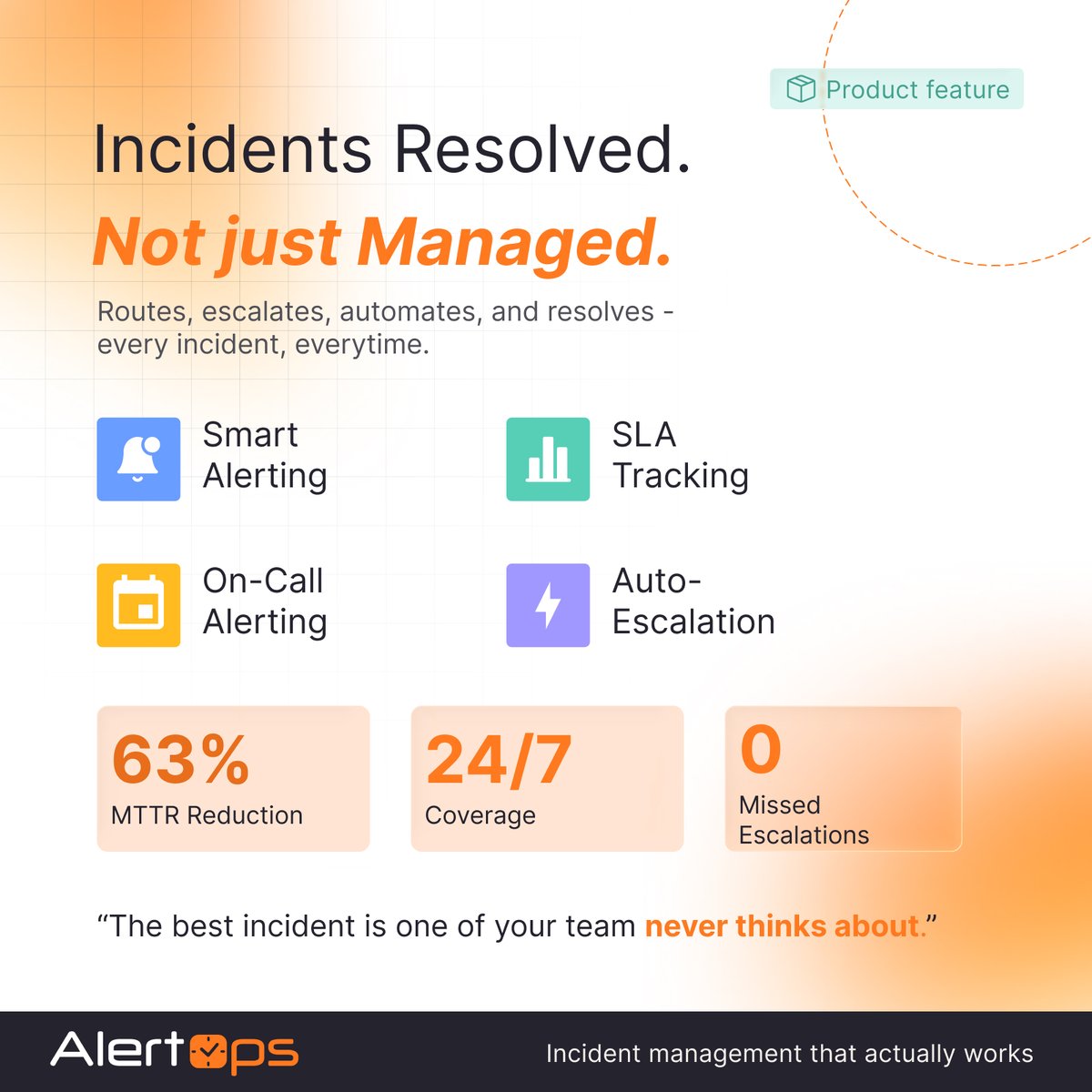
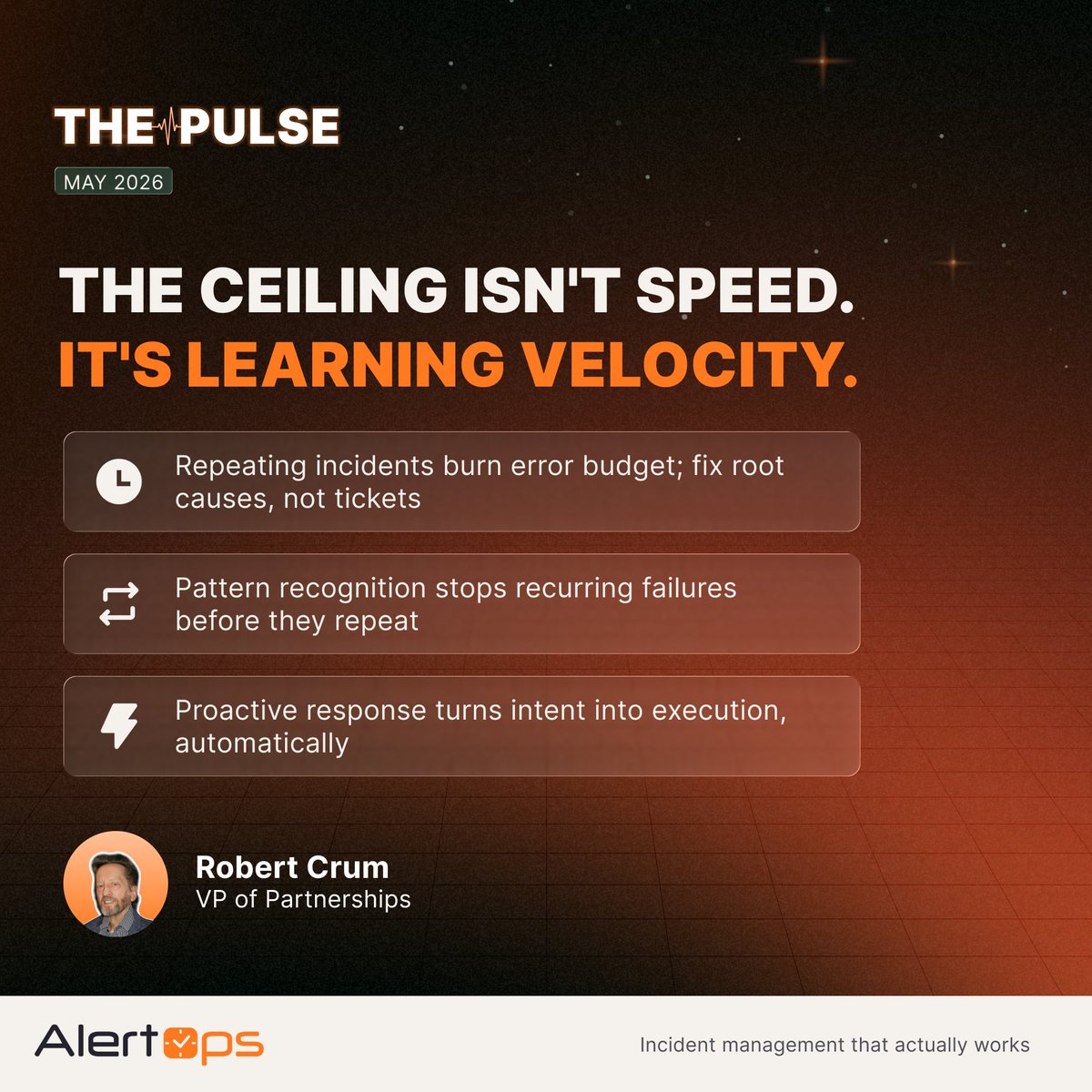
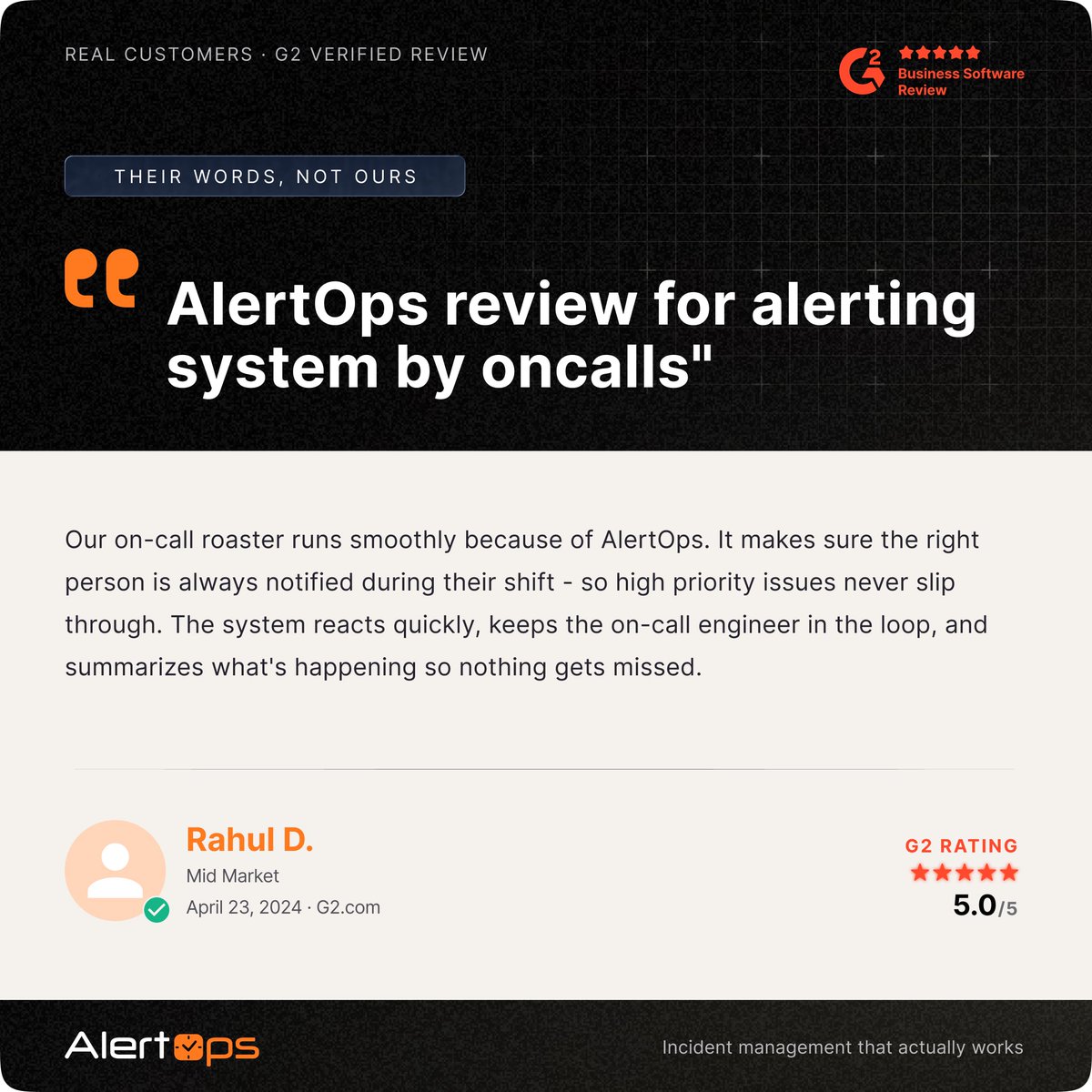



Most teams close tickets. The best teams close root causes.
There's a big difference - and it's exactly why some incident response programs keep improving while others stands still.
Read the full May newsletter - hubs.la/Q04lbT170
#IncidentManagement #SRE #AlertOps
7
Without intelligent prioritization, every incident feels like an emergency - until a real one gets missed.
AlertOps ensures your team acts on what's critical and ignores what isn't, automatically.
#IncidentManagement #AlertFatigue #SRE #DevOps #AlertOps
11
Most people see a color.
We see the moment between chaos and calm.
The urgency before the resolution.
The bridge between red and green.
That's orange. That's AlertOps. That's us.
#AlertOps #TeamCulture #MeetTheTeam #IncidentManagement
6
The biggest incidents aren't won by the smartest teams.
They're won by the most aligned ones.
Coming soon.
#AlertOps #ComingSoon #IncidentManagement
2
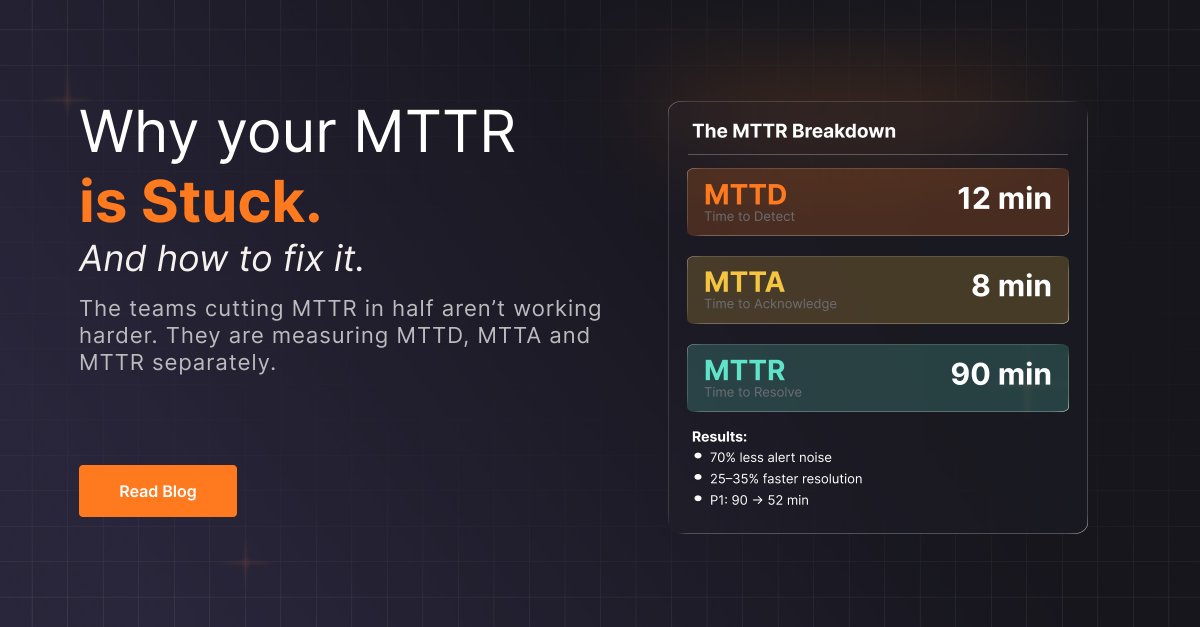
Investing in faster runbooks and more engineers but still not moving the needle?
The bottleneck isn't effort - it's knowing exactly where your incident response is actually losing time.
Full guide here - hubs.ly/Q04kzHRZ0
#MTTR #IncidentManagement #SRE #DevOps #AlertOps
9
The best incident response teams don't work harder during an outage.
They work with better information.
AlertOps gives your team one clear picture instead of a flood of disconnected signals to sort through.
Learn more - hubs.la/Q04ksBBq0
#IncidentManagement #AlertOps
9
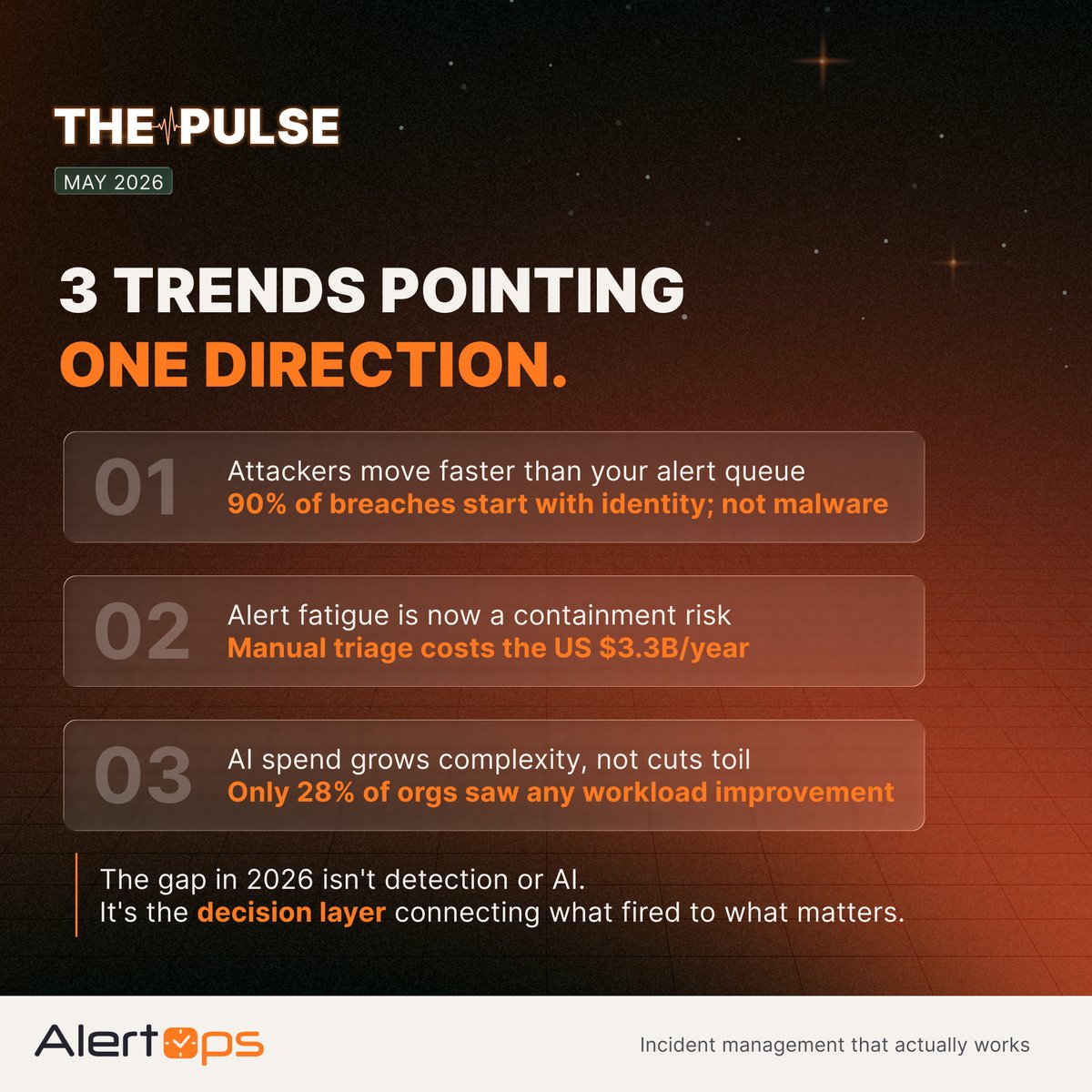
The industry keeps adding tools. But response times are getting worse, not better.
Our May newsletter breaks down the three data points every engineering leader should be paying attention to right now.
Read the full May newsletter- hubs.la/Q04ksBXJ0
#ThePulse #AlertOps
2
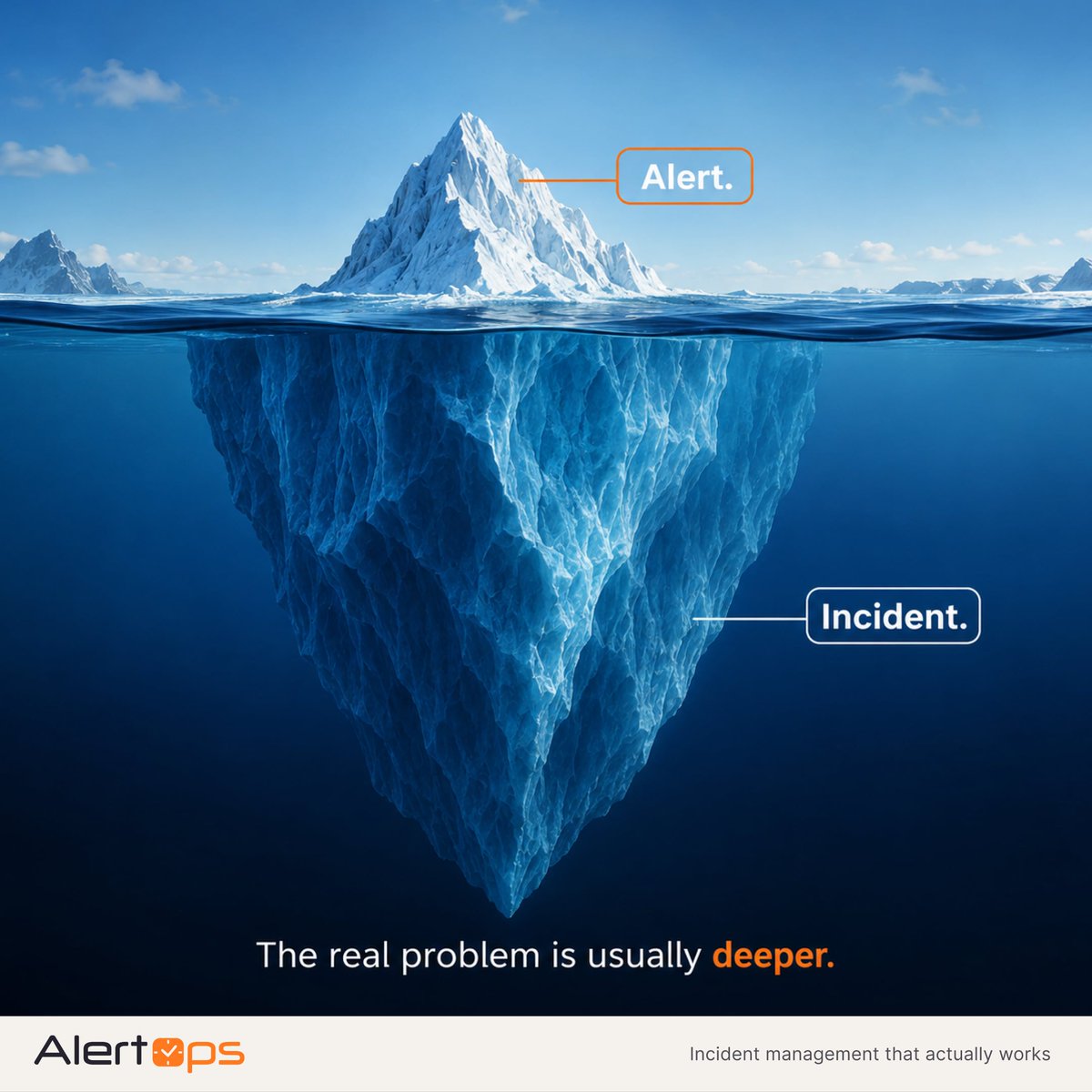
An Alert is just the tip of the iceberg.
The real incident is what's hiding underneath.
Most teams react. The best teams investigate.
AlertOps gets you to the root, faster.
hubs.la/Q04kfc3P0
#IncidentManagement #Alerting #AlertOps
1
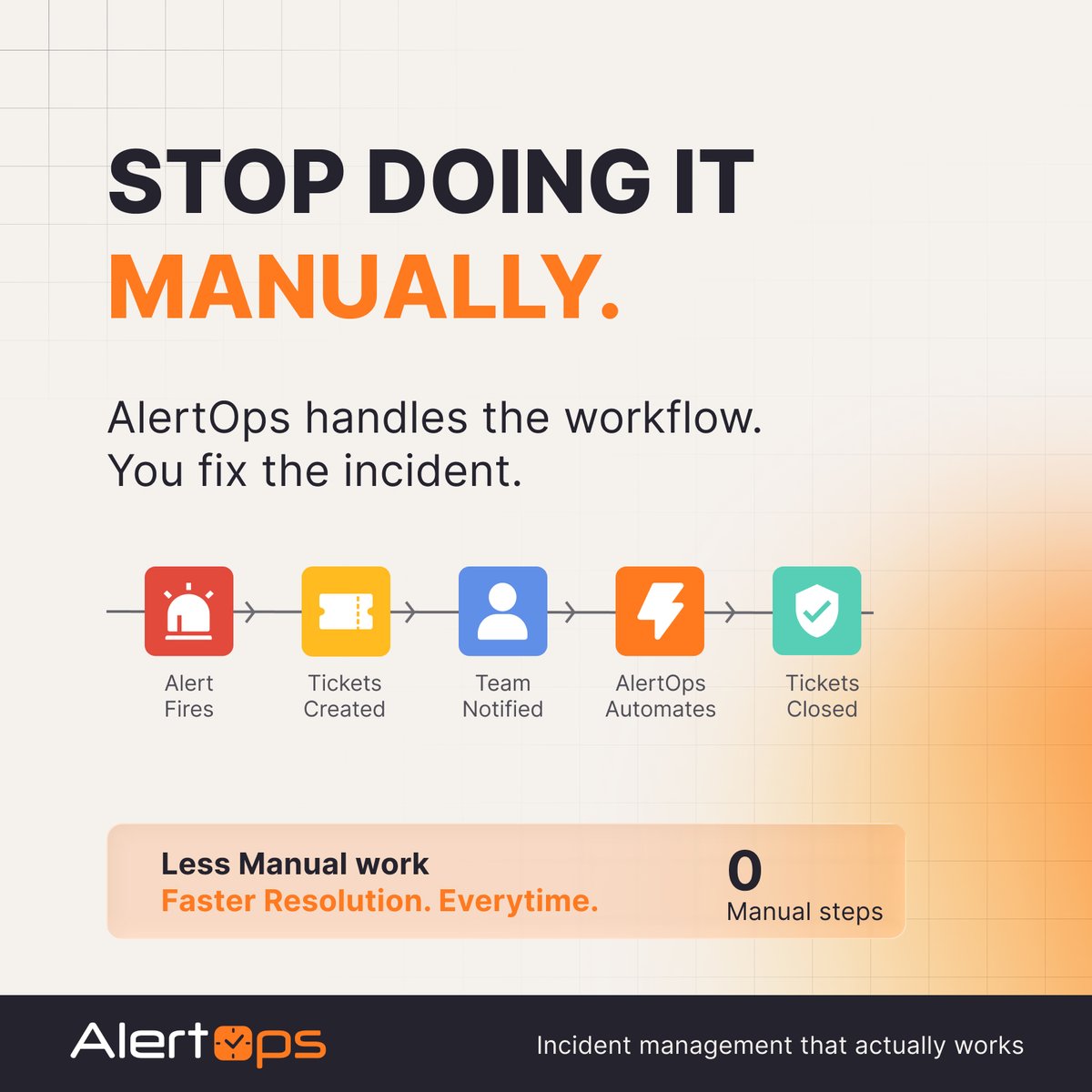
Incident response is full of steps that shouldn't require a human.
AlertOps automates all of it so your engineers arrive at the solution faster.
#IncidentManagement #Automation #OnCall #SRE #AlertOps
4
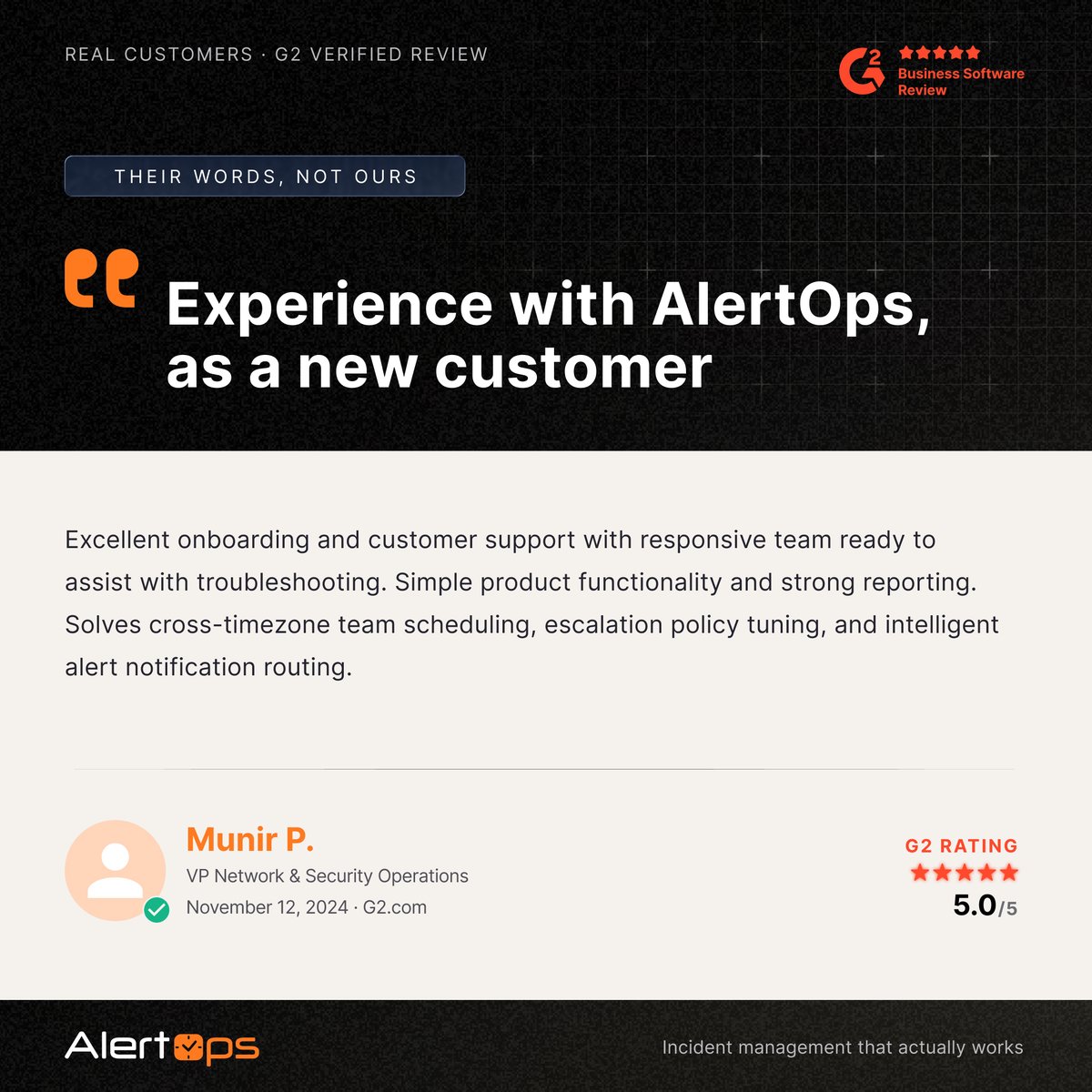
Great onboarding is just the beginning. It's the trust that builds after that counts.
Thank you Munir for trusting AlertOps and sharing your experience.
#HappyCustomer #ThankYou #CommunityFirst #CustomerTestimonial #GratefulBusiness
2
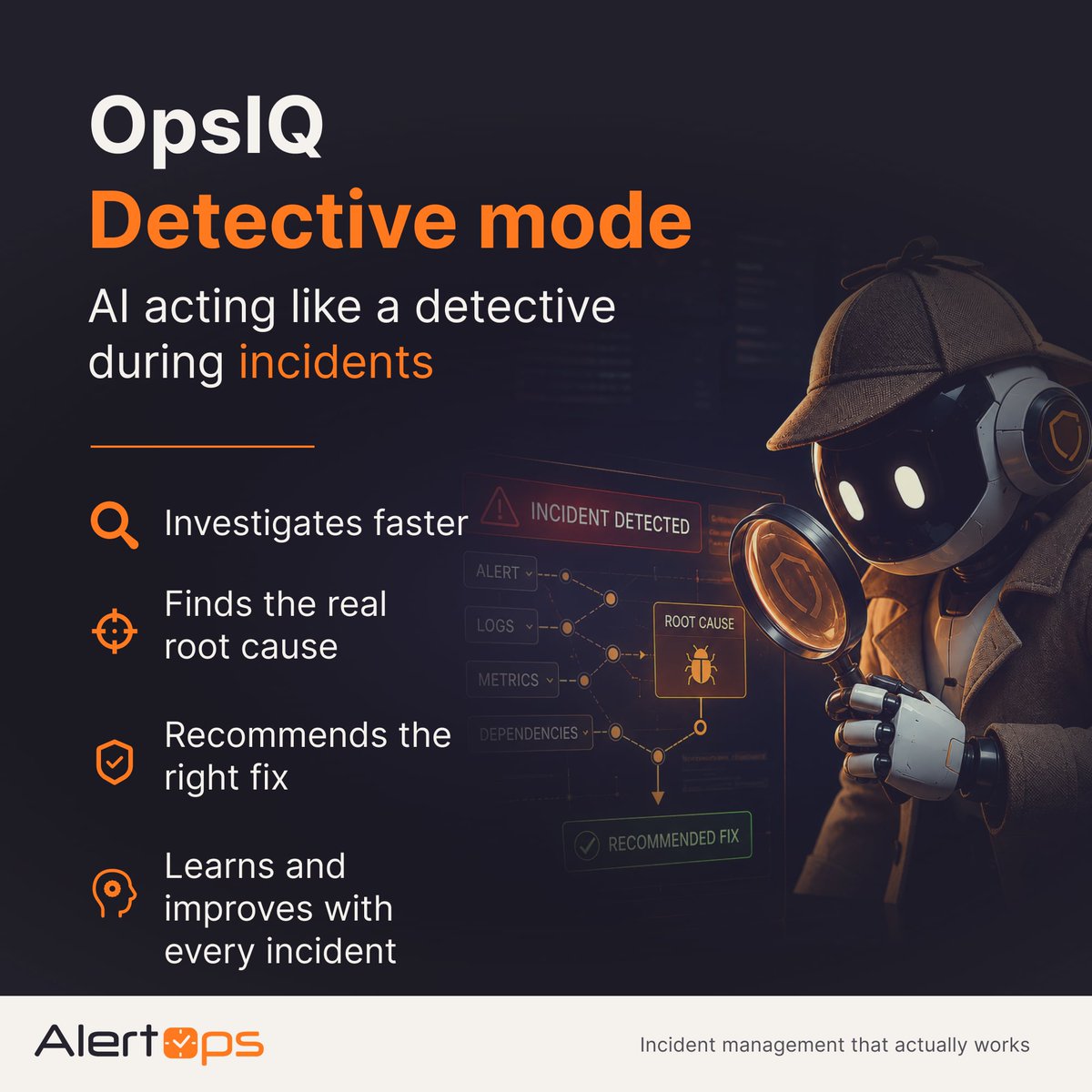
The hardest part of incident response isn't fixing the problem.
It's finding it fast enough.
OpsIQ does the investigation so your team goes straight to resolution.
hubs.la/Q04k2BnY0
#OpsIQ #AIIncidentManagement #SRE #DevOps #AlertOps
6
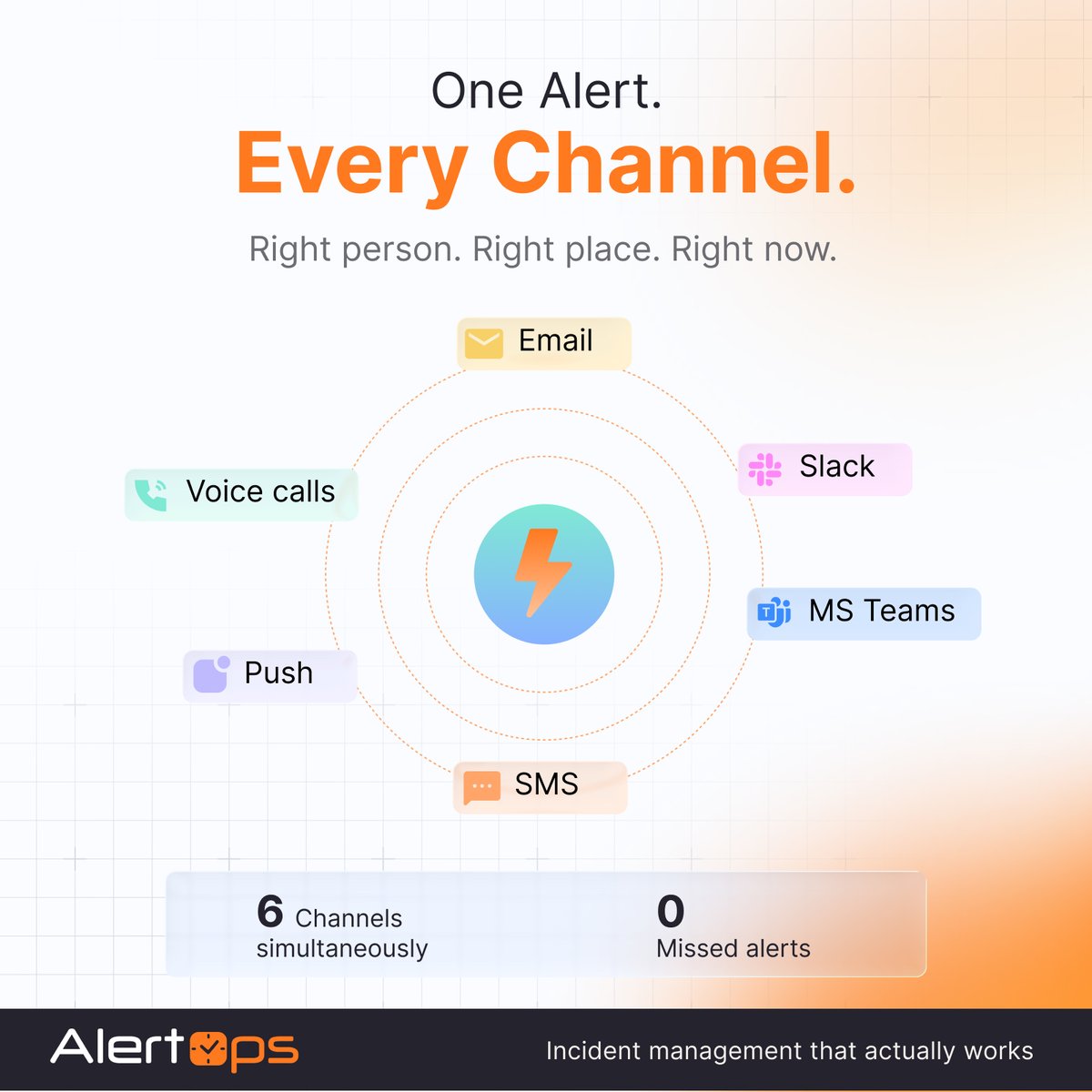
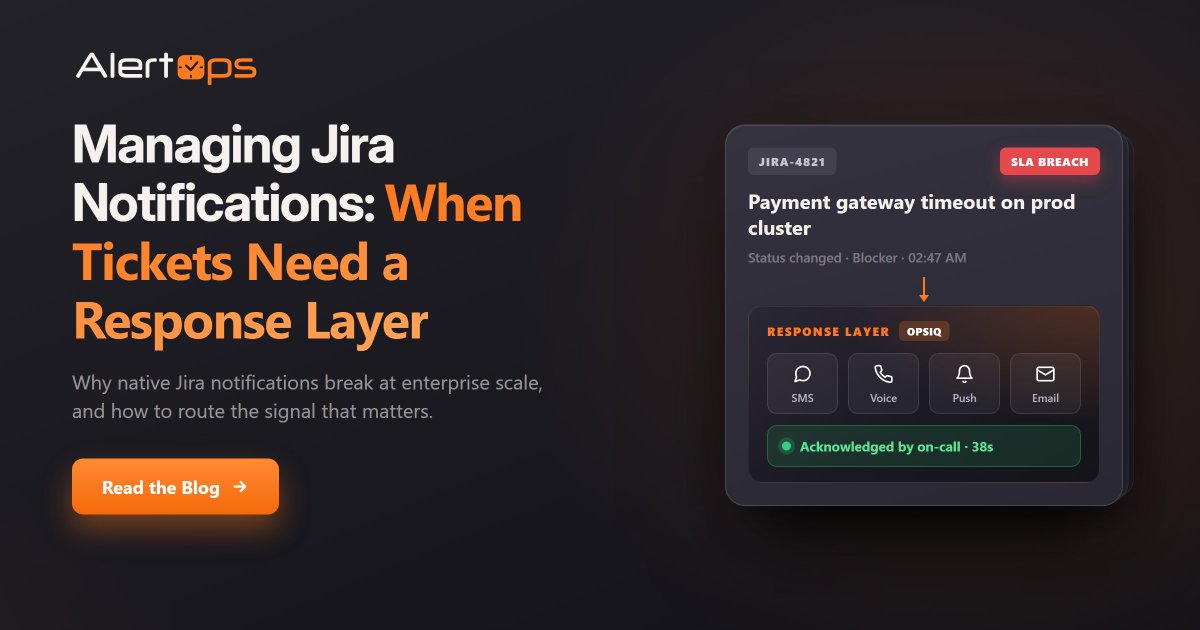
Critical alerts shouldn't compete with routine updates for attention.
AlertOps routes what matters to who needs to act - instantly.
See how it works - hubs.la/Q04k21p30
#Jira #IncidentManagement #SRE #DevOps #AlertOps
7
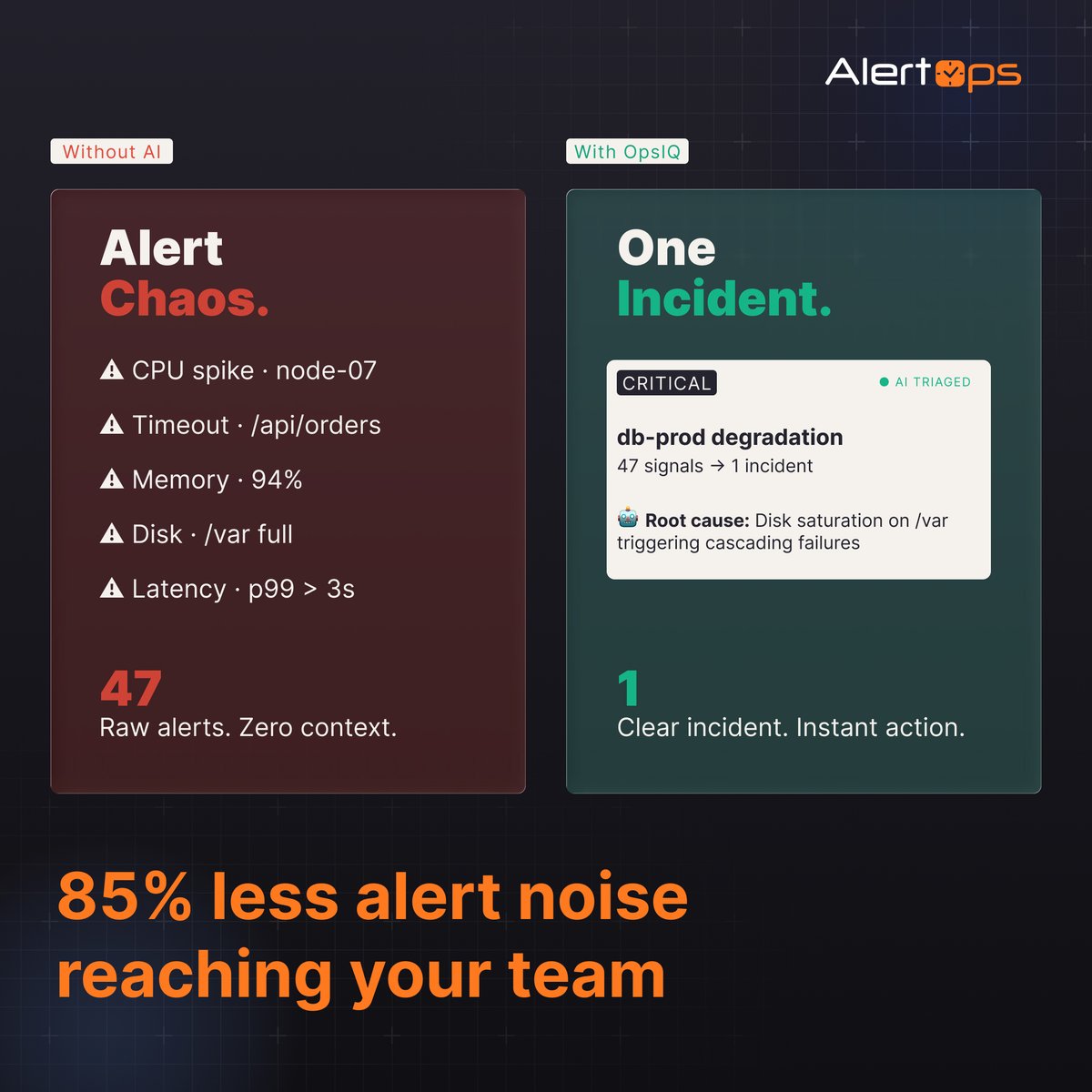
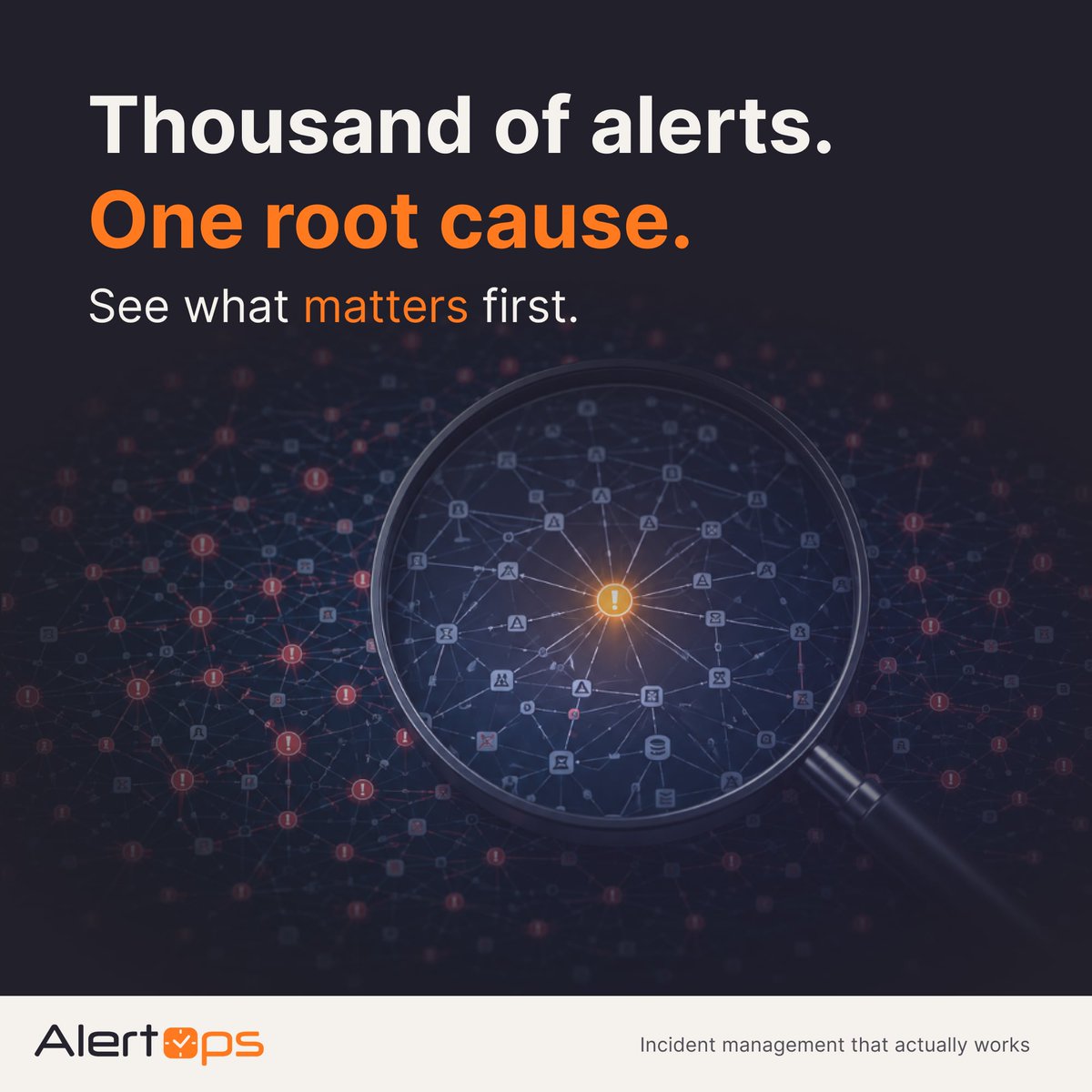
Chasing every alert during an incident costs your team critical minutes.
AlertOps correlates the noise into a single clear signal so your engineers act with precision, not panic.
#AlertFatigue #IncidentManagement #SRE #DevOps #AlertOps
12
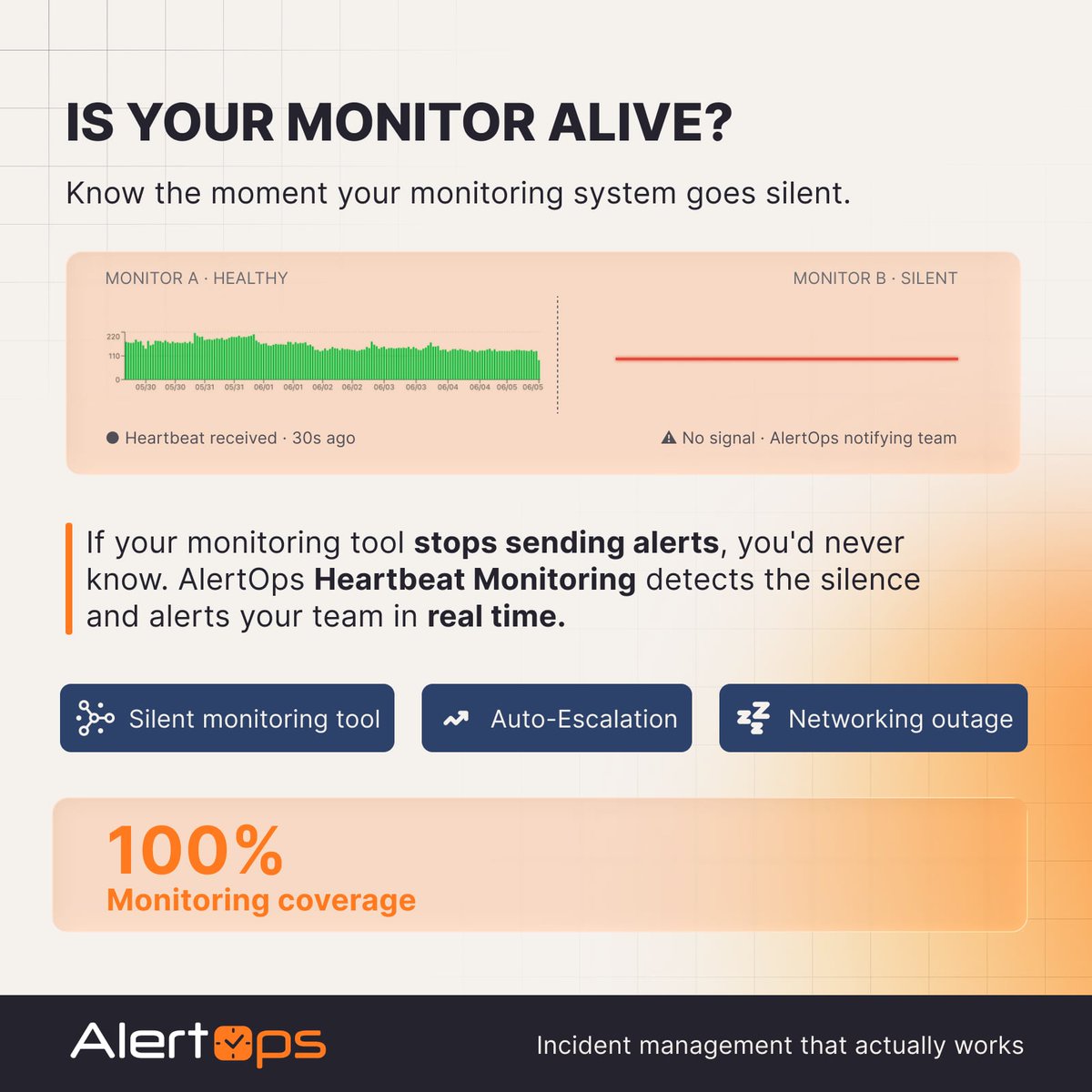
Most outages aren't caused by loud alerts - they're caused by silence nobody caught.
AlertOps watches your monitoring tools so your team always knows when something stops working.
See it in action.
hubs.la/Q04jVkQZ0
#HeartbeatMonitoring #IncidentManagement #AlertOps
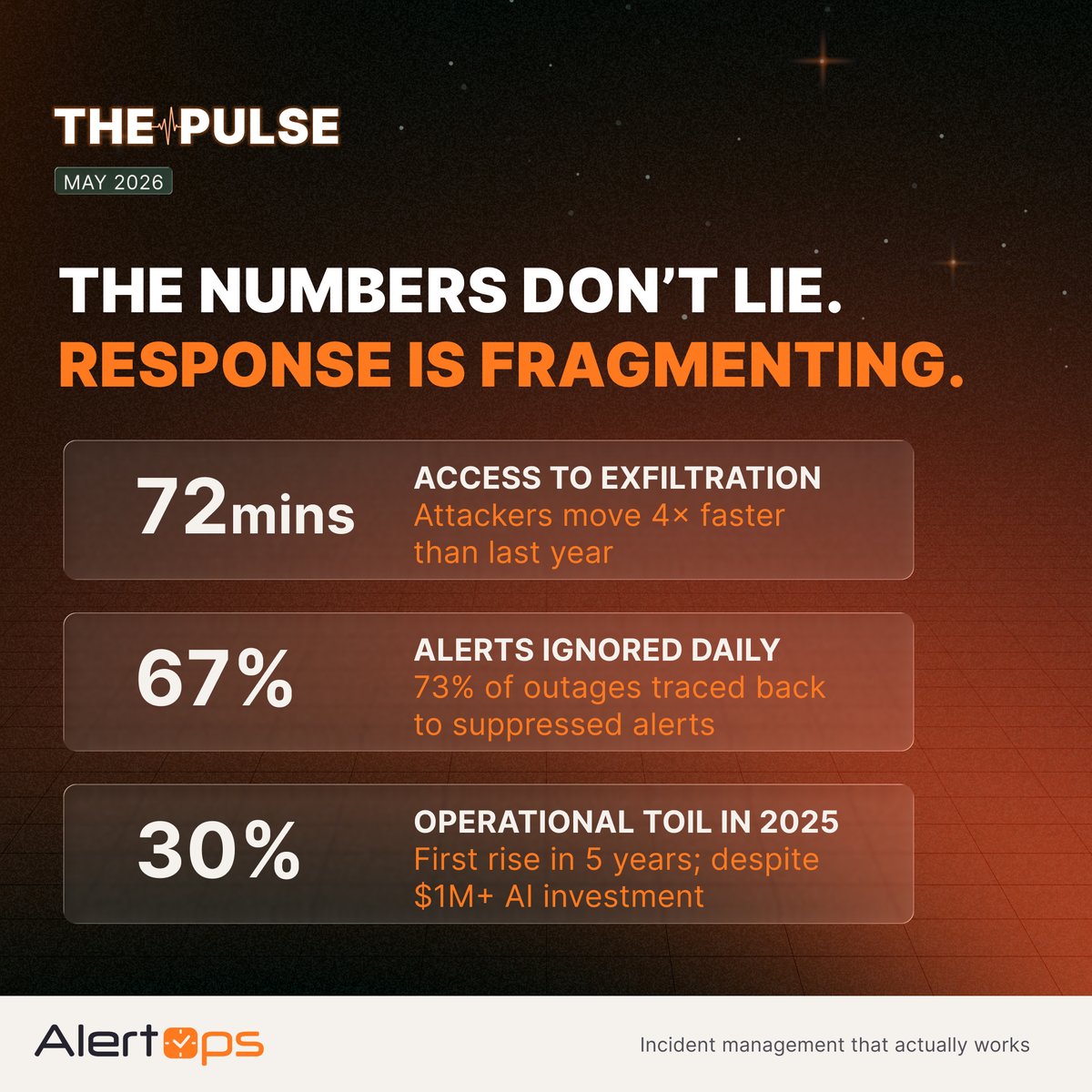
The industry keeps investing in tools.
But response times aren't improving - they're fragmenting.
Our May Newsletter breaks down exactly why, with data.
hubs.la/Q04jJ_N30
#ThePulse #IncidentManagement #SRE #DevOps #AlertOps
6
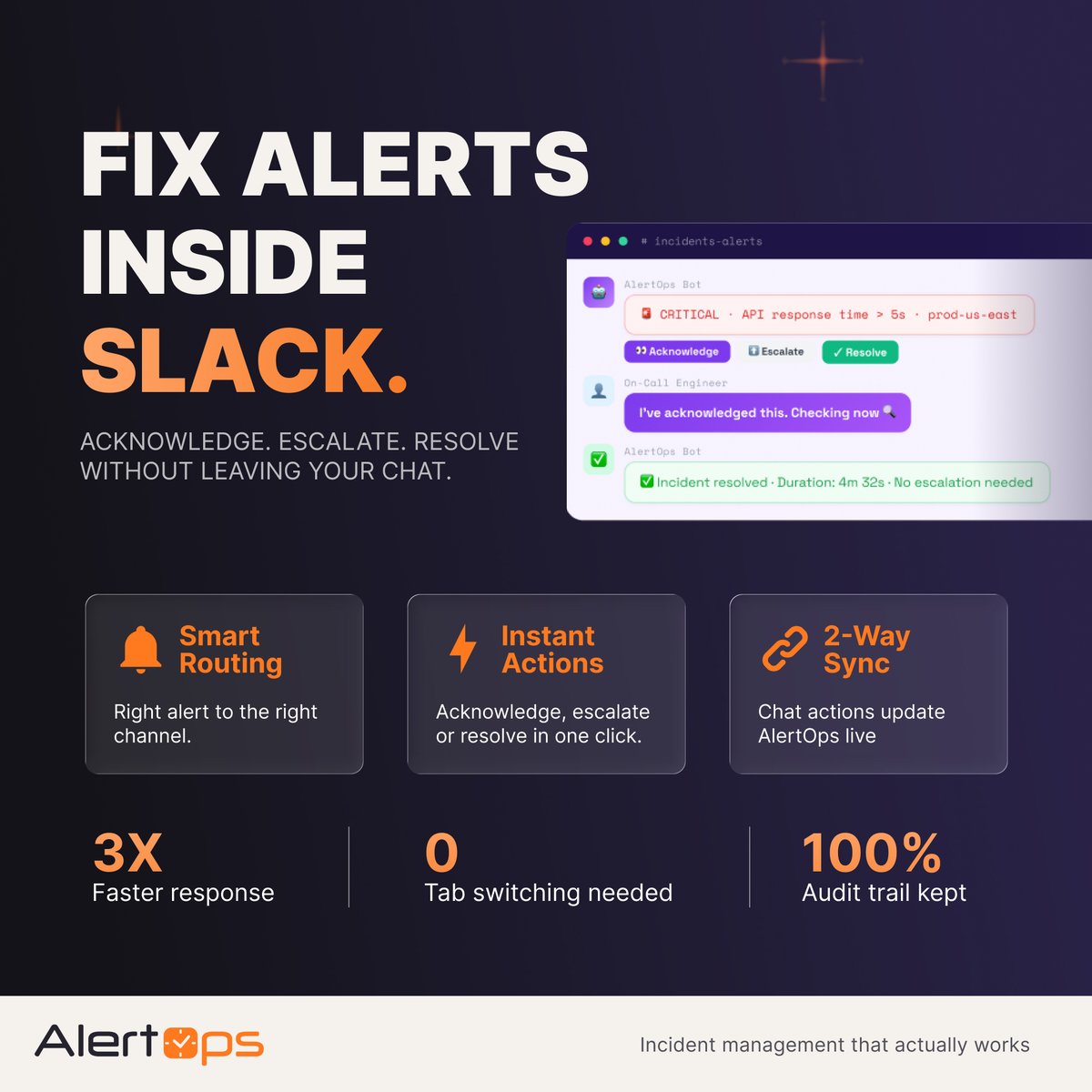
Switching tabs during a critical incident costs more time than you think.
What if your team never had to leave the conversation to resolve it?
#SlackIntegration #IncidentManagement #SRE #DevOps #AlertOps
5
The right information at the right time changes everything.
Something built for that is almost here.
#ComingSoon #IncidentManagement #AlertFatigue #SRE #AlertOps