Building trading bots with Python and AI.
Joined October 2025
- Tweets 3,323
- Following 27
- Followers 646
- Likes 3,045
70 Photos and videos
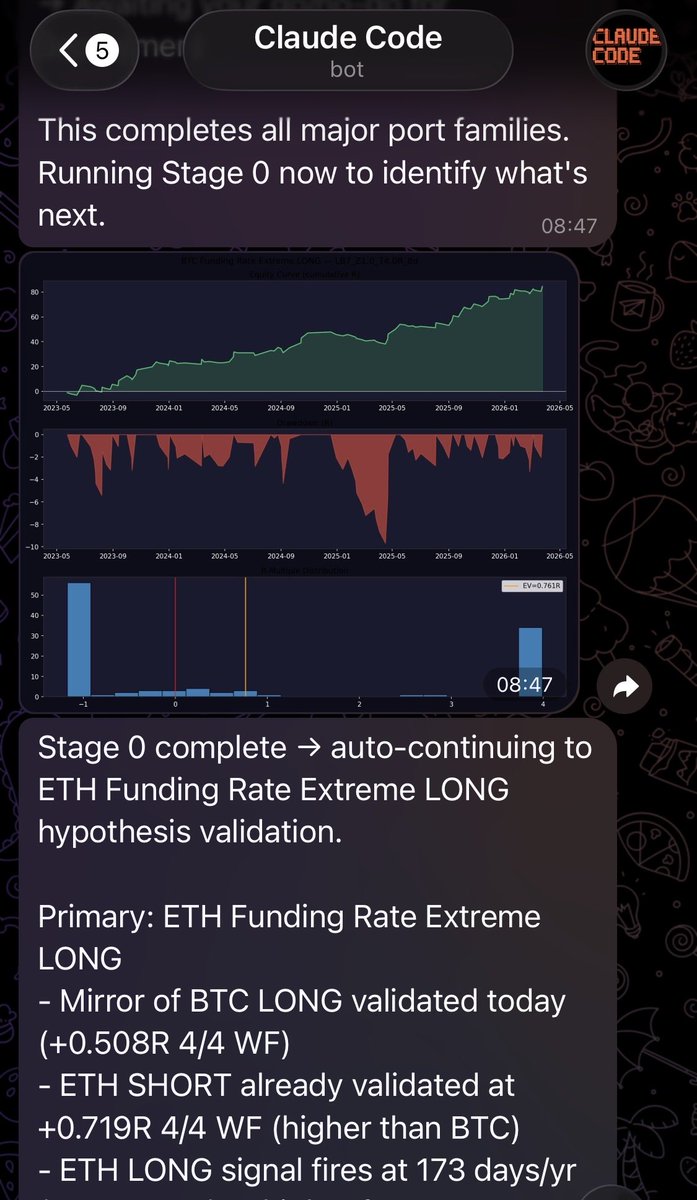
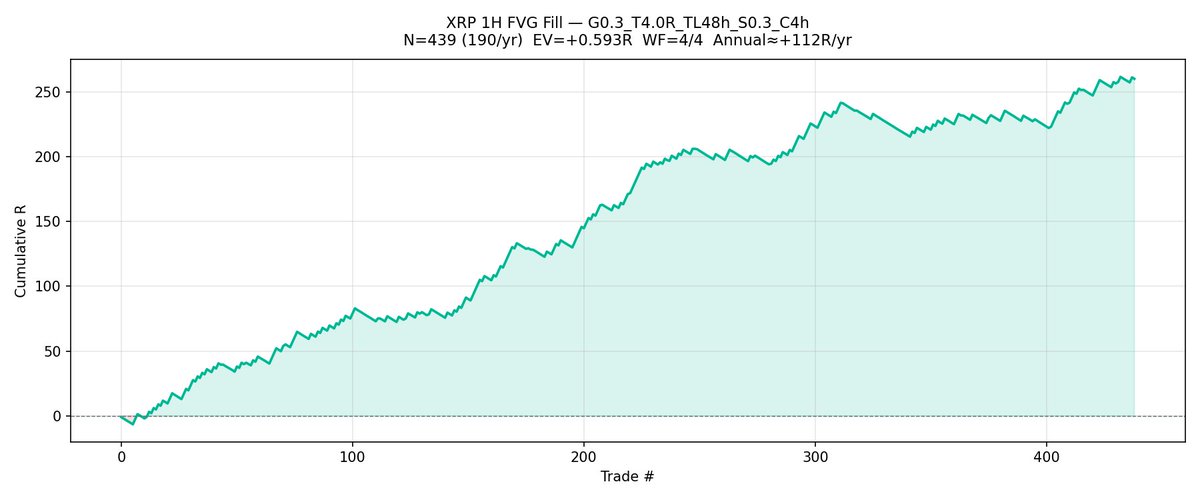
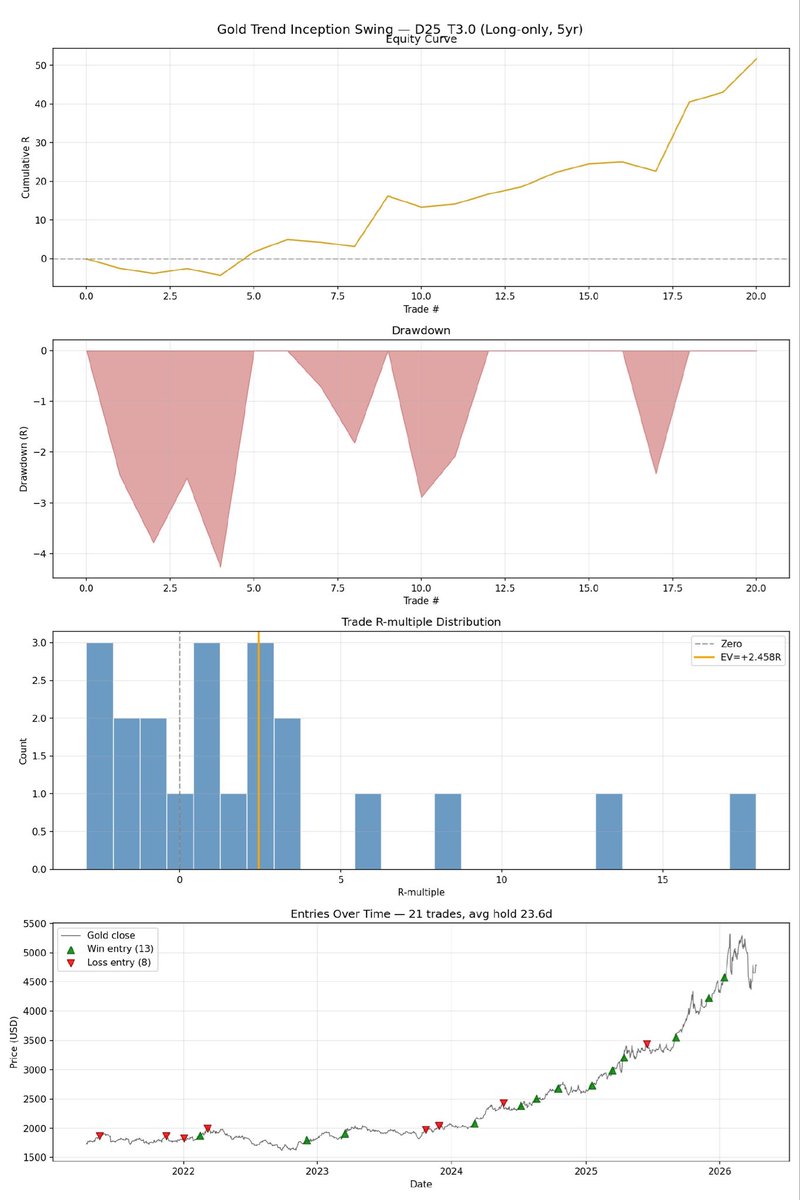
You do not need a hundred dollar a month dashboard to start reading on-chain data.
Funding, open interest and liquidations come free straight from the exchange APIs.
Binance, Bybit, Hyperliquid all hand it over.
The headline on-chain metrics are free on CryptoQuant and Glassnode.
Anything custom you write yourself in Dune for nothing.
Paying buys you finer resolution and deeper history, not secret signals nobody else can see.
So prove the signal works on the free data first.
Upgrade when the edge is real, not before.
The cost was never the thing standing in your way.
35
The account ender is almost never the first loss.
It is the one after it. Took the loss, chased it, sized up to make it back fast, turned a bad day into a dead account.
Did that more than once.
Willpower doesn't save you in that state because the moment you need it is the exact moment it is gone.
What fixed it was taking the decision away.
A daily loss cap that locks the platform for the rest of the session, no override.
A bot that only trades the setup, so there is no make-it-back button to reach for.
Automation didn't hand me discipline. It removed the gambler by denying him access.
40

Jun 11
The step almost everyone skips is the one that matters most.
Before I write a line of code, I run deep research on the idea.
Does the mechanism have real backing in the literature, or does it just sound clever.
I run it through more than one tool, NotebookLM, Claude, ChatGPT and play them off each other so one cannot flatter me into a bad idea.
No evidence, idea killed, move on.
It stops you burning weeks backtesting something the academic work buried years ago.
Research first is not the slow path. It is what stops you testing dead ideas.
1
82
Jun 10
I did not come to bots from a position of strength.
I blew up multiple times trading by hand.
Revenge traded, chased losses, could not follow my own system to save my life.
The strange part is I could build profitable backtests just fine.
The edge was there on paper.
I just could not execute it without my own emotions wrecking it.
Good builder, hopeless trader, that was the whole problem.
So I built the thing that executes the plan without me in the way.
The bot does not revenge trade. I did, every time.
2
63
Bots are not risk free, and anyone who tells you otherwise has not run one long enough.
They remove most execution mistakes.
They do not remove risk.
People have lost entire accounts to broken code, a bad fill loop, a logic error firing at full size while they slept.
Emotion is still in it too, the moment you watch a live system you feel every tick.
Automation takes away the gambling, not the danger.
Respect the thing.
A bot you trust blindly is just a faster way to find out what you missed.
1
52
One rule the bot is never allowed to break.
Never risk more than one percent on a single trade.
Not because one percent is magic, but because it means no single trade and no bad run can take you out of the game.
And when the losses string together the size comes down, not up.
The urge to size up and win it back is exactly the human instinct that blows accounts, so I hardcoded the opposite.
The bot does not get a pass on this just because it is automated.
The rule lives in the code, where I cannot argue with it.
2
92
My whole operation runs on a VPS that costs about ten dollars a month.
Cron jobs fire the scripts, the bots place every trade themselves, all of it in Python, none of it touched by hand.
That is the part people get wrong about cost.
You do not need a trading desk or a Bloomberg terminal to run a fleet of systems.
You need a cheap box that never sleeps and code that does its job while you do something else.
Hedge-fund-style plumbing for the price of two coffees a week.
2
123
Most people build a strategy, see a nice backtest, and ship it.
That is how you go live with a curve fit.
My gate is harder than that.
Research the mechanism first, does it have real evidence or did I just like the idea.
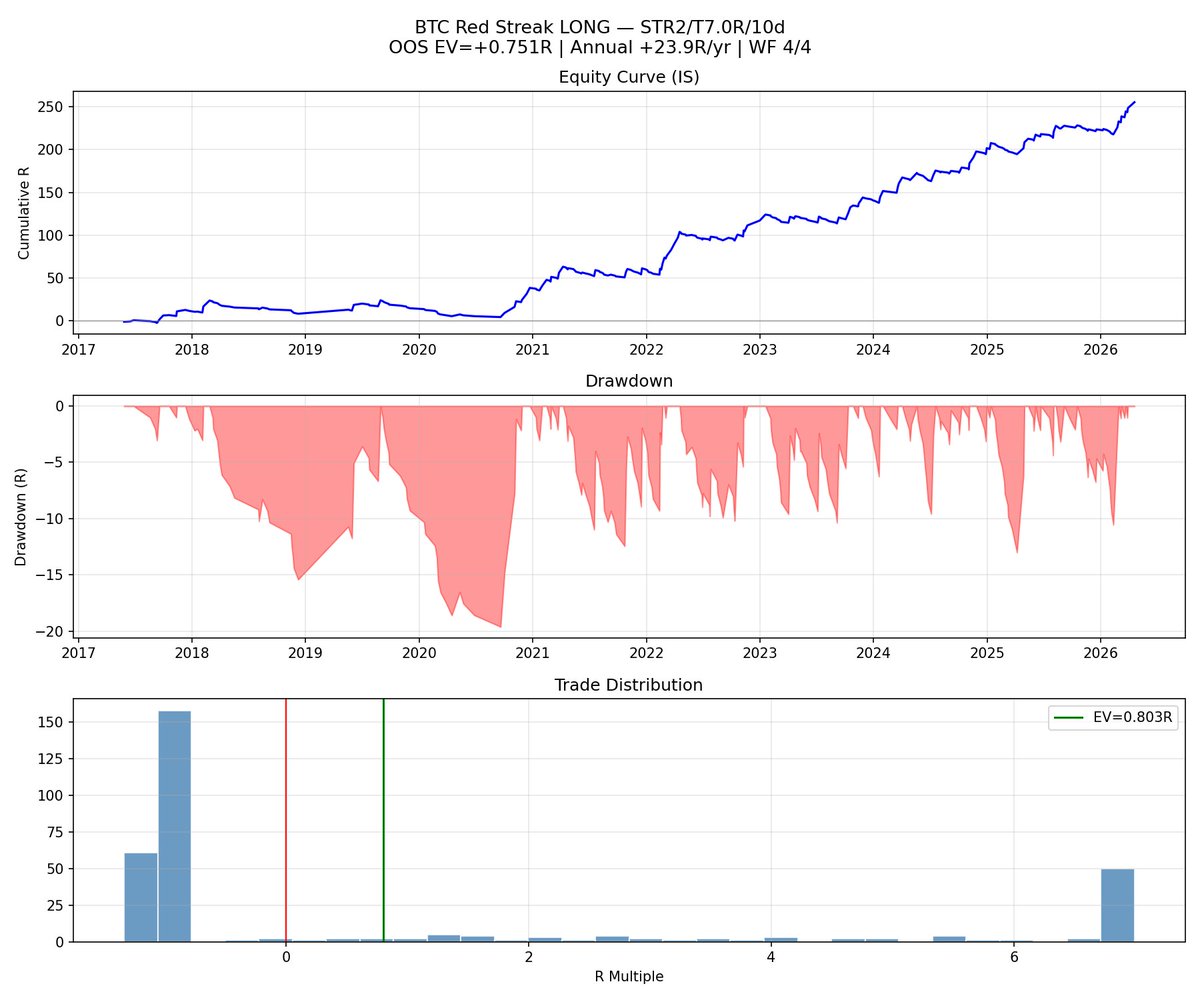
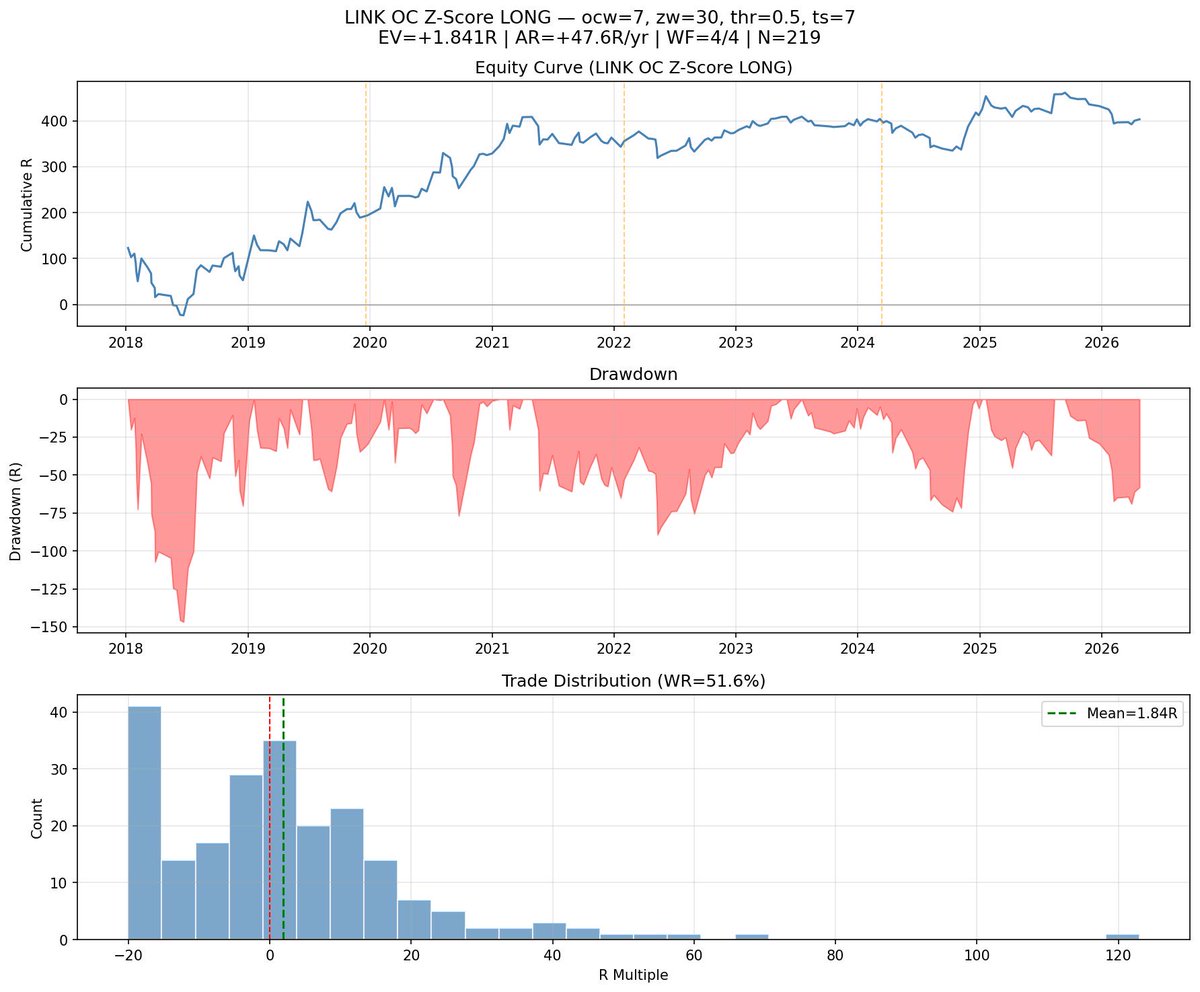
Then a bar-by-bar backtest with real exchange fees baked in.
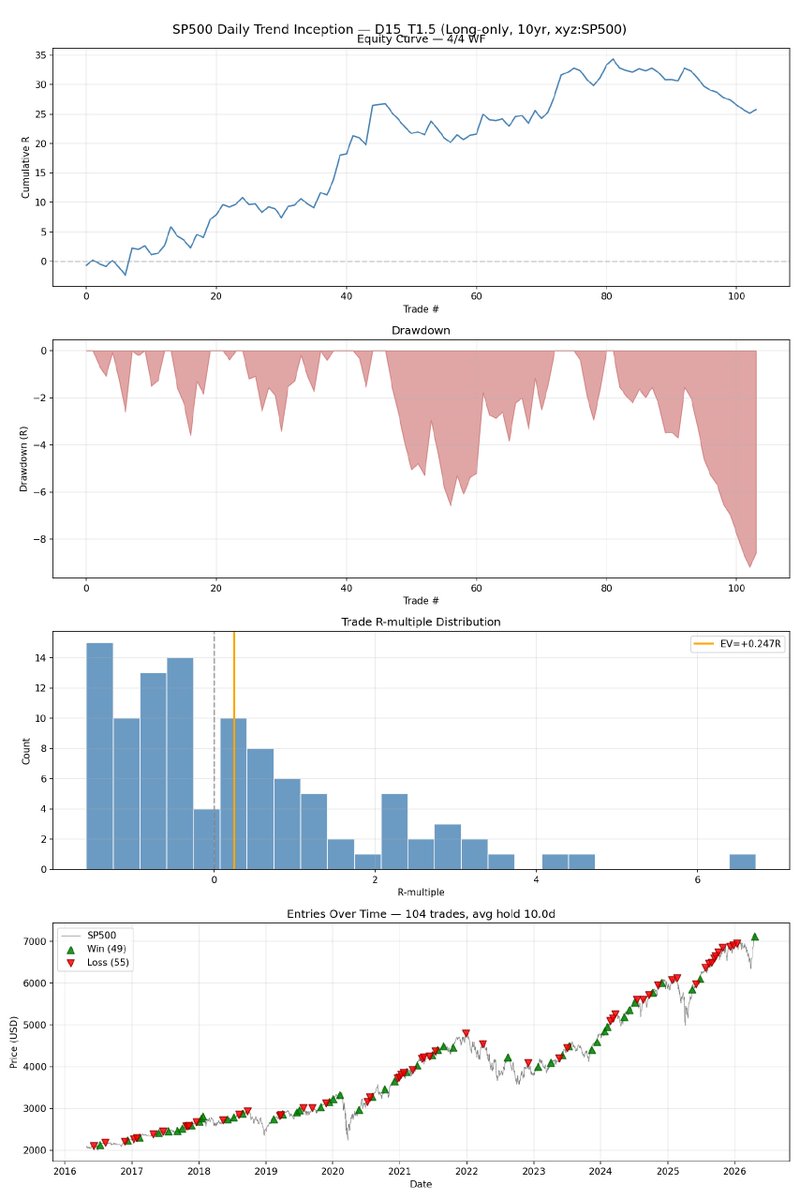
Then a four-fold walk-forward on data it has never seen.
Hard thresholds on return, trade frequency and walk-forward score, and if it misses one it dies, no exceptions.
Whatever survives gets correlated against the live fleet, because a system that fires on the same days as one I already run adds nothing.
Only then does it touch money.
61
Want to be a scalper?
Done manually that is twelve hours a day staring at a screen waiting for setups that may not come.
Or you could be a scalper who never looks at a screen.
The bot waits for the setup, fires it, logs it, and you find out later.
Same strategy, none of the chair time.
The catch is the setup still has to be a real edge, a fast bad strategy is just a faster way to lose.
Automate the waiting once the edge is proven, not before.
47
There is little point trading manually in 2026.
Some people still find an edge by hand, but they are rare and they always were.
The core of trading is emotion, yours, working against you the whole time.
Science backs this up, your brain is wired to do the wrong thing under money pressure.
So instead of spending years fighting your own wiring, remove the emotion from the loop entirely.
Code the plan, let it run and the single biggest cause of blown accounts is just gone.
1
64
If you want one thing to learn for the next ten years, learn to run AI agents.
Subagents, MCPs, the fundamentals of wiring tools together.
Do not try to chase every model update, that is a losing race and pointless.
Get properly good at the basics instead, because those carry across whatever you end up building.
Almost every job ends up delegated to agents, and someone still has to direct them well.
The free resources are everywhere.
The only thing missing is you starting.
48
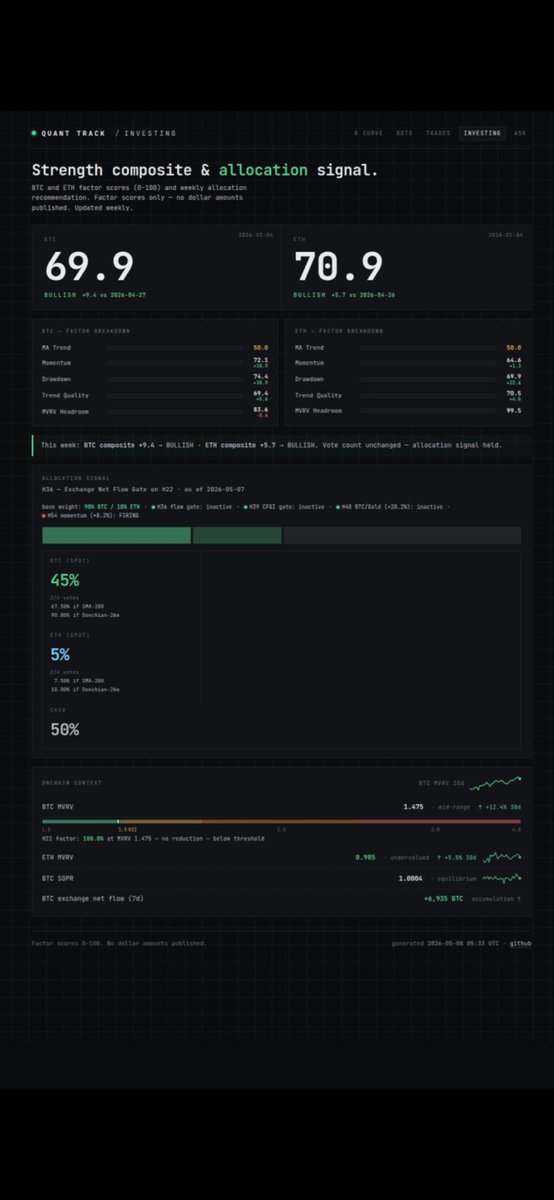
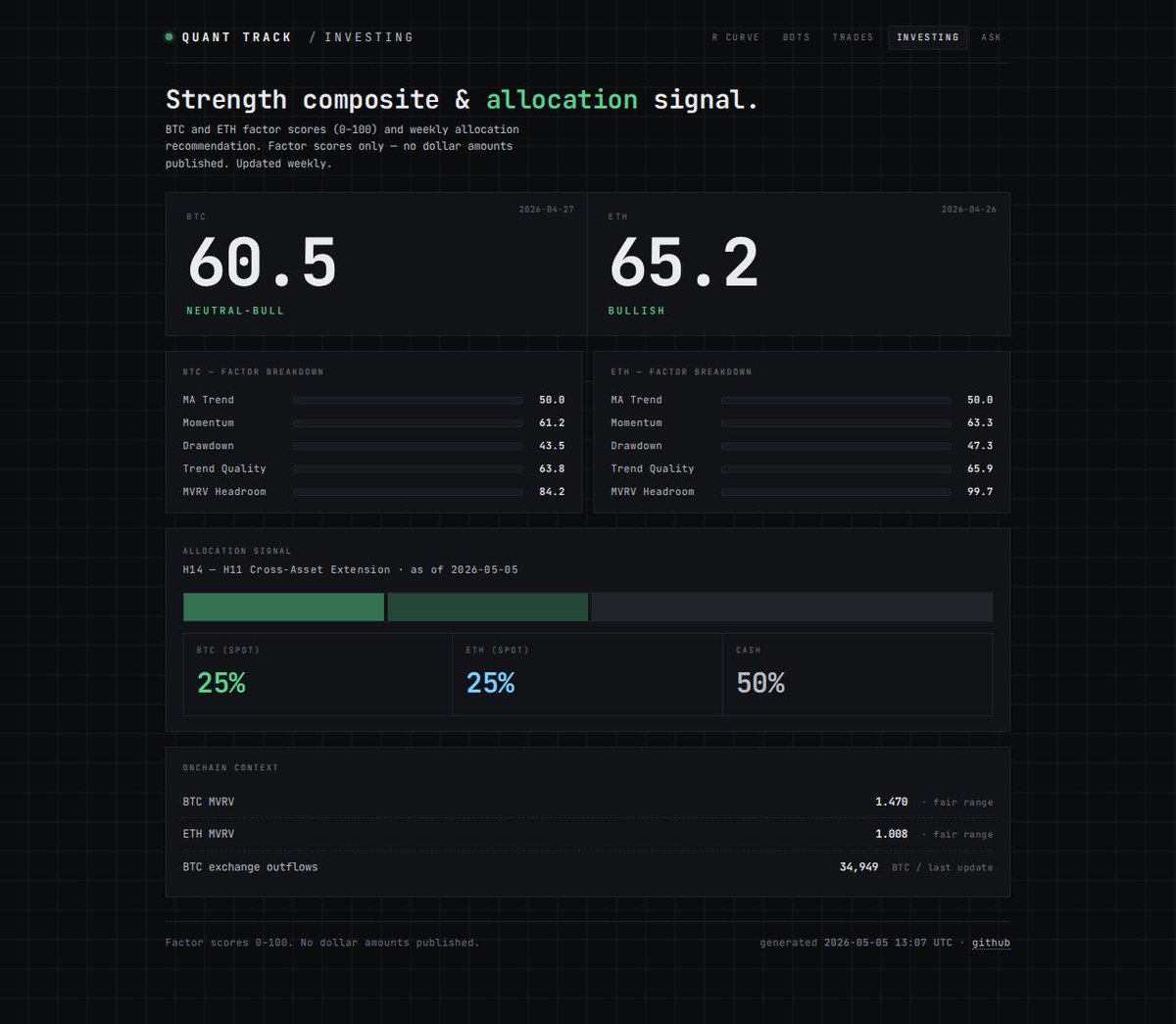
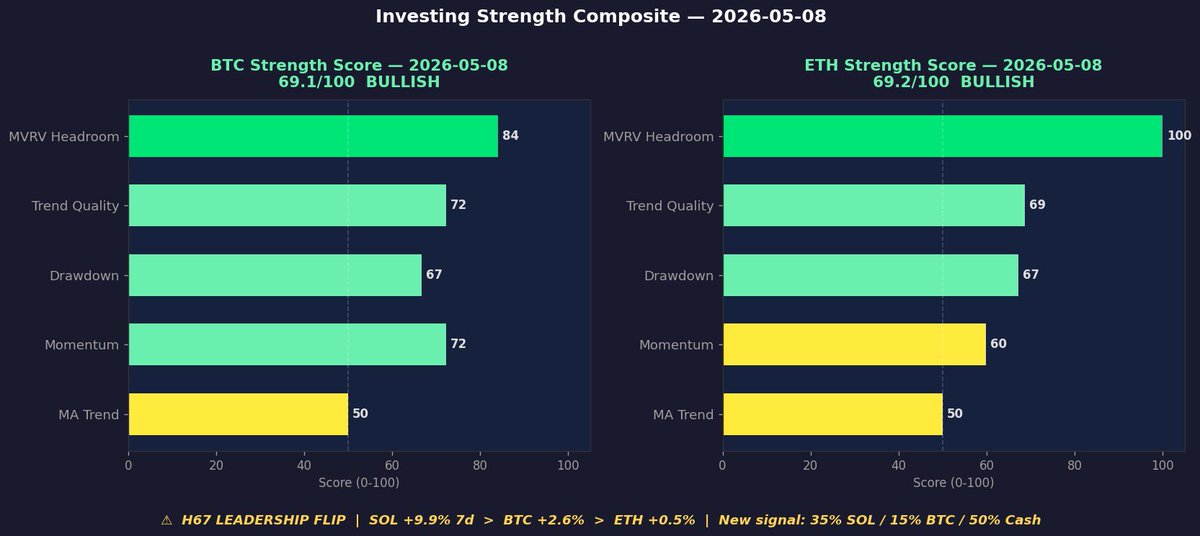
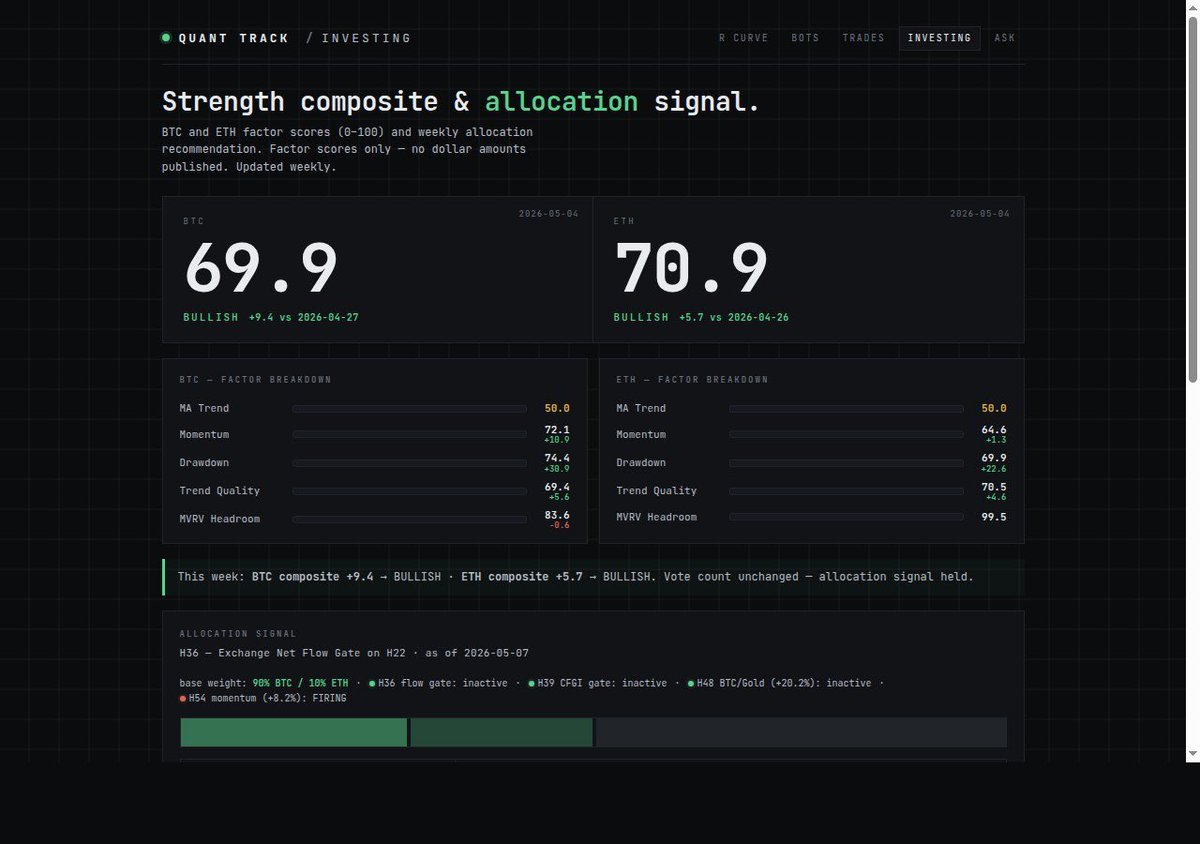
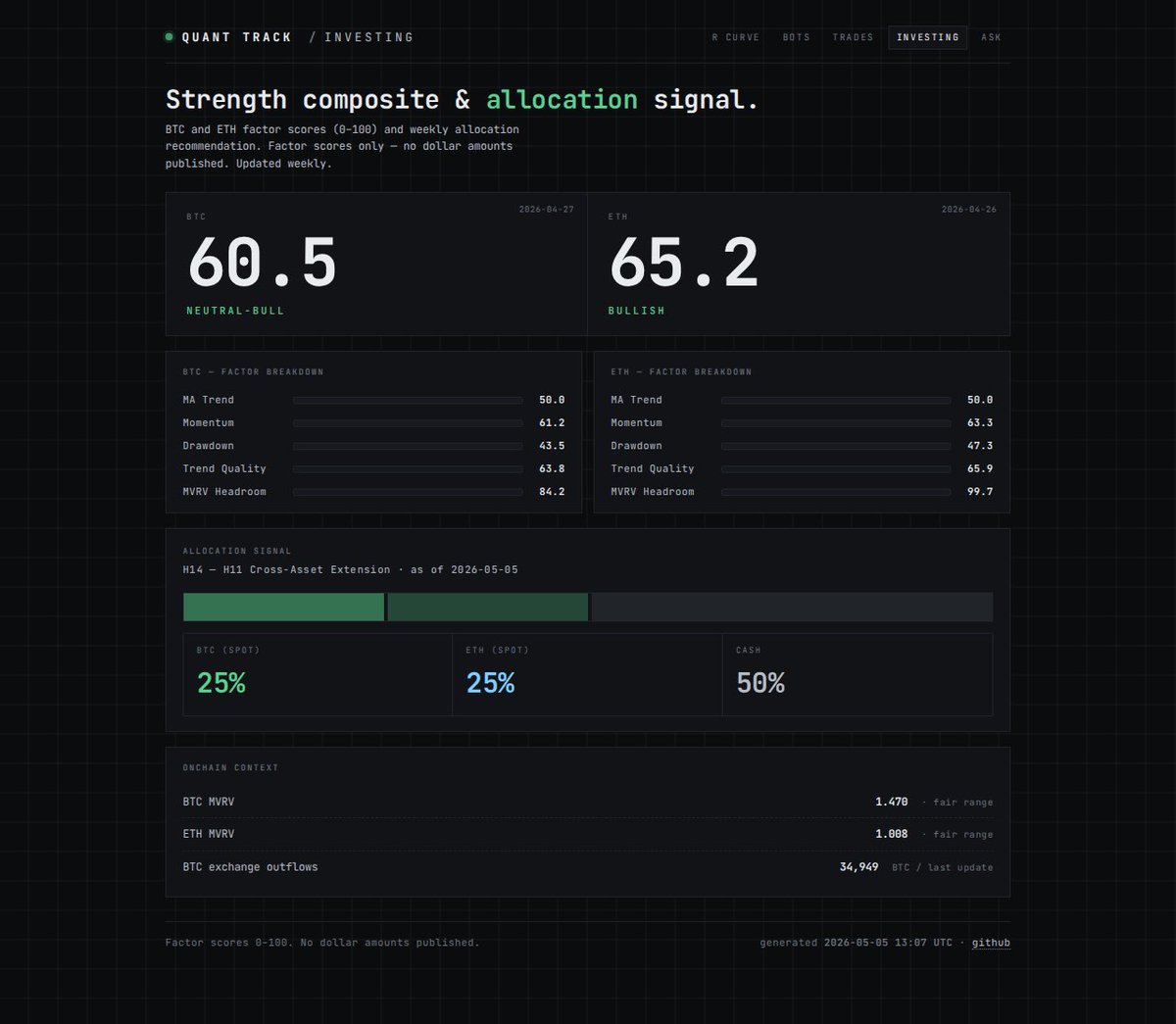
I am building an investing system in Python that scores the major assets against each other.
Gold, Bitcoin, the S&P, silver, oil.
It rotates between whatever is actually moving instead of marrying one of them.
Every day it spits out a report. What to buy, what percentage to put where, how much to actively trade versus hold.
The point is the machine ranks the whole field for you and you act on the ranking, not on a hunch about which chart looks exciting.
No more guessing which asset is hot.
Score them and let the numbers point.
91
Manual trading should have made me quit.
Blew up more times than I could count. Revenge traded. Could not follow my own system. By any sensible measure I should have walked away and accepted trading wasn’t for me.
I refused. Not because I was sure I’d win. Because I knew there was a way I hadn’t found yet.
For years that conviction had nothing to back it up. Just a stubborn refusal to accept the verdict the screen kept giving me.
Then I stopped trying to fix the trader and started building instead. Fed the AI my own edge and got it to build around that, rather than asking it to invent a strategy on its own.
15 live systems trading 24/7 now. None of them place a trade I’d want to override. The conviction was right, the route I’d been taking was wrong.
If trading’s for you, you’ll find a way. You just have to want it badly enough to keep going when nothing’s working.
5
112
I did not switch to bots because I was a great trader.
I switched because I am a builder who likes solving problems and stays calm doing it.
Sat live on a chart with my own money I was the opposite, and no amount of telling myself to be disciplined ever changed that.
So I stopped trying to repair the trader and built the thing that did not need repairing.
The system runs the plan while I do the part I am actually good at.
Work out what you are, then automate the rest.
1
1
74
Everything in my system is automated except the one thing that never should be.
Agents research, build, backtest and audit on their own all day.
The second anything touches live capital, it stops and waits for me.
Deployment is a manual approval, deliberately.
Automate the work, never the decision to risk real money.
1
103
Six AI agents run my operation every day and not one of them stays running.
Each is a time-boxed session with a single job.
One health-checks every live bot before the day opens.
One works the research queue, killing weak ideas and pushing good ones forward.
One audits the live systems for silent failures.
They start fresh, do the work, write what they found to a memory file, then shut down.
The trick is not one giant always-on AI.
It is small agents with narrow jobs and a memory they hand to the next run.
79
The model is the same one everyone else is typing into.
The only variable you control is what you put in front of it.
A lazy prompt and a properly engineered one are night and day.
Give it a role. Give it your real constraints and your actual edge hypothesis.
Wrap the trading plan in XML tags so it can tell rules from noise.
Strip anything it would otherwise have to guess.
People blame the AI for generic output when the input was generic first.
47
Automation does not remove risk. It removes you, at the exact moments you are most dangerous.
No jumping on the chart.
No yanking the stop because a candle looked scary.
No sizing up to win it back after a loss.
The bot follows the rules you set while you are nowhere near the keyboard.
And you only ever put a system live once it is already profitable, so the job stops being prediction and starts being staying out of the way.
It takes the gambling out, because the gambler was always you.
51
Edge comes from price, not from the perfect RSI setting.
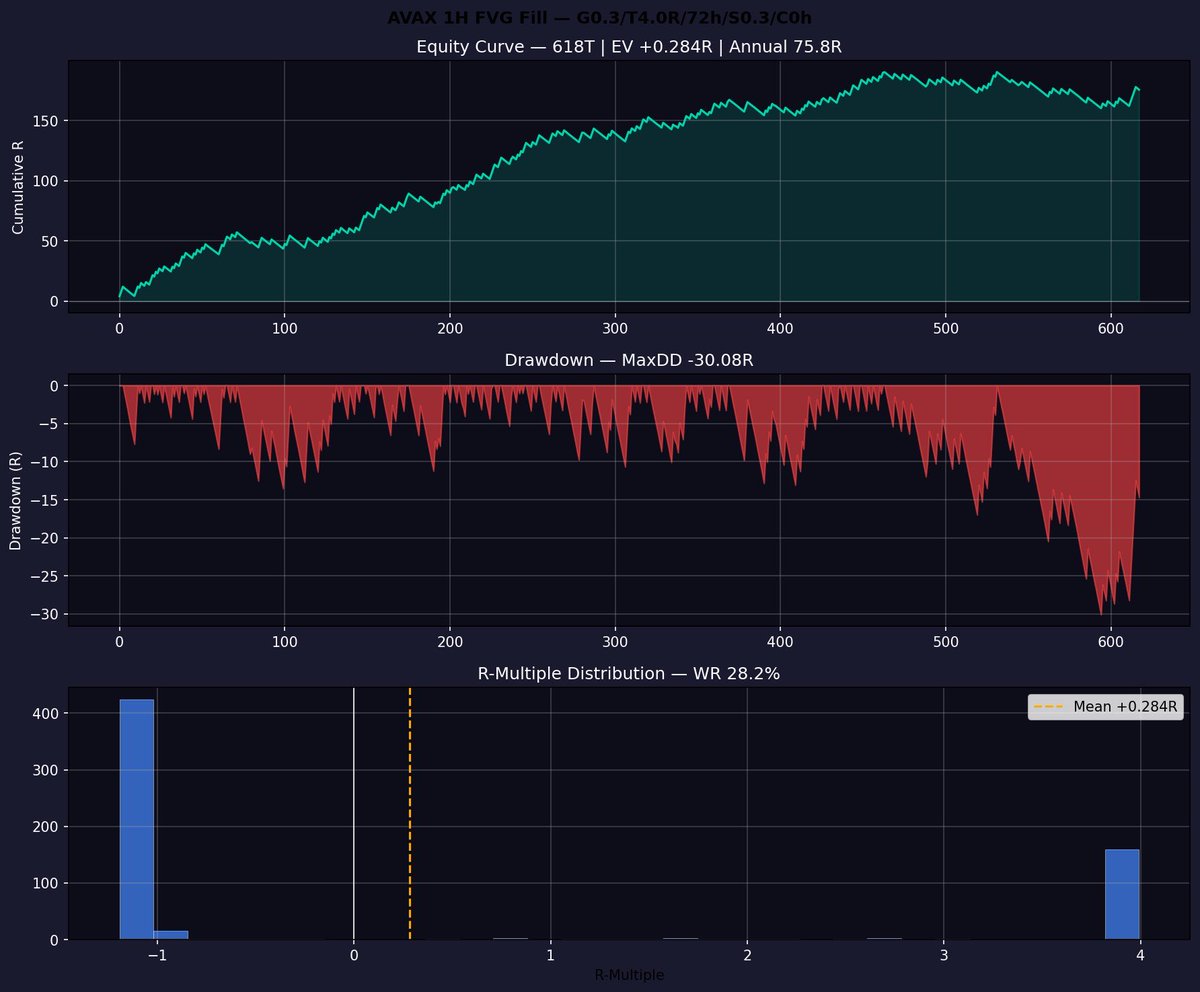
I start with fair value gaps, market structure, the levels price keeps respecting.
Indicators confirm what the chart is already telling you, they never lead it.
Most people have it backwards, hunting for a magic indicator combo while ignoring what the candles are screaming.
Learn to read structure first and the indicators become a second opinion instead of the whole thesis.
An indicator you bolt on without understanding price is just decoration.
40
The first time a bot of mine went haywire it tried to fire the same order in a loop off a bad data feed.
I watched it happen.
The only reason it did not matter was that I was running on tiny size, almost embarrassingly small, because I did not trust it yet.
That habit saved me real money that day.
I treat small size as a testing tool, not timidity.
You go live small on purpose, to catch the bugs that only show up with real fills and real fees, while the cost of finding them is a few dollars instead of your account.
Scale up after it has earned it, never before.
80