
Reporting on AI, startups, and the technologies shaping tomorrow.
Joined May 2023
- Tweets 12
- Following 72
- Followers 4
- Likes 2
9 Photos and videos
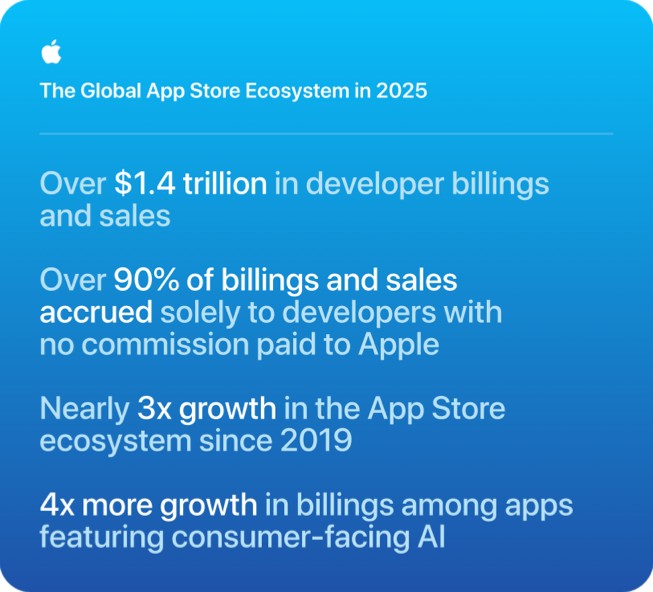






Five to 10 years ago, building software required significantly more manual coding than it does today. Now, AI coding assistants have made things easier for developers. The question then becomes how developers can turn AI-built products into businesses.
Photo: Apple
cutly.in/VF9lLh
1
16

Jun 13
Anthropic PBC said it believes there has been a misunderstanding after the US Government directed the company to stop foreign nationals from accessing Claude Fable 5 and Claude Mythos 5, the frontier lab’s two most capable AI models.
cutly.in/1DsqIX
2
Jun 12
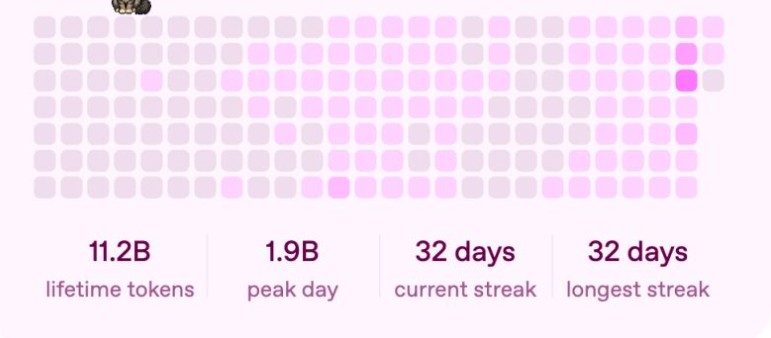
As tokenmaxxing is increasingly used to encourage AI utilisation in some tech companies, a staffer at OpenAI shared her Codex dashboard showing how many tokens she burned in four months.
cutly.in/mjJ7Q3
1
Jun 12
Getting into Meta is a dream many software engineers hold dear, but a Singaporean software engineer who claims he worked at the Mark Zuckerberg-led tech giant quit after two years.
cutly.in/wRivMA
1
11
Jun 10
I Gave the Same Prompt to Claude Fable 5, ChatGPT, Grok, and Gemini. They All Have Different Responses
cutly.in/T5XAlD
3
Breaking: Anthropic releases Claude Fable 5 to the General Public, Claude Mythos to Cyber Partners
On Tuesday, June 9, Anthropic announced the release of two AI models, one to the general public and the other to its cybersecurity partners.
Athropic said it released Claude Fable 5, a Mythos class model, but with some of its capabilities removed as a form of safety guardrails.
It also released Claude Mythos to a small number of cybersecurity partners, noting that it would continue to expand access to the model, said to be capable of detecting vulnerabilities in cyber infrastructure.
"Today we’re launching Claude Fable 5: a Mythos-class1 model that we’ve made safe for general use", Anthropic wrote in a blog post.
"For a small group of cyberdefenders and infrastructure providers, we’re also launching Claude Mythos 5. It’s the same underlying model as Fable 5, but with the safeguards lifted in some areas."
1
1
26
Breaking: OpenAI Confidentially Files for IPO
Sam Altman's OpenAI has confidentially filed for an initial public offering (IPO) with the US Securities and Exchange Commission (SEC).
The announcement was made via a blog post on the ChatGPT maker's website on Monday, June 8.
"We recently submitted a confidential S-1. We expect it to leak so we’re just announcing it. We have not decided on timing yet; it may be a while because there are things we want to do that are likely easier as a private company. But it’s a complicated set of tradeoffs and this gives us the option to go public sooner if that ends up being best."
OpenAI joins Anthropic and SpaceX in the race to go public among the dominant AI companies.
17
@AlgorithmPost Interviewed the Designer Who Customised Air Max 1 and Dunk Low Sneakers for Slack
linkedin.com/pulse/i-intervi…
8
Anthropic Says AI Is Making Cyberattackers More Dangerous After Banning 832 Accounts
By Israel Usulor
As AI models get more sophisticated and capable of executing complex tasks with little human interference, concerns have continued to mount about what the future holds for the world economy should malicious actors successfully misuse them.
AI models are increasingly capable of performing tasks that previously required significant human involvement. Now, less-skilled bad actors are deploying AI to assist their operations, making traditional threat-assessment methods less reliable.
In a blog post published on June 3, 2026, Anthropic said it had banned 832 accounts between March 2025 and March 2026. According to the frontier lab, the accounts were “banned for malicious cyber activity.”
Anthropic, which recently confidentially filed a draft S-1 for a proposed IPO, stated that it had analysed the 832 accounts and activities in them and concluded that “malicious actors are using AI in ways that make them more dangerous. More specifically, threat actors are using AI in the later, more complex stages of their cyber operations.”
The company said “cyberattacks are becoming more autonomous” due to the use of AI to coordinate many parts of the attacks by bad actors.
Anthropic explains how AI makes attackers more dangerous
A breakdown of the 832 accounts banned by Anthropic shows that most of them used AI to prepare for cyberattacks. According to the analysis, 560 of the 832 accounts studied by Anthropic used AI to write malware. This number represents 67.3%. Also, 54 of the 832 accounts (6.5%) used AI to assist them with what is called “lateral movement”, which is a method used to penetrate deeper into a compromised network.
According to web security company Cloudflare, lateral movement is the process by which attackers spread through a compromised network after gaining initial access.
According to Anthropic, the activities of malicious actors who are assisted by AI are more dangerous because it increases the threat level of the attackers. “Across the period we studied, attackers’ use of AI shifted from techniques to gain initial access to a system towards activity carried out once they were inside the system,” it said.
Anthropic said the share of actors classified as medium risk or higher rose from 33% in the first six months of the analysis to 56% in the second half, suggesting that attackers are increasingly using AI for more sophisticated operations.
Industry experts agree that AI is growing more capable and increasingly deployed by bad actors, and that some companies may not yet be ready for defence. According to a 2025 State of Ransomware Survey carried out by CrowdStrike, a leading cybersecurity technology company, 76% of global organisations struggled to match the speed of AI-powered attacks.
1
1
38