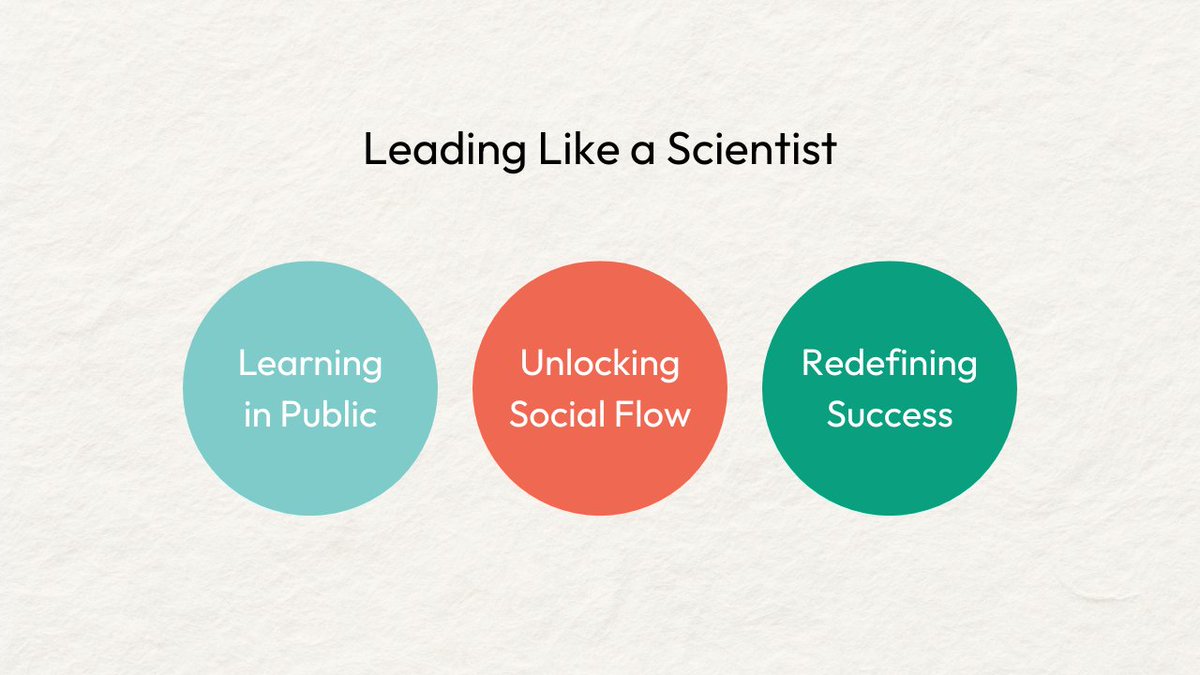
When we are the leader or manager, there's pressure to be "the person who knows". If we cannot give confident advice or direction to our teams, we might look weak. Yet leaders who openly acknowledge what they don’t know often create superior outcomes. Much better to "lead like a scientist": This means approaching everything with curiosity, experimentation, collaboration & being comfortable with not knowing.
Three ways to lead like a scientist:
1) Learn in public: openly admit when we don’t know something, share failures & lessons learned, ask questions instead of always providing answers & document our thinking.
2) Unlock social flow: encourage team members to design their own experiments, make space for sharing insights & remove as many artificial barriers as possible.
3) Redefine "success": think beyond performance standards & treat unexpected results as valuable data. When everyone understands that learning is part of success, they take smarter risks, surface problems earlier & develop more interesting solutions to complex challenges:
nesslabs.com/lead-like-a-sci…. By @neuranne.
The next episode of our Let’s Talk About Student Success Podcast is now available! This month we talk about all things assessment and feedback. Two essential elements of higher education that all students encounter within their experience. Listen now: social.advance-he.ac.uk/SmXj…
ALT Let's Talk About Student Success Podcast - Assessment and Feedback
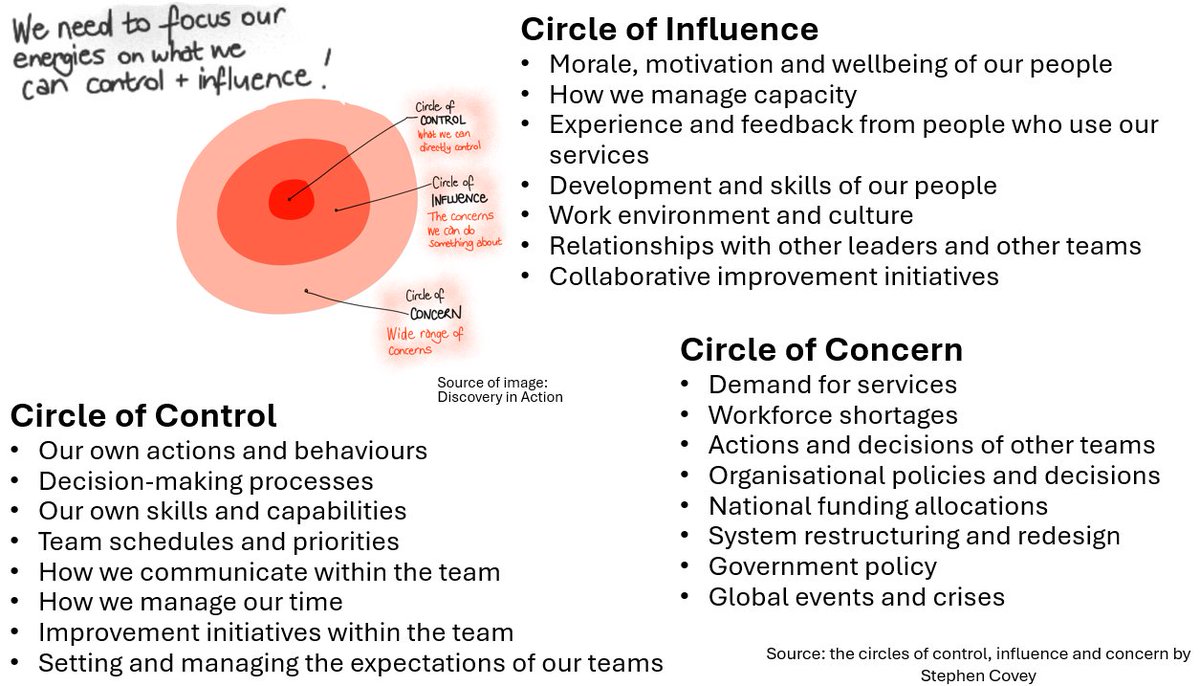
There's so much change happening at present. It's easy to feel powerless & overwhelmed. That's why I have gone back to sharing the classic Stephen Covey "circle of control" model with many of the teams I work with. There are lots of big changes happening that are in our "circle of concern" & we don't have the power to do much about them. But we can still make a significant difference in the world in our "circle of control" & "circle of influence". Lets put our energies into what we can control & influence.
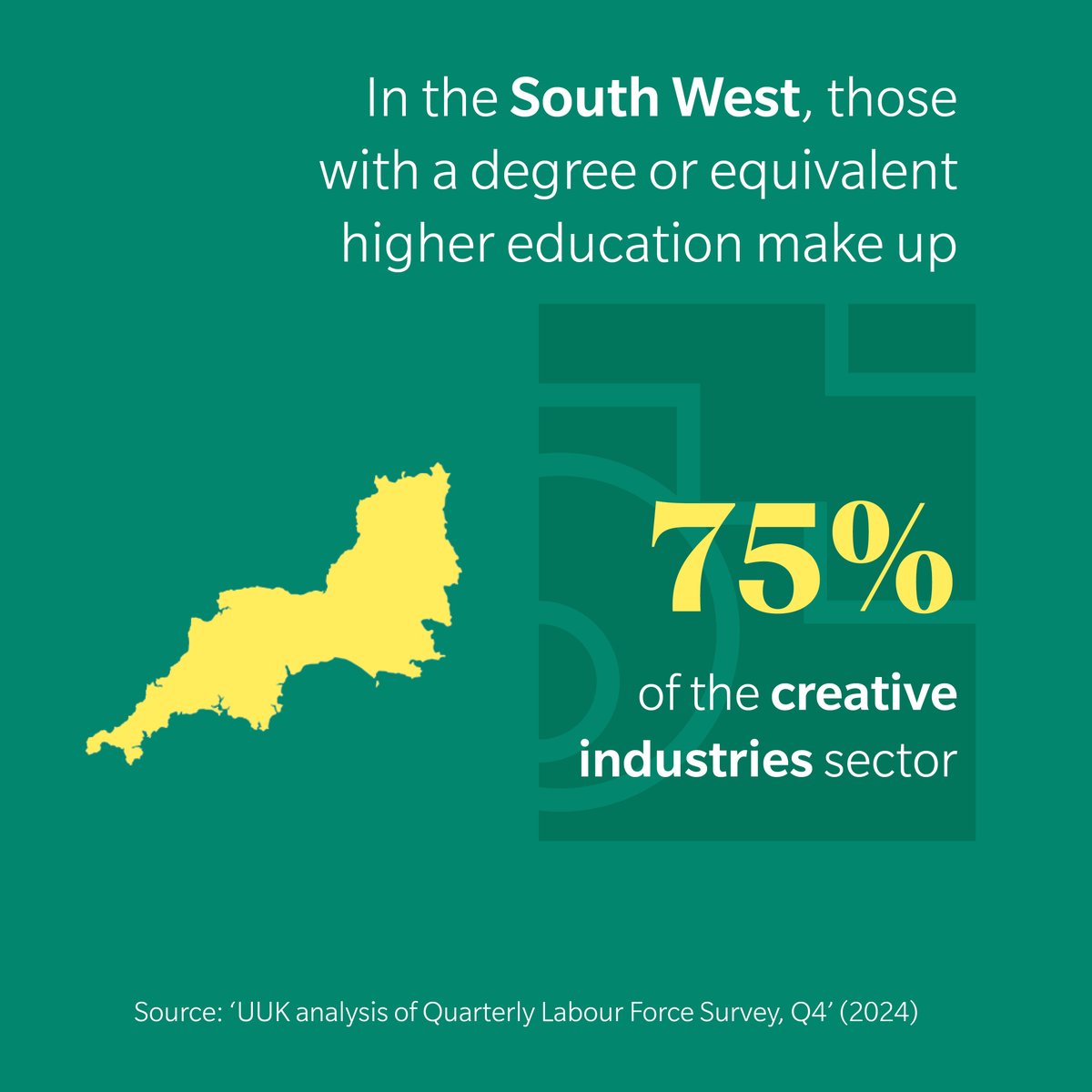
ALT outline of South West with text saying 'In the South West, those with a degree or equivalent higher education make up 75% of the creative industries sector
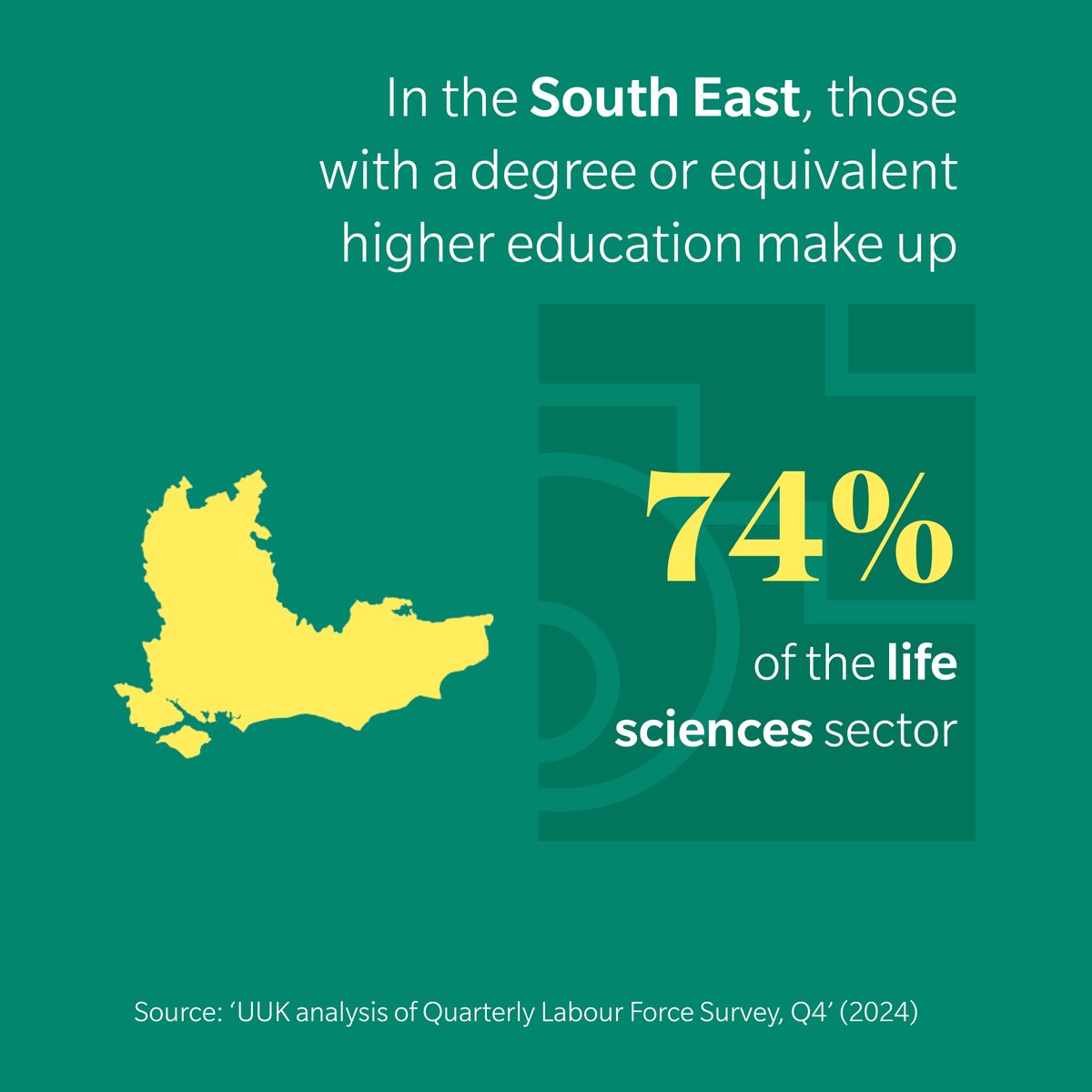
ALT outline of South East with text saying 'In the South East, those with a degree or equivalent experiences make up 74% of the life sciences sector
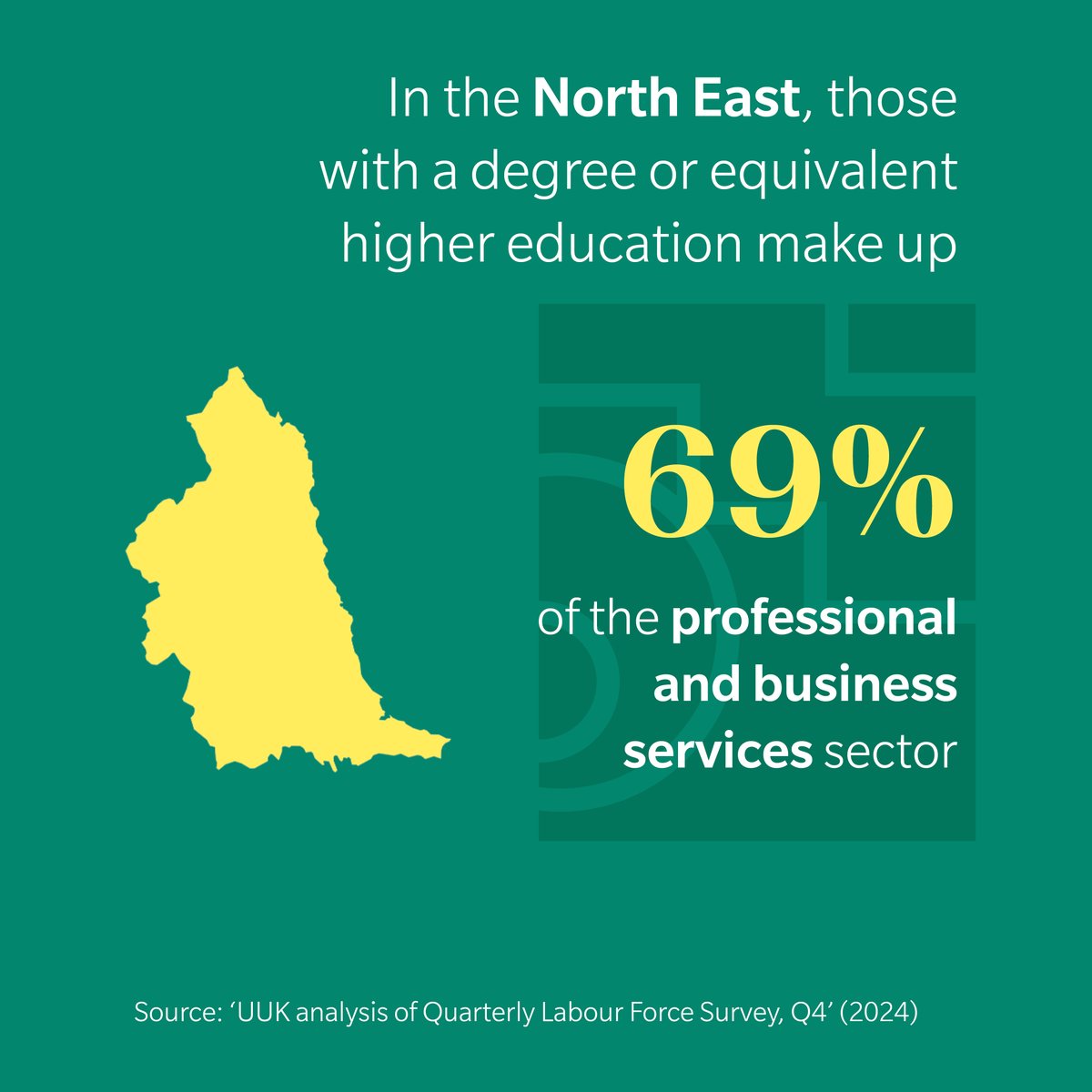
ALT outline of the North East with text saying 'In the North East, those with a degree or equivalent higher education make up 69% o the professional and business services sector
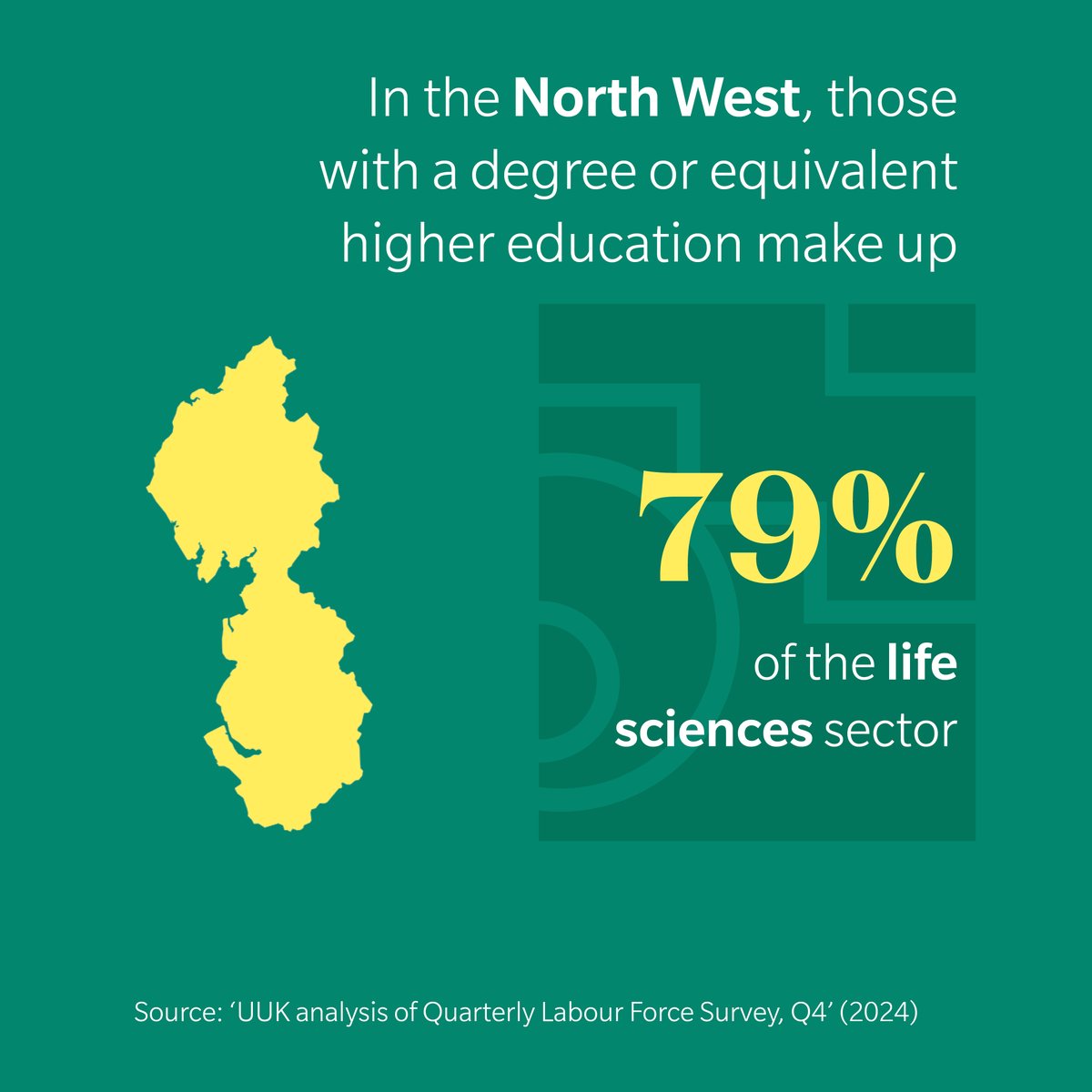
ALT Outline of the North West with text saying 'In the North West those with a degree or equivalent higher education make up 79% of the life sciences sector
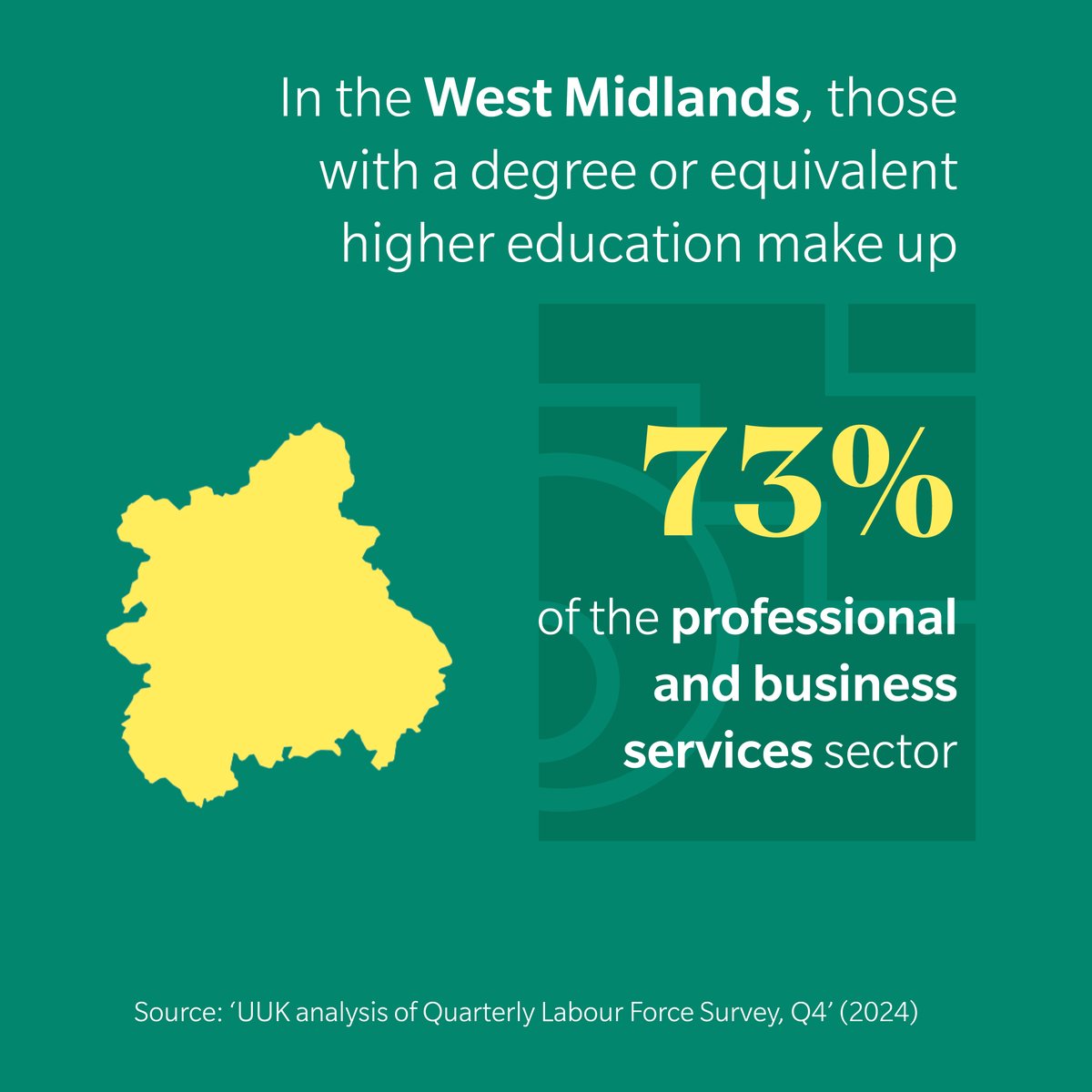
ALT outline of the west midlands with text saying 'In the West Midlands those with a degree of equivalent higher education make up 73% of the professional and business services sector
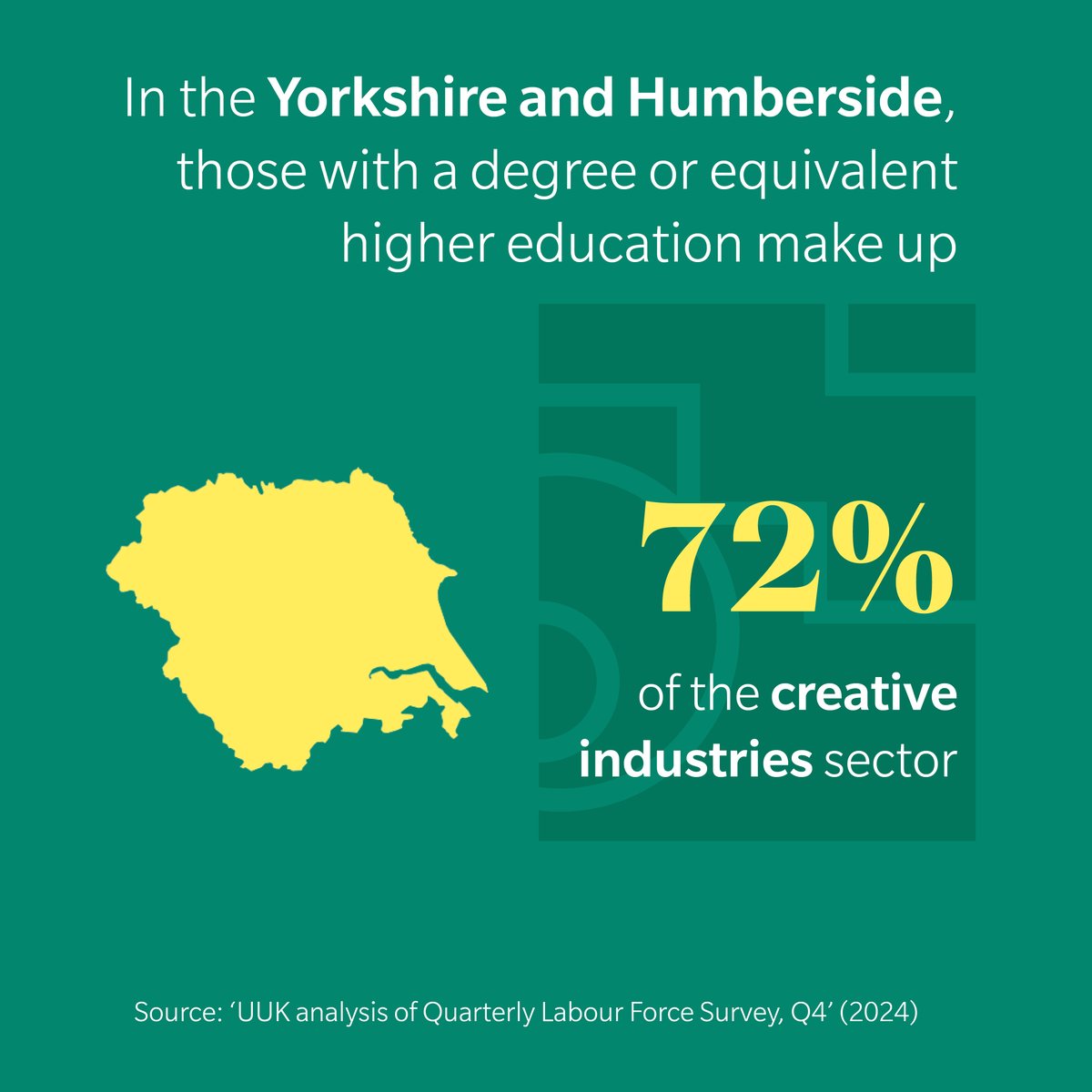
ALT outline of Yorkshire and Humberside with text saying 'In the Yorkshire and Humberside region, those with a degree of equivalent higher education make up 72% of the creative industries sector
Did you know that graduates account for a significant proportion of the workforce in key growth sectors?
Our analysis of government data shows how important the skills gained from higher education are to get skilled jobs and spark growth
See more!👇🧵
loom.ly/kEtH_AI
ALT clip art of UK with text saying 'How do graduates power economic growth?
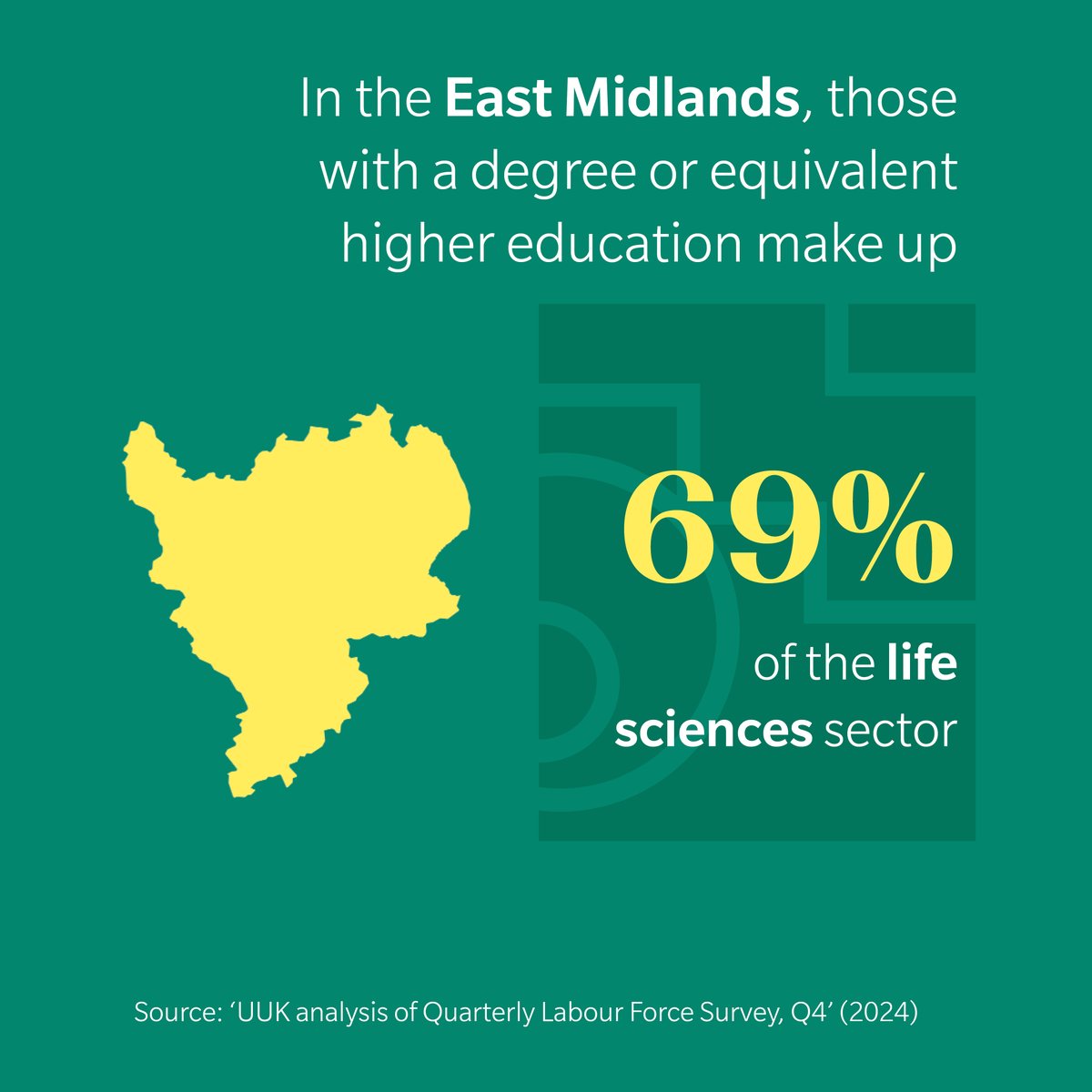
ALT Outline of East Midlands with text saying 'In the East Midlands, those with a degree or equivalent higher education make up 69% of the life sciences sector
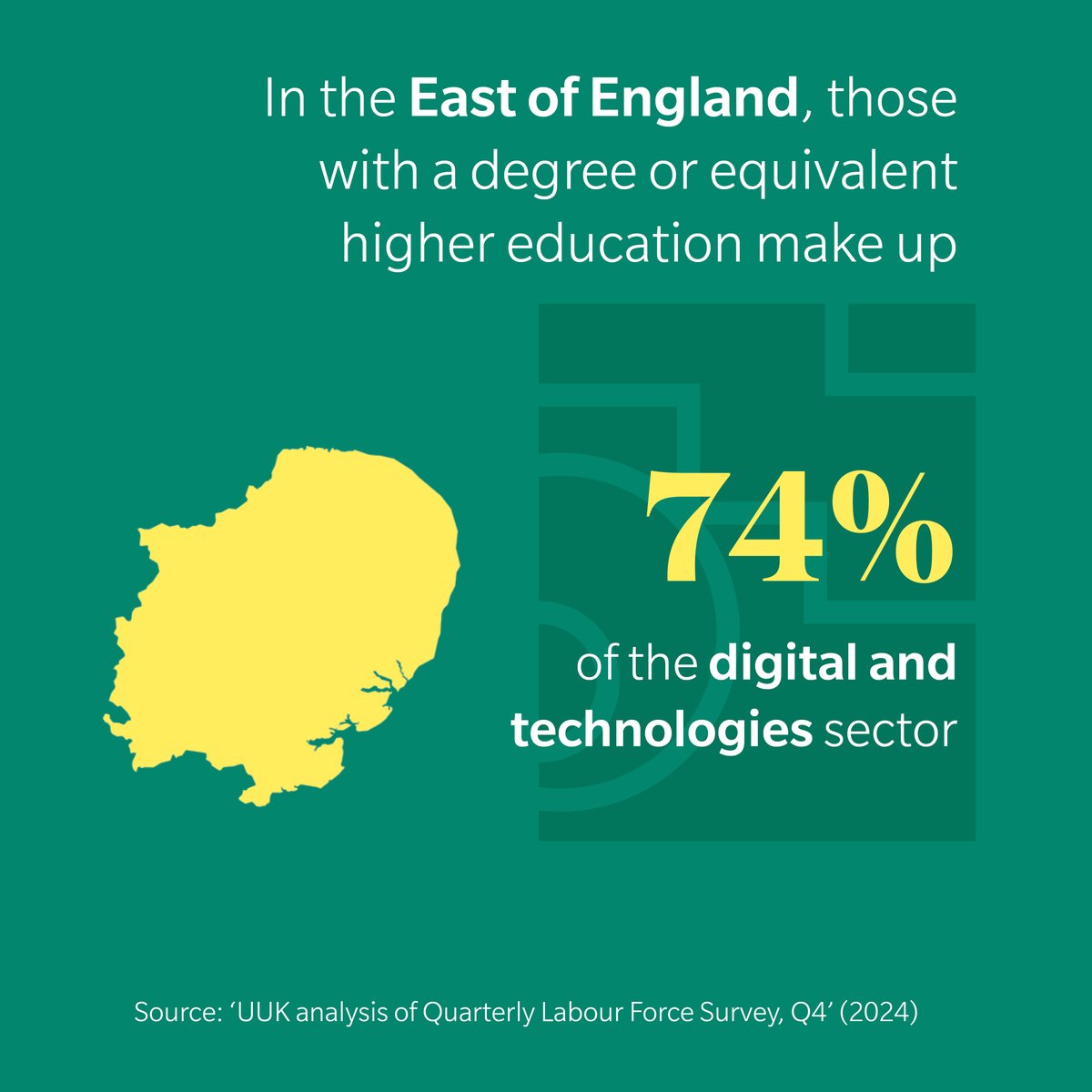
ALT Outline of East of England with text saying 'those with a degree or equivalent higher education make up 74% of the digital and technologies sector
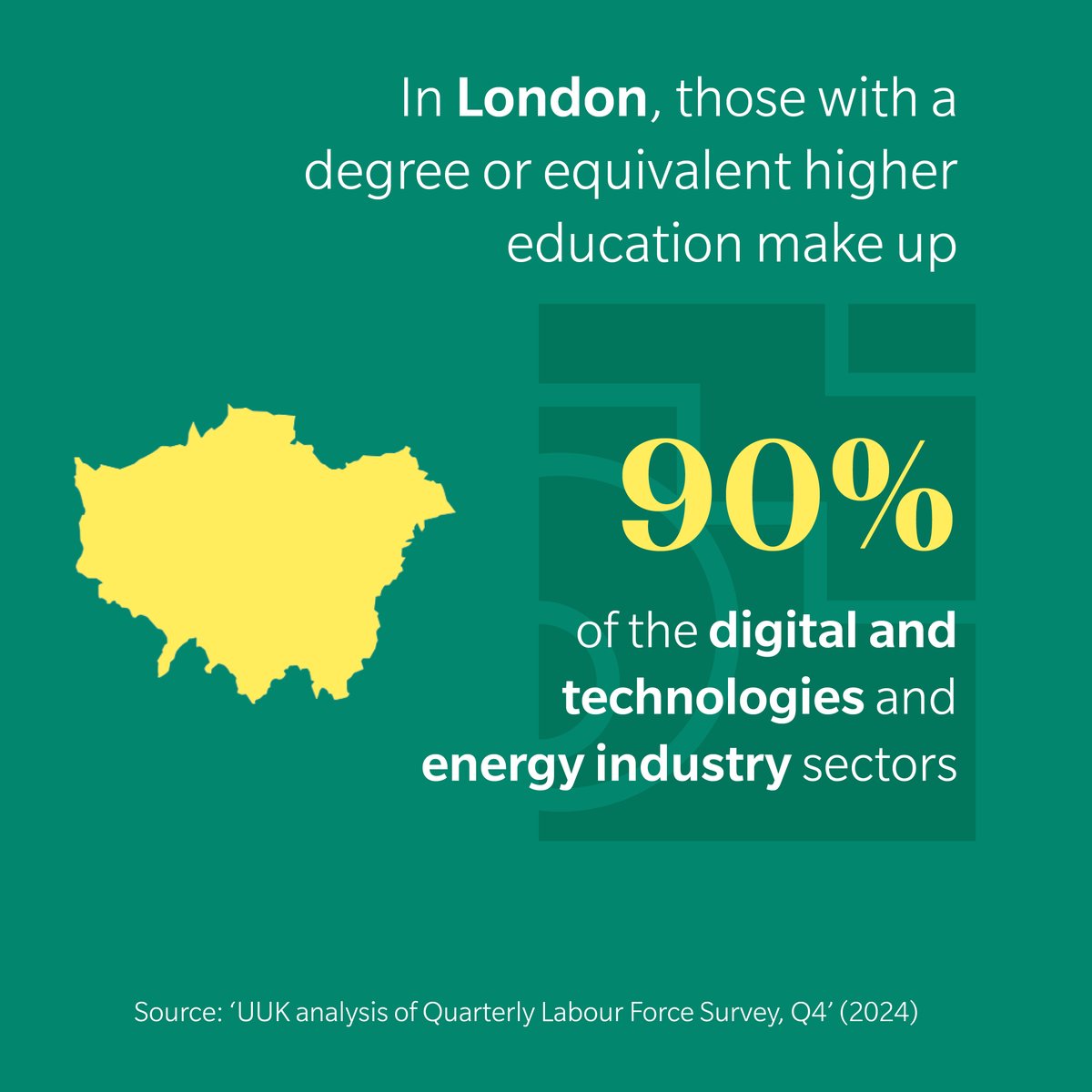
ALT outline of London with text saying 'In London, those with a degree or equivalent higher education make up 90% of the digital and technologies and energy industry sectors
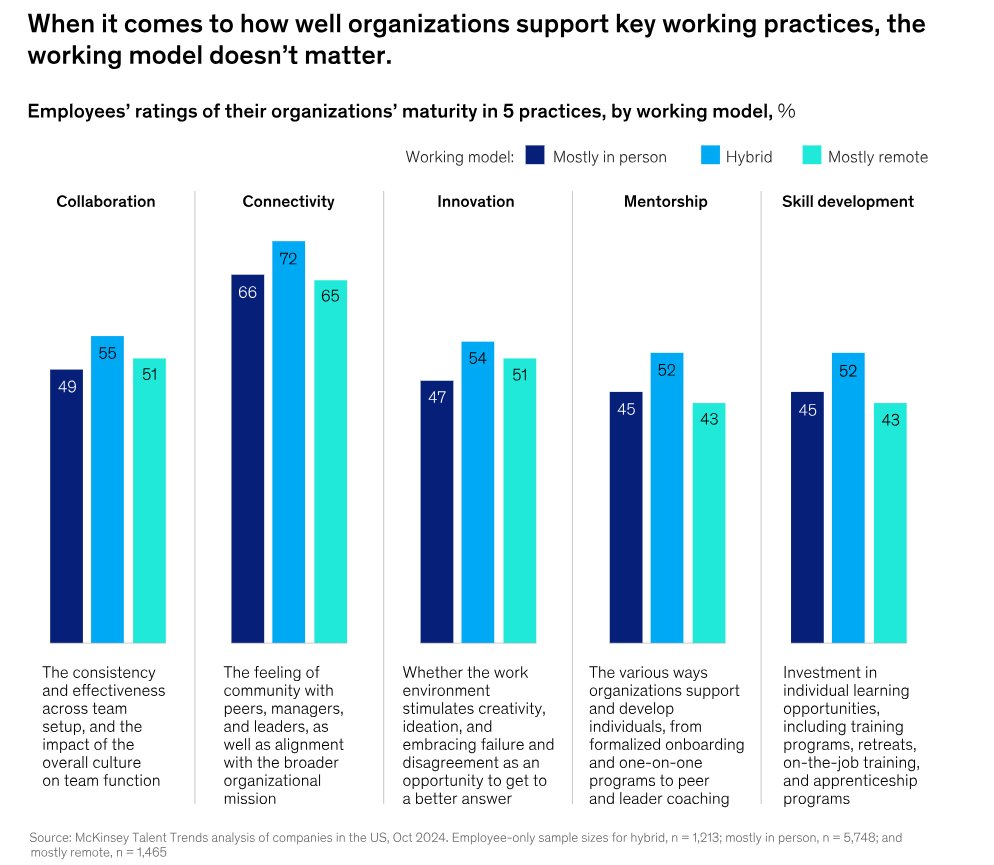
New research by @McKinsey states that when it comes to workforce performance/productivity, the working model (office based, working from home or hybrid) is far less important than other factors. What matters most is the work environment that leaders create.
McKinsey sets out five core practices that drive performance & strengthen organisational health, whatever the working model:
1) collaboration
2) connectivity
3) innovation
4) mentorship
5) skill development.
mckinsey.com/capabilities/pe….
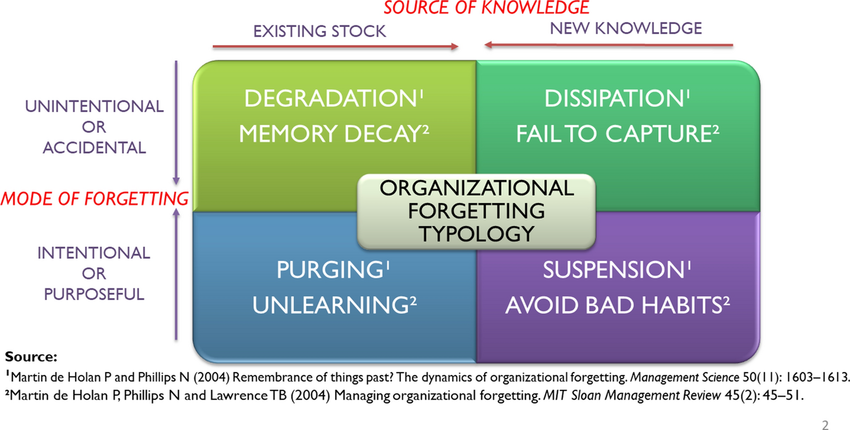
"Corporate amnesia" or "institutional forgetting" – where organisations lose valuable knowledge, experience & insights over time (& reinvent approaches whilst not considering existing expertise &/or not making the time to learn from what happened previously). It is a significant contributor to productivity/performance shortfalls.
In my field of change & improvement, we have 40 years of NHS improvement experience, yet when we start new programmes, how often do we reflect on what we know already? If we don't consider why we failed previously, we're more likely to fail this time too. We are not talking about intentional "unlearning" but about organisational memory loss &/or failure to capture learning.
In our pursuit of the new, we risk discarding the very knowledge we need to retain. Organisational memory isn’t just about preserving the past; it’s about arming ourselves with the insights needed to make smarter decisions, avoid repeating mistakes & foster innovation:
paulitaylor.com/2024/05/31/i…. By @PaulIanTaylor
We are pleased to share the publication of "Scaling Northern Ambition," the latest True North report!
The report is packed with data-driven insights to help leaders address our region's challenges. 📊
Read now 🔗 brabners.com/true-north#ScalingNorthernAmbition
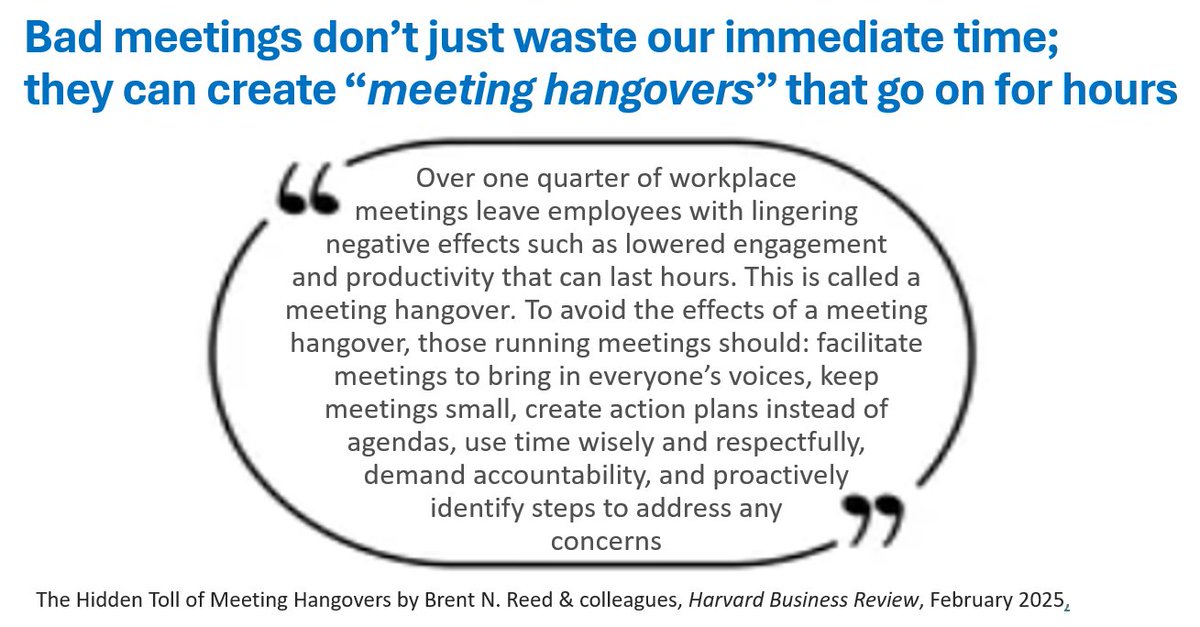
When we take part in an unproductive meeting, the effect isn't just the immediate impact of a waste of our time. The effect can go on for hours or even days. It's called a "meeting hangover": a period of diminished focus, motivation or productivity following a bad meeting. Researchers found that more than a quarter of meetings produced meeting hangovers. Five insights from meeting science to prevent meeting hangovers:
1) More active, thoughtful facilitation
2) Cut the guest list ruthlessly
3) Turn agendas into action plans
4) Make every minute count & don’t run over
5) Demand accountability, every time
hbr.org/2025/02/the-hidden-t…. Via @brentnreed
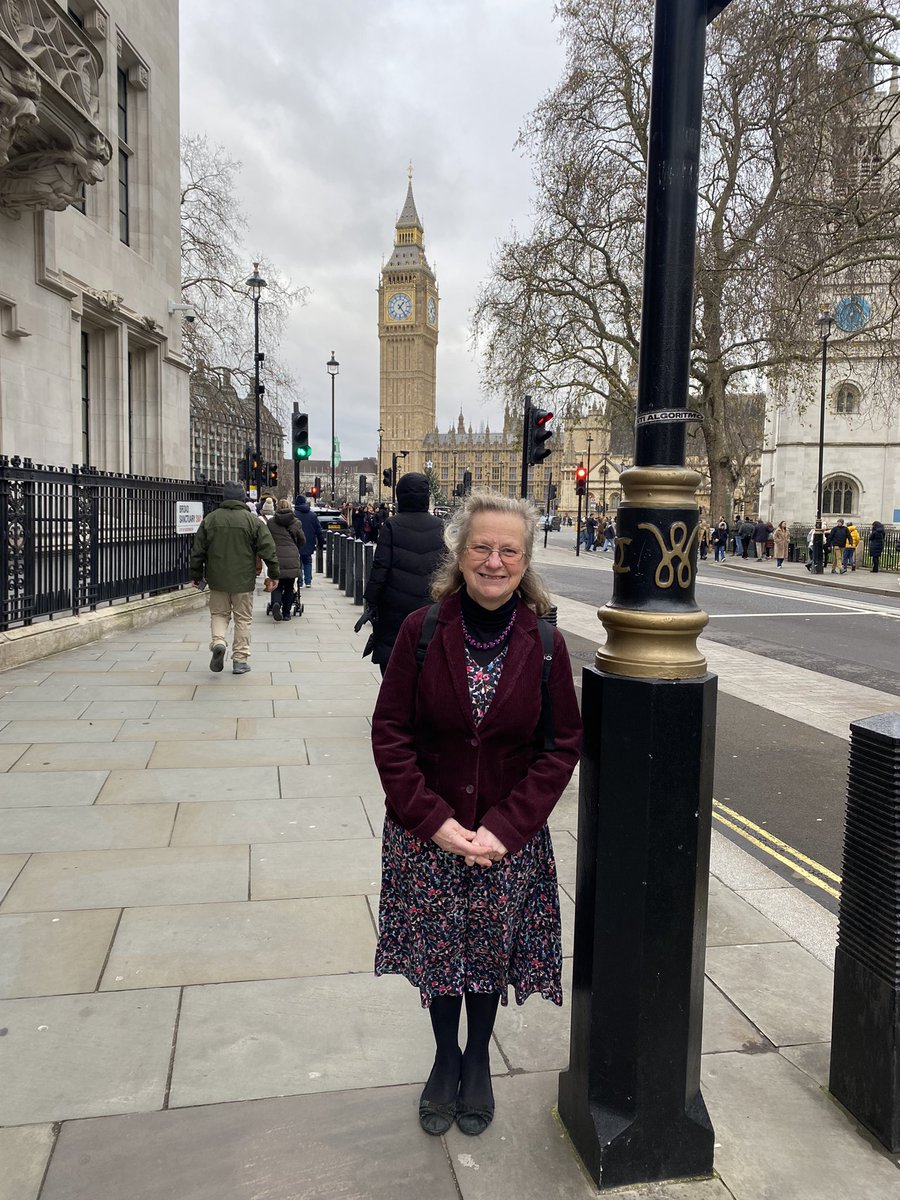
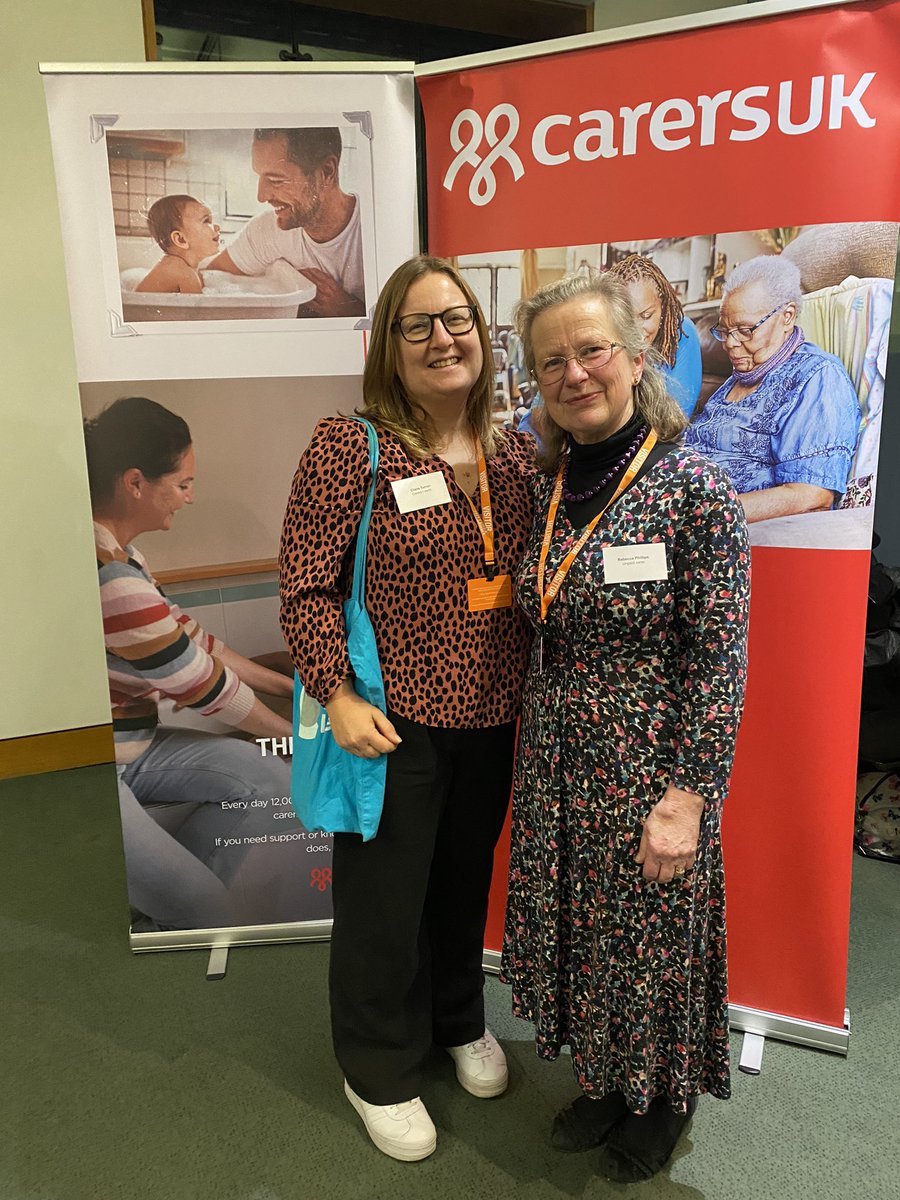
Great to represent #unpaidcarers from Leeds and @CarersLeeds at today’s the Carer Poverty Coalition parliamentary event. Lots of opportunity to talk to MPs about the financial challenges faced by #carers and what the government can do about it!
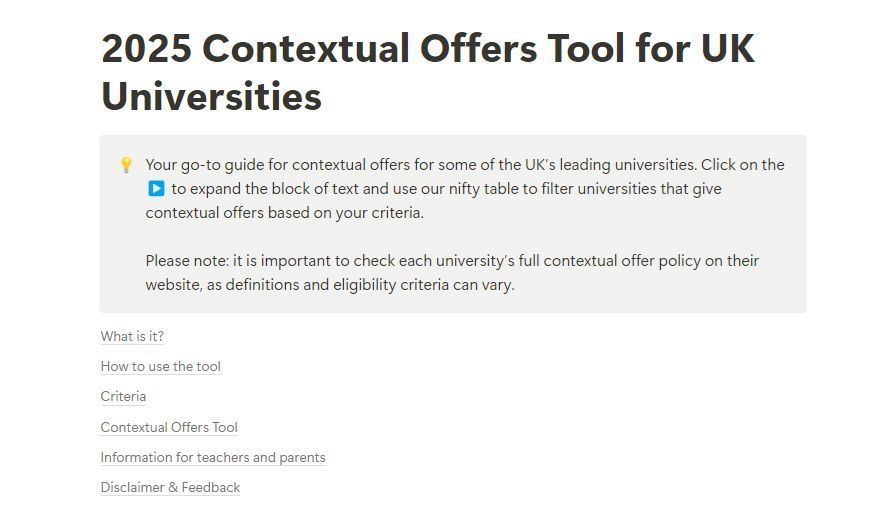
👀 Did you know that many top universities provide contextual offers to students?
Contextual offers allow for a students' circumstances to be considered when applying to university.
Our tool breaks down what some of the UK’s leading unis offer ⤵️
suttontrust.com/contextual-o…
What a week for AI and Robotics.
As usual, I summarized everything announced by OpenAI, Google DeepMind, Amazon, Microsoft AI, Tencent, ElevenLabs, Meta, xAI, and more.
Here's everything you need to know and how to make sense out of it:
Supporting SMEs launches today! Read about the tools and technologies on offer that are helping to build a more resilient business landscape at ow.ly/Xpq850UmfyO#SupportingSMEs2024
Interactions between universities and businesses dropped by 5% in 2022-23
@NCUBtweets analysis is "worrying" and "reveals some difficult realities", according to CEO @dr_joe_marshall, as the govt banks on R&D as an engine for growth
@emilytwinch reports
researchprofessionalnews.com…