
Planetary astronomer at @SETIInstitute, CEO and co-founder of @skymapperspace,co-founder of @Unistellar, tweeting about space, our planet & us, humans
Joined August 2010
- Tweets 22,833
- Following 3,201
- Followers 8,795
- Likes 20,060
4,343 Photos and videos
Pinned Tweet

1 Jun 2024
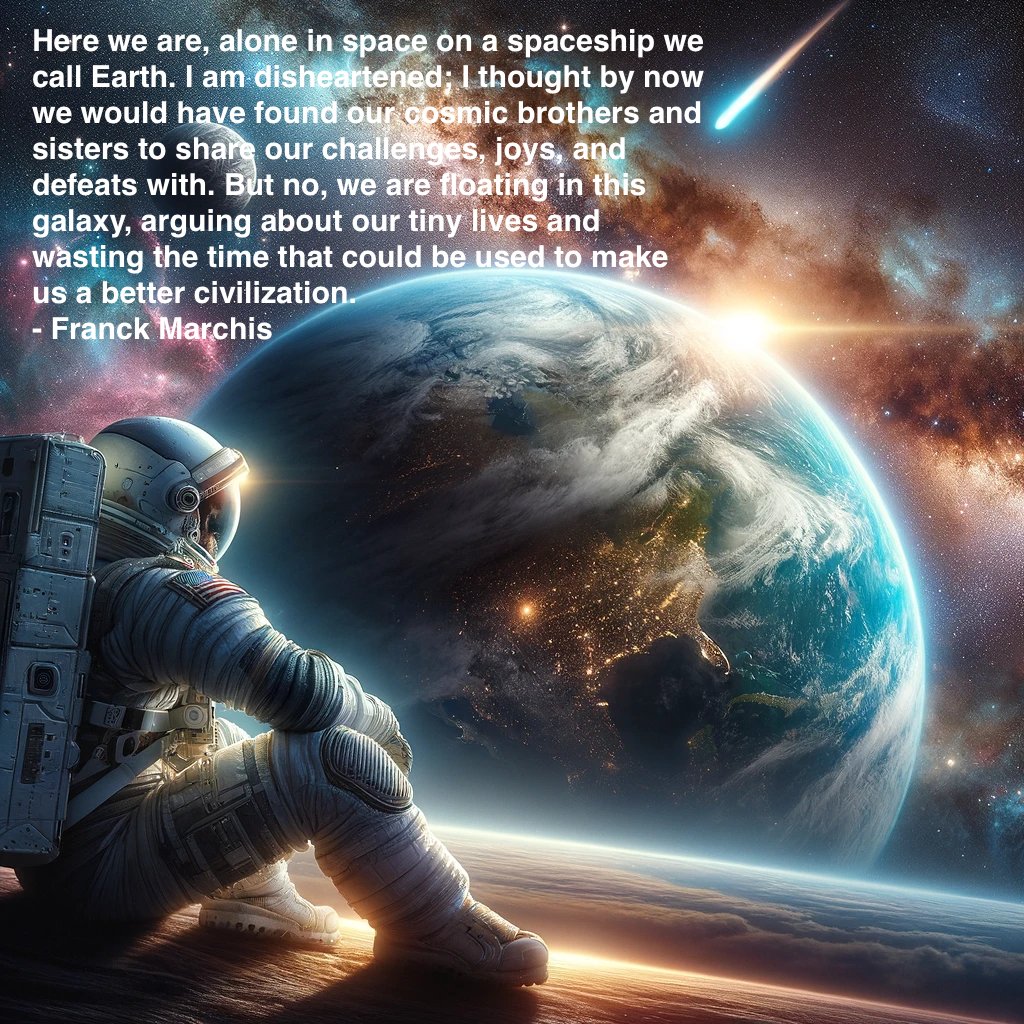
Here we are, alone in space on a spaceship we call Earth. I am disheartened; I thought by now we would have found our cosmic brothers and sisters to share our challenges, joys, and defeats with. But no, we are floating in this galaxy, arguing about our tiny lives and wasting the time that could be used to make us a better civilization. #todaythought
7
8
37
9,707
Franck Marchis retweeted

Jun 12
A decade ago, 49 beautiful souls were stolen, more than 50 others injured and countless traumatized in the horrific hate-fueled attack at Pulse Nightclub.
Today, we remember those we lost, honor the courage of the survivors and hold their loved ones and the entire LGBTQ community in our hearts.
136
515
4,529
80,470
Franck Marchis retweeted

Jun 10
We did it.
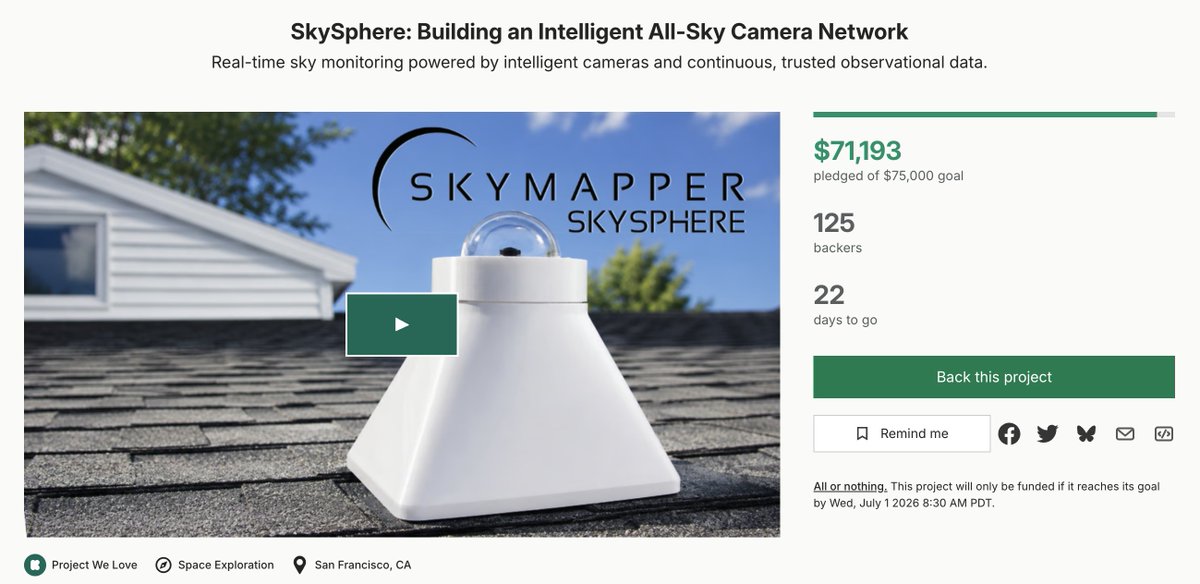
SkySphere has officially reached its @Kickstarter goal. 🎉
It's incredibly inspiring to see so many people share our passion for exploring, understanding, and documenting the sky above us.
Thank you to everyone who backed, shared, supported, and believed in the vision.
This is just the beginning.
May 22

Our @Kickstarter is now LIVE.
Meteors. Satellites. Drones. Aircraft. Auroras. UAP.
SkySphere combines edge AI, trusted timing systems, and real-time detection software to transform raw sky imagery into actionable, trustworthy sky intelligence.
Observe. Replay. Detect. Contribute.
Built for wonder. Designed for real-world awareness.
Back the future of continuous sky observation 👇
bit.ly/SkySphereKick_SM
2
4
7
350
Jun 10
Tomorrow, I’ll be hosting a live Reddit AMA!
Ask me anything about astronomy, SETI, SkyMapper, SkySphere, citizen science, UAP data or what it takes to build a global network that watches the sky continuously.
📅 June 11
⏰ 11 AM PT / 2 PM ET
Join me here:
reddit.com/r/IAmA/comments/1…
4
6
10
3,035
Jun 9
We are very close to reach our goal on @Kickstarter with our SkySphere, an intelligent all-sky camera designed to detect natural phenomena in the sky, as well as human-made ones or even extraterrestrial ones... Join us! #SETI #UAP @SETIInstitute
4
18
3,070
Franck Marchis retweeted

🚨Price increases — Coming this summer to a grocery store aisle, gas station, and airfare ticket near you!
We’re running this video ad as part of Home of the Brave’s new Sticker Shock Summer campaign to show the public the real price tag of the Trump administration’s agenda.
21
1,239
3,078
314,397
Franck Marchis retweeted

A rare visitor from another star system flew through our Solar System—and ESA’s Juice spacecraft was in the perfect place to see it.
Join @AllPlanets and Cecilia Tubiana (INAF) on June 11 at 9 AM PDT for SETI Live as we explore what Juice revealed about interstellar comet 3I/ATLAS ☄️
Bring your questions: youtube.com/live/lssQSmUmITc
#SETILive #Comet3IATLAS #JuiceMission

ALT SETI Live record button logo. Text: 5 Things Juice Found with Franck Marchis and Cecilia Tubiana, Thursday, 11 June 2026, 9:00 am PDT / 12:00 pm EDT. Background: Photograph of interstellar comet 3I/ATLAS, seen as a fuzzy green blob with a short tail in the midst of a night sky full of stars.
5
11
31
3,530
Franck Marchis retweeted
Jun 7
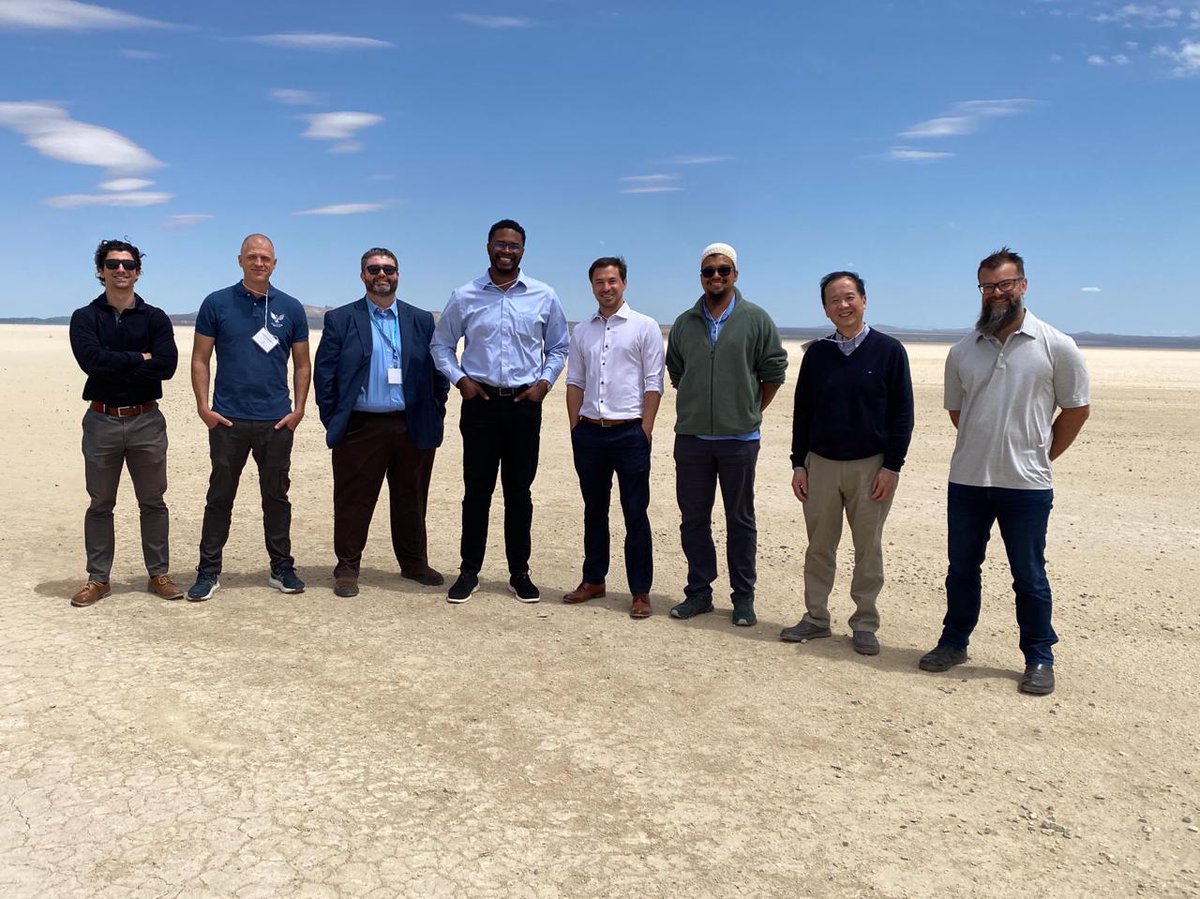
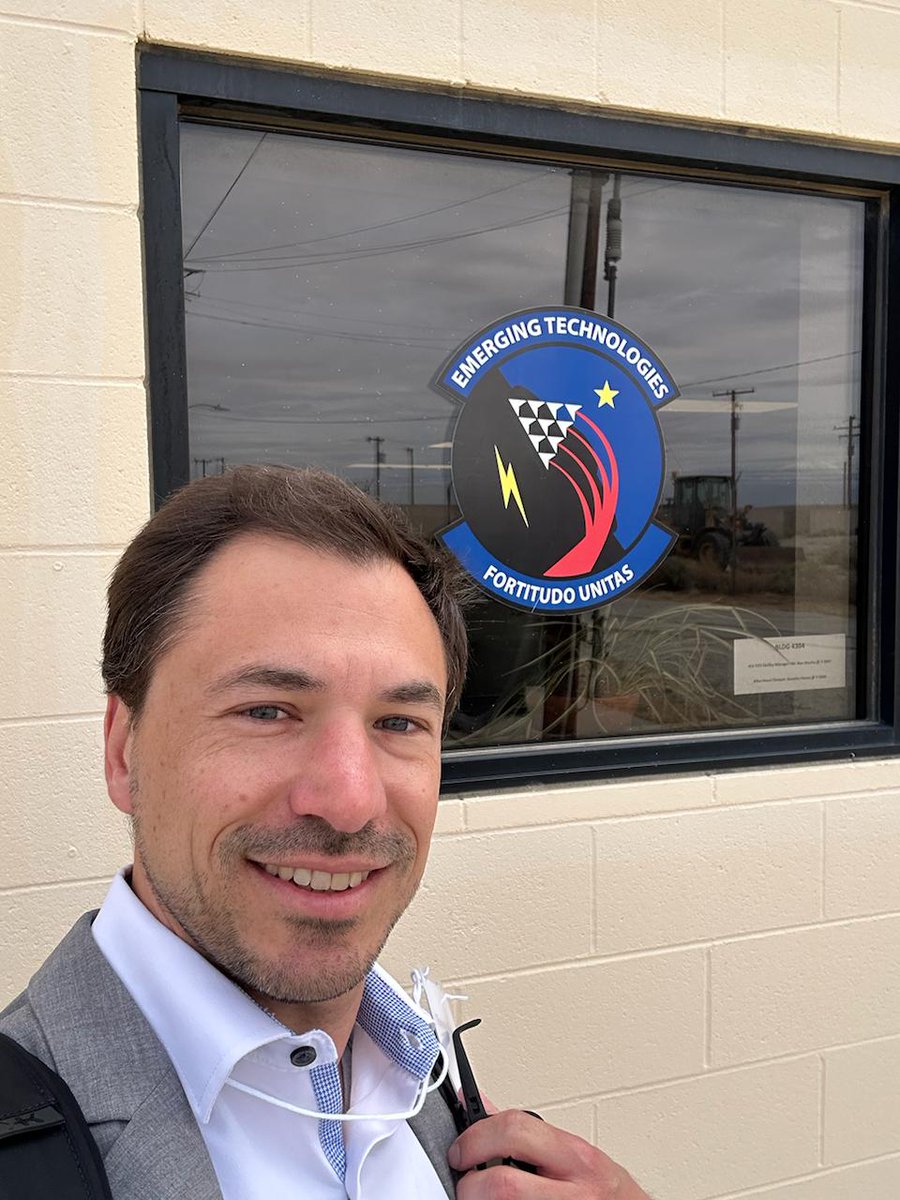
From standing on the historic Rogers Dry Lake where Chuck Yeager broke the sound barrier to meeting with the @usairforce's Experimental Test Force hosted by @GriffissInst
SkyMapperCSO Tom Esposito recently visited Edwards Air Force Base and was invited to participate in upcoming "Game of Drones" exercises, where we'll be testing SkySphere's drone detection and alert capabilities in real-world scenarios 🛩📡
1
4
253
Jun 7
Kristen Welker was the journalist of the weekend. By doing her job and asking basic follow-up questions, she exposed just how incompetent, irresponsible, and immature this president and his administration are.

🚨 BREAKING: Trump has a complete MELTDOWN on Meet the Press.
Kristen Welker presses him on his wild California election conspiracies. Trump calls her “crooked” and “stupid,” calls the press crooked, calls Meet the Press crooked, and throws a tantrum about how unfair everything is.
Then he dramatically storms out mid-interview like a toddler who lost at recess.
Classic Trump: zero answers, all insults, instant exit.
Thank you, Kristen Welker — this is how you handle him. 🔥
2
9
368
Jun 5
I am deeply concerned by the new OMB proposal on federal research grants.
For decades, America’s economic growth, technological leadership, national security, and global influence have been driven by scientific progress. That progress did not come from political officials deciding which scientific ideas were acceptable. It came from researchers asking difficult questions, challenging established views, debating evidence, and competing through peer review.
This proposal does not formally abolish peer review, but it would significantly weaken it. It would allow political appointees to override scientific recommendations based on changing presidential priorities and broadly defined interpretations of the “national interest.” It could also allow active grants to be terminated even when researchers are fully compliant and meeting their scientific objectives.
This creates profound uncertainty for scientists, universities, startups, research institutes, and international partners. The United States risks losing some of its best researchers to countries where scientific funding is more stable and less vulnerable to political interference.
Astronomy would be particularly affected. The sky is global. No country can monitor the entire sky alone. Research on asteroids, supernovae, gravitational-wave events, satellites, meteors, and other transient phenomena requires observatories distributed across different continents and longitudes. International collaboration is not an optional benefit—it is often a scientific necessity.
A potentially hazardous asteroid does not stop at a border. A transient astronomical event cannot wait for administrative approval. A telescope survey designed to operate for ten years cannot be reorganized every time political priorities change.
Scientific progress is built through disagreement, controversy, replication, and open discussion. It must remain a bottom-up process led by experts, not a top-down process controlled by political priorities.
Strong oversight of public money is necessary. Political control of scientific judgment is not.
I have submitted a public comment opposing the most damaging provisions of this proposal and encouraging OMB to preserve independent peer review, protect active grants from arbitrary termination, and recognize the essential role of international scientific collaboration.
Scientists, engineers, educators, entrepreneurs, and members of the public should examine this proposal and submit their own substantive comments before July 13, 2026.
agu.quorum.us/campaign/16387…
Federal Register proposal:
federalregister.gov/document…
2
3
232
Jun 5
After several years of discussion within the IAA SETI Committee, we have reached an international consensus and published a new SETI post-detection protocol.
Its core principle is simple: extraordinary claims require extraordinary evidence.
Any potential detection must be independently verified, transparently communicated, and supported by data that can be preserved, shared, and trusted.
In an age of AI-generated misinformation, deepfakes, and instant global rumors, preparing for discovery is more important than ever.

PRESS RELEASE
Beyond Disclosure Day: The Real-World Protocols
The IAA SETI Committee announced today updated rules for evaluating and revealing the detection of extraterrestrial intelligence.
A University of Manchester astronomer has led a major international overhaul of the rules that would govern how scientists announce evidence of extraterrestrial intelligence to the world.
Professor Michael Garrett, the Sir Bernard Lovell Chair of Astrophysics, chaired a global effort to update the long-standing “post-detection protocols” used by researchers involved in the Search for Extraterrestrial Intelligence (SETI). The updated guidelines have now been formally ratified by the International Academy of Astronautics (IAA).
The revised Declaration of Principles marks the first major update to the protocols in more than 15 years and reflects a media landscape transformed by social media, artificial intelligence and the 24-hour news cycle.
Acknowledging that any credible detection of extraterrestrial technology would be a transformative event for humanity, the new Declaration establishes a rigorous framework for verification, transparency and global risk communication.
"The information environment we operate in today is vastly more complex than it was in 2010," said Garrett, Chair of the IAA SETI Committee. "In an era of deepfakes, automated misinformation, and instant global connectivity, a single unverified claim could trigger confusion or panic. These new protocols ensure that scientists maintain the highest standards of evidence before making announcements to the world."
Learn more: seti.org/news/beyond-disclos…
ALT SETI Institute logo. Background: Night sky full of nebulae and stars with a spiral overlaid. Text: The IAA SETI Committee Announces Updated Rules for Evaluating and Revealing the Detection of Extraterrestrial Intelligence.
3
3
6
865
Franck Marchis retweeted

Jun 5
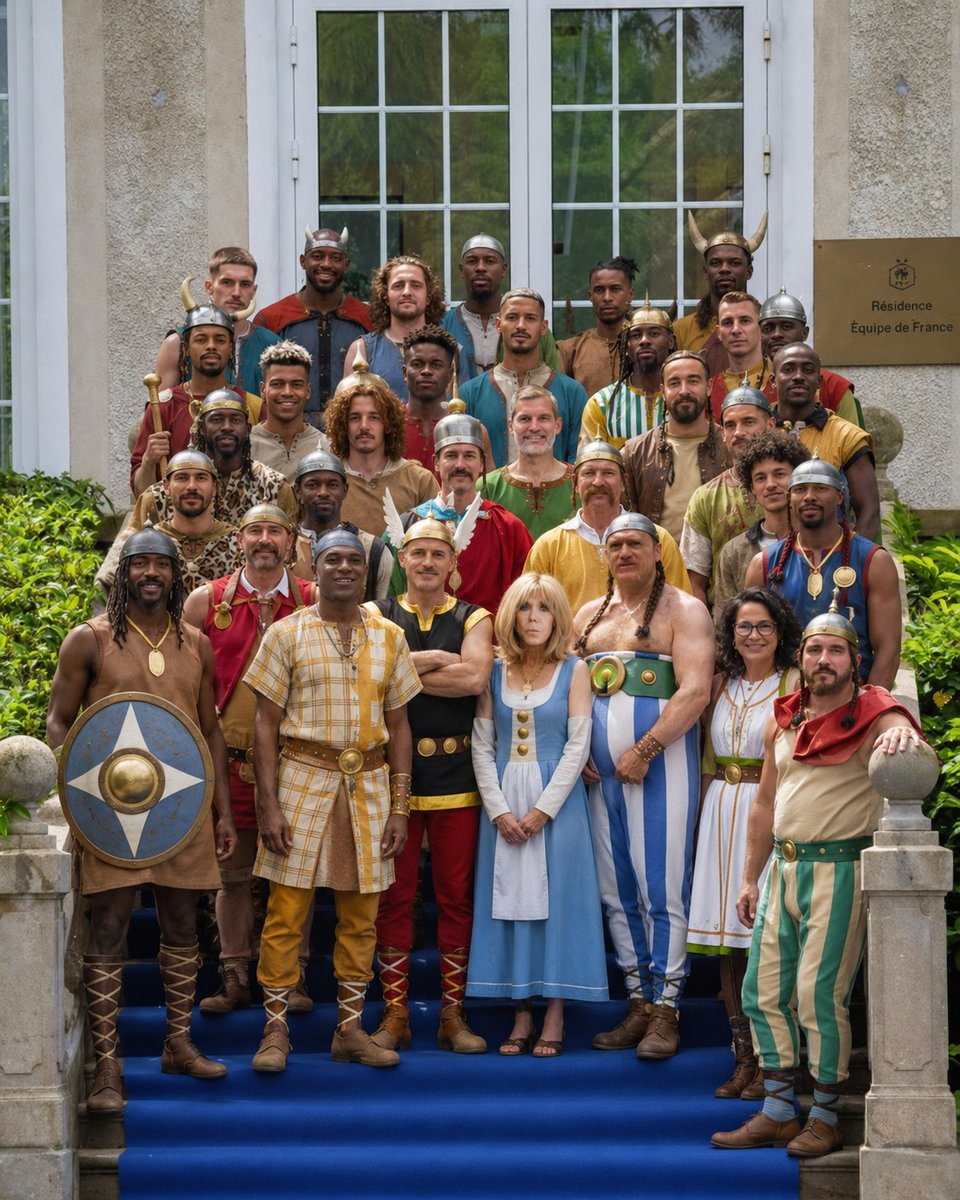
France is coming 🇨🇵


288
1,284
13,752
1,186,171
Jun 5
While the world is in disarray because of his actions, most families in the US can’t feed themselves because of the inflation he created, while
The stock market is collapsing, he is sleeping at 3pm in front of the camera.
Jun 4

Trump appears to be completely passed out asleep during his 3pm Oval Office announcement
2
7
27
828


Jun 5
Probably the best summary of the situation in Europe and the way the EU enlargement is being perceived over there.

🤣 Albanian PM Edi Rama on when Albania will join the EU:
“There are three things you can't predict: God, sex and the EU.”
Probably the most accurate description of EU enlargement ever.
249
Franck Marchis retweeted
Jun 3
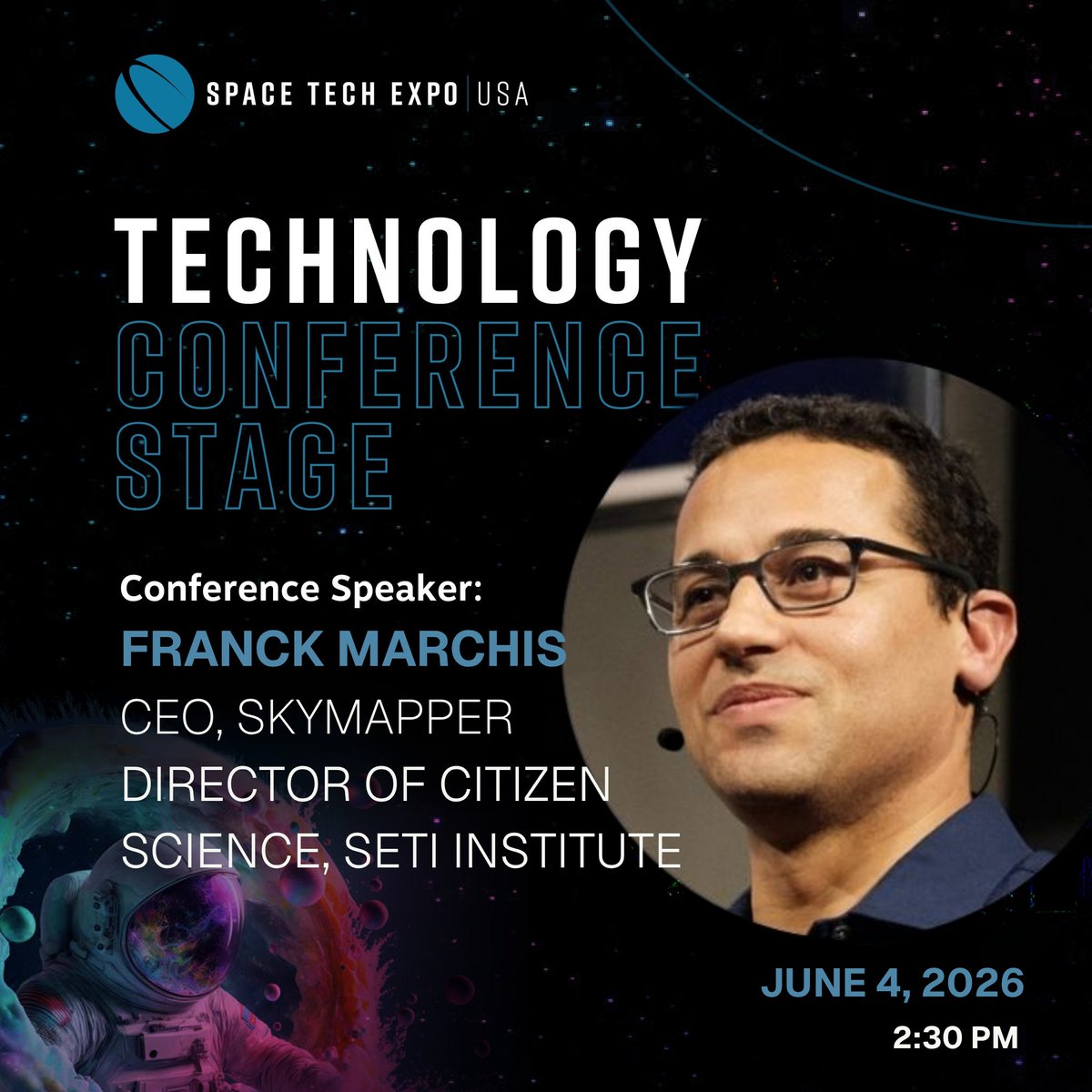
Catch SkyMapper CEO and @SETIInstitute Director of Citizen Science @AllPlanets at @spacetechexpo on Thursday at 2:30 PM.
From space science and citizen astronomy to distributed observation networks and the future of space infrastructure, the next chapter of the space economy is being written in data.
Don't miss it!
4
14
2,795
Franck Marchis retweeted

Jun 3
Excited to be a part of @Skymapperspace's sky observation network! Get yours today on @Kickstarter
May 22
Our @Kickstarter is now LIVE.
Meteors. Satellites. Drones. Aircraft. Auroras. UAP.
SkySphere combines edge AI, trusted timing systems, and real-time detection software to transform raw sky imagery into actionable, trustworthy sky intelligence.
Observe. Replay. Detect. Contribute.
Built for wonder. Designed for real-world awareness.
Back the future of continuous sky observation 👇
bit.ly/SkySphereKick_SM
1
1
3
1,148
Jun 2
I've just registered for Space Tech Expo USA 2026. Who else is going?
See you at the new location in Anaheim, CA, June 3-4 and stop[ by to our panel discussion "NASA's identity: Is it Changing?" moderating by Mat Kaplan from @planetarys
invt.io/1txbr8xgy9t
1
7
2,832
Jun 2
Some good news from @blueorigin’s CEO. Glad to read this today.
We need more companies capable of launching satellites, exploring space, and expanding humanity’s access to orbit. Competition, innovation, and multiple launch providers are essential for a healthy and resilient space ecosystem.

Some LC-36 updates. Now that we’ve had access to the pad and integration facility we can share a bit of good news. The propellant farm, oxygen, liquid hydrogen and LNG tanks are all in good shape. This is good luck because these are very long lead items. The water tower is also good. The big support tower is damaged, but it can be repaired in place rather than torn down and replaced. The booster “Never Tell Me The Odds” and the three GS-2s that were onsite in the integration facility also look good.
I’ve seen some speculation that we might move directly to the 9x4 configuration, but we won’t do that. Rate manufacturing of 7x2 is going well, and we’re going to continue that at pace as planned and store the stages for use. In addition, we had already been working for some time on eliminating our transporter-erector in favor of an alternative vertical conop, and we’ll now go directly to that; so we don’t need a new transporter-erector.
We will fly again before the end of this year. Gradatim Ferociter.
4
354

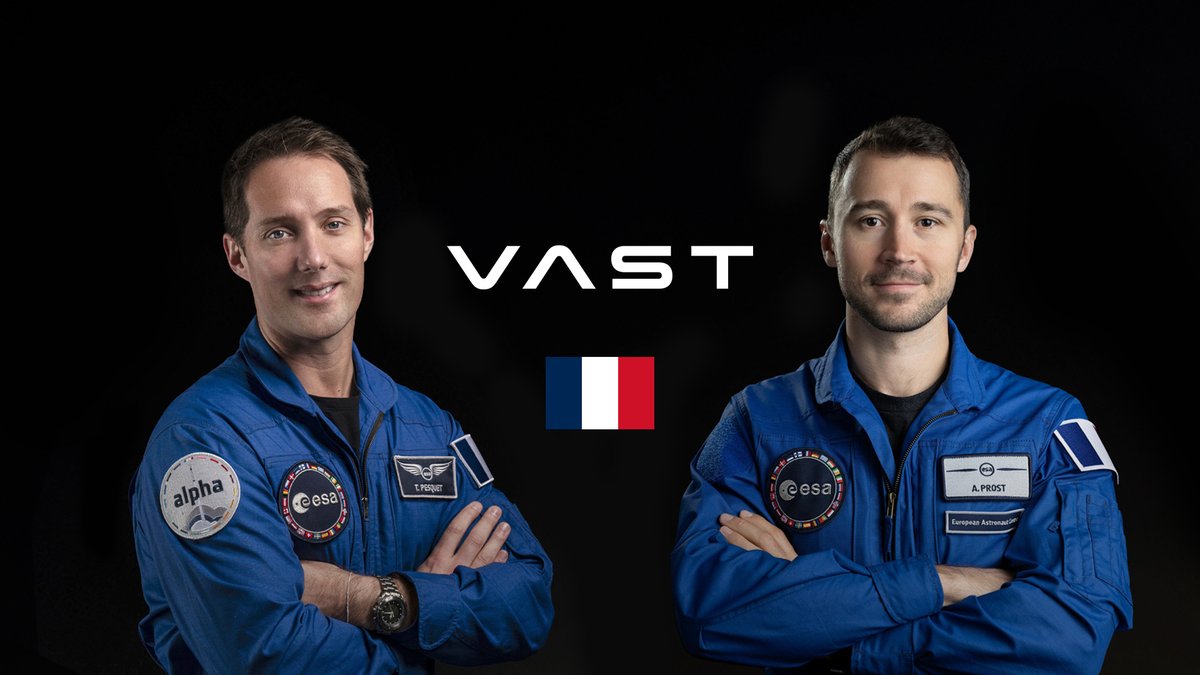
🇫🇷 Today at Choose France, President @EmmanuelMacron announced a historic agreement with Vast for 2 astronaut missions: @Thom_astro to the International Space Station and @Arno_astro to Haven-1. Vast will also establish its European Headquarters in Paris. vastspace.com/updates/france…
30
232
1,047
215,227
Franck Marchis retweeted
Jun 1
Track. Detect. Replay. Monitor.
Receive meteor alerts, track satellite passes, monitor changing weather conditions, detect unusual aerial activity, and capture rare sky events as they happen.
All with one device.
SkySphere continuously watches the sky above you, turning observations into awareness.
4
6
24
5,397