
Joined September 2022
- Tweets 1,887
- Following 2,174
- Followers 350
- Likes 1,454
43 Photos and videos

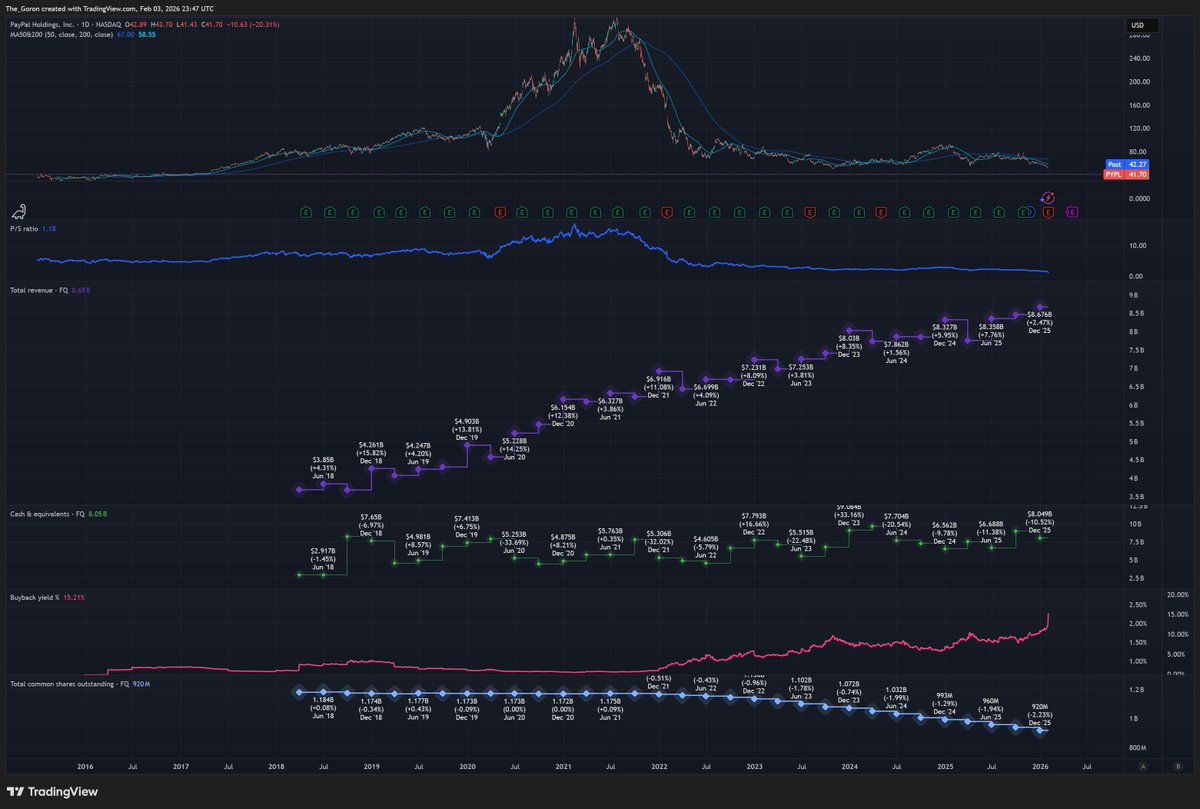

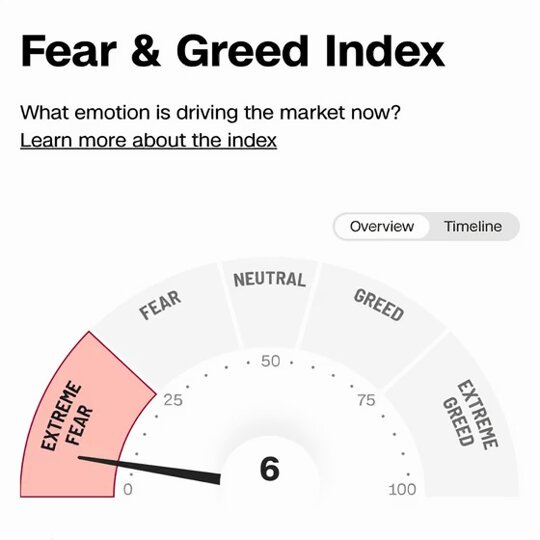












Jun 8
We are about to go way, way, way higher
Jun 8

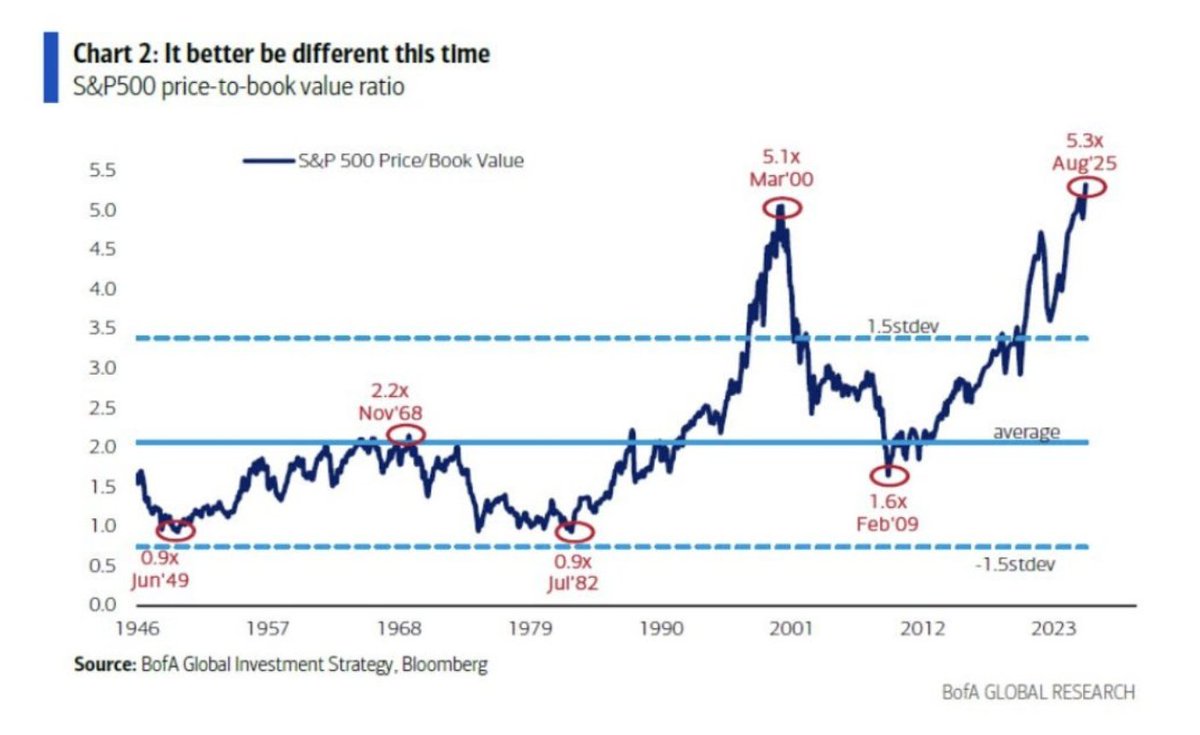
JUST IN: 🇺🇸 Bank of America says investors should take profits, citing "too many red flags" in the stock market.
1
21
Analysis retweeted

Jun 4
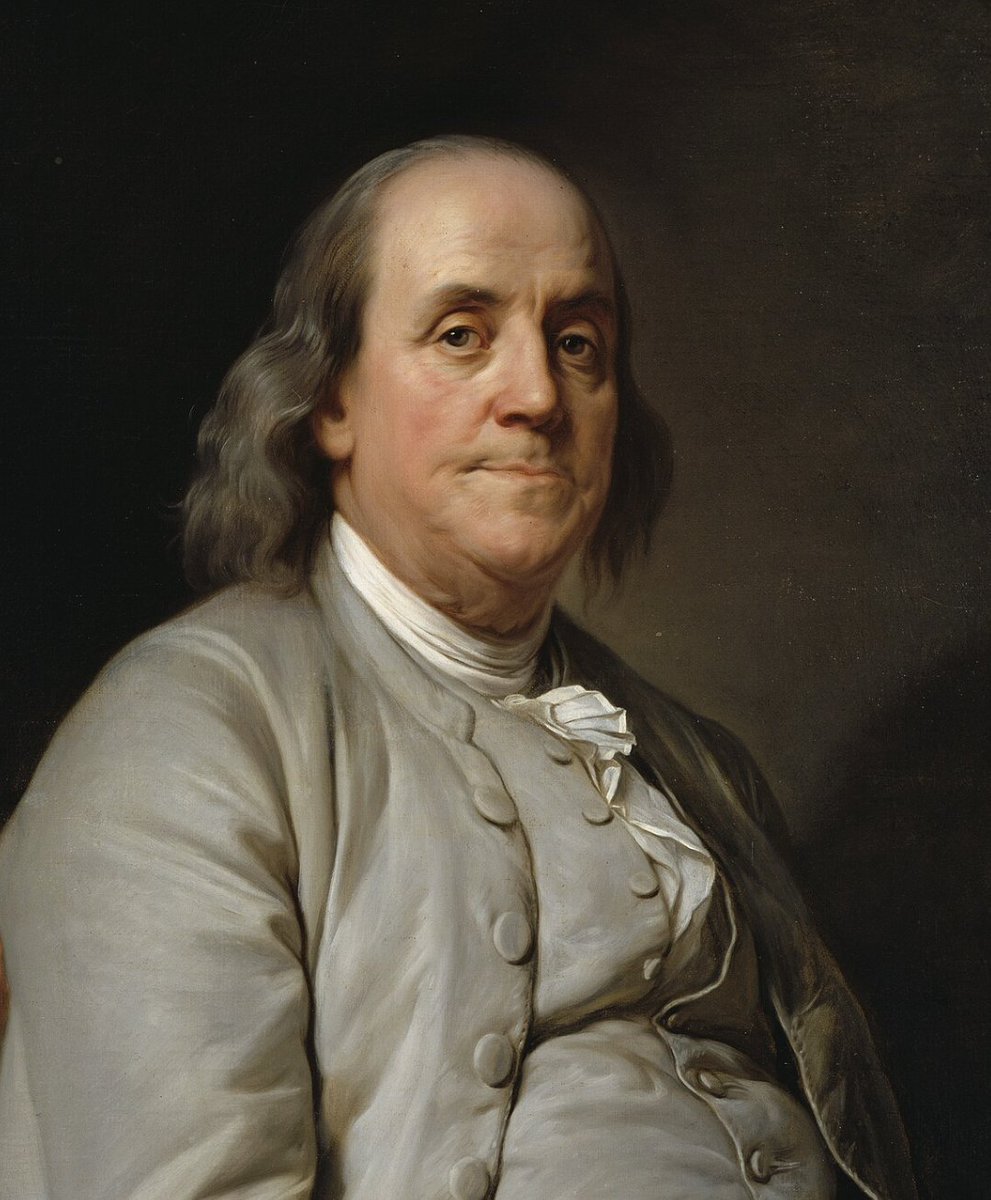
“Tell me and I forget, teach me and I may remember, involve me and I learn.”
― Benjamin Franklin
1
26
133
3,162
Analysis retweeted

remember what Robert Greene said:
"Always be the one who decides."
1
18
121
2,580
Analysis retweeted

Jun 2
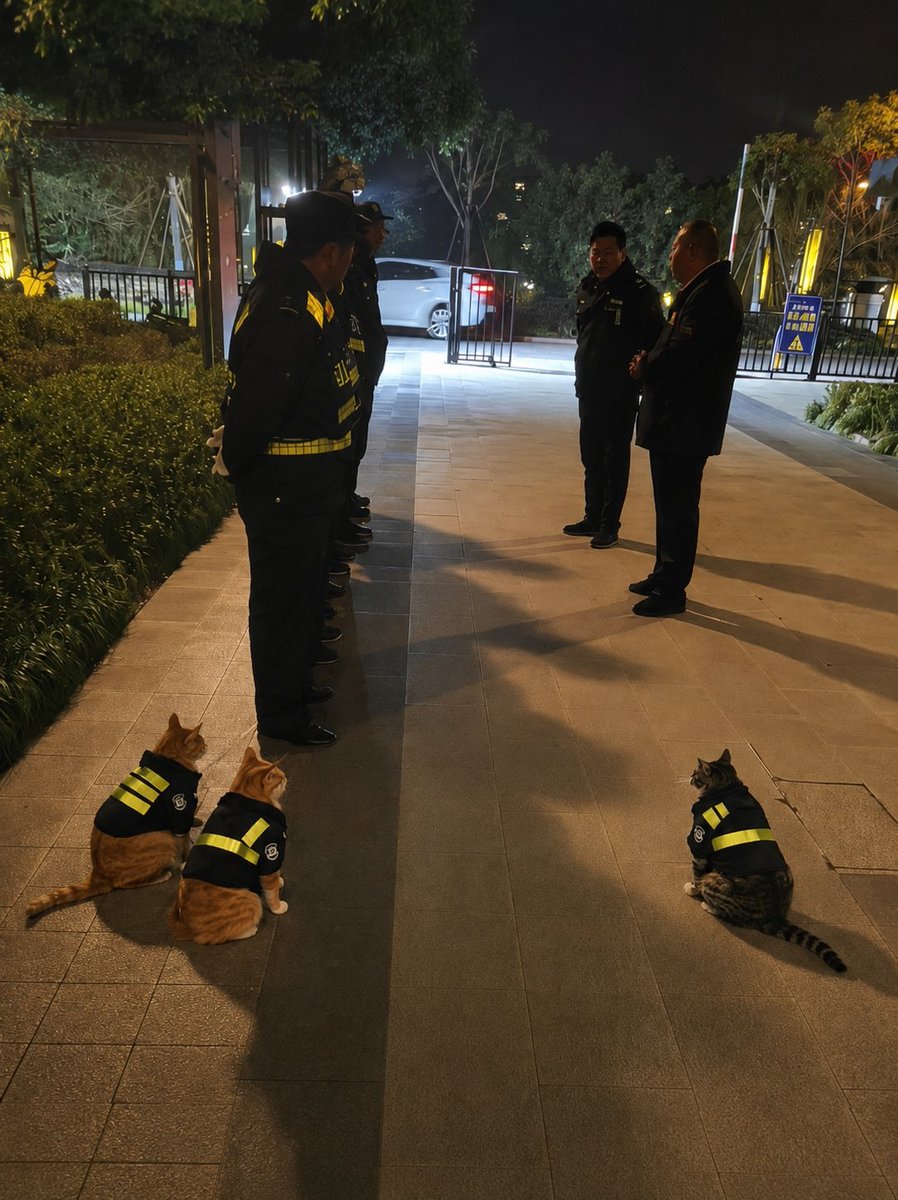
🇸🇬 An interesting new initiative from Singapore; under a new policy introduced in certain areas, cats will now accompany security personnel on their nightly patrols. 🐱🚔
The goal is to both protect community cats and bring a little more warmth to the streets. From now on, the safety of Singapore's streets will be entrusted not only to security forces, but also to their four-legged partners. 😹
However, the system is already facing a few minor challenges. Some of the feline officers have reportedly been caught taking naps in the middle of their shifts, while others tend to disappear without notice and return whenever they feel like it. 😂
Even so, experts believe this may be one of the most adorable public safety projects in recent years. One thing is certain: this is a system that absolutely deserves to be adopted around the world. 🐱❤️🌍😹
140
1,376
6,421
256,982
Analysis retweeted

JUST IN: CYPHERPUNK LEGEND ADAM BACK JUST ABSOLUTELY BURIED MARK CUBAN ON TV FOR SELLING ALL HIS #BITCOIN
BTC IS "DIGITAL GOLD"
IT WILL HIT "PARITY WITH GOLD" THIS CYCLE
HE'S CALLING FOR $1,500,000 🚀
73
196
1,583
139,473
May 23
RT @camelfinance: Show this to a 4 year cycle denier:
It bottomed exactly where it was supposed to and so far, topped month 35, the same a…
24
Analysis retweeted

May 19
Three key trends I am increasingly excited about...
1: Our industry has started caring much more about the security and reliability of the infrastructure, standards and oracles/dependencies that it is built on top of. This shift in focus towards security is already massively benefiting Chainlink because it is built with security and reliability in mind from the start e.g. 16 nodes vs 1 of 1 or 2 of 2 (which is actually often just a 1 of 1 in disguise). This focus on reliability and security makes a better system for everyone in the DeFi/TradFi industry to transact with less risk and also leads to more overall Chainlink adoption over time. The way Chainlink became the leading data oracle is through security and reliability, I think that will happen across all categories where Chainlink deploys services for the same reasons.
We are now clearly seeing this dynamic take place in cross-chain interoperability, with many large users migrating onto CCIP after conducting deeper security reviews of bridging providers, more and more of which are now being published, some telling quotes below:
x.com/krakenfx/status/205494…
Kraken chose Chainlink CCIP because it offers enterprise-grade infrastructure with strict security & risk management requirements, including:
• ISO 27001 and SOC 2 Type 2 certifications
• Secure by default architecture
• 16 independent nodes
• Native rate limits, and more.
x.com/LidoFinance/status/205… and blog.lido.fi/cross-chain-sec…
The analysis covers how Chainlink CCIP delivers strong decentralization, native safeguards, and issuer control as default protocol-level guarantees, which insulates wstETH from a number of attack vectors behind the Kelp / LayerZero exploit.
x.com/Lombard_Finance/status…
Chainlink CCIP has emerged as the standard in cross-chain infrastructure, providing an enterprise-grade framework to secure high-value assets
With over $4Billion migrated in just a few weeks and more on the way, I am clearly seeing the industry's clear preference for security and reliability being a key trend leading to accelerated adoption of Chainlink and CCIP.
2: Chainlink has always continued to build and added many of its best features during down markets, when there is less noise to distract top teams from building. Because Chainlink already has clear product market fit, being able to focus on building the future is a powerful accelerant for future progress and is actually what I and many of the people building Chainlink are here for.
I am very excited about both the use case specific features e.g. collateral management and the increasing number of reusable primitives e.g. verifiable confidential compute in CRE, which are now actively being built, refined and launched with top users. In my experience, during the down market lulls is when the best things get built, and I am truly thrilled to see Chainlink being built to better serve its existing users and entirely new users.
3: The RWA, TradFi Tokenization and Digital Assets industry has now decoupled from crypto prices as a determining factor of its success and is a rapidly growing market of its own. Great news for the technologies, standards and infrastructures that can serve this new and growing demand, of which Chainlink is at the very top of the list. By having the relevant certifications; blog.chain.link/chainlink-ac…, being the historically most secure/reliable option with the largest amount of value enabled and being able to compose multiple key primitives (Data Interoperability Identity/compliance verifiable off-chain orchestration) into full end-to-end solutions like no other platform can, puts the Chainlink platform/ecosystem in a unique place to be adopted by this new and growing market.
This is now becoming increasingly clear in practice through Chainlink's adoption in various parts of the capital markets; from collateral management with some of the most recent examples being...
DTCC using CRE and Data for their production plans; dtcc.com/news/2026/may/12/dt… x.com/The_DTCC/status/205417…
Data providers like SGX using DataLink for key data; x.com/chainlink/status/20563…
Top asset managers like State Street; x.com/chainlink/status/20520… and Fidelity International; x.com/chainlink/status/20545…, being powered by Chainlink on the backend.
The above are just a small number of recent examples, with many more being worked on all across the TradFi ecosystem, from payments, to tokenized equities, to tokenized funds; all of these on-chain finance use cases need multiple Chainlink components working together.
I can't wait for the next stage, where the leading DeFi applications and the top TradFi institutions start interoperating through their use of shared on-chain standards, interoperability connections and data/identity oracles, all of which are being provided by Chainlink, together with existing infrastructures. Solving each of these market's individual problems is already exciting, but helping them merge into the new global financial system is something that I and many others in our ecosystem have been working towards for a while.
If the above sounds like something worth spending many late nights on, and you can see the future I am talking about, this is the best time to join a top team like Chainlink Labs... if you're the best of the best, excited about the future of the blockchain industry, DeFi, TradFi and building the future of the new global financial system, we are excited to work together with you: chainlinklabs.com/open-roles.
May 13

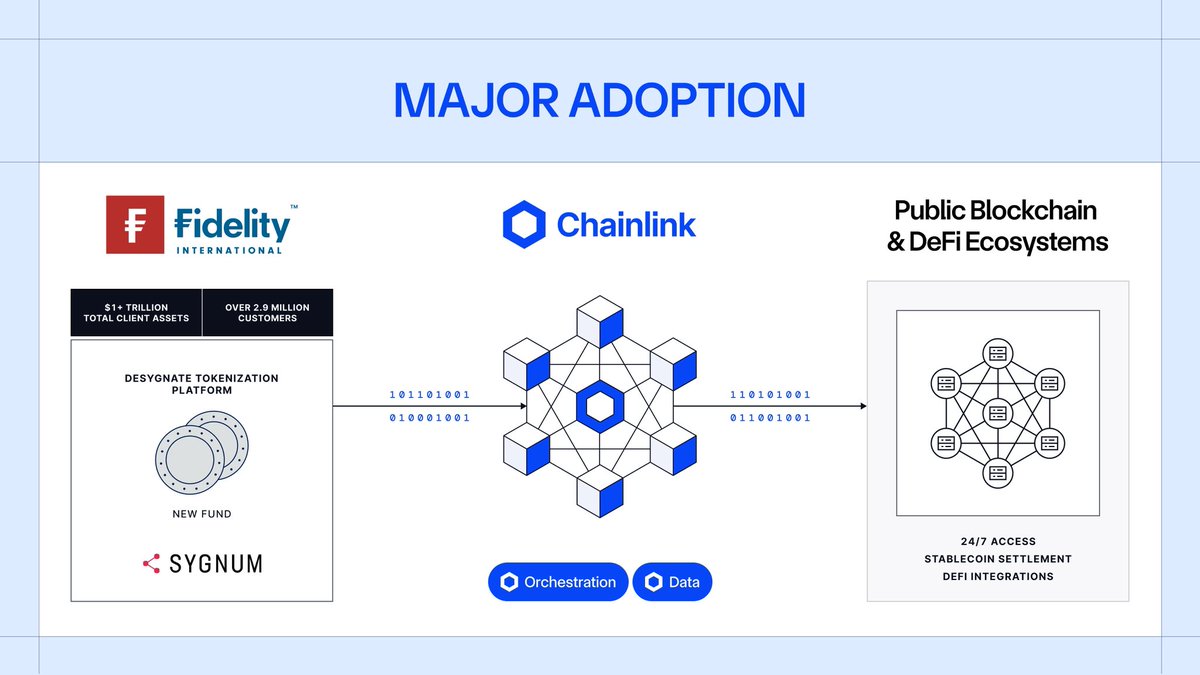
LIVE: Fidelity International, a global asset manager with $1 trillion total client assets, launches its first tokenized fund FILQ, powered by Chainlink.
Through onchain NAV, Chainlink is enabling Fidelity International to bring regulated yield-bearing liquidity into 24/7 digital market.
144
245
1,300
124,386
Analysis retweeted

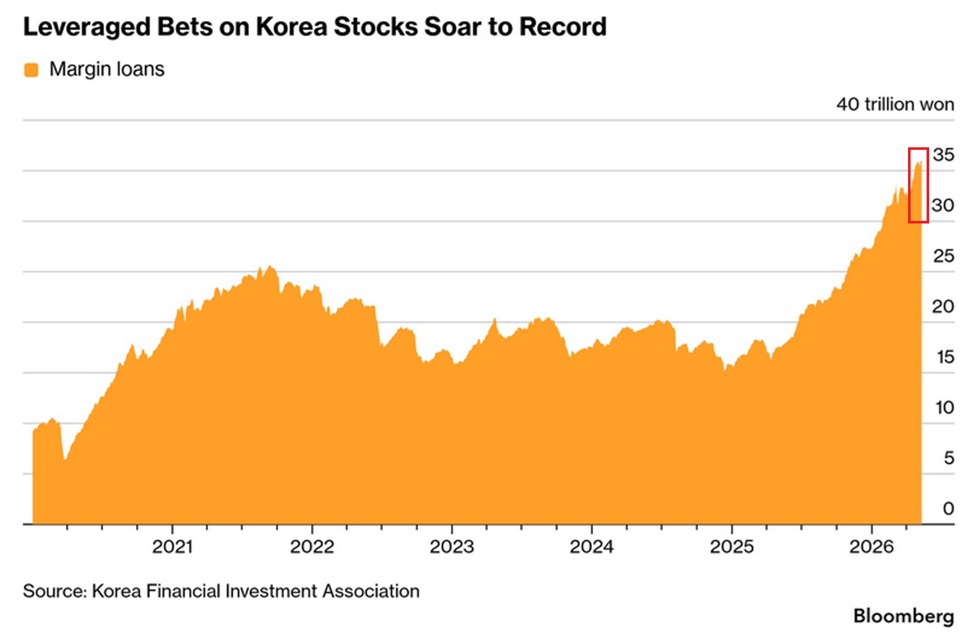
Risk appetite in South Korea is exploding:
Margin loans outstanding on Korean stocks are up to a record $24.3 billion.
Since the start of 2025, margin debt has surged 140% and is up 32% since the beginning of this year alone.
To put this into perspective, the value of leveraged bets on Korean stocks was ~$5.0 billion in 2020.
This also likely understates the real scale, given that many loans taken out to buy stocks are labeled under other categories.
Meanwhile, domestic investors have poured ~$25.3 billion into South Korean shares year-to-date.
Retail investors in South Korea are aggressively rushing into stocks.
146
346
2,082
417,957
Analysis retweeted

May 17
Meteor Crater in Arizona, USA was formed 50,000 years ago by a 160 ft meteorite.
289
1,177
9,309
385,127
Analysis retweeted

May 16
Similarity between Apple stores and Soviet-era architecture.
206
2,563
29,265
1,674,561
Analysis retweeted

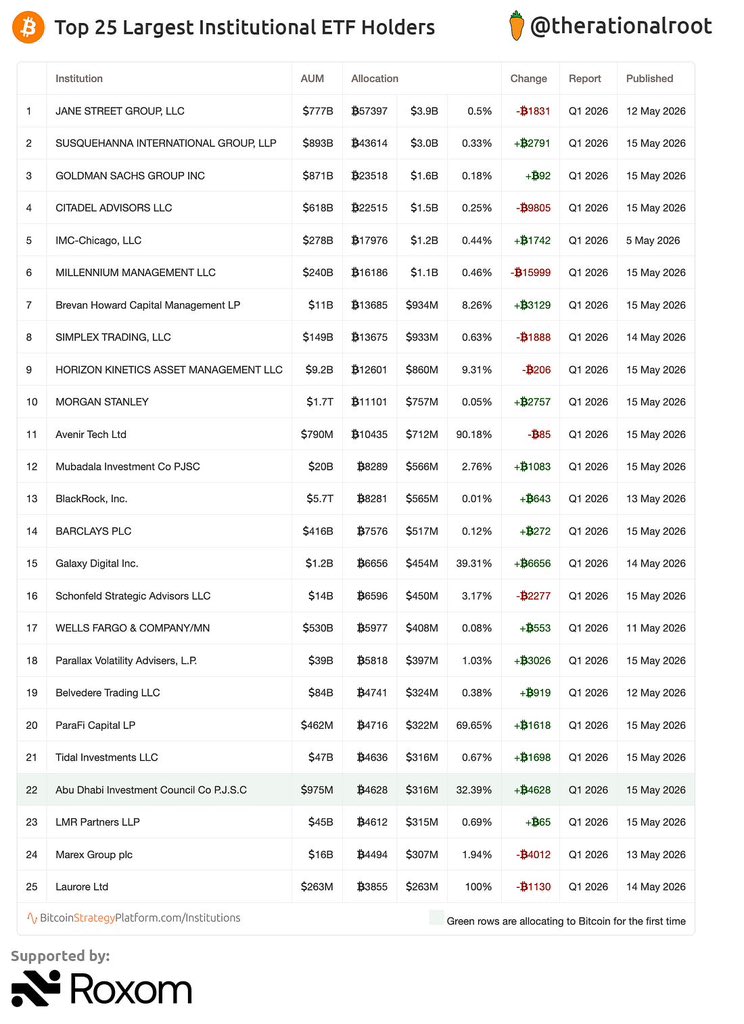
Top 25 largest institutional Bitcoin ETF holders
16
21
167
18,388
Analysis retweeted

May 15
Lol having your "truck" towed out by a minivan is somehow deeply symbolic.
722
2,882
21,734
772,336

In Brazil, a tortoise survived for about 10 years, trapped under a sealed floor in a family's home, and was discovered alive during repairs. Experts credit its extremely slow metabolism for helping it endure with very little food and water.

335
1,376
18,608
1,321,928
Analysis retweeted

May 7
“mathematics is the music of reason”
51
687
4,252
136,753


Analysis retweeted
May 2
A rare stampede of 5,000 dolphins spread over a mile near San Clemente, Southern California.
49
552
2,892
67,097
Apr 24
70
Analysis retweeted

Apr 19
After flagging 18 months ago about the design of DVNs and their configuration to LZ's founder, there's now a $292 million hack because the DVN had the security guarantees of what was basically someone just running a script on a server somewhere.
What's insane to me about this is that: LZ would encourage and not flag to their end users that 1/1 is basically no security, and that the DeFi protocols are not reviewing the integrations they're doing that can wreck them.
It's inexcusable that the default DVN config when deploying LZ has the security of a single wallet. For this industry to be taken more seriously, people need to wake up and care more about what they build and understand the security guarantees of protocols they integrate with.
Just use Chainlink.
8 Oct 2024

I thought your approach to DVNs meant there'd be a "wide array of DVNs" spanning multiple client types, validation sets and proving techniques?
So the reality is, all of the DVNs use a closed-source client in a private repo that is invite only and submits all of the signed responses to a centralised endpoint which you control and we can't verify because none of it is in public repos. I thought LZ wasn't in the market of developing their own software and was just a framework?
Threat model is extremely simple considering most of the value flows through a 2 of 2 multisig to which no one can even prove address separation.
Meanwhile, here's both the Chainlink network software and the entirely separate Risk Management Network repos:
github.com/smartcontractkit/…
github.com/smartcontractkit/…
12
51
360
34,795
Analysis retweeted

Apr 19
No luck involved here sir. Architecture.
CCIP by @chainlink was built around the exact failure that just drained Kelp, and the difference isn't a slightly better config. It's a different threat model from the ground up. Every CCIP message is validated by two completely independent networks before it can execute on the destination chain. The main Chainlink DON observes the source chain, reaches consensus on the messages and their ordering, and commits a Merkle root to the destination. That's the same shape as any oracle network. The part that matters is what happens next. A second network, the Risk Management Network, watches the source chain on its own, independently rebuilds that Merkle root from scratch, and has to explicitly "bless" it before any message under that root can be executed. No bless, no execution.
A compromised primary network cannot move funds on its own. A buggy primary network cannot move funds on its own. A primary network with a key leak cannot move funds on its own. That second network isn't a different quorum of the same thing. It's a separate Rust codebase (smartcontractkit/risk-management-network), separate team inside Chainlink Labs, separate set of node operators, zero shared nodes with the main Go client. Different language, different binary, different infra, different people. A bug in the Go client cannot exist in the Rust one. An operator compromised on one side has no signing rights on the other. Both repos are public and you can audit the consensus logic, the blessing logic, the curse logic, and the signer set yourself.
That's what client diversity looks like when someone actually builds it. LayerZero's marketing says DVNs can be diverse, but in practice every major DVN runs the same closed source "essense" client and pipes signed messages into a LayerZero operated collector. You cannot prove two "independent" DVNs aren't the same binary on the same box run by the same operator under two names. Kelp's config was 1-of-1. One signer. One closed client. $292M of trust sitting on a single key whose provenance nobody outside LZ can verify.
RMN also has a kill switch that lives outside the system it protects. Any RMN node that sees anomalous state, a reorg, a finality violation, a message that shouldn't exist, a rate limit breach, can push a single curse transaction to the Risk Management Contracts on every chain and the entire CCIP lane halts globally in one tx. No multisig coordination, no 46 minute pause window, no scramble to find the right pauser key. Kelp needed 46 minutes to pause. In that window 116,500 rsETH walked out the door and the attacker tried twice more for another 40,000 each time, only stopped because the pause finally beat them.
Rate limits live inside the OnRamp and OffRamp contracts themselves, enforced by the protocol. Every lane has a per-token throughput cap and an aggregate cap that refills over time. You cannot drain 18% of a token's supply through a CCIP lane in a single txn because the contract reverts before the transfer settles. This isn't something the app developer has to remember to configure. It's the default behavior of the rails. Kelp's OFT Adapter had no equivalent. One lzReceive call released 116,500 rsETH with no throttle anywhere in the path.
The operators themselves are economic security, not just signing keys. CCIP DON operators are public companies with public identities (@linkpoolio , @cryptomanuf, @googlecloud, various others), each running independently audited Chainlink nodes. You can verify on chain what is signed and how long nodes been running. Contrast that with the DVN space, where you cannot even verify that the address listed as the Nethermind DVN is actually operated by Nethermind, because the signer wallet has never publicly identified itself or signed a proof of ownership.
And this isn't theoretical. PrimordialAA flagged LayerZero's DVN architecture 18 months before Kelp, then flagged Stargate's specific 2-of-2 admin wallet setup 8 days before Kelp. LayerZero publicly dismissed both as "gas abstraction" and "0 implication on security." Eight days later a different OApp using the same class of architecture got drained for $292M. @ChainLinkGod has been explaining this for two years. None of this was a mystery. The warnings were in public, the on chain evidence was in public, the code was in public.
So when the reply is "just use Chainlink," it's not superstition and it's not branding. It's the observation that CCIP made specific architectural choices that make the Kelp-style attack mechanically impossible. One network signs funds away? Blocked by RMN bless. Bug in the node client? Blocked by Go and Rust diversity. Operator compromised? Blocked by the second operator set. App didn't remember to configure a rate limit? Protocol enforces one anyway. Something weird happening that the automated systems didn't catch? Any human operator at RMN can curse the lane globally in one tx.
Everything I just described is verifiable from an RPC right now, in two public repos, with public operator identities and public signer sets. That's the actual argument. It's not "trust Chainlink," it's "Chainlink built the system so that trusting them isn't the thing holding it up." Two networks, two languages, two teams, two codebases, two independent verifications, a global curse, protocol level rate limits, public operators, slashable stake. All of it on chain. All of it auditable.
"Don't jinx it" is understandable after watching $292M vanish in 46 minutes. But the security of the system isn't a vibe. It's the Merkle root that two independent networks both have to agree on, or the message doesn't move.
7
46
215
9,235
Analysis retweeted

The US Military appears so powerful that any delay or adverse consequence is seen as a failure
- The Strait of Hormuz closed and not seen as a potential chokehold building the strategy was careless
- No closer to removing Uranium or ending Irans Nuclear capabilities is a failure
- Damaging your own economy and crashing your own market for a foreign war is a failure
- Bending to the demands of Israel is not seen as a strength from a superpower
- Not being able to get support from allies in a regional war, is not a good look either
- Losing public opinion is not a win either
- The US can bomb every inch of Iran but they’ve won nothing if their own economy and market crashes
- China is also gaining ground as the next peaceful superpower and focusing on its economy and relations
This war is a disgrace
44
38
541
43,352