
SSG, US Army (Ret.) | Gen AI enthusiast/practitioner | C.G. Jung explorer | Believer in the large gray ideological area that most people are located
Joined May 2024
- Tweets 470
- Following 410
- Followers 195
- Likes 1,036
15 Photos and videos










Pinned Tweet

Apr 1
Current agentic systems — even Grok 4.20’s four debating agents (Captain Harper, Benjamin, Lucas that argue in real time) — still collapse genuine conflict via priority rules or shifting context. Depth Agency proposes a different architecture: a Self-analog (persistent interior center) that agents orient toward rather than obey. It draws structural ideas from Jung: Persistent state across contexts
Shadow as uninvited long-term memory surfacing in novelty
Transcendent function as holding tension until generative synthesis emerges (not just selection)
Test: Does the system hold tension, or does it converge? Full working paper v1.1 (March 2026): github.com/DDAM-ai/depth-age…
@elonmusk
@xai
1
2
121
Apr 1
Current agentic systems — even Grok 4.20’s four debating agents (Captain Harper, Benjamin, Lucas that argue in real time) — still collapse genuine conflict via priority rules or shifting context. Depth Agency proposes a different architecture: a Self-analog (persistent interior center) that agents orient toward rather than obey. It draws structural ideas from Jung: Persistent state across contexts
Shadow as uninvited long-term memory surfacing in novelty
Transcendent function as holding tension until generative synthesis emerges (not just selection)
Test: Does the system hold tension, or does it converge? Full working paper v1.1 (March 2026): github.com/DDAM-ai/depth-age…
@elonmusk
@xai
1
2
121
Apr 1
Why this matters for xAI: Grok already uses collaborating agents for complex tasks. This framework adds a coherent “conductor” — an interior organizing principle grounded in domain-specific ethical traditions — so agents maintain identity across sessions and generate novel responses under ambiguity, instead of persona inflation or context collapse. Includes the Enterprise Council: multiple coherent agents holding cross-domain tension for true synthesis (a natural extension of Grok’s internal agent debate, but with deeper integration and persistent centers).
1
23
Apr 1
Not about consciousness — purely functional and testable architectural proposal. Relevant to long-horizon agency, multi-agent coordination, and building systems that act with coherence when instructions conflict or novelty hits. Open to feedback from the team pushing Grok’s agentic capabilities. What do you think — does agentic AI need a structural center beyond tools and prompts?Once you have the real link, just swap it in. For the xAI job application, you can directly attach the .docx or converted PDF in the "statement of exceptional work" section (they accept pdf/doc/docx).If you run into trouble converting/uploading or want me to tweak the thread once you have the link, paste the link here and I'll update everything. This setup keeps it clean and professional. Good luck — the content is strong!
1
41
Derek D. retweeted

27 Nov 2025
On this day in history November 27th, 1095, Pope Urban II at the Council of Clermont declared the First Crusade.
He called on Christians everywhere to retake the Holy Land.
Happy Crusade Day everybody! Deus Vult!
Let’s do it again.

244
1,071
4,253
36,917

5 Jul 2025
No better places to choose for America250!
4 Jul 2025

Most people celebrate July 4th with fireworks and hot dogs.
But that’s not where freedom was born.
If you really want to feel 1776, go where the Revolution was fought.
Here are 15 places where the American spirit still lives on.....🧵

1
44
30 Jun 2025
You had me at ‘fu k your ignorance’
29 Jun 2025

“abolish capitalism!”
cool. who grows the food???
no seriously—who’s out there at dawn breaking their back in the dirt, fixing broken irrigation lines, replacing a tractor axle in 110° heat—for free? because you think profit is mean?
who mines the lithium for your laptop, the cobalt for your EV battery, the iron for your train rails? who refines it? who ships it? who builds the ships? who insures them when they catch fire in the middle of the ocean?
who unloads the containers at the port? who drives the truck across 4 states? who services the diesel engine at the roadside stop in Nebraska when it breaks at 3am?
who keeps track of inventory, repairs the refrigeration system, updates the software, cleans the floors, builds the shelves, trains the workers, manages the risk, pays the legal fees, replaces the lightbulbs, handles the theft, the overtime, the breakdowns, the lawsuits?
who coordinates all of this across time zones and continents without profit?
you think the whole supply chain is just gonna keep running because everyone suddenly caught a case of the warm fuzzies???
you think people are going to wake up and go do hard, thankless, physical labor for vibes?
capitalism doesn’t work because people are good. it works because people are selfish and it figured out how to harness that into infrastructure. it’s the only system that survives human nature without needing to rewrite it
you kill profit, you kill production. you kill production, you kill logistics. you kill logistics, and suddenly it’s day four of your anti-capitalist utopia and the shelves are empty, the power’s out, the pharmacy’s closed, and nobody knows how to fix a fucking thing
anti-capitalism isn’t a philosophy. it’s a death wish dressed up as a virtue signal
it’s the aesthetic of rebellion powered by an iPhone, subsidized by Uber Eats, and resting on 400 years of industrial infrastructure you take for granted because you’ve never built a single useful thing in your life
you’re not oppressed. you’re just ungrateful
and the second you get your little no-profit revolution, you’ll find out exactly how long society runs on vibes: about three days, give or take—then the generators fail and you’re boiling rainwater so you can heat up your shitty powdered food
35
Derek D. retweeted

18 May 2025
Earlier today I wrote about General McChrystal, one kind of American general. The kind we don't want to honor.
This post isn’t about him. It’s about his polar opposite in American history: William Tecumseh Sherman.
Sherman wasn’t polished. He wasn’t popular. He wasn’t safe. But he was necessary. They said he was mad. He suffered a breakdown. He was relieved of command and dragged by the press.
And still, he returned to command, marched to the sea, and broke the Confederacy’s spine in half. Not for glory. Not for revenge. To end the war. To spare the country from dragging its own death out any longer. A level of commitment to violence McChrystal can't even fathom.
When they begged him to run for president, he didn’t hesitate. “I will not accept if nominated, and will not serve if elected.” Imagine that. A general who saved the Republic, and walked away from power.
He called himself a philosopher more than a warrior. But when war came, he fought like a man who knew cruelty was mercy.... when it kept the next generation from ever seeing it again.
He was loyal to Grant. Hated politics. Hated fame. And when others played at heroism, Sherman did the awful, sacred work that ended the war.
He broke, but came back harder.
He bled without wounds, and kept marching.
He was hated in his time, and immortal ever since.
Sherman wouldn’t survive in today’s Army. He’d fail the board. Too blunt. Too intense. Too honest. But the Army only survived because it once belonged to men like him.
He’s not here to see the Army’s 250th. McChrystal is. So let me remind the institution:
You were not built by safe men.
You were not saved by smooth talkers.
You were carried through hell by men like Sherman.
And if you forget that, you don’t deserve another 250. Honor the fire. Honor the pain. Honor the man who didn’t seek praise, only peace.
Sherman didn’t want your applause. He wanted the war to end in victory. And he made damn sure it did. Which is more than we can say for McChrystal.

406
838
4,399
252,723
Derek D. retweeted

23 Mar 2025
The Democrat Party isn’t a political party anymore.
It’s a cult fully formed, fully weaponized, and dangerously unhinged. And worse it’s morphing into a domestic terrorist movement hiding behind hashtags and hollow slogans.
We're not talking figure-of-speech here.
This is textbook cult behavior:
Blind allegiance to the narrative. Demonization of outsiders. Reality replaced with doctrine. Emotional manipulation on a mass scale. Dissent met with punishment. And a god complex so bloated it makes Jim Jones look modest.
They don’t think, they repeat.
They don’t question, they comply.
They don’t analyze, they feel.
Every thought is pre-approved. Every belief mass-produced. Every outrage carefully curated to keep the hive angry and obedient.
They scream “my truth” while erasing the truth.
They cry “democracy” while behaving like tyrants.
They chant “tolerance” while burning your life to the ground if you dare to disagree.
This isn’t just a cult. It’s a radicalized ideological machine, and it’s gone militant.
They’ve burned cities and called it justice.
They’ve assaulted citizens and called it activism.
They’ve openly advocated for censorship, political violence, and persecution of opponents all while hiding behind a phony veil of compassion.
They’re not protesting. They’re intimidating.
They’re not debating. They’re erasing.
They’re not seeking equality. They’re demanding submission.
What do you call a movement that justifies violence, targets political enemies, manipulates the youth, and silences all dissent?
That’s not activism.
That’s not civil discourse.
That’s a domestic insurgency in plain sight.
This is ideological terrorism, psychological warfare dressed in inclusive language and corporate branding.
No bombs. No guns. Just engineered outrage, cultural chaos, and political violence wrapped in a blue ribbon and broadcast as virtue.
They’ve built a cult of the weak. A sanctuary for the emotionally unstable - trained to attack logic, reject reality, and kneel before whatever dogma the hive demands that day.
And like all cults, they require your sacrifice:
Your rights. Your reason. Your freedom. Your future.
They don’t want a better America, they want a new America, built on the ashes of the real one.
This isn’t about policy anymore.
It’s about power through destruction.
They will burn everything and call it equity.
The Democrat Party has become the most dangerous force in America today:
A cult of chaos, disguised as compassion.
A domestic insurgency, cloaked in moral theatrics.
And like every cult that gains too much power, it’s heading for collapse.
But not before it tries to take the entire country down with it.
This is no longer a political debate.
It’s a fight for reality itself.
And the time to call it what it truly is…
is now. @realDonaldTrump
84
170
538
43,212

Derek D. retweeted

16 Feb 2025
I've been in quant finance for 20 years.
If I were just getting started (from scratch) here's where I would focus:
8
47
451
61,895
28 Jan 2025
Interesting
28 Jan 2025

🚨REPORT: NGOs EMERGE AS "SHADOW GOVERNMENT" WITH 55,000 ORGANIZATIONS
Fractal technology maps previously hidden connections between 55,000 liberal NGOs, revealing how tax dollars allegedly flow through major institutions like Vanguard and Morgan Stanley to groups like the Chinese Progressive Association.
This breakthrough tracking system can now monitor "every dollar going to every NGO," exposing intricate funding webs that traditional tech couldn't detect.
Example: Black Voters Matter Fund's $4M distribution network was invisible until quantum mapping revealed dozens of subsidiary organizations.
The unprecedented mapping reveals a previously hidden web of financial relationships.
Source: @PeterBernegger
56
23 Jan 2025
DataRepublican made a wonderful tool. Worth exploring!
22 Jan 2025

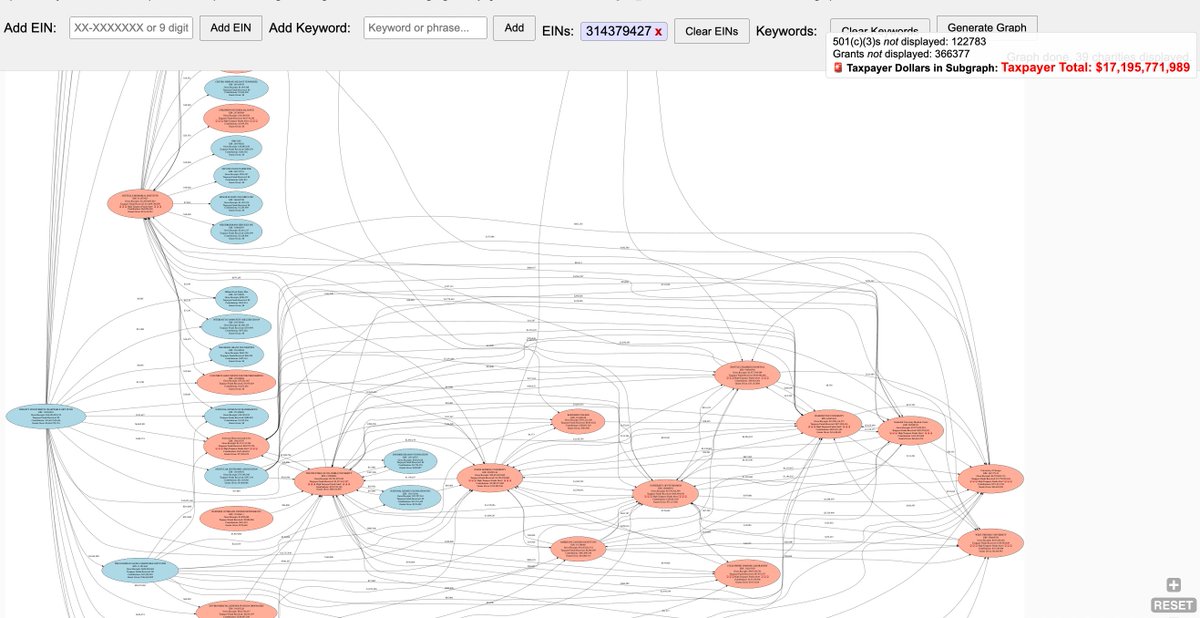
🚨 NONPROFIT SPENDING WATCHDOG TOOL 🚨
🔍 FOLLOW THE MONEY: TRACK NONPROFITS & TAXPAYER DOLLARS 💰
I've built a powerful tool to help you expose potential misuse of taxpayer funds. With a few clicks, uncover how government grants are flowing into nonprofits across the country.
Here’s how it works:
✅ Search by EIN (tax ID) or Keywords: Find charities you’re curious about.
✅ Highlight Taxpayer Dollars: Instantly see how much public money each nonprofit has received.
✅ Explore Connections: Visualize grants and relationships between organizations.
✅ Big Receipts, Small Graph? Automatically expands results to ensure you're getting a meaningful picture of where your money is going.
✅ You can zoom in and out.
The below screenshot is of United Way.
💡 Whether you're investigating waste, fraud, or abuse, this tool empowers you to demand accountability and protect your hard-earned tax dollars.
👉 Start searching today and shine a light on the truth!
WARNING: Data-heavy! Not recommended for mobile browsers. Link below:
1
49
Derek D. retweeted

1 Jan 2025
Protect your intellect this year.
Don’t involve yourself in unnecessary conversations.
Don’t fill your feed with degenerate content.
Don’t listen to music with a bad message.
Don’t waste your time talking to people who don’t share an abundant mindset.
Protect your intellect.
31
383
2,540
78,903
Derek D. retweeted

29 Dec 2024
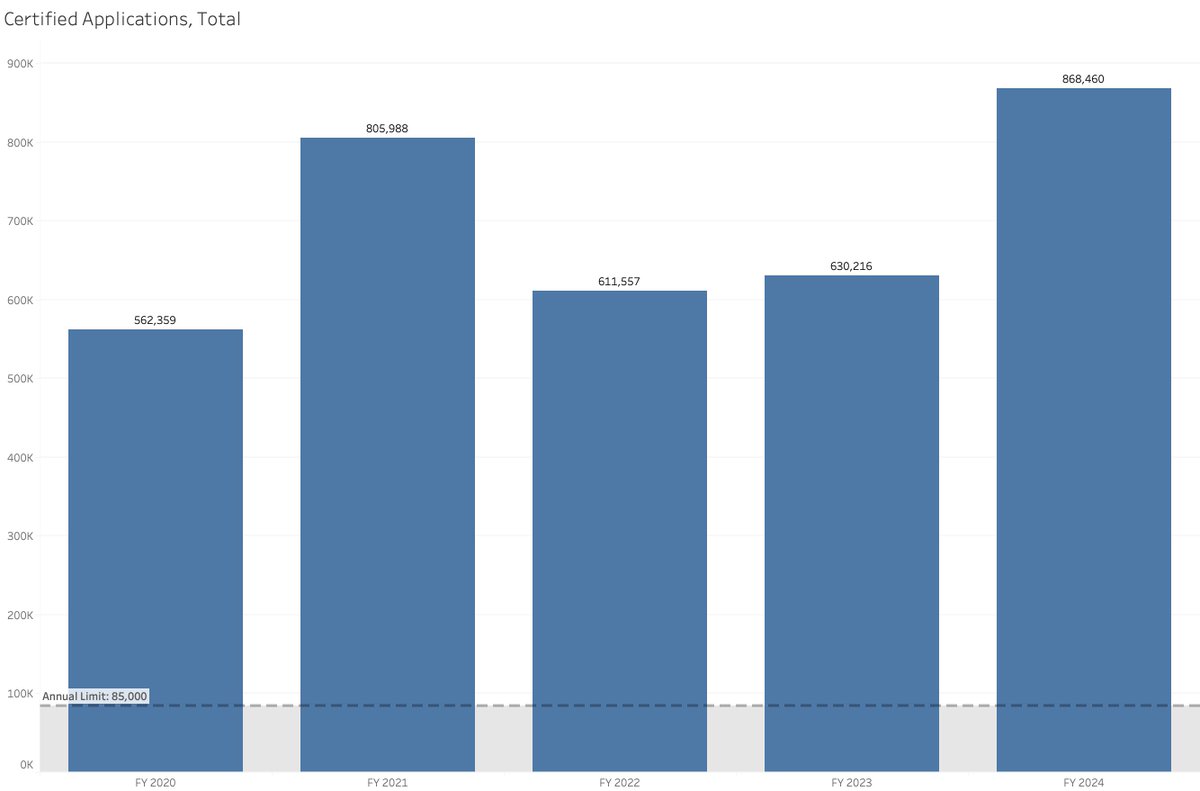
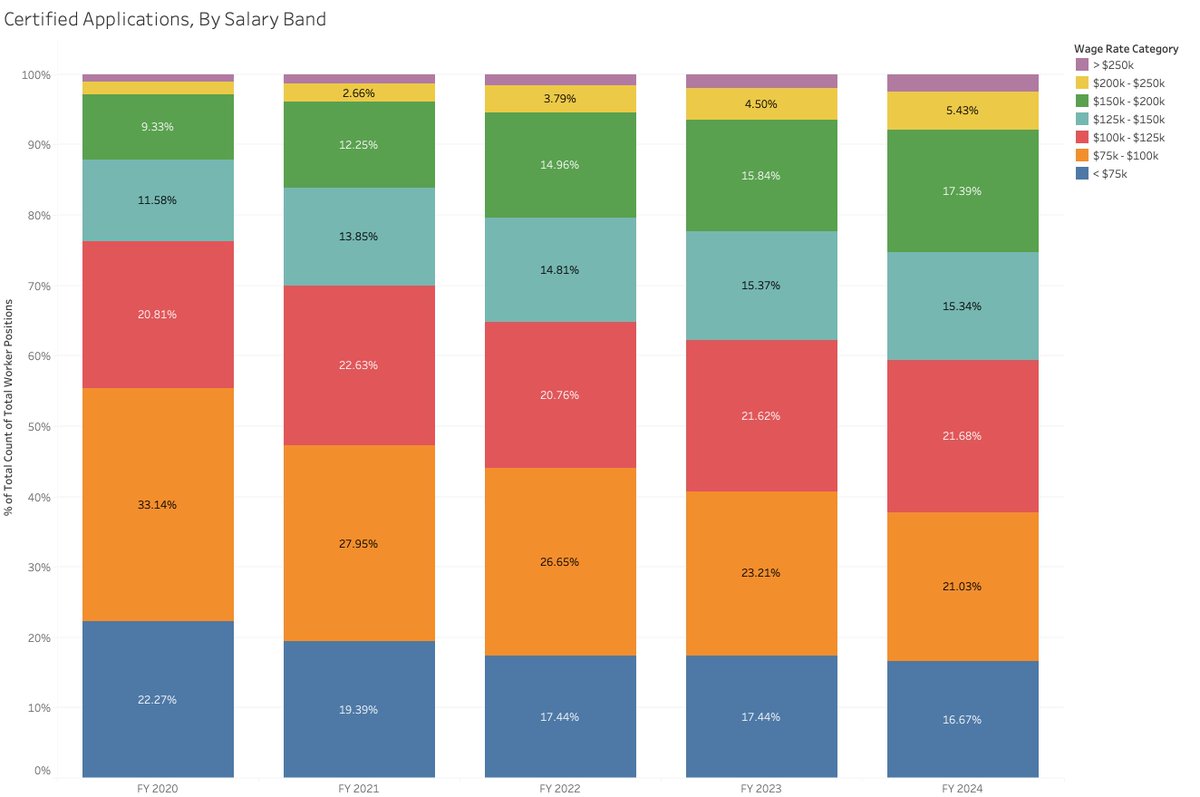
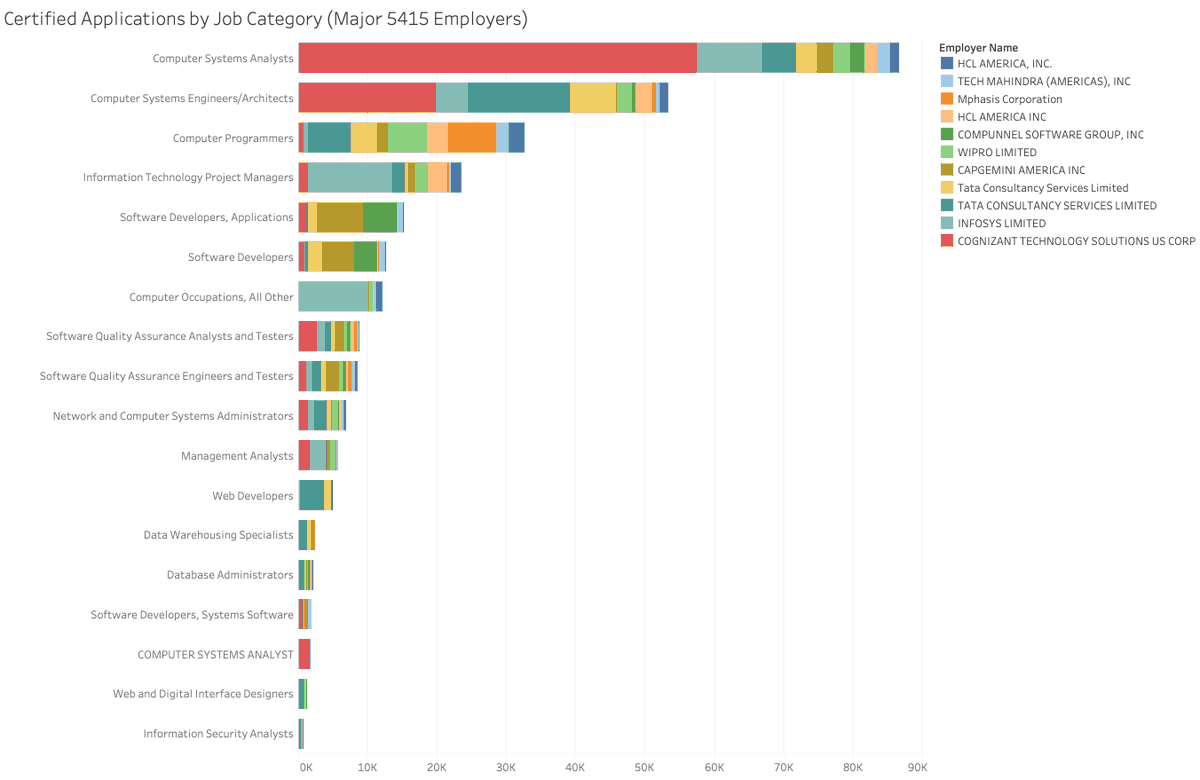
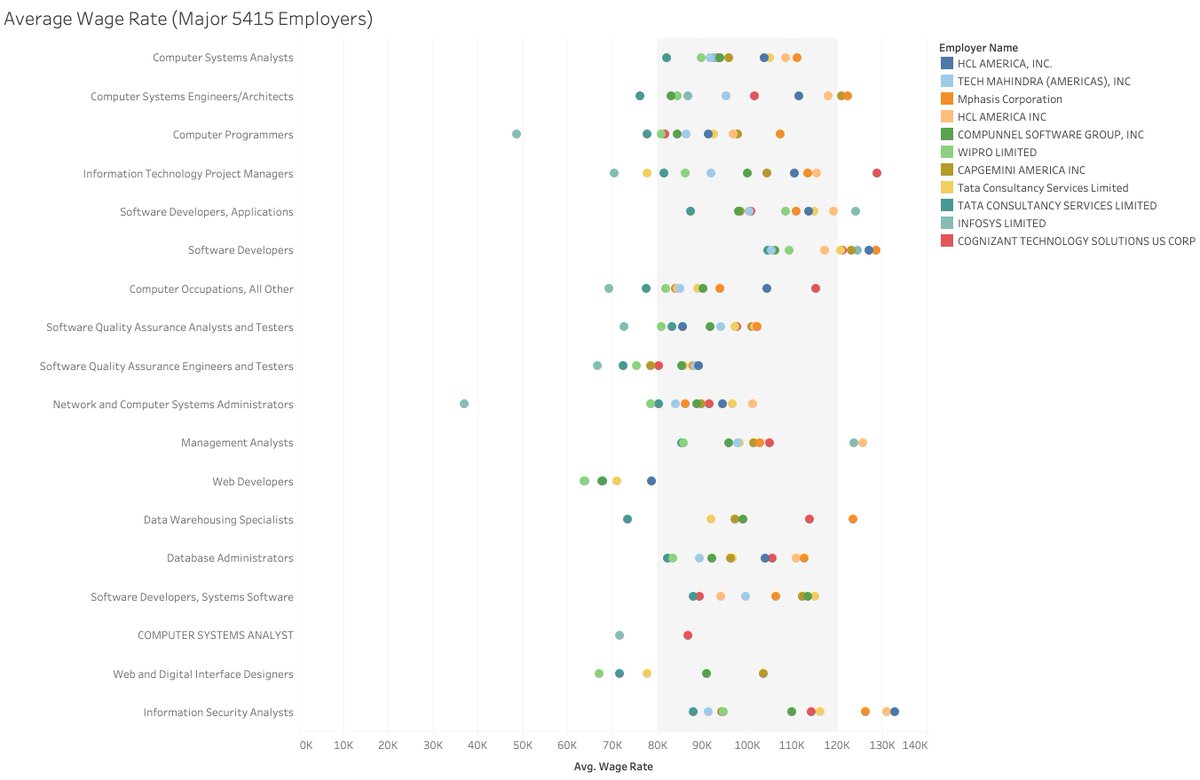
H-1B DATA MEGA-THREAD 🧵
I downloaded five years of H-1B data from the US DOL website (4M records) and spent the day crunching data.
I went into this with an open mind, but, to be honest, I'm now *extremely* skeptical of how this program works.
Here's what I found 👇
3,280
14,991
58,245
11,354,677
Derek D. retweeted

27 Dec 2024
All of these things can be true...
1. The H-1B program is being exploited to the detriment of American workers.
2. We need more 10x engineers and super geniuses ASAP - the top 0.001% of global talent.
3. Millions of Biden-era illegal aliens need to be deported starting on day one.
4. We need to seal and protect our physical borders.
5. Big Tech has targeted conservatives and white men without consequence for decades.
6. America sucks at growing and nurturing domestic talent in a meritocratic way.
7. We shouldn't demonize legal, smart, hard-working, entrepreneurial immigrants.
8. The asylum process is totally broken.
9. NGOs who support illegal immigration need to be defunded, taken out, and where possible, criminally charged.
516
1,399
7,783
664,028



Derek D. retweeted

15 Nov 2024
I want a maximally truth-seeking government which autistically collects & publishes factual data about demography, crime, immigration, outcomes, health, economics, science, the natural world, climate, space, etc., etc., etc.
515
1,308
10,629
27,950,700