
European. Ulsterman. Now: @AFP Deputy Latin America Editor based in Bogota. Priors: Australia/White House/Southern Africa/Libya/Fed/Panama/EU.
Joined March 2009
- Tweets 1,816
- Following 4,184
- Followers 30,821
- Likes 25,313
54 Photos and videos

Andrew Beatty retweeted

May 14
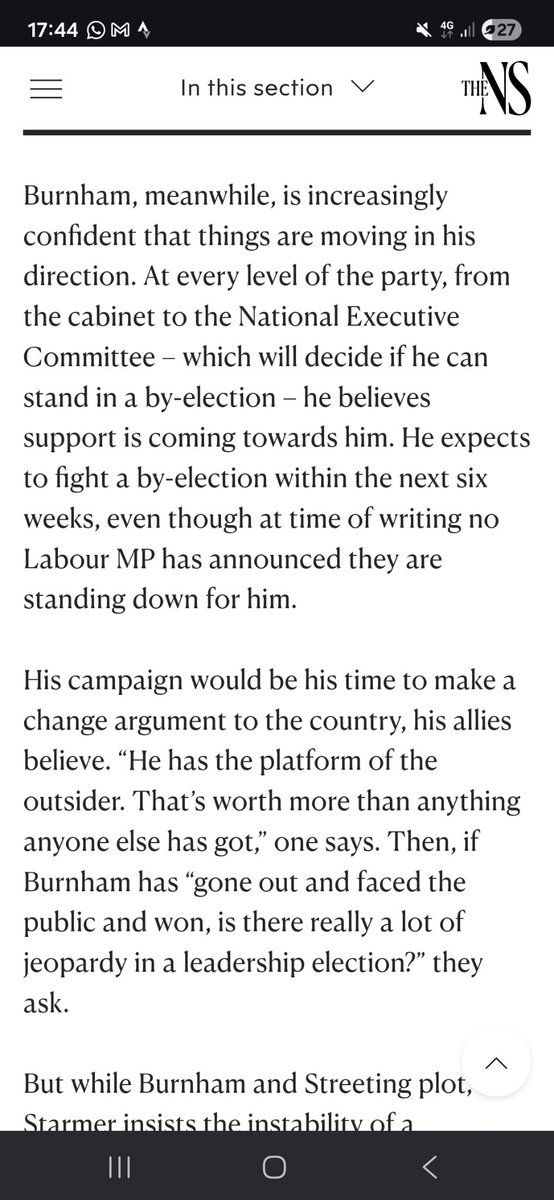
Andy Burnham wants this by-election to be a proof of concept election: he will pitch himself as the change candidate, the outsider. Once he has proven he can win in places Labour is losing, he thinks an eventual leadership election poses less jeopardy.
From this week's New Statesman politics column (written days ago!)
18
28
187
32,320

May 14
Mexican rights activist speaks out after being hit by US sanctions @AFP yahoo.com/news/articles/mexi…
260
Andrew Beatty retweeted

Guatemalan President Bernardo Arevalo has selected Gabriel Garcia Luna on May 5 as the new Attorney General (AG) and head of the Public Ministry. He replaces Consuelo Porras, who under presidents Biden and Trump was on the USG list of corrupt actors ineligible for a visa. Garcia Luna has a strong professional reputation, and Arevalo has clear he will respect the new AG’s independence.
Garcia Luna inherits an AG office that for eight years under Porras has consistently dropped or stalled prosecutions of grand corruption, and which instead has prosecuted, or pushed into exile, persons who had investigated corruption or who had opposed her failed attempt to invalidate the 2023 elections. The AG politicized justice like no other AG had done in 41 years of democratic rule. The prospect of change, of an independent and non-partisan prosecutorial service, unnerves Guatemalans who relied upon grand corruption and a compliant Public Ministry as political and economic tools. It is also bad news for narcotics traffickers and human smugglers who prefer to operate in a corrupt environment.
For over 15 years, Guatemalan institutions – the executive branch, judiciary, and the attorney general – have cooperated with US law enforcement investigations and extraditions. Garcia Luna is most likely to continue and to improve this cooperation. Garcia Luna’s appointment should encourage the Trump administration, since a more independent and credible Guatemalan judicial system will not only do better in prosecuting organized crime, traffickers, and gangs, but will also enable the long-term economic growth and political stability that in turn reduces the push for Guatemalans to emigrate to the US. With Guatemala’s attorney general and the police lined up against organized crime, the US has a major opportunity.
The big questions about the AG’s office, as Garcia Luna prepares to take over, are the extent to which grand corruption and organized crime have grown and infiltrated institutions, the extent to which the AG's office enabled this, what measures to take to address these distortions, restore justice, and to ensure that they cannot be repeated, and how to respond to efforts by status quo politicians and operators to block change.
Specific major challenges facing Garcia Luna:
1) The network of prosecutors who advised and implemented Porras’ decisions to drop cases or imprison opponents. They will try to burrow in; their victims will seek justice;
2) How to answer Guatemalans’ demands for better citizen security and actions against extortion and gang activity;
3) What to do about existing prosecutions of reporters, indigenous leaders, and former corruption prosecutors and judges, and of those forced into exile. Victims seek release; there will be calls to investigate spurious prosecutions;
4) The status of AG units, including the wiretap unit and counternarcotics and organized crime units, that US law enforcement relies upon and which the US previously supported;
5) Opposition by the “pact of the corrupt;” while now on its back foot, this group views Garcia Luna’s appointment as an existential threat, and will use its influence in the courts to stymie him;
6) Opposition by some politicians and wealthy families, including those who financed lobbyists in the US, who at the best are skeptical about Garcia Luna’s appointment and its implications for their ambitions, and who are susceptible to fear and resentment. Underlying this is a lack of consensus on what judicial independence and accountability really mean for persons with power. Garcia Luna has the opportunity to define them as Attorney General.
#Guatemala #FiscalGeneral #ConsueloPorras #GarciaLuna #Arevalo #USEmbassyGuatemala
15
130
399
24,352
Andrew Beatty retweeted

May 5
Trump blocks visas for Costa Rica's leading newspaper because it broke a sexual abuse scandal involving the country's current president, who is a Trump ally. trib.al/Dx8kpjY
388
9,353
17,045
816,997
Andrew Beatty retweeted

May 4
Almost all of these news influencers build their brand by commenting on reporting done by real journalists at legacy outlets.

A new report shows that social media ‘influencers’ and ‘independent creators’ are taking a greater role in providing news to Americans – especially younger Americans. usnews.com/news/national-new…
81
851
3,431
456,043
Apr 30
Latin America countries doing what South East Asian countries have been doing for quite some time.
Apr 30

“Tenemos que seguir en comercio con todo el mundo. No podemos negar que tenemos una buena relación comercial con China”.
This pattern is clear among regional conservative leaders, from the “Trump of the Tropics” Bolsonaro to “MAGA all the way” Milei.
cnnespanol.cnn.com/2026/04/1…
1
473
Apr 29
La mutilación genital, una tragedia silenciosa para niñas indígenas en Colombia @AFP youtube.com/watch?v=igZUJDA6…
1
376
Andrew Beatty retweeted

Apr 23
“No formal invitations have been issued at this time, but all G20 members will be invited to attend ministerial meetings and the leaders’ summit" in Florida, a senior administration official tells AFP. Russia says it was invited at "the highest level".
3
3
1,389

Anthropic said Mythos was too dangerous to release. Then four random guys in a Discord gained access on day one by guessing the URL...
This is pretty insane:
→ Group in a private Discord guessed the endpoint from Anthropic's naming conventions
→ They figured out the conventions from the leak in the Mercor breach three weeks ago
→ Used a contractor's legit eval credentials to walk in
→ Have been using it ever since to build simple websites
The AI that finds zero-days in every operating system on earth was defeated by address bar autocomplete... big yikes

Anthropic's Mythos has been accessed by a small group of unauthorized users, raising questions about control of the AI model bloomberg.com/news/articles/…
272
2,281
24,301
3,975,995
Apr 13
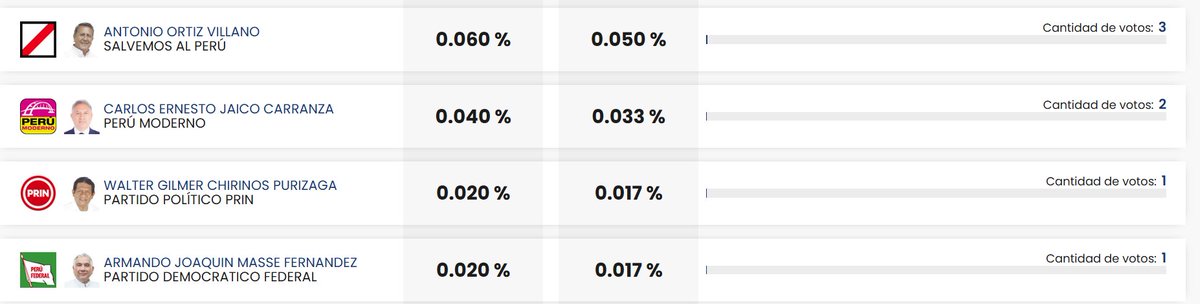
Early days, but not going super well for some in the Peruvian election
1
511
Andrew Beatty retweeted

Apr 11
Keiko Fujimori, Peru's presidential front-runner, vowed to expel illegal migrants, attract U.S. investment and extend a conservative tide sweeping power in Latin America on the eve of Sunday's election. ebx.sh/VCOSXQ
2
4
2,797
Apr 11
Keiko Fujimori, Peru's presidential front-runner, vowed to expel illegal migrants, attract U.S. investment and extend a conservative tide sweeping Latin America, in an exclusive interview with @AFP on the eve of Sunday's election. japantimes.co.jp/news/2026/0…
1
274
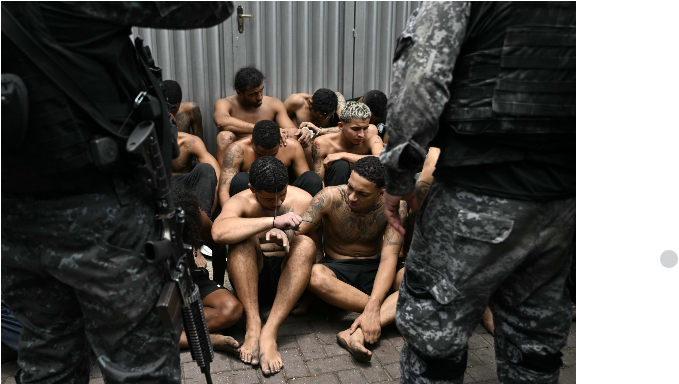
In El Salvador's mass trials, 'the innocent pay for the guilty' @AFP uk.news.yahoo.com/el-salvado…
1
339
Andrew Beatty retweeted

Mar 20
Trump on Strait of Hormuz: “At a certain point, it’ll open itself.”
174
261
1,533
316,774
Mar 20
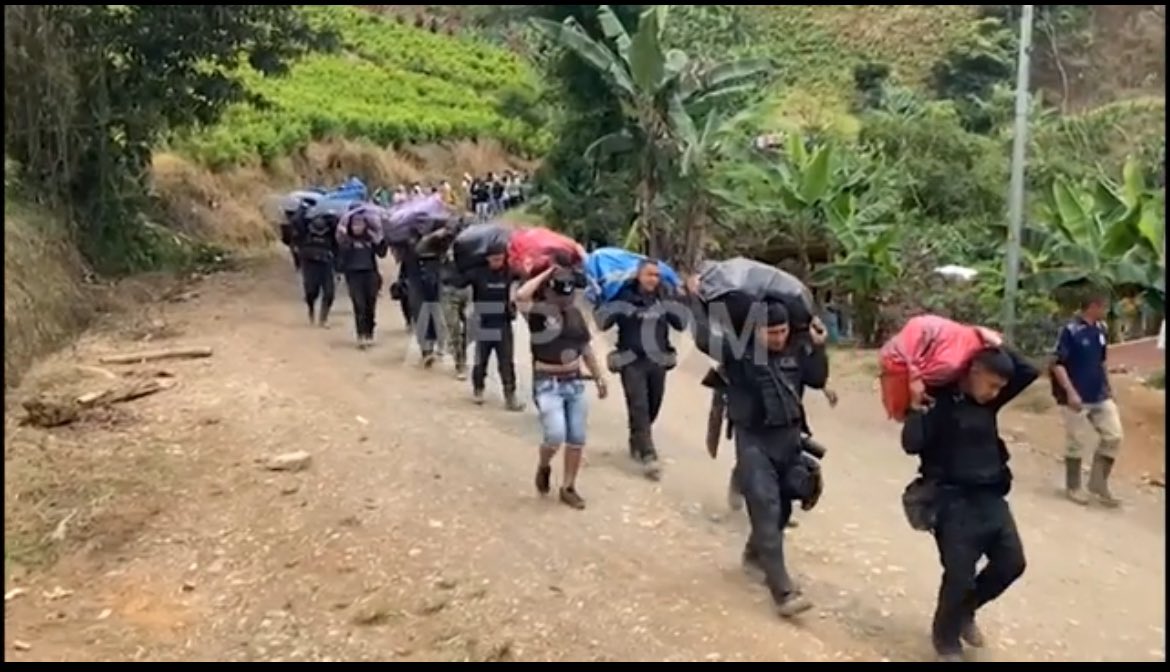
A US-backed crackdown on drug cartels along the Ecuador-Colombia border has sparked accusations that security forces bombed farms, burned homes and detained and abused villagers @AFP barrons.com/news/us-backed-a…
1
41
48
12,759
Mar 16
RT @mikercarpenter: Belgium’s blocking the use of frozen assets now becomes a lot clearer. It wasn’t merely about Euroclear. It’s about the…
519
2
Andrew Beatty retweeted

Mar 14
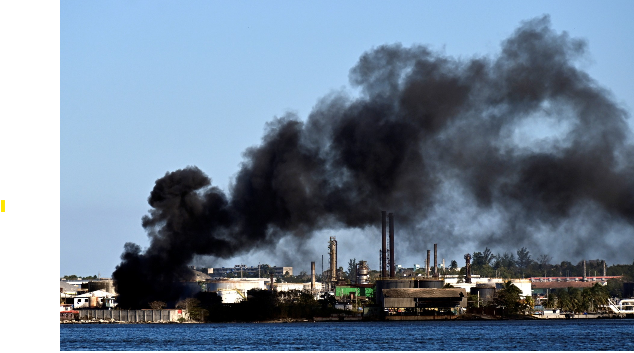
Protesters ransack a Cuban communist party office: state media
1
2
553
Mar 12
The first foreign visit of Venezuela's US-backed interim leader, Delcy Rodriguez, since taking power was abruptly cancelled on Thursday, just hours before she was due to arrive in Colombia @AFP
3
3
1,944
Elections under fire: Colombia endures deadliest campaign in decades @AFP yahoo.com/news/articles/elec…
233