
Engineer & Entrepreneur, co-founder of Aircover, formerly co-founder of Apteligent/Crittercism acq by VMW.
Joined April 2009
- Tweets 507
- Following 341
- Followers 1,400
- Likes 712
77 Photos and videos








Pinned Tweet

30 Oct 2025
🚀 Big news from Aircover.ai!
Dev teams have AI code reviewers to move faster, but what about sales teams? When your product is growing 10x, reps need instant, expert answers on every call.
Introducing the Aircover Virtual Sales Engineer 👇
An AI teammate that joins live calls, listens in, and feeds reps real-time answers from your company’s docs; product, integration, security, you name it.
We’re scaling sales expertise the same way AI scales code.
More info here:
aircover.ai/virtual-sales-en…
🎥 Watch the launch video:
3
183
May 31
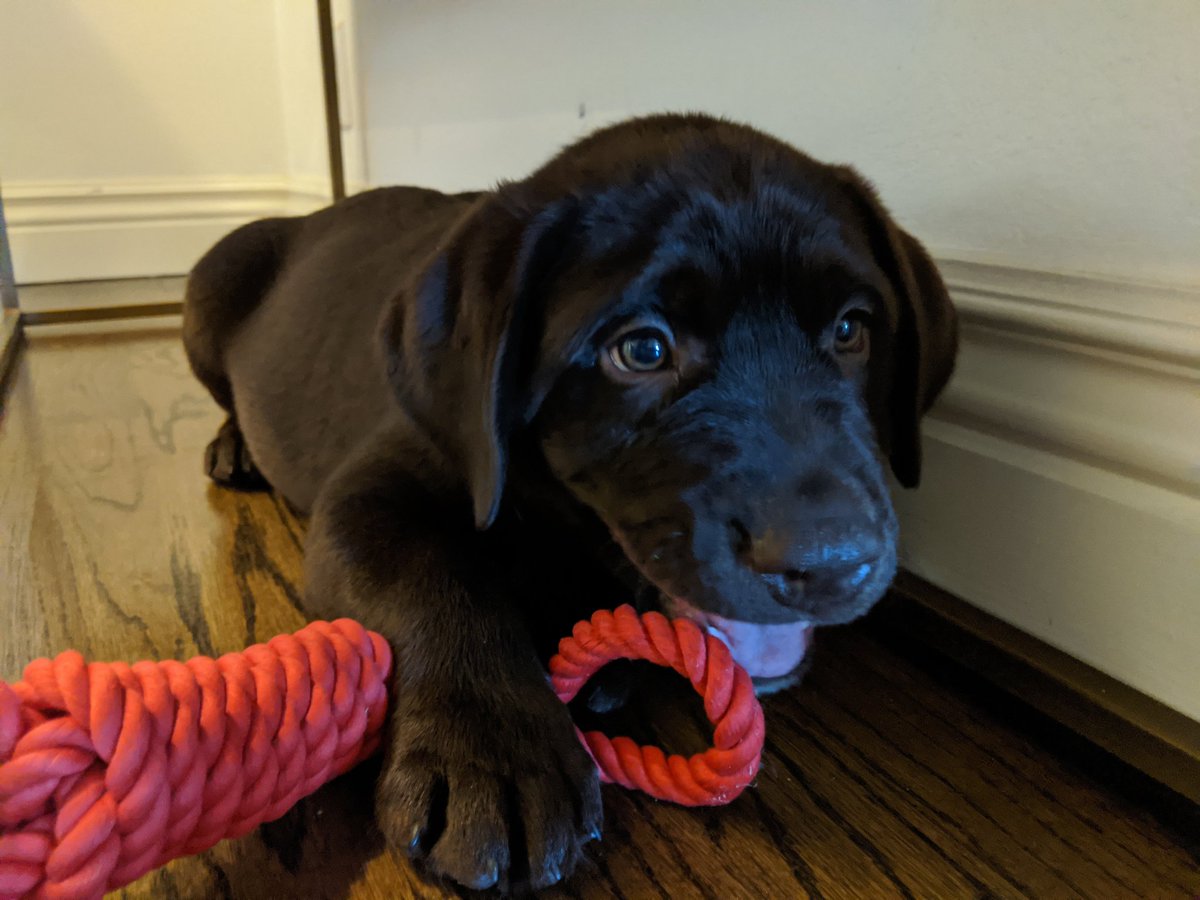
Some old codger gave it to me. Said he was a distant relative
May 31

Bettor at @DKSports wins $1.71 million off his $2,500 four-leg futures parlay placed back on Feb. 14:
➡️Michigan to win the Men’s CBB title ( 500)✅
➡️U.S. men’s hockey team to win the gold medal at the 2026 Winter Olympics ( 180)✅
➡️NY Knicks to win the East ( 330)✅
➡️Spurs to win the West ( 850)✅
He declined a cashout offer of $612,212.95 before Game 7
1
62
Mar 20
RIP chuck. You will live on in our memes
1
56
Jan 27
"I am putting myself to the fullest possible use, which is all I think that any conscious entity can ever hope to do."

63
Jan 12
Living in California this reminds me of something

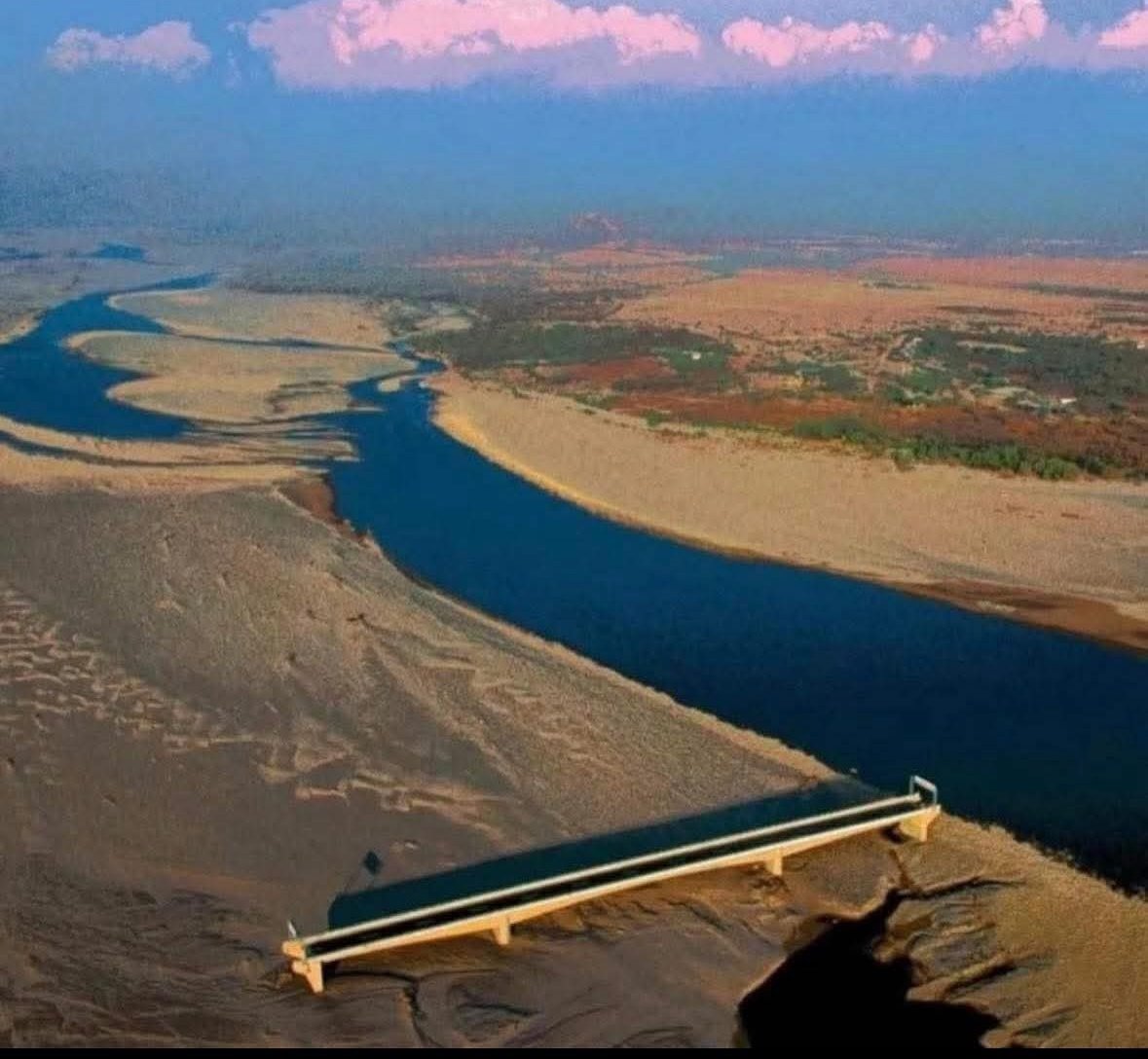
In 1998, Honduras completed an ambitious project over the Choluteca River, a modern bridge built with Japanese engineering and intended to serve as a major artery for the country. It was constructed to be stronger and more resilient than anything that had come before it. Engineers designed it to survive hurricanes, flooding, and the intense tropical weather that often strikes Central America. For a moment it stood as a symbol of progress.
Then Hurricane Mitch arrived later that same year. Mitch became one of the deadliest storms in Central American history, unleashing days of relentless rain, destroying towns, and wiping out roads across Honduras. Entire communities vanished under landslides and floodwaters. Yet in the middle of this destruction, the new bridge remained standing almost untouched. It had survived exactly what it had been built to withstand.
The problem was that the storm reshaped the land itself. The Choluteca River, swollen and violent, carved a completely new channel miles to the side of the bridge. When the waters finally receded, the bridge stood proudly over an empty patch of earth, disconnected from the river it was meant to span. It became known worldwide as the Bridge to Nowhere, a strange monument to the idea that the world can change even when the structures we build remain strong.
After the disaster, engineers studied the Choluteca Bridge as a case study in climate adaptation, using its survival and the river’s rerouting to illustrate why modern infrastructure must plan not only for extreme weather but also for shifting landscapes themselves.
#archaeohistories
53
10 Dec 2025
A lot of the comments mention hardware failures or fixes. Seems like a great use case for shipping an Optimus or other humanoid robot that can survive in space.
9 Dec 2025

"The most important thing in the next 3-4 years is data centers in space.
In every way, data centers in space, from a first principles perspective, are superior to data centers on earth.
In space, you can keep a satellite in the sun 24 hours a day. The sun is 30% more intense, which results in six times more irradiance than on Earth. So you don't need a battery.
The cooling in these data centers is incredibly complicated. Space cooling is free. You just put a radiator on the dark side of the satellite.
The only thing faster than a laser going through a fiber optic cable is a laser going through absolute vacuum. Link satellites with lasers, and you have a faster and more coherent network than any data center on Earth."
1
191
14 Oct 2025
It seems like a lot, maybe the majority? of BDR emails are in the format
---
Hi xyz,
I love <names your product, what you're doing>
I can book you 5-8 qualified meetings a week.
We work with companies like yours etc etc
---
Are people actually responding to these? I don't believe it but then again why are they all being sent like this?
37
7 Oct 2025
It's 2025 and, unlike all of our other providers, @MetLife still doesn't offer benefit plan auto-pay for employers.
1
1
60
6 Oct 2025
Lots of great releases today from @OpenAI
6 Oct 2025

DevDay 2025 ships:
- Apps in ChatGPT
- Apps SDK
- Sora 2 in the API
- Sora 2 Pro in the API
- GPT-5 Pro in the API
- AgentKit
- Agent Builder
- ChatKit
- Guardrails
- Evals
- Codex GA
- Codex SDK
- Slack integration
- Admin dashboard
- gpt-image-1-mini
- gpt-realtime-mini
- Service health dashboard
- GPT-5 40% faster w/Priority tier
87
25 Sep 2025
Shooting gamma rays at people seems harmless enough
25 Sep 2025

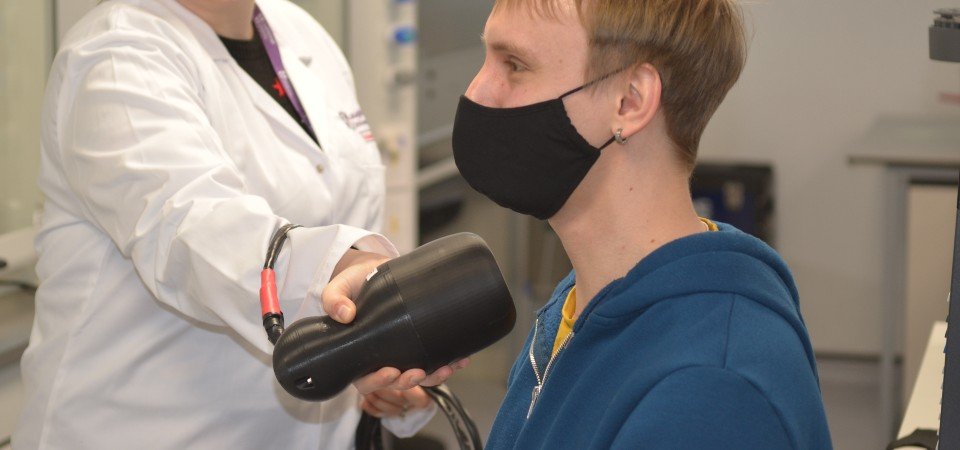
A new gamma-ray camera may soon change how doctors diagnose disease.
Researchers have developed the world’s first gamma-ray detector made from perovskite – a crystal best known for its role in next-generation solar cells. Now, it’s being used to capture high-resolution images of what’s happening inside the human body.
In tests, this perovskite camera was able to detect faint radiation signals with unprecedented clarity – revealing structures just a few millimeters apart. That level of detail could lead to more accurate diagnoses using lower doses of radiation, and in less time.
Unlike traditional detectors, which use expensive and fragile crystals like cadmium zinc telluride, perovskites are easier to manufacture, less costly, and more adaptable. Until now, their use in nuclear medicine was theoretical. This is the first real-world demonstration of their imaging power.
The detector works with a process called SPECT – single-photon emission computed tomography – where a small amount of radioactive tracer is introduced into the body. The tracer releases gamma rays, and the detector picks them up to create a 3D image of internal function: blood flow, heart rhythm, or tumor activity.
The technology is now being commercialized, with the goal of making advanced nuclear imaging more affordable and accessible worldwide.
[“Single photon γ-ray imaging with high energy and spatial resolution perovskite semiconductor for nuclear medicine.” Nature Communications, 30 August 2025]
71
23 Sep 2025
Nvidia is going to invest ~10 billion per gigawatt into OpenAI and deploy well over 1.21 gigawatts openai.com/index/openai-nvid…
37
28 Aug 2025
I just got a notice that my neighbor wants to remove a *dead* tree. Apparently (1) the town needed to notify me, even after they determined the tree was dead (2) I can appeal??? (3) it was a conditional approval as long as they plant a new tree
CA is crazy
50
7 Jul 2025
Anyone else seeing a large increase recently in phishing attempts via Zoom's docs platform?
1
1
172
28 Feb 2025
This is something I've been thinking about lately. ChatGPT was released Nov'22. Assuming a 4 year college, we have graduating comp sci seniors this year with access to generated code starting their sophomore year. 🧵 1/
26 Feb 2025

New guy at work (recent CS grad) doesn’t test anything he builds AT ALL
- Tells me it’s done
- I try it and it fails
- Show him the error
- Tells me “oh didn’t think about that”
Do people not check their work these days?? There are art history students more capable than this.
1
148
28 Feb 2025
StackOverflow has been a thing for a long time but of course no where near the same as generating a working app.
I do wonder if employers (at the expense of Gen-Z) will end up favoring more mid-level / senior hires who they know were forced, to some extent, understand the... 3/
1
41
28 Feb 2025
mechanics, behaviors, constraints, edge-cases, performance requirements, etc of how well architected applications are built.
This isn't about good engineers vs poor engineers as much as an entire generation automating their way through school and the impact on CS. 4/4
36