
Joined August 2021
- Tweets 11,065
- Following 1,658
- Followers 3,619
- Likes 16,316
1,791 Photos and videos




Jun 13
It feels like a self-inflicted wound with all the doomer-speak over the past year.
Jun 13

The US government, citing national security authorities, has issued an export control directive to suspend all access to Fable 5 and Mythos 5 by any foreign national, whether inside or outside the United States, including foreign national Anthropic employees.
The net effect of this order is that we must abruptly disable Fable 5 and Mythos 5 for all our customers to ensure compliance.
Access to all other Claude models is not affected.
We apologize for this disruption to our customers. We believe this is a misunderstanding and are working to restore access as soon as possible.
Read our full statement: anthropic.com/news/fable-myt…
86
Jun 11
This is called the vertical integration hell. @binance has such a direct hand in deploying all major utilities to their chain that no other builder wants to compete on the chain.
If you see the amount of integrations bStocks has, there is no chance for an external builder to create a competing app.
When chains create vertical integrations to the app layer, it stunts innovation on the chain, leaving the users of the chain with a single option. That's a pattern you'll notice all over BNB Chain.
Builders want their app to grow. Builders bring in investors through their distribution. Investors want to trade on an innovative chain with a variety of builders trying fresh ideas.
On an open chain, builders have a chance to see their app succeed so they are more likely to build there. Instead of one chain owned app, you'll have multiple builders trying to build there. With fresh ideas being built, investors prefer to trade on that chain. As traders are active on a chain, more builders want to build there.
A closed vertically-integrated chain kills this loop, leading to a scarcity of builders as they can't compete against the chain's app, leading to the chain being less exciting to trade on, leading to fewer active investors, leading to builders seeing lower volume on their apps, which leads to them leaving the chain.
Vertical integration is a short-term opportunistic approach that kills the long-term growth of a chain.
It might also be the case where Binance has to take this direction because they do not expect anyone to build a utility on the chain so they are forced to create these so that @BNBCHAIN users can have access to these utilities.
Can vertical integration be a measure of chain regression?

bStocks are landing on BNB Chain.
Launched by @Binance as 1:1-backed U.S. securities, bStocks are tradable 24/7 with zero fees and settle on BNB Chain in under a second.
Start with just $5 while enjoying full self-custody over your portfolio on @TrustWallet, @BinanceWallet and more, powered by @native_fi.
Not only that, you can soon deploy bStocks to work across DeFi protocols on BNB Chain, all while continuing to earn dividends on your underlying stocks: @PancakeSwap, @Aster_DEX, @VenusProtocol, @lista_dao and more.
Read the full story in our blog 👇
bnbchain.org/en/blog/introdu…
1
2
226
Jun 9
If you keep sizeable funds on a DeFi platform and their contract is upgradeable, just withdraw the funds. That includes most of the top yield apps in the market.
These apps are a mockery of DeFi and they pose as DeFi apps while keeping all the control to the contracts.
With the scams getting smarter, it is critical to let go of permissions.
Jun 9

INCIDENT UPDATE:
Last night, June 8, the H token was hit by a coordinated attack across Ethereum and BSC. While we’re still investigating this incident, we want to be transparent with our community about what happened.
As of right now, ~$36M has been stolen across both chains and dumped. This was a result of a breach that happened after an employee’s laptop was compromised.
Three of six Gnosis Safe owner keys controlling the Hyperlane bridge ProxyAdmin were compromised. The attacker used these to transfer ProxyAdmin ownership to their own wallet, then upgraded the bridge contract to a malicious implementation and swept ~141.2M H in a single transaction.
Three of five BSC Safe owner keys were also compromised. The attacker performed the same ProxyAdmin seizure on BSC, deployed a malicious implementation with an unlimited mint function, and minted 200,000,005 H in two tranches directly to their wallet.
We’ve now halted all deposits and withdrawals to the affected bridges and are working with all related parties, including exchanges, to minimize the damage. Further to our internal investigation, we’re also working closely with the police to investigate this incident and recover some of the stolen funds.
People in this community worked hard for what they hold here, and we feel the weight of that. We want to apologize for what has happened and thank you for your patience, messages, and for sticking with us.
2
2
134
Jun 9
How to raise capital for your startup in 2026...
Tokenization is not always the solution (especially in this stage of the cycle).

1
112

Jun 2
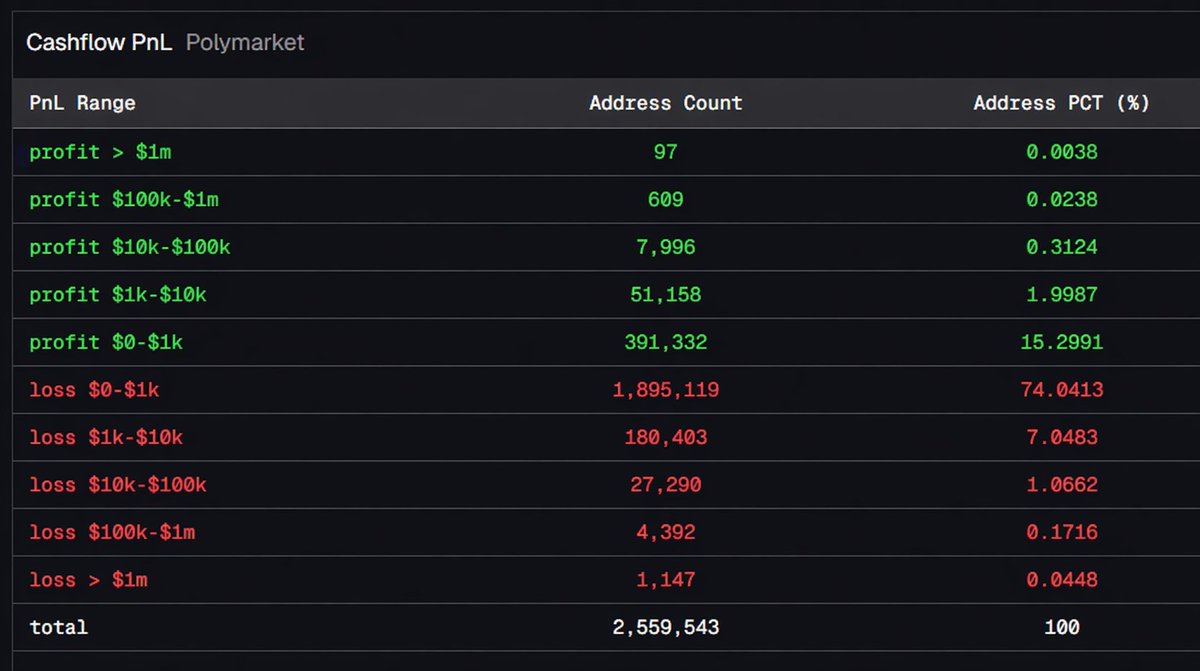
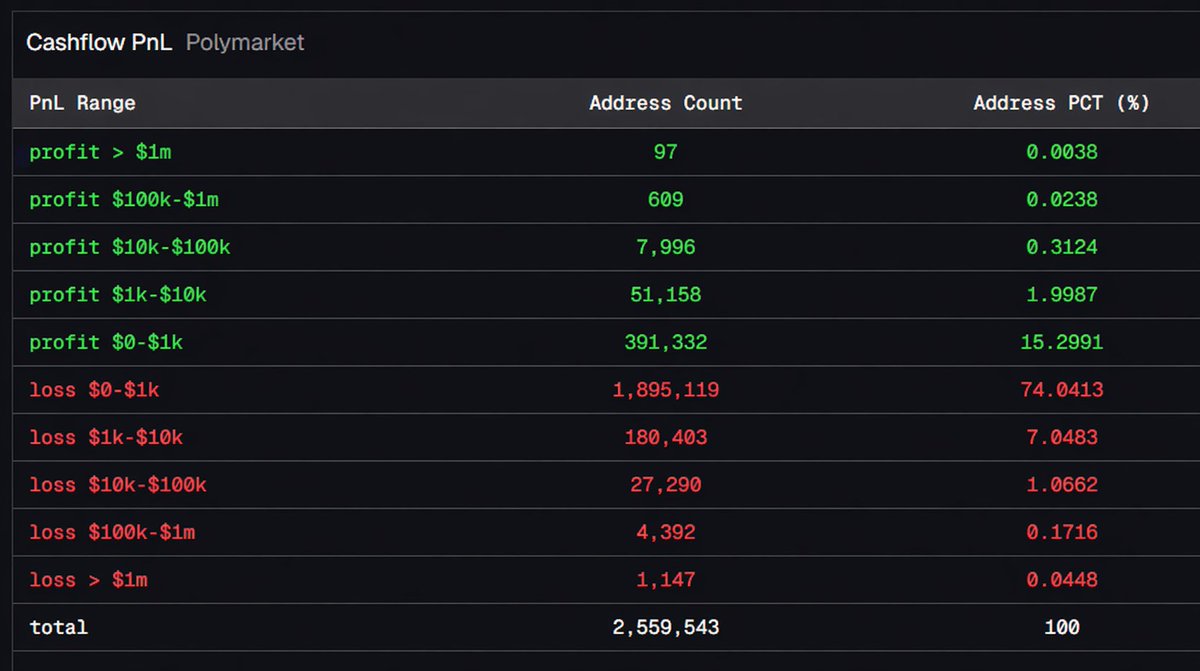
83% of the Polymarket traders lose money. Mathematically, you need to be in the top 17% of the players to be profitable. For every winner, there are 5 losers.
I would insist people do research on the game they're playing.
Jun 2

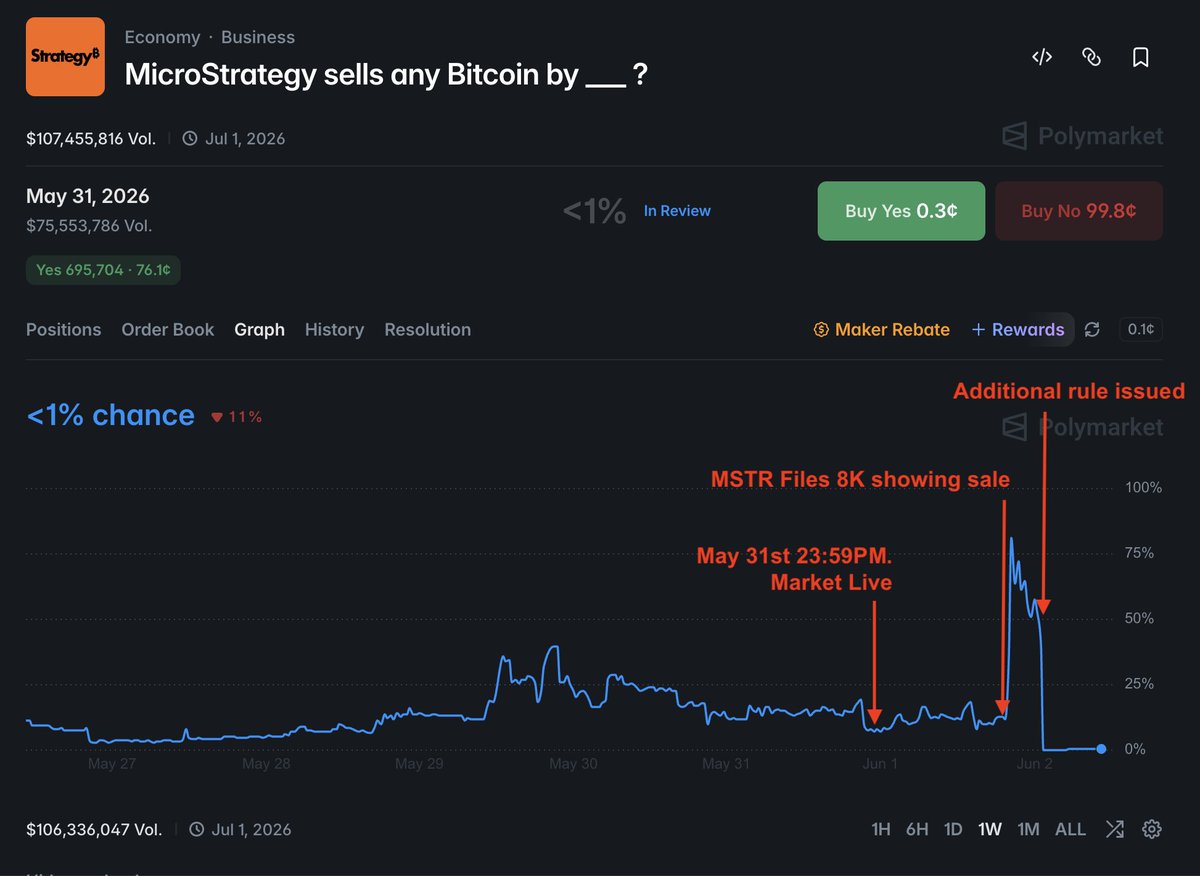
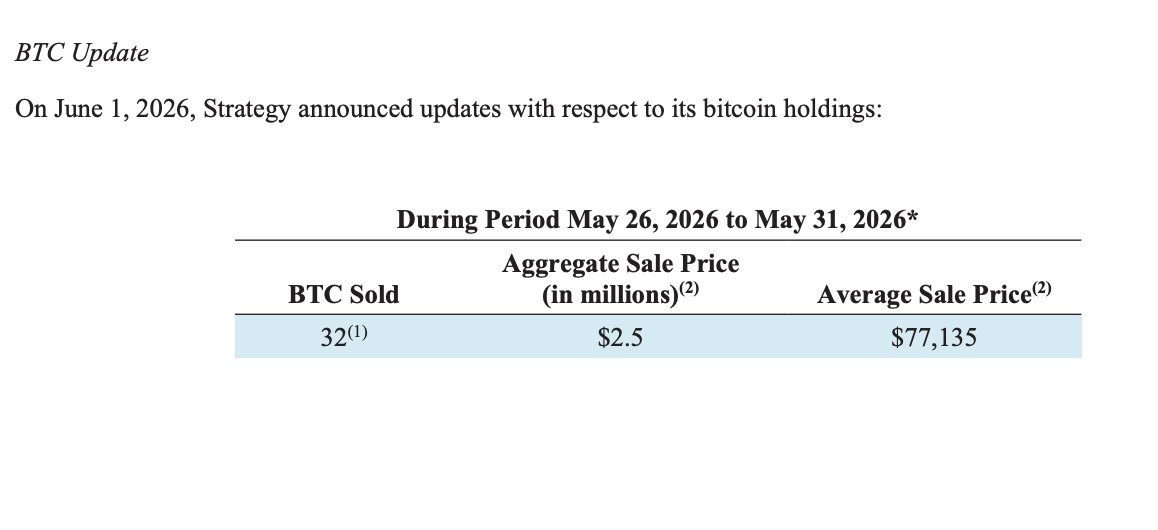
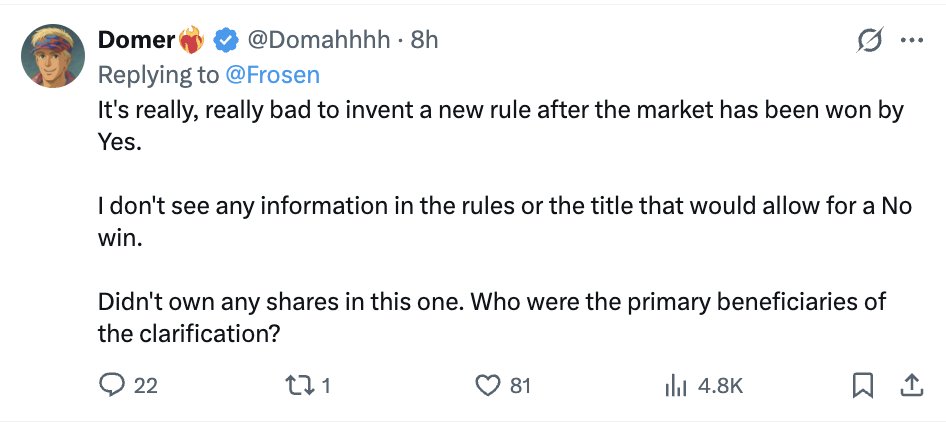
I was just scammed for $500K by Polymarket.
I am "willo2", the top holder of YES on "MicroStrategy sells Bitcoin by May 31st".
Here's what happened:

8
1
18
2,596
May 27
Security can be a very valuable product right now, especially Web3 security.
1
2
195
Andrew Seb retweeted
May 27
The contracts are not a problem. The problem is Teams keeping permissions with them to move fast in the market. If people intend to create true DeFi systems, they have to let go of permissions kept with the Teams.
Smarter phishing attacks and supply chain attacks leave individual keys to get compromised which collectively enable 'DeFi' systems to be vulnerable.
The DeFi systems of today are not safe due to the human variable. Currently, we have millions to billions in each of these DeFi vaults, waiting for 3/6 multisig executives to get phished and get these vaults drained.
Defi contracts are safe and meant to be trustless. Modern DeFi systems are not trustless. That's where the problem lies.
1
1
330
May 24
This is happening with @claudeai app where it takes between 1 and 5 mins to start working on a turn.
I hope @AnthropicAI is not starved for compute again.
1
4
138
Andrew Seb retweeted

May 22
New updates every Wednesday!



4
3
19
2,026
May 17
BSC's second-largest block builder, @48Club_Official, operates a token-gated 0-gwei transaction service. Its own documentation sets the rules: hold 48 Soul Points and get gas at 1 wei, which is one fifty-millionth of BSC's 0.05 gwei floor.
The cheapest path to 48 SP is staking 2 BNB at a 48Club validator, roughly $1,320 in capital that earns staking yield and is fully recoverable. After the 48-day weighting period, the quota of Soul Points × 10,000 gas per 252-second window unlocks. At 21,000 gas per transfer, that's 22 transfers per window, 7,543 per day, 226,286 per month, indefinitely.
Regular users, whose gas was already pennies, do not benefit from this. The economic profile of someone who needs millions of near-free transactions is a phisher running automated address-poisoning.
@blocksecteam, a major BSC security firm, named the channel directly in January 2025: phishing contracts utilizing 0-gwei transactions "leveraged 48Club's 0 Gwei transaction service by holding Koge," and the activity continued after 48Club added restrictions.
Coinmonks found that 50%-70% of transactions in 48Club's Puissant builder blocks are 0-gwei. 48Club builds around 40% of all BSC blocks per the Dune MEV dashboard.
48Club is also a participant in the BNB Goodwill Alliance, framed as anti-MEV. The alliance has deployed sandwich-attack filters. Meanwhile, 48Club continues to operate the 0-gwei service that security firms have publicly tied to phishing for more than a year, while it sits inside an alliance that claims to protect users.
@BNBCHAIN @heyibinance @_RichardTeng Your second-largest block builder is a major enabler of address poisoning attacks on your own users.
请救救这些用户,兄弟们
May 16

Two companies built 96% of @BNBCHAIN blocks over a recent six-month stretch. You've probably never heard of them. You've been asked to trust them.
When you use a private RPC like @PancakeSwap's MEV Guard, your transaction skips the public mempool and goes directly to builders. That generally protects you from public sandwich bots, and that part is effective (mostly).
But here's the catch. Whichever builders receive your transaction can see it before anyone else. @48Club_Official and @BlockRazor_Inc (the duopoly) have publicly framed backrunning as harmless to users, meaning they capture the MEV your transaction creates after it executes, without degrading your trade. There's no on-chain way to verify that framing. There's also no way to know whether they're sandwiching, skimming, or doing exactly what they say, or the presence of a barrier to them doing so in the future.
We're not being sandwich-attacked (probably). It's about being asked to trust an opaque system.
Ethereum is structurally more open. Entry is permissionless, a relay layer sits between builders and validators as a checkpoint, and longer block times leave room for slower entrants to bid. BSC's whitelisted PBS and sub-second blocks hinder all three.
1
2
4
344
May 17
Sources:
arXiv paper "MEV in Binance Builder": arxiv.org/abs/2602.15395
Dune, BNB Smart Chain MEV Stats: dune.com/bnbchain/bnb-smart-…
48Club Docs: docs.48.club
BlockSec analysis of BSC after PBS: blocksecteam.medium.com/how-…
Coinmonks "0 GWEI, Is It Real?": medium.com/coinmonks/0-gwei-…
BEP-322 specification: github.com/bnb-chain/BEPs/bl…
BNB Goodwill Alliance announcement: bnbchain.org/en/blog/bnb-goo…
3
116
May 16
Two companies built 96% of @BNBCHAIN blocks over a recent six-month stretch. You've probably never heard of them. You've been asked to trust them.
When you use a private RPC like @PancakeSwap's MEV Guard, your transaction skips the public mempool and goes directly to builders. That generally protects you from public sandwich bots, and that part is effective (mostly).
But here's the catch. Whichever builders receive your transaction can see it before anyone else. @48Club_Official and @BlockRazor_Inc (the duopoly) have publicly framed backrunning as harmless to users, meaning they capture the MEV your transaction creates after it executes, without degrading your trade. There's no on-chain way to verify that framing. There's also no way to know whether they're sandwiching, skimming, or doing exactly what they say, or the presence of a barrier to them doing so in the future.
We're not being sandwich-attacked (probably). It's about being asked to trust an opaque system.
Ethereum is structurally more open. Entry is permissionless, a relay layer sits between builders and validators as a checkpoint, and longer block times leave room for slower entrants to bid. BSC's whitelisted PBS and sub-second blocks hinder all three.
2
1
10
668
May 16
I write such pieces because I feel as UX becomes the competitive frontier for on-chain users, there are compromises on decentralization and creating single points of failure. For a long time, decentralization has been the main safeguard against control and security attack vectors. You can draw your own conclusions from this post.
1
2
100
May 16
Sources:
arXiv paper 2602.15395: arxiv.org/abs/2602.15395
BNB Chain forum: forum.bnbchain.org/t/mev-in-…
GitHub issue #3218: github.com/bnb-chain/bsc/iss…
1
134
May 13
I think this is very smart. I was actually worried if I should just stop developing on my main machine. This is a reasonable line of defense.

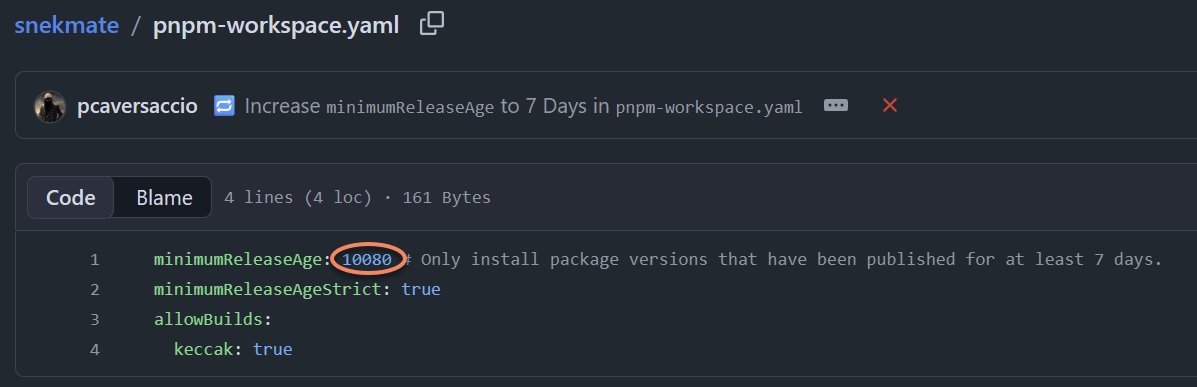
i have updated all of my actively maintained repos that use npm packages in some form to only install package versions that have been published for _at least 7 days_ (this includes transitive deps as well); 7 days is currently my hope that will be enough to catch the some-dev-account-got-compromised-and-published-something-malicious as well as the more sophisticated worm hacks. anyone who currently does not enforce a min release age for deps of at least 3 days imho is simply irresponsible.
2
107
May 6
Really happy to see Durov take control of $TON again. I want to highlight though, that improving finality time comes at the expense of decentralization.
Let's break down the concept a bit to understand it better.
There are two things that define a blockchain - block time and finality time.
Finality time means that the block is set in stone after being agreed by 2/3rd of all the validators. It is a very neat trick where block time can provide a good UX by confirming fast, which is perfect for smaller transactions. Users must wait for the finality time for big transactions so they are sure that such a transaction getting reverted by a bad actor is financially impossible.
Something like ETH has a finality time of 12.8 mins with a block time of 12 seconds. Basically, this means that 2/3rd of the validators agree on that block being final after 12.8 mins. This is not a set time. The metric is contingent on 2/3rd of the validators voting for it.
$TON doing it in 0.6 seconds means 2/3rd of the validators are able to confirm it within that time which means a high infra requirement for validators (or no smaller operators want to validate TON chain).
Telegram stands for decentralisation but this metric makes it look very centralised. Block time, and not finality time, is used as a UX metric. Finality time is your security layer and a shorter finality time points at TON being a very centralised chain.

1
2
9
512