
PhD student of Artificial Intelligence at JKU Linz under the supervision of Johannes Brandstetter and Sepp Hochreiter.
Joined January 2020
- Tweets 14
- Following 191
- Followers 138
- Likes 42
3 Photos and videos
Pinned Tweet

8 Nov 2024
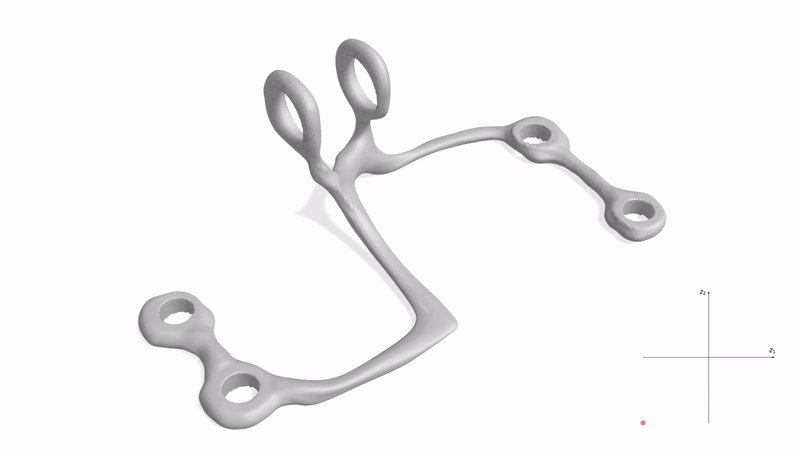
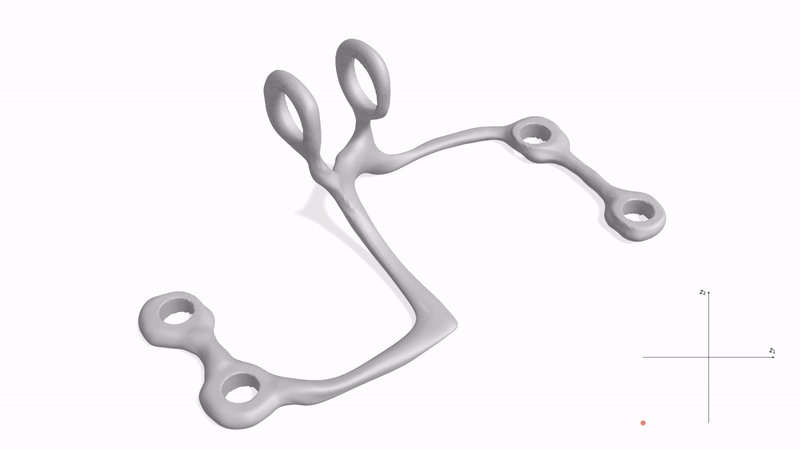
Proud of our Geometry-Informed Neural Net (GINN🍸) which generates diverse shapes without training data.
Paper: arxiv.org/abs/2402.14009
Great work and thanks to my amazing team mates and supervisors @artuursberzins @e_volkmann @SebSanokowski @HochreiterSepp @jo_brandstetter
8 Nov 2024

Geometry-Informed Neural Networks are evolving! Beyond faster training and improved shapes, GINNs surprised us with an emergent property – a structured latent space. 🧵
3
17
1,860
12 Mar 2025
I had the privilege of presenting my latest work at the renowned CRUNCH seminar at Brown University.
👉 Geometry-informed Neural Networks (GINNs)
👉 Generative Topology Optimization (GenTO)
Video: youtu.be/bTsbZcAlfXY?t=3621
With
@e_volkmann @artuursberzins @jo_brandstetter
3
5
13
698
12 Mar 2025
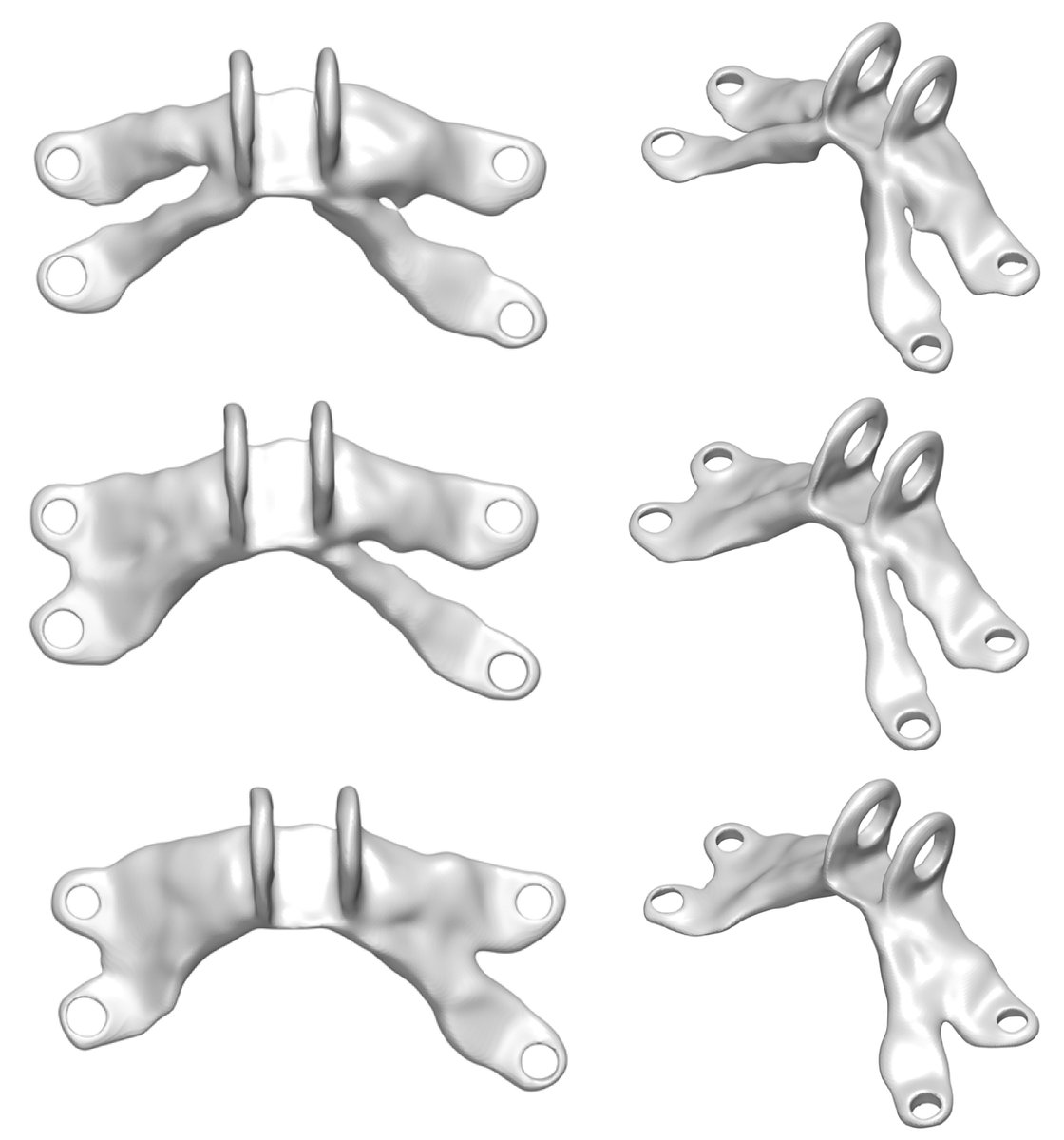
👉 GINNs: A new method to train shape-generative models using design constraints, producing diverse geometries with a unique diversity constraint.
👉GenTO: Applies GINNs to topology optimization, using a solver-in-the-loop to create diverse and structurally compliant shapes.
61
12 Mar 2025
Geometry-informed Neural Networks: arxiv.org/abs/2402.14009
Generative Topology Optimization: arxiv.org/abs/2502.13174
2
73
Andy Radler retweeted

15 Nov 2024
Super hyped to share NeuralDEM -- the first real-time simulation of industrial particulate flows. NeuralDEM replaces Discrete Element Method (DEM) routines and coupled (CFD-DEM) multiphysics simulations. 🧵
📜: arxiv.org/abs/2411.09678
🖥️: nx-ai.github.io/NeuralDEM/
7
91
389
41,202
27 Jul 2024
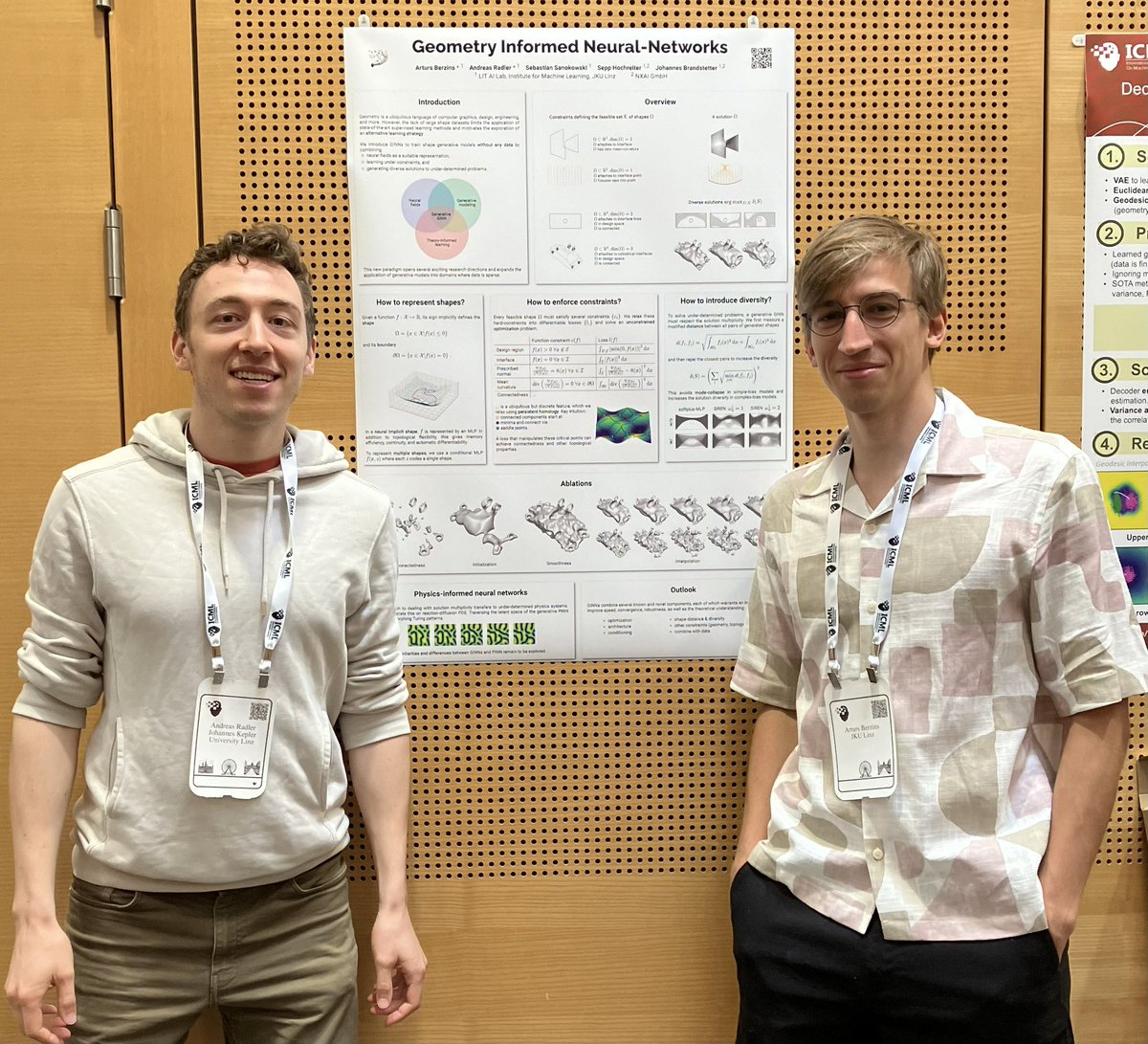
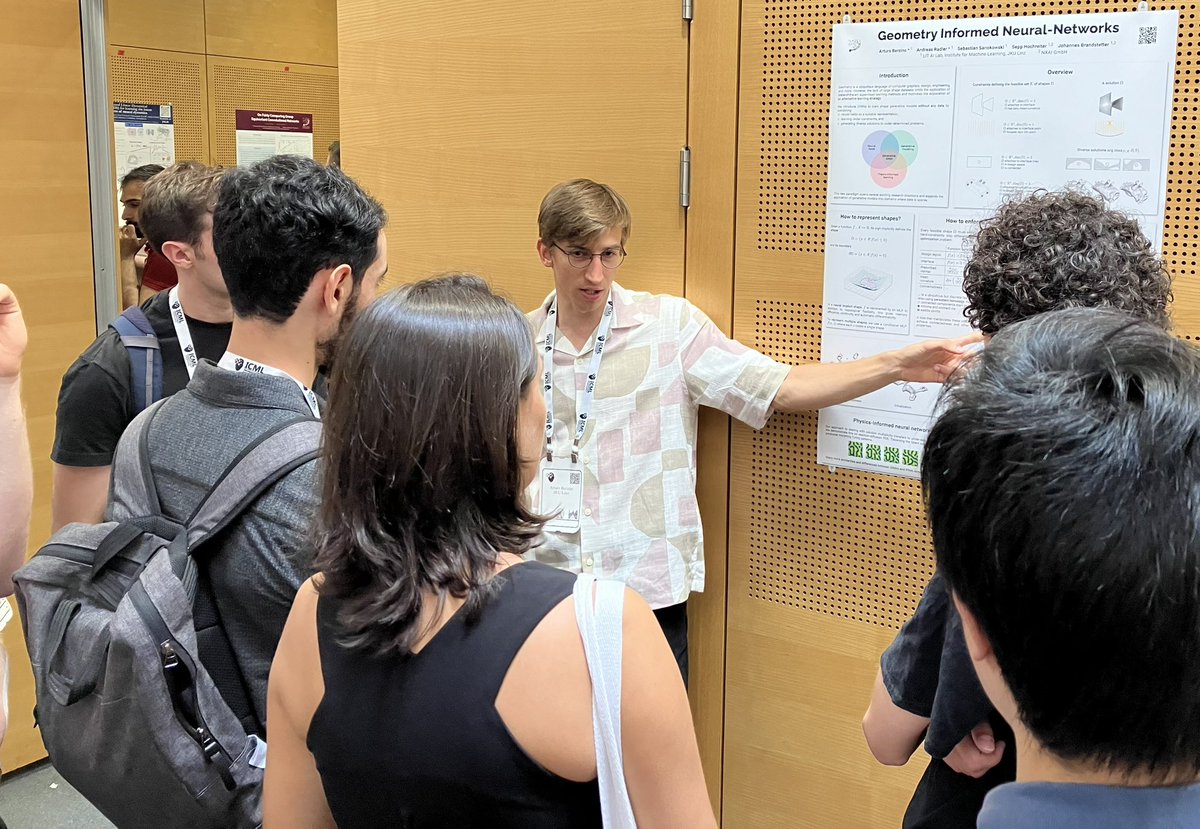
Thanks to all the folks visiting our poster on Geometry-informed Neural Networks (GINNs) at the workshop on Geometry-grounded Representation Learning and Generative Modelling.
With @artuursberzins @SebSanokowski @jo_brandstetter @HochreiterSepp
#ICML2024 #GenerativeAI
2
10
87
4,652
29 May 2024
Thanks for the fantastic collaboration @artuursberzins @SebSanokowski @jo_brandstetter @HochreiterSepp
29 May 2024

We introduce Geometry-Informed Neural Networks to train shape generative models
without any data (!!), combining learning under constraints, neural fields as a suitable representation, and generating diverse solutions to under-determined problems:
🖥️: arturs-berzins.github.io/GIN…
12
529
Andy Radler retweeted
29 May 2024
We introduce Geometry-Informed Neural Networks to train shape generative models
without any data (!!), combining learning under constraints, neural fields as a suitable representation, and generating diverse solutions to under-determined problems:
🖥️: arturs-berzins.github.io/GIN…
5
150
813
203,877

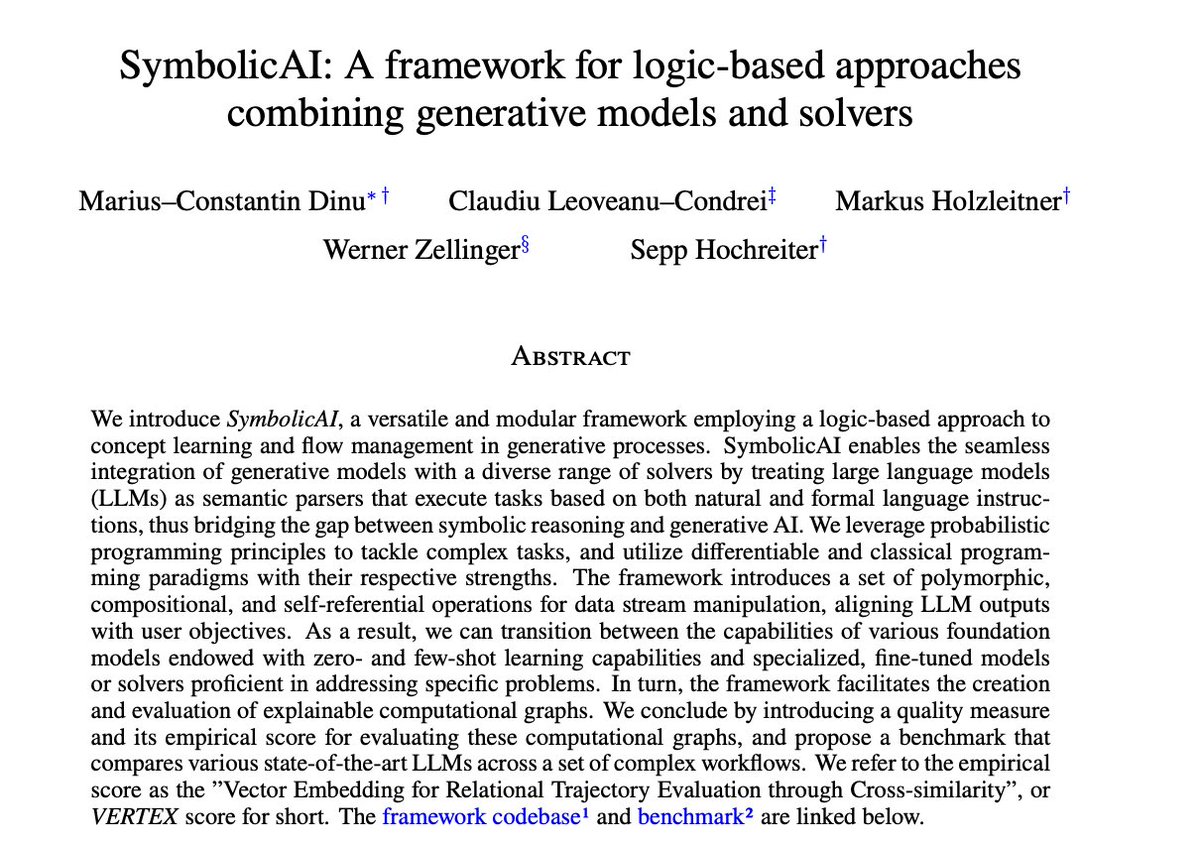
SymbolicAI
A framework for logic-based approaches combining generative models and solvers
paper page: huggingface.co/papers/2402.0…
introduce SymbolicAI, a versatile and modular framework employing a logic-based approach to concept learning and flow management in generative processes. SymbolicAI enables the seamless integration of generative models with a diverse range of solvers by treating large language models (LLMs) as semantic parsers that execute tasks based on both natural and formal language instructions, thus bridging the gap between symbolic reasoning and generative AI. We leverage probabilistic programming principles to tackle complex tasks, and utilize differentiable and classical programming paradigms with their respective strengths. The framework introduces a set of polymorphic, compositional, and self-referential operations for data stream manipulation, aligning LLM outputs with user objectives. As a result, we can transition between the capabilities of various foundation models endowed with zero- and few-shot learning capabilities and specialized, fine-tuned models or solvers proficient in addressing specific problems. In turn, the framework facilitates the creation and evaluation of explainable computational graphs. We conclude by introducing a quality measure and its empirical score for evaluating these computational graphs, and propose a benchmark that compares various state-of-the-art LLMs across a set of complex workflows. We refer to the empirical score as the "Vector Embedding for Relational Trajectory Evaluation through Cross-similarity", or VERTEX score for short. The framework codebase and benchmark are linked below.
5
83
356
49,216
Andy Radler retweeted
6 Nov 2023
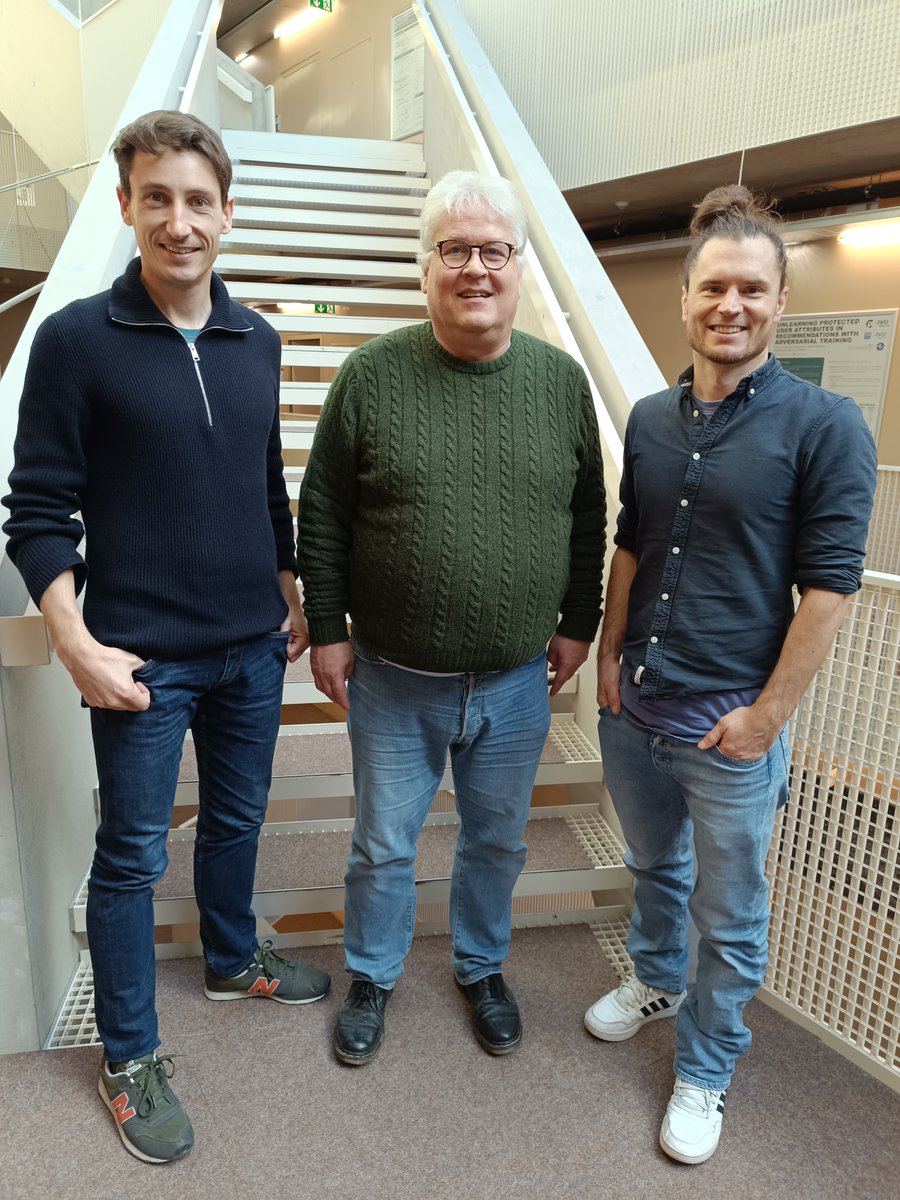
Personal update: last month, I re-joined the group of my mentor @HochreiterSepp and my amazing colleague @gklambauer in Linz, opening my own group "AI for data-driven simulations". We all share the vision to create a large-scale AI ecosystem in Linz. Big news to come soon 🚀
18
24
244
41,387
Andy Radler retweeted

1 Jan 2022
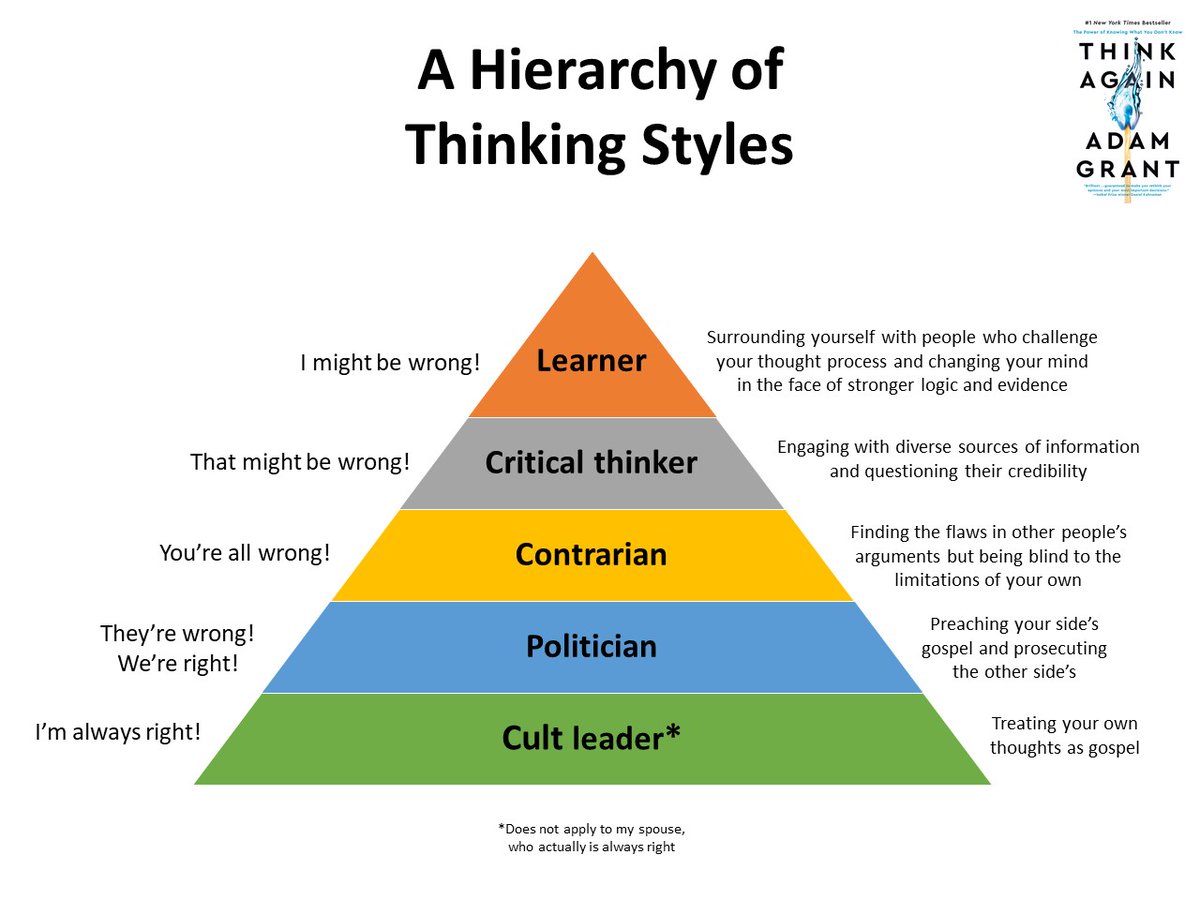
One of the clearest signs of learning is rethinking your assumptions and revising your opinions.
21 things I rethought in 2021: a thread...
809
13,287
42,257
Andy Radler retweeted

23 Jan 2023
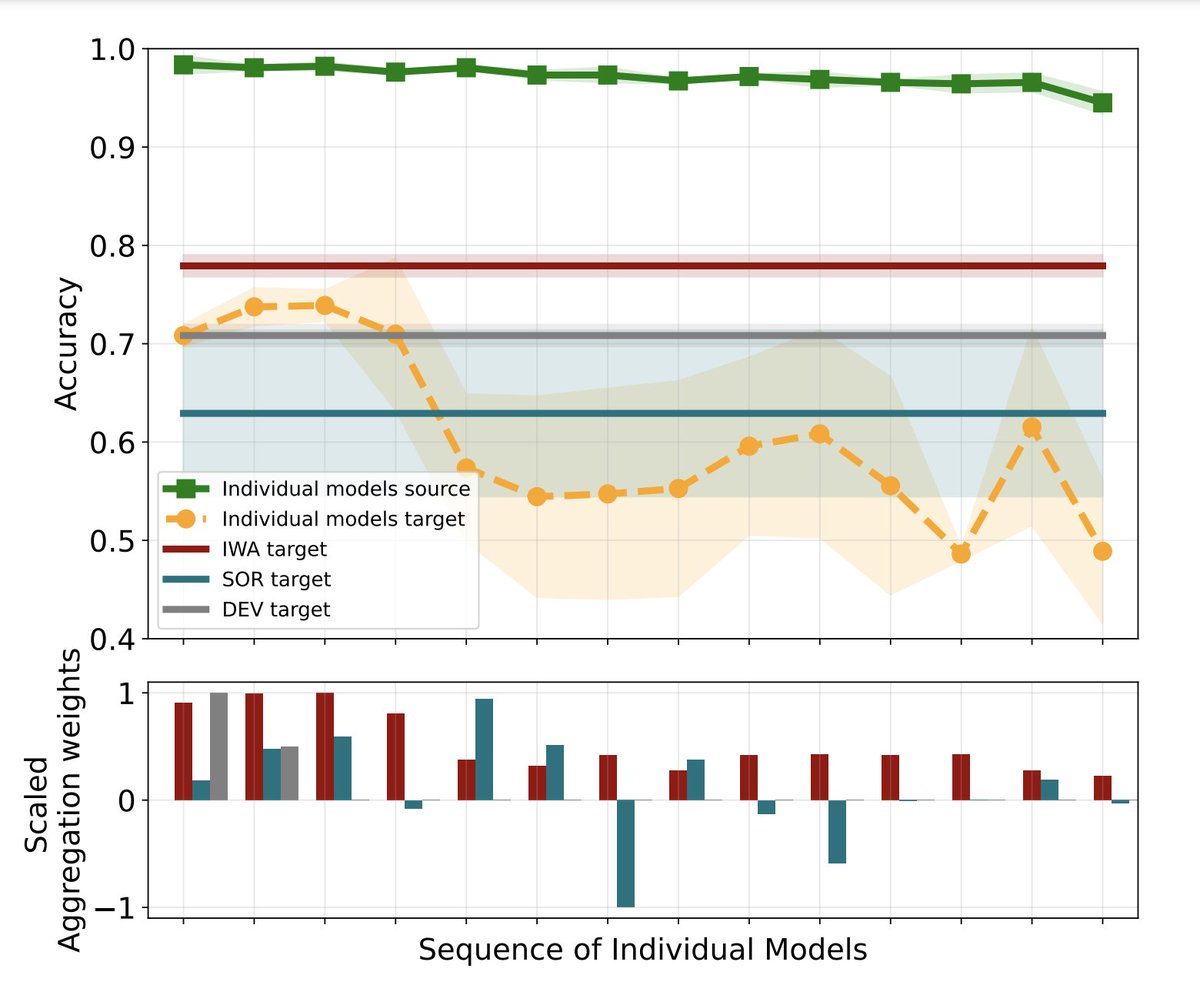
In our recent work, we address the problem of parameter choice in unsupervised domain adaptation by aggregation. Paper (selected for oral presentation at #ICLR2023): openreview.net/forum?id=M95o… [1/2]
23 Jan 2023

Our paper "Addressing Parameter Choice Issues in Unsupervised Domain Adaptation by Aggregation" has been selected for oral presentation (notable-top-5%) at #ICLR2023 openreview.net/forum?id=M95o…. [1/n]
2
3
27
12,045
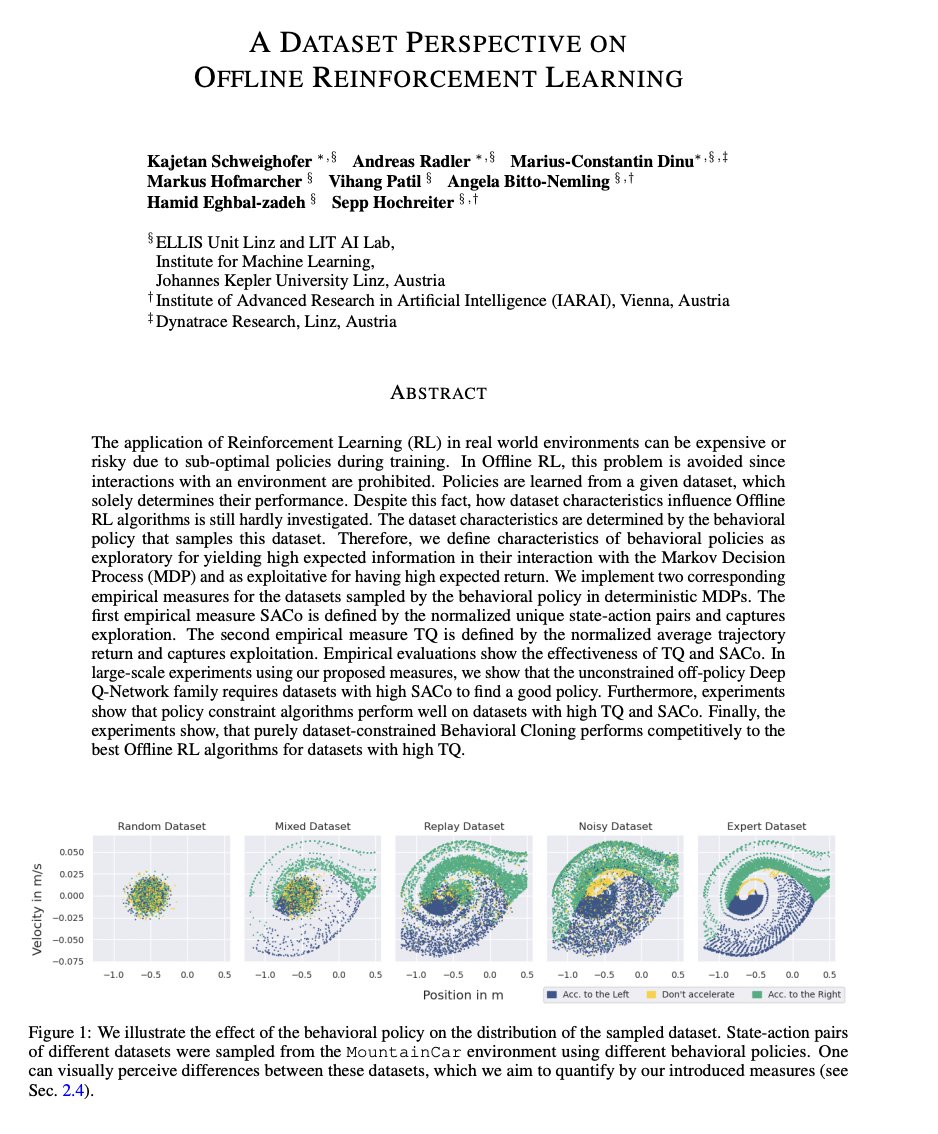
A Dataset Perspective on Offline Reinforcement Learning
abs: arxiv.org/abs/2111.04714
github: github.com/ml-jku/OfflineRL
37
127
Andy Radler retweeted
15 Apr 2022
ArXiv arxiv.org/abs/2204.07118: New simple data-augmentation for Vision Transformers (ViTs): Grayscale, Solarization, Gaussian Blur. Suggests simple random crops. Outperforms by a large margin previous fully supervised training recipes for ViTs.
1
43
163