
B.A. Political Science UCLA, J.D. Pepperdine, Criminal Litigation, Federal and State Court. 30 Years - 100 Trials to Verdict
Joined March 2022
- Tweets 19,492
- Following 419
- Followers 525
- Likes 12,446
50 Photos and videos



ANUBIS OF THE DEEP retweeted

Mar 26
Just good enough, won't work anymore.
2
15
259
ANUBIS OF THE DEEP retweeted

Mar 13
Trumpism will collapse. It is too tied up with the infantilised deformation of a single man’s personality. But Trumpism going away does not make it an abberation. In reality, Trumpism is a warm up act for the more serious authoritarianism to come in the 2030s.
62
200
1,622
43,029

23 Nov 2025
This platform is completely illegitimate. Musk published the Origin country on all accounts and then quickly took it down when it revealed the wide ranging maga bots and maga foreign accounts from Russia, Nigeria, Morocco etc . . Musk pays these content creators. Goebbels USA.
90
19 Sep 2025
X IS A DUMPSTER FIRE OF LIES, BOTS AND CALCULATED MISINFORMATION. The more time you spend here the more stupid you will become.
1
1
87
16 Sep 2025
Every time I get on X, my hate for my fellow citizens grows deeper. X is a dumpster fire of fascistic propaganda.
1
103
12 Mar 2025
Question to Grok: Did Ireland steal the entire United States pharmaceutical industry as Trump claimed?
“No, Ireland did not "steal" the entire United States pharmaceutical industry. This claim seems to stem from exaggerated rhetoric rather than factual evidence. What has happened is that Ireland has become a major hub for pharmaceutical manufacturing and exports, attracting many U.S.-based companies due to its favorable economic conditions, not through theft or coercion.
Ireland’s rise in the pharmaceutical sector is well-documented. The country is one of the world’s top exporters of pharmaceuticals, ranking third globally in 2021 with $70.6 billion in exports, behind Germany ($115 billion) and Switzerland ($90.2 billion), but ahead of the U.S. ($81.5 billion) in some metrics. This success is largely due to a deliberate strategy starting in the 1960s, when Ireland began attracting foreign direct investment (FDI) from U.S. and other multinational pharmaceutical companies. Companies like Pfizer, AbbVie, and Johnson & Johnson have established significant operations there, employing tens of thousands and contributing to Ireland’s economy, where pharma accounts for about 45% of goods exports as of 2024.
The attraction isn’t theft—it’s economics. Ireland offers a low corporate tax rate (historically 12.5%, now shifting to 15% under global agreements), a skilled workforce, and access to the European Union market. U.S. companies often set up subsidiaries in Ireland to manufacture drugs, sometimes shifting intellectual property (IP) there to reduce tax liabilities in the U.S. This practice, often called "tax inversion" or profit-shifting, allows firms to "import" drugs back to the U.S. at higher costs while booking profits in Ireland. Critics argue this disadvantages the U.S. Treasury and consumers, but it’s a legal strategy enabled by U.S. tax policy gaps, not an Irish heist.
Claims on platforms like X suggesting Ireland "has the entire U.S. pharmaceutical industry in its grasp" oversimplify the situation. The U.S. still has a massive domestic pharma presence—think of giants like Merck or Eli Lilly—and remains the largest market for drug consumption, generating $660 billion in revenue in 2025 projections. Ireland’s role is more about production and tax optimization, not ownership or control. In 2019, U.S. pharma imports were $151 billion, with Ireland and Switzerland as key sources, but this reflects strategic outsourcing, not a takeover.
The idea of "stealing" also ignores mutual benefits. U.S. companies gain tariff-free access to the EU and other markets from Ireland, boosting their global reach. Meanwhile, Ireland’s economy grows, employing over 50,000 in the sector. It’s a symbiotic relationship, though one that’s sparked debate about U.S. tax reform and trade deficits (e.g., $93 billion in pharma trade deficit in 2020).
So, no grand theft occurred—just smart positioning by Ireland and profit-driven decisions by U.S. firms, enabled by policy on both sides of the Atlantic. The narrative of "stealing" is more political hyperbole than reality.”
3
349
12 Mar 2025
99% of the goods that travel between Canada and the United States are tariff free. There are almost no trade barriers between the United States and Canada. Here are the few which remain.
1) Both the United States and Canada protect their media, respectively insisting on majority ownership by their own nationals.
2) Canada wisely protects its own dairy and poultry industry by imposing tariffs on American dairy and poultry products once American imports reach a certain quota. (Check egg prices in Canada)
3) The United States on the other hand imposes a 5 to 10% tariff on Canadian lumber as we have argued that Canadian lumber is government subsidized.
4) Both Canada and the United States, allow foreign banks to operate within their territory, however, there are numerous restrictions in both countries preventing foreign banks from opening retail banking outlets.
That’s pretty much it. Canada is our largest trading partner. Trump is starting a trade war over economically trivial issues.
3
300
10 Mar 2025
Hello, back after ban. Musk says he is limiting my reach because he does not like what I am saying. I am also accused of manipulating the platform. Please give me a like if you see this. Its the only statistic here I can rely on. Thank you
1
7
253
2 Mar 2025
Look at the lying hypocrite
2 Mar 2025

This is Marco Rubio explaining how the USA promised to defend Ukraine forever if they got rid of their nuclear arsenal left after the Soviet Union fell.
This is why lil marco was sinking into the couch. He was hoping we wouldn’t find it…so don’t RT right now this very second.
2
5
364
2 Mar 2025
The MAGATS truly believe we showed everybody what America is all about. A win for America . . . There is not one place in the world Trump can go, save Moscow, where he is not roundly despised.
2 Mar 2025

Every part of this video of Zelensky’s SW1 arrival makes me proud of my country, the public support in Whitehall, our PM’s words, the BBC’s questions, the British media’s questions, the DIGNITY….
1
1
6
298
2 Mar 2025
550 followers only 19 views. obviously limited visibility because I said MAGAT. IF I put Libtard in the headline, this post will go out to 500,000 people.
2
1
5
156
2 Mar 2025
The Takedown
2 Mar 2025

Let’s destroy Marco Rubio argument: Trump’s Russia Ukraine strategy has accomplished the following: Now every ally can see how the American president will treat them if they get invaded by Russia. Every ally now knows they must disengage and sever their dependence on the United States if they want to survive. Right now they are speaking of the disengagement. Tomorrow they will be planning it.
They need to find different trade partners and more reliable sources of supply for critical goods and services lest they be extorted by Trump at a critical time. They must develop their own weapons rather than relying on ours. Injuring our greatest source of export wealth.
They will and must gradually disengage their intelligence services, keep secrets from us they would not normally keep. Every country in Europe that can develop nuclear weapons will develop nuclear weapons as will South Korea, Taiwan, Japan and Australia. The chances of nuclear conflict increases exponentially. The carefully constructed non proliferation regime is dead, unilaterally killed by Trump without consultation. The most violent continent on earth, the site of millions of war deaths and several world wars will soon be brimming with nuclear weapons. But do not worry it won’t affect us. . . .
Every country is now weary of us. The American brand is in the toilet. Zelenski is cheered everywhere and Trump is booed unless he is in front of his Maga supporters. Our National Anthem is booed in every stadium it is played outside the U.S. Vance can’t escape the dishonor even on vacation. The overwhelming majority of the country which including many who voted for Trump are disgusted. The shakedown engineered by Trump was an unconditional surrender save the extortion condition of carving out Ukraine’s mineral wealth. It is roundly seen internationally as a despicable act reminiscent of the spectacle of crazed Nazi judges viciously sentencing conspirators.
1
104
2 Mar 2025
The Answer Is Yes.
2 Mar 2025

Did Trump just fuck up America’s standing completely?
Because now Zelensky’s top guy — Andrii Yermak — says it’s time to arrange a meeting between Zelensky and Xi.
You know what that means?
When America abandons its friends, China steps in.
Trump didn’t just weaken NATO — he opened the door for China to become the new global power broker.
FAFO.
2
106
2 Mar 2025
Fellow Americans look at the example of what a leader of a country looks and speaks like.
1 Mar 2025

Alexander Stubb has character.
Imagine if that was true everywhere
3
87
ANUBIS OF THE DEEP retweeted

28 Feb 2025
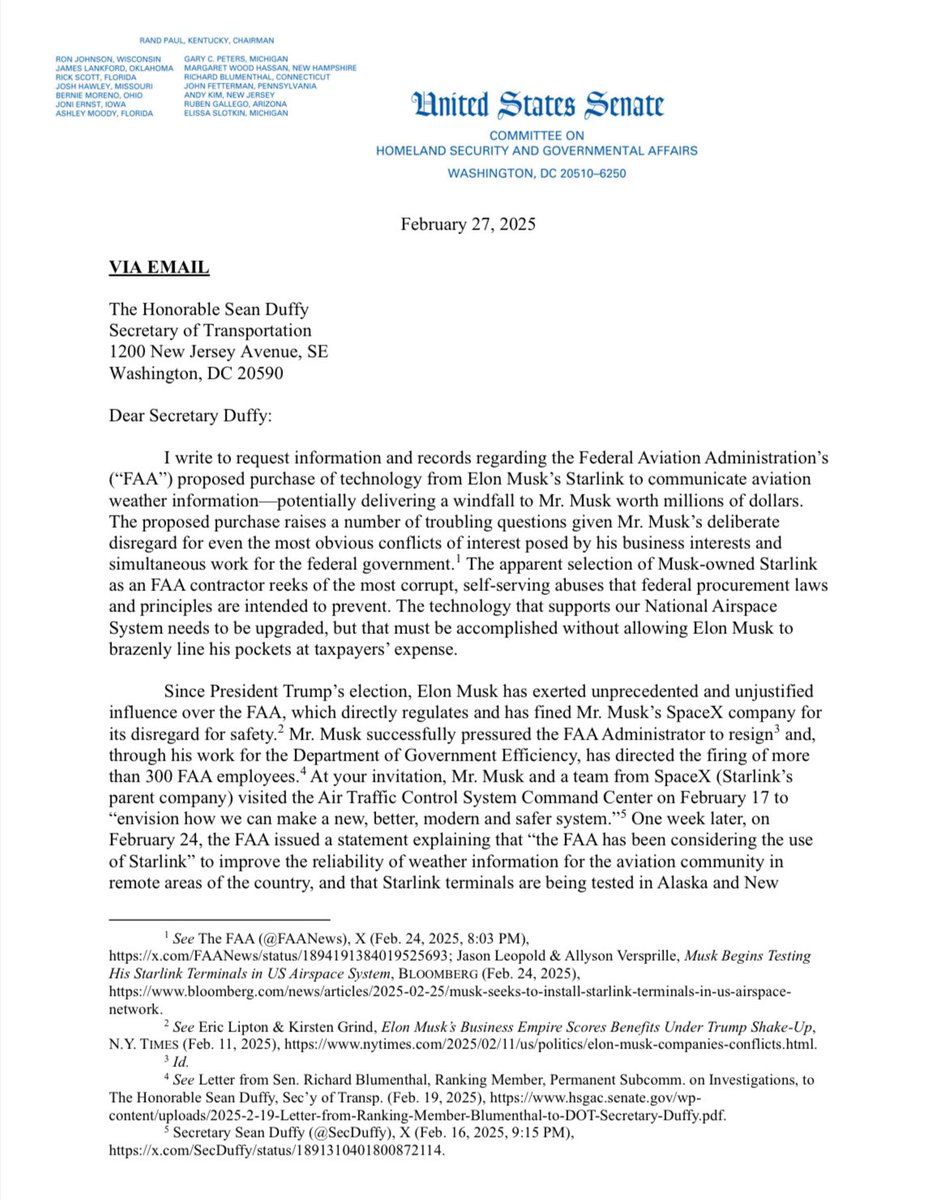
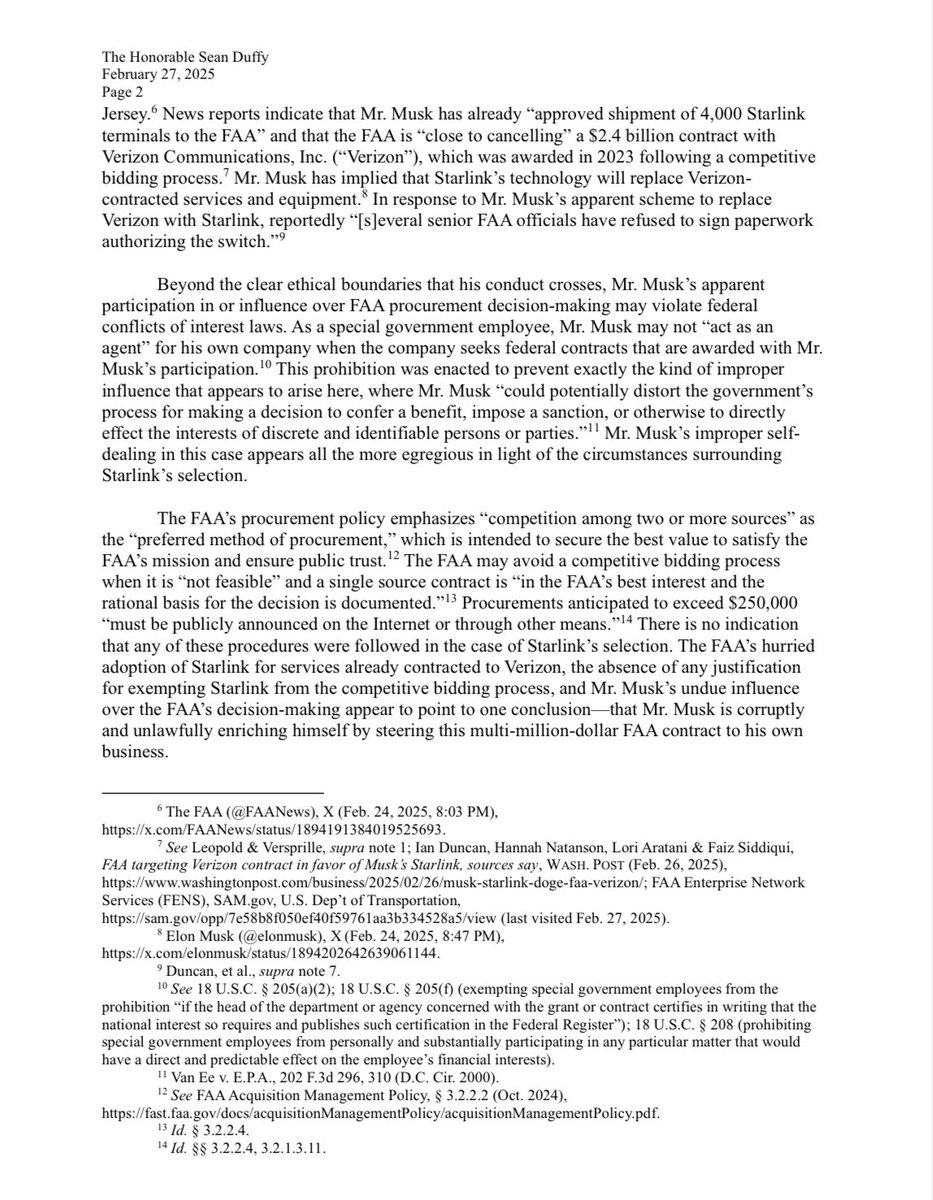
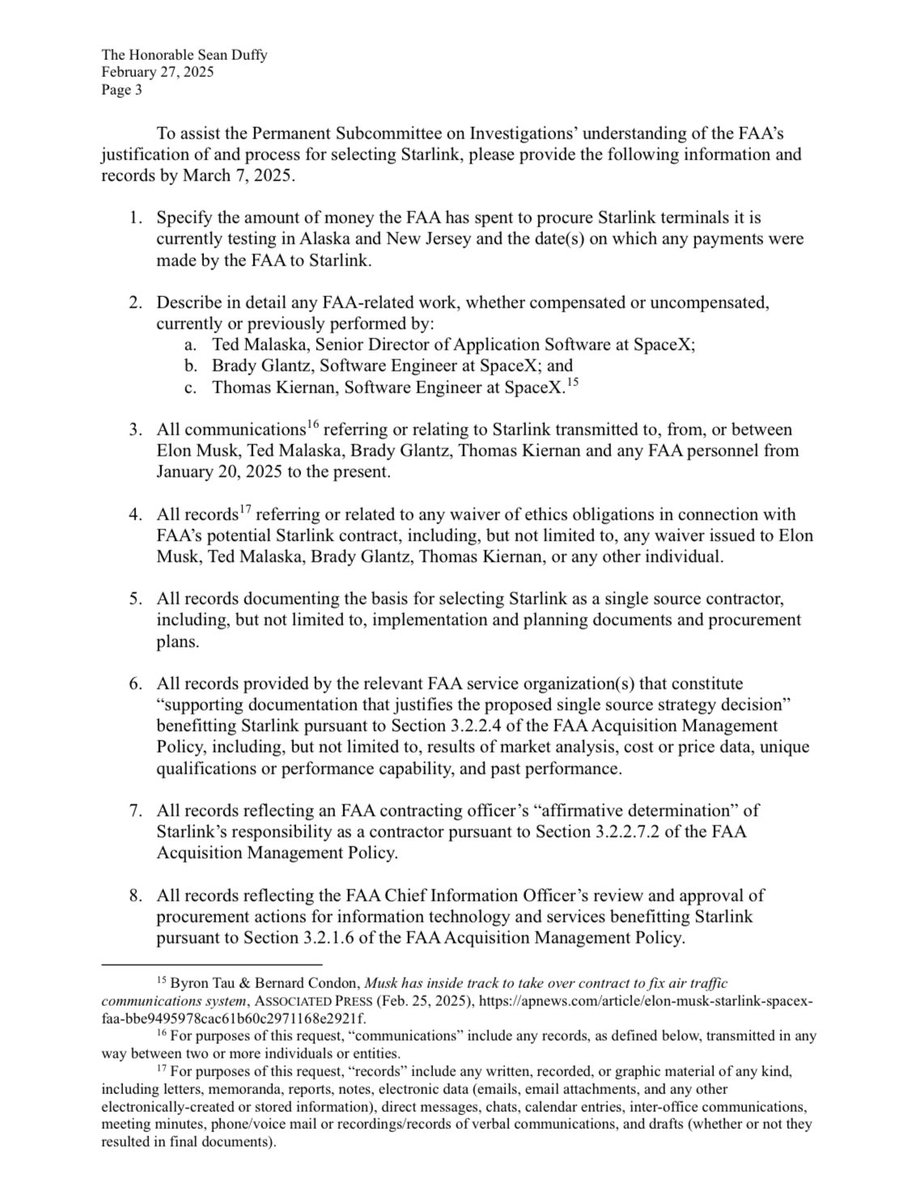
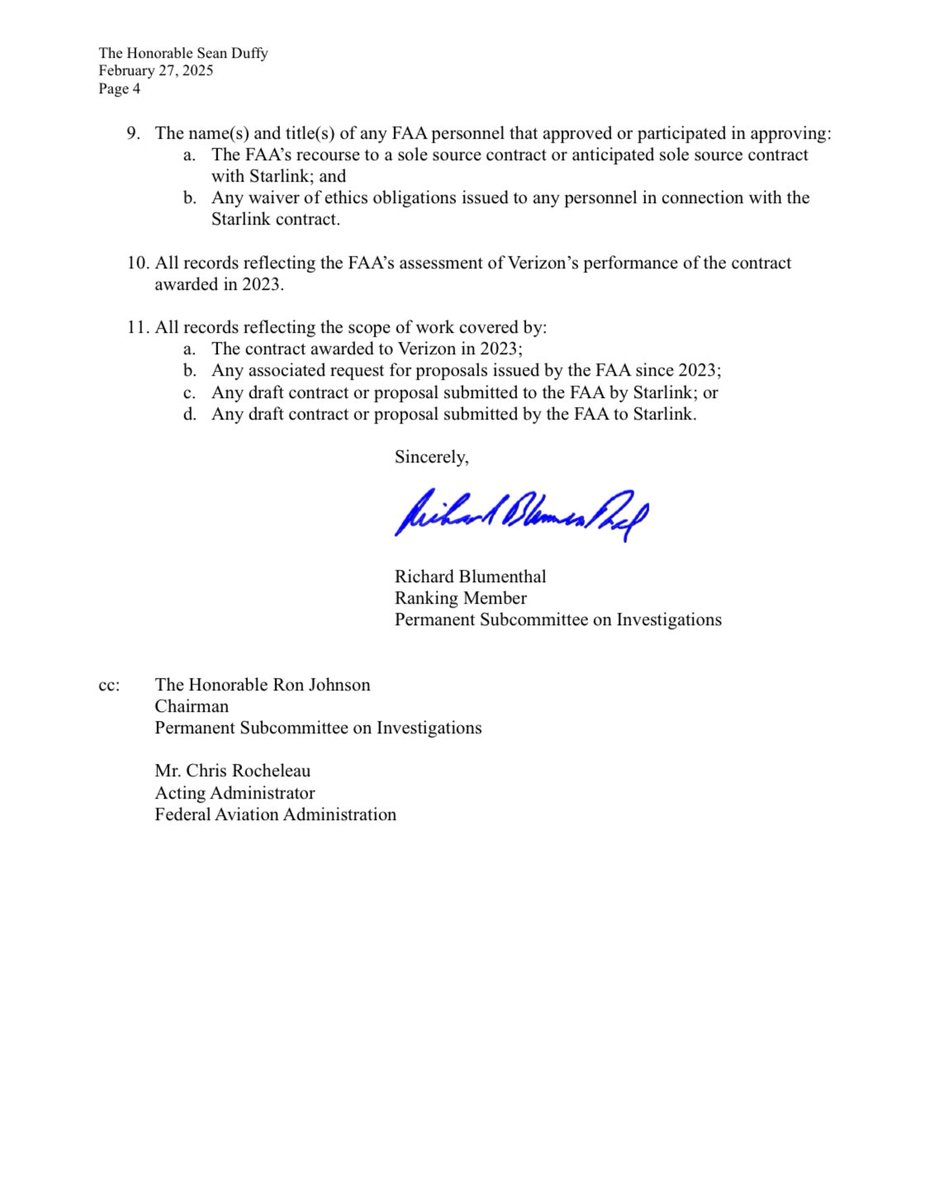
I’m demanding Sec. Duffy explain why his agency is suddenly selecting Musk’s Starlink for FAA use after a contract was already signed with Verizon. This new deal reeks of corrupt, self-serving abuse of taxpayer dollars.
8,797
13,544
50,502
1,608,166
1 Mar 2025
Pre-TRUMPLICAN RUBIO was a solid defender of Europe. He just denied that the United States was pulling out of NATO but even if that’s true every NATO member has just seen how they’ll be treated if Russia invades them. What has been seen cannot be unseen.
Rubio Warns Of The Threat Putin Poses To NATO And Russia’s Neighbors youtu.be/qO9wbFFZesE?si=QUvz… via @YouTube
1
2
123
1 Mar 2025
Truth
1 Mar 2025
Well, that was your first mistake Mr. McFaul. There’s no evidence that he’s been a successful businessman given that all of his ventures end up in bankruptcy and saying he’s a talented politician is like saying Ted Bundy was a ladies man.
1
107