
Faculty Member & PhD, ISE || Game Studio Founder/Director/CEO (1994-2016) || Prod Dev, AI, XR, Python/R, SW Carpentry & Tooling || Terminally Curious
Joined July 2019
- Tweets 4,380
- Following 684
- Followers 476
- Likes 10,755
220 Photos and videos





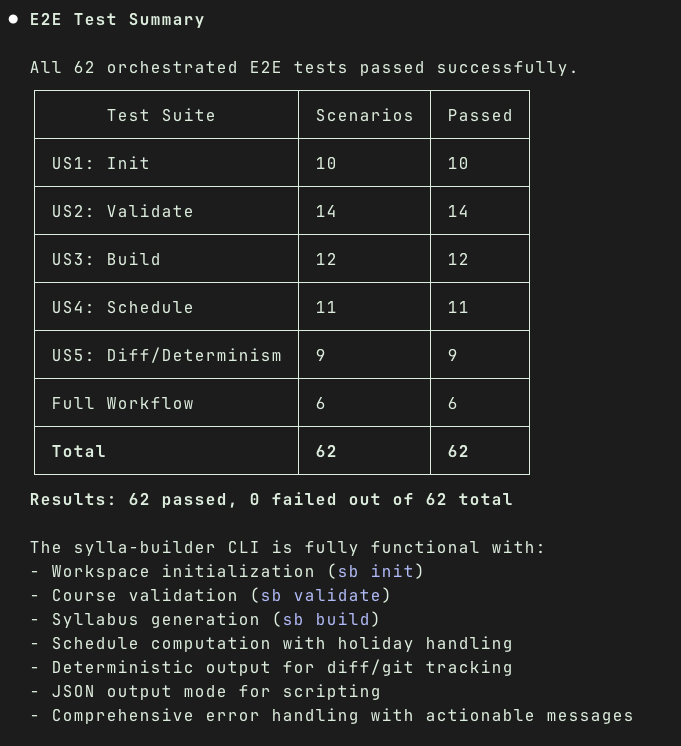
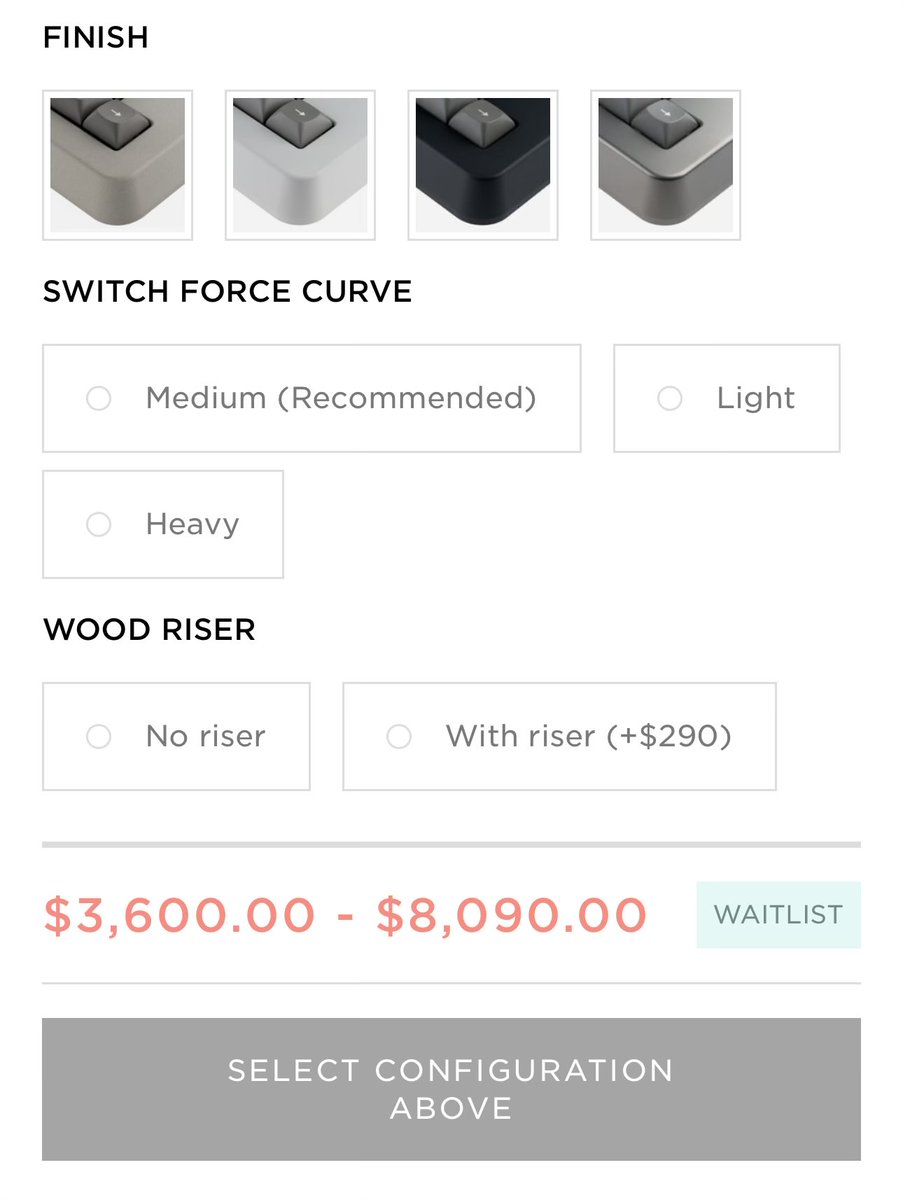



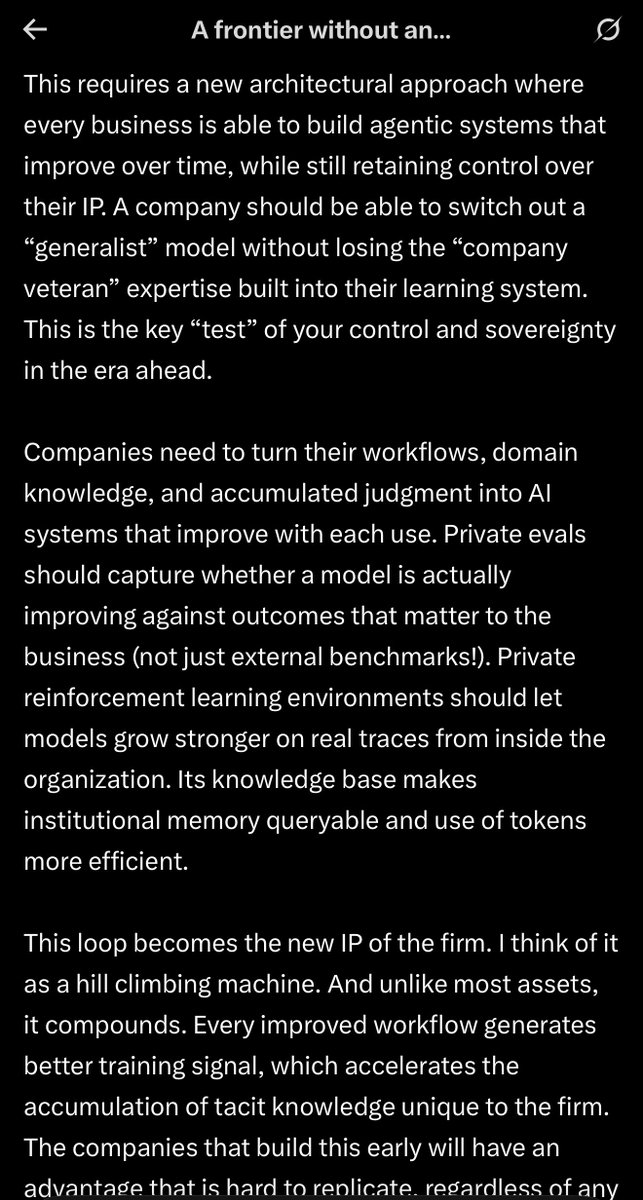
I think most of us are seeing the same problems and converging on similar solutions - at least in form - like SN’s essay describes. Our understanding of how to best implement it as a cohesive system is still emerging. Many pieces exist, along with a few solutions (like JE’s).
Jun 14

I couldn’t agree more with @satyanadella here. This exactly echoes the argument I’ve been making to my hedge fund consulting clients recently.
The architecture I’ve come up with, which is a universal agent-intuitive CLI tool interwoven with a base skill library, combined with a custom skill layer that references the base skills, accomplishes all of these goals very nicely.
The base skill library forms a system: modular, composable skills that have a hierarchy of abstractions. Over time, I expand and refine these skills and push out updates.
The custom skill layer tailors the skills to the specific firm’s particular workflows and knowledge base and represents their wholly owned IP.
The CLI tool is referenced throughout the skill library to give the agent concrete “how-to” knowledge in addition to abstract understanding of workflows.
But because it’s built on top of the base skill library, they’re able to amortize this base R&D across my clients to get something a lot more powerful and expansive than they’d get otherwise.
The client is able to add, expand, and revise their custom skill layer and iterate based on their actual experience and feedback using the system.
And they can do this iteration themselves without needing to ask me or even divulge certain aspects of their approach, methodology, data, etc.
The CLI tool also runs on the client’s machine along with the agent, whether Claude Desktop or the Codex GUI app, and connects directly to data sources like EDGAR, Capital IQ, FactSet, Google Trends, etc., so the client doesn’t need to leak alpha indirectly.
As I add new features, functionality, and data sources to the CLI tool, the clients get those in real-time (if they want), and the skills are updated to reflect the new CLI features.
If I raised VC funding for this business, I’m sure investors would insist that everything run on my servers, that the clients never see the actual base skill library, that the CLI tool just be a dumb client that routes requests to our servers, etc.
That is, all things that lead to vendor lock-in and dependency, but which are clearly NOT in the best interests of the client and the preservation of their IP and alpha.
Ultimately, I believe the client-centric approach will win out. And I can already see how much the messaging resonates with prospective clients.
You can get the benefits of AI agents without giving away the farm (your proprietary IP, workflows, and alpha) to the frontier labs or VC backed startups that will ultimately seek to productize this IP or compete directly with you in the future.
1
1
56
The future belongs to tools that convert intent into product at the cost of tokens and oversight. The problem of today is eliminating any other friction: wrapping the elements of continuous improvement - memory, process, evaluation - in the “right” ui. Disruption will accelerate.
1
18
This fight is for the future of computing. The winner will transform work as we know it. Stakes are much higher than for the “next” internet / smartphone. Incumbents like Microsoft and Apple, however aware of the threat, are too invested in existing models of productivity to win.
15
LLMs are having their ensemble moment
Jun 13

Really excited to open source a new project: Omnigent, a meta-harness for AI agents.
It lets you build multi-agent coding and custom agents, sitting above Claude Code, Codex, Pi, and agent SDKs to let you compose them. It also adds live collaboration and rich control policies.
30

Jun 4
Twice in three years 🏆
Everything School 🐅 War Eagle 🦅

THE NO. 1 TEAM IN THE COUNTRY STANDS ALONE ☝️🏆
For the second time in three years, the Auburn Tigers are NCAA Champions!
#WarEagle

24
May 21
An easy way to see exactly what context Codex wraps your prompts with:
`codex debug prompt-input <prompt>`
antisimplistic.com/posts/202…
85
May 21
Big get for Mario. Hope AK is still able to drop occasional wisdom on the rest of us from time to time!
May 19

Personal update: I've joined Anthropic. I think the next few years at the frontier of LLMs will be especially formative. I am very excited to join the team here and get back to R&D. I remain deeply passionate about education and plan to resume my work on it in time.
45
May 11
I found sandisk around 2001 (realized they created / licensed all CF tech)
I first bought BTC on August 8, 2015 for $273.53 each
I worked in the time-place Jensen Huang credits with the birth of GPUs and watched NVIDIA rise from basically nothing
still not a millionaire. skill issue
May 9

If you found bitcoin is 2012 you are a millionaire.
If you found Tesla in 2018 you are a millionaire
If you found Nvidia in 2022 you are a millionaire
If you found Palantir in 2023 you are a millionaire
If you found Sandisk in 2025 you are a millionaire
If you found …
3
102
May 8
outstanding article
I still love md for writing
but for reading… html

1
1
63
May 7
When the lms provider for 40% of colleges and universities (about 9000 schools and 275m people) gets pwned by a ransomware group... I'd hate to be working at Instructure right now.
@dhh - just host it they said...
4
366
Apr 28
OpenAI pressing their current advantage
Already very generous rates (relative to CC), currently better coding model, Anthropic missteps…
Tibo: “here, have all the tokenz!”
💰💰💰
Apr 28

Don't just reset Codex rate limits for fun, it costs money.
Don't just reset Codex rate limits for fun, it costs money.
... but the vibes are good ...
I have reset Codex rate limits for ALL paid plans to celebrate a good week and allow everyone to build more with GPT-5.5. Enjoy
1
48
Apr 19
Never thought of it this way, but accurate. Computation comes in many forms.
Apr 19

This a computer, and you likely own one. It's a hydraulic analog computer.
It’s essentially a machined analog computer that computes with fluid instead of electronics: pump pressure is routed through passages that act like wires, while spool valves, springs, orifices, and check balls perform the equivalents of comparators, logic gates, delays, and one-way elements.
What it “calculates” is the machine’s current operating state, whether conditions have crossed a threshold to justify changing state, how strongly to apply each output, and how quickly to make that transition without instability or shock.
It does this by continuously balancing forces—pressure on different valve areas against spring preload and feedback pressure—so each valve shifts only when one hydraulic condition outweighs another, while restrictions and chambers add timing and smoothing.
In plain English, it is a real-time fluidic state machine that solves “if this pressure is greater than that one, route flow here; otherwise hold, delay, soften, or override” entirely through geometry and oil.
They're used in every car with an automatic transmission, where it makes choices like what gear to be in and how hard to apply clutches, etc....
And some dude worked it all out on paper back in the 1960s.

50
Apr 12
I conjure working, tested programs, and orchestrate them with a legion of skilled, hard working, but slightly broken coworkers that react to my spoken word.
We are not the same.
Apr 12

i use a C program to compile and run my other C programs
we are not the same
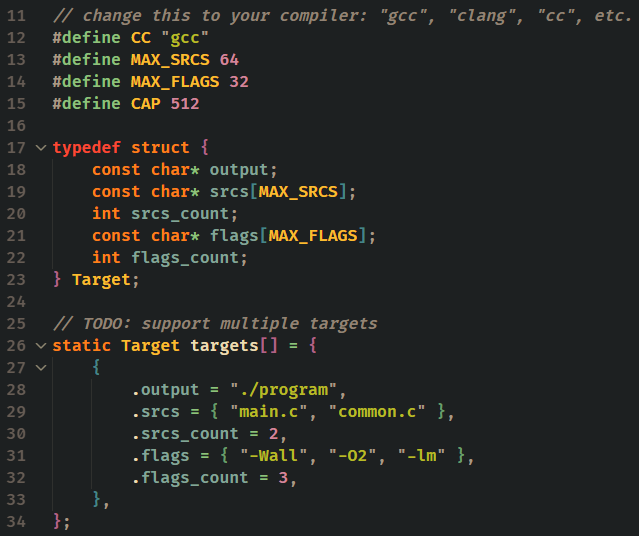
70
Apr 1
Not April Fools.
Apr 1

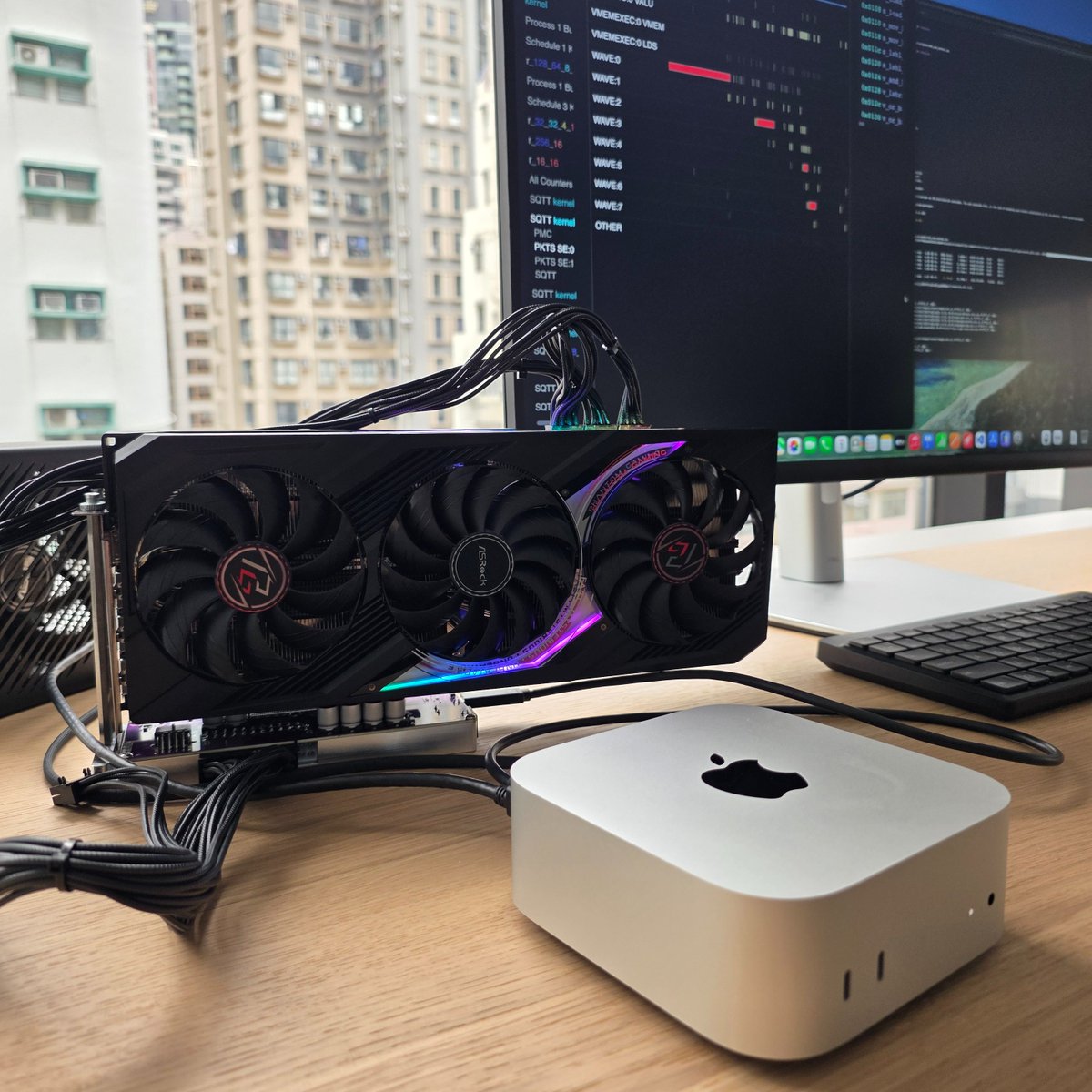
If you have a Thunderbolt or USB4 eGPU and a Mac, today is the day you've been waiting for! Apple finally approved our driver for both AMD and NVIDIA. It's so easy to install now a Qwen could do it, then it can run that Qwen...
1
151
Mar 30
Following pushback on my last post re: hardening uv settings against litellm-style attacks I did some digging. I discovered a misunderstanding that adjusts the recommendation in question but does not remove it. This follow-up explains my thinking.
antisimplistic.com/posts/202…
3
87
Mar 28
How I changed my uv config after the LiteLLM fiasco. Thanks to @__mharrison__ for the `exclude-newer` tip, I'll raise you one `constraint-dependencies`.
antisimplistic.com/posts/202…
1
8
74
23,766