
A practical Appreciative Inquiry (AI) resource for churches and communities. Tweets by Fiona Thomas, co-editor/co-author of the book.
Joined November 2016
- Tweets 485
- Following 199
- Followers 155
- Likes 408
156 Photos and videos










Mar 16
Would you like to know how #AppreciativeInquiry could make a difference in your church and community? We are offering an introduction over four sessions in April, tailored to participants contexts. For details see appreciating.church/introduc…
1
1
121
Mar 15
Conversations at the end of life. Using #AppreciativeInquiry to craft questions can open a doorway to meaning, blessing, and legacy.
appreciating.church/apprecia…
2
2
39
Feb 13
Desiring to be a bridge - the upcoming Appreciative Space will explore cross-cultural conversations appreciating.church/desiring…
9
New Year, New Frame. An Appreciative Space to start 2026 on 14th January appreciating.church/a-view-i…
1
8
4 Dec 2025
A space to reflect on Advent and Christmas using #AppreciativeInquiry
appreciating.church/apprecia…
5
28 Oct 2025
The next Appreciative Space will be discussing leadership. Wednesday 12th November 19.30 (GMT). appreciating.church/encourag…
1
2
144
29 Sep 2025
The monthly Appreciative Space is moving to a new time from 8th October, making it open to practitioners in more parts of the world. appreciating.church/bring-an…
10
2 Sep 2025
Next online #AppreciativeInquiry Appreciative Space is Wednesday 10th September appreciating.church/salutoge…
1
1
173
20 Jun 2025
In the next Appreciative Space on Wednesday 9th July Warren Hartley will reflect on how #AppreciativeInquiry has helped him walk alongside parishes as they work out where God is calling them. appreciating.church/lets-sta…
1
1
104
Appreciating Church retweeted

1 Jun 2025
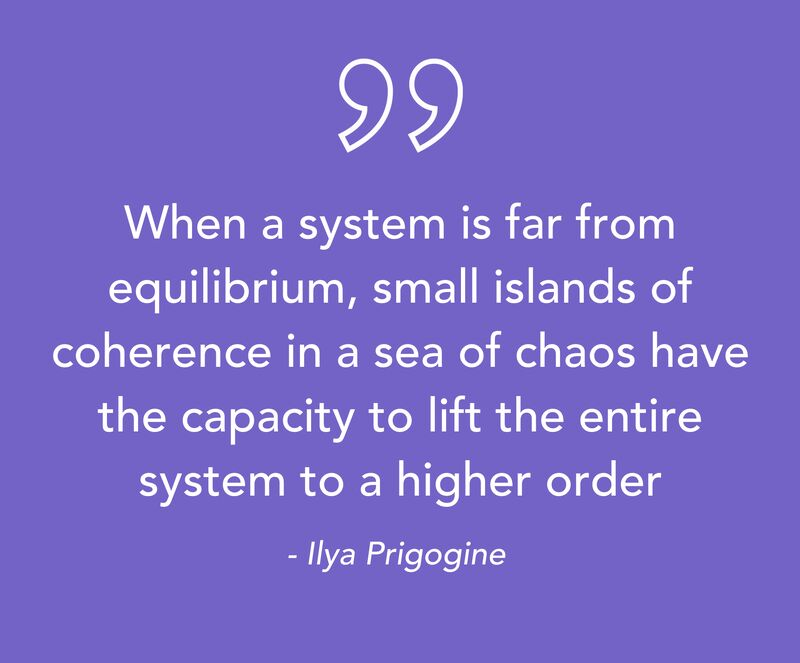
Often, when we are a person in the middle of a big organisational transition, we may feel powerless, with no ability to influence things. Yet systems knowledge tells us that the opposite may be true.
At critical points during a transition process, the overall structures that supported the system previously disintegrate & new ones have to emerge. Transitions make systems less predictable & less controllable. This creates the conditions for, small, positive, local changes that lead to big, system-wide improvements.
1) Small changes can spread: In chaotic situations, small initiatives that reflect the new paradigm—pockets of the future—can gain traction: They become amplified through positive feedback loops to grow rapidly.
2) Systems can organise themselves: Complex systems often don’t need a boss telling every part what to do. Instead, by following "simple rules" & reacting to what is happening nearby, local groups with order can influence the bigger system.
3) Shifting the emotional & cultural narrative may enable systemic change more effectively than top-down policies.
See: systemsinnovation.network/po…. Via Joss Colchester @Sys_innovation.
5
38
130
12,116
3 Jun 2025
Disruption, liminality and reconciliation ....this month's Appreciative Space on Wednesday 11th June will digest some of the ideas from an upcoming festival of ideas on missional thinking appreciating.church/being-mi…
2
2
100
5 May 2025
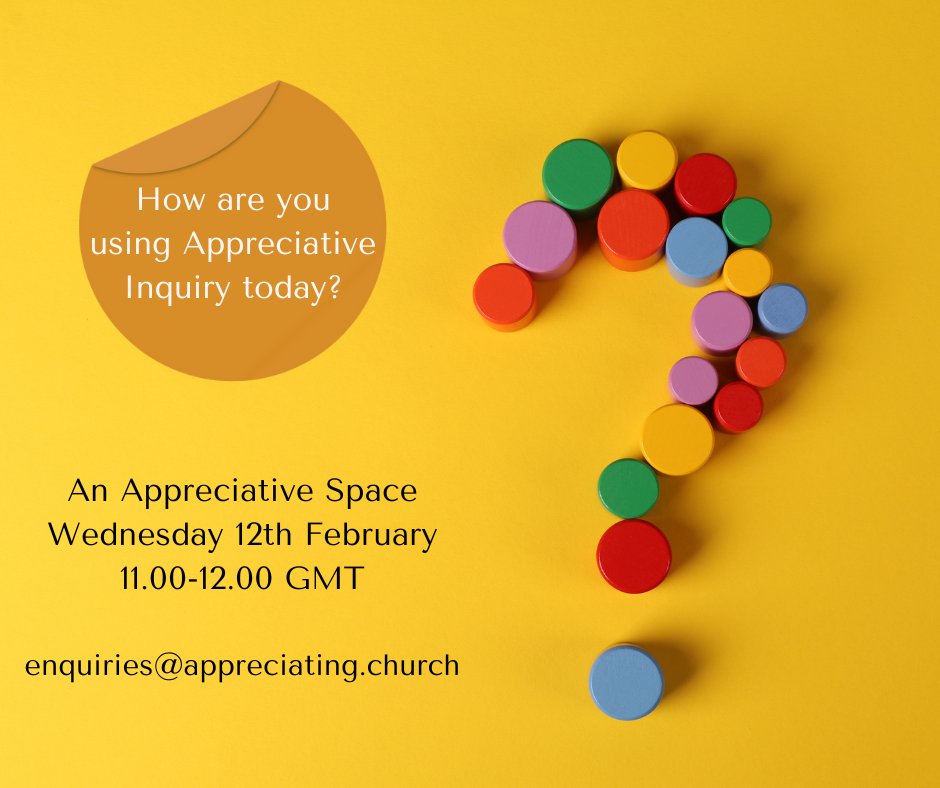
May's Appreciative Space tries out some conversation starters. Wednesday 14th May 11.00-12.00 BST: appreciating.church/the-surp…
1
10
26 Mar 2025
April 9th - the monthly Appreciative Space will be thinking about the value of naming elephants appreciating.church/the-art-…
1
1
16
4 Mar 2025
The upcoming Appreciative Space (Wednesday 12th March 11.00-12.00 GMT) invites you to bring something to share as we explore the Poetic Principle of #AppreciativeInquiry Details: appreciating.church/the-poet…
14
2 Jan 2025
How about creating intentions for 2025 rather than New Year Resolutions? The #AppreciativeInquiry alternative appreciating.church/new-year…

2
1
62
3 Dec 2024
#AppreciativeInquiry and Pastoral Supervision. Space to reflect with Revd Dr Jim Coleman. Wednesday 11th December 11.00 to 12.00 (GMT) appreciating.church/december…
20
7 Nov 2024
We have an article in the latest edition of AI Practioner appreciating.church/naturali…
1
2
157
31 Oct 2024
Our November Appreciative Space will be led by Suzanne Quinney from @AppreciatingP picking up a case study from their latest book. Wednesday 13th November 11.00 (GMT) appreciating.church/apprecia…
2
5
110