
Architects, Quantity Surveyors, Town Planners, Engineers, Landscape Architects, Interior Designers, Environmental Design Consultants & Construction Managers
Joined January 2014
- Tweets 10,941
- Following 3,579
- Followers 23,442
- Likes 2,214
6,390 Photos and videos









The Architectural Association of Kenya invites you to the second session of the Architectural Heritage Talks Series on Thursday, 18th June 2026, at the Nairobi Railway Museum.
The session will explore the historical forces that have shaped our urban landscapes through presentations and discussions on:
- Pre-Colonial African Urbanism- Prof. Robert A. Obudho
- Colonial Planning & Its Urban Legacy- Prof. Jason Mochache
- Post-Independence Urbanization & Informality- Plan. Christine Muchiri
Moderated by Arch. Mumbua Musyimi
The programme will begin at 1:00 PM with a guided tour of the Nairobi Railway Museum, followed by the heritage talk.
⚠️ Limited slots available.
Register Here: members.aak.or.ke/eventdetai…
1
61
Today, we honour the remarkable journey of Arch. Jon Anthony Cavanagh (FAAK) , whose passion, mentorship, and commitment to excellence leave an imprint that will continue through the generations of architects he influenced.
The built environment community has lost a true pioneer, but his impact remains woven into the profession he served.
Our thoughts are with his family, colleagues, and all who had the privilege of knowing him.
Rest in peace, Arch. Cavanagh.
#AAK #ArchitectureKenya #BuiltEnvironment #InMemoriam
1
147
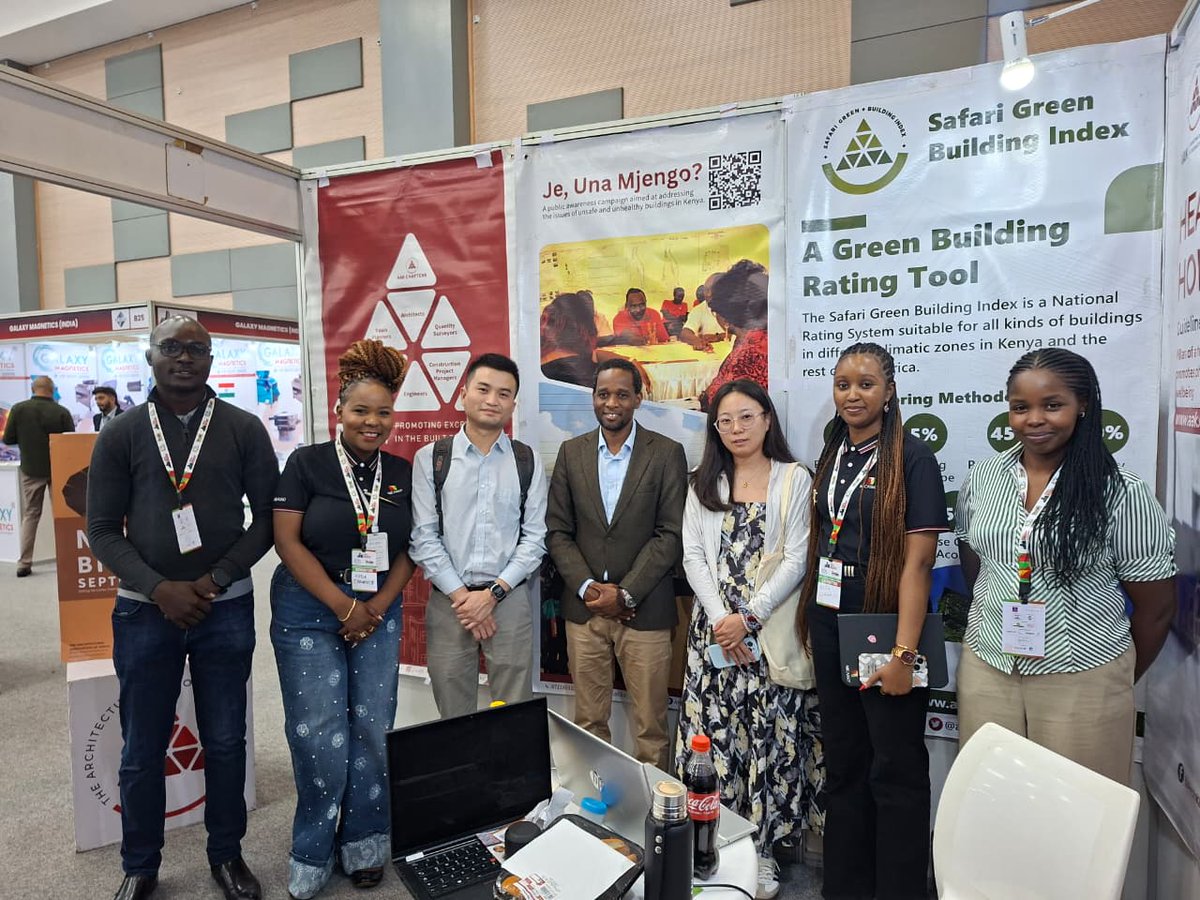
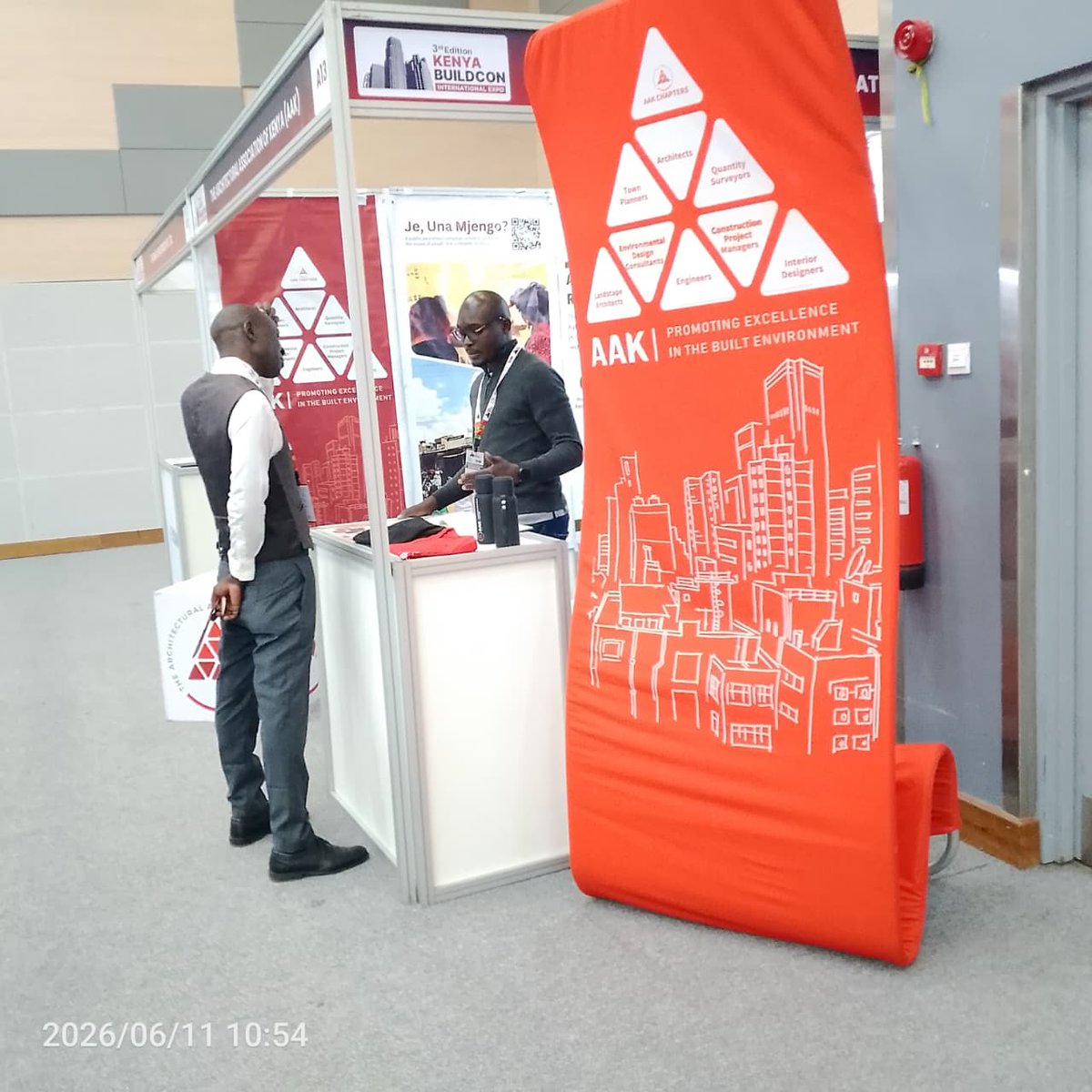
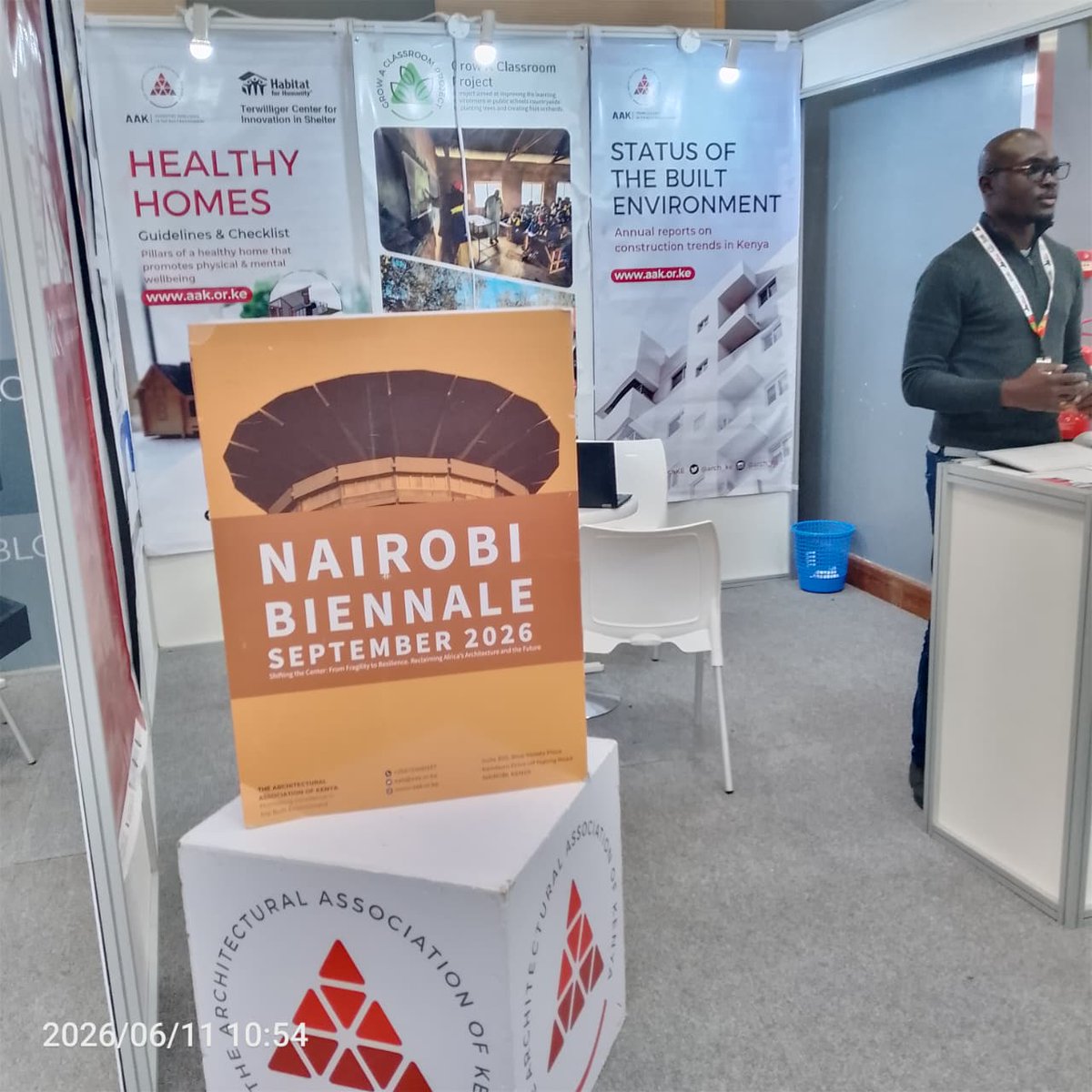
AAK will be at the 3rd Edition Kenya Buildcon International Expo, at the Sarit Expo Centre, Nairobi today and tomorrow.
Visit us booth A13.

1
2
174
The AAK Western Branch, represented by Arch. Alfred Mango, held a consultative meeting today with AAK President, George Ndege, to discuss initiatives aimed at strengthening professional practice within the region.
The meeting focused on planned activities, strategic priorities, and identifying potential partners to support and advance these initiatives.
4
283
Join us at the 𝟑𝐫𝐝 𝐄𝐝𝐢𝐭𝐢𝐨𝐧 𝐨𝐟 𝐊𝐞𝐧𝐲𝐚 𝐁𝐮𝐢𝐥𝐝𝐜𝐨𝐧 𝐈𝐧𝐭𝐞𝐫𝐧𝐚𝐭𝐢𝐨𝐧𝐚𝐥 𝐄𝐱𝐩𝐨 / 𝐊𝐞𝐧𝐲𝐚 𝐒𝐄𝐏𝐋 𝐄𝐱𝐩𝐨 / 𝐊𝐞𝐧𝐲𝐚 𝐖𝐨𝐨𝐝 𝐈𝐧𝐭𝐞𝐫𝐧𝐚𝐭𝐢𝐨𝐧𝐚𝐥 𝐄𝐱𝐩𝐨,
bringing together the entire ecosystem of building, construction, energy, power, lighting, wood, interiors, and renewable technologies under one roof.
Meet 100 Participating Companies from Kenya, India, Tanzania, Sri Lanka, Switzerland, UK & Other Countries
📅 𝟏𝟏 – 𝟏𝟑 𝐉𝐮𝐧𝐞 𝟐𝟎𝟐𝟔
🕙 𝟏𝟎 𝐀𝐌 – 𝟔 𝐏𝐌
📍 𝐓𝐡𝐞 𝐒𝐚𝐫𝐢𝐭 𝐄𝐱𝐩𝐨 𝐂𝐞𝐧𝐭𝐫𝐞, 𝐍𝐚𝐢𝐫𝐨𝐛𝐢, 𝐊𝐞𝐧𝐲𝐚
🎟️ VISITORS ENTRY FREE
🔗 Visitor Registration (Free): exporegistration.in/kenya-bw…
#KenyaBuildcon #KenyaSEPL #KenyaWood #ETSIPL #Futurex #Kenya #Nairobi #AfricaTradeShow
3
266
AAK invites built environment students and recent graduates to participate in the Masterplan Concept Ideas Competition for Mabokoni Primary School, Diani. Reimagine a sustainable, inclusive, and climate-responsive learning environment through innovative design.
Submission Deadline: 30th June 2026
Showcase your creativity and shape better school environments across Kenya.
Would you like your alma mater to be next? Let us know via advocacy@aak.or.ke
2
2
208
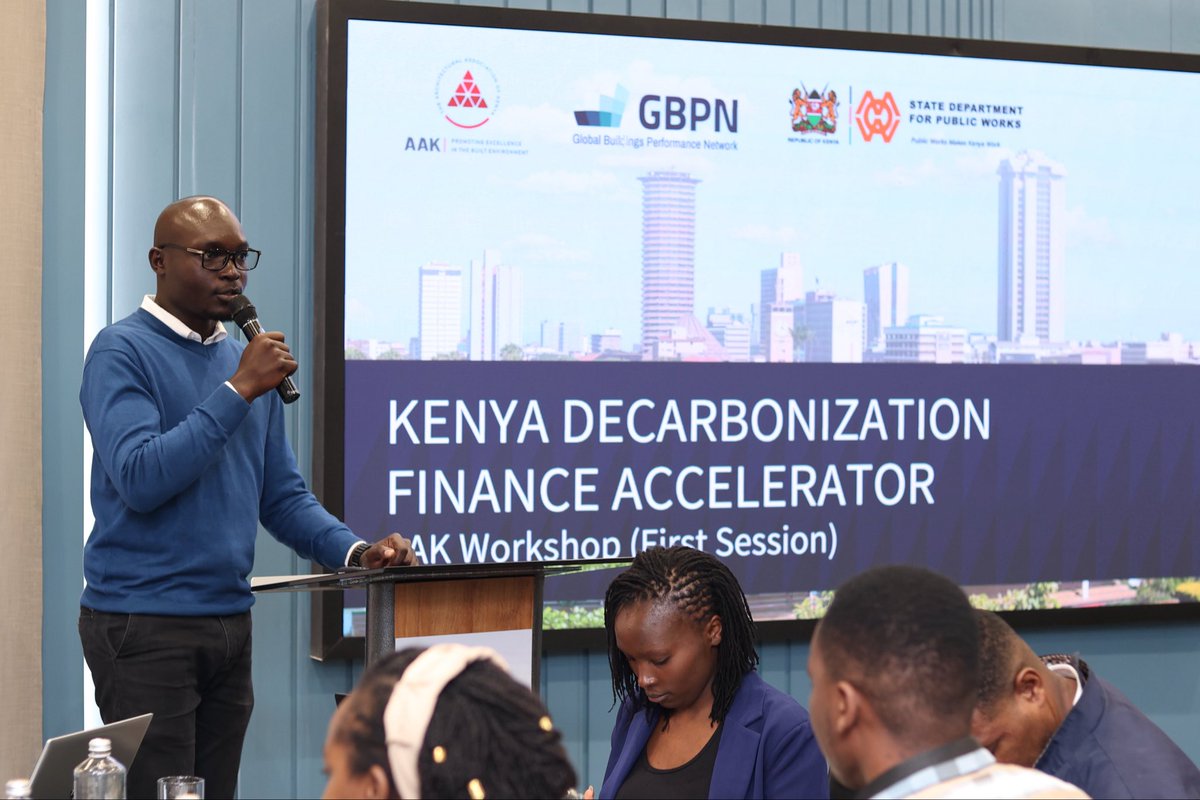
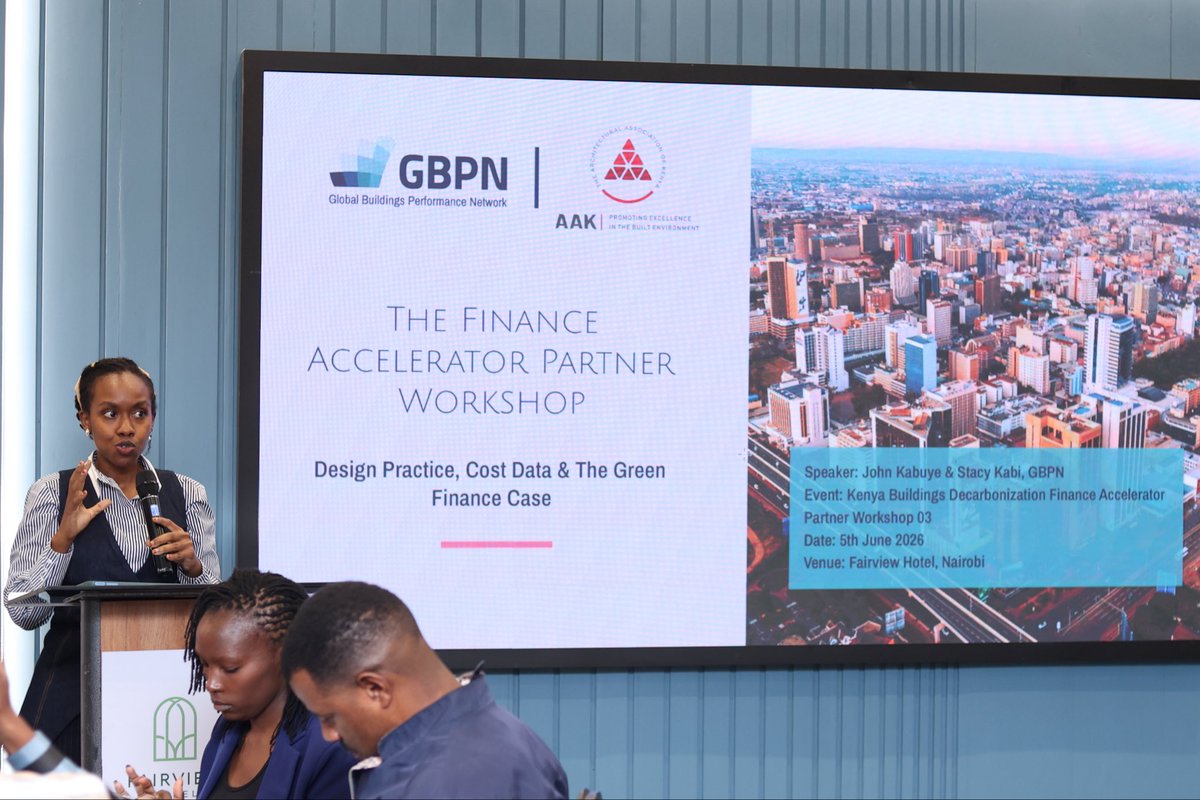
AAK convened its first partner workshop under the Finance Accelerator Programme at the Fairview Hotel, Nairobi in collaboration with the Global Buildings Performance Network (GBPN). The workshop, themed “Unlocking Green Finance for Built Environment Professionals,” sought to build a shared understanding of the critical role of green finance in accelerating investment in low-emission buildings and retrofits.
The Finance Accelerator Programme aims to catalyze targeted funding by 2030 to deliver the first wave of low-emission buildings and retrofits, unlocking 1.5 MtCO₂ – equivalent to 47% of Kenya’s 3.2 MtCO₂ emissions reduction target for the buildings and construction sector.
The workshop provided a platform for United for Access and Health (UHAI) coalition stakeholders to explore pathways for developing a pipeline of bankable green projects, reducing investment risks, and strengthening market confidence.
Discussions highlighted a key challenge within the market: despite the availability of capital and a substantial pipeline of development projects, many projects struggle to attract green financing due to inadequate documentation, limited certification, and a lack of demonstrated bankability. Also emphasized was the importance of contextualizing external green certification systems to better reflect local realities. Drawing lessons from countries such as India and Egypt, stakeholders explored opportunities to adapt global certification frameworks to Kenya’s diverse climatic and regional contexts while maintaining international credibility.
The afternoon session featured a presentation on strategies for reducing the cost of green developments through design decisions, material selection, technological adoption, certification pathways, procurement approaches, and innovative financing mechanisms. Participants underscored the need to debunk the perception that green buildings are inherently more expensive than conventional developments. It was noted that this perception is often driven by limited building performance data, which in turn affects investor confidence and the ability of financial institutions to assess project bankability.
The discussions also highlighted the need for financial products tailored to Kenya’s unique housing market, particularly the incremental manner in which many households finance and construct their homes. The workshop concluded with a co-creation session informed by insights gathered through the Barrier Analysis Survey. The outcomes of the discussions will contribute to the development of the Barrier Analysis and Finance Landscape Report, which will be jointly fed by input from the UHAI Coalition partner workshops.
The report will help identify priority interventions needed to unlock investment and scale green finance across the industry, while supporting the implementation of the priority actions outlined in Kenya's Buildings and Construction Decarbonization Roadmap.

3
8
860
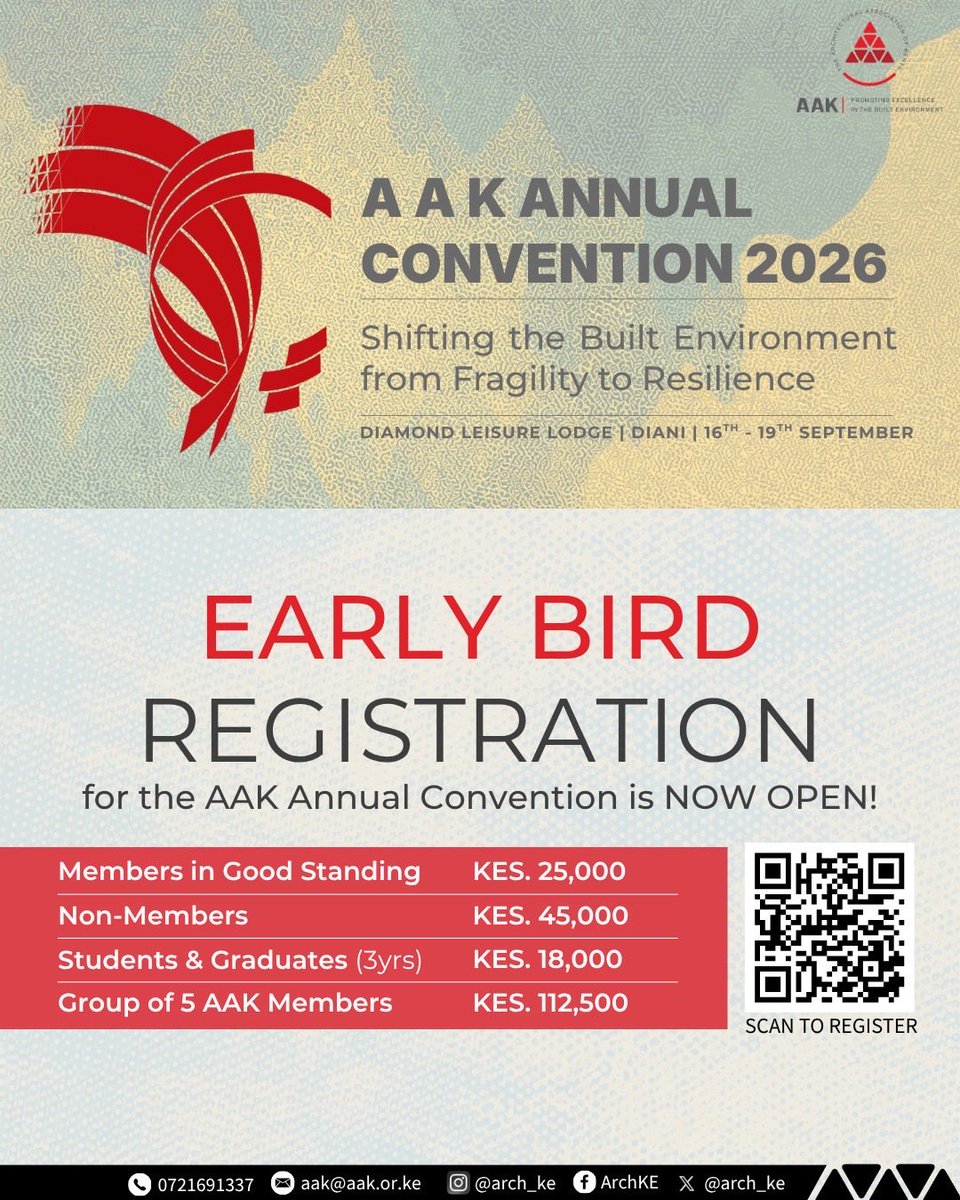
Don’t be late! 🫵🏾 Early Bird Registration for the AAK Annual Convention 2026 is OPEN!
We are heading to Diani from 16th–19th September for the AAK’s premier convention on the theme: Shifting the Built Environment from Fragility to Resilience.
Secure your discounted ticket before prices go up!
Click here to register: members.aak.or.ke/lnk/jscqxb…
178
Honoring a lifetime of visionary leadership. 🕊️
We mourn the passing of Arch. Olufemi Majekodunmi (1940–2026), a champion of African and global architecture. As a trailblazing leader and AUA Trustee, his immense contributions and dedication to the profession have left an indelible mark on the built environment.
Our thoughts and prayers are with his family and the entire architectural community. Rest in peace, Arch. Majekodunmi.

2
3
376
Architectural Association of Kenya retweeted
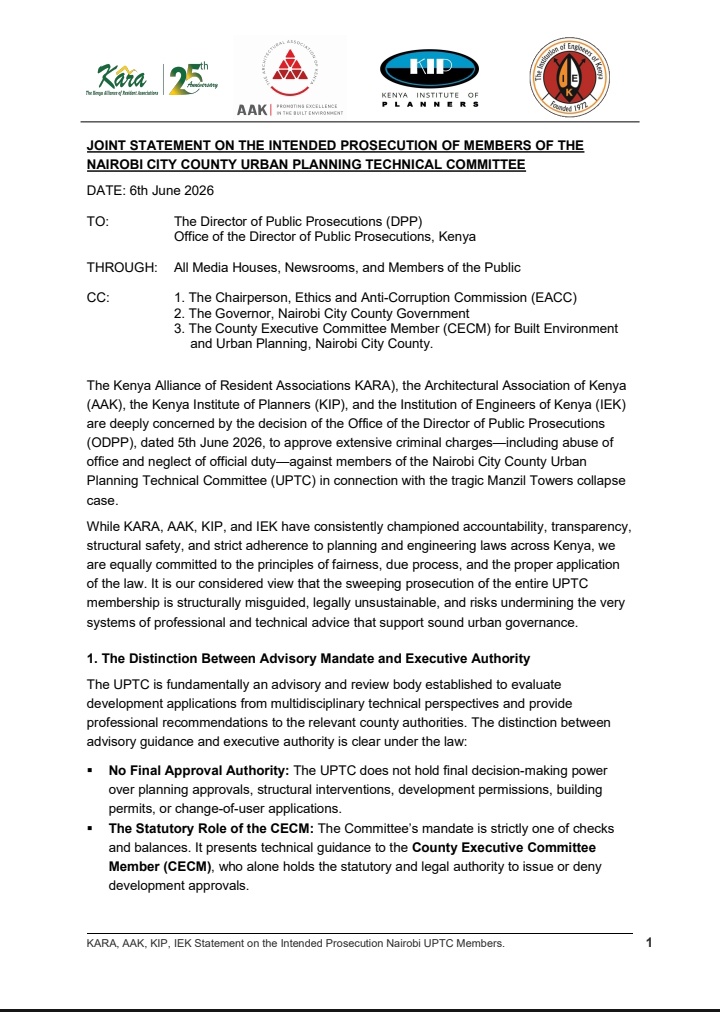
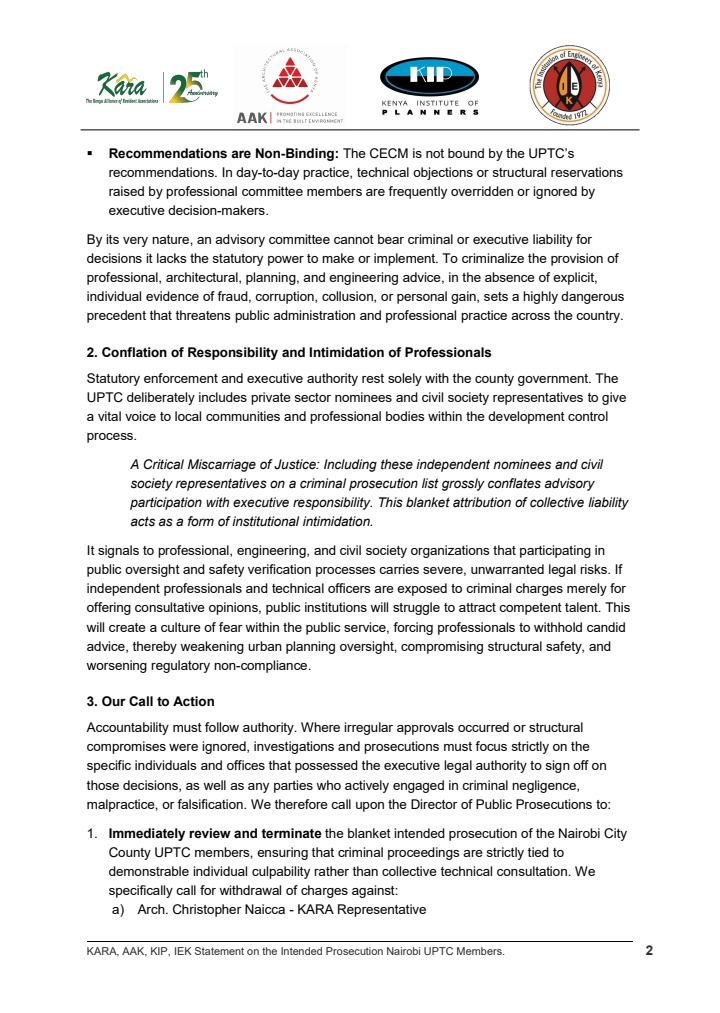
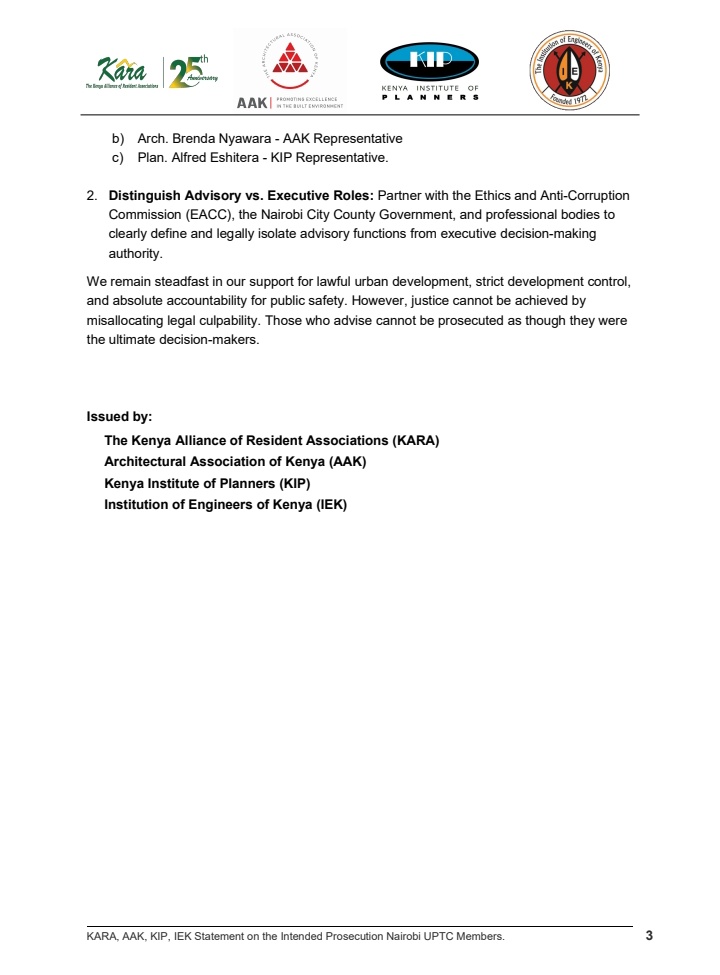
Joint statement on the intended prosecution of members of the Nairobi City County Urban Planning Technical Committee
12
26
34
6,168
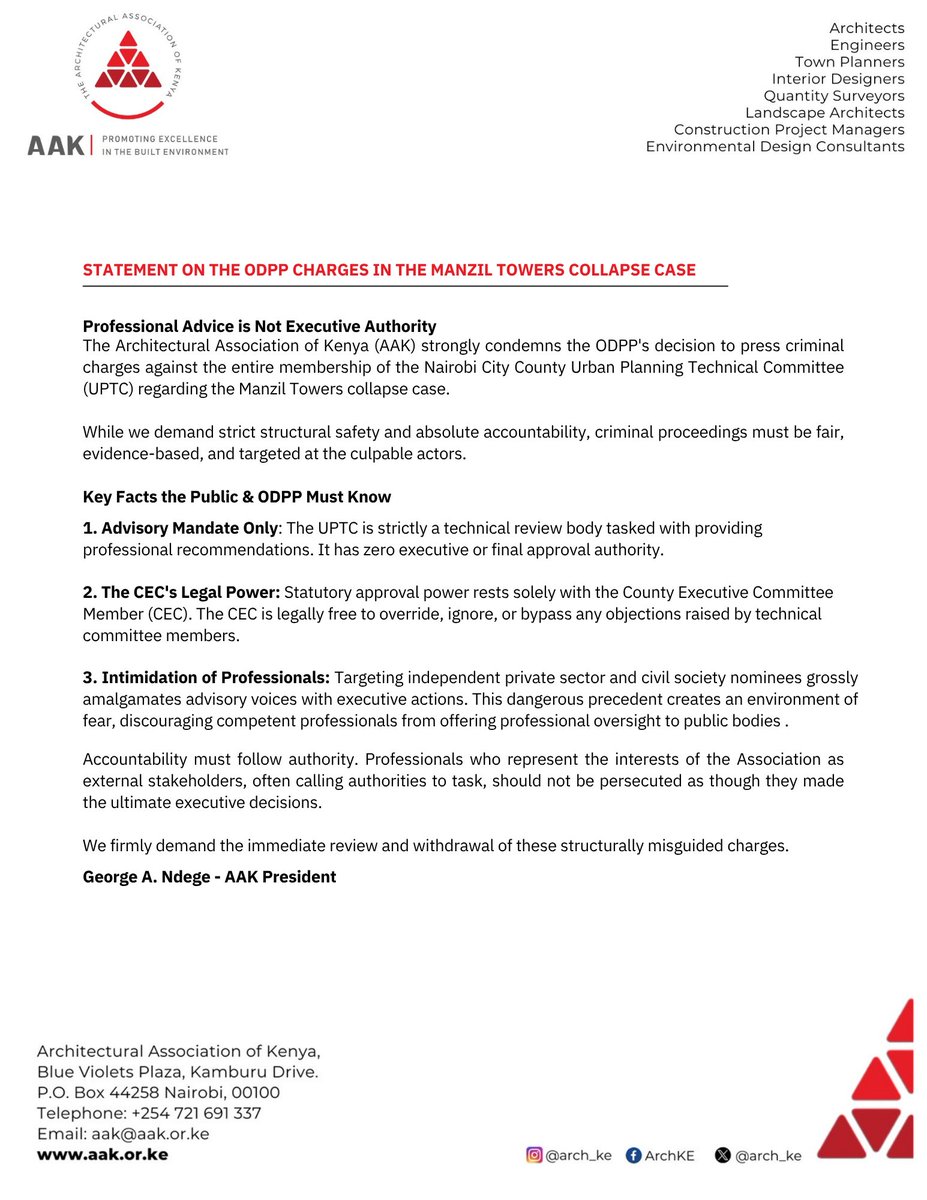
STATEMENT ON THE ODPP CHARGES IN THE MANZILTOWERS COLLAPSE CASE
22
65
101
22,058
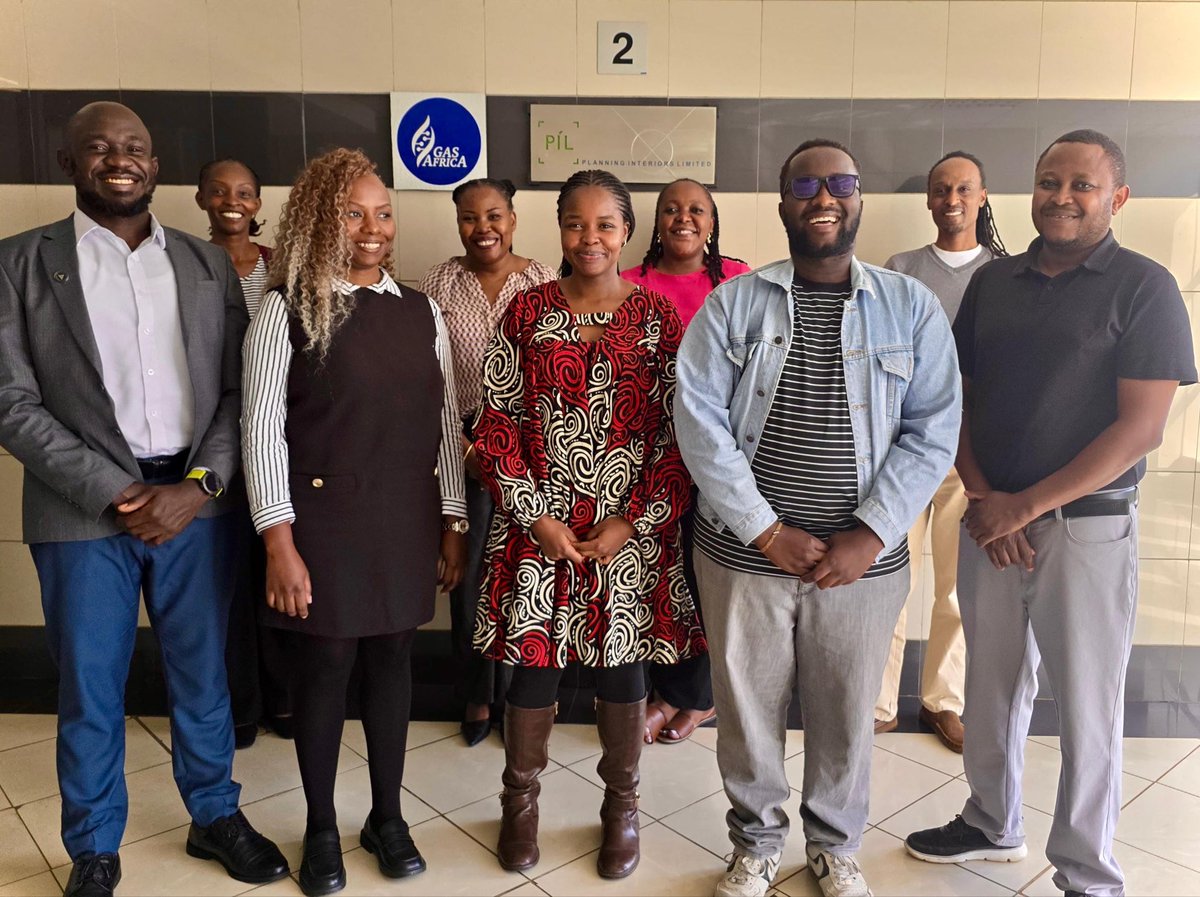
It's always a pleasure touching base with our Firm Members!
The Association joined Planning interiors Limited, this afternoon and we got to understand how the Association fits into the Interior Designers industry, the challenges, the opportunities as well and how we can add more value to our members.
We were joined by the Managing Director Eugene Ngugi, Daisy Nyeresa, Cyrus Ng’ang’a, Dennis Njagi, and Steve Waititu Maina.
The AAK team was represented by the Hon Registrar, Eng. Nashon Tambo, Interior Designers Chapter council members: Chapter Chair Daisy Nyeresa, Registrar Emily Muchika, Secretary Jacinta Serem, Student Representative Lawrence, Secretary, Architects Chapter Arch. Michael Mathenge, the Chapter Members and Secretariat.
Thank you for opening your doors to us and we look forward to a fruitful partnership.
Did you know the AAK Interior Designers Chapter is only 4 years old and is the newest Chapter of the association, growing steadily and with a unified voice?
Join us today!
Talk to us on 0721691337.



5
520
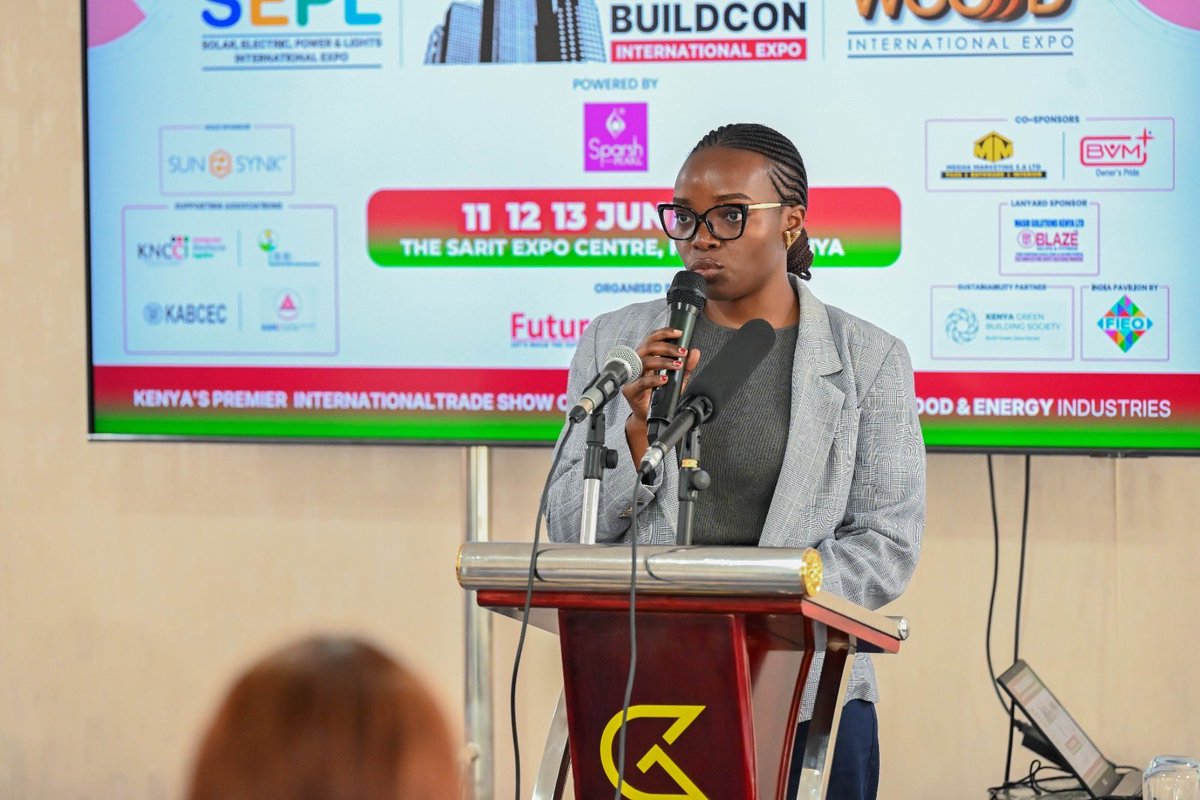
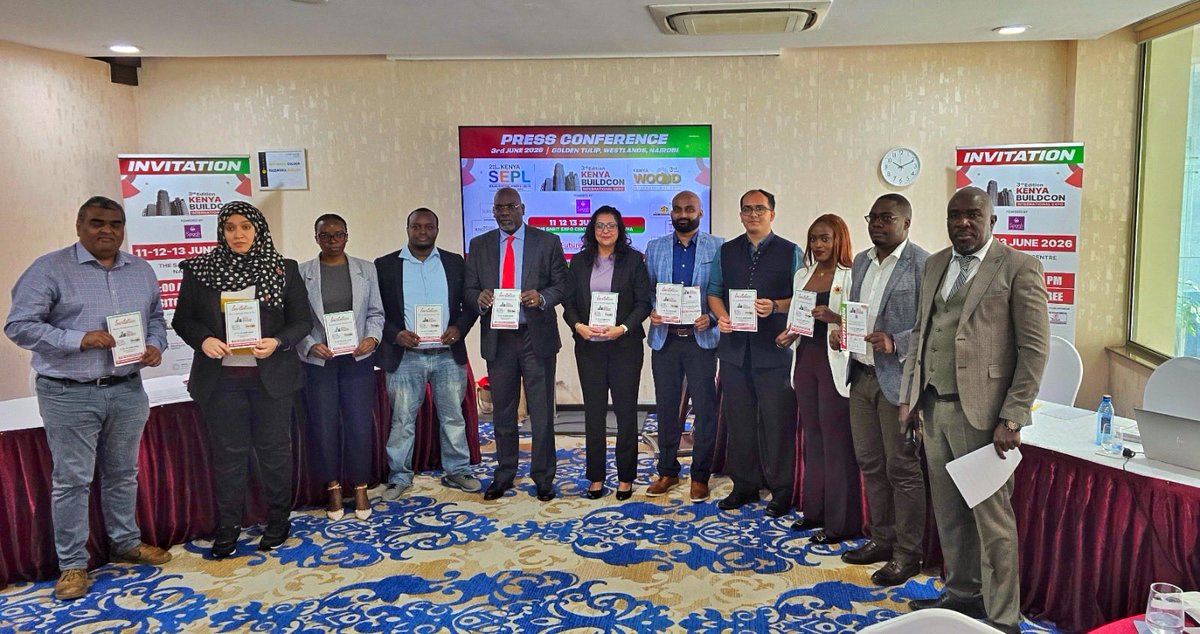
The Architectural Association of Kenya (AAK) participated in the Kenya Buildcon International Expo 2026 Press Conference earlier today as part of the lead-up activities to the upcoming exhibition.
The forum convened key stakeholders from across the built environment sector to explore opportunities for driving innovation, sustainability, and resilience in the development of our cities and communities.
We value the opportunity to contribute to these important industry conversations and look forward to continued collaboration with partners, professionals, and industry leaders at the Expo, scheduled to take place from 11–13 June 2026 at the Sarit Expo Centre, Nairobi. AAK will be at Booth B4, hall B.

2
5
431
A massive congratulations to our very own, Dr. Arch. Linda Nkatha Gichuiya, M.A.A.K (A)! 👏🏾🎉
She has been honored with the RAIC Architectural Journalism & Media Award (Distinction) for her brilliant contribution to the book "Mobs and Microbes: Global Perspectives on Market Halls, Civic Order & Public Health."
Thank you for putting Kenyan architectural scholarship on the global map and inspiring the entire built environment community! 🇰🇪
#ArchitecturalJournalism #AAKPromotesExcellence #BuiltEnvironmentKE #WomenInArchitecture #GlobalStage
7
437
⏳ Just 9 Days to Go!
Kenya’s most anticipated international platform for Building & Construction, Woodworking, Energy & Renewable industries is almost here!
Be part of a powerful gathering of global brands, industry leaders, and decision-makers—all under one roof.
📅 11–13 June 2026
📍 The Sarit Expo Centre, Nairobi, Kenya
✨ What to expect:
🏗️ Latest construction technologies & materials
🌳 Advanced woodworking & furniture solutions
⚡ Innovations in energy & renewable sector
🤝 High-value networking & business opportunities
🎟️ Register now & secure your visitor pass!
Don’t miss your chance to explore, connect, and grow at East Africa’s premier industry expo.
Confirm Your Visit:
exporegistration.in/kenya-bw…
#KenyaBuildcon #KenyaWoodExpo #KenyaSEPL #NairobiEvents #ConstructionExpo #WoodworkingIndustry #RenewableEnergy #TradeExpo #BusinessNetworking

3
254
Architectural Association of Kenya retweeted
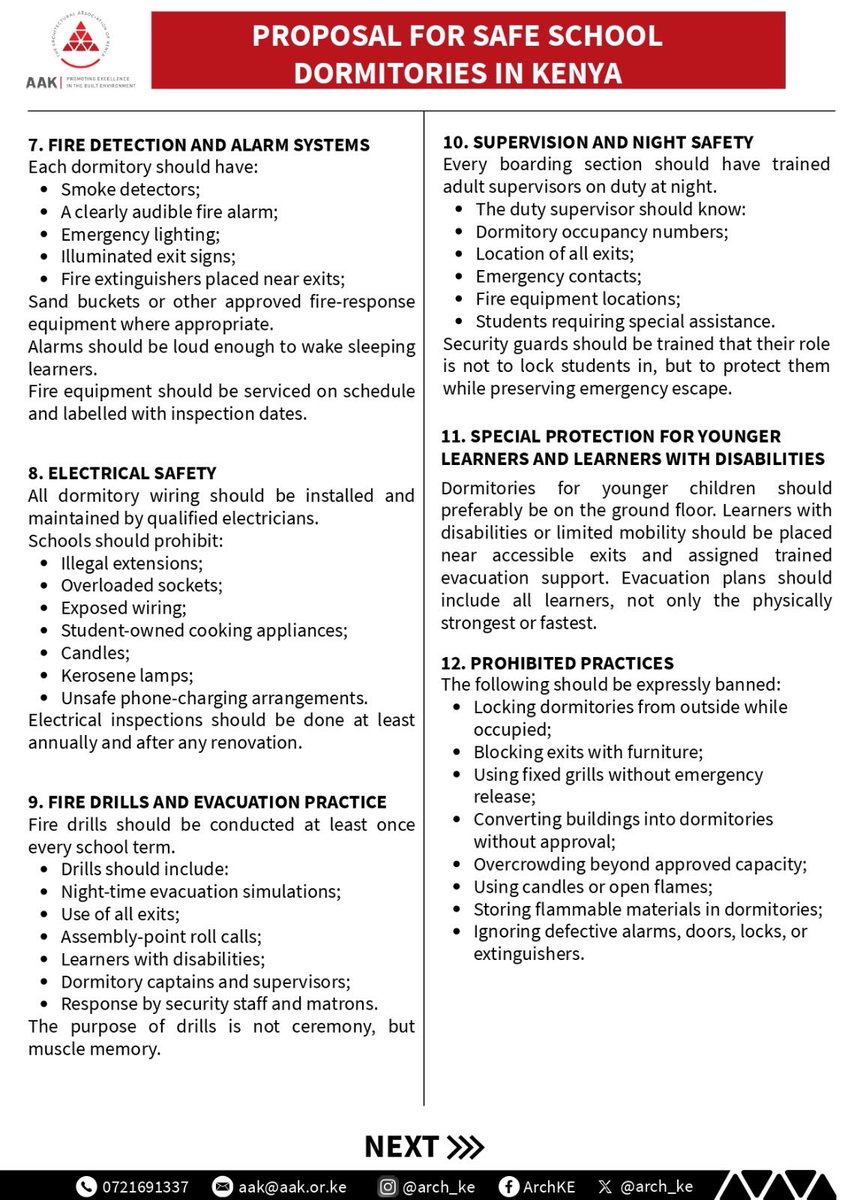
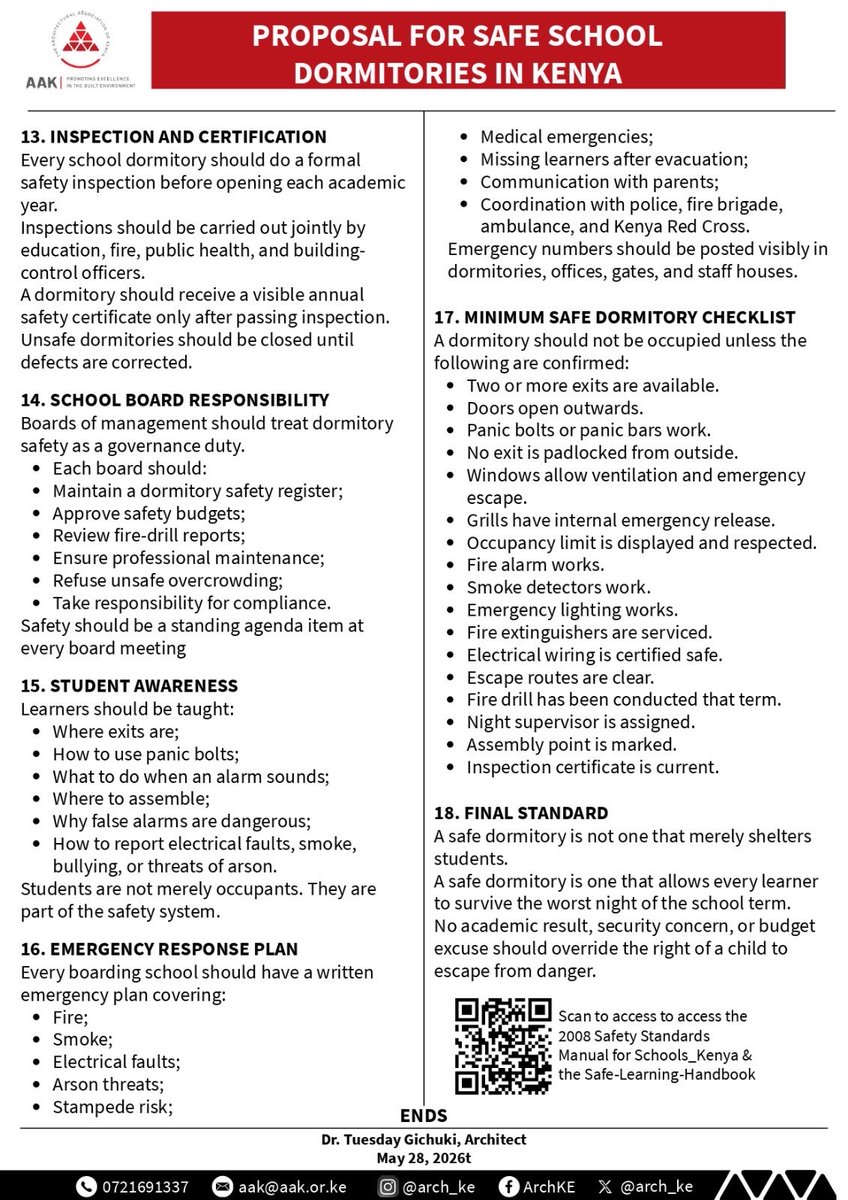
The safety of learners must never be left to chance.
In response to recurring dormitory fire tragedies and safety concerns in boarding schools, the Architectural Association of Kenya (AAK) is pleased to share the Proposal for Safe School Dormitories in Kenya by Dr. Tuesday Gichuki, Architect.
The proposal outlines practical recommendations on dormitory design, fire safety, emergency exits, occupancy limits, inspections, supervision, and emergency preparedness to help create safer learning environments for all learners.
We invite school boards, education stakeholders, built environment professionals, policymakers, and the public to review and support these recommendations.
Download the full proposal here: aak.or.ke/opinion-editorials…

4
41
41
2,931
AAK Arbitration Panel Forum | From Dialogue to Action
A productive engagement with members of the AAK Arbitration Panel, focused on strengthening the framework, governance, and visibility of arbitration services within the profession.
The forum concluded with clear action points, including:
✅ Launch of a call for arbitrators and mentees
✅ Development of key arbitration documents, including rules, ethics policies, codes of conduct, and fee structures
✅ Establishment of a task force to support appointments, admissions, and administration of arbitration processes
✅ Enhanced marketing and online visibility of arbitration practitioners
✅ Development of ADR-focused CPDs and training programmes
With dedicated leads identified and timelines agreed upon, we are committed to translating these discussions into tangible outcomes that will strengthen arbitration practice and professional dispute resolution within the built environment.
#AAK #Arbitration #ADR #BuiltEnvironment #ProfessionalPractice #Leadership #CapacityBuilding #DisputeResolution #Architecture #ConstructionIndustry #Kenya

1
3
288