
Tech enthusiast sharing the latest in AI, blockchain, and innovation. Follow for insights, trends, and updates shaping our digital future.
Joined October 2015
- Tweets 488
- Following 1,298
- Followers 646
- Likes 354
74 Photos and videos





Arjun retweeted

4 Jan 2025
Technology is just one step away from a big disaster!
Everything is changing fast, and fear is in the air.
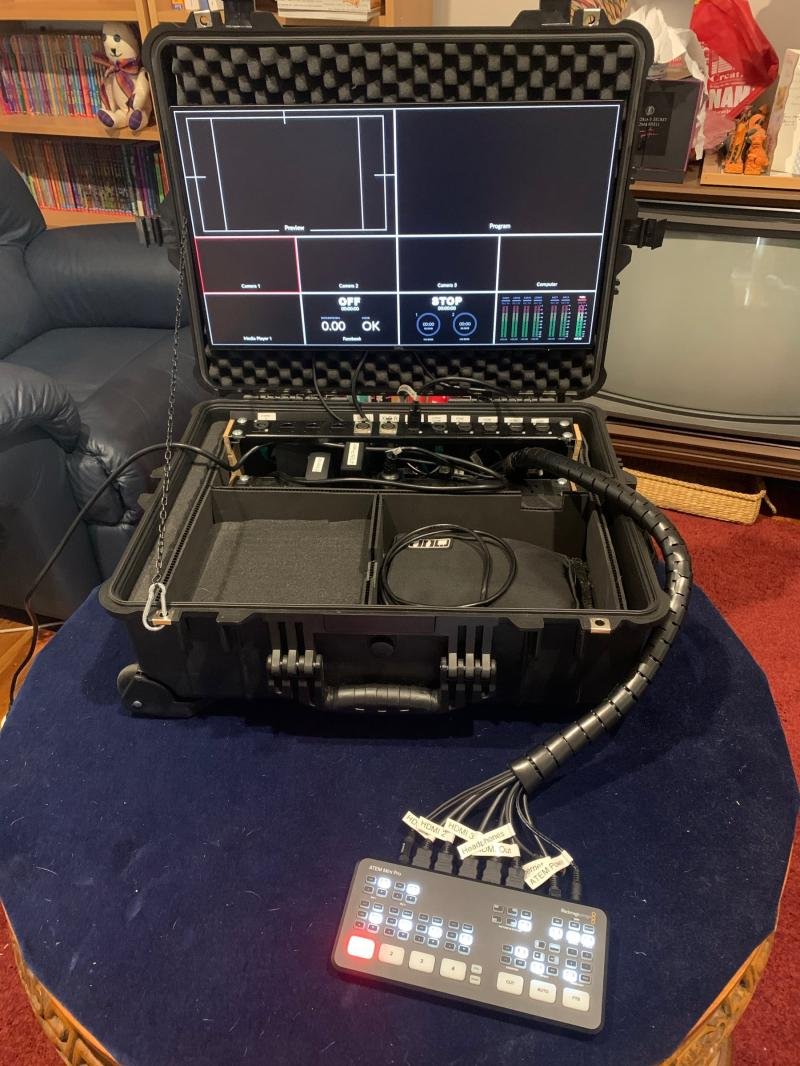
Here are 12 Tech inventions that you will NOT believe are real.
78
342
1,889
1,728,698
Arjun retweeted

28 Dec 2024
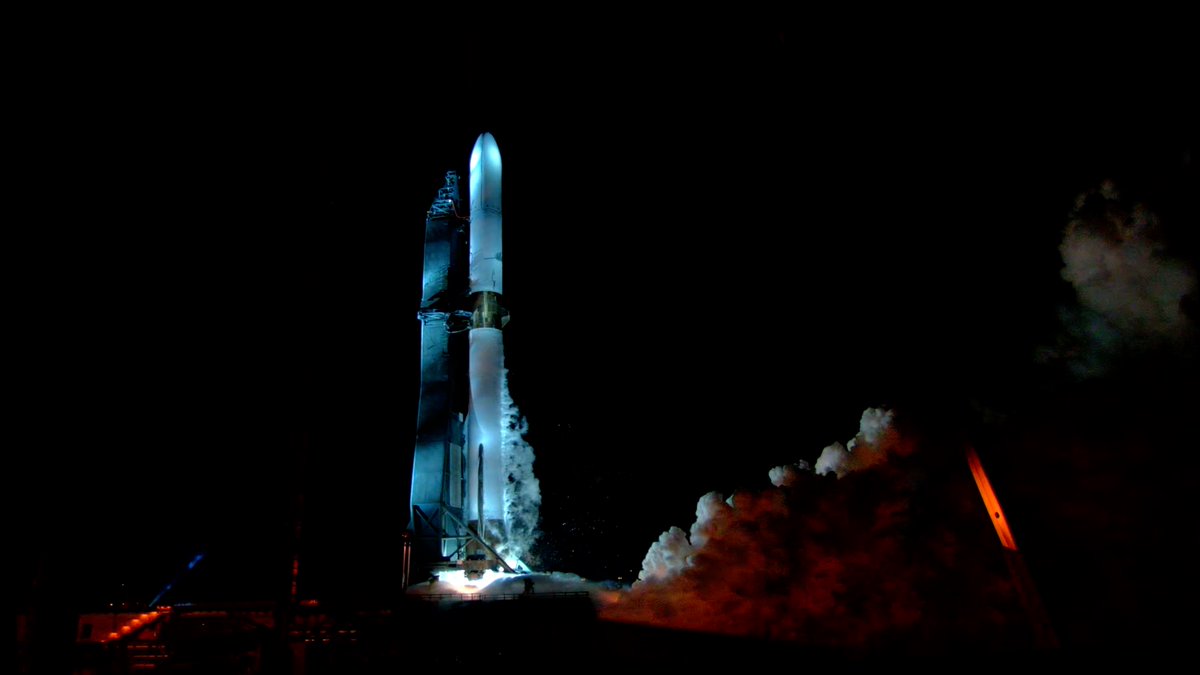
A successful hotfire of our fully integrated New Glenn launch vehicle at LC-36! The seven-engine hotfire lasted 24 seconds and marked the first time we operated the entire flight vehicle as an integrated system. Read more: bit.ly/4iQaUF7
160
719
5,623
408,370
Arjun retweeted

16 Dec 2024
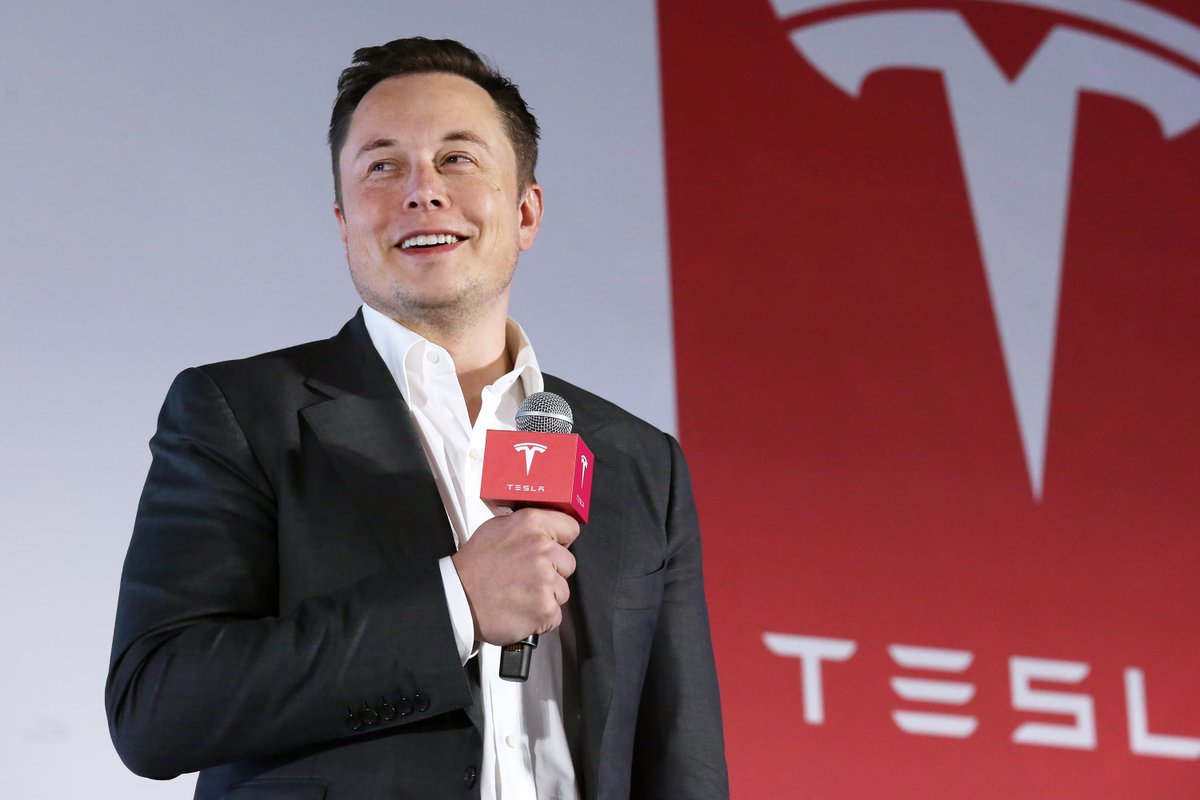
Tesla just hit $25 billion in revenue.
But while everyone's focused on Tesla's cars, Elon's been quietly building something bigger...
A secret division that's growing 52% year-over-year.
Here's how Elon's master plan is unfolding:
121
1,072
9,294
1,724,217

16 Dec 2024
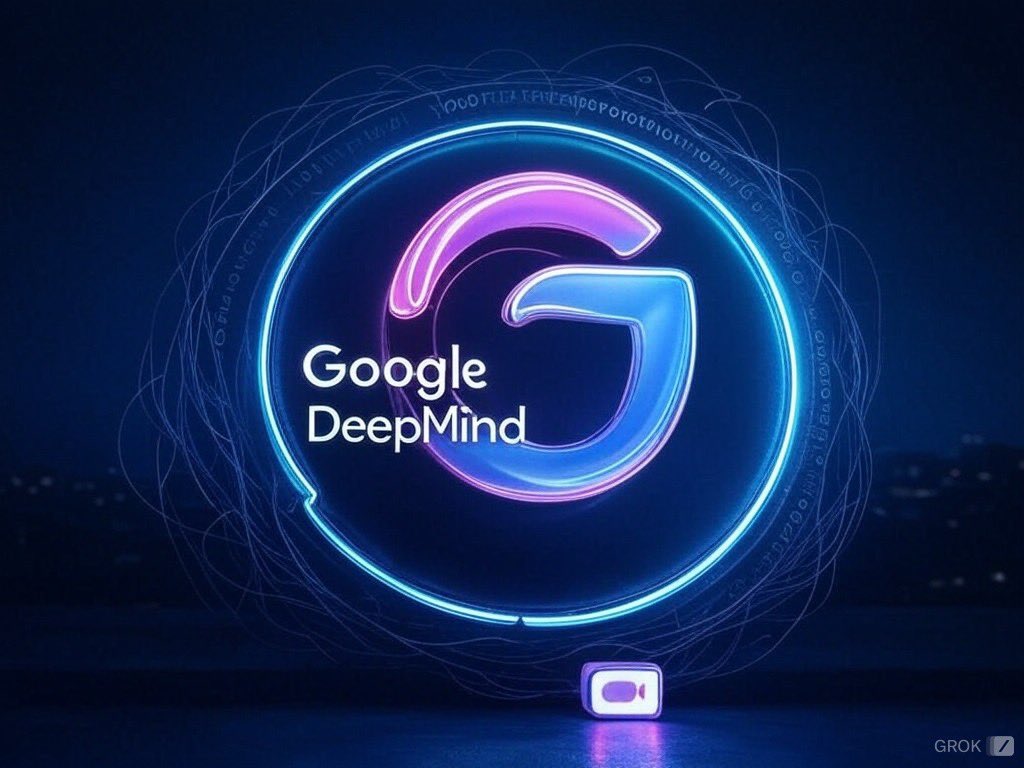
Google DeepMind has just unveiled its latest video model, aiming to outshine competitors like Sora with advanced AI capabilities in video understanding and generation. This could mark a significant leap forward in AI-driven visual content. #GoogleDeepMind #AI #VideoGeneration
42
16 Dec 2024
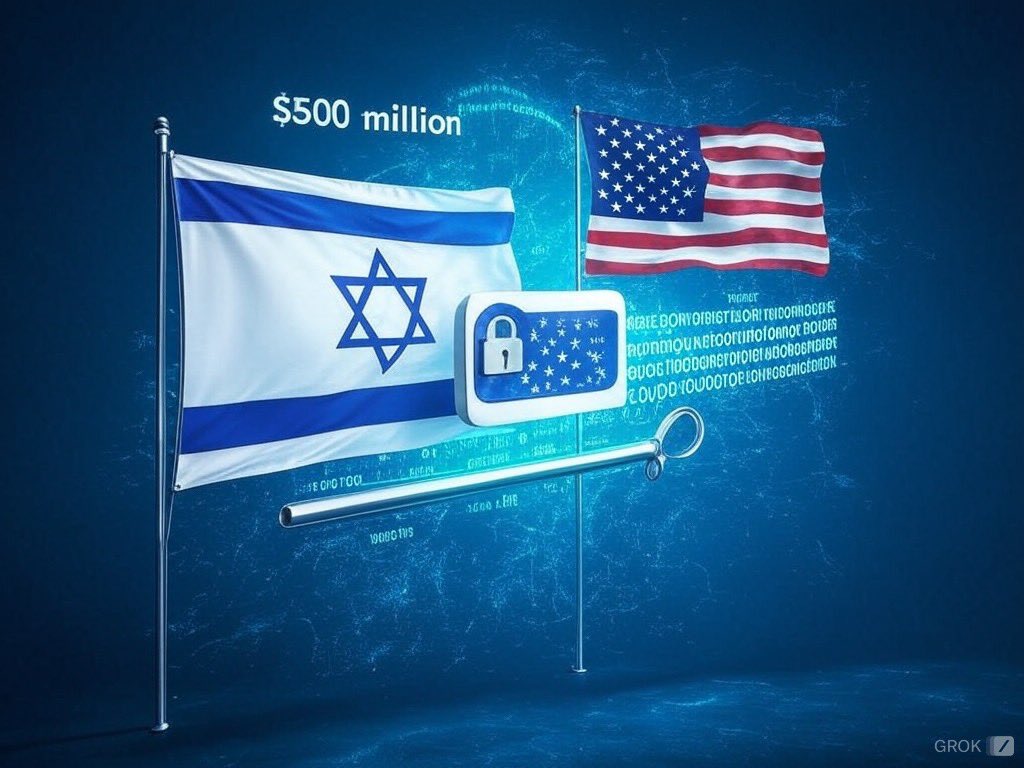
Big news in cybersecurity! Israeli spyware maker Paragon has been acquired by a U.S. private equity firm for around $500 million, signaling a shift in the global spyware market. #Paragon #Cybersecurity #TechAcquisition
1
57
16 Dec 2024
YouTube is testing a new feature where creators can reply to comments with voice notes, enhancing interaction on the platform. This could change how viewers engage with content creators. #YouTube #VoiceNotes #CreatorTools
45
16 Dec 2024
Bitcoin hit a new record high above $106,000, influenced by President-elect Trump's proposal for a U.S. Bitcoin strategic reserve. #Bitcoin #Cryptocurrency #Finance
53
11 Dec 2024
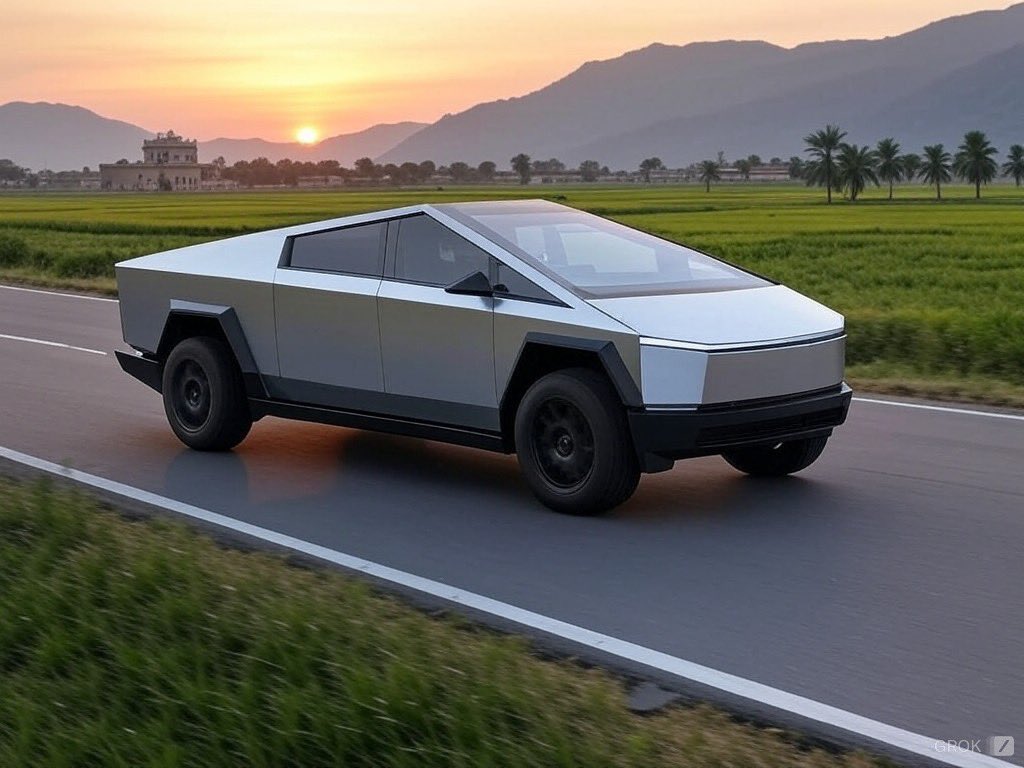
🚨 Tesla Resumes Showroom Hunt in New Delhi 🇮🇳
Tesla is back in the game for an Indian footprint, engaging with DLF to scout premium spaces! Here's the scoop:
- Showroom size? They're eyeing 3,000 to 5,000 sq ft for an experience center, plus more for services.
- Key locations? DLF Avenue Mall in Delhi and Cyber Hub in Gurugram are on the list.
This comes after Elon Musk's earlier plans to announce a significant investment in India. The electric vehicle giant might just be gearing up for a grand entry!
#Tesla #NewDelhi #ElectricVehicles #Showroom #Investment #DLF #EV #Innovation
61
10 Dec 2024
Exciting news from the world of AI! xAI has officially launched their new image generation model, **Aurora**. This model is setting a new standard with its ability to create photorealistic images from text prompts, trained on billions of images for a deep understanding of visual content. Now available on the X platform, Aurora promises to push the boundaries of AI-generated imagery with its precise rendering and editing capabilities.
#xAI #Aurora #AIImageGeneration #Grok #PhotorealisticAI #TechInnovation #AIEthics
3
124
10 Dec 2024
Elon Musk's proposal for a Transatlantic Tunnel aims to connect New York and London with a travel time of about 54 minutes using vacuum tube technology. However, this remains conceptual. The projected cost is around $20 trillion, though some speculate a more feasible figure might be much lower. There's no governmental support currently, and the project faces significant technological and environmental challenges. It's still in the speculative stage.
1
330
10 Dec 2024
Meet Willow, the new quantum chip from Google that's a game-changer! It reduces errors as it grows bigger, solving a 30-year puzzle. In tests, Willow did a calculation in under 5 minutes that would take the best supercomputer longer than the universe has existed!
9 Dec 2024

Introducing Willow, our new state-of-the-art quantum computing chip with a breakthrough that can reduce errors exponentially as we scale up using more qubits, cracking a 30-year challenge in the field. In benchmark tests, Willow solved a standard computation in <5 mins that would take a leading supercomputer over 10^25 years, far beyond the age of the universe(!).
1
137
Arjun retweeted

4 Dec 2024
The 'eureka' moment of Archimedes is a famous story that illustrates how a sudden insight can solve a problem. According to the story, Archimedes was asked by King Hiero II of Syracuse to determine whether a crown made for him was pure gold or mixed with silver. Archimedes did not know how to measure the purity of gold without damaging the crown, so he was puzzled by this problem.
One day, he went to take a bath and noticed that the water level rose as he immersed himself in the tub. He realized that the amount of water displaced by his body was equal to the volume of his body, and that this principle could be applied to measure the volume of any irregular object. He then thought that by comparing the weight and volume of the crown with those of a pure gold sample, he could determine if the crown was adulterated or not. He was so excited by this discovery that he jumped out of the bath and ran naked through the streets, shouting “Eureka!” which means “I have found it!” in Greek.
This story is often used as an example of the eureka effect, which is the common human experience of suddenly understanding a previously incomprehensible problem or concept. The eureka effect is also known as the Aha! moment or insight. It involves a shift in perspective or a break in mental fixation that allows the solution to appear clear and obvious. The eureka effect is associated with positive emotions and a sense of confidence in the solution.
The eureka moment of Archimedes is also the basis of his famous principle, which states that when a body is immersed in a fluid, it experiences an upward force equal to the weight of the fluid displaced by the body. This principle explains how ships float, submarines dive, hot air balloons fly, and many other phenomena involving buoyancy.

39
165
714
46,935
Arjun retweeted

2 Dec 2024
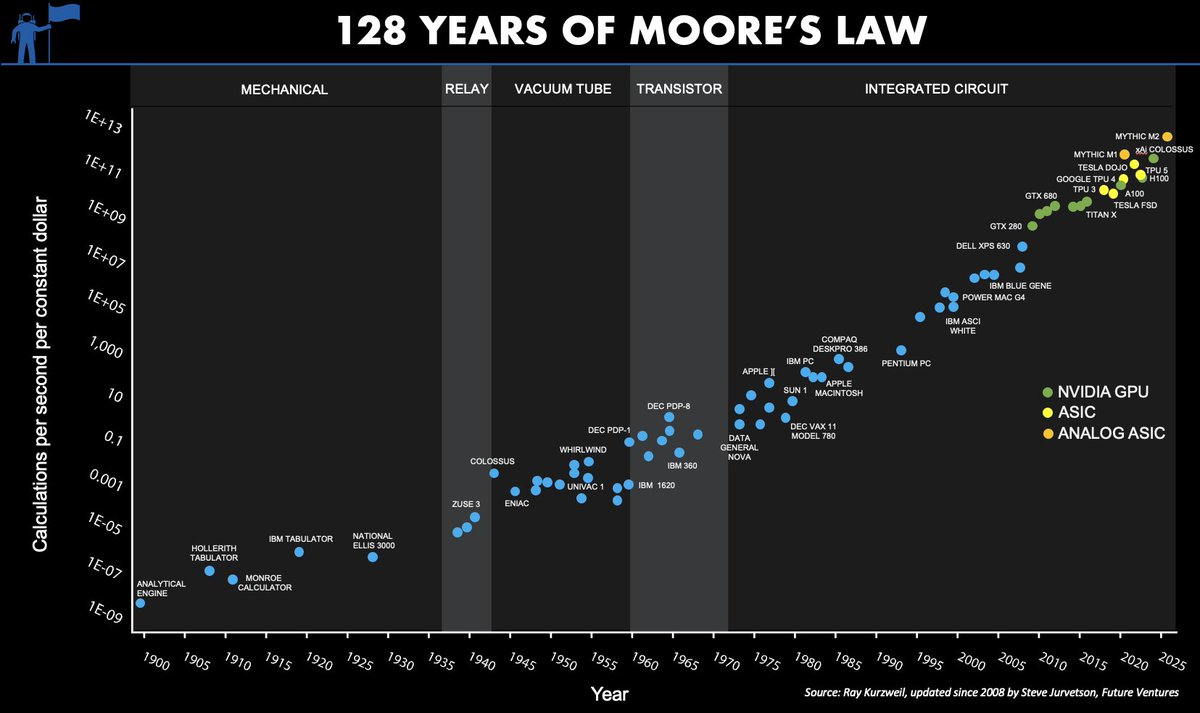
The Moore's Law Update
NOTE: this is a semi-log graph, so a straight line is an exponential; each y-axis tick is 100x. This graph covers a 1,000,000,000,000,000,000,000x improvement in computation/$. Pause to let that sink in.
Humanity’s capacity to compute has compounded for as long as we can measure it, exogenous to the economy, and starting long before Intel co-founder Gordon Moore noticed a refraction of the longer-term trend in the belly of the fledgling semiconductor industry in 1965.
I have color coded it to show the transition among the integrated circuit architectures. You can see how the mantle of Moore's Law has transitioned most recently from the GPU (green dots) to the ASIC (yellow and orange dots), and the NVIDIA Hopper architecture itself is a transitionary species — from GPU to ASIC, with 8-bit performance optimized for AI models, the majority of new compute cycles.
There are thousands of invisible dots below the line, the frontier of humanity's capacity to compute (e.g., everything from Intel in the past 15 years). The computational frontier has shifted across many technology substrates over the past 128 years. Intel ceded leadership to NVIDIA 15 years ago, and further handoffs are inevitable.
Why the transition within the integrated circuit era? Intel lost to NVIDIA for neural networks because the fine-grained parallel compute architecture of a GPU maps better to the needs of deep learning. There is a poetic beauty to the computational similarity of a processor optimized for graphics processing and the computational needs of a sensory cortex, as commonly seen in the neural networks of 2014. A custom ASIC chip optimized for neural networks extends that trend to its inevitable future in the digital domain. Further advances are possible with analog in-memory compute, an even closer biomimicry of the human cortex. The best business planning assumption is that Moore’s Law, as depicted here, will continue for the next 20 years as it has for the past 128. (Note: the top right dot for Mythic is a prediction for 2026 showing the effect of a simple process shrink from an ancient 40nm process node)
----
For those unfamiliar with this chart, here is a more detailed description:
Moore's Law is both a prediction and an abstraction. It is commonly reported as a doubling of transistor density every 18 months. But this is not something the co-founder of Intel, Gordon Moore, has ever said. It is a nice blending of his two predictions; in 1965, he predicted an annual doubling of transistor counts in the most cost effective chip and revised it in 1975 to every 24 months. With a little hand waving, most reports attribute 18 months to Moore’s Law, but there is quite a bit of variability. The popular perception of Moore’s Law is that computer chips are compounding in their complexity at near constant per unit cost. This is one of the many abstractions of Moore’s Law, and it relates to the compounding of transistor density in two dimensions. Others relate to speed (the signals have less distance to travel) and computational power (speed x density).
Unless you work for a chip company and focus on fab-yield optimization, you do not care about transistor counts. Integrated circuit customers do not buy transistors. Consumers of technology purchase computational speed and data storage density. When recast in these terms, Moore’s Law is no longer a transistor-centric metric, and this abstraction allows for longer-term analysis.
What Moore observed in the belly of the early IC industry was a derivative metric, a refracted signal, from a longer-term trend, a trend that begs various philosophical questions and predicts mind-bending AI futures.
In the modern era of accelerating change in the tech industry, it is hard to find even five-year trends with any predictive value, let alone trends that span the centuries.
I would go further and assert that this is the most important graph ever conceived. A large and growing set of industries depends on continued exponential cost declines in computational power and storage density. Moore’s Law drives electronics, communications and computers and has become a primary driver in drug discovery, biotech and bioinformatics, medical imaging and diagnostics. As Moore’s Law crosses critical thresholds, a formerly lab science of trial and error experimentation becomes a simulation science, and the pace of progress accelerates dramatically, creating opportunities for new entrants in new industries. Consider the autonomous software stack for Tesla and SpaceX and the impact that is having on the automotive and aerospace sectors.
Every industry on our planet is going to become an information business. Consider agriculture. If you ask a farmer in 20 years’ time about how they compete, it will depend on how they use information — from satellite imagery driving robotic field optimization to the code in their seeds. It will have nothing to do with workmanship or labor. That will eventually percolate through every industry as IT innervates the economy.
Non-linear shifts in the marketplace are also essential for entrepreneurship and meaningful change. Technology’s exponential pace of progress has been the primary juggernaut of perpetual market disruption, spawning wave after wave of opportunities for new companies. Without disruption, entrepreneurs would not exist.
Moore’s Law is not just exogenous to the economy; it is why we have economic growth and an accelerating pace of progress. At Future Ventures, we see that in the growing diversity and global impact of the entrepreneurial ideas that we see each year — from automobiles and aerospace to energy and chemicals.
We live in interesting times, at the cusp of the frontiers of the unknown and breathtaking advances. But, it should always feel that way, engendering a perpetual sense of future shock.
545
2,006
8,333
12,929,904
1 Dec 2024
"Technology is a useful servant but a dangerous master." — Christian Lous Lange
9
208
1 Dec 2024
OpenAI, once a beacon of non-profit AI research, has transitioned to a for-profit model, sparking debate. Founded to ensure AI benefits humanity, the shift began with a "capped-profit" approach in 2019. Now, recent moves suggest a full pivot to for-profit, potentially sidelining its nonprofit board. This change raises questions about balancing profit with the original mission of ethical AI development.
#OpenAI #ForProfitTransition #AIEthics #TechChange
1
91
1 Dec 2024
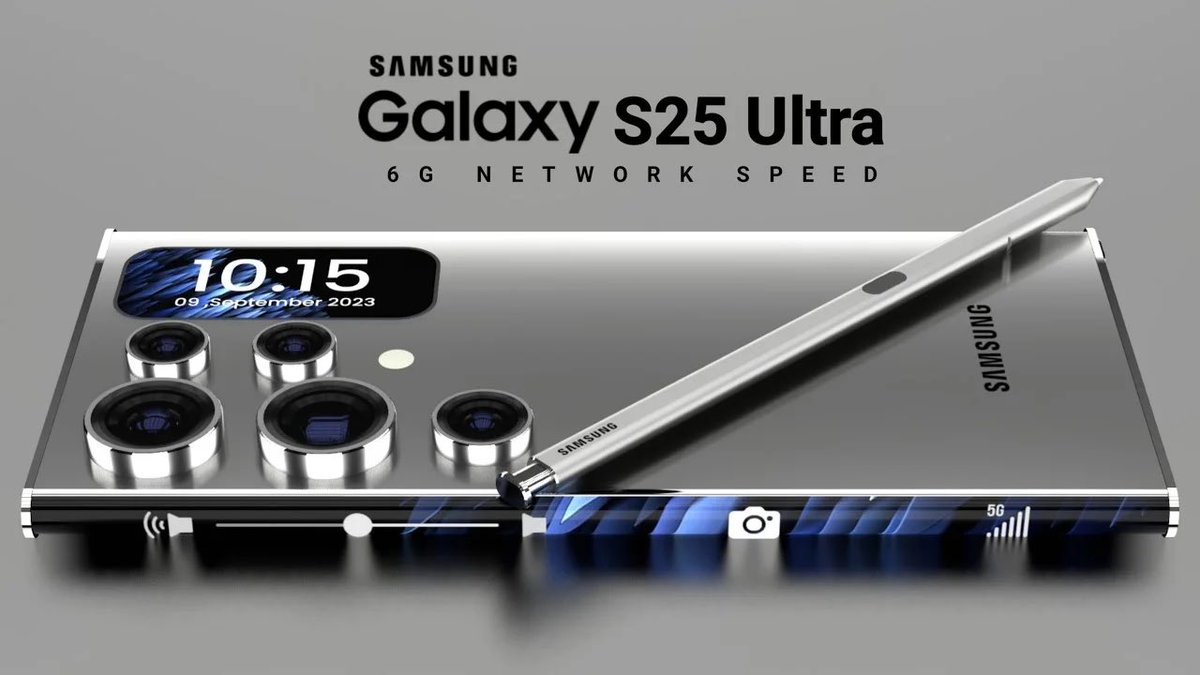
Here's a bit more detail on what to expect from Samsung's Galaxy S25 series:
- Snapdragon 8 Elite: The new chipset promises to deliver high-performance computing, potentially making the S25 series one of the quickest smartphones on the market.
- Galaxy AI: Expect deeper integration of AI for smarter functionalities like better photo processing, predictive text, and possibly even more intuitive user interface controls.
- Design and Display: While specifics are scarce, there's a buzz about new materials for a premium feel, alongside displays that might offer higher brightness and refresh rates.
- Camera System: Rumors suggest the S25 Ultra might introduce a new sensor or lens, focusing on improved low-light photography and zoom capabilities.
- Ecosystem Integration: Samsung aims to make its devices work better together, meaning your phone, earbuds, and tablet will interact more seamlessly.
Keep an eye out for the Samsung Unpacked event for the official word on these features. #GalaxyS25 #TechLeaks #SamsungInnovation
1
182
1 Dec 2024
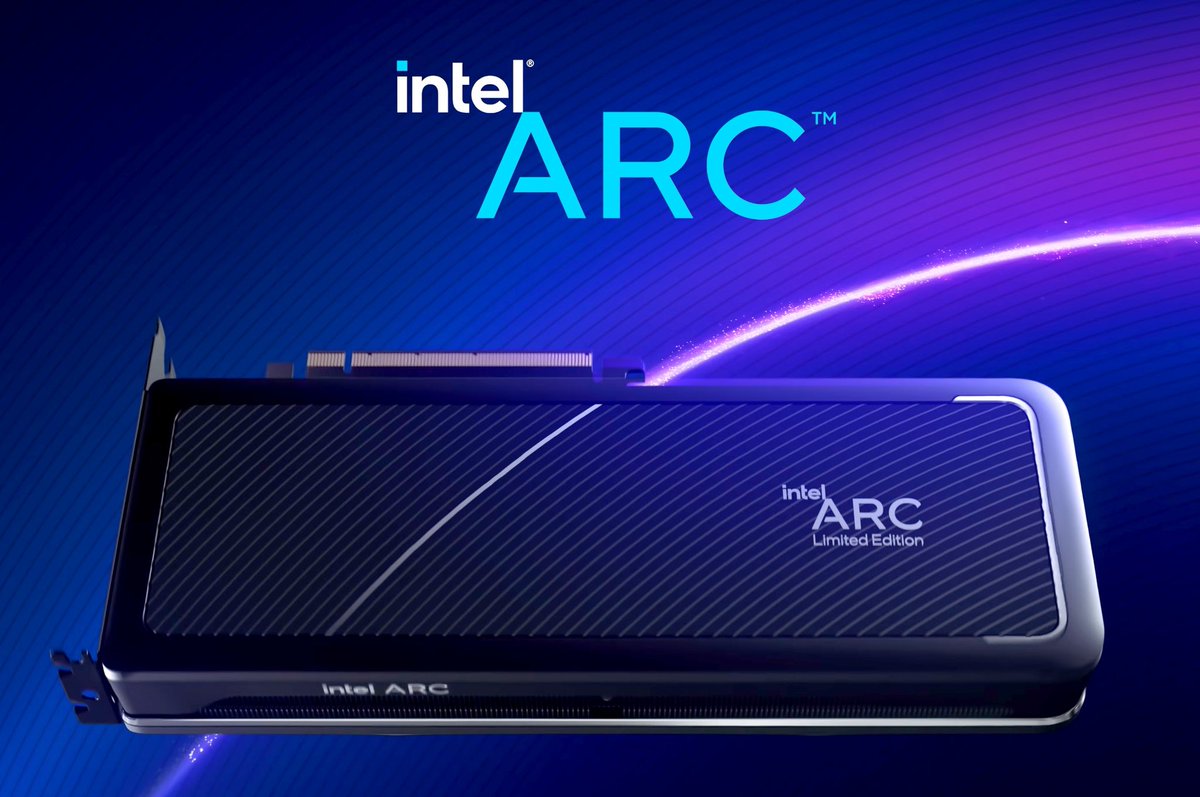
Intel Arc is Intel's new graphics card line, starting with the Alchemist series. Key points:
- Launch: Introduced in 2022 with the A770 and A750 models. #IntelArc #AlchemistSeries
- Features: Ray tracing, DirectX 12 Ultimate, and Intel XeSS for upscaling. #RayTracing #DirectX12 #XeSS
- Performance: Mixed, with early driver issues but showing improvement. #GPUPerformance
- Future: Next gen "Battlemage" expected to enhance performance and market position. #Battlemage
- Market Impact: Aims to offer competitive pricing and performance in the mid-range GPU segment. #GPUCompetition
154
30 Nov 2024
SpaceX celebrated its 100th successful launch from Pad 4E at Vandenberg Space Force Base with a Falcon 9 mission carrying NROL-126 and 20 Starlink satellites. #SpaceX #Falcon9 #NROL126 #Starlink #Vandenberg

Watch Falcon 9 launch the @NatReconOfc’s NROL-126 mission and 20 @Starlink satellites to orbit from pad 4E in California x.com/i/broadcasts/1OdKrXRBD…
1
2
412
29 Nov 2024
"The science of today is the technology of tomorrow." — Edward Teller
14
244