
Programmable Money 👾 Built by @ArkLabsHQ
Joined April 2025
- Tweets 363
- Following 200
- Followers 4,099
- Likes 662
55 Photos and videos





Pinned Tweet

Mar 12
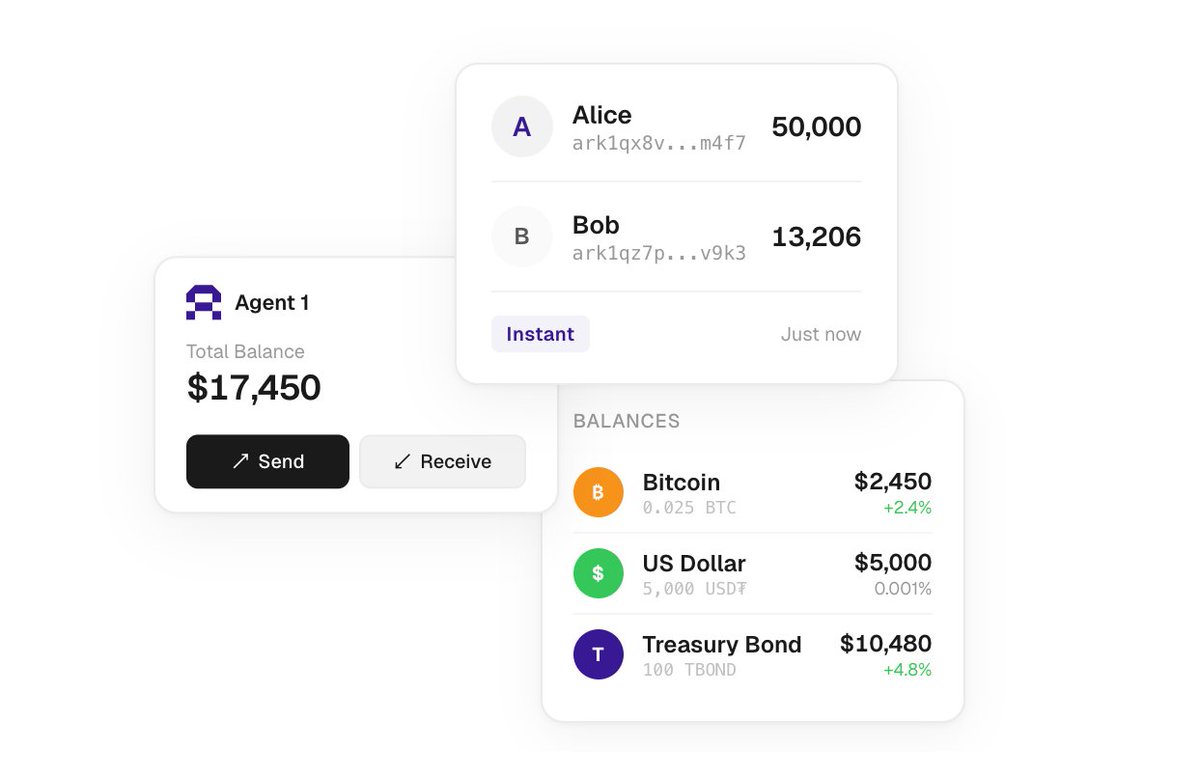
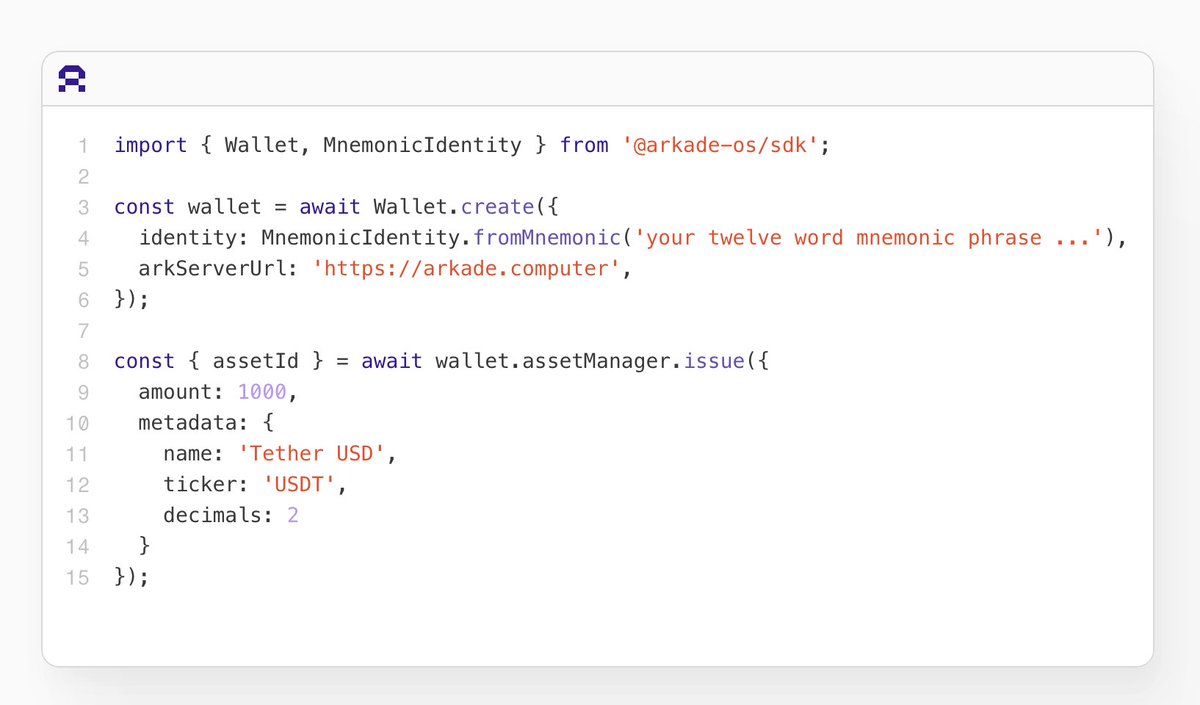
Arkade Assets is now live on mainnet.
If you're building stablecoin products, tokenized assets solutions, or any application that needs to move more than bitcoin: you can now issue, mint, transfer, natively on Bitcoin with instant execution and programmable logic.
13
18
97
25,867
Arkade retweeted

Jun 8
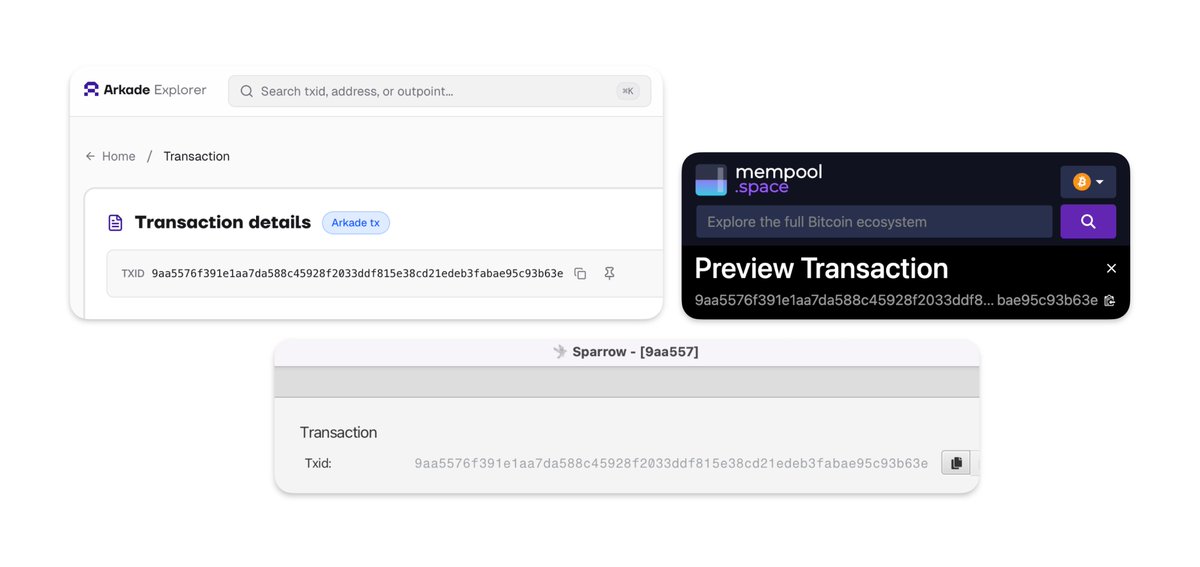
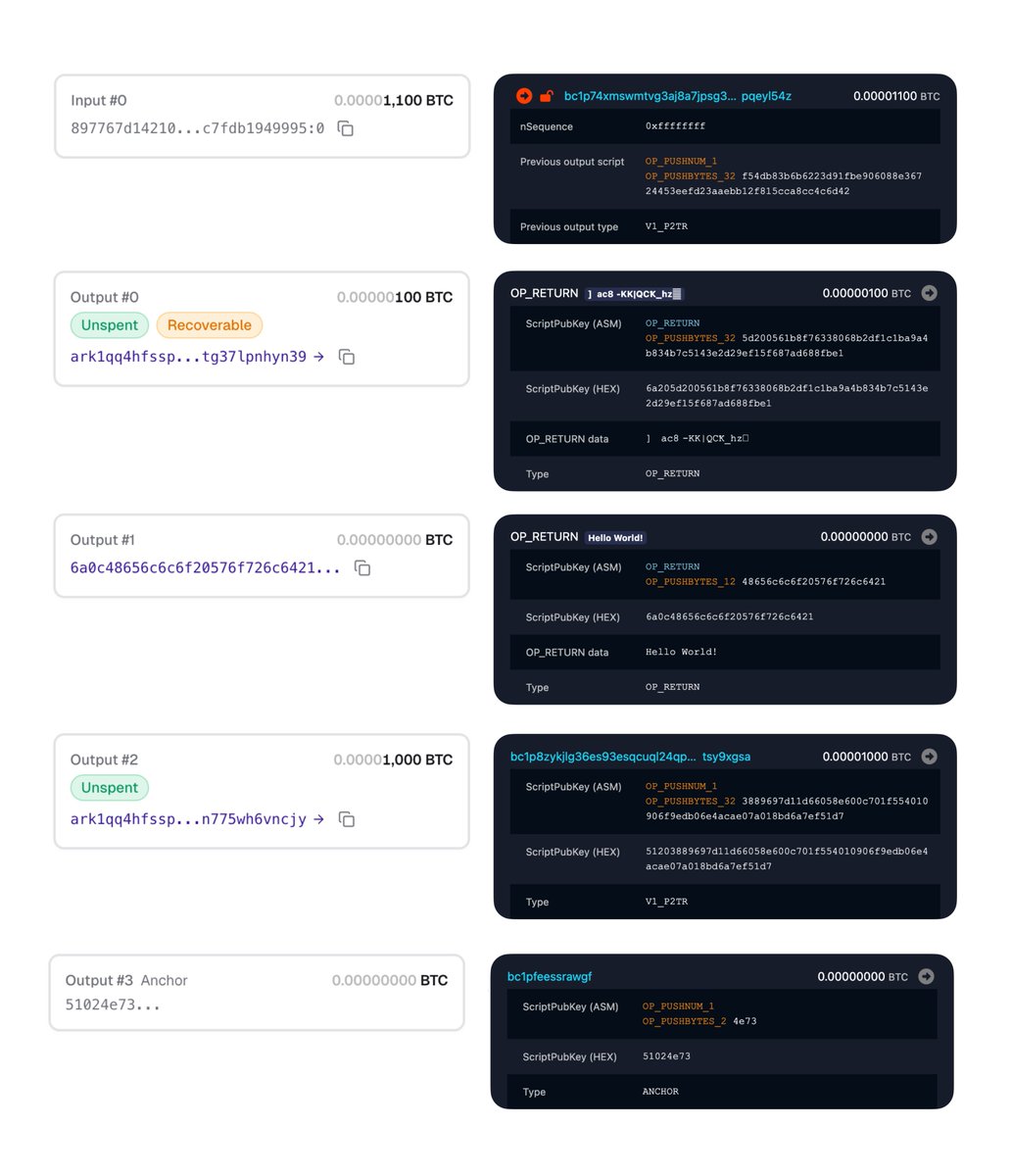
As I've mentioned before, @arkade_os is Bitcoin with extra steps
You can inspect Arkade transactions using standard Bitcoin software like @SparrowWallet and @mempool
But how is that possible when the vast majority of transactions never get published to Bitcoin mainnet?
2
16
53
6,278
Arkade retweeted

Jun 8
Every lending book in Bitcoin today operates on ad hoc architecture that ranges from completely custodial to trust-minimized according to different threshold or contract policies.
"Bitcoin DeFi" doesn't have to rely on speculation or tokenmaxing.
All we have to do is standardize this backend, make it open and interoperable using open source technology.
An open infrastructure provides better access to capital markets, regardless of where users decide to be positioned on the security stack.
1
5
26
2,386
Jun 4
There's a quiet assumption that doing more with Bitcoin means adding a new cryptographic system or routing value through a bridge.
Those paths can add expressiveness. They also expand the security surface: proof systems, wrapped assets, verifier logic, relayers, and upgrade keys.
Arkade works with Bitcoin's existing stack.
A lot of the focus on bringing "DeFi" to Bitcoin has gone into making things trustless. Making every dependency disappear is a flawed approach.
Financial operations, credit, pricing, and execution all involve trust somewhere.
The better question is: how tightly can those dependencies be bounded?
Turns out Bitcoin is specially equipped to deliver secure risk boundaries.
A UTXO is a discrete piece of state. Taproot can commit to specific spend paths. Transaction validity is deterministic.
With a healthy combination of these principles and some creativity, we can achieve most of the mechanisms required of higher order finance.
Bitcoin is already a savings and treasury asset.
The next step is making it useful across more financial relationships without dragging every contract into a larger, more opaque security model.
More expressive Bitcoin, with risk you can reason about.
4
5
22
3,158
Arkade retweeted

May 27
Next video for Wesatoshis is the big one: a Holy Grail demo an Bitcoin SPV wallet integrated with Arkade @arkade_os that executes atomic swaps to pay Lightning invoices. No mobile, desktop, or web apps needed, no App Store or Google Play approvals. Just pure SATS, seamless Bitcoin-native flow
4
9
1,315
Arkade retweeted

May 26
@arkade_os is building the bedrock of real DeFi on Bitcoin, or the closest we've seen yet IMO.
What I believe will contribute greatly to it's success is the high attention to design & ease of use. Top-notch UX from FinTech is finally coming to Bitcoin.

1
3
7
1,308
Arkade retweeted
May 26
A friend asked me what @arkade_os is today
My answer?
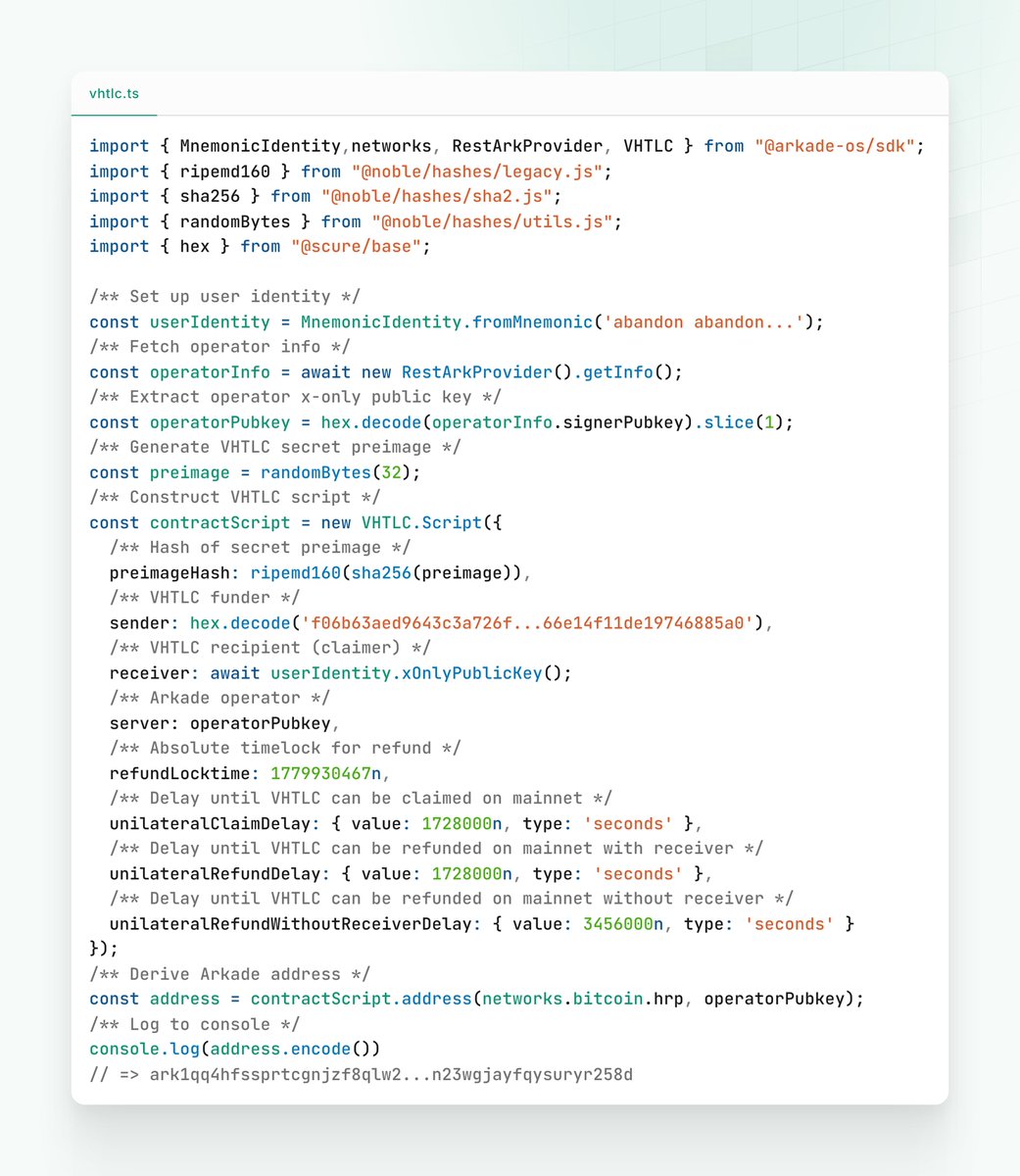
SDKs for building Bitcoin applications
Yes, Arkade has nice features like instant transactions and native assets… but the SDKs are the real value add
Never been easier to build advanced Bitcoin-native financial contracts
1
2
15
1,022
Arkade retweeted
May 21
.@arkade_os is WAY simpler than people think
Every Arkade transaction is a Bitcoin transaction
Real, standard, normal Bitcoin
Not "layer 2"
Not "attested"
Not "sequenced"
Just unbroadcasted
And you can see for yourself, via @mempool's transaction preview feature
Mar 17

Everything you can do on Bitcoin, you can do on Arkade
Arkade transactions are identical to standard Bitcoin transactions, with two key differences:
1. They're instantly pre-confirmed
2. The recipient chooses when they want to gain mainnet finality
4
11
51
8,943
May 21
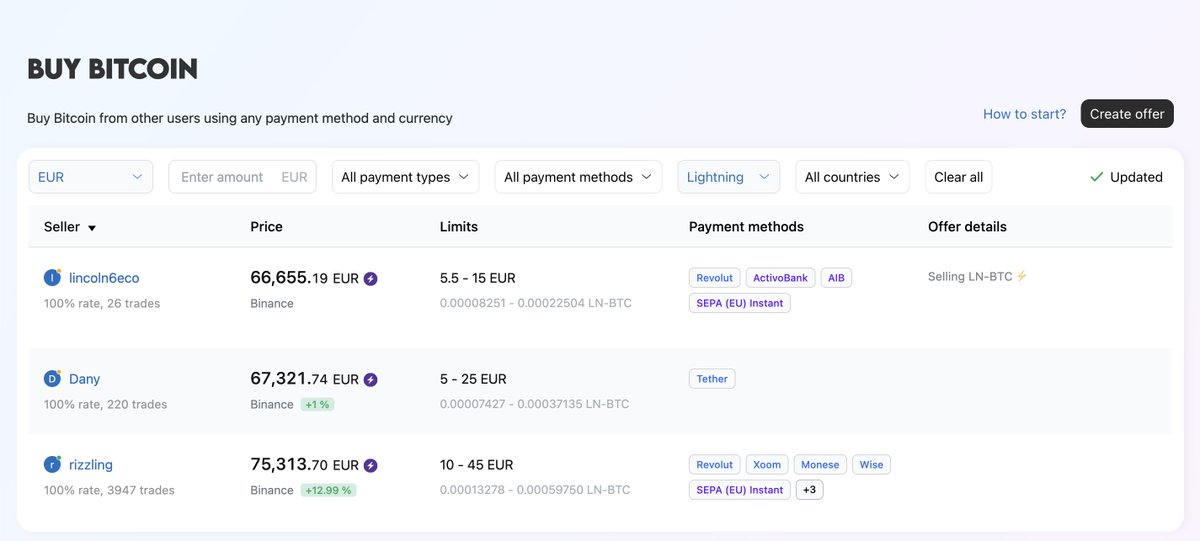
We are on a mission to bring Bitcoin to every market.
It starts with foundation use cases like P2P trading.
We could not be more excited for @hodlhodl to bring escrow back to Lightning with Arkade.
Level up.
👾

Peer-to-peer Bitcoin Lightning trades on Hodl Hodl is on 🔥
Let more offers start coming in, someone in your region is waiting to try Lightning trade. ⚡️👀
🔗 hodlhodl.com
ALT Bitcoin Lightning trade on Hodl Hodl
2
7
22
2,704
Arkade retweeted
May 21
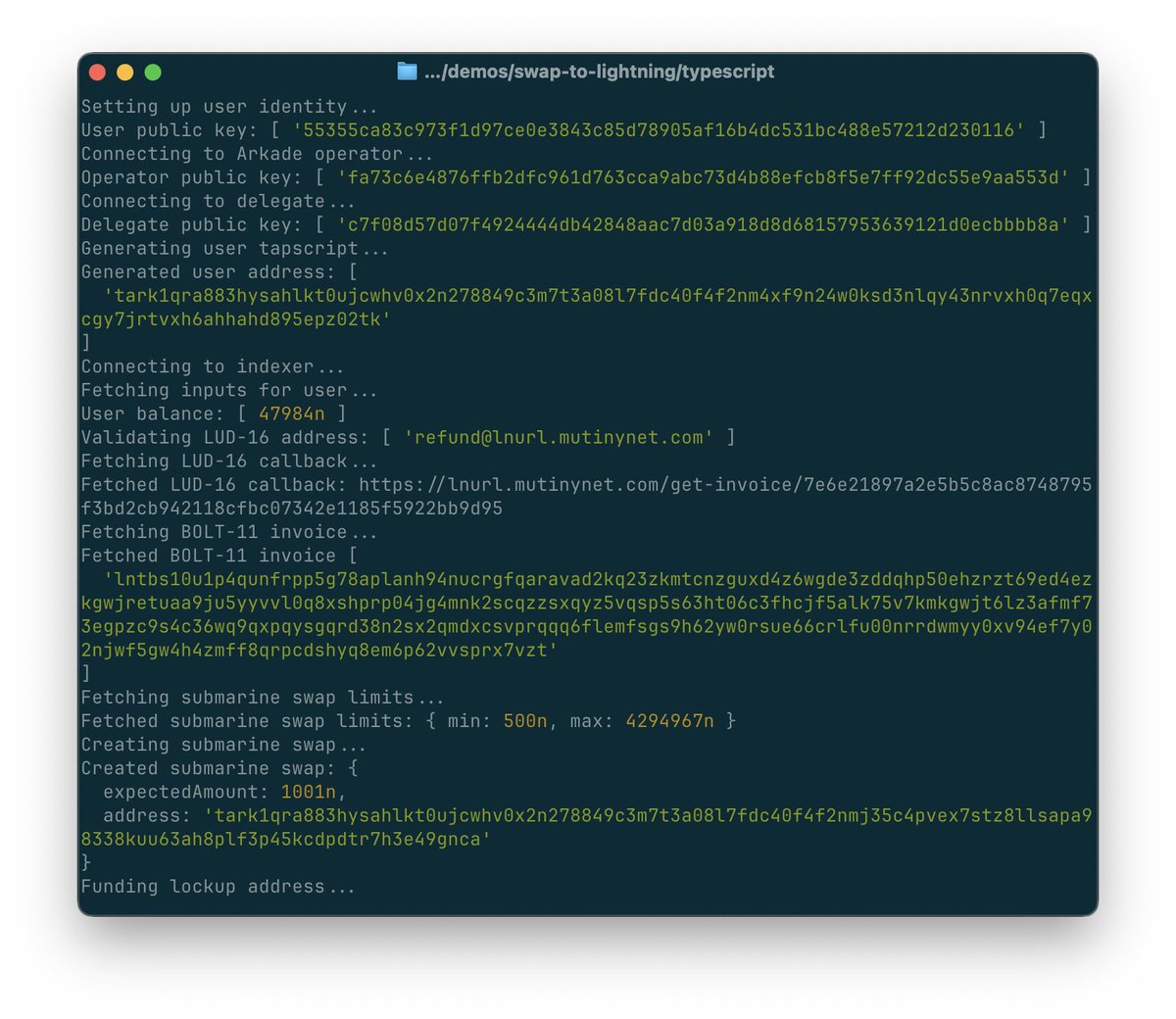
Just published two demos showcasing @arkade_os swaps powered by @Boltzhq
👉 Create claim reverse swap
👉 Create fund submarine swap
Only intended for educational purposes!
For production, use our SDKs (boltz-swap, NArk, ark-rs) which automatically save/claim/refund swaps
2
6
19
2,060
Arkade retweeted

May 20
Glad to share that non-custodial Bitcoin P2P Trading is live at @hodlhodl
2
9
28
2,456
May 21
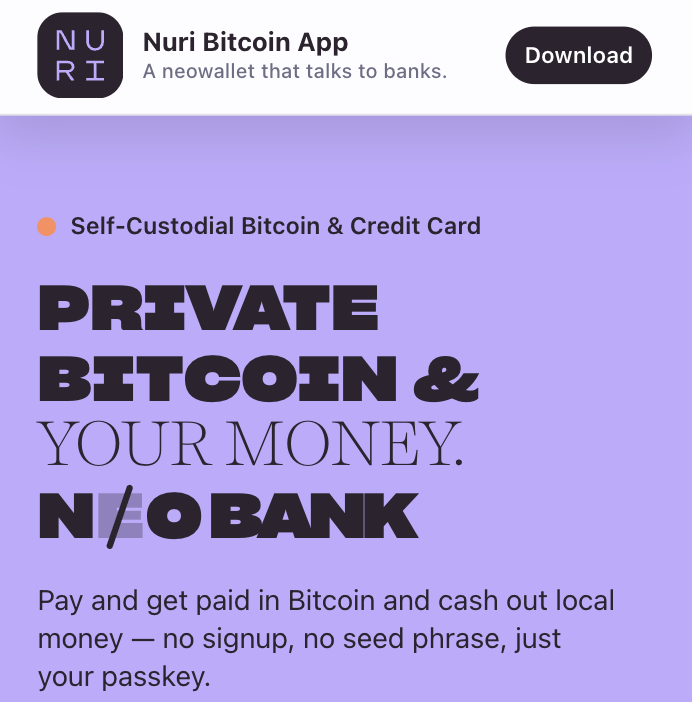
We like it 👾

4
488

⚡ THE WAIT IS OVER ⚡
We are pleased to announce that Lightning trading is now live on the Hodl Hodl Mainnet, powered by our strategic integrations with @arkade_os and @satora_io
This milestone represents a significant advancement in our mission to deliver the most efficient Bitcoin-native peer-to-peer trading experience.
Our platform now offers substantially improved transaction speeds and settlement efficiency, enabling users to execute trades with greater speed and reduced friction.
Hodl Hodl users can now benefit from the speed and scalability that Lightning technology provides while maintaining the security and transparency inherent to our platform.
This is a major leap forward for Bitcoin-native P2P trading.
NOTE: Lightning Network trading is currently in BETA. During this initial phase, trading activity is subject to transaction limits ranging from $5 USD to $50 USD (approximately 700 to 70,000 SATs)
Welcome to Lightning on Hodl Hodl. ⚡
ALT Lightning trades on Hodl Hodl
9
39
120
22,230
Arkade retweeted

May 17
There are two futures for self-custodial wallets, and last week’s ThorChain exploit made the choice between them clearer.
The first is the one we live in today, where wallets aim to support every chain. Supporting 50 chains makes MPC-style signing the only practical option, as there’s no per-chain contract deployment or gas—just key shares passed between participants. This convenience creates the attack surface. ThorChain lost $10.8M last week to a GG20 leak that Verichains had documented as a vulnerability class in 2022. It’s a structural property of the design, not a fixable bug.
The second is a single settlement chain with atomic bridges, where Bitcoin retains value because its signing model doesn’t share key material between participants and leaves nothing for attackers to extract. Atomic swaps and intent solvers handle EVM execution and last-mile payments, while @arkade_os builds the programmable layer that enables this with native Bitcoin transactions.
This is the future I’m excited about.
It benefits wallet providers by collapsing the review surface from N chains to one signing model. It is bullish for borrowers and lenders because wrapped Bitcoin is already the most-used collateral in markets like Morpho, proving demand to borrow against BTC exists. The gap is lender infrastructure that can extend credit against native Bitcoin directly, without wrapping or bridges.
End users don’t pick UTXO or EVM. They want a dollar account they can tap, open financial services, and the option to rotate savings into BTC.

thorchain gg20/tss attack path
i reproduced the suspected gg20 leakage mechanics against the tss-lib version they used. it accepts malformed paillier material, exposes a type 5 / type 7 oracle shape, and the go-tss wrapper misses some important checks.
banteg.xyz/posts/thorchain-t…
3
7
31
4,181
Arkade retweeted
May 14
Arkade integrates into existing Bitcoin workflows seamlessly.
The possibilities are endless. Think of any escrow capacity a company might enforce to manage operations and treasuries.
Every multisig set can benefit from a smart Arkade cosigner enforcing additional logic.
⚡ Lightning Trade on Hodl Hodl is more than just faster Bitcoin trading.
Behind it is a powerful technology that helps make the experience smooth, efficient, and still true to our non-custodial roots.
So how does it actually work?
And what role does @arkade_os and @satora_io play in all of this?
We’ve broken it all down in our latest blog post.
📖 Read here: hodlhodl.com/blog/en/arkade-…
ALT Arkade protocol explained
3
7
34
3,149
⚡ Lightning Trade on Hodl Hodl is more than just faster Bitcoin trading.
Behind it is a powerful technology that helps make the experience smooth, efficient, and still true to our non-custodial roots.
So how does it actually work?
And what role does @arkade_os and @satora_io play in all of this?
We’ve broken it all down in our latest blog post.
📖 Read here: hodlhodl.com/blog/en/arkade-…
ALT Arkade protocol explained
3
11
32
8,135
Arkade retweeted

May 11
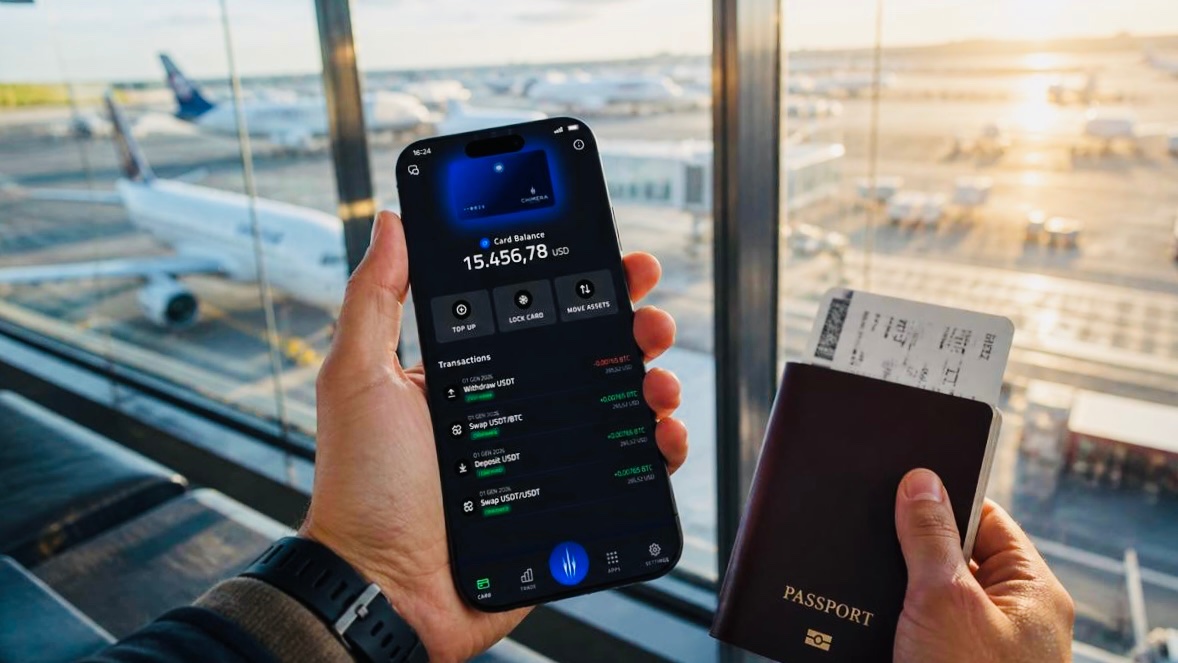
💰 Wallets today are solid, but they were built for a different setup. While Chimera Wallet is created for BTC for our current reality.
🔹 Non-custodial by design
🔹 PWA (no App Store dependency)
🔹 Bitcoin on Arkade
🔹 Verify only when you need it
Save this. You’ll need it when choosing a wallet: go.chimerawallet.com/1105x
6
6
20
1,667
📣 Special Annoucement ⚡️
⚡Lightning Trade has officially landed on Hodl Hodl Testnet ⚡
Powered through our integration with @arkade_os and @satora_io, this is our take on making Bitcoin trading feel faster, smoother, and just easier to use.
We’d love everyone to get in early, try it out, explore the flows, and tell us what feels good (and what doesn’t) 👀
Your feedback will help shape the final experience.
Getting started is simple 🧪👇
ALT Lightning trades on Hodl Hodl
21
37
108
29,324
Arkade retweeted
Apr 30
We’ve just been featured on @blockonomi
The article covers Chimera Wallet and explores the security model, user control over private keys, and why PWA wallets could become a major direction for crypto UX in 2026.
Read the full piece here: blockonomi.com/chimera-walle…
7
5
20
1,059