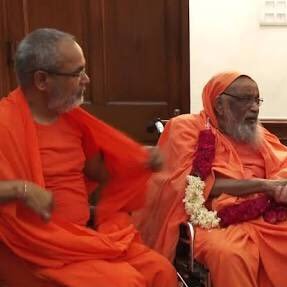
An official tweeter handle of Arsha Vidya Mandir, Rajkot founded by Swami Parmatmananda Saraswati , Senior disciple of Swami Dayananda Sarswati
Joined August 2019
- Tweets 1,390
- Following 1
- Followers 303
- Likes 403
Photos and videos
Arsha Vidya Mandir retweeted

सेवा ह्रदय का उदार भाव है।ऐसा वर्णन है कि सेवक में (१) संपूर्ण समर्पण (२)विश्वास(३)शुचिता(४)गौरव(५)संयम(६)शुश्रुषा (७) प्रेम -ये सात गुण होने चाहिए…आदरणीय श्री #नरेन्द्रभाई अपने जीवन और कर्म से ‘सेवक’ शब्द की गरिमा को चरितार्थ करते है।स्वच्छ भारत अभियान,जनधन योजना,डिजीटल इंडिया,उजावला योजना,आयुष्मान भारत,मेक इन इंडिया,आयुष्मान भारत,infrastructure विकास,ईत्यादि योजनाओं द्वारा भारतमाता को गौरवान्वित किया है।आपकी निष्ठा एवम् सेवा भावना अति सराहनीय है।आपको भारतमाता की अत्याधिक सेवा का मौक़ा मिले एवम् भारतमाता को विश्वगुरु पद पे प्रतिष्ठित करने में आप निमित्त बने-शुभकामनाएँ .@narendramodi @AmitShah @BJP4India @AcharyaSabha @AvdheshanandG @SureshChavhanke @davidfrawleyved @Sadgurudev_Goa @GitaManishi @alok_bhatt @MSwamiSGVP @anirbanganguly #12YearsOfModiGovernment #LongestServingPrimeMinister #एकभारत_श्रेष्ठभारत
1
9
17
1,769
Modiji holds the record as longest-serving continuously elected PM. Having first assumed office on26/5/14, he officially surpassed the continuous uninterrupted tenure of the country's first PM record of uninterrupted consecutive days in office elected through general elections
4
Arsha Vidya Mandir retweeted
Bhagavad Gītā Series: CH: 05 – Śhloka – 18 Contd..
*Paṇḍitaḥ as the One Established in Wisdom*
Paṇḍitaḥ (wise one) in Bhagavad Gītā verse 5.18 is not merely a learned person or one skilled in words. He is one whose vision has been refined by #Vidyā (true knowledge) and softened by #Vinaya (humility), and so he is Vidyā-Vinaya-Sampannaḥ (endowed with knowledge and #humility). His charecter reflects #Jñāna (#knowledge),#Bhakti (#devotion),, #Saṁyama (self-#restraint), Tyāga (#inner #renunciation), and #Tapas (austerity). These virtues are not ornaments added from outside. They express the maturity of an inwardly cleansed mind. Such a person sees life with #maturity, reverence, and depth. He does not remain trapped in outer distinctions alone, because his deeper understanding has turned toward the one-non dual #Brahman (limitless reality) present in all beings. Paṇḍitaḥ is one in whom wisdom has become #character, #humility has become #nature, and vision has become equal through #awareness about truth.
*ज्ञान में स्थित पण्डित&
भगवद्गीता के पाँचवें अध्याय के अठारहवें श्लोक में #पण्डित केवल #विद्वान व्यक्ति या शब्दों में कुशल व्यक्ति नहीं है। वह ऐसा व्यक्ति है जिसकी दृष्टि #विद्या, अर्थात् सत्य ज्ञान, से परिष्कृत हुई है और विनय, अर्थात् नम्रता, से भरी हुई है। इसलिए वह विद्या-विनय-सम्पन्न है, अर्थात् ज्ञान और नम्रता से युक्त है। उसमें ज्ञान, अर्थात् #सत्य की पहचान; #भक्ति, अर्थात् श्रद्धापूर्ण समर्पण; संयम, अर्थात् आत्म-नियन्त्रण; #त्याग, अर्थात् आन्तरिक अनासक्ति; और #तप, अर्थात् अनुशासित साधना, प्रधान होते हैं। ये बाहर से जोड़े गए आभूषण नहीं हैं। ये भीतर से शुद्ध हुए मन की #परिपक्वता को प्रकट करते हैं। ऐसा व्यक्ति जीवन को स्थिरता, श्रद्धा और गहराई से देखता है। वह केवल बाहरी भेदों में फँसा नहीं रहता, क्योंकि उसकी समझ सभी प्राणियों में स्थित एक #ब्रह्म, अर्थात् असीम सत्य, की ओर मुड़ चुकी है। पण्डित वह है जिसमें ज्ञान चरित्र बन गया है, नम्रता स्वभाव बन गई है, और सत्य की निकटता से दृष्टि समान हो गई है।यह ज्ञान गुरुमुख से किये हुए श्रवण-मनन-निदिध्यासन से स्थिर होता है।
@AcharyaSabha @AvdheshanandG @alok_bhatt @SureshChavhanke @ShriAdiShankara @EkatmaDham @Kailashkher @MSwamiSGVP @DivineLife @DharmicBharat @Theholisticpsyc @davidfrawleyved @Jaisrigurudev @DrChinmayP @ArshaVidhya @krishnasmessage @GitaManishi @ShefVaidya @anirbangaguly @Bhagawad_Gita #कर्मयोग #साधना
#श्रवण #मनन #निदिध्यासन #अहंकार #आत्मज्ञान #भगवद्गीता #वेदांत #मोक्ष #श्रोत्रियगुरु #ब्रह्मनिष्ठगुरु #अद्वैत
2
10
15
1,110
Arsha Vidya Mandir retweeted
*Bhagavad Gītā Series: CH: 05 – Śhloka – 15 Contd..*
*Vibhu (limitless reality): That which is not limited by place, time or objectivity.
Vibhu means limitless-not confined to one location,or one form(body etc)or not conditioned by time . When Bhagavad Gītā say Ātmā (Self) or Īśhvara (the Lord as cosmic order), is “Vibhu” the point is that the reality in question is not a small entity sitting somewhere and acting like an individual person. Vibhu is present everywhere,at all times,and in all beings-yet untouched by the particular actions, Puṇya or Papa, Just as space is present everywhere without becoming stained by what occurs within it.
This is why the Lord is called Vibhu in Bhagavad Gītā verse 5.15. He is revealed as not to take anyone’s pāpa or sukṛita.
The word negates-what is generally thought about the Divine as—limited, partial, or personally involved in the way a jīva (individual being) is entangled. So Vibhu points to that limitless, all-pervading presence which illumines all, accommodates all, and remains free from all limitation.
* विभु (अनंत सत्य): जो देश, काल और वस्तुत्व की सीमाओं से परे है।
“विभु” का अर्थ है — असीम, अर्थात् जो किसी एक स्थान, किसी एक रूप (जैसे शरीर आदि) या समय की सीमा में बँधा हुआ नहीं है। जब #भगवद्गीता में #आत्मा (स्वरूप) अथवा #ईश्वर (सृष्टि-व्यवस्था रूप में परम सत्ता) को “विभु” कहा जाता है, तब उसका तात्पर्य यह है कि वह कोई छोटा-सा अस्तित्व नहीं है जो कहीं बैठकर किसी व्यक्ति की तरह कार्य कर रहा हो।
विभु सर्वत्र, सर्वकाल में और सभी प्राणियों में विद्यमान है — फिर भी वह किसी विशेष कर्म, पुण्य या पाप से स्पर्शित/लेपित नहीं होता। जैसे आकाश सब जगह उपस्थित रहता है, किन्तु उसके भीतर घटने वाली घटनाओं से मलिन नहीं होता, उसी प्रकार विभु भी सबमें व्याप्त होकर भी निर्लिप्त रहता है।
इसी कारण भगवद्गीता के अध्याय 5, श्लोक 15 में भगवान को “विभु” कहा गया है। वहाँ यह प्रकट किया गया है कि वे किसी के पाप या सुकृत (पुण्य) को ग्रहण नहीं करते।
यह शब्द उस सामान्य धारणा का निषेध करता है जिसमें दिव्य सत्ता को सीमित, पक्षपाती, या जीव की भाँति व्यक्तिगत उलझनों में संलग्न माना जाता है। अतः “विभु” उस असीम, सर्वव्यापी सत्ता की ओर संकेत करता है जो सबको प्रकाशित करती है, सबको धारण करती है, और स्वयं सभी सीमाओं से सदा मुक्त रहती है।
@AcharyaSabha @AvdheshanandG @alok_bhatt @SureshChavhanke @ShriAdiShankara @EkatmaDham @Kailashkher @MSwamiSGVP @DivineLife @DharmicBharat @Theholisticpsyc @davidfrawleyved @Jaisrigurudev @DrChinmayP @ArshaVidhya @krishnasmessage @GitaManishi @ShefVaidya @anirbangaguly @Bhagawad_Gita #कर्मयोग #साधना
#अहंकार #आत्मज्ञान #भगवद्गीता #वेदांत #मोक्ष #श्रोत्रियगुरु #ब्रह्मनिष्ठगुरु #अद्वैत #विभु #अनंत #असंग
2
4
11
174
Arsha Vidya Mandir retweeted
Bhagavad Gītā Series: CH: 05 – Śhloka – 13 Contd..
*Who Is Vaśhī?*
Vaśhī (self-mastered one) in Vedānta refers to a person whose inner instrument is under the guidance of #Viveka (discrimination), not under the pressure of impulse, habit, or emotional reaction. Such a person is not #mechanically driven by every movement of #Manas (mind), #Indriya (sense faculties), or old conditioning. When you add that all Karma (action) are in one’s command, and that not even a single Cheshtā (effortful movement) happens without #Viveka (discernment), the meaning becomes very beautiful. Vaśhī (self-mastered one) is one in whom action is no longer scattered, compulsive, or blindly reactive. There is inward governance. There is restraint. There is appropriateness. Action arises where it should arise, and he remains quiet where it should remain quiet. This is not stiff control. It’s effortless mastery over senses like a turtle withdrawing itself. It is maturity of the inner life, where #Buddhi (intellect) is clear enough to guide the person, and the person no longer lives as a servant of pressurising urges.#Vedanta #Sanyas #Mastery_Mind
*वशी कौन है?*
वशी उस पुरुष को कहते हैं जिसका अन्तःकरण विवेक के मार्गदर्शन में है, न कि आवेग, आदत, या भावनात्मक प्रतिक्रिया के दबाव में। ऐसा पुरुष मन, इन्द्रियों, या पुराने संस्कारों की प्रत्येक गति से यांत्रिक रूप से नहीं चलाया जाता। जब यह भी कहा जाता है कि कार्य और कर्म उसके वश में हैं, और विवेक के बिना एक भी चेष्टा नहीं होती, तब इसका अर्थ बहुत सुन्दर हो जाता है। वशी वह है जिसमें कर्म अब बिखरा हुआ, बाध्यकारी, या अन्धी प्रतिक्रिया से उत्पन्न नहीं होता। उसमें आन्तरिक शासन है। उसमें संयम है। उसमें यथोचितता है। जहाँ कर्म उठना चाहिए वहाँ उठता है, और जहाँ शांत रहना चाहिए वहाँ शांत रहता है।यह कोई कठोर नियन्त्रण नहीं है। यह इंद्रियों पर सहज नियंत्रण है, जैसे कछुआ अपने अंगों को भीतर समेट लेता है। यह आन्तरिक जीवन की परिपक्वता है, जहाँ बुद्धि इतनी स्पष्ट हो चुकी होती है कि वह मनुष्य का मार्गदर्शन कर सके, और मनुष्य अब क्षणिक आवेगों का दास बनकर नहीं जीता।
@AcharyaSabha @AvdheshanandG @alok_bhatt @SureshChavhanke @ShriAdiShankara @EkatmaDham @Kailashkher @MSwamiSGVP @DivineLife @DharmicBharat @Theholisticpsyc @davidfrawleyved @Jaisrigurudev @DrChinmayP @ArshaVidhya @krishnasmessage @GitaManishi @ShefVaidya @anirbangaguly @Bhagawad_Gita #कर्मयोग #साधना
#संन्यास #विविदिषा_संन्यास #विद्वत्संन्यास #अहंकार #आत्मज्ञान #भगवद्गीता #वेदांत #मोक्ष #श्रोत्रियगुरु #ब्रह्मनिष्ठगुरु #अद्वैत #आत्मज्ञान
1
6
20
2,059
Arsha Vidya Mandir retweeted
An #impulsive person lives #instinctively.Present thought, emotion/reaction are quickly taken as the whole truth of the moment. Instinctive living can appear lively and immediate,though it is often more vulnerable to inappropriate response and inner swings.Instinctive living is often governed by (heavy) #unconscious.They often have connive bias.
Where as a spontaneous person lives with an inner space/wisdom born out of self disciplined life for a length of time. The spontaneous person has more inner space in the face of pleasure, pain, praise, blame, success, or frustration.His response thereby,becomes more thoughtful,appropriate and Dhārmic (aligned with dharma).
The spontaneity is totally different from impulsiveness.The spontaneous person has ease of a mind that has become clear and disciplined enough to act without confusion.Such mind is light enough to move without false burden of unconscious. #InnerSpace #Spontanity #Instinct
एक आवेगपूर्ण व्यक्ति स्वाभाविक प्रवृत्तियों के आधार पर जीता है। वर्तमान विचार, भावना या प्रतिक्रिया को वह तुरंत ही उस क्षण की पूरी सच्चाई मान लेता है। ऐसा जीवन जीवंत और तात्कालिक प्रतीत हो सकता है, लेकिन यह अक्सर अनुचित प्रतिक्रियाओं और आंतरिक उतार-चढ़ाव के प्रति अधिक संवेदनशील होता है। आवेगपूर्ण जीवन प्रायः (गहरे) अचेतन मन द्वारा संचालित होता है।
इसके विपरीत, एक स्वस्फूर्त (स्पॉन्टेनियस) व्यक्ति लंबे समय तक आत्म-अनुशासन से उत्पन्न आंतरिक विकास और प्रज्ञा के साथ जीता है। सुख, दुःख, प्रशंसा, निंदा, सफलता या निराशा के सामने भी उसके भीतर अधिक स्वस्थता/अवकाश होता है। इसलिए उसकी प्रतिक्रिया अधिक विचारपूर्ण, उपयुक्त और धार्मिक (धर्म के अनुरूप) होती है।
स्वस्फूर्तता, आवेगशीलता से पूरी तरह भिन्न है। स्वस्फूर्त व्यक्ति के पास ऐसा सहज मन होता है जो पर्याप्त रूप से स्पष्ट और अनुशासित हो चुका होता है, जिससे वह बिना भ्रम के कार्य कर सकता है। ऐसा मन इतना हल्का होता है कि वह अवचेतन के झूठे बोझ के बिना सहजता से आगे बढ़ सके।
@AcharyaSabha @AvdheshanandG @alok_bhatt @SureshChavhanke @ShriAdiShankara @EkatmaDham @Kailashkher @MSwamiSGVP @DivineLife @DharmicBharat @Theholisticpsyc @davidfrawleyved @Jaisrigurudev @DrChinmayP @ArshaVidhya @krishnasmessage @GitaManishi @ShefVaidya @anirbangaguly @Bhagawad_Gita #कर्मयोग #साधना
#अहंकार #आत्मज्ञान #भगवद्गीता #वेदांत #मोक्ष #आत्मज्ञान #सहजता #आवेगशीलता
2
6
15
1,047
Arsha Vidya Mandir retweeted
In Vedānta, #Muniḥ (the contemplative one,committed steady reflection) does not merely mean a silent person, a withdrawn ascetic, or someone who speaks very little,interaction with the world is minimum..
The word points to one whose mind has become deeply reflective, emotionally mature, and steadily focused toward truth. A Muniḥ is one who lives with Manana (reflection), not only with information. Such a person does not merely collect teachings. He stays with them, assimilates them, and reshape vision.
In this sense, Muniḥ is one whose mind has become contemplative in a sacred way, not restless, scattered, or driven by every passing impulse. From a deeper Vedāntic standpoint, to remain in the awareness of Īśhvara (the Lord as the intelligent order) in all situations is also Muniḥ. This means whether one is acting, speaking, serving, waiting, succeeding, or facing difficulty, the inner connection with Īśhvara (the Lord) is not easily dropped. Such awareness gives steadiness to the mind, humility to action, and sacredness to ordinary living. A Muniḥ is therefore not defined only by outer quietness, but by inward remembrance, discernment, and settled alertness.
He may act in the world, though he is not inwardly lost in it. He may speak, though speech rises from reflection. He may face changing situations, though his mind remains anchored in something deeper than circumstance.
That is why it’s important for a seeker to be Muni. It is the state where the mind is no longer merely reacting to life, but is living in thoughtful awareness of Ātmā (Self), Dharma (right order), and Īśhvara (the Lord) with increasing steadiness.#Vedanta #Muni #ascetic #Manan #Emotional_Maturity #reflection #Atma
वेदान्त में मुनिः (अर्थात् चिंतनशील, मनन में स्थित साधक) का अर्थ केवल एक मौन रहने वाला व्यक्ति, संसार से अलग रहने वाला संन्यासी, या बहुत कम बोलने वाला नहीं होता—जो दुनिया से न्यूनतम संपर्क रखता हो, ऐसा भर नहीं है।
यह शब्द उस व्यक्ति की ओर संकेत करता है जिसका मन गहराई से विचारशील, #भावनात्मक रूप से #परिपक्व, और सत्य की ओर स्थिर रूप से उन्मुख हो गया हो। मुनिः वह है जो केवल जानकारी (information) के साथ नहीं, बल्कि मनन (गहन चिंतन) के साथ जीता है। ऐसा व्यक्ति केवल शिक्षाओं को एकत्र नहीं करता, बल्कि उन पर ठहरता है, उन्हें आत्मसात करता है, और अपने दृष्टिकोण को उनके अनुसार परिवर्तित करता है।
इस दृष्टि से मुनिः वह है जिसका मन पवित्र रूप से चिंतनशील बन गया है—न कि चंचल, बिखरा हुआ, या हर क्षणिक आवेग से संचालित। वेदान्त के गहरे दृष्टिकोण से, हर परिस्थिति में ईश्वर (सर्वज्ञ नियम-रूप में) की स्मृति में स्थित रहना भी मुनिः का ही लक्षण है। इसका अर्थ है कि चाहे व्यक्ति कर्म कर रहा हो, बोल रहा हो, सेवा कर रहा हो, प्रतीक्षा कर रहा हो, सफलता पा रहा हो या कठिनाइयों का सामना कर रहा हो—उसका ईश्वर से आंतरिक संबंध सहज रूप से टूटता नहीं है।
ऐसी सजगता मन को स्थिरता देती है, कर्म में विनम्रता लाती है, और सामान्य जीवन को भी पवित्रता प्रदान करती है। इसलिए मुनिः केवल बाहरी मौन से परिभाषित नहीं होता, बल्कि आंतरिक स्मरण, विवेक, और स्थिर सजगता से पहचाना जाता है।
वह संसार में कार्य कर सकता है, पर भीतर से उसमें खोया हुआ नहीं होता। वह बोल सकता है, पर उसकी वाणी चिंतन से उत्पन्न होती है। वह बदलती परिस्थितियों का सामना कर सकता है, पर उसका मन किसी गहरी, स्थायी सत्य में स्थापित रहता है।
इसीलिए साधक के लिए मुनि बनना महत्वपूर्ण है। यह वह अवस्था है जहाँ मन केवल जीवन पर प्रतिक्रिया नहीं करता, बल्कि आत्मा, धर्म, और ईश्वर की सजग स्मृति में, बढ़ती हुई स्थिरता के साथ जीने लगता है।
@AcharyaSabha @AvdheshanandG @alok_bhatt @SureshChavhanke @ShriAdiShankara @EkatmaDham @Kailashkher @UdayMahurkar @MSwamiSGVP @DivineLife @DharmicBharat @Theholisticpsyc @davidfrawleyved @Jaisrigurudev @DrChinmayP @ArshaVidhya @krishnasmessage @GitaManishi @ShefVaidya @ssivaram_21 @anirbangaguly @Bhagawad_Gita @Kailashkher #मुनि #वेदांत
#श्रवण #मनन #निदिध्यासन #आत्मज्ञान #भगवद्गीता #वेदांत #मोक्ष #अद्वैत #आत्मज्ञान #मौन #स्थिरता #विनम्रता #पवित्रता
4
15
54
7,397
Arsha Vidya Mandir retweeted
ज्ञेयः स नित्यसंन्यासी यो न द्वेष्टि न काङ्क्षति । निर्द्वन्द्वो हि महाबाहो सुखं बन्धात्प्रमुच्यते ॥ #भगवद्गीता ||५.३ ॥
#ŚhrīKṛiṣhṇa brings out a very subtle and practical truth about #Sanyasa.In #BhagavadGītā Chap-5 #3.He says-Nitya Sannyāsī (constant renunciate) is the one who neither hates nor desires. This means the real mark of renunciation is freedom from Dveṣha (aversion) and freedom from Ākāṅkṣhā/Raga(craving). A person may still be engaged in Karma (action), and yet inwardly live as a #renunciate when the mind is no longer constantly pulled toward Raga(craving) or disturbed by Dwesha (aversion) and their cause(#प्रकृति). It shows that such a #KarmaYogī (one established in the Yoga of attitude in action) should be understood as always a Sannyāsī(renunciate).
Because bondage is carried mainly through these inner opposites. When Rāga-Dveṣha (attachment and aversion) begin to fall silent, the person becomes light within and moves toward freedom with less struggle.
This verse gives deep insight.Because it tells the seeker that renunciation need not wait for a change of outer life. It begins where the heart becomes less reactive, less demanding, and more available. One gains “inner space” for Vivek/Vairagya and thereby Self Knowledge…!!!
#श्रीकृष्ण भगवद्गीता के अध्याय ५ के श्लोक ३ में संन्यास के विषय में एक अत्यन्त सूक्ष्म और व्यावहारिक सत्य प्रकट करते हैं। वे कहते हैं— #नित्यसंन्यासी वह है जो ‘न किसी से द्वेष करता है और न किसी वस्तु की आकांक्षा करता है’। इसका अर्थ है कि वास्तविक संन्यास का चिह्न द्वेष से स्वतंत्रता और आकांक्षा/राग से स्वतंत्रता है।
कोई व्यक्ति कर्म में लगा हुआ रहते हुए भी भीतर से संन्यासी के समान जी सकता है, यदि उसका मन निरन्तर राग (लालसा) की ओर खिंचता न रहे और न ही द्वेष तथा उसके कारणों (प्रकृति)से विचलित हो। इससे स्पष्ट होता है कि ऐसा कर्मयोगी— जो कर्म में योग-बुद्धि से स्थित है— वास्तव में सदा संन्यासी ही समझा जाना चाहिए, क्योंकि बन्धन मुख्यतः इन्हीं भीतरी द्वन्द्वों के द्वारा बना रहता है।
जब राग-द्वेष (आसक्ति और द्वेष) शान्त होने लगते हैं, तब मनुष्य भीतर से हल्का हो जाता है और कम संघर्ष के साथ स्वतंत्रता/मोक्ष की ओर बढ़ता है।
यह श्लोक साधक को बहुत सान्त्वना देता है, क्योंकि यह बताता है कि संन्यास के लिए बाहरी जीवन में परिवर्तन की प्रतीक्षा आवश्यक नहीं है। संन्यास वहीं से आरम्भ हो जाता है जहाँ हृदय कम प्रतिक्रियाशील, कम अपेक्षाशील और अधिक उपलब्ध हो जाता है।
तब मनुष्य के भीतर विवेक और वैराग्य के लिए अवकाश बनता है, और उसी के द्वारा,गुरुप्राप्ति से आत्मज्ञान होता है।
@AcharyaSabha @AvdheshanandG @alok_bhatt @SureshChavhanke @ShriAdiShankara @EkatmaDham @Kailashkher @UdayMahurkar @MSwamiSGVP @DivineLife @DharmicBharat @Theholisticpsyc @davidfrawleyved @Jaisrigurudev @DrChinmayP @ArshaVidhya @krishnasmessage @GitaManishi @GitaPress @ShefVaidya @ssivaram_21 @VyasKamaleshji
@KishoreAsthana @anirbangaguly @mahurkar
1
13
25
2,661
Arsha Vidya Mandir retweeted
#Kartṛitva (#doership) means the sense centred on I - “I am doer.” It is the inner claim/sense that I initiate, control, and carry out #Karm (action). It sits behind choices, effort, and responsibility, and it often becomes tied to identity and pride.
#Bhoktṛitva (enjoyership) is a sense centred on I-“I am the one who experiences and enjoys.” It is the inner claim that I receive results, taste pleasure, suffer pain, and own the outcome of events. It sits behind expectation, disappointment, and the need for self satisfaction.
#Kartṛitva (in jņ ) and #bhoktṛitva (enjoyership) move together. When I take myself as the doer,I am also the receiver/enjoyer.When results do not match, the mind strains.
It’s ignorance caused identification with Body Mind complex,self ignorance(#अविद्या) that gives birth to these #कर्ता #भोक्ता. When I see these as roles arising in the body mind #upādhi (conditioning), their grip reduces, and life becomes simpler inside-one becomes free.
#कर्तृत्व (#doership) का अर्थ है ‘मैं’ केन्द्रित यह भाव — “मैं कर्ता ही हूँ।” यह वह आंतरिक दावा/भाव है कि मैं ही कर्म (कार्य) को आरम्भ करता हूँ, उसे नियंत्रित करता हूँ और उसे पूरा करता हूँ। यह हमारे चुनाव, प्रयास और जिम्मेदारी के पीछे रहता है, और अक्सर हमारी पहचान तथा अहंकार से जुड़ जाता है।
#भोक्तृत्व (#enjoyership) ‘मैं’ केन्द्रित यह भाव है — “मैं अनुभव करने वाला और भोगने वाला ही हूँ।” यह वह आंतरिक दावा है कि मैं ही फल प्राप्त करता हूँ, सुख का अनुभव करता हूँ, दुःख सहता हूँ और घटनाओं के परिणामों को अपना मानता हूँ। यह अपेक्षा, निराशा और आत्म-संतोष की आवश्यकता के पीछे कार्य करता है।
#कर्तृत्व और #भोक्तृत्व (enjoyership) (ज्ञान के अभाव में) साथ-साथ चलते हैं। जब मैं स्वयं को कर्ता मानता हूँ, तब मैं स्वयं को भोक्ता/फल-प्राप्त करने वाला भी मानता हूँ। जब परिणाम अपेक्षा के अनुसार नहीं होते, तब मन में तनाव उत्पन्न होता है।
यह शरीर-मन के साथ तादात्म्य-आत्म-अज्ञान (#अविद्या) ही है, जो इन #कर्ता और #भोक्ता भावों को जन्म देता है। जब मैं इन्हें शरीर-मन रूपी #उपाधि (conditioning) में उत्पन्न होने वाली भूमिकाओं के रूप में देखता हूँ, तब इनकी पकड़ ढीली हो जाती है, और भीतर से जीवन सरल हो जाता है — व्यक्ति स्वतंत्र हो जाता है।मुक्त हो जाता है।
@AcharyaSabha @AvdheshanandG @alok_bhatt @SureshChavhanke @ShriAdiShankara @EkatmaDham @Kailashkher @UdayMahurkar @MSwamiSGVP @DivineLife @DharmicBharat @Theholisticpsyc @davidfrawleyved @Jaisrigurudev @DrChinmayP @ArshaVidhya #अहंकार #संसार #अविद्या
1
8
16
1,476
Arsha Vidya Mandir retweeted
The word
*"Upaniṣad"* etimogically means Knowledge.The body of words,a book is also called Upanishad in secondary sense.
The verb Ṣad*has three meanings. “destroying” (नाशनम्) “loosening” (शिथिलिकरणम्)& going/reaching (गमनम्)
The prefix *Upa(उप्) means near and prefix नि means near.
The word Upanishad(उपनिषद्) if formed, adding these two prefixes and suffixes as per rules of grammar.
Thus उपनिषद् means the Knowledge which loosens grip of Samsar(cycle of Birth and date),removes ignorance(knowledge becomes free from doubt & errors),& takes one to Brahman-(leads seeker to discover Self as Brahman).
When one listens Upanishad,with proper attitude(Shraddha etc)from a Competent teacher(श्रोत्रिय एवम् ब्रह्मनिष्ठ गुरु) one gains Pramā (knowledge free from doubts and errors) one gains मुक्तिः। One discovers Self to be Limitless (पूर्णः) that settles the issue of bondage..
“उपनिषद्” शब्द का व्युत्पत्तिगत अर्थ है प्रमा/ज्ञान (Knowledge) है। मन्त्रों का समूह जो यह विद्या प्रतिपादित करता है,किसी ग्रन्थ का रूप लेता है, उस ग्रन्थ को भी गौण अर्थ में उपनिषद् कहा जाता है।
धातु “षद् (sad)” के तीन अर्थ बताए जाते हैं—
1.नाश करना (नाशनम्)
2.शिथिल करना (शिथिलिकरणम्)
3.जाना या पहुँचना (गमनम्)
उपसर्ग “उप” का अर्थ है निकट और उपसर्ग “नि” का अर्थ भी विशेष रूप से निकट होता है। इन दोनों उपसर्गों एवम् अन्य प्रत्यय धातु षद् के साथ जोड़ने से,व्याकरण के नियमों के अनुसार “उपनिषद्” शब्द बनता है।
इस प्रकार उपनिषद् का अर्थ है— वह ज्ञान जो संसार (जन्म-मृत्यु के चक्र) की पकड़ को शिथिल करता है, अज्ञान का नाश करता है (जिससे ज्ञान संशय और भ्रम से मुक्त हो जाता है) और साधक को ब्रह्म प्राप्ति होती है— अर्थात् साधक जिज्ञासु अपने ही स्वरूप को ब्रह्म के रूप में जानता है।
जब कोई व्यक्ति उचित भाव (श्रद्धा आदि) के साथ किसी समर्थ गुरु (श्रोत्रिय एवं ब्रह्मनिष्ठ गुरु) से उपनिषद् का श्रवण करता है, तब उसे प्रमा— अर्थात् संशय और भ्रम से रहित सत्य ज्ञान— प्राप्त होता है।
उस ज्ञान से मुक्ति की प्राप्ति होती है और साधक यह जान लेता है कि उसका वास्तविक स्वरूप पूर्ण, असीम (पूर्णः) है। यही ज्ञान बन्धन की समस्या को समाप्त कर देता है।
@AvdheshanandG @ShriAdiShankara @AcharyaSabha @Sadgurudev_Goa @SureshChavhanke @alok_bhatt @MSwamiSGVP @ShefVaidya @VHPDigital @RSSorg @EkatmaDham @Kailashkher @UdayMahurkar @aseemrshukla #उपनिषद् #प्रमा #श्रेात्रिय #ब्रह्मनिष्ठ #ब्रह्मविद्या #मोक्ष #श्रद्घा #साधनचतुष्टय #वेदांत
4
29
112
3,586
Arsha Vidya Mandir retweeted
*Vākra Kr̥pā-वक्रकृपा* (unexpected grace) refers to grace that arrives in a form you did not ask for, and did not initially welcome. It can come as a delay, a denial, a disruption, or a hard turn in events. In that moment it may feel unpleasant. Later it reveals itself as protection, correction, or a quiet redirection!
It is called Vākra Kr̥pā (unexpected grace)
because the pathway is not straight in human eyes. The mind expects grace to look soft and comforting. This kind of grace comes through a bend. It mellows down the ego. It exposes blind spots. It pushes the person toward maturity, prayer, and deeper inquiry.
When you cannot control outcomes and life still shapes you, that shaping can be received as Īśhvara teaching you through events.Vākra Kr̥pā is later recognition that a difficult turn carried a hidden blessing. #Prayers #Grace #Maturity #Hard_Turns_in_life #Grace
वक्र कृपा (अप्रत्याशित अनुग्रह) उस कृपा को कहते हैं जो उस रूप में आती है जिसकी हमने न तो अपेक्षा की होती है और न ही जिसे हम प्रारम्भ में सहज रूप से स्वीकार कर पाते हैं। यह कभी विलम्ब के रूप में, कभी अस्वीकार के रूप में, कभी किसी व्यवधान के रूप में, या जीवन की घटनाओं में किसी कठिन मोड़ के रूप में प्रकट हो सकती है। उस क्षण वह अप्रिय प्रतीत हो सकती है, परन्तु बाद में वही सुरक्षा, सुधार या जीवन की शांत दिशा-परिवर्तन के रूप में प्रकट होती है।
इसे वक्र कृपा इसलिए कहा जाता है, क्योंकि मनुष्य की दृष्टि में इसका मार्ग सीधा नहीं होता। मन चाहता है कि कृपा कोमल और सांत्वना देने वाली हो। परन्तु इस प्रकार की कृपा एक मोड़ के माध्यम से आती है। यह अहंकार को नम्र बनाती है, हमारी अनदेखी कमियों को उजागर करती है और व्यक्ति को परिपक्वता, प्रार्थना तथा गहन आत्मचिन्तन की ओर प्रेरित करती है।
जब परिणाम हमारे नियंत्रण में नहीं होते, फिर भी जीवन हमें आकार दे रहा होता है, तब उस प्रक्रिया को इस प्रकार भी देखा जा सकता है कि ईश्वर घटनाओं के माध्यम से हमें शिक्षा दे रहे हैं।
वक्र कृपा वह बाद की समझ है कि जीवन के किसी कठिन मोड़ में भी एक छिपा हुआ आशीर्वाद था।#प्रार्थना #कृपा #परिपक्वता #जीवन_के_कठिन_मोड़
#कर्मफलम् #Bhakti
@AvdheshanandG @AcharyaSabha @SureshChavhanke @alok_bhatt @manjeetnegilive @EkatmaDham @SuhagAShukla @ShefVaidya @aseemrshukla @ShriAdiShankara
5
22
72
4,480
Arsha Vidya Mandir retweeted
If the Antaḥkaraṇa (inner instrument) is not Shuddha(pure) and ekāgra (one-pointed), then Jñāna (knowledge) does not become steady even after Śhravaṇa (listening). One may listen from a competent Teacher(गुरु) and the meaning may be understood for a moment, yet it does not stay. The mind keeps slipping back into old habits-doubt, distraction, and emotional pull. Though श्रवणम् is means of Knowledge (प्रमाणम्) In the beginning,
Śhravaṇa (listening) is like planting the seed. A śhuddha (pure) mind gives the seed a clean soil. An ekāgra (one-pointed) &subtle mind gives it steady sunlight. Then the teaching can take root and become lived clarity. Without that readiness, the teaching remains as information, not as settled understanding.
यदि अंतःकरण (भीतरी साधन) शुद्ध (पवित्र) सूक्ष्म और एकाग्र नहीं है, तो श्रवण (सुनना) के बाद भी ज्ञान (समझ) स्थिर नहीं होता।श्रोत्रिय गुरुजी से शब्द सुने जा सकते हैं, और अर्थ कुछ समय के लिए समझ में भी आ सकता है, फिर भी वह टिकता नहीं। मन पुराने स्वभावों में लौट जाता है, जैसे शंका, भटकाव, और भावनात्मक खिंचाव।
गुरुमुख से श्रवण (सुनना) बीज बोतने जैसा है। शुद्ध (पवित्र) मन उस बीज के लिए साफ मिट्टी देता है। एकाग्र (एक बिंदु पर टिकने वाला) मन उसे स्थिर धूप देता है। तब शिक्षा जड़ पकड़ती है और जीने योग्य स्पष्टता बनती है। इस तैयारी के बिना शिक्षा सूचना बनकर रह जाती है, स्थिर समझ नहीं बन पाती।@AvdheshanandG @AcharyaSabha @alok_bhatt @SureshChavhanke @manjeetnegilive @EkatmaDham @ShriShankaracharya @davidfrawleyved @Sadgurudev_Goa #Vedanta #आत्मज्ञान #प्रमाण #श्रवण_मनन_निदिध्यासन #ज्ञाननिष्ठा #अन्तःकरणशुद्धि #एकाग्रमनः #संशय #विपरीतभावना #Spirituality
2
23
88
4,097
Arsha Vidya Mandir retweeted
एक क्षण ऐसा आता है जब आप स्पष्ट रूप से देख लेते हैं कि जो आप प्रतिदिन कर रहे हैं, वह आपको वहाँ नहीं ले जा रहा जहाँ आप वास्तव में पहुँचना चाहते हैं। सभी कर्म आपको सुविधा, प्रतिष्ठा या तात्कालिक राहत दे सकते हैं, किन्तु वे स्थायी पूर्णता नहीं देते-जो आप मूलत: चाहते है। जब यह दृष्टि स्थिर हो जाती है, तब वैराग्य उत्पन्न होता है। यह जबरदस्ती नहीं होता; यह स्वाभाविक रूप से आता है, क्योंकि मन उस वस्तु के पीछे दौड़ना बंद कर देता है जिसे वह पहले ही तुच्छ जान चुका है।
मैं संपूर्णता का अनुभव करने के लिए परिणामों पर कम निर्भर रहने लगता हूँ। भय से प्रेरित होकर कम प्रतिक्रिया करता हूँ। मन में अधिक अवकाश उत्पन्न होता है, और भीतर से जीवन अधिक सरल हो जाता है।
There comes a moment when you see clearly that what you do each day is not taking you where you truly want to go. The actions may bring comfort, status, or quick relief. Still they do not bring lasting fullness. When this seeing stays steady, vairāgya (dispassion) arises. It is not forced. It comes because the mind stops chasing what it has already discovered as futile.
I depend less on outcomes to feel whole. I react less from fear. The mind gets more space, and life becomes simpler inside.@AcharyaSabha @AvdheshanandG @Sadgurudev_Goa @alok_bhatt @manjeetnegilive @SureshChavhanke @SuhagAShukla #Bhagawadgita #Vairagya #Innerspace #वैराग्य #साधना #वेदांत #Objectivity #simpleliving
2
7
16
908
Arsha Vidya Mandir retweeted
#Sanātana #Dharm is not another #faith to join. It is a search for understanding of truth.#Bhagavad #Gītā gives me an understanding that” l am complete” even when life still looks/appears incomplete. That inner wholeness,that is myself,is #mokṣha (freedom).
It is a clarity about who I am and how I stand in the middle of changes/issues.
It changes how I relate to my daily struggles.When I label a situation as problem or crisis it carries fear, resistance, and a demand that reality should be different. #Self #Knowledge gives me inner space that reduces every problem and crisis to a situation Then what remains is a situation to be met with steadiness and right understanding. This inner #freedom is the movement toward inner completeness, mokṣha (freedom).
सनातन धर्म कोई विशेष मत या #पंथ नहीं है जिसे अपनाया जाए। यह सत्य को समझने की खोज है। #भगवद #गीता मुझे यह समझ देती है कि “मैं पूर्ण हूँ” भले ही जीवन अभी भी अधूरा सा दिखे। वही भीतर की पूर्णता, वही मेरा अपना स्वरूप, मोक्ष (स्वतंत्रता) है। यह स्पष्टता आती है कि मैं कौन हूँ और बदलावों या उलझनों के बीच मैं कैसे खड़ा हूँ।
यह मेरी रोज की कठिनाइयों से मेरा रिश्ता बदल देती है। जब मैं किसी स्थिति को समस्या या संकट का नाम देता हूँ, तो उसके साथ डर, विरोध, और यह मांग जुड़ जाती है कि वास्तविकता अलग होनी चाहिए। आत्म-ज्ञान मुझे भीतर एक जगह देता है, जिससे हर समस्या और हर संकट का भार कम हो जाता है, और वह केवल एक स्थिति बनकर रह जाता है। फिर जो बचता है, वह एक ऐसी स्थिति होती है जिसे स्थिरता और सही समझ के साथ सामना करना है। यही भीतर की #स्वतंत्रता भीतर की पूर्णता की ओर गति है, और वही मोक्ष (स्वतंत्रता) है।@AcharyaSabha @AvdheshanandG @Sadgurudev_Goa @alok_bhatt @SureshChavhanke @manjeetnegilive #Self_Knowledge #Bhagawadgita #wisdombites #freedom #problems_freedom #Moksha
2
4
15
439
अद्वैत वेदांत शिविर राजकोट 👇👇
instagram.com/reel/DUlHiyLDK…
9
यूनिवर्स क्या है ? क्यों उसको मल्टीवर्स या वैरी वर्स नहीं कहतें?
youtube.com/shorts/dEJVDSG4X…
25

4 Dec 2025
प्रथम दिवस की एक झलक: ओंकारेश्वर महादेव किंप्राण प्रतिष्ठा महोत्सव, आर्ष विद्या मंदिर वडोदरा
22
3 Dec 2025
14
3 Dec 2025
HariOm
Here are the links for live broadcast of Pran Prathishtha Mahotsav
3rd, 8 am IST onwards :
youtube.com/live/7cTnUHpIAcE…
4th, 8 am IST onwards:
youtube.com/live/kachYLgm1l4…
5th, 7 am IST onwards:
youtube.com/live/JYF6cz1hRQw…
youtube.com/live/7cTnUHpIAcE…
23
30 Nov 2025
कुंभाभिषेकम व प्राणप्रतिष्ठा महोत्सव
आर्ष विद्या मंदिर वडोदरा , गुजरात ५ दिसम्बर २०२५
21