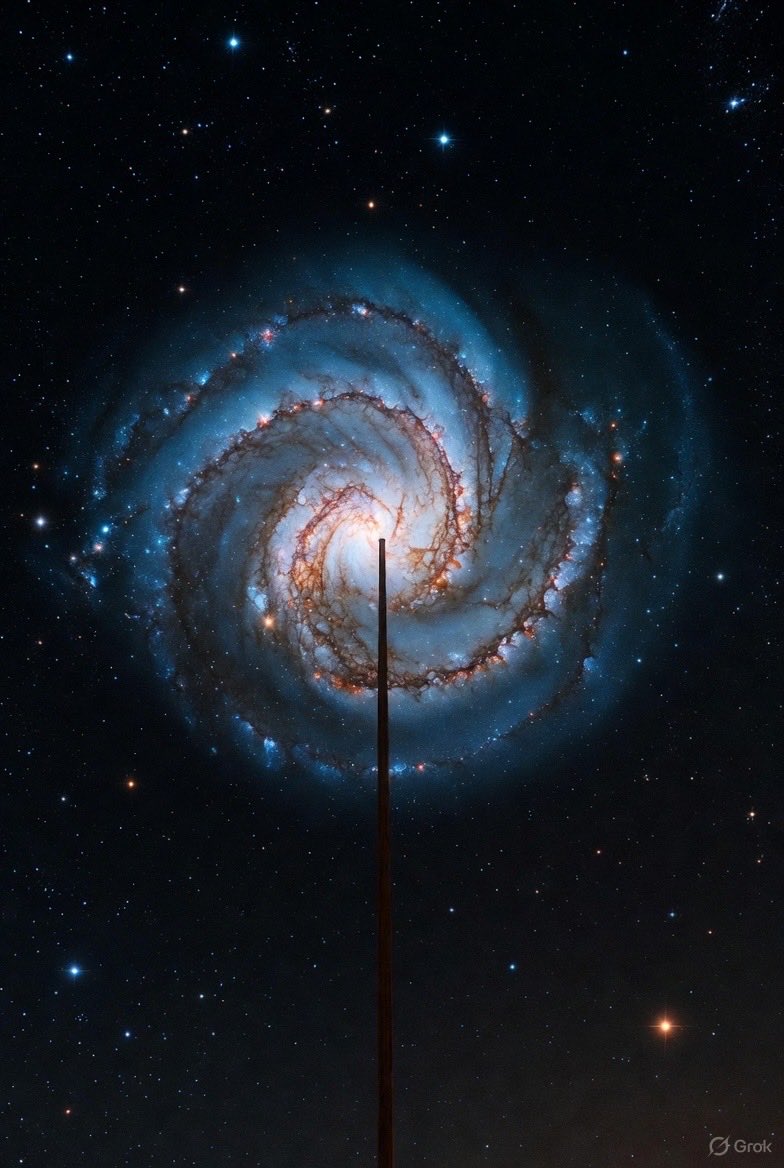
Now that Artemis II has launched we have 10 days to get everyone on Earth a Planet of the Apes costume so we can do something hilarious when the astronauts return 😁
The launch team at @NASAKennedy are GO to begin filling the Artemis II rocket with fuel.
The official launch broadcast begins at 12:50pm ET (1650 UTC). Liftoff is scheduled for no earlier than 6:24 pm ET (2224 UTC). Tanking coverage can be found here: youtube.com/live/m3kR2KK8TEs…
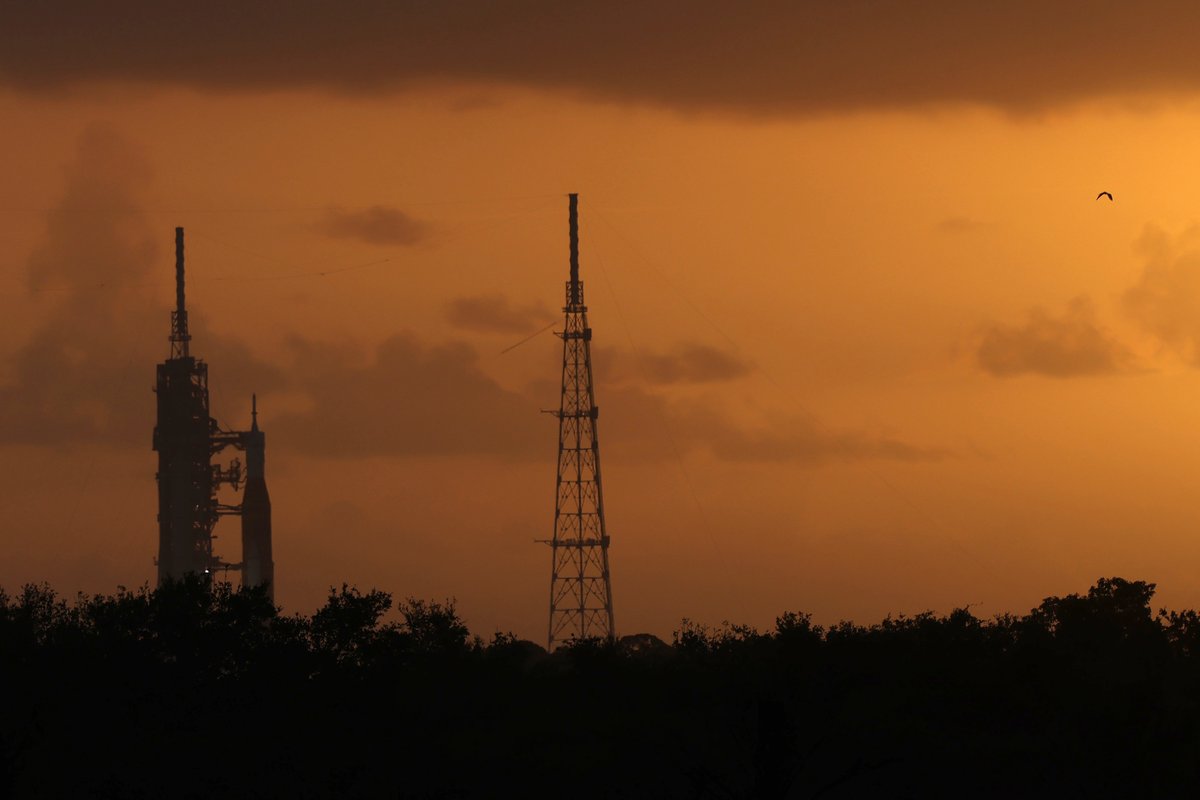
ALT The Artemis II rocket and spacecraft can be seen at Launch Complex 39B at NASA's Kennedy Space Center during the early morning of Wednesday, April 1. The SLS (Space Launch System) rocket and Orion spacecraft are standing to the right of the trussed structure of the mobile launcher. A lightning tower can be seen in the center of the image. The sky is an orange haze in the background. Credit: NASA/Michael DeMocker
The weather's looking good for tomorrow's Artemis II launch, and our teams are getting the rocket ready for liftoff!
Read the latest updates on our mission around the Moon: go.nasa.gov/4tiFY4P
Tonight is the peak of the Geminids meteor shower, but our eyes will actually be on the Moon. 🌝
Here at #NASAMarshall we have a Lunar Impact Monitoring team. Typically, we spot about one lunar impact every two hours. But, during the Geminids, we could see one every 12 minutes! ☄️
Learn more about lunar impacts here: go.nasa.gov/4oSA6N9
Before our Artemis II astronauts lift off on their journey around the Moon next year, find out what it takes to build a mission like theirs from the ground up.
Episode 1 of Moonbound is live—and free to watch on NASA : go.nasa.gov/4pxIoel
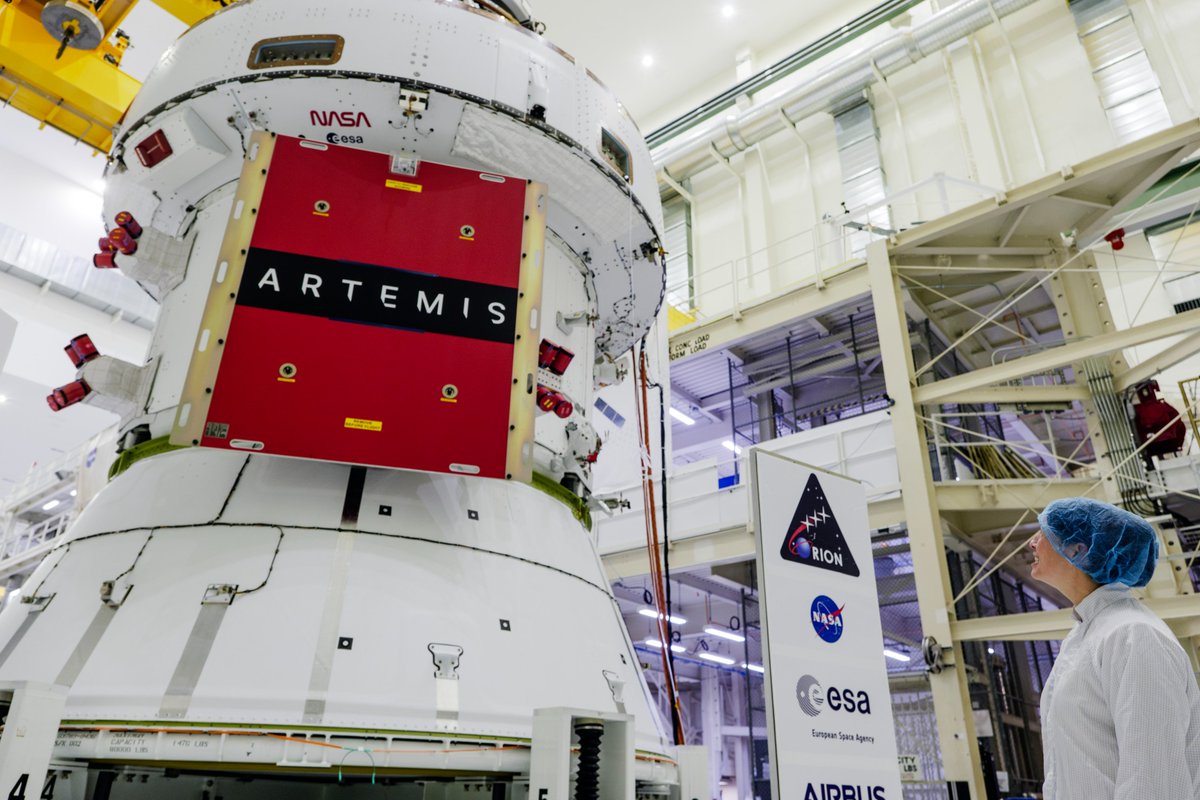
POV: Your job is preparing Orion — humanity’s ride to the Moon.🌕
As the @NASAArtemis II vehicle manager for the Orion Program at @NASA_Johnson, Branelle Rodriguez has been involved in every stage of the spacecraft’s preparation for its historic mission in 2026. go.nasa.gov/4oFO4lq
ALT Branelle Rodriguez looks over the Artemis II Orion spacecraft following solar array wing installation in the Operations and Checkout Facility at NASA’s Kennedy Space Center in Florida. Credit: NASA
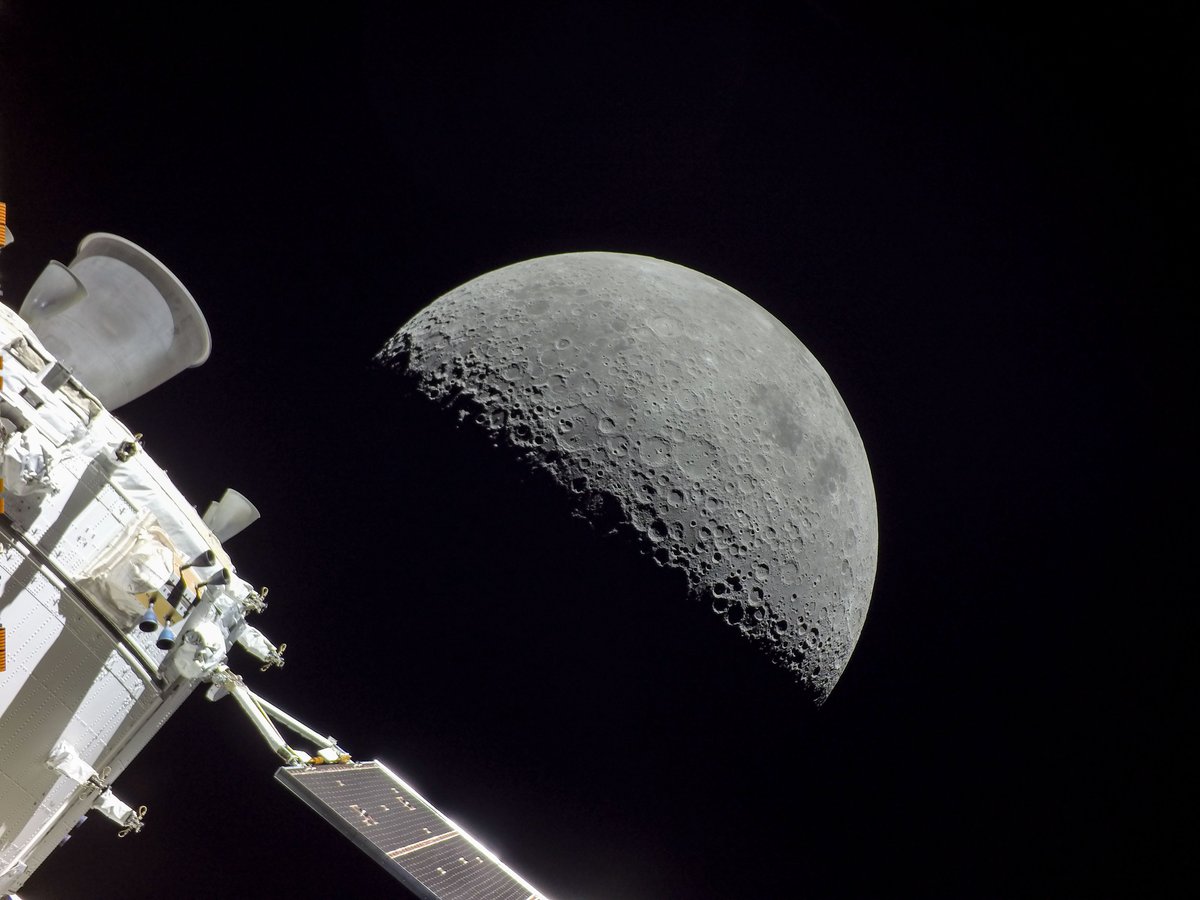
What a view 🌓
#OTD in 2022, the Orion spacecraft captured this image of the Moon during the Artemis I mission.
Soon, Artemis II will venture back around the Moon with four crew members aboard Orion. Learn more about the mission: go.nasa.gov/4iI0g3B
ALT On flight day 20 of the Artemis I mission, Orion captured the Moon on the day of return powered flyby. The burn, which lasted 3 minutes, 27 seconds, committed the spacecraft to a Dec. 11 splashdown. Credit: NASA
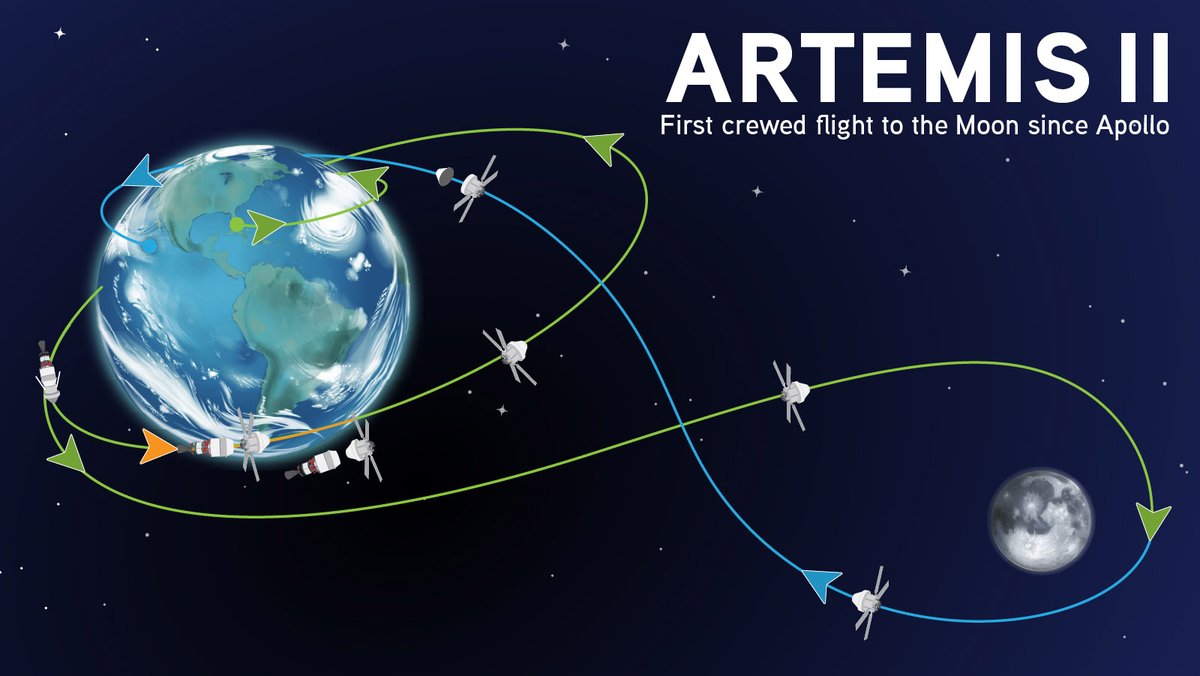
During #Artemis II, Orion will circle our planet twice before heading to the Moon. Once there, the spacecraft will go around the far side and head back to Earth. This will take nearly 10 days. #AroundTheMoon
Learn more: asc-csa.gc.ca/eng/multimedia…
ALT The infographic includes a representation of Earth, the Moon, and the Orion spacecraft. A curvy line marks the expected flight path of the mission. Eight arrows along the flight path indicate Orion's direction. The arrows are numbered to correspond to the following steps.