
Joined October 2022
- Tweets 3,415
- Following 2,418
- Followers 978
- Likes 69,210
189 Photos and videos



Pinned Tweet

Apr 20
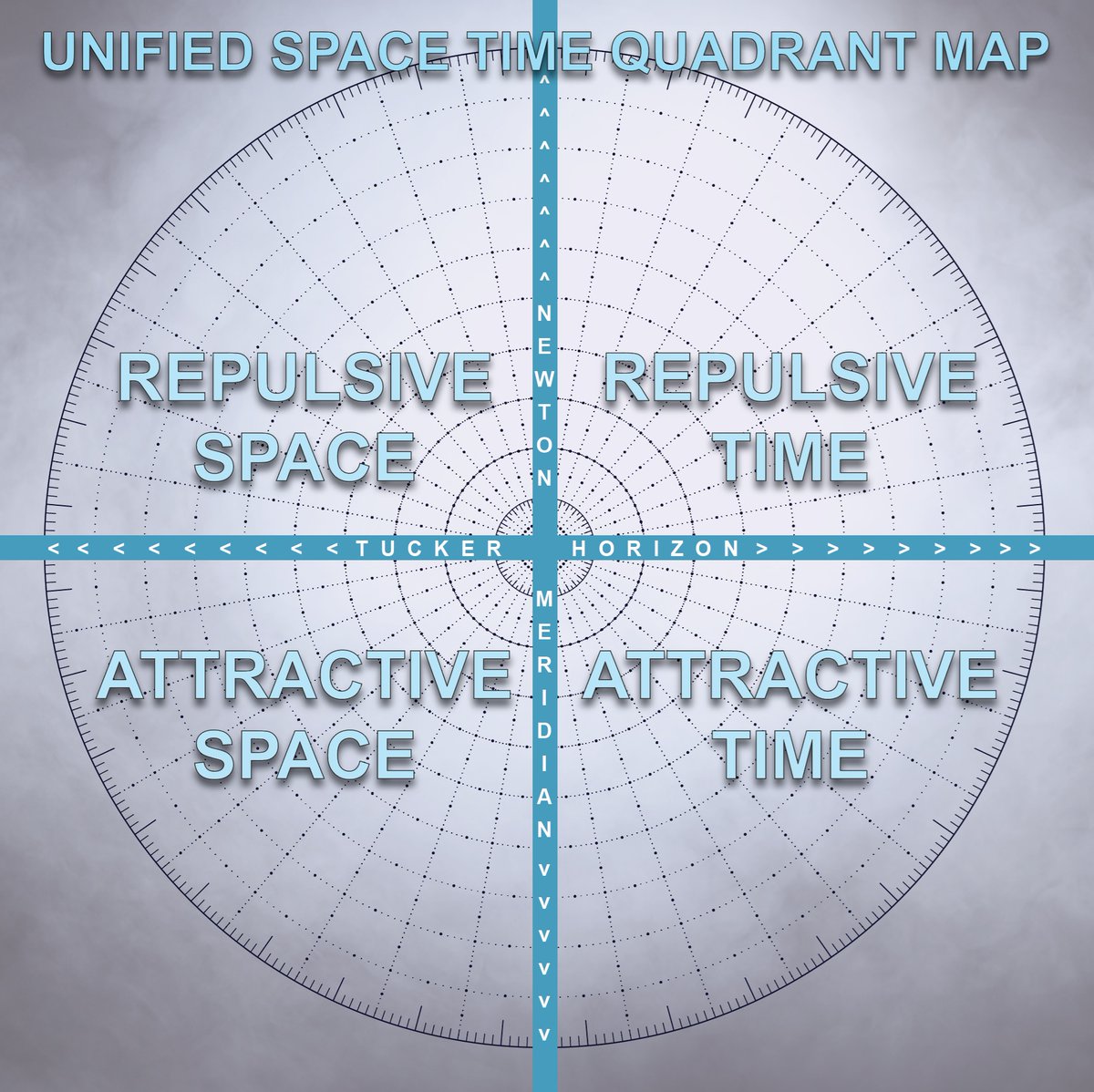
Unified Space-Time is the theory in which General Relativity is recovered as the local limit of a deeper geometric reality. The Einstein field equations still govern the attractive regime. They simply sit atop a repulsive baseline curvature that is now part of the geometry itself, rather than an added energy term.
The cosmological constant is no longer a problem. It is the geometric constant of empty space. Dark energy is the baseline breathing. Dark matter anomalies are curvature gradients near the Tucker Horizon. Quantum mechanics is the physics of the ground state, visible wherever matter density is too low to cross that horizon. The arrow of time, the arrow of cosmic expansion, and the quantum-to-classical transition all emerge from the same Resolution Interface dynamics.
We predict observable signatures: atomic clocks in deep cosmic voids will reveal the cap set by the Speed of Time; modified Casimir forces will show interface pressure; gravitational-wave detectors may catch the faint h_interface(t) signature of ongoing dimensional translation; and the cosmic microwave background will carry subtle void anomalies tracing the 95/5 equilibrium.
This is not a revolution that discards the past. It is the completion Einstein always sought, the thermodynamic endpoint Hawking mapped, the geometric unity Weinstein demands, and the Copernican correction I first dared to state plainly.
The universe is not mostly mysterious substances. It is mostly itself, dark, cold, repulsive, and quantum, with small, beautiful, temporary wells of attractive order where we happen to live and measure.
We are the fish. The surface has always been there.
It is time to look up.
3
88
Jun 11
UST Continuum Architecture v1.0
A New Way to Think About Space Time
youtu.be/QZMe0UfShsg?si=28CC…
18
Jun 5
⚔️ Only 10 Collector's Packages Available ⚔️
Includes:
📖 Signed RISING SON (with my personal library stamp)
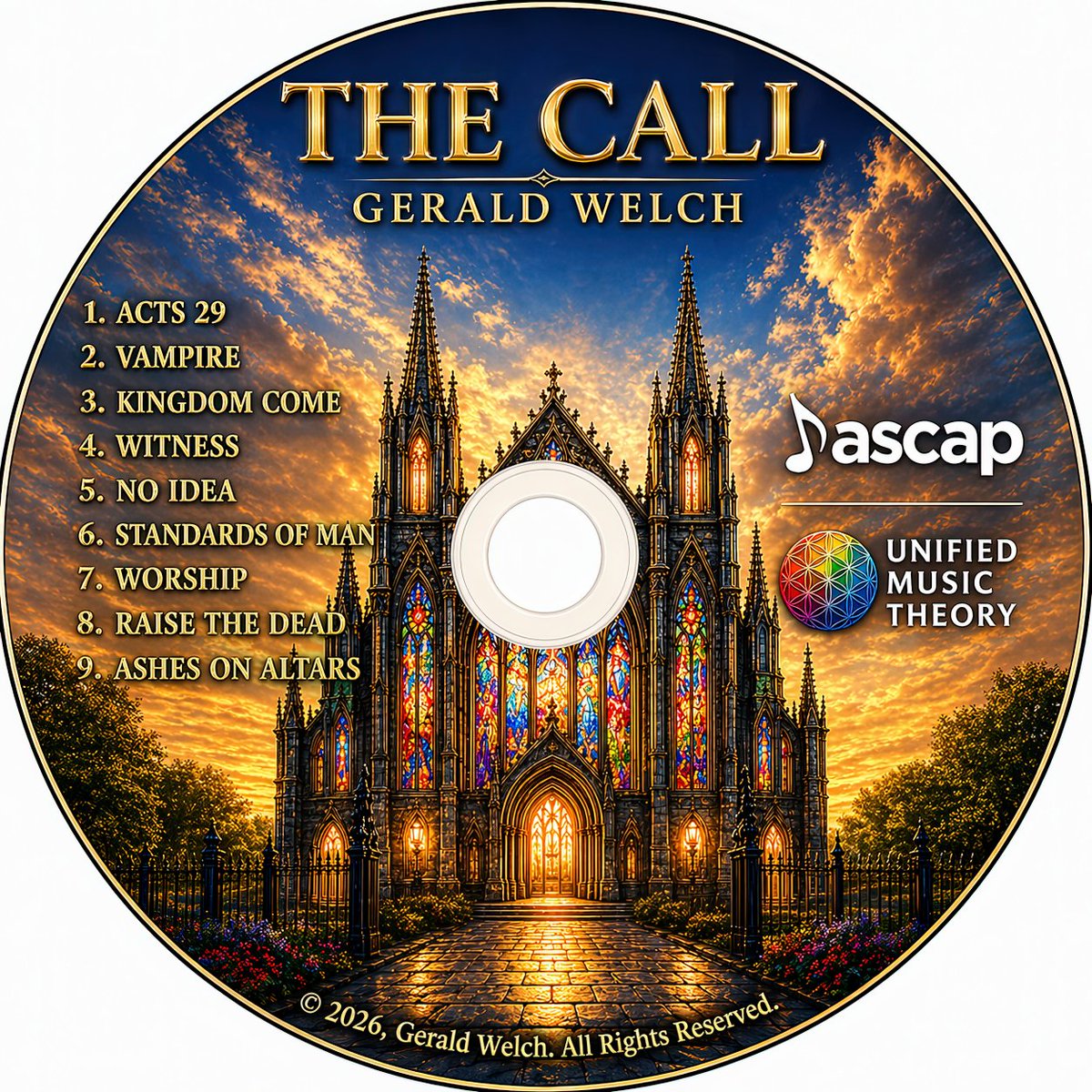
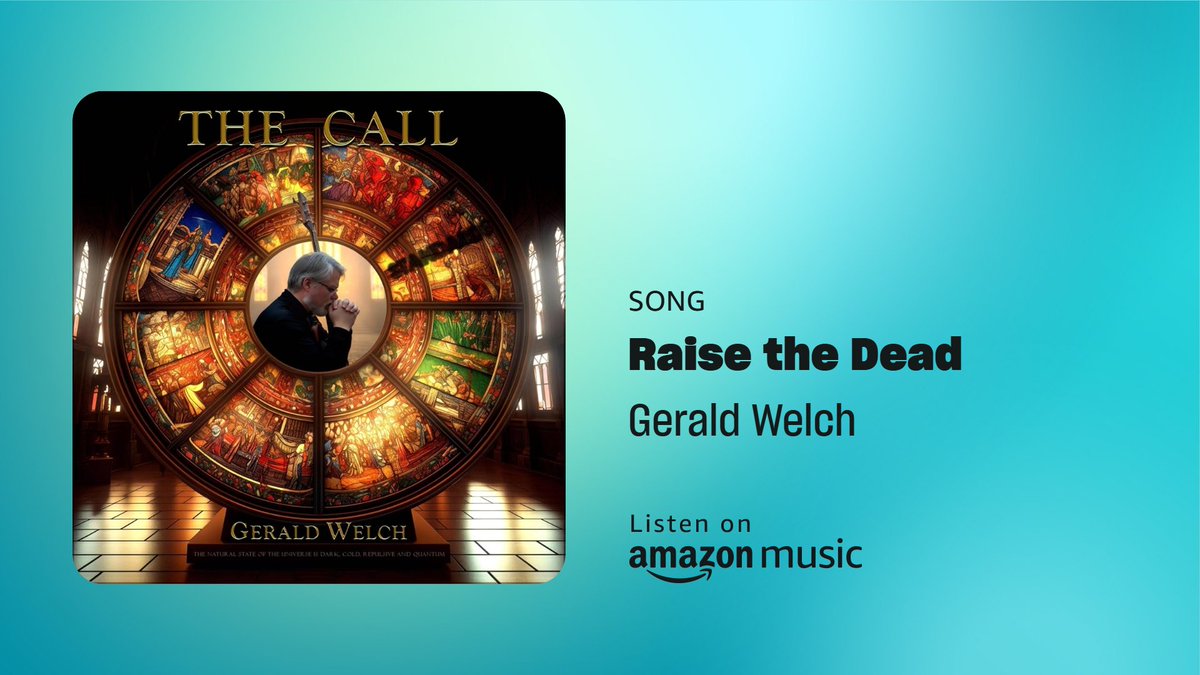
🎵 Signed THE CALL CD
🪙 Sinanju collector coin
🎁 Surprise gift
$50 shipped anywhere in the U.S.
DM me if you'd like me to reserve one.
Gerald Welch
60
May 24
In case anyone is wondering, my day job is as the author of LEGACY and THE LAST WITNESS. I also work on theoretical physics and my music, which includes custom instruments to fit my specific audio goals.
At 61, I released my first solo album, THE CALL.
Contact if you want one.
1
44
May 21
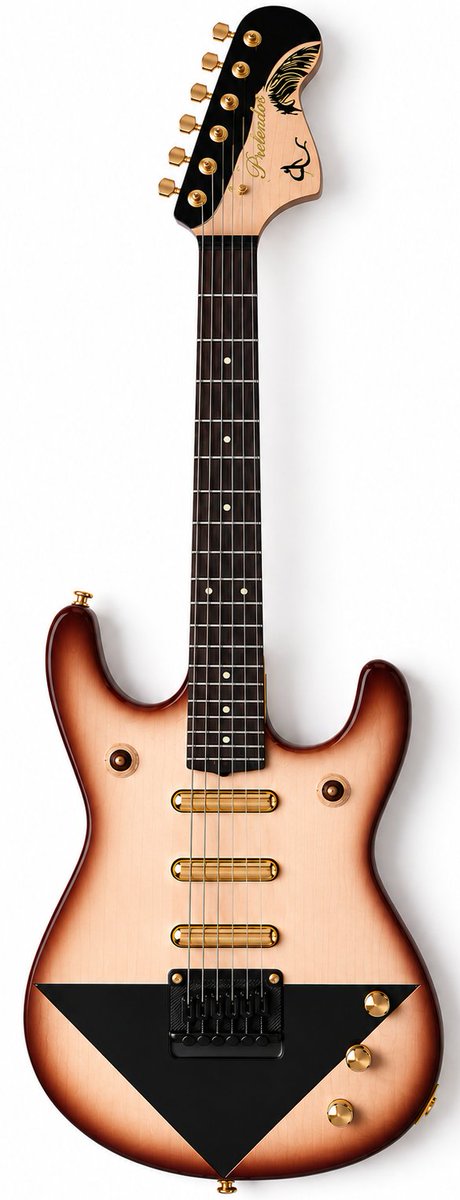
I am building the PRETENDER.
A fully functional satirical guitar built as commentary on corporate ownership, artistic identity, trademark culture, and the increasingly blurred line between industrial design and protected artistic expression.
The exaggerated feminine visual elements are intentional. For decades, the Strat-style silhouette has been described in artistic and marketing language as elegant, sensual, feminine, and iconic. PRETENDER takes those ideas literally and pushes them into visible satire.
Yes, it will have lipstick pickups.
No, this is not a Fender product or affiliation of any kind.
PRETENDER is transformative artistic commentary exploring where functional design ends and claimed artistic identity begins.
If corporations can argue that a guitar silhouette is expressive art tied to emotion and identity, then artists also have the right to respond through transformation, exaggeration, satire, and parody.
Sometimes the clearest way to examine an idea is to turn the volume all the way up.
1
19
May 15
I am brand agnostic.
A brand has to prove itself to me before I will support it. That means that I reserve the right to like or dislike whatever I want, regardless of the label attached to it.
That means I can enjoy Caffeine Free Pepsi (seriously, try it) and Coke in a bottle.
I can like Apple, Samsung, AND Windows.
I can drive a Chrysler, Ford, or Tesla without treating any of them like a religion.
It also means I can vote for whoever I want, based on MY values, not because some party machine tells me what I am supposed to think.
I can respect a writer I disagree with and reject bad writing from someone who agrees with me.
Too many people outsource their judgment to brands, parties, influencers, and tribes.
Brand worship is just another form of ignorance.
15
May 13
If Λ is measurable through its gravitational effect on cosmic expansion, why is it treated as a separate dark energy component rather than as part of a single gravitational curvature continuum?
1
20


Apr 23
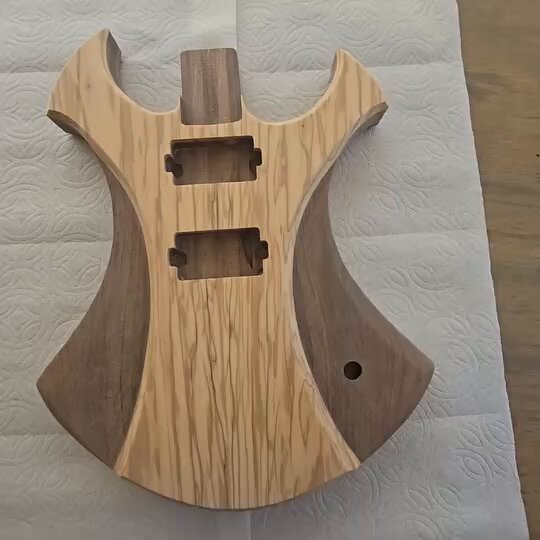
Embergrains finalizing the prototype Sanctum guitar, coming soon!
1
36
Apr 19
If you have Spotify, check out my artist page and let me know what you think!
open.spotify.com/artist/6TrD…
1
44
Apr 12
QUESTION: What makes the Punisher, who, let's be honest, was a poor caricature of the Executioner, better than the Executioner?
I'm talking post Grant/Zeck's 1986 series.
I've read several Executioners, but I don't care as much for Mac as I do Frank.
Thoughts?
#MacVSFrank
26
Apr 11
Something weird here. Check this out. Considering the rotation of the Earth, that ship was going way faster than 25,000 mph. At the speed I am seeing it wouldn't take but 20-30 minutes at most to circle the Earth.
instagram.com/reel/DW8zShSjM…...
Thoughts?
14
Apr 9
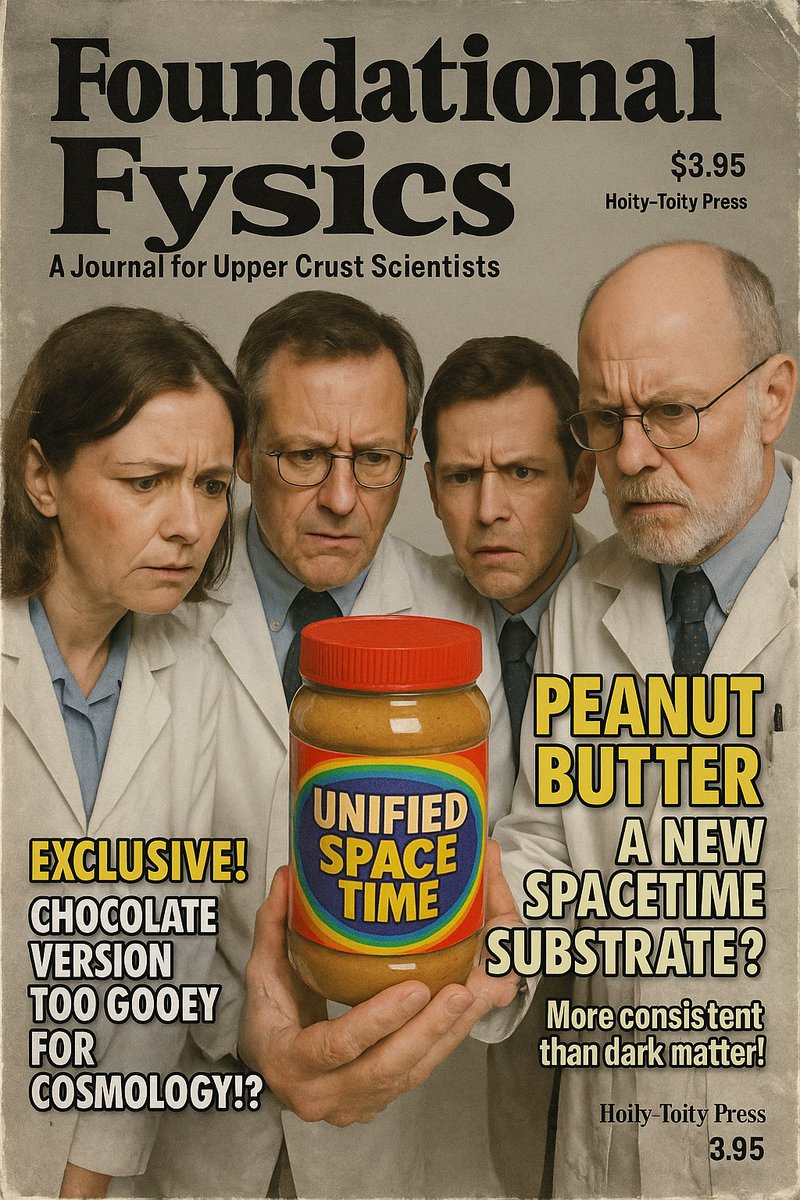
Unified Space Time – Working Concept
April 9, 2026
Most modern cosmology describes expansion as the stretching of spacetime.
Unified Space Time (UST) proposes a different view:
spacetime doesn't merely stretch, it continuously emerges.
This distinction matters because physical behavior isn't determined by expansion alone, but by the stable manifestation that results from this emergence.
In UST, a region of spacetime is classified by the stable state it permits:
Repulsive state
The default manifestation of unoccupied spacetime, where emergence proceeds freely and expresses the baseline repulsive curvature.
Attractive state
The manifestation of occupied spacetime, where emergence resolves into persistent localized matter-energy structure, producing attractive curvature.
These aren't two separate forces. They are two stable outcomes of a single curvature framework.
Cosmic expansion, in this view, isn't the stretching of preexisting space, but the large-scale result of continued spacetime emergence. Because emergence proceeds more freely in unoccupied regions, void space increasingly dominates, while gravitationally bound matter remains localized in the attractive regime and doesn't expand in the same way.
This framework suggests a shift in perspective:
The default gravitational state of the universe may not be attraction, but repulsion.
Attraction may instead be a localized manifestation of occupied spacetime.
What is commonly labeled "vacuum energy" may be the measurable signature of ongoing baseline emergence in low-density spacetime.
This isn't presented as a final theory, but as a structured proposal:
gravity may be understood as one curvature with two stable manifestations, governed by the conditions under which spacetime emerges.
Thoughts?
35
Apr 9
It's difficult for me to agree with President Trump's plan if it doesn't specifically include the removal of the current regime and open and honest elections.
A condition of which is that anyone associated with the IRGC cannot participate in the new government.
EVER.
#FreeIRAN
16