
Arutha is a policy think tank focused on economic research and communication with a special interest in public debt and taxation.
Joined August 2023
- Tweets 1,111
- Following 9
- Followers 777
- Likes 22
604 Photos and videos









Arutha retweeted

Was Sri Lanka's crisis really about debt? @yolanifernando argues the foundation of the collapse is the "Third Deficit": a profound lack of accountability in our political and economic systems. 🛡️ 💰 📉
#SriLanka #Macroeconomics #Governance #EconomicPolicy #PublicService #SocioEconomicRights #InstitutionalReform
@ambikasat @WorldBank @IMFNews @UN @UNSriLanka @CBSL @AruthaResearch
🎬 Watch: youtube.com/shorts/Gil_Imvfr…
📖Read neelan.org/macroeconomic-_po…
2
10
14
614

Jun 11
Despite the price shock of the US-Iran war on energy, the per unit cost of coal imported to Sri Lanka has not increased dramatically.
The per unit cost of coal imported in 2025 was Rs 34 per kg and Rs 38 in April 2026. Average monthly imports of coal in 2025 was ~151,500 metric tonnes. In April 2026, ~363,754 metric tonnes of coal was imported.
Therefore, the growth in the import bill for coal in April 2025 can be attributed to an increase in the quantity of imports rather than a price increase. The increase may also be attributed to a seasonal spike, as the full year's coal requirement is typically imported in between October and April, before the South-West monsoon begins.
2
1
321
Jun 9
The IMF programme gave Sri Lanka much needed stability following the 2022 economic crisis. But for our economy to grow what should we be focusing on next?
Watch the full episode to find out more: youtube.com/watch?v=LqTUITi-…
#lka #srilanka
1
2
244
Jun 8
Arutha X Neon
Sri Lanka's IMF programme helped stabilise an economy in crisis - but what comes next? As the country moves forward, do we need another programme or are we ready to take responsibility for our own economic development?
Watch the full episode here: youtube.com/watch?v=LqTUITi-…
2
5
470
Jun 5
Sri Lanka will face fresh tariff troubles this year with its exports to its top export market - the United States. The United States has proposed a new tariff of up to 12.5% on imports from Sri Lanka and 59 other economies following investigations into whether countries have adequately prohibited imports produced using forced labour.
This means that, according to the US investigation, Sri Lanka has not taken adequate steps to prevent goods that maybe produced using forced labour from being imported to Sri Lanka. Where the US feels this is the case, the United States Trade Representative is empowered to take action to correct such problems.
This proposal is not yet finalised and follows repeated attempts by the Trump administration to disrupt trade flows with the use of tariffs. Last year, President Trump's 'Liberation Day' tariff announcement shocked the global economy, but were later struck down by the US Supreme Courts as being unconstitutional.
This new proposal suggests that the Trump administration is looking for alternate legal paths to impose its tariff.
1
1
156
Jun 1
Missed the launch webinar for the first issue of our flagship research publication, Lanka Dispatch?
You can now watch the full session on our YouTube channel, where we presented our key findings and shared insights on Sri Lanka’s evolving place in the world.
🔗 Watch the full webinar here: Lanka Dispatch - Mapping Sri Lanka’s Place in the World - youtube.com/watch?v=ScOBK3ZX…
If you have any questions or thoughts, leave them in the comments below!
2
3
116
May 27
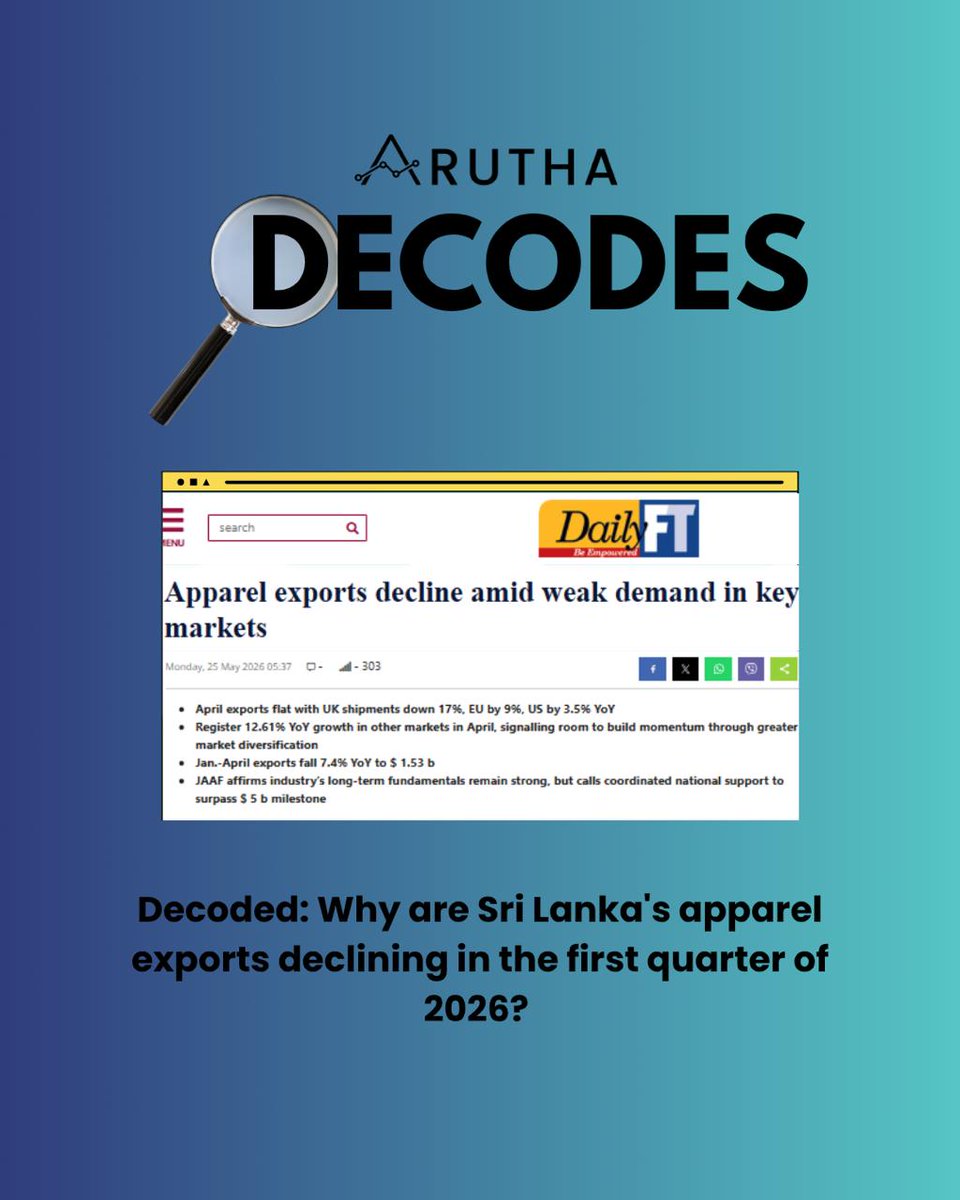
The ongoing conflict in West Asia has led to a slowdown in Sri Lanka's major apparel sector markets. This is largely due to higher global energy costs which have put pressure on household finances.
- United Kingdom: inflation is projected to rise to 4.1% by early 2027, with economic growth expectations revised sharply downward.
- European Union: economic growth expectations have been lowered while inflation projections have been raised to 3.0%, with consumer confidence at a 40-month low.
- United States: projections for consumer spending and employment are being revised downward as fuel costs rise, and inflation is expected to exceed 3%.
Compared to the same year, Sri Lanka’s apparel export earnings declined by 4.7% April 2026 to USD 328 million, while earnings fell by 7.5% to USD 1.53 billion. This is a notable reversal from 2025, when the sector grew by 5.3% to USD 4.9 billion, supported by strong demand from the European Union and slight growth in demand from the United States.
Compared to the same period last year;
- Exports to the United Kingdom fell by 17%
- Exports to the European Union declined by 9%
- Exports to the United States decreased by 3.5%
- Exports to other markets grew by 12.6% in April
This signals potential for greater market diversification beyond Sri Lanka’s traditional export destinations. The situation highlights a long-standing structural weakness – Sri Lanka’s heavy reliance on a limited number of export markets.
#lka #srilanka
1
3
328
May 20
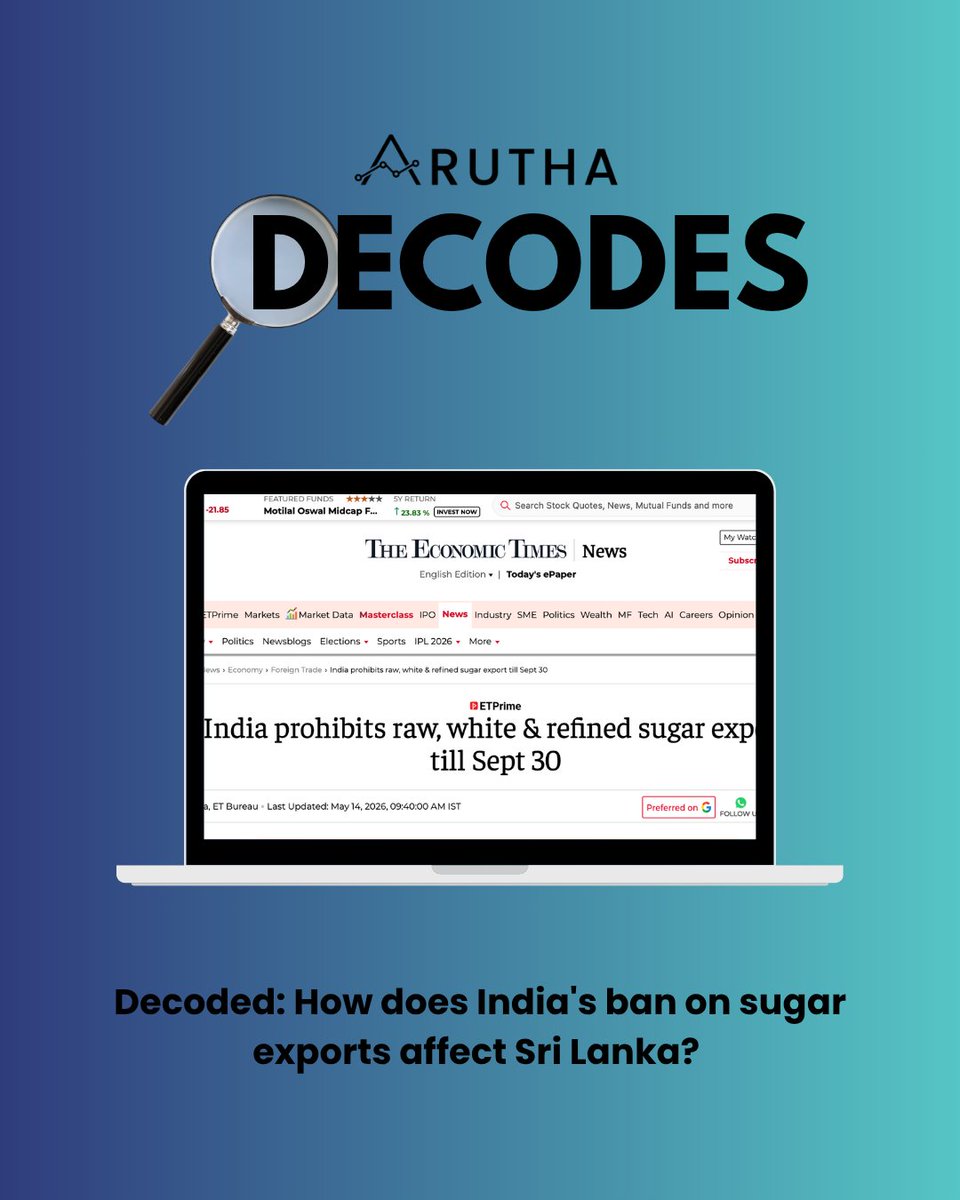
India’s ban on the export of raw, white and refined sugar affects sugar availability in Sri Lanka. In 2025, India accounted for 50% of Sri Lanka’s 656,381 metric tonnes of sugar imports.
While Sri Lanka produces its own sugar cane, the domestic supply of raw sugar is largely import dependent. Brazil, the world’s largest sugar exporter is Sri Lanka’s second largest source of imports – accounting for 25% of 2025 sugar imports.
India’s sugar ban is meant to stabilise domestic prices in the face of rising production costs stemming from the closure of the Strait of Hormuz.
Exports to US and EU are exempted from the ban, as are any government-to-government exports. Although Sri Lanka and India have a free trade agreement, sugar imports from India are subject to standard duties, as sugar is a highly protected industry.
Sri Lanka sugar importers have assured a steady supply through alternate markets.
4
6
780
May 18
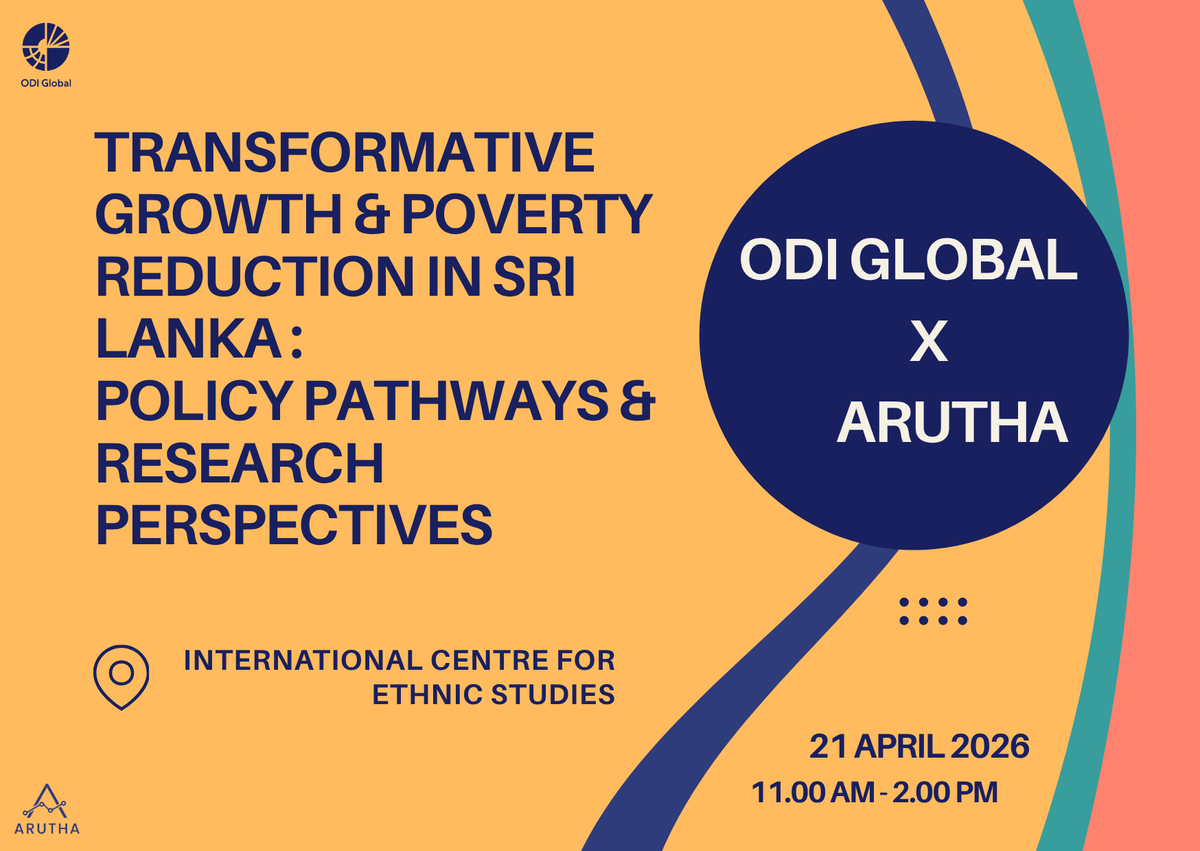
There's still time to sign up! Join us tomorrow to find out more.
Register now - zoom.us/meeting/register/pnc…


2
4
194
May 15
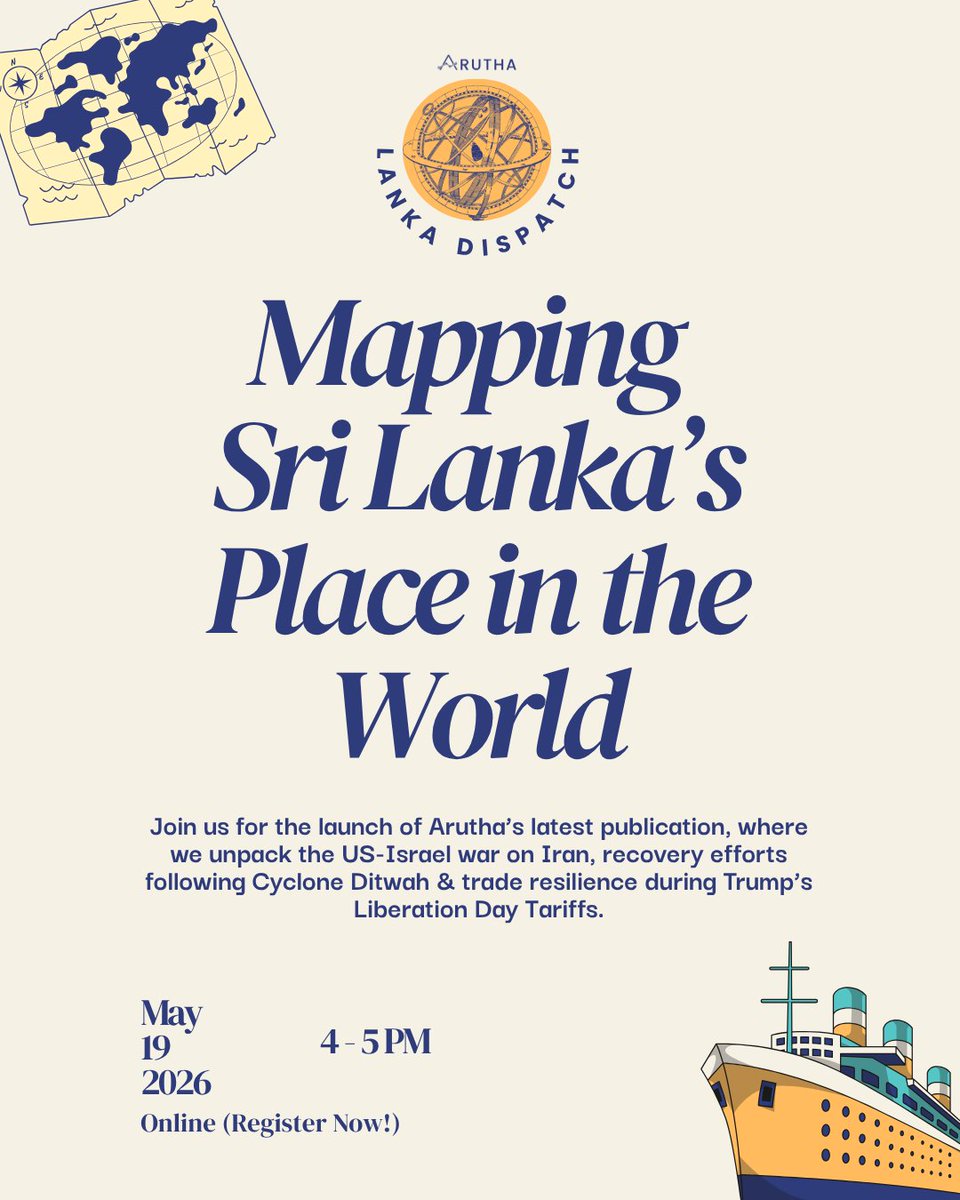
Join us as we launch our latest publication, Lanka Dispatch and map Sri Lanka's place in this fragmented and volatile world.
Register now - zoom.us/meeting/register/pnc…
#lka #srilankaeconomy #middleeast
3
4
1,096
Arutha retweeted
May 8
Join us as we launch Arutha's latest publication, 'Lanka Dispatch' and unpack the US-Israel war on Iran, recovery efforts following Cyclone Ditwah & trade resilience during Trump's Liberation Day Tariffs.
Register Now!
zoom.us/meeting/register/pnc…
3
5
487
May 6
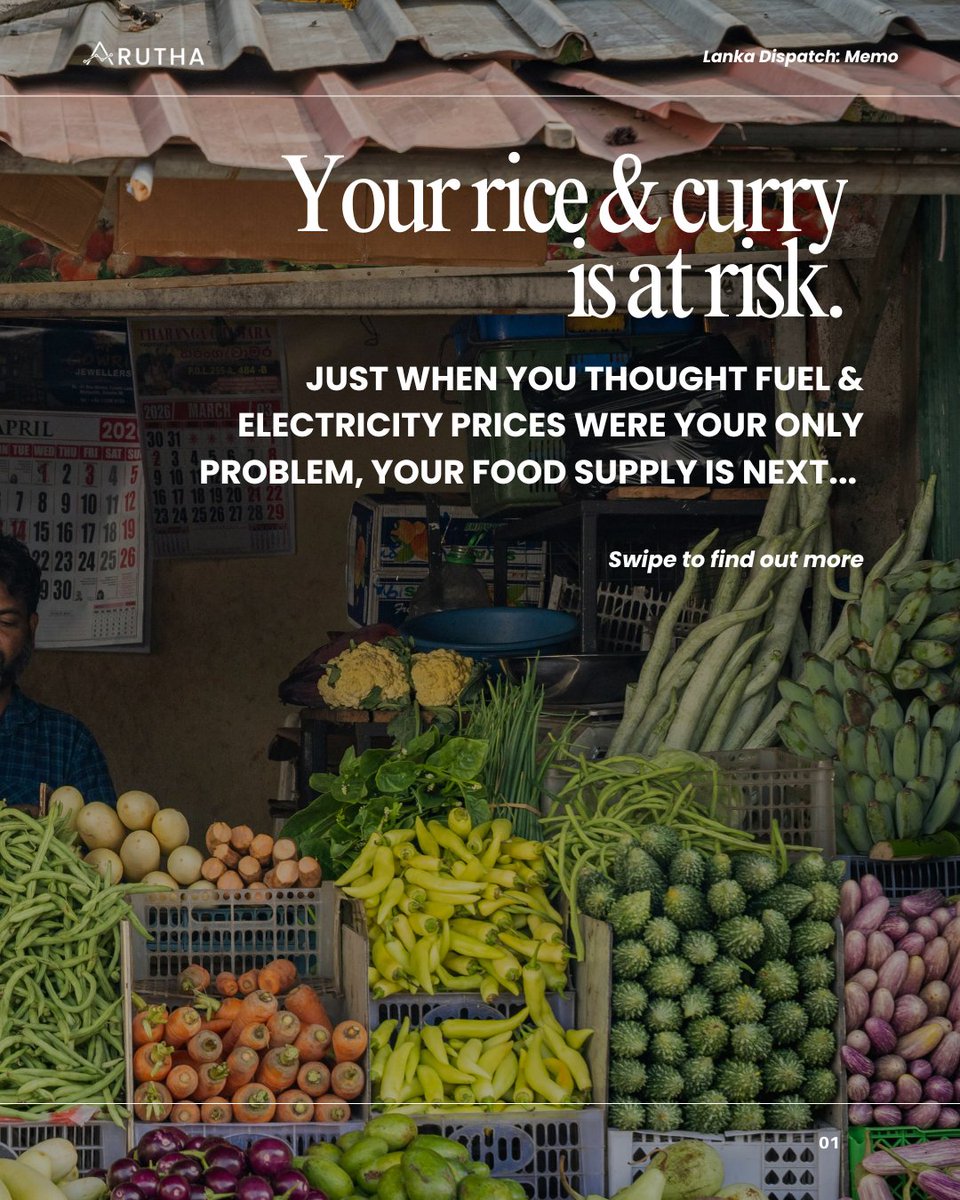
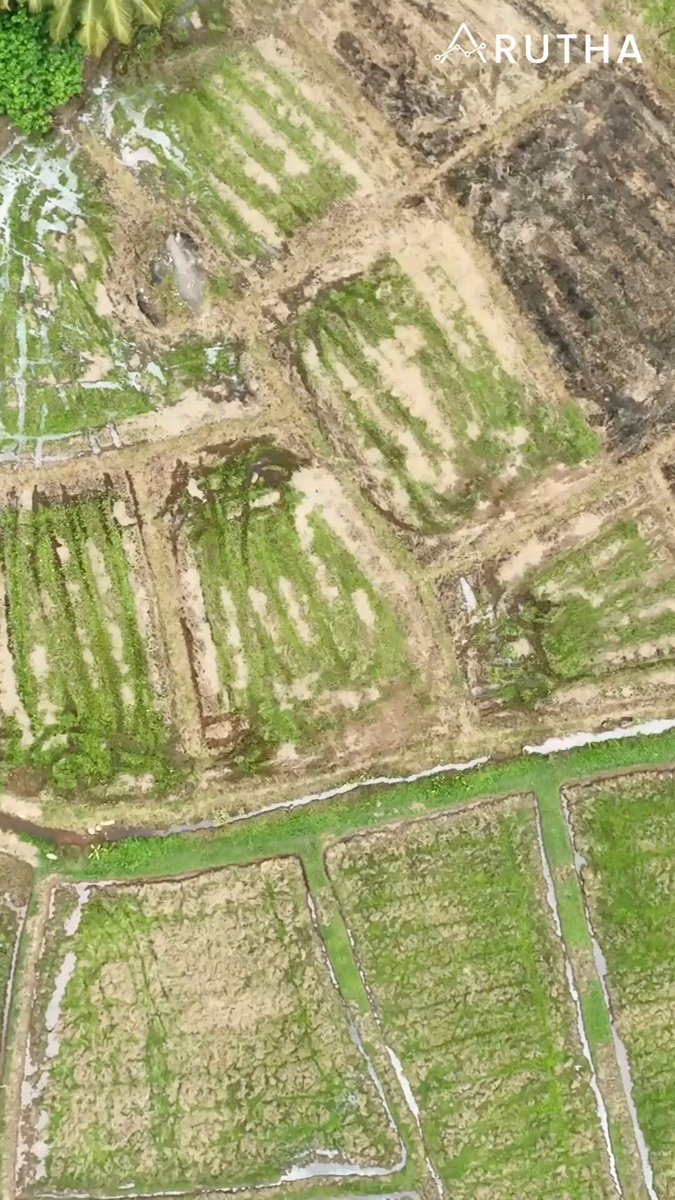
Fertiliser prices are going up. How does this affect Sri Lanka's food supply and you?
- Agricultural production (rice, fruits and vegetables) would fall, and supply will reduce.
- Supply of crops that are used to produce food (such as maize for egg and poultry production) will also reduce.
- This will lead to increase in food prices.
- There will be an increased risk of food security as nutritious food (especially sources of protein) becomes more expensive.
- If the war persists, sourcing fertilisers will become much harder. This could affect cultivation in the Maha season which begins in October.
Why are fertiliser prices going up?
- 30% of global fertiliser transits through the Strait of Hormuz which is currently being blockaded by Iran and the US. Gulf nations are major producers of fertilisers, especially nitrogen-based fertilisers like urea.
- This reduces the amount of fertiliser available for trade.
- With the drop in supply, fertiliser prices have shot up.
- Higher prices reflect not only the shortage of fertilisers, but also the higher shipping costs from rising oil prices and higher insurance premiums due to the war risk.
- China, who is Sri Lanka’s main source of fertiliser imports and one of the world's largest fertiliser exporters, halted exports of fertiliser on 19th March, further reducing supply.
Is it only Sri Lanka affected?
No, many countries that depend on global supply chains for their fertiliser needs are affected – this includes countries like India and Vietnam.
What is happening in Sri Lanka?
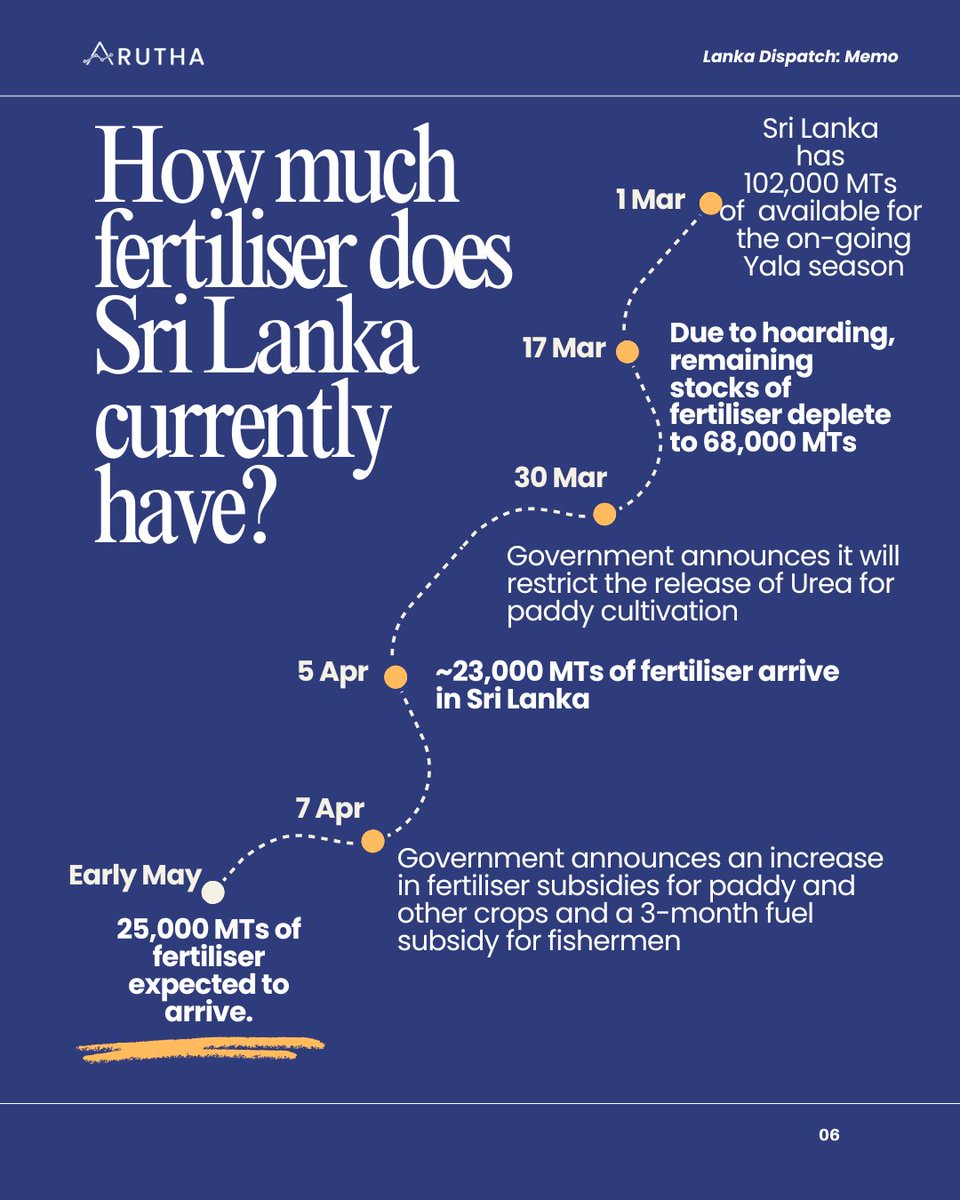
5
6
503
Apr 30
We're making it easier to stay informed.
Get timely updates on Sri Lanka's economy straight to WhatsApp. From key developments to data-driven insights, follow our channel to stay updated.
We analyse and provide clarity and context on news or policy decisions, making complex or technical developments understandable while highlighting the practical significance and potential risks.
Follow the Arutha channel on whatsapp.com/channel/0029Vb6…
1
3
268
Apr 28
Tea production fell by 14% in March 2026 due to prevailing dry and hot weather. Sri Lanka’s tea industry faces another issue. The wider Middle East region bought 52% of Sri Lanka’s tea in 2025 - generating ~$850 million of export revenue. This year, traditional shipping routes to its major markets in the Gulf are disrupted with the closure of the Strait of Hormuz.
Fertiliser prices have shot up due to shortages, also a result of the closure of the Strait. Urea, the world’s most used fertiliser, has doubled in price from $380 per tonne to >$700 per tonne. GoSL increased the fertiliser subsidy for crops like tea to Rs 18,000 to help with the price shock.
GoSL claims to have 100,000 MTs of fertiliser in stock. Industry professionals refute this claim. Price controls will not work with such constrained supply and global unavailability, instead possibly creating black markets that will drive prices up further.
#lka #srilanka #middleeast #foodsecurity
4
3
351
Apr 27
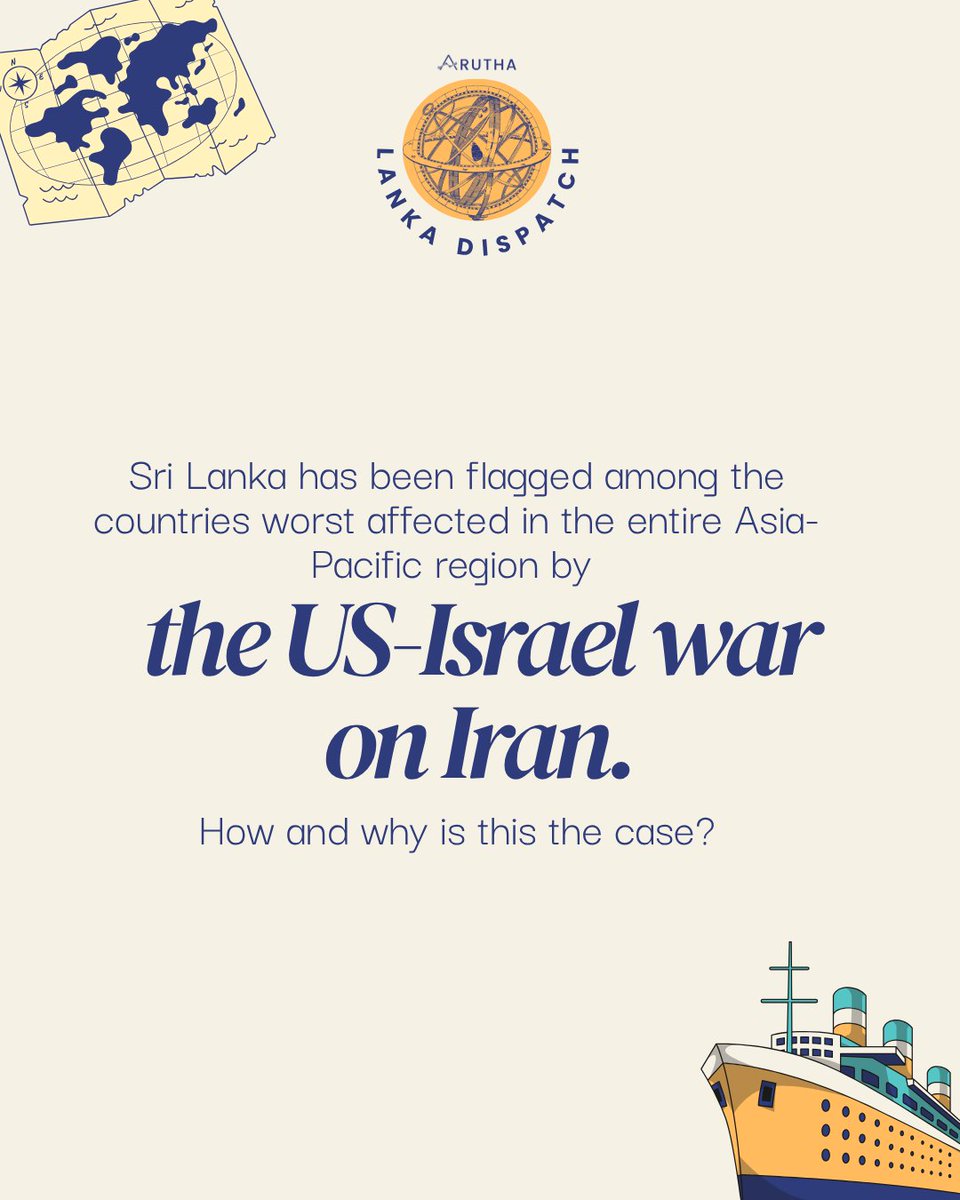
Fertiliser shortages are already hitting Sri Lanka - and the situation could get worse. The US/Israel war on Iran is disrupting global trade routes, tightening fertiliser supply across Asia.
What can be done right now?
- Prioritise essential crops over less critical production
- Use existing fertiliser stocks more efficiently
- Strengthen negotiations with key suppliers like China
- Reduce food wastage through better storage and transport backed by government mandates
What you think Sri Lanka should be doing?
Read more and comment below!
arutharesearch.org/post/us-i…
5
4
425
Apr 24
This post has been updated to reflect a correction:
The Trump administration must now process $166 billion in refunds to companies in the US who paid the tariff – American consumers who bore the final cost of the increased tariff are not eligible for refunds.
The ‘Liberation Day’ tariff package last year disrupted global trade significantly – including Sri Lanka. Sri Lankan exports were initially hit with a 44% tariff, then negotiated down to 20% in September 2025.
The US is Sri Lanka’s largest export destination. Despite the tariff shock, Sri Lanka’s overall exports to the US increased by a marginal 2% in 2025.
After mutiple changes, America’s Supreme Court struck down the tariff package in late February 2026. Following this, President Trump imposed a 10% tariff on all countries using alternate legal routes. He threatened to raised it to 15% the next day, however it is not yet in effect.
The current tariff applicable to most imports is 10%. The new global tariff also faces legal and operational challenges.
1
2
123
Apr 20
Is Sri Lanka's food security under threat due to the US-Israel war on Iran?
#lka #srilanka #middleeastwars
1
2
251