
Your crypto is worthless the moment the network dies. We're building a Layer 1 so that never happens again. Mesh-powered. Seed round open.
Joined March 2026
- Tweets 497
- Following 19
- Followers 591
- Likes 1,112
40 Photos and videos












Pinned Tweet
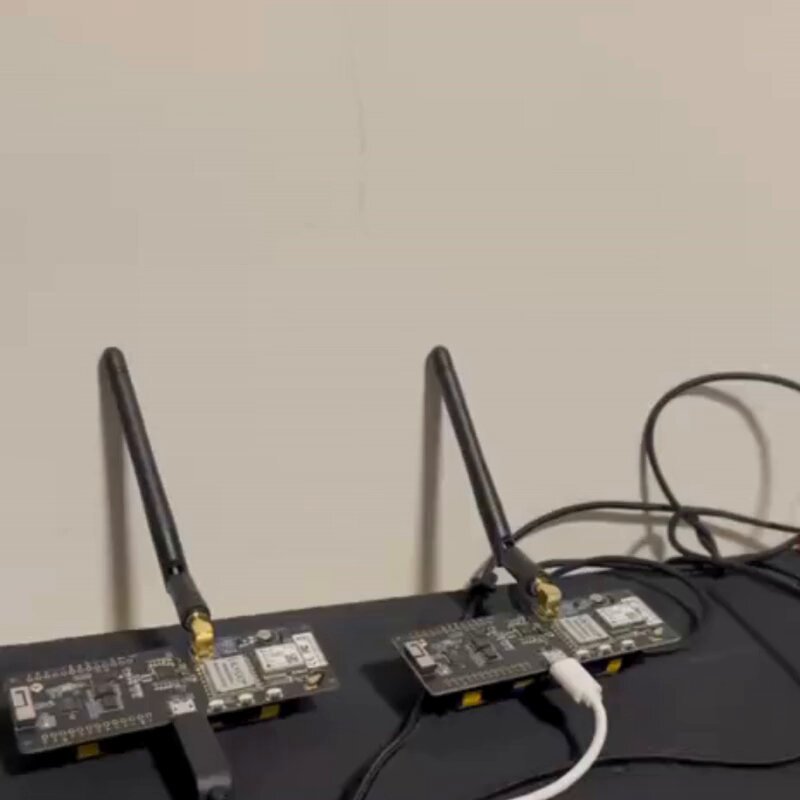
WE DID IT ! We just sent the first layer 1 blockchain transaction over lora radio. No internet. no cellular. no satellite.
193 bytes, signed with ed25519, validated locally, on real hardware. @lilygo9 t-beam to lilygo t-beam, 868 mhz, two years of work landing in a single packet.
What does this actually mean ?
The entire crypto industry talks about decentralization and builds everything on top of an internet connection. as if it's never occurred to anyone that a government would cut that connection the second it serves them. @web3privacy has been screaming about this for years. They're right..
580 million people hold crypto. three trillion dollars on chain. all of it depends on a server somewhere being online. wait until they cut your internet. your wallet won't be drained. it'll just be worth nothing.
Arxia removes that dependency at the protocol layer. block lattice consensus. orv stake-weighted voting. crdt reconciliation when partitions reconnect. unique nonce per wallet, signed receiver field, four-tier finality with explicit caps so you always know what guarantee you're holding. 34 of 34 protocol tests passing. fully open source.
What we aim for ? A layer 1 that doesn't die when the network does. a wallet that works in a blackout, a war zone, a kill switch event, a solar storm, a protest where they pull the plug. the blockchain that runs when the internet is dead.
today we proved the radio leg works. next is the mesh, the field deployment, the public testnet, the ido, the mainnet.
@LoRaAlliance
87
195
1,203
52,711

Jun 10
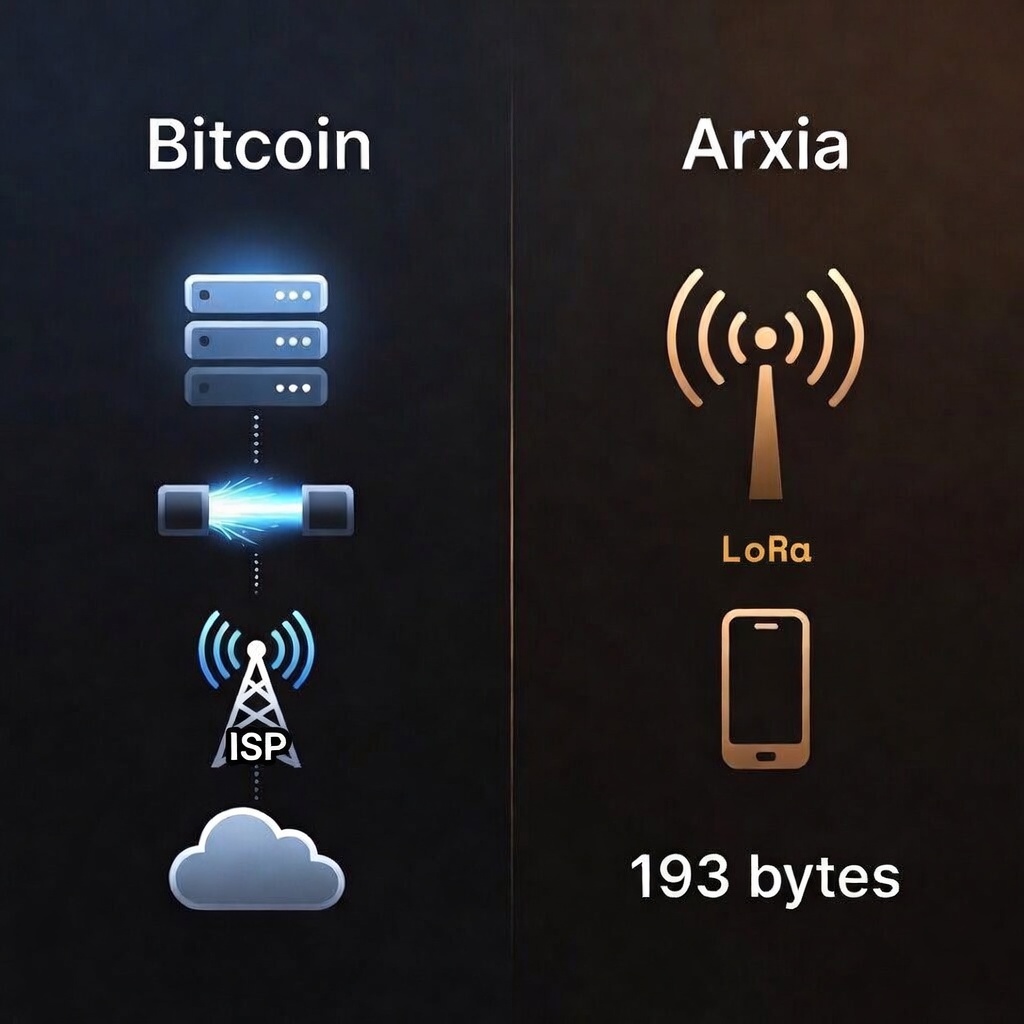
A person holding $1B in bitcoin can't buy a bottle of water from their neighbor if the internet goes down. not because his Bitcoins are gone. not because of a hack. not because of any cryptographic failure.
simply because there's no network to broadcast the transaction to.
This is the thing crypto never talks about.
Decentralization is a story about censorship resistance. It was never a story about infrastructure resilience.
Those are two completely different problems. One has been solved. The other hasn't.
Arxia is solving the other.
x.com/ArxiaLayerOne/status/2…
Post Written by our community writer @0xCatechist
May 11

Alice in Warland
Alice is in a war zone, and the Internet is down. She needs to pay Bob 5 USDC for water.
Here's what happens:
She opens the app. The wallet shows her 100 USDC stored locally on her phone. No server needed. She enters the amount. Scans Bob's QR code. Her phone builds the transaction.
She signs it with her private key. Ed25519. Mathematical proof came from her with no third party involved. The transaction travels phone-to-phone via Bluetooth in an instant with 193 bytes (256 bytes in total).
Bob's app validates it with a correct signature and a nonce never seen before. Sufficient balance. Bob shows 5 USDC. Alice shows 95 ARX.
No internet. No tower. No server. No bank. When the internet returns an hour, a day, or a week later, both phones sync to the global network automatically, and the ledger reconciles itself. Nothing is lost.
Post written by our community writer @0xCatechist
1
1
91
Arxia Layer One retweeted

Jun 6
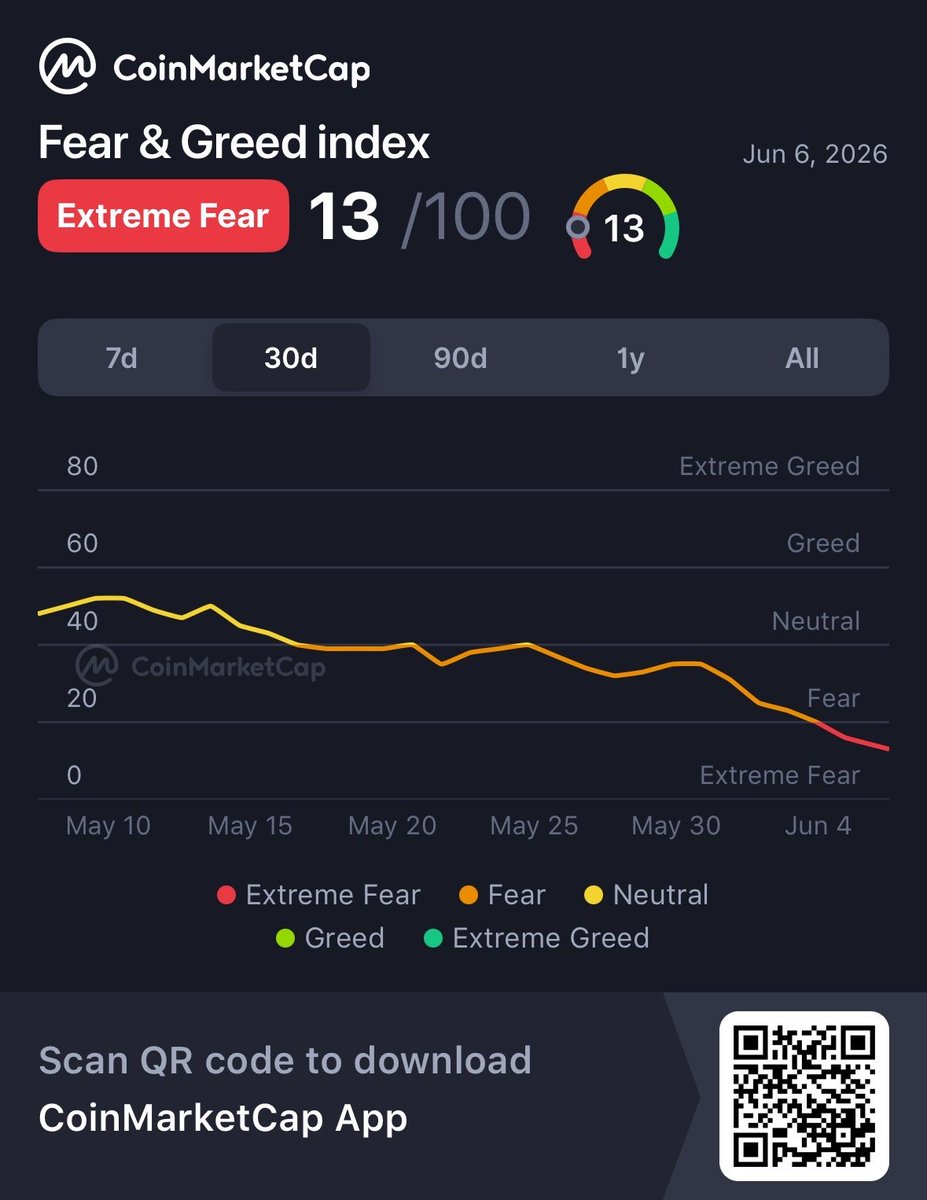
CoinMarketCap | Fear and Greed Index
🔹 Sentiment is at 13 – Extreme Fear.
coinmarketcap.com/charts/fea…
127
63
309
27,916
Another full-stack dev joined this week. We're splitting the work into smaller tasks across more hands, so things get done right and audited thoroughly before they ship.
his track, in order:
The node application you actually install and run.
permanent on-disk storage.
The first real transaction over lora radio instead of a simulation.
a wallet tool to create accounts and move test funds.
a multi-node network we run ourselves before anyone outside joins.
That's the path to a phased testnet.
3
78
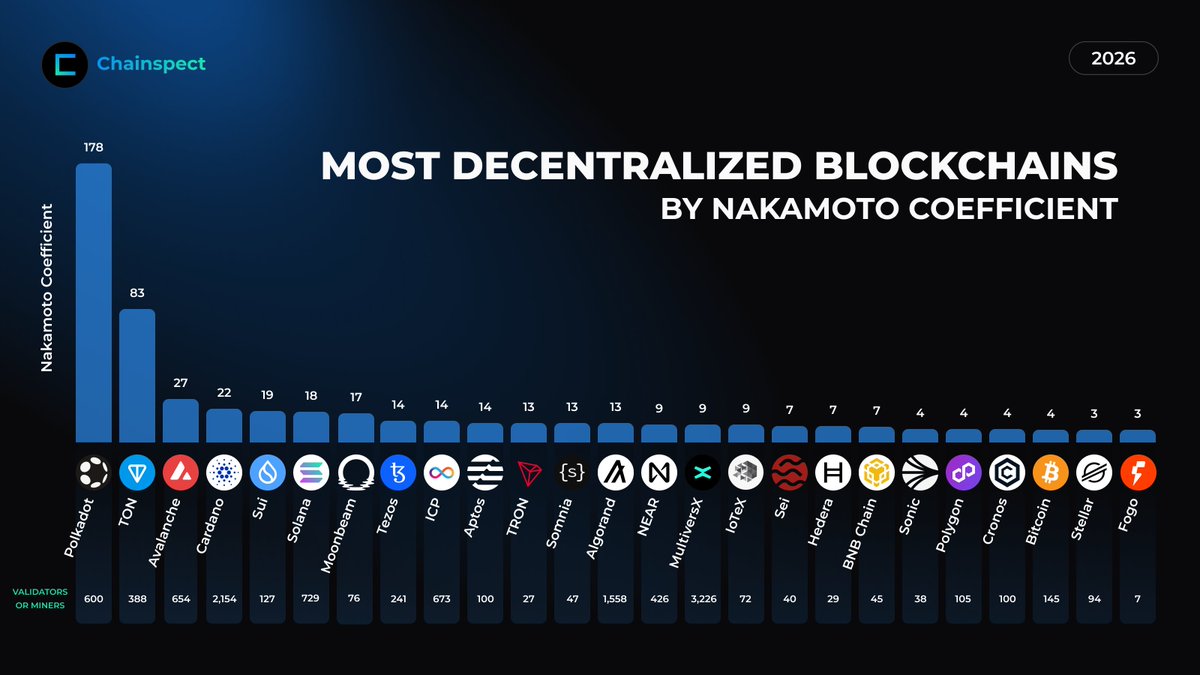
Why does anyone actually care about a stat like this. It measures who'd have to collude to stop a chain. It says nothing about who has to flip one switch. None of these 25 survive a government cutting the internet. On the axis that matters, they all score zero.
Jun 4

🛡️ What would it take to control your favorite blockchain?
The Nakamoto Coefficient measures how many entities would need to collude to compromise a network
Here are the 25 most resilient blockchains 👇
📊 chainspect.app/dashboard/dec…
1
72

Arxia Layer One retweeted
Apr 12
Nobody seems ready to talk about this, so we're just going to poll it and let your own answer sink in.
-Would you rather hold your savings on a blockchain that works without internet or one that dies when a government flips a switch?
#Bitcoin #crypto #DePIN
0%
killswitch included
100%
No internet needed
0%
0%
0%
0%
0%
0%
4 votes • Final results
8
4
24
339
May 31
Picture this :
In warzones, total internet blackout , a refugee crosses a border with their entire life on a phone. Degrees, property titles, medical history, and professional credentials. All of it is cryptographically signed and anchored on a decentralized ledger. But in the new country, social services need to verify his identity. With no internet connection to the origin country, no trusted server or a central authority that both sides recognize, how would this work?.
Arxia includes an identity solution to solve this. With a W3C Decentralized Identifier supported by Arxia, the verification happens offline. From the local copy of the ledger on a nearby node. The math proves the credentials are genuine, and no one needs to contact anyone.
A DID is not a product feature. For 100 million refugees worldwide, it is the difference between being believed and being invisible.
1
1
5
94
May 27
Here's why every existing blockchain fails when the internet goes down and what a protocol designed from scratch for fragmented networks actually looks like.
Every major blockchain was designed with one premise: all nodes can communicate in near real-time. Remove that premise, and everything breaks.
-Bitcoin: needs global node communication to validate transactions. Offline = no validation.
-Ethereum: Smart contracts require network consensus.
-Nano: Free, fast, Block Lattice. But zero offline support. Closest architecture to what's needed but not designed for fragmented networks.
-IOTA: explored mesh networking seriously, but the Tangle architecture requires a partial view of the global DAG to function. It is structurally incompatible with long network partitions.
The pattern is an internet-first design, with offline support bolted on as an afterthought.
The alternative is to start with the opposite assumption that the internet is the optimal case and not the prerequisite.
Arxia builds for the fragmented network first and uses the connected network as a bonus. This is what the Arxia team is building from the ground up.
Post written by our community writer
@0xCatechist
1
1
5
141
May 25
every blockchain currently running assumes continuous internet connectivity. solar flares, satellite disruptions, grid failures these aren't edge cases for crypto infrastructure, they're systemic failure points.
the "decentralized" money system has a single point of failure: the network it runs on.
May 25

🚨 THE SUN JUST FIRED OFF AN X2-CLASS FLARE ONE OF THE STRONGEST IN RECENT TIMES.
An intense X2 solar flare has erupted on the far side of the Sun, according to latest monitoring data.
X-class flares are the most powerful category the Sun produces. They release enormous bursts of radiation and can trigger:
• Radio blackouts
• Satellite disruptions
• Strong geomagnetic storms when aimed at Earth
Why this matters:
Even though this particular flare is on the far side, the Sun is currently in an active phase of Solar Cycle 25. More X-class events are expected in the coming months.
These flares are dramatic reminders that our star is not a quiet, steady light it’s a violent plasma engine capable of releasing energy equivalent to billions of nuclear bombs in minutes.
The deeper implication:
As our civilization becomes increasingly dependent on satellites, power grids, and GPS, even moderate solar activity can have real-world consequences. A direct hit from a major flare could disrupt global communications and infrastructure.
How prepared are we for the next big one pointed straight at Earth?
Follow for more frontier physics and space weather updates.
1
1
4
147
May 25
Quick update a lot's happened since our first offline transaction video!
contract status:
- smart contract finalized, audit-ready
- 43/43 foundry tests passing (including fuzz invariant)
- 100% coverage, slither 0 findings, halmos invariants proven
- deployment tested on base sepolia, everything works as designed
strategic shift:
we're switching the order of operations. ido first, seed round after.
the reasoning is simple: in this market, traction gets seen and weighted before the project itself does. unfortunate but that's the reality. a project with a live token, real community, locked lp, and visible volume is taken seriously. the same project pre-launch with just docs and a thesis isn't.
so the new plan:
1. one month of aggressive marketing build-up around the ido
2. ido on pinksale (base) with standard presale structure
3. post-ido, we approach our seed investor list (vcs, infrastructure funds, ngo strategic partners) with real traction in hand
this isn't a pivot on the project. it's a pivot on the sequencing. the tech, the thesis, the architecture, the offline-first mission, none of that changes. what changes is when capital comes in.
more details on ido structure, dates, and marketing rollout coming in the next few days. stay tuned.
1
1
6
202
May 23
In 1859, a solar storm hit Earth. It destroyed the entire global telegraph infrastructure overnight. Operators reported sparks flying from their equipment. Some disconnected their batteries entirely because the aurora alone was generating enough current to transmit messages. That was the Carrington Event. NASA estimates a 12% probability of a modern equivalent within the next 10 years.
The modern version doesn't just take out telegraphs. It takes out satellites. Internet backbone. Regional power grids. Every blockchain node that depends on electricity and internet connectivity goes dark. Bitcoin becomes unusable. Ethereum becomes unusable. Your entire portfolio has the transactional power of an empty wallet.
12% is not a small number. It's roughly the odds of Russian roulette with two bullets. Nobody is building for this.
With LoRa tech and independence from the grid, Arxia, with a solar-powered setup and short antennas, can eliminate device exposure to widespread outages from similar storms.
Post written by our community writer
@0xCatechist
1
3
112
May 17
Bitcoin goes down with the internet. Ethereum goes down with the internet. Solana. USDC. Every stablecoin and wallet will go down the moment the network dies.
Every blockchain ever built shares one foundational assumption: The internet is available. That assumption is reasonable 99% of the time. But the 1% is not hypothetical.
There were 282 deliberate internet shutdowns in 2023 alone across 29 countries. Three submarine cables were cut simultaneously in 2024. And there subsists the 12% probability from NASA that a solar storm capable of taking down global infrastructure will occur soon.
The question was never if. It was always when. And no existing protocol was built for that answer. Arxia solves this.
1
1
4
148
May 14
$3,000,000,000,000 of cryptocurrency market cap (with about $90B in DeFi TVL) across sovereign reserves, institutional capital and personal savings all rest on the condition that a server somewhere in the world is online.
Your hardware wallet keeps your keys safe. But keys without a network are like cash in a vault you can never open. Though you own the asset, you cannot move it, spend it, or access it. Ownership without access is not financial sovereignty.
The crypto industry spent 15 years solving for censorship resistance, but no one solved infrastructure collapse. Arxia fixes this.
Post written by our community writer
@0xCatechist
#web3 #cryptocurrency
3
139
May 11
Alice in Warland
Alice is in a war zone, and the Internet is down. She needs to pay Bob 5 USDC for water.
Here's what happens:
She opens the app. The wallet shows her 100 USDC stored locally on her phone. No server needed. She enters the amount. Scans Bob's QR code. Her phone builds the transaction.
She signs it with her private key. Ed25519. Mathematical proof came from her with no third party involved. The transaction travels phone-to-phone via Bluetooth in an instant with 193 bytes (256 bytes in total).
Bob's app validates it with a correct signature and a nonce never seen before. Sufficient balance. Bob shows 5 USDC. Alice shows 95 ARX.
No internet. No tower. No server. No bank. When the internet returns an hour, a day, or a week later, both phones sync to the global network automatically, and the ledger reconciles itself. Nothing is lost.
Post written by our community writer @0xCatechist
1
7
308
Arxia Layer One retweeted
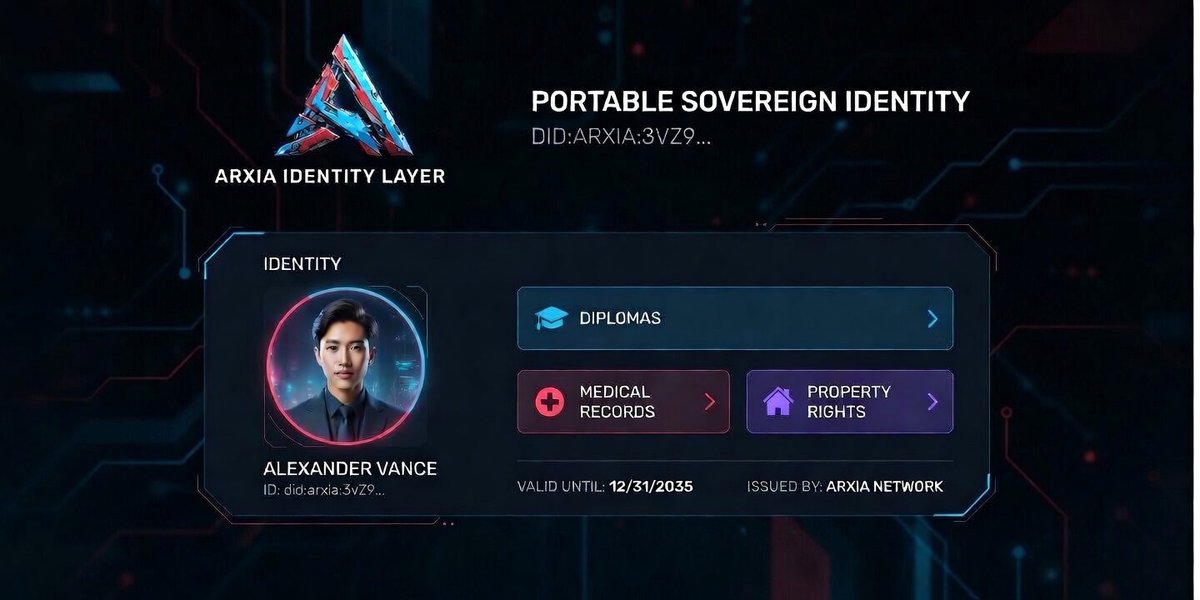
Identity is the other half nobody talks about. Sending money offline is one problem. Proving who you are without a server is another.
W3C DID standard built into the protocol. Your diplomas, your medical records, your property rights. Cryptographically signed. Verifiable offline by anyone.
#DID #SelfSovereignIdentity #W3C #DecentralizedIdentity
1
4
17
299
we fooled ourselves. we aint decentralized. Change my mind.
figured id share my villain origin story around the current "decentralization" of crypto. so here it is
I loved that word back when crypto first started getting big (decentralization). believed in it fully. that was until march 2024.
flew into lagos late january for a 3 month contract, smart contract dev work for a fintech outfit building remittance rails. one way ticket, didnt bring much cash, they were supposed to pay me weekly in usdc so easier to convert chunks at a time than eat fx fees upfront. figured worst case i had crypto on my ledger as backup.
third week in, they hit a funding wall. african startup funding had been brutal for over a year, their lead investor pulled back. they came back trying to renegotiate down to half rate. i told them id finish the month and bounce. fine. figured id ride it out a few extra weeks and see the place.
March 14. Wake up, no internet. mtn data dead, airtel barely loading, wifi in the apartment is down. couple hours later word starts spreading. four subsea cables between west africa and europe failed at almost the same time. wacs, mainone, ace, sat-3. an undersea rockslide off cote divoire took em out. sterling banks network was down. ussd transfers failing. atms either offline or refusing. the country had been effectively UNPLUGGED from the rest of the world overnight, and the bank rails went with it.
my ledger? technically fine. the device works. but what does that get me. i had usdc sitting on #ethereum and no way to reach a node, no rpc, no exchange ui, and the local #p2p guy id used the week before was as offline as i was. banks were down anyway so even if i could move usdc id have nowhere to land it. had cash on hand, so did most people i knew, but trust me you feel small when your "self-custody" position becomes a brick because of a rockslide on the seafloor.
mainone said repairs could take up to five weeks. sat-3 didnt come back until early april. mobile got patched first as carriers rerouted, but capacity was a mess for weeks. by then id had a lot of time to think.
thats when it clicked. we fooled ourselves. we aint #decentralized. we built billion dollar systems sitting on top of a few hundred subsea cables, dns servers, and bank rails any rockslidebor government can shut off whenever they feel like it. four cables dead and a third of a continent is offline. one minister signs a memo and a whole country loses twitter for seven months.
That's why im building a layer 1 thats actually decentralised. runs on lora, ble, sms. works when the internet doesnt. if you see the same problem, tag along, signal boost, were trying to get visibility.
cheers.
Kwon Jihak
2
2
9
273
The offline lora transaction just got picked up by @MEXC news. 193 bytes, ed25519, zero internet, real hardware.
Coverage is starting to land.
mexc.com/en-GB/news/1069633?…
1
93
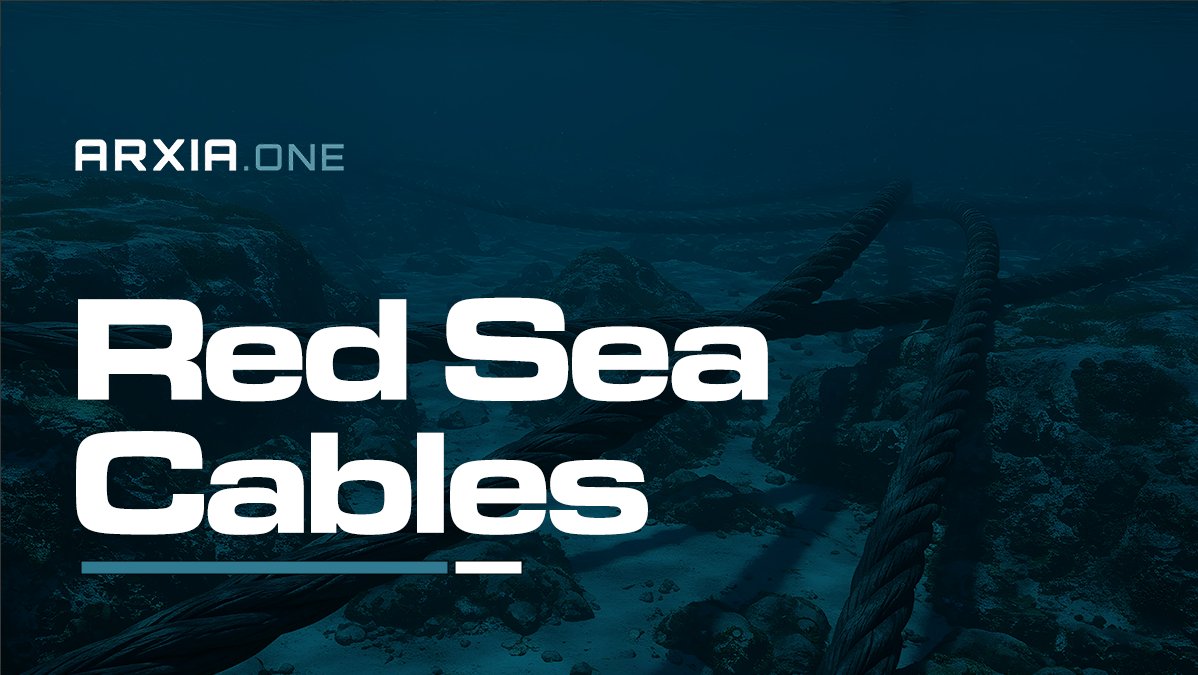
Thread🧵The Red Sea Cables
In February 2024, 3 submarine cables were cut simultaneously in the Red Sea. 25% of West Africa lost internet access for weeks. Every crypto wallet in the affected region became useless overnight. Not hacked. Not stolen. Just inaccessible.
This wasn’t even a war zone anomaly. It was a cable. A single point of failure took down the financial access of millions of people who thought decentralization protected them. It doesn't.
Decentralization protects you from censorship, but it does not protect you from infrastructure collapse. Bitcoin goes down with the internet. Ethereum goes down with the internet. Solana, USDC, every stablecoin goes silent the moment the network dies.
The crypto industry spent 15 years building revolutionary financial systems that rely entirely on the same fragile infrastructure as the banks they claim to replace. Nobody solved this… Until Arxia.
Post written by our community writer @0xcatechist.
2
2
10
325
WE DID IT ! We just sent the first layer 1 blockchain transaction over lora radio. No internet. no cellular. no satellite.
193 bytes, signed with ed25519, validated locally, on real hardware. @lilygo9 t-beam to lilygo t-beam, 868 mhz, two years of work landing in a single packet.
What does this actually mean ?
The entire crypto industry talks about decentralization and builds everything on top of an internet connection. as if it's never occurred to anyone that a government would cut that connection the second it serves them. @web3privacy has been screaming about this for years. They're right..
580 million people hold crypto. three trillion dollars on chain. all of it depends on a server somewhere being online. wait until they cut your internet. your wallet won't be drained. it'll just be worth nothing.
Arxia removes that dependency at the protocol layer. block lattice consensus. orv stake-weighted voting. crdt reconciliation when partitions reconnect. unique nonce per wallet, signed receiver field, four-tier finality with explicit caps so you always know what guarantee you're holding. 34 of 34 protocol tests passing. fully open source.
What we aim for ? A layer 1 that doesn't die when the network does. a wallet that works in a blackout, a war zone, a kill switch event, a solar storm, a protest where they pull the plug. the blockchain that runs when the internet is dead.
today we proved the radio leg works. next is the mesh, the field deployment, the public testnet, the ido, the mainnet.
@LoRaAlliance
2
71
2/ Here's the number that matters:
$3,000,000,000,000 of cryptocurrency market cap (with about $90B in DeFi TVL). That's how much value is connected to all things blockchain today. Personal savings. Institutional capital. Sovereign reserves and lifetime wealth.
All of it rests on one condition: That a server somewhere in the world is online.
The richest person alive with $1 billion in BTC cannot buy a bottle of water from their neighbor if the internet is dead. We know that this is not decentralization and it poses a different kind of fragility.
1
6
105
3/ In post-apocalyptic movies, an improvised medium of exchange always emerges. Bottle caps. Cigarettes. Ration points. Anything that lets two people agree on a value and survive together. Nobody planned a cryptographic currency for that moment.
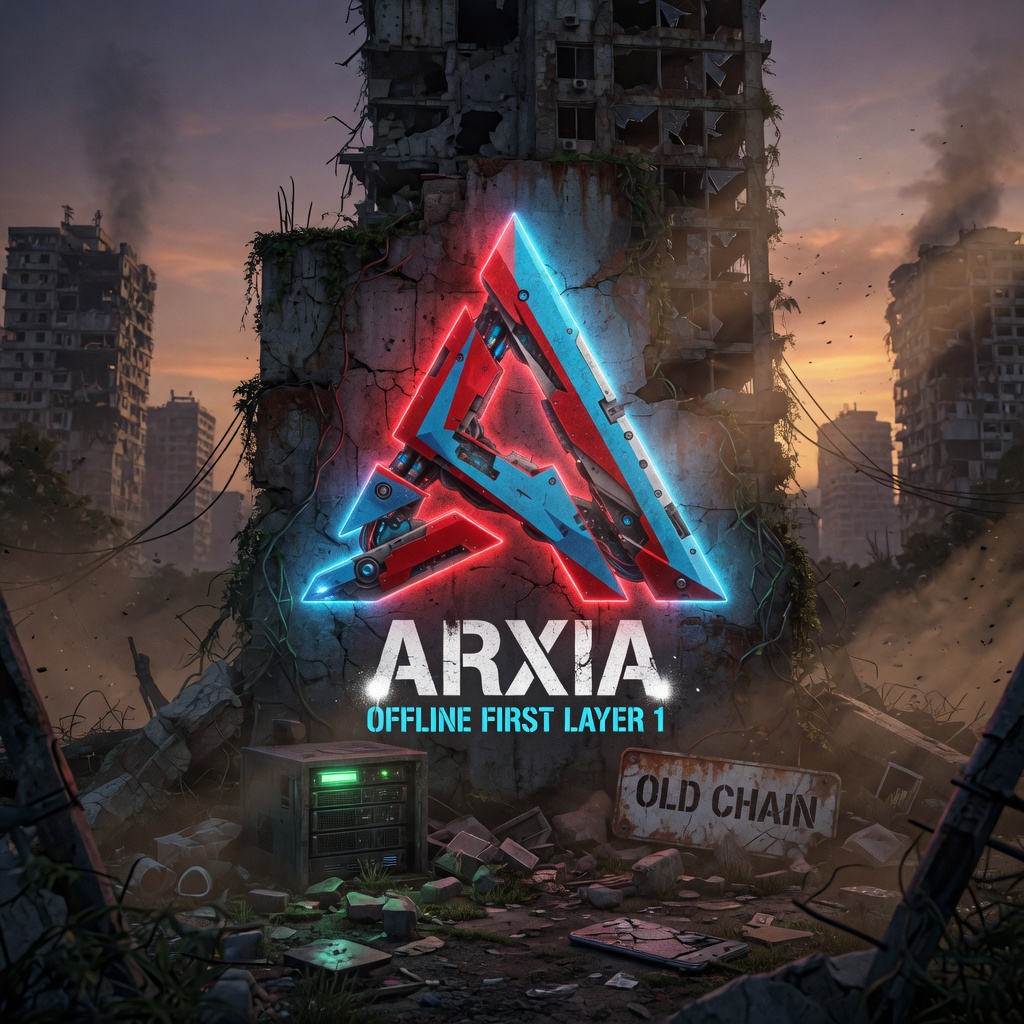
Arxia is what should have been planned. A Layer 1 blockchain designed from scratch to work when everything else stops. It is not an offline mode bolted onto an existing architecture. It is the architectural foundation itself.
Arxia is a Layer 1 blockchain designed from the ground up for fragmented and intermittent networks through LoRa radio, Bluetooth, SMS, and Satellite. The protocol routes over whatever survives. When networks reconnect, the ledger heals itself mathematically, deterministically, without manual intervention.
More this week. Follow to stay ahead of what's coming.
4
84